Buyer Fit Snapshot
| Best fit | custom boxes comparison choose the fit for packaging buyers comparing material specs, print proof, MOQ, unit cost, freight, and repeat-order risk where brand print, material, artwork control, and repeat-order consistency matter. |
|---|---|
| Quote inputs | Share finished size, material target, print colors, finish, packing count, annual reorder estimate, and delivery region. |
| Proofing check | Approve dieline scale, logo placement, barcode or warning zones, color tolerance, and any recyclable or compostable wording before bulk production. |
| Main risk | Vague material claims, crowded artwork, or missing packing details can create delays even when the unit price looks attractive. |
Fast answer: Custom Boxes Comparison Choose The Fit: Dieline, Finish, Proof, and Buyer Review should be specified like a repeatable production item. The safest quote includes material, print method, finish, artwork proof, carton packing, and reorder notes in one written spec.
What to confirm before approving the packaging proof
Check the product dimensions against the actual filled item, not only the sales mockup. Ask for tolerance on folds, seals, hang holes, label areas, and retail display edges. If the package carries a logo, QR code, warning copy, or legal claim, reserve that space before decorative graphics fill the panel.
How to compare quotes without losing quality
Compare board or film grade, print process, finish, sampling route, tooling charges, carton quantity, and freight assumptions side by side. A lower quote is only useful if the supplier can repeat the same color, closure quality, and packing count on the next order.
Custom Boxes Comparison: How to Choose the Best Fit
Two boxes can look almost identical on a quote sheet and still behave like completely different animals once product weight, pallet pressure, humidity, and carrier handling enter the picture. Boxes love to look innocent on paper. They are not. That is why a custom boxes comparison is not just a hunt for the prettiest carton. It is a practical check on protection, presentation, production method, and total cost before you commit to a run.
From a packaging buyer's point of view, the right custom boxes comparison answers a few blunt questions fast: Will this survive transit? Will it fit the product without stuffing it full of filler? Will the print hold up well enough to support brand packaging and package branding? And, yes, will it stay inside budget once freight, setup, and assembly labor show up?
If you are still narrowing the field, our Custom Packaging Products page is a useful starting point because it shows how different formats can support product packaging, retail packaging, and shipping use cases. A smart comparison never relies on looks alone. It weighs structure, material, print method, inserts, timeline, and the actual route the carton will travel.
Here is the practical lens I use for a custom boxes comparison:
- Protection - how the box handles weight, compression, vibration, and drop risk.
- Presentation - how the carton supports shelf impact, unboxing, and custom printed boxes aesthetics.
- Production method - whether the design fits corrugated, folding carton, or rigid construction.
- Total cost - unit price, setup, freight, labor, and damage exposure.
- Timeline - sample time, approval time, and the actual production window.
That balance matters because the cheapest box on paper can turn into the priciest choice in real life. A carton that saves three cents per unit but causes returns, scuffed prints, or slow pack-out is not a bargain. A proper custom boxes comparison keeps the decision tied to how the packaging performs after the ink dries and the shipment leaves the dock.
What a custom boxes comparison really tells you
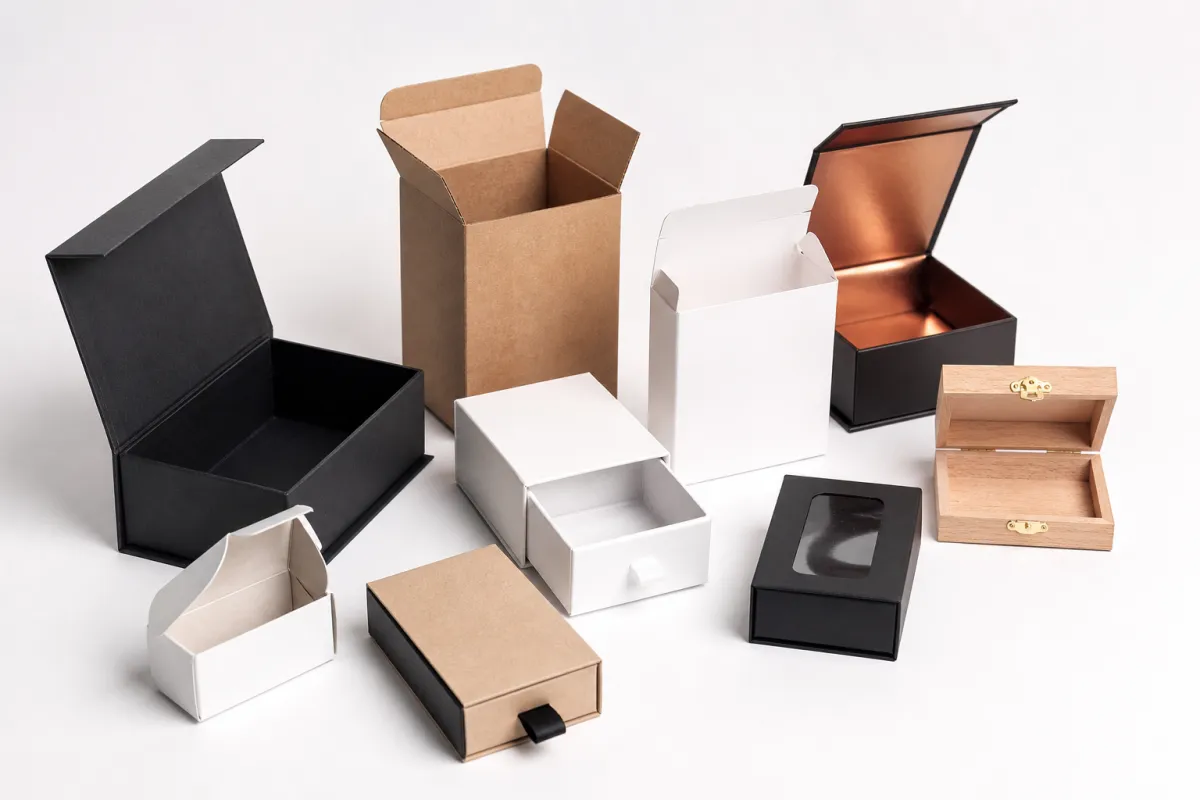
A solid custom boxes comparison tells you more than which supplier dropped the lowest number. It shows where one option protects better, where another looks better, and where a third is easier to run in production. That matters because a box is never just a box. It is part structure, part shipping system, part brand presentation.
Two cartons with the same outside dimensions can still behave differently once you look at the inside dimensions, flute profile, board grade, closure style, and print coverage. One may look fine on paper but collapse sooner under stack load. Another may ship well and still look flat on the shelf. A good custom boxes comparison makes those tradeoffs visible before anyone commits to tooling or inventory.
I like to define the term in plain language: a custom boxes comparison is a structured side-by-side review of box options using the same criteria, same quantity, and same product assumptions. It is not a style contest. It is not a price chase dressed up as strategy. It is a controlled way to compare protection, branding, pack-out speed, and cost so the chosen box fits the job instead of forcing the job to fit the box.
That distinction matters in everyday packaging decisions. Fragile items need cushioning and controlled movement. Heavy items need compression strength and secure closures. Premium items need a better finish, cleaner edges, and a more deliberate unboxing feel. Shelf-facing products need print clarity and consistent panel geometry. A custom boxes comparison helps separate those needs instead of tossing them into one vague request for "something nice."
"A box that looks right on the screen can still fail in the hand. The real test is whether it holds the product, survives the route, and still looks like your brand when it arrives."
From a packaging operations standpoint, that is the whole point. The best custom boxes comparison keeps function, brand image, and budget in the same conversation. Let one factor dominate too early and the decision gets skewed. Go too cheap, and damage risk rises. Go too fancy, and money disappears into structure or finish your product never truly uses. A measured comparison keeps the decision honest.
It also gives teams a common language. Instead of saying a carton "feels better," you can say it has stronger corner support, a tighter insert fit, a better print surface, or a lower pack-out time. That is what turns a custom boxes comparison into a useful buying tool rather than a subjective debate with a spreadsheet in the room.
And yes, that can save you from a week of circular email replies. Which is a gift.
How a custom boxes comparison works in production
The best custom boxes comparison starts with the product itself, not the packaging catalog. Measure the exact length, width, and height, then confirm the weight, surface finish, and fragility. A glass jar, a powdered product, a cosmetics set, and a heavy tool kit all ask the carton to do different work. If the item ships individually, in a set, or inside a master pack, that changes the comparison too.
Once the product is defined, compare box families by use case. Corrugated Shipping Boxes are built for transit strength and stacking. Folding cartons suit lighter retail products and crisp shelf graphics. Rigid boxes bring a premium feel and a more substantial unboxing moment, but they also carry more material and labor. A thoughtful custom boxes comparison looks at those differences before anyone starts talking about foil or specialty coatings.
Next comes the spec sheet. This is where the comparison gets real. Check the board grade, flute profile, caliper, print method, coating, and any internal support. If the product must survive parcel transit, ask whether the design has been tested against relevant ISTA methods or similar compression and vibration standards. That does not promise perfection. It does give the custom boxes comparison a technical basis that is better than guesswork and wishful thinking.
I also pay attention to the sample, because samples expose what the spec sheet cannot. Does the product shift inside the carton? Do the corners bow under load? Is the tuck flap too tight for fast packing? Does the printed panel scuff when handled? Those are the details that separate a paper comparison from a production-ready custom boxes comparison.
A simple scorecard keeps the process from drifting. Score each option on the same scale for protection, presentation, assembly speed, sustainability, and cost. That turns the custom boxes comparison into a decision matrix instead of a memory test. Teams can review the same facts without relying on whichever sample arrived first or whichever quote looked friendliest.
In practice, this is where packaging design and production reality meet. A beautiful die line can still fail if the board is too thin. A sturdy carton can still annoy the line if it takes too long to erect. The strongest custom boxes comparison keeps design and manufacturability in the same frame, which is how you end up with Packaging That Works on the line and at the customer’s door.
Custom boxes comparison: materials, structure, and finish
Material choice changes almost everything in a custom boxes comparison. Corrugated board brings cushioning and crush resistance, folding carton stock gives a cleaner print surface, and rigid construction delivers a more substantial premium feel. The right choice depends on the product, the shipping route, and how much presentation the box needs to carry on its own.
For shipping-heavy programs, single-wall corrugated with common target strengths such as 32 ECT or 44 ECT is often the starting point. B-flute offers stronger cushioning and stacking performance, while E-flute gives a smoother print surface and a thinner profile for retail-friendly graphics. For lighter product packaging, 18 pt to 24 pt SBS or CCNB can work well, especially when the box sits on a shelf and needs sharp print. For premium kits, rigid boxes often use grayboard or chipboard around 1.5 mm to 3 mm thick, wrapped in printed paper for a more elevated finish.
Structure matters just as much as the board itself. A well-designed insert, tuck flap, seal end, or lock-bottom can protect a product better than a thicker box with weak internal support. I have seen a lighter carton outperform a heavier one simply because the internal geometry held the item in place. That is why a smart custom boxes comparison looks at internal fit, not just external strength.
Finishes deserve the same level of attention. Matte and gloss coatings affect both appearance and scuff resistance. Soft-touch adds a velvety feel that works well for premium custom printed boxes, but it can add cost and may show marks if the carton is handled often. Spot UV can make logos or product names pop, while foil can create strong shelf impact. None of those choices is wrong, but each one changes the balance of cost, durability, and visual tone in the custom boxes comparison.
Sustainability should stay in the conversation, but it should stay grounded. Recycled content, recyclability, and material reduction are all useful goals, yet the most sustainable carton is not automatically the thinnest one. If a box fails early, the waste problem gets worse. That is why I prefer a custom boxes comparison that looks at actual performance first and then trims material where the design can truly support it.
If you want a sourcing reference for responsibly managed fiber, the FSC certification system is a practical benchmark to discuss with suppliers. That does not solve every packaging question, but it gives your sourcing conversation a clearer footing. In the same way, a careful custom boxes comparison keeps the sustainability discussion tied to real specifications rather than broad claims.
One more point that gets overlooked: the shipping path changes material needs. A box that performs well in local distribution may need a different caliper or closure style for national parcel shipping. A retail carton that looks perfect on a shelf may need extra protection if it travels through a warehouse with higher humidity. A real custom boxes comparison accounts for those conditions instead of treating the carton as if it lives in a lab.
Custom boxes comparison: cost, pricing, and value
Price only becomes useful in a custom boxes comparison when it is tied to the same spec. Two quotes that look different may simply reflect different board grades, print coverage, or lead times. That is why I always separate unit price from total landed cost. A carton may be pennies cheaper at the quote stage and still cost more once setup, freight, damage, storage, and labor are added.
Here is the pricing pattern I see most often. Smaller runs usually have a higher unit cost because setup and tooling are spread across fewer pieces. Larger runs lower the per-unit price, but they can tie up cash and warehouse space. A custom boxes comparison should make both sides visible so the buyer can Choose the Right balance between inventory risk and piece price.
| Box Type | Common Material | Best Use | Typical Price Range | Notes for Comparison |
|---|---|---|---|---|
| Corrugated shipping box | Single-wall B-flute or E-flute | E-commerce, transit, stackable shipments | $0.35-$1.25 per unit at mid-volume | Strong for protection; print is good, but finish options are more limited. |
| Folding carton | 18 pt-24 pt SBS or CCNB | Retail packaging, lighter products, shelf display | $0.18-$0.65 per unit at higher volume | Best print surface; may need extra inserts or shipper cartons for transit. |
| Rigid box | Chipboard wrapped in printed paper | Premium kits, gifts, presentation sets | $1.50-$6.00 per unit depending on build | Strong brand impact and unboxing feel; higher labor and material usage. |
Those ranges are ballpark numbers, not universal truth, and they move with quantity, region, board market swings, print coverage, and finishing choices. Still, they give a useful starting point for a custom boxes comparison. A buyer comparing boxes without ranges like these is usually comparing feelings, not costs.
The hidden pricing drivers matter just as much as the base price. Dieline changes can add setup time and prepress work. Specialty inks, foil, embossing, or spot UV can increase cost faster than people expect. Inserts may be simple paperboard supports, or they may require custom tooling and more assembly. Each one changes the economics of the custom boxes comparison.
Cheap box, expensive problem. If a carton saves money on paper but creates damage, repacking, or customer complaints, the "savings" disappear fast.
That is why value matters more than sticker price. If a stronger box lowers returns, protects fragile product packaging, or lets your team pack faster, the higher quote may actually be the better business choice. The best custom boxes comparison is not asking which box costs less today. It is asking which box costs less across the full life of the order.
There is also a branding angle here. Better packaging design can increase perceived value, especially for premium goods or direct-to-consumer shipments. A cleaner panel layout, better coating, or sturdier closure can make the product feel more considered. In some categories, that lift in perceived quality supports a higher retail price. So the right custom boxes comparison should treat packaging as part of the selling system, not only as a container.
If the numbers are close, spend more where risk is highest. That might mean better compression strength, a more stable insert, or a finish that resists scuffing in transit. A careful custom boxes comparison makes it easier to see where a small extra cost protects a much larger business outcome.
Custom boxes comparison step by step: from brief to sample
A practical custom boxes comparison works best when the process is structured from the start. If the brief is vague, the quotes will be vague too, and the comparison will drift. If the brief is clear, suppliers can price the same box on the same assumptions, which makes the result far easier to trust.
- Build the packaging brief. Include exact product dimensions, weight, fragility, shipping method, target audience, and any retail display requirements. If the box must support branded packaging or a premium unboxing experience, say that up front.
- Request quotes on the same basis. Match inside dimensions, board grade, print coverage, quantity, and finish. A custom boxes comparison only works if each supplier is quoting the same spec, not a version that quietly changes the price.
- Review the dieline and artwork together. A carton can print beautifully and still fail if the logo lands too close to a fold or the copy sits in a panel that gets crushed. The comparison should include design fit, not just price.
- Ask for a sample or prototype. Check fit, closure, assembly, and visual alignment. If the product moves too much, the insert needs work. If the box takes too long to erect, that is a labor cost, not a minor inconvenience.
- Confirm schedule and production window. One supplier may look competitive on price but miss the launch date. A strong custom boxes comparison treats timeline as part of the value equation.
Sample testing is where many teams learn the most. Real products expose real problems. A glass container may need more internal support than expected. A cosmetic set may rub against the finish during transit. A heavy accessory may crush a weak tuck end. The sample stage of a custom boxes comparison gives you a chance to fix those issues before they scale.
I also recommend documenting the winning spec in plain language: board grade, dimensions, print method, finish, insert style, and approved artwork version. That simple record makes future reorders easier and keeps teams from drifting away from the original custom boxes comparison. Reorder consistency matters more than people think, especially once the packaging becomes part of a product line rather than a one-off order.
One useful habit is to test the box in the same conditions it will face in real life. Stack it in the warehouse. Shake it gently. Drop-test a sample if the product is fragile. Check how it assembles with gloves on if that is realistic for your team. A custom boxes comparison becomes much more reliable when it reflects the actual environment, not just a clean desk review.
For teams managing multiple SKUs, it helps to keep one master comparison sheet and reuse the same scoring language every time. That makes future decisions faster and helps everyone understand why one carton was chosen over another. Over time, that discipline turns the custom boxes comparison into a repeatable packaging decision process rather than a one-time scramble.
That is the part people usually want to skip. It is kinda boring. It is also where most bad packaging decisions get caught before they cost real money.
Common mistakes in a custom boxes comparison
The most common mistake in a custom boxes comparison is focusing only on the quoted unit price. That is understandable, because the number is visible and easy to compare. The problem is that a low quote can hide costs that show up later as damage, returns, repacking, or slower fulfillment. A real comparison includes what happens after the carton is in use.
Another frequent error is using outside dimensions instead of inside dimensions. A box can appear cheaper if the outside size looks right, but if the inside space is too tight, the product will scuff, deform, or need extra void fill. In a proper custom boxes comparison, the fit inside the box matters more than the number printed on the outer edge.
People also forget about pack-out time. A box that takes an extra 10 seconds to assemble may not sound like much, but across thousands of units that becomes a real labor cost. Sometimes the slightly more expensive carton wins the custom boxes comparison because it folds faster, needs fewer components, or uses an insert that drops into place cleanly.
Skipping sample testing is another costly habit. The spec sheet may look fine, but the live product can reveal corner crush, insert misalignment, or print scuffing that no one expected. A sample is not a formality. It is the point where the custom boxes comparison stops being theoretical and starts looking like production.
Lead time also gets underestimated. Artwork changes, finish upgrades, and structural adjustments can all extend the schedule. If the launch date is fixed, that matters as much as cost. A custom boxes comparison that ignores timing may deliver a great carton too late to help the launch.
Finally, teams sometimes compare packaging styles that do not serve the same job. A corrugated shipper and a rigid presentation box may both be "custom boxes," but they are not interchangeable. A better custom boxes comparison starts by matching the format to the use case, then compares the options that actually belong in that category.
Expert tips and next steps for a smarter comparison
Use a scorecard. It sounds basic, but it keeps a custom boxes comparison honest. I like to score protection, branding, cost, lead time, sustainability, and ease of assembly on the same 1-to-5 scale. That makes the tradeoffs easy to see, especially when multiple departments care about different outcomes.
Ask for at least one sample that matches the exact board, print, and finish combination you plan to order. A generic sample is useful for seeing a style, but it will not tell you how your specific combination behaves. If the comparison is about a premium finish, a lighter board, or a tighter insert, the sample needs to reflect the real build.
Test the package in the conditions it will actually face. If the box is going through parcel networks, that is a different challenge than pallet-only shipping. If it sits in a humid warehouse, moisture resistance matters more than it would in a dry storage room. A strong custom boxes comparison respects those differences instead of pretending every supply chain is the same.
There is also a sourcing side to this. Suppliers who understand material efficiency, print consistency, and production timing usually give better guidance than suppliers who only talk about unit price. If your program needs multiple versions, our Custom Packaging Products page can help frame the options more clearly. In many cases, a good custom boxes comparison is really a conversation about how to match structure to the product and avoid overbuilding where you do not need to.
When two options are close, choose the one that lowers risk or labor. That extra bit of strength, a cleaner fold, or a better insert fit often matters more than a tiny price difference. In packaging, tiny savings vanish fast if the carton slows down the line or exposes the product to damage. That is why a mature custom boxes comparison looks beyond the quote and toward the actual cost of ownership.
My final advice is simple: measure the winning box against your real priorities, not against the loudest opinion in the room. If the carton protects well, supports the brand, runs efficiently, and stays within budget, you have likely found the right fit. And if the next reorder needs a fresh look, use the same custom boxes comparison framework again so the decision stays consistent, practical, and grounded in how your packaging really performs.
What should I compare first in a custom boxes comparison?
Start with the product's exact size, weight, fragility, and shipping method, because those four factors narrow the field quickly. After that, compare structure, material, print needs, and assembly speed so the shortlist reflects real use instead of appearance alone.
Is the cheapest option always the best value in custom boxes comparison?
Not usually. A lower quote can create higher costs through damage, returns, extra packing labor, or storage problems. The best value is the option with the lowest total cost after protection, efficiency, and brand impact are included.
How do I compare custom box quotes fairly?
Make sure every quote uses the same inside dimensions, board grade, print coverage, quantity, and finish. Then ask each supplier to include setup fees, tooling, freight assumptions, and lead time so the numbers line up cleanly.
What affects lead time the most in custom boxes comparison?
Artwork approval, dieline changes, specialty finishes, and tooling all add time, especially on more complex structures. Prototype review and sample approval can also extend the schedule, so plan those steps before you need cartons in hand.
Should I choose corrugated, folding carton, or rigid boxes?
Choose corrugated for shipping strength and stackability, folding cartons for lighter retail products, and rigid boxes for premium presentation. The right choice depends on how the product travels, how it is displayed, and how much protection it needs in transit.
Bottom line: a useful custom boxes comparison comes down to the same spec, the same test conditions, and the same business priorities every time. Match the box to the product, verify the sample in real transit conditions, and document the build that actually protects, packs, and presents well. That is the one worth ordering.

