Buyer Fit Snapshot
| Best fit | custom folding box manufacturer choose the fit for packaging buyers comparing material specs, print proof, MOQ, unit cost, freight, and repeat-order risk where brand print, material, artwork control, and repeat-order consistency matter. |
|---|---|
| Quote inputs | Share finished size, material target, print colors, finish, packing count, annual reorder estimate, and delivery region. |
| Proofing check | Approve dieline scale, logo placement, barcode or warning zones, color tolerance, and any recyclable or compostable wording before bulk production. |
| Main risk | Vague material claims, crowded artwork, or missing packing details can create delays even when the unit price looks attractive. |
Fast answer: Custom Folding Box Manufacturer Choose The Fit: MOQ, Samples, Lead Time, and Quote Checks should be specified like a repeatable production item. The safest quote includes material, print method, finish, artwork proof, carton packing, and reorder notes in one written spec.
What to confirm before approving the packaging proof
Check the product dimensions against the actual filled item, not only the sales mockup. Ask for tolerance on folds, seals, hang holes, label areas, and retail display edges. If the package carries a logo, QR code, warning copy, or legal claim, reserve that space before decorative graphics fill the panel.
How to compare quotes without losing quality
Compare board or film grade, print process, finish, sampling route, tooling charges, carton quantity, and freight assumptions side by side. A lower quote is only useful if the supplier can repeat the same color, closure quality, and packing count on the next order.
Custom Folding Box Manufacturer: How to Choose the Best Fit
A carton can look perfect in a mockup and still fall apart the second it hits a pack line, a warehouse bin, or a retail shelf. A Custom Folding Box manufacturer is there to catch those problems before they turn into crushed corners, ugly gaps, or returns nobody wants to explain.
That part gets skipped all the time. A folding box is not just cardboard with a logo on it. It is structure, board grade, ink behavior, coating, glue placement, die-cut accuracy, and flat-pack efficiency all working at once. If one piece is off, the whole box feels cheap. A solid custom folding box manufacturer does more than print a nice surface. They turn product requirements into packaging that holds up in transit, looks right under retail lights, and still assembles without chewing through labor.
If you are buying for branded packaging, product packaging, or retail packaging, this matters more than most sales decks admit. The right partner can also keep you from spec creep, which is a polite way of saying you accidentally ordered a box that costs too much and still does not fit. If you want a broader sense of what Custom Logo Things offers, start with Custom Packaging Products and learn more about the company at About Custom Logo Things.
Cheap boxes are rarely cheap. They just bill you later through damage, reprints, and assembly headaches.
What a Custom Folding Box Manufacturer Does
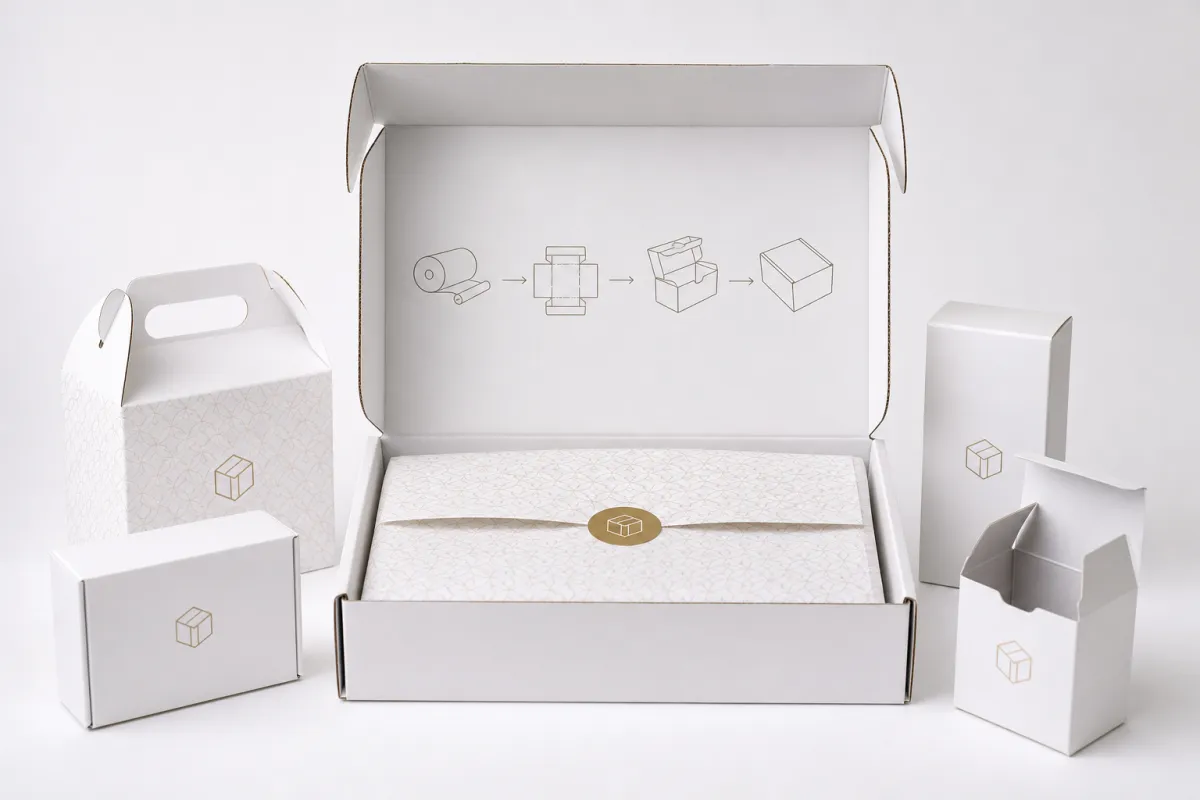
A custom folding box manufacturer handles the full stack of decisions that turns a flat sheet into a usable carton. That usually includes structure design, board selection, print method, finishing, die-cutting, folding, gluing, and flat-pack shipping. In practical terms, they are part engineer, part print shop, and part translator for the packaging chaos everyone else wants to ignore. If you only want someone to move artwork from a PDF to a press, you are missing half the value.
Structure comes first. A box for a 2 oz serum bottle is not the same as a box for a candle, a supplement jar, or a small electronics accessory. The manufacturer has to account for product dimensions, clearance, weight, shelf position, and how the box opens. A straight tuck end carton can work well for light retail items. A lock-bottom or auto-lock style may make more sense for heavier product packaging because it resists popping open during handling. A sleeve can look elegant, but it does less for protection. That is not a flaw. It is just the tradeoff.
Board choice is another place where the details matter. Folding cartons commonly use SBS, C1S, or C2S board in ranges like 16pt, 18pt, 20pt, and 24pt. A lighter cosmetic product might do well on 18pt SBS. A premium retail box may need 24pt for better stiffness and cleaner folds. A custom folding box manufacturer should explain those choices instead of tossing out a price and hoping you do not ask why the corners feel soft.
Print and finish matter too. Offset printing gives clean, high-resolution color for large runs. Digital printing is useful for shorter quantities or faster changes. Finishing options like matte aqueous coating, gloss varnish, soft-touch lamination, foil stamping, embossing, debossing, and spot UV all change the look and the cost. A good custom folding box manufacturer ties those choices to the actual job, not just to a sales brochure. Pretty is fine. Useful pays the bills.
There is also a real difference between a manufacturer, a converter, and a broker. A broker sells you the job and places it with someone else. A converter may handle part of production, but not always the whole chain. A true custom folding box manufacturer controls the run more directly, which usually means better visibility into quality, lead times, and material options. That control is worth money. Usually more than the lowest quote on a spreadsheet.
What should you expect from a serious partner? Clear dieline guidance, realistic tolerances, direct answers about print limits, and a willingness to say, "No, that structure will buckle." That kind of honesty is a very good sign. A weak answer is not.
I have seen a beautiful cosmetic carton pass every presentation slide and still crack along the fold because the score was too tight for the board caliper. It looked expensive right up until the first production test. Then it looked like a mistake. That kind of failure is boring to fix and expensive to ignore.
How a Custom Folding Box Manufacturer Process Works
The process is not mysterious, but it does have a rhythm. A strong custom folding box manufacturer usually moves through concept, dieline, prepress, sampling, approval, production, and shipment. Each step exists because skipping it costs money later. That is one of those boring truths packaging buyers learn the hard way.
1. Concept brief — You start with product dimensions, weight, quantity, retail or shipping use, branding goals, and budget. A useful brief also includes how the box will be packed, whether inserts are needed, and whether the product will sit on a shelf or ship in a mailer. If the brief is vague, the quote will be vague too.
2. Dieline development — The dieline is the box template. This is where panel sizes, folds, tuck flaps, glue areas, and structural allowances are set. A custom folding box manufacturer will usually adjust the dieline based on board thickness so the finished carton actually closes. That sounds obvious, yet people still send artwork before the structure is approved. Then everyone stares at copy sitting on a fold line and acts shocked. A classic avoidable mess.
3. Prepress review — This is where artwork is checked for bleed, safe zones, resolution, color space, overprint issues, and ink coverage. If the job uses spot colors, the manufacturer may request Pantone references. If it uses full color, the file should be built correctly for CMYK. At this stage, a custom folding box manufacturer is looking for hairline text, tiny reversed type, and logos that sit too close to a seam.
4. Sampling or prototype — For new structures or fragile products, a sample is worth the time. Sometimes that sample is a flat digital proof. Sometimes it is a white sample or a fully printed prototype. A sample tells you whether the box feels sturdy, whether the insert fits, and whether the closure behaves the way you expected. In plenty of cases, a sample is the difference between a clean launch and an expensive apology.
5. Production — Once approved, plates or digital files go to press, then the sheets are die-cut, stripped, folded, glued, and packed flat. The manufacturer should keep tolerances tight and inspect for print registration, color drift, glue accuracy, and scuffing. If the box is going into high-end retail packaging, this is where surface quality matters most. A box with beautiful color and ugly corners is still an ugly box.
6. Shipment — Most folding cartons ship flat, which saves space and freight cost. That is one reason brands like them. A custom folding box manufacturer should pack the cartons so they stay clean and do not pick up edge damage before they reach your facility.
Timeline reality is where the romance ends. A straightforward run with an existing structure can sometimes move in 10 to 15 business days after proof approval, depending on capacity and shipping. New structures, specialty coatings, inserts, and multiple proof rounds can stretch that to three to five weeks or more. If artwork is late, measurements are fuzzy, or approval gets stuck with a manager who is on vacation, the schedule drifts. It always does. The trick is not pretending otherwise.
For transit and distribution testing language, the International Safe Transit Association is a useful reference. For recycled fiber sourcing, the Forest Stewardship Council remains the standard many brands ask about.
Custom Folding Box Manufacturer Pricing: What Drives Cost
Pricing is where people start guessing. That usually ends badly. A custom folding box manufacturer prices work based on material, size, print coverage, finishing, quantity, and setup complexity. Two boxes can look nearly identical and still land in very different price bands because one uses simple one-color printing and the other has foil, soft-touch lamination, and a tighter structural spec.
The biggest driver is quantity. Low-volume orders cost more per unit because setup costs get spread across fewer cartons. That includes press setup, die creation, plate costs for offset work, and the time needed to dial in registration. A 500-piece run may be perfectly reasonable for a launch test, but it will almost always cost more per box than a 5,000-piece order. That is not greed. It is math.
Material matters next. Thicker board and premium coated stocks cost more, but they also offer better stiffness and a nicer print surface. A light retail sleeve might work on 16pt board. A sturdier cosmetics box may need 18pt or 24pt SBS. If your product is heavy or fragile, cheap board can become a bad joke. A custom folding box manufacturer will usually show you where the practical floor is before the box starts looking and feeling flimsy.
Print coverage changes the price too. Full-bleed artwork with heavy ink coverage, metallic elements, or multiple spot colors takes more setup and more control on press. White ink on dark stocks can also drive cost up, especially if multiple passes are needed. A clean two-color box can be far cheaper than a dense photographic package design, even if the outside size is identical.
Finishes are where budgets quietly explode. Matte aqueous is usually affordable. Gloss varnish is also relatively manageable. Soft-touch lamination, foil stamping, embossing, and spot UV each add setup and labor. Use them where they help the brand, not because they sound impressive in a meeting. A custom folding box manufacturer should be able to tell you whether the finish adds real shelf impact or just drains margin.
| Build Type | Typical Use | Common Specs | Approx. Unit Cost at 5,000 Units |
|---|---|---|---|
| Economy tuck carton | Lightweight retail items | 18pt SBS, 1-2 color print, aqueous coating | $0.18-$0.32 |
| Standard retail carton | Cosmetics, supplements, small accessories | 20pt-24pt SBS, full-color print, matte finish | $0.28-$0.55 |
| Premium shelf box | Fragrance, gift sets, luxury branded packaging | 24pt board, soft-touch lamination, foil or embossing | $0.62-$1.10 |
| Heavy-duty lock-bottom box | Heavier product or frequent handling | 24pt-28pt board, reinforced base, insert-ready | $0.55-$1.25 |
That table is not a quote. It is a reality check. Actual pricing shifts with quantity breaks, shipping method, special coatings, and whether your artwork is ready on time. A setup fee for plates, cutting dies, or tooling can land anywhere from roughly $150 to $800 or more depending on complexity. The fee is not the issue by itself. The issue is forgetting about it until the last minute and acting shocked when the total changes. Packaging does not care about your surprise.
There are also hidden cost traps. Oversized packaging wastes board and freight. Overcomplicated structures add make-ready time. Vague files create prepress revisions. A late change to the dieline can force a new proof cycle. If you are working with a custom folding box manufacturer, ask for a line-item quote so you can see what Affects the Total. That is the difference between buying with judgment and buying blind.
If you are deciding where to spend more, put money into the parts the customer sees and the parts the box has to survive. Spend on board quality, fit, and a finish that supports the brand. Save money by keeping the structure simple, trimming unnecessary spot effects, and ordering enough quantity to get a better rate. That is the sane middle ground.
Key Factors That Decide Box Performance
A nice-looking box that fails in use is not good packaging. Performance comes from the interplay between structure, board, finish, and end use. A strong custom folding box manufacturer will ask how the box travels, how often it is touched, and what the customer expects to feel when they open it. Those are practical questions, not fluff.
Structure is the first decision. Straight tuck end cartons are common for lightweight retail packaging and are efficient to assemble. Reverse tuck end boxes are often used for similar products and can help with tuck direction depending on the artwork layout. Auto-lock bottoms are useful when you need faster hand assembly and a more secure base. Lock-bottom designs are better for heavier items because they hold shape under load. Sleeves can elevate package branding, but they are not a substitute for protection.
Board thickness and caliper affect how stiff the carton feels and how cleanly it folds. A board that is too thin may warp, scuff, or crush at the corners. A board that is too thick may crack at the scores or create awkward closure tension. That is why the best custom folding box manufacturer talks about board choice in relation to your product, not in isolation. A 6 oz product and a 14 oz product do not want the same carton just because the size is close.
Print side matters too. C1S board gives a coated front for print and an uncoated back. C2S gives both sides a coated surface, which can improve print and interior appearance. SBS is a common choice for premium folding cartons because it gives a consistent, clean printing surface. If the inside of the box is visible during opening, that side needs attention too. Customers notice more than brands think they do.
Finishing changes both performance and perception. Matte finishes reduce glare and can make photography look more upscale. Gloss adds punch and color depth. Soft-touch feels luxurious but can show scuffs if the carton gets abused. Foil and embossing create shelf attention, yet they should support the design rather than shout over it. In package branding, restraint usually beats decorating every square inch like a birthday card.
Product weight and shipping method should drive the spec. A box that only sits on a shelf has a different job than a box that rides through e-commerce fulfillment. If the item is fragile, ask whether the carton should be paired with inserts, corrugated protection, or transit testing aligned to ASTM D4169 or similar standards. A custom folding box manufacturer that understands distribution testing can save you from the old "it worked in the sample room" excuse.
Assembly speed is another hidden factor. A fancy structure that takes 12 seconds to fold may be fine for a boutique run, but expensive on a high-volume line. Auto-lock and pre-glued cartons can save labor. On the other hand, they may increase the unit price. That tradeoff should be intentional. Nobody needs mystery labor costs.
One more practical note: if your brand wants sustainability claims, ask for board and coating details early. FSC-certified fiber, recyclable structures, and low-migration inks can all matter, but only if they are actually built into the spec. Good product packaging should match the claim, not just print the claim on the side.
Step-by-Step: Choosing the Right Manufacturer
The best way to choose a custom folding box manufacturer is to compare real specs, not sales language. A polished website is fine. It is not quality control. What you want is a supplier that can turn your brief into a manufacturable carton without making you babysit every detail.
- Write a clean packaging brief. Include product dimensions, weight, material sensitivity, quantity, target use, shipping method, finish preferences, and budget range. If you have a display requirement or shelf footprint, state that too. A custom folding box manufacturer cannot guess the things you forgot to mention.
- Ask for like-for-like quotes. If one supplier quotes 18pt SBS and another quotes 24pt with soft-touch, you are not comparing anything useful. Give each custom folding box manufacturer the same board, same dimensions, same finish, same quantity, and same delivery expectation.
- Check dieline support. Some suppliers help with structure development. Others expect you to supply a finished dieline. If your team does not have packaging design resources, choose a custom folding box manufacturer that can supply or verify the template.
- Review proofing carefully. Read the file notes. Check safe areas. Make sure barcode placement, legal copy, ingredient text, and logos land where they should. If the box needs inserts or special folds, approve those details before production. One tiny missed dimension can ruin a whole run.
- Ask about quality control. What does the factory check before shipping? Do they inspect glue, color, cut registration, and score quality? A reliable custom folding box manufacturer should have a process, not just hope and confidence.
- Compare responsiveness. Fast, clear communication usually beats a slightly lower unit price. Why? Because delays, revisions, and missed instructions cost more than a small price difference.
Here is the part people hate hearing: the lowest quote is not always the best value. Sometimes it is the right choice. Often it is not. If one custom folding box manufacturer is $0.07 cheaper per unit but ignores your board requirements, the savings can disappear the moment the boxes arrive too soft, too glossy, or just plain wrong.
Ask these three questions before you sign:
- Does the manufacturer understand the product load, shipping method, and shelf use?
- Can they show a sample or prototype before the run?
- Will they tell you when a spec is overbuilt or underbuilt?
That last one matters more than people admit. The best custom folding box manufacturer is not the one that says yes to everything. It is the one that pushes back when the spec is bad. That is how you avoid ugly surprises later.
If you are still comparing options, use Custom Packaging Products as a starting point and then narrow the field based on communication, capability, and proofing discipline. A supplier that can keep up with your timeline is useful. A supplier that can keep your box from failing is better.
Common Mistakes When Working With a Custom Folding Box Manufacturer
The same mistakes show up again and again. A custom folding box manufacturer sees them because packaging buyers tend to learn by pain, not by theory. The good news is that most of these errors are easy to avoid once you know where the traps are.
Quoting from rough dimensions is a classic mistake. Product dimensions alone are not enough. You need clearance for insertion, tolerance for manufacturing variance, and room for the closure to work. If the carton is sized exactly to the product on paper, it may be too tight in production. That is how you get crushed corners and irritated fulfillment teams.
Sending print-ready art too early is another one. The structure has to be approved first. Otherwise, the text might land on a fold, the barcode might wrap too close to a seam, or the logo might end up on the glue flap. A custom folding box manufacturer should be able to flag those issues, but only if the workflow is respected.
Choosing the cheapest spec can backfire fast. Thin board may lower the unit price, but if the box bends during shipping or feels weak on shelf, the brand pays the price in perception. Packaging is one of the few places where the customer touches your quality claim before they read a single word. That touch matters.
Skipping samples is where people get cocky. A proof is not a sample. A file on screen is not a sample. Real cardboard, real folds, real dimensions tell you things you cannot see in a PDF. A sample is especially important if the product is fragile, if the finish is unusual, or if the launch has no room for error. A competent custom folding box manufacturer will encourage sampling when it makes sense.
Underestimating lead time causes its own mess. Artwork revisions, approval loops, press scheduling, coating changes, and freight all take time. If the boxes support a product launch, assume you need a buffer. If you think the schedule is comfortable, add more buffer. That is not pessimism. That is experience.
Leaving pack-out details vague also causes trouble. Does the box need to fit an insert? Will it ship in master cartons of 100 or 250? Will it be hand-packed or machine-packed? The answers affect the spec. A custom folding box manufacturer that knows the pack-out method can make the design less annoying to use.
If the quote looks too easy, it usually means somebody missed a detail.
The fix is simple, if not always fashionable: confirm material, finish, dimensions, quantity, shipping method, and approval owner before production starts. A good custom folding box manufacturer will thank you for that. So will your budget.
Expert Tips and Next Steps Before You Order
If you want a cleaner buying process, start with a checklist. A custom folding box manufacturer can move faster and more accurately when you hand over complete information. The goal is not to create more paperwork. The goal is to stop the same file from bouncing between teams three times because one dimension was missing.
Use this pre-order checklist:
- Product dimensions with tolerances
- Product weight and fragility level
- Desired quantity and reorder expectation
- Board preference or required strength
- Print method, color count, and finish ideas
- Shipping method and storage conditions
- Branding goals, shelf use, and unboxing expectations
- Approval contacts with one clear decision maker
Ask for a sample or prototype if the structure is new, the product is fragile, or the finish has to land precisely. This is especially true for premium retail packaging, where a small mismatch can make the whole thing feel off. A custom folding box manufacturer should not act offended by sampling. If they do, that is useful information.
Build timeline buffer into the plan. Not because everyone is slow, but because supply chains are real and approvals are not always prompt. Add time for artwork correction, dieline revisions, shipping transit, and seasonal demand. If you are ordering close to launch, the schedule should be conservative. Optimism is not a production plan.
Compare value, not just price. That means looking at communication speed, consistency, sample quality, and whether the supplier actually solves problems or just forwards emails. A responsive custom folding box manufacturer saves you time. A precise one saves you money. The best one saves both.
One practical move: request side-by-side quotes using the same brief, then compare them on board grade, finish, setup fees, lead time, and sample policy. If one supplier looks cheaper, check whether the spec is actually the same. It often is not. A lower quote can hide a lighter board, less finish, or weaker proof support.
For brands building custom printed boxes around a product launch, the safest path is simple: gather the product data, get a dieline, request sample approval, and lock the final spec before production. That is how a custom folding box manufacturer becomes a useful partner instead of a source of surprises. And surprises are fun only if they are birthday cakes.
My blunt recommendation: do not place an order until you have a confirmed dieline, a material spec you can repeat, and one sample you have physically inspected. If a supplier cannot stay steady on those three things, keep looking. It saves a lot of drama later.
FAQ
What should I ask a custom folding box manufacturer before getting a quote?
Ask what board grades, print methods, and finishes they can support for your product size and quantity. Confirm minimum order quantity, whether dieline support is included, and if sample options are available. Also ask for estimated lead times for sampling, production, and shipping so you can plan inventory without guesswork. A good custom folding box manufacturer should answer those questions plainly.
How much does a custom folding box manufacturer usually charge per box?
Pricing depends on size, board, print coverage, finish, and quantity. Small runs usually cost more per unit because setup costs are spread across fewer pieces, while larger runs lower the per-box price. Premium finishes like foil, embossing, or soft-touch lamination can raise the unit price quickly, so ask for line-item pricing before you assume the quote is simple.
How long does a custom folding box manufacturer need from approval to delivery?
Simple jobs may move in a few weeks, while custom structures and specialty finishes take longer. Sampling, artwork revisions, and freight can add time even when production runs efficiently. If the boxes support a launch or seasonal demand, build in buffer time. A reliable custom folding box manufacturer will give you a schedule that reflects reality, not wishful thinking.
What files does a custom folding box manufacturer need for production?
Most suppliers need a dieline, print-ready artwork, and clear product dimensions with tolerances. Fonts should be outlined or embedded, images should be high resolution, and any special folds or inserts should be called out before final approval. If you are not sure whether the file is production-ready, ask the manufacturer to review it before you send final sign-off.
Is a custom folding box manufacturer different from a folding carton supplier?
Sometimes the terms overlap, but a manufacturer usually controls production while a supplier may only resell the job. A true custom folding box manufacturer is more likely to handle dielines, sampling, quality control, and material guidance directly. If you need exact specs, repeatable quality, and fewer surprises, ask who actually runs the press and converts the carton. That detail matters more than the sales title.

