Buyer Fit Snapshot
| Best fit | Custom Branded Paper Tote Bags for Sustainable Brands projects where brand print, material claims, artwork control, MOQ, and repeat-order consistency need to be specified before quoting. |
|---|---|
| Quote inputs | Share finished size, material target, print colors, finish, packing count, annual reorder estimate, ship-to region, and any compliance wording. |
| Proofing check | Approve dieline scale, logo placement, barcode or warning zones, color tolerance, closure strength, and carton packing before bulk production. |
| Main risk | Vague material claims, crowded artwork, missing packing details, or unclear freight terms can make a low unit price expensive after revisions. |
Fast answer: Custom Branded Paper Tote Bags for Sustainable Brands should be specified like a repeatable production item. The safest quote records material, print method, finish, artwork proof, packing count, and reorder notes in one written spec.
Production checks before approval
Compare the actual filled-product size with the drawing, then confirm tolerance on folds, seals, hang holes, label areas, and retail display edges. Reserve space for logos, QR codes, warning copy, and material claims before decorative graphics fill the panel.
Quote comparison points
Review material grade, print process, finish, sampling route, tooling charges, carton quantity, and freight assumptions side by side. A quote is only useful when the supplier can repeat the same color, closure quality, and packing count on the next order.
A paper tote can keep working long after the purchase that introduced it. That is the quiet strength of custom branded paper tote bags: they move through stores, offices, sidewalks, cars, and gift tables after the sale is finished, carrying a brand into places ordinary packaging never reaches. When packaging needs to do more than hold product for a few minutes, that longer life matters a lot.
Buyers often land on custom branded paper tote bags because they sit in a useful middle ground. They feel cleaner than plastic, look more polished than a plain carrier, and can be tailored for retail packaging, event giveaways, hospitality takeaways, or premium gifting. The bag supports package branding without shouting over the product, which is usually the mark of good packaging design.
The real question is not whether the bag photographs well. It is whether the paper, handle, print method, and structure still hold together after the bag is loaded, carried, set down, and reused. I have seen plenty of mockups that looked lovely on screen and then fell apart in the hand because the construction was underspecified. That is the difference between packaging that merely exists and custom branded paper tote bags that keep earning their place.
For brands comparing options, it helps to keep the conversation grounded in how the bag will actually be used. Paper can be a smart fit when the goal is lower plastic use, easier recycling where local systems allow it, and a more natural brand presentation. The exact result still depends on the paper stock, any coatings or lamination, the handle material, and the weight of the contents. If you want a broader view of formats, our Custom Packaging Products page is a useful place to compare structures, while our Case Studies show how different product packaging choices hold up in the field.
What Custom Branded Paper Tote Bags Are and Why They Matter
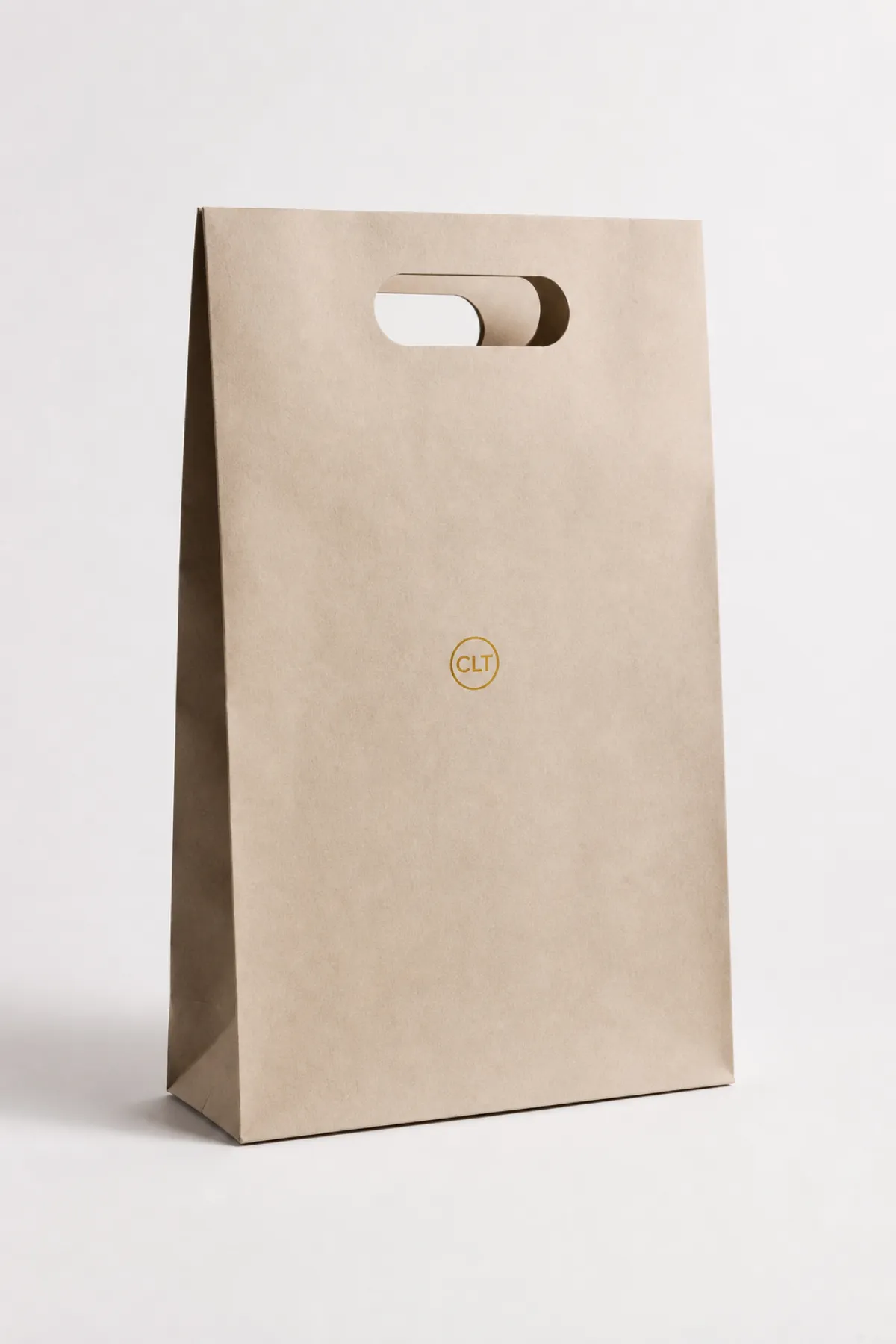
Custom branded paper tote bags are paper carry bags customized with a logo, brand message, color system, or finishing detail. They show up in retail stores, at events, in corporate gifting programs, and in takeaway packaging. The value is not limited to transport. A well-made tote becomes part of the product story, and sometimes part of the customer’s daily routine long after the original item is unpacked.
That longer life is what surprises many first-time buyers. A customer may carry a purchase home, then use the same bag later for lunch, paperwork, samples, or another quick run into town. In that sense, custom branded paper tote bags can keep advertising without feeling like advertising. The brand impression travels through stores, parking lots, lobbies, and social settings, which is a real advantage for companies investing in branded packaging.
The sustainability question deserves a straight answer. Paper is often a strong fit when a brand wants to reduce plastic use and work with recyclable materials, but recyclability is not automatic. Inks, coatings, metallic effects, and laminated finishes can change how a bag behaves in local recycling streams. FSC-certified paper can be a good choice when chain-of-custody sourcing matters, and the FSC system remains one of the best-known references for responsible forest management.
Many buyers make the category harder than it needs to be. The better question is not whether custom branded paper tote bags are "sustainable" in the abstract. The more useful question is whether the bag matches the product load, the brand image, and the disposal path available to the customer. When those three points line up, the packaging tends to justify itself.
Brands choose custom branded paper tote bags for several practical reasons:
- They create a polished handoff moment at retail or events.
- They support premium perception better than a generic carrier bag.
- They can work for apparel, beauty, specialty food, gifts, and small boxed goods.
- They turn every customer into a moving brand impression.
There is also a branding benefit that matters in the real world. Compared with many forms of product packaging, the tote is visible in public. That visibility is why logo placement, typography, color contrast, and finish all deserve attention. A bag that looks strong in the design file but weak at arm’s length will not do the job. Good custom branded paper tote bags feel intentional in the hand and unmistakable in the crowd.
How Custom Branded Paper Tote Bags Are Built
Most custom branded paper tote bags begin as a paper sheet that is cut, folded, glued, and reinforced into a carry structure. The process sounds simple, yet the build determines whether the bag feels crisp and dependable or flimsy and forgettable. Bottom style, side gussets, top fold, and handle attachment all affect how much weight the bag can carry and how it behaves once loaded.
At the base, a bag may use a flat bottom, a square gusset, or a reinforced insert. A flat bottom works well for light retail items and brochures. A deeper gusset allows the bag to expand for apparel boxes, jars, or gift bundles. Reinforced bottoms are worth considering when the contents are dense or likely to shift during transport. For custom branded paper tote bags, structure is not a hidden detail; it is part of the value.
Paper stock is usually the first major decision. Kraft paper brings a natural, earthy look that pairs well with eco-forward branding and minimal printing. Coated or smoother stocks hold sharper artwork and finer detail, which helps when the design relies on tight typography or rich color fields. Heavier board-style papers can create a more premium feel, especially for upscale retail packaging or gift packaging. In many programs, paper weights fall somewhere around 120 gsm to 250 gsm for the bag body, though the right number depends on the design and load.
Handle style changes both appearance and performance. Twisted paper handles are common and economical, with a clean look that suits mass retail. Flat tape handles feel sturdy and are comfortable for many shoppers. Rope handles, often cotton or polypropylene, raise the perceived value and can handle heavier carry loads. Ribbon-style handles lean decorative and work better for presentation than heavy carry. In custom branded paper tote bags, the handle is not just a finishing touch; it affects comfort, durability, and how the bag reads from across a room.
Common decoration methods
Print method matters because it changes what the artwork can do. Flexographic printing is efficient for simpler graphics and repeat runs. Offset printing supports finer detail and tighter color control, which is useful for packaging design that depends on exact brand shades. Hot foil can add metallic contrast. Embossing or debossing gives a tactile effect that many premium brands like. Spot varnish can lift specific elements without coating the entire surface. The point is not to use every finish available. The point is to choose the one that supports the design intent of the custom branded paper tote bags.
Glue points and fold lines deserve attention too. A bag can look elegant and still fail if the handle area is not reinforced properly. That is especially true for bottles, boxed goods, or mixed purchase orders where one tote may need to carry several items. If you are comparing structures for product packaging and retail packaging, ask how the bag is assembled, not just how it is printed.
A good tote bag is quiet engineering. If the customer forgets to think about the construction while carrying it, the design team probably did something right.
For a closer look at how structural decisions affect different formats, see how related Custom Packaging Products are specified for carry strength, print clarity, and brand presentation. Those same thinking points apply directly to custom branded paper tote bags.
Cost, Pricing, and MOQ for Custom Branded Paper Tote Bags
Pricing for custom branded paper tote bags usually comes down to a handful of factors: bag size, paper weight, print coverage, number of colors, handle type, finishing effects, and any reinforcements added for durability. If a quote seems much lower than the others, ask what was removed to get there. In packaging, price and specification are almost always tied together.
MOQ, or minimum order quantity, exists because the setup work is real. Plates, die cutting, machine calibration, material staging, and assembly all take time before the first finished bag rolls off the line. For custom branded paper tote bags, MOQs often start around 1,000 to 3,000 pieces for simpler runs, and they can go higher for specialty constructions or more complex decoration. That does not mean small brands are locked out; it simply means the economics of setup need to be shared across enough units.
Unit cost usually falls as quantity rises. A small run might land in a range such as $0.70 to $1.40 per bag depending on size and finish, while a larger run may move down to roughly $0.18 to $0.45 per bag for simpler builds. Premium rope handles, foil, embossing, thick board, or full-coverage print can push pricing higher even at scale. Those numbers are directional, but they help a buyer judge whether the quote is in the expected zone. I always tell people to treat ranges as a starting point, not a promise, because paper supply, freight, and finishing choices can nudge the number around.
Here is the simplest way to think about it. If the tote is supporting a low-margin giveaway, a lean build may be enough. If the tote is carrying premium retail goods or a gift set, a stronger build can protect the product and improve the customer’s impression of the entire order. That is why custom branded paper tote bags should be priced against the use case, not just against the cheapest available supplier.
| Option | Typical Build | Best For | Approximate Unit Range | Notes |
|---|---|---|---|---|
| Economy kraft tote | Light-to-mid paper weight, twisted paper handle, one-color print | Events, light retail items, brochures | $0.18-$0.40 | Good for volume, modest presentation |
| Retail premium tote | Heavier paper, flat or rope handle, full-color print | Apparel, specialty retail, gifting | $0.35-$0.85 | Balanced choice for most custom branded paper tote bags |
| Luxury presentation tote | Thick board, foil or embossing, reinforced handle area | High-end gifting, launch kits, boutique packaging | $0.75-$1.50+ | Strong visual impact, higher setup cost |
When you request a quote, a good supplier will ask for dimensions, artwork readiness, quantity, number of print locations, handle preference, delivery destination, and the item being carried. Those details separate a decent estimate from a useful one. For custom branded paper tote bags, even one small change, such as moving from a paper handle to a cotton rope handle, can shift both cost and appearance in a meaningful way.
My advice is simple: ask for two versions. Request a value-driven quote and a premium quote using the same artwork. That makes the tradeoff visible. Sometimes the more expensive build is the right choice because it protects the merchandise, supports the brand, and avoids the disappointment of a weak-looking handoff. Other times, a lighter build is enough and keeps the budget where it needs to be.
Production Steps, Timeline, and Lead Time Basics
The production path for custom branded paper tote bags usually starts with the brief. Someone defines the size, intended contents, quantity, artwork, and budget. Then comes artwork review, proofing, material sourcing, printing, converting, assembly, packing, and shipment. The machine run may be only one part of the schedule; approval work often takes longer than expected.
Proofing is where many timelines either stay clean or drift. A digital proof confirms layout, but it cannot fully show paper texture, handle feel, or the way ink sits on a natural kraft surface. A physical sample goes further and is often worth the extra time if the project has strict branding or structural requirements. With custom branded paper tote bags, one round of corrections early is better than a rush fix later. I have watched projects lose days because a team waited until the final hour to check handle placement or side-panel text. That kind of delay is avoidable if someone keeps an eye on the details from the start.
Lead time depends on material availability, print complexity, and finishing method. Simple custom branded paper tote bags can often move in roughly 12 to 15 business days after proof approval, while more complex bags may need 18 to 25 business days or more. If the order uses specialty paper, foil, embossing, or unusual handle materials, allow extra time. Freight should also be part of the schedule, especially if the bags are traveling across regions or internationally.
Brands planning a store opening, holiday promotion, launch event, or trade show should work backward from the delivery date and add buffer time for artwork revisions and transit. A lot of packaging headaches come from treating lead time like a suggestion rather than a real production window. For custom branded paper tote bags, schedule discipline matters as much as print quality.
There is also a quality-control angle. Some buyers ask about ISTA-style transit concerns for packed goods, which is smart thinking even if the bag itself is not undergoing formal package testing. If the tote will carry fragile merchandise, the packaging team should think about how the bag, insert, and contents move together. Product packaging is not only about the outer surface; it is about what happens during handling, stacking, and delivery.
To see how timing and presentation affect different orders, browse the project examples in our Case Studies section. The same lesson shows up repeatedly: the best custom branded paper tote bags are the ones that fit the event date, the product weight, and the brand story at the same time.
Key Design and Material Factors That Change the Result
Bag size should follow the product, not the other way around. Too small, and the contents crush the top edge or force the bag to bow awkwardly. Too large, and the package feels loose, wasteful, and less premium. For custom branded paper tote bags, size should let the product sit comfortably with a little headroom while still looking intentional when handed to the customer.
Paper weight and feel change the entire impression. A lighter stock can work beautifully for apparel, brochures, or low-density giveaways. A heavier stock makes more sense for boxed goods, candles, bottles, and premium gifting. If the bag needs to survive repeated reuse, a stronger paper and better reinforcement are usually worth the extra cost. That is a judgment call, not a fixed rule, which is why good suppliers ask about the actual load.
Brand consistency matters just as much as construction. Logo placement should be visible from a normal carrying distance. Ink color should contrast with the paper rather than disappear into it. Minimalist branding can look sophisticated on kraft, while a bold, high-contrast mark may perform better on white or coated stock. The artwork should reflect whether the brand wants to feel playful, refined, sustainable, or luxurious. In custom branded paper tote bags, design and material need to speak the same language.
Finish choices also change the story. A matte surface feels more natural and often pairs well with eco-forward messaging. Soft-touch lamination can feel upscale, though it may affect recyclability depending on the build. Spot foil or embossing can create a high-end effect for product packaging or gift packaging, yet those details only work if they support the brand rather than distract from it. A little restraint usually goes a long way here.
Practical sustainability checks
If sustainability is a priority, ask about recycled content, FSC sourcing where available, and whether the finish can stay within your recycling goals. The EPA has useful public guidance on recycling basics at EPA recycling resources, which gives helpful context when a brand wants to understand how material choice affects disposal behavior. Not every paper tote is equally recyclable, so the exact build matters more than the label.
Handling performance deserves one more look. A customer does not evaluate the bag in a vacuum; they carry it in the rain, set it down on a seat, or reuse it for another purchase. Grip comfort, tear resistance, and bottom stability all matter in the real world. That is why custom branded paper tote bags should be judged as working packaging, not just as a graphic surface.
For brands that need a broader view of retail packaging formats, compare how paper totes sit alongside Custom Printed Boxes and other branded packaging options. The right choice depends on what the customer is carrying, how the brand wants to be perceived, and how much handling abuse the package must survive.
Common Mistakes to Avoid Before You Place an Order
The most common mistake is choosing a bag based only on price. Cheap custom branded paper tote bags can look acceptable in a mockup and still fail in the hand because the handle pulls, the bottom sags, or the print loses clarity on the chosen paper. Replacements and reprints erase savings quickly, so the lowest quote is not automatically the best value.
Another frequent problem is under-specifying the size. A tote that is too small can pinch the product and stress the seams. A tote that is too big can make the contents rattle around and create a less polished presentation. The goal is fit, not just capacity. In retail packaging, a well-sized bag feels deliberate, and deliberate packaging usually feels more expensive than it really is.
Artwork approval is another place where teams slip. Logo placement should be checked at arm’s length, not only on a monitor. On kraft stock, low-contrast colors can disappear. Fine typography may need to be slightly larger than the brand guideline suggests. Bleed, safe zone, and side panel alignment all matter, especially for custom branded paper tote bags with multi-panel print layouts.
Do not ignore the handle attachment or bottom reinforcement. Those two points carry most of the real stress. If the tote is intended for heavier items, the handle should be bonded and reinforced in a way that fits the load. A beautiful bag that tears at the top after one use is poor packaging, plain and simple. That is true whether the bag is used in retail, hospitality, or promotional settings.
Lead time mistakes are expensive too. Teams often approve artwork too late, forget to include transit time, or assume a special finish will move at the same pace as a basic bag. Then a launch date arrives before the shipment does. Build the schedule backward, leave room for revisions, and keep freight in the plan. Custom branded paper tote bags are usually easier to manage when production is treated like a calendar task, not a guess.
A few more practical checks can save trouble:
- Confirm the actual item weight and dimensions before choosing the structure.
- Ask whether the paper stock has recycled content or FSC sourcing if that matters to your brand.
- Review the print method against the artwork detail level.
- Ask for a sample if the bag will carry premium merchandise.
Those small steps are often the difference between a packaging order that fits the brand and one that creates avoidable problems. Custom branded paper tote bags should make the sale feel complete, not add another issue to solve.
Expert Tips and Next Steps for Ordering Custom Branded Paper Tote Bags
Start with a short spec sheet. Include intended use, product weight, desired size, artwork files, quantity target, and any sustainability requirements. That one document keeps the conversation focused and helps a supplier recommend the right construction instead of guessing. For custom branded paper tote bags, clear input usually leads to cleaner output.
Request at least two quotes if possible: one value-driven and one premium. Compare them on the same terms so the differences are easy to see. A slightly higher price may buy better handles, thicker paper, or a finish that supports the brand story in a way the lower-cost option cannot. The right answer depends on whether your priority is appearance, strength, or budget balance.
Order samples or a physical mockup when the project is important. Touch, handle comfort, paper texture, and logo visibility are easier to judge in hand than on a screen. That matters a lot for custom branded paper tote bags because the customer experiences the bag physically, not digitally. If the bag feels wrong, the brand impression changes with it.
Before approval, run a simple checklist:
- Dimensions match the product.
- Paper stock fits the load and brand style.
- Handle type is comfortable and strong enough.
- Print colors match the artwork intent.
- Finish supports the desired look and disposal goal.
- Quantity, delivery date, and freight plan are confirmed.
- There is time for one revision if needed.
That checklist sounds basic, but basic is often where packaging succeeds or fails. I have seen many orders go smoothly simply because the buyer treated the bag as a packaging system rather than a decoration. That mindset is especially useful for custom branded paper tote bags, where the construction, branding, and timing all have to work together.
If you are planning a product launch, seasonal promotion, store opening, or gift program, work backward from the needed date and set a buffer. Then choose the bag that matches both the brand story and the daily use case. That is the cleanest way to move from concept to production with custom branded paper tote bags that actually perform.
For a broader packaging conversation beyond totes, our Custom Packaging Products page can help you compare retail packaging formats before you commit. For many brands, the answer is not just one bag; it is a package branding system that feels consistent across the whole customer experience. Done well, custom branded paper tote bags become a steady part of that system, not a one-off accessory.
Frequently Asked Questions
What are custom branded paper tote bags best used for?
They work well for retail purchases, gifts, trade shows, hospitality takeaways, and any setting where the bag itself becomes part of the brand experience. They are especially useful when presentation matters and the packaging needs to feel more premium than a plain carrier bag. They also help brands reduce reliance on plastic while keeping a polished, reusable look.
What size should I choose for custom branded paper tote bags?
The best size usually depends on the product dimensions, the number of items inside, and how much headroom the bag needs to close cleanly. A good tote should fit the contents without bulging at the seams or leaving so much space that the product shifts around. If you are unsure, ask for one size that fits the main item and a second option for bundled or gift-style packing.
Which handle style is most practical?
Twisted paper handles are common for economy runs, flat handles often work well for standard retail use, and rope handles are usually chosen when the bag needs a more premium look or extra carrying comfort. The right choice depends on load weight, brand style, and how long the customer is likely to reuse the bag. If the contents are heavier, reinforced rope or taped handles are often the safer option.
How much do custom branded paper tote bags usually cost?
Pricing depends on size, paper weight, print complexity, handle style, finishing, and order quantity. Larger runs usually lower the unit cost, while specialty printing or heavier construction raises the price. The most accurate way to compare costs is to ask for a quote with the same artwork across two or three material options.
What paper weight is best for custom branded paper tote bags?
Lighter stocks are fine for apparel, brochures, and lightweight retail items, while heavier stocks are better for boxed goods or premium gifting. If the contents are dense or awkwardly shaped, choose a sturdier paper and reinforced handles to reduce tearing. The right weight is the one that matches the product load without making the bag unnecessarily bulky or expensive.
How long does it take to produce custom branded paper tote bags?
Timeline depends on artwork approval, material availability, print method, quantity, and shipping distance. Simple orders can move faster, but custom finishes, revisions, or special materials can add time. It is best to build in buffer time before a launch, event, or seasonal promotion so approval delays do not disrupt the schedule.
Are custom branded paper tote bags recyclable and reusable?
Often yes, but recyclability depends on the exact paper, inks, coatings, lamination, and handle materials used. Many paper totes are also reused several times before disposal, which increases their practical value as packaging. Ask about material composition and local recycling guidance if recyclability is a top requirement for your brand.
For brands that want packaging to carry the message as well as the merchandise, custom branded paper tote bags remain a practical and visible choice. Choose the Right paper, the right handle, the right print method, and the right lead time, and the bag will do more than hold product; it will keep representing the brand long after the transaction is complete. The actionable takeaway is simple: define the load first, then match the structure to it, because that is how custom branded paper tote bags end up looking good and working hard at the same time.

