Buyer Fit Snapshot
| Best fit | Custom Branded Zip Pouches projects where brand print, material claims, artwork control, MOQ, and repeat-order consistency need to be specified before quoting. |
|---|---|
| Quote inputs | Share finished size, material target, print colors, finish, packing count, annual reorder estimate, ship-to region, and any compliance wording. |
| Proofing check | Approve dieline scale, logo placement, barcode or warning zones, color tolerance, closure strength, and carton packing before bulk production. |
| Main risk | Vague material claims, crowded artwork, missing packing details, or unclear freight terms can make a low unit price expensive after revisions. |
Fast answer: Custom Branded Zip Pouches: Film, Print, MOQ, and Carton Packing should be specified like a repeatable production item. The safest quote records material, print method, finish, artwork proof, packing count, and reorder notes in one written spec.
Production checks before approval
Compare the actual filled-product size with the drawing, then confirm tolerance on folds, seals, hang holes, label areas, and retail display edges. Reserve space for logos, QR codes, warning copy, and material claims before decorative graphics fill the panel.
Quote comparison points
Review material grade, print process, finish, sampling route, tooling charges, carton quantity, and freight assumptions side by side. A quote is only useful when the supplier can repeat the same color, closure quality, and packing count on the next order.
Custom Branded Zip Pouches: What to Know Before Ordering
Custom branded zip pouches have a funny habit of changing the way people judge a product before they have even opened it. A plain pouch can hold the contents just fine, but it rarely tells a convincing story. Put the same item into custom branded zip pouches with the right film, zipper, and print setup, and it starts to feel deliberate, polished, and easier to trust. That shift matters in retail, in ecommerce, and in any channel where packaging has to do a little quiet persuasion before the sale happens.
The work here is not decoration for its own sake. Good custom branded zip pouches protect the product, support repeat use, and raise the perceived value of the item inside. They can also simplify the rest of the packaging system by reducing the need for extra branded layers, oversized cartons, or filler graphics that try too hard to compensate for a weak primary pack. When the pouch carries the right mix of function and presentation, the whole line usually feels more considered and often costs less to build around.
That said, ordering custom branded zip pouches gets complicated quickly once the conversation moves from looks to specifications. Material structures, closure styles, print methods, barrier levels, and minimum order quantities all affect what you get and what you pay. If you are evaluating custom branded zip pouches for food, supplements, cosmetics, pet goods, or general retail packaging, the same questions keep showing up: what does the pouch need to do, how much volume makes sense, and where do the hidden costs live?
Custom Branded Zip Pouches: why they outperform plain bags
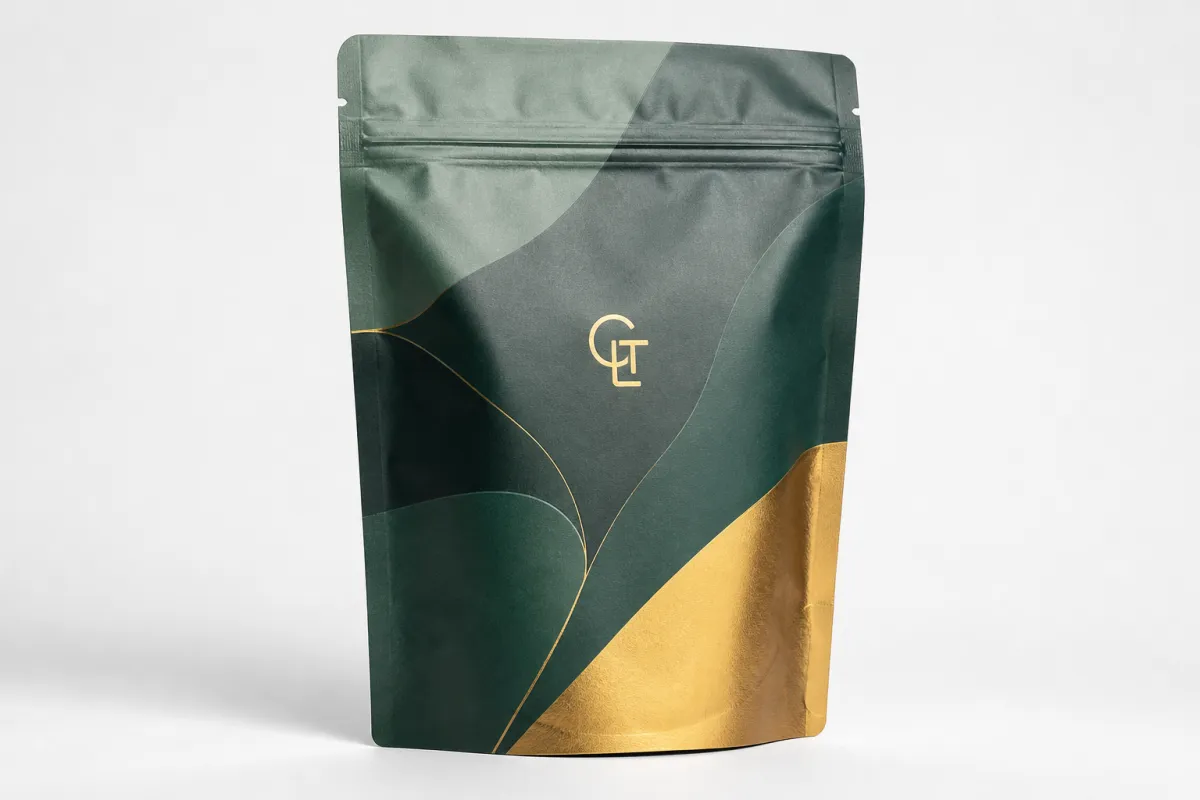
Plain packaging puts more pressure on the product to carry the brand on its own. That can work for some internal uses, but it usually falls flat once the item has to compete on a shelf or in a crowded product grid. A decent formula in a blank pouch still reads as generic. The same formula in custom branded zip pouches looks like a finished product, something that belongs in a real catalog rather than an afterthought pile. That difference affects first impressions, repeat orders, and the amount of explanation a buyer needs before deciding to purchase.
The zipper matters more than people expect. A resealable closure gives customers a reason to keep the pouch around, and that means the brand stays visible after the first opening. It also adds practical value through freshness, storage, and convenience. Dry snacks, coffee, supplements, pet treats, bath salts, and refill goods all benefit from that kind of reuse. For some categories, the zipper is not a nice detail. It is part of the product promise.
Custom branded zip pouches also make the broader packaging system easier to manage. When the pouch does a strong job on shelf presence and brand communication, the outer shipper can stay simpler, the secondary packaging can stay cleaner, and the design budget does not need to be spread across unnecessary layers. That usually creates room for savings elsewhere, which is welcome in packaging programs that often spend too much trying to look premium in too many places at once.
From the buyer side, the difference is usually obvious after handling a few samples. Stock bags are fine for quick tests or low-stakes internal use. Once the product is facing a customer, custom branded zip pouches tend to win because they do more than contain the contents. They help protect the product, shape the brand impression, and make the item feel complete.
In packaging reviews I have done over the years, the same product in a blank pouch and in a well-built branded pouch can draw very different reactions from the same buyer group. The product did not change. The perceived quality did. That is why packaging choices can feel a bit unfair, but they are still real.
A pouch that looks premium but fails to protect the product is not premium. It is just costly regret with a zipper.
If you want to see how that thinking carries into a wider packaging program, our Case Studies show how structure, print choice, and finishing details affect the result. The same logic shows up across Custom Packaging Products, from cartons and labels to flexible formats built for retail and shipping.
The strongest custom branded zip pouches are not always the flashiest in a sample kit. They are the ones that fit the product, the filling line, the shipping environment, and the planned order volume without creating extra problems later. That is the part buyers sometimes miss because the shiny sample feels finished before the spec sheet has had its say.
How custom branded zip pouches work: process and timeline
The production path looks simple on paper. In practice, it stretches wherever decisions stay vague. Custom branded zip pouches usually move through a sequence of brief, dieline, artwork setup, quote confirmation, proofing, sample approval, print production, lamination, converting, zipper insertion, quality checks, and shipment. Each step is manageable. Each step can also add days if the spec keeps changing after the conversation has started.
The first discussion should focus on the product, not the graphics. Before anyone starts laying out custom branded zip pouches, define fill weight, density, shelf life, handling, and storage conditions. A 150g snack mix does not behave like a 250g protein powder. Roasted coffee asks for different protection than a bath soak. That sounds obvious, yet a lot of packaging trouble starts when someone chooses a pretty sample first and asks about function later.
Buyers often blur the difference between a digital sample, a pre-production proof, and a finished production run. A digital sample is mainly a visual reference. A pre-production proof gets closer to the real item, but it still may not capture every production variable. The full run is the only thing that confirms the final result, which is why the important details need to be settled before the order moves forward. Custom branded zip pouches do not reward casual guessing.
Lead time tends to stretch in a few predictable places: artwork revisions, material sourcing, print setup, and special finishing. A custom window, soft-touch coating, metallic ink, matte varnish, child-resistant closure, or nonstandard zipper usually adds time. Simple digital-print custom branded zip pouches may be ready in about 10-15 business days after proof approval. More involved builds often land in the 3-6 week range, especially when the supplier has to source a specific barrier film or zipper configuration.
For food, supplements, and cosmetics, the compliance questions matter too. Buyers should ask about seal strength, shelf-life assumptions, and any testing used to check transit performance. If the order is going into ecommerce, the pouch and outer pack should be considered for drop and vibration exposure, not just static shelf display. The test methods published by ISTA are a useful benchmark for that side of the work. I am not giving legal or regulatory advice here, though; if your product is controlled or has strict labeling rules, the spec should be checked by the right compliance team before the run starts.
Custom branded zip pouches also change by category. Food often needs moisture and aroma protection. Supplements may need light protection and tamper-evident features. Cosmetics can care more about appearance, feel, and leak resistance. Non-food retail products often lean harder on presentation and durability. Same pouch family, different priorities. That is why generic packaging advice tends to miss the mark.
If the supplier already stocks the film and zipper style, the order can move faster. If not, the project may wait on sourcing, testing, or line setup. That does not mean the supplier is dragging its feet. It means the pouch is actually custom, which is the whole point of the exercise.
Materials, barrier levels, and design choices that matter
Materials are where a lot of buyers overspend, underperform, or do both at once. A pouch can look expensive and still be wrong for the product. It can also be technically sound and look flat on the shelf. Custom branded zip pouches work best when the structure and the design language support the same job instead of fighting each other.
Core material choices
The usual starting points include clear films, matte or gloss laminates, kraft-look finishes, foil structures, and mono-material or recyclable-oriented options. Clear windows help customers see the contents, which works well for retail packaging and for food items with visual appeal. Kraft-look films can suggest a natural or handcrafted position, though they are often printed laminates rather than plain paper. Foil structures help with barrier performance and create a more premium feel, especially when light or aroma protection matters.
If sustainability is part of the brief, ask about the actual structure instead of stopping at the marketing label. Recyclable claims can get messy fast, and a vague promise is worse than none at all. FSC certification may apply to paper components in some builds, but many custom branded zip pouches rely mainly on film structures rather than paper. Honest language helps far more than polished adjectives when the packaging has to withstand real use.
For a broader look at packaging material behavior and terminology, the resources at packaging.org are useful because they separate practical structure decisions from buzzwords. That helps when you are comparing branded packaging options that all look similar in a sample kit but behave very differently in production.
Barrier basics
Barrier is not a fancy term. It simply describes how well the pouch keeps out the things that damage product quality. Moisture barrier matters for powders, snacks, and anything that clumps. Oxygen barrier matters for coffee, nuts, oils, and certain supplements. Light barrier matters for products that degrade or discolor. Aroma barrier matters when scent retention is part of the experience or when outside odors would hurt the product.
A common mistake is asking for a “premium” material when what the product actually needs is better barrier performance. Those are not the same thing. Custom branded zip pouches can look high-end with moderate barrier, or look modest while performing extremely well. The right answer depends on the product, the storage conditions, and the shelf life target, not the mood board.
Closures and structure details
Resealable zips get most of the attention, but they are only part of the structure. Tear notches help first open. Hang holes help display. Bottom gussets improve shelf standing and fill volume. Side gussets change how the pouch settles. Child-resistant zippers deserve a discussion for regulated or sensitive products. If the pouch will be handled often, the tactile feel of the zipper can influence satisfaction more than another layer of finish ever will.
Print coverage also changes the price and the final look. Full-bleed artwork on a dark film behaves differently from a restrained layout with one or two colors. Metallic effects and soft-touch finishes can add texture and perceived value, though they also add cost and can increase production complexity. Beautiful packaging is rarely cheap, and packaging buyers usually know that the moment a quote lands in their inbox.
The simplest way to choose a structure is to start with function, then narrow the appearance. Ask three questions: what does the product need to stay fresh, what does it need to survive in transit, and what should it communicate at first glance? Custom branded zip pouches should answer all three without forcing the product to compensate for a weak structure.
Custom branded zip pouches pricing, MOQ, and quote basics
Pricing is where incomplete comparisons cause the most trouble. Two quotes can look close on the surface and be far apart in real value. Custom branded zip pouches are priced by size, material structure, print method, number of colors, finish, zipper type, window cuts, barrier level, and quantity. Every custom choice adds another place where the price can rise.
MOQ, or minimum order quantity, is the next thing buyers underestimate. Lower MOQs usually mean higher unit costs because setup expenses are spread over fewer pieces. Larger runs usually bring the per-piece price down. That is why a quote for 1,000 pouches can look surprisingly high next to 10,000 pouches even if the pouch spec barely changes.
Here is a practical range that works as a sanity check rather than a promise. For simpler digital-printed custom branded zip pouches in smaller runs, unit pricing might land around $0.35-$0.90 each at 1,000-3,000 pieces, depending on size and finish. For larger flexographic or gravure runs, the unit cost can fall to roughly $0.12-$0.30 each at 10,000+ pieces. Special barriers, custom windows, matte soft-touch surfaces, and premium zippers push the number up. They always do.
Before comparing quotes, confirm what is actually included. Tooling. Plates or cylinders. Artwork adjustments. Shipping. Sampling. Extra colors. Repeat runs. Storage. If those line items are not spelled out, the cheaper quote may not be cheaper once the order reaches production.
| Print / Build Route | Typical MOQ | Approx. Unit Cost Range | Best For | Common Tradeoff |
|---|---|---|---|---|
| Digital print | 1,000-3,000 | $0.35-$0.90 | Launches, small SKU tests, faster artwork changes | Higher unit cost, fewer size economies |
| Flexographic print | 5,000-20,000 | $0.12-$0.30 | Mid-volume retail packaging and repeat orders | Plate setup adds lead time and setup cost |
| Gravure print | 20,000+ | $0.10-$0.25 | High-volume product packaging with stable artwork | Higher setup cost, less flexible for frequent changes |
| Stock pouch + label | Very low | $0.08-$0.40 | Very early testing and short-run experiments | Less polished package branding, weaker shelf presence |
There are a few clean ways to save money without damaging the pouch. Use a standard size if it fits the fill weight. Reduce print coverage. Drop a specialty finish if it does not help the product sell or perform. Keep the zipper standard unless the product truly needs something special. That kind of discipline usually beats chasing tiny savings by guessing at a cheaper structure and hoping the result still works.
And yes, custom branded zip pouches can cost more than a plain pouch. That is not a flaw. The real question is whether the added cost earns its place through better conversion, stronger perceived value, lower damage rates, or fewer returns.
Step-by-step: ordering custom branded zip pouches without headaches
If you want the order to run smoothly, start with the product rather than the artwork. That sounds plain, and it saves money. Custom branded zip pouches should be built around fill weight, density, shelf life, and handling needs before anyone debates font size or foil accents.
What to prepare before requesting quotes
Have the basic data ready: pouch dimensions if you know them, target fill weight, product type, closure preference, desired finish, barrier goal, and quantity. Decide whether you want a clear window, a hang hole, a tear notch, a matte finish, or a recyclable-oriented structure. The more complete the brief, the less likely you are to receive three quotes for three different products.
Artwork matters too. Vector files are usually the best starting point. Include the logo, print colors, copy, barcode, regulatory text, and any claims that need careful placement. If the artwork is not print-ready, budget time for revisions. That is not a failure. It is a normal part of packaging work, and it needs to be planned into the timeline.
The approval chain
The typical sequence is quote, dieline, artwork placement, proof, sample, and production approval. Delays usually happen at the proof stage, when someone notices the barcode sits too close to a seal area or the logo bleeds in a way that looked fine on a laptop but strange in print. Custom branded zip pouches tend to expose those issues early, which is useful even when it feels inconvenient.
If the supplier offers a sample, ask whether it is a digital mockup, a flat proof, or a filled sample. Those are not the same thing. A flat sample can show color and layout. A filled sample can show how the pouch stands, how the zipper feels, and how the graphics hold up under actual product load. That is the better test, especially for custom branded zip pouches used in retail packaging or ecommerce.
A practical buyer checklist
- Confirm product weight, fill behavior, and shelf-life target.
- Ask for the exact pouch structure and zipper style in writing.
- Check bleed, safe area, and barcode placement on the dieline.
- Request lead time separated into proofing, sampling, and production.
- Verify whether tooling, shipping, and artwork edits are included.
- Test the sample with the real product before approving the full run.
That last point is the one that saves the most pain. Empty pouches lie. Filled pouches tell the truth. A sample can look excellent and still fail once the contents settle, press against the zipper, or shift the gusset in an awkward direction. Judge the pouch against how the product behaves, not just against a polished render.
For launch work, I usually prefer buyers to treat the first order as a learning run. Not a giant bet. You can always scale once the fit, print, and customer response are confirmed. That approach works especially well for custom branded zip pouches used alongside other formats like Custom Printed Boxes or label-led starter kits.
Common mistakes when buying custom branded zip pouches
The biggest mistake is choosing on looks alone. A beautiful pouch that cannot protect the product is not premium. It is shelf candy. Custom branded zip pouches need to do more than photograph well. They need to protect the contents, survive shipping, and open and close cleanly enough that people actually keep using them.
Size errors come next. Buyers often underestimate fill volume, headspace, and the way a product settles after filling. Granular products, powders, dried snacks, and mixed formats can all behave differently. A pouch that sounds right on paper can look squeezed in real life, or leave too much empty space and feel underfilled. Neither outcome helps package branding.
Artwork mistakes are equally expensive. Weak files lead to blurry logos, color drift, and endless proofing loops. Dark films make some colors behave differently. Metallic surfaces can mute contrast. Tiny text disappears fast. That is why custom branded zip pouches should be designed with print behavior in mind, not only with screen behavior in mind. Packaging design is not the same thing as a social post.
Another common trap is comparing quotes that are not actually the same spec. One supplier prices a matte laminated pouch with a standard zipper and printed inside liner. Another prices a gloss film with a basic closure and a shorter lead time. The unit price looks close, but the products are not the same. Apples-to-apples matters. Otherwise you are just comparing numbers and pretending that procurement is complete.
People also order too much before testing. That is brave in the wrong way. A pilot run often shows issues with zipper feel, shelf stability, seal behavior, or how the branding reads on a crowded shelf. A small test with custom branded zip pouches can save a painful amount of inventory write-off later.
For shipping-heavy programs, do not ignore transit testing. If the pouch is part of a subscription model or ecommerce launch, ask whether it should be checked under common distribution methods such as vibration and drop testing. That is where standards from organizations like ISTA start to matter, even if the buyer never reads the whole document set. If the pouch fails in transit, the brand pays for the mess.
One more mistake shows up a lot in real projects: forgetting that the person filling the pouch and the person buying the pouch are not always the same person. If the pack is hard to fill, hard to seal, or hard to stack, operations will have a rough time even if the marketing team loves the mockup. That friction has a way of showing up later in places nobody budgeted for.
Expert tips for better custom branded zip pouches and next steps
My first tip is simple: ask for one sample filled with your real product if possible. Empty pouches are decent for layout, and poor for judgment. Custom branded zip pouches behave differently once weight, pressure, and product texture come into play. That one extra test often catches expensive mistakes before they become inventory.
Second, keep the design system tight. One strong visual idea usually beats six half-finished ones. A readable hierarchy matters more than a crowded layout. Good custom branded zip pouches usually have a clear brand mark, a simple product name, and enough contrast to survive a busy shelf or a dim ecommerce photo. If the design only works in a perfect render, it is probably too fragile.
Third, ask for a written quote and a spec sheet. Verbal promises age badly. A clean quote should state the pouch size, structure, print method, finish, zipper type, quantity, lead time, sample plan, and what happens if the artwork changes. That is how you keep custom branded zip pouches from turning into a moving target.
Fourth, use the first production run as a learning run if the SKU is new. Watch how customers open it, reseal it, store it, and talk about it. If the pouch lives in retail packaging, look at how it sits next to competitors. If it is part of ecommerce fulfillment, check for scuffs, corner crush, or seal stress after shipping. The feedback is usually easy to read if you take the time to look.
There is a bigger strategy here too. Strong custom branded zip pouches can carry a brand far enough that the surrounding materials do not need to work nearly as hard. That can simplify the full product packaging system, especially when the line also includes custom printed boxes, stickers, or secondary cartons. A good packaging program has a clear family resemblance, not a pile of unrelated pieces.
For teams comparing options, the next move is usually plain and practical: define the product spec, request a dieline, compare two or three written quotes, approve a proper sample, and only then place the full order. That is how you buy custom branded zip pouches without drama. The boring route usually costs less than the exciting one.
If you keep the product needs, material structure, and production details aligned, custom branded zip pouches become one of the most efficient ways to raise perceived value without turning the whole packaging line into a budget sinkhole. The takeaway is straightforward: lock the spec before you chase the design, because the best-looking pouch is still a bad buy if it misses the product’s actual needs.
What is the minimum order for custom branded zip pouches?
MOQ varies by supplier, pouch size, print method, and zipper style. Custom work usually starts higher than stock packaging because setup costs need to be spread across fewer units. Lower minimums are possible, but they often push the unit price up. Ask whether the quote covers one size, one artwork version, and one closure style, since extras can move the minimum quickly.
How long does custom branded zip pouches production usually take?
Lead time depends on artwork approval, sample sign-off, material sourcing, and the complexity of the pouch structure. A simple run can move fairly fast once the proof is approved. Special finishes, windows, or custom barrier structures add time. The cleanest way to manage it is to ask for a timeline that separates proofing, sampling, and full production.
Are
Related Articles

How Much Are Custom Stickers Before You Order?
Jun 26, 2026

Order Very Small Custom Stickers That Actually Read
Jun 26, 2026