Buying Custom Bucket Hats for resort retail shops is mostly a decision about utility, shelf appeal, and margin. The hat has to pack easily, feel good in warm weather, and look worth the asking price the moment a guest picks it up. If it feels flimsy, overbranded, or hard to wear, it will not move.
The same logic that applies to Custom Packaging Products applies here too: the item must read quickly, photograph cleanly, and reinforce the property’s visual identity without looking forced. A hat that works on the wall, on the head, and in a suitcase has a much better chance of turning into repeat sales.
What Custom Bucket Hats for Resort Retail Shops Actually Solve
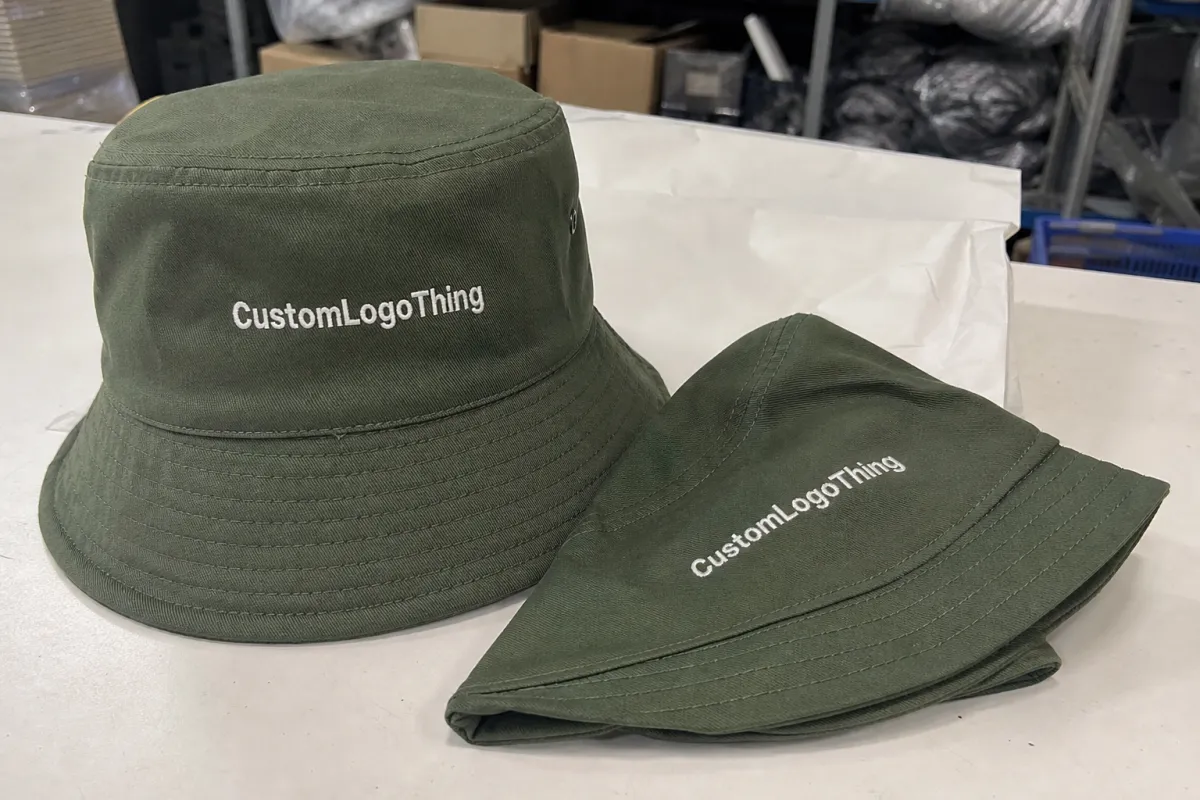
Resort retail is driven by impulse, but only if the product feels useful. Bucket hats work because they sit between souvenir and practical wear. Guests can wear them at the pool, on excursions, or on the flight home, which makes the purchase easier to justify than a novelty item that stays in the bag.
They also solve three buying problems at once. They give sun coverage, leave enough room for branding, and pack down without much bulk. That combination matters in gift shops where buyers want items that are easy to display, easy to carry, and easy to buy on the spot.
Destination identity should guide the design, not overpower it. A beach property, marina shop, and mountain lodge should not receive the same palette or logo treatment. The best versions feel connected to place while still looking wearable outside the resort. That balance is what keeps inventory moving instead of getting stranded in one corner of the shop.
A hat that looks good in a mockup but feels wrong on the head will not sell itself.
Bucket hats also support the rest of the retail presentation. Hangtags, belly bands, and display cards should make the item feel deliberate, not generic. If the shop already invests in branded packaging for other products, the same standard should apply here: clear logo placement, a clean story, and a quick visual read.
How Decoration, Materials, and Fit Shape the Final Product
Decoration changes the tone of the hat more than many buyers expect. Embroidery is usually the cleanest and most durable choice for simple logos or short text. A woven patch gives more room for detail and can feel more premium. Printed patches work better when the artwork includes gradients, fine lines, or multiple colors that thread cannot reproduce cleanly.
Material choice affects comfort, drying time, and perceived value. Cotton twill is familiar and soft, but it can hold moisture longer in humid climates. Polyester blends dry faster and keep their shape better. Nylon is useful when packability matters most. Quick-dry fabrics make sense near water, but they still need to feel substantial enough for retail.
Fit is where many first-time buyers get surprised. A hat can look balanced flat on a table and still sit too shallow, too tall, or too stiff on a real head. Crown depth affects comfort, brim width affects shade, and the internal band affects how often the hat gets worn again. One-size-fits-most can work, but only if the pattern and band have enough flexibility.
Ask for production details that affect wear and durability:
- Stitch density around the brim and logo area.
- Seam finishing inside the crown and along stress points.
- Brim reinforcement so the shape holds without becoming rigid.
- Sweatband construction so it sits flat and does not twist.
Visual hierarchy matters too. The same discipline used in custom printed boxes applies here: contrast, placement, and first-glance clarity shape perceived value. A dark patch on a light crown usually reads better than a low-contrast logo that disappears under warm resort lighting.
For hangtags, inserts, or display cards, FSC-certified paper is a practical option when the resort wants a cleaner materials story. Basic certification information is available at fsc.org. For carton handling and shipping damage control, guidance from ista.org is useful when the order has to travel a long way before it reaches the floor.
Fabric, Brim, and Color Choices That Actually Sell
Buyers should compare a few specs before approving a run. Is the crown structured or soft? Is there lining, or is the inside bare? Does the sweatband feel padded or scratchy? Are the ventilation eyelets functional or decorative? Those details change how the hat feels in hand and on the head.
Brim width matters because it affects both shade and style. A narrow brim can look modern, but it may not protect enough in full sun. A very wide brim shades better, yet it can read as floppy or costume-like if the shape is too loose. In practice, a mid-brim style often gives the best balance for resort retail.
Color is where the assortment either looks curated or looks like leftover promo stock. Strong neutrals such as sand, stone, navy, olive, and washed black usually feel more wearable. Destination colors can work when they echo the property palette or local landscape. Loud novelty prints may sell in high-volume tourist zones, but premium locations often do better with restrained tones and one clear accent point.
For a quick comparison, these are the styles that most often make sense on the shelf:
| Style Choice | Typical Appeal | Common Unit Impact | Best Use |
|---|---|---|---|
| Flat embroidery | Clean, wearable, durable | +$0.35-$0.90 | Simple logos, premium resort retail |
| Woven patch | More detail, souvenir feel | +$0.55-$1.25 | Destination marks, illustrated crests |
| Printed patch | Best for detailed art | +$0.40-$1.00 | Colorful branding, small graphic runs |
| All-over print | Bold, fashion-forward | +$0.80-$1.80 | Limited drops, resort collections |
If the property is hot and humid, test the fabric under warm light and handle it for a minute. Some finishes wrinkle quickly or feel sticky after a short wear. Guests usually do not explain that in technical terms; they just put the hat back.
Pricing, MOQ, and Unit Cost: What Buyers Should Expect
Vague pricing leads to poor buying decisions, so the numbers need to be practical. For small runs of Custom Bucket Hats for resort retail shops, unit cost is higher because setup is spread across fewer pieces. As volume increases, the per-unit price falls, but inventory risk rises with it.
For a basic embroidered bucket hat, a rough range often looks like this: 500 pieces at about $5.50-$8.50 each, 1,000 pieces around $4.20-$6.80, and 3,000 pieces or more dropping further depending on fabric and trim. Add a woven patch, special labels, or inside taping, and the price moves up. Add presentation packaging, and it climbs again.
It helps to think in landed cost, not just factory cost. Freight, duties, carton volume, and damage risk all affect the real number that ends up on the shelf. A hat that seems cheap on a quote can become much less attractive once shipping and packaging are included.
The main cost drivers are straightforward:
- Decoration complexity — more thread colors, layered patches, or all-over artwork increase labor.
- Material spec — cotton twill, washed cotton, polyester blend, and nylon all sit at different price points.
- Custom details — woven labels, hangtags, branded sweatbands, and retail-ready packaging add cost.
- MOQ structure — lower minimums usually mean higher unit cost because the line still has to be run.
The MOQ question matters a lot for resort buyers. If demand is still being tested, 300 to 500 units spread across a few colorways is usually safer than one large order in a single shade. If the hat performs well, reorder quickly and keep the best seller in stock. If it misses, cash is not trapped in a shelf full of the wrong color.
Margin math should stay disciplined. A hat landing at $5.50 wholesale may need to retail around $18-$28, depending on location and perceived quality. If the resort has strong traffic and guests expect premium pricing, the upper end is more realistic. If nearby souvenir stalls set the tone, pricing may need to stay lower and decoration may need to stay simpler.
For broader assortment planning, the hat should sit comfortably beside other product packaging decisions instead of fighting them. A well-priced hat can support a cleaner display story, especially if the same visual system runs through signs, tags, and shelf cards. If you are lining up other retail-ready pieces, the Custom Packaging Products page can help align the lineup.
Production Steps and Timeline From Mockup to Delivery
A clean order process saves time and catches mistakes early. The usual sequence is straightforward: inquiry, artwork review, mockup or proof, sample approval, bulk production, quality check, packing, and shipping. Trouble starts when someone assumes one sketch is enough and skips the proof stage.
Realistic timelines depend on decoration complexity and how fast the buyer responds. A simple embroidered order may move in 12-18 business days after proof approval. A patch-heavy or multi-color program can stretch to 18-25 business days. If samples are needed first, add another week or two, especially if revisions are involved.
Good buyers ask for checkpoints instead of one vague ship date. A better schedule looks like this: proof by Tuesday, sample by next week, bulk start after sample approval, final photos before packing, carton count before dispatch. Specific milestones keep everyone honest and make delays easier to catch.
Quality control should not stop at the proof. Before bulk packing, ask for checks on logo scale, thread tension, color consistency, brim symmetry, and crown shape. A crooked patch or warped brim can pass a quick glance and still hurt sales later. If the hat is meant for a premium souvenir shop, the tolerance for obvious flaws is low.
Packaging matters here too. Even for hats, retail presentation may include tissue, hangtags, belly bands, or simple polybags with printed inserts. If the resort wants a cleaner shelf read, that kind of packaging design can raise perceived value without pushing the product into a different price tier. The same logic behind better branded packaging applies: the shopper feels the difference before they can explain it.
Shipping protection is worth attention. Hats are lighter than boxed goods, but cartons can still crush brims, flatten crowns, or scuff decoration if they are packed loosely. A practical pack-out, with enough structure to hold shape but not so much bulk that freight becomes wasteful, usually gives the best result.
Common Ordering Mistakes That Hurt Resort Sell-Through
The first mistake is overbranding. A giant logo can make the hat feel promotional instead of desirable. Guests usually want to remember the property, not wear a walking billboard. Keep the logo visible, but let the design breathe.
The second mistake is choosing colors because they look good on screen instead of on the sales floor. Store lighting changes everything. So does the resort’s existing palette. A pale hat can look washed out under warm lights, while a bright one can feel cheap next to wood fixtures and neutral apparel. Test the color against the real display environment before ordering heavily.
The third mistake is skipping the sample. A sample is the cheapest way to catch fit issues, patch size problems, or decoration placement that looks fine in a file and odd in hand. If the hat is meant to live in a premium souvenir shop, sample approval is part of the buying job, not an optional extra.
The fourth mistake is bad stock planning. Ordering five colors in tiny quantities can make the display look scattered and make reorders painful. Ordering only one color can be safe, but if it misses the mark, the whole run sits still. The better move is usually two or three core colors with one limited accent, then a quick reorder of the winner.
There is also a subtler issue: treating the hat like a standalone item instead of part of the resort’s broader retail presentation. The display, tags, and any insert should support the same message. If the rest of the shop uses a consistent visual system, the hat line should feel like it belongs. Otherwise, the shelf starts to look assembled in pieces, which rarely helps sales.
Expert Next Steps for a Smarter First Order
If you are starting from scratch, keep the first order simple. Pick one core style, two or three colors, and one decoration method that matches the property. That gives you a clear read on what guests want without turning the launch into an experiment with too many variables.
Before you commit, do three things:
- Order samples and check fit, color, and patch or embroidery placement in real light.
- Set a retail target and confirm the margin still works after decoration and packaging.
- Decide your reorder trigger before launch so you are not waiting until the shelf is empty.
It also helps to set the hat lineup against the resort calendar. High sun season, holiday traffic, local festivals, and occupancy swings all affect sell-through. A beach property may want lighter colors and faster reorder cycles. A mountain or spa property may do better with muted tones and a more refined presentation.
For buyers managing broader gift shop assortments, keep the package branding consistent across the store. If the hat line looks polished but the rest of the retail wall feels random, the whole assortment loses credibility. Guests notice that mismatch quickly.
The most reliable approach is to treat bucket hats like a testable retail category, not a one-time souvenir order. Build around a realistic margin, a wear-again design, and a reorder path that does not require a scramble every peak season.
Frequently Asked Questions
What is the best first order size for custom bucket hats for resort retail shops?
A small test run is usually the smartest move. For many resort shops, 300-500 pieces is enough to read demand without putting too much cash into one style. If traffic is uncertain, it is better to test a few colorways and reorder quickly than to guess on a large run.
Which decoration method works best for custom bucket hats in resort stores?
Embroidery works well for simple, durable branding and a cleaner premium look. Woven or printed patches are better when the artwork needs more detail or a more souvenir-like feel. In most resort settings, wearable branding outsells busy graphics because guests want something they will keep using after the trip.
How much do custom bucket hats for resort retail shops usually cost?
Unit cost depends on order size, decoration method, and how many custom details you add. Smaller orders cost more per hat, while larger runs lower the unit price but increase upfront spend. Ask for pricing at multiple volume tiers so you can compare margin, not just chase the lowest quote.
What is the usual production timeline for resort bucket hat orders?
Expect extra time for artwork approval, sampling, and any patch or embroidery setup. Simple runs can move in roughly 12-18 business days after proof approval, while more detailed orders often take longer. Peak season can stretch lead times, so plan backward from your shelf date.
Which styles sell best in beach and resort gift shops?
Neutral or destination-tied colors usually outperform novelty-heavy designs because they feel more wearable. Mid-brim, packable styles tend to beat stiff fashion-only versions when travelers want comfort and easy storage. The strongest sellers usually balance local identity with everyday utility.

