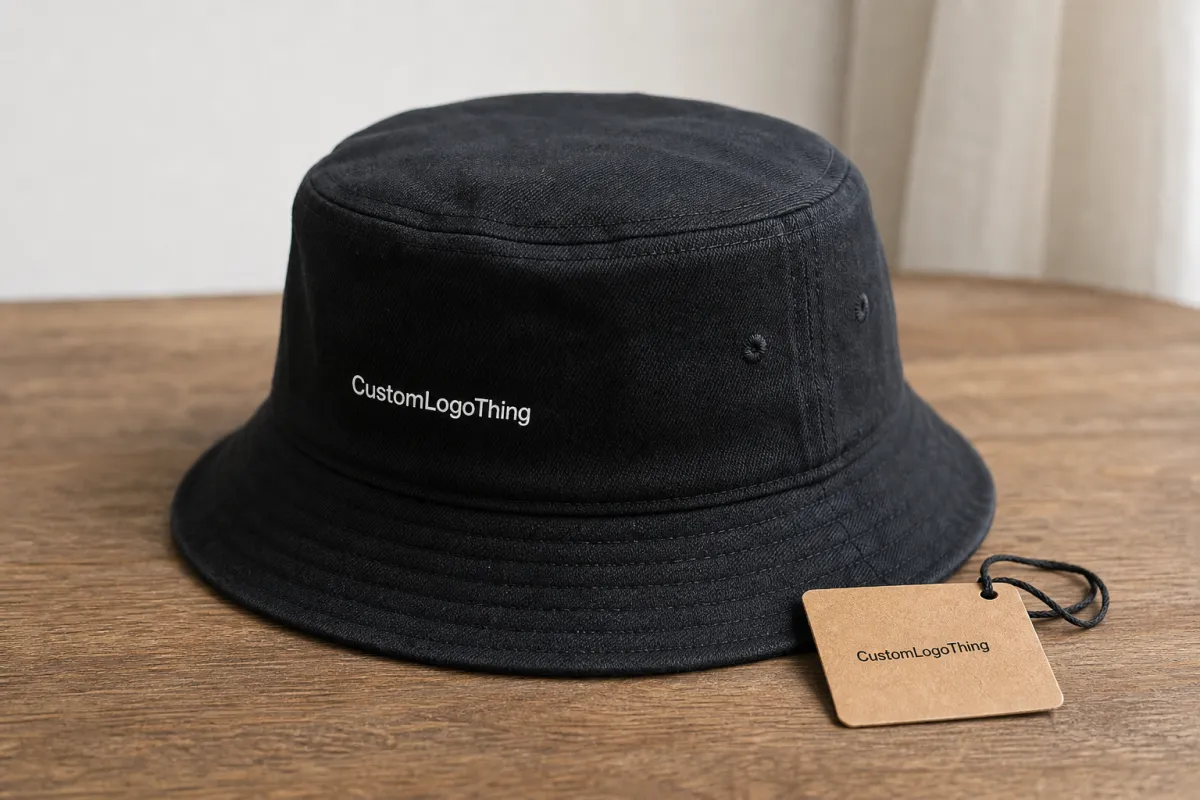
Custom Bucket Hats Bulk Order: What Makes the Quote Real A Custom Bucket Hats bulk order only works if the hat wears well, the decoration survives handling, and the delivery date is based on production reality. Buyers often get tripped up by quotes that look low because they leave out setup, sampling, freight, repacking, or the extra work needed to keep the brim in shape. Bucket hats are simple in form but sensitive in execution, so small spec changes show up fast in the final product.
That is why this category should be treated as a product program, not a quick merch line. Fabric, construction, decoration, packaging, and lead time all affect the real cost. A denser twill, cleaner seam finish, or stitched patch can raise the unit price, but those details also change how the hat looks, feels, and lasts. The useful question is not just what the quote is, but what it includes and what the buyer will receive after production, packing, and transit.
What Actually Drives the Quote
The real cost of a Custom Bucket Hats bulk order comes from five variables: fabric, construction, decoration, packaging, and schedule. Buyers often focus on the logo first because it is the visible part of the product, but material and build usually have the bigger impact on both cost and wear. A cotton twill hat with a structured crown is not comparable to a lightweight nylon version with a small heat transfer, even if the mockups look close.
For larger runs, decoration alone can shift the unit price by a few cents to more than a dollar, depending on stitch count, color changes, patch construction, and whether artwork needs digitizing. Minimum Order Quantity matters too. A factory may quote 5,000 pieces competitively, then price 500 or 1,000 pieces very differently because setup costs do not scale evenly. For that reason, ask for a landed estimate that includes sampling, freight assumptions, and carton handling where possible.
Lead time is part of the price. A straightforward order may take 12 to 20 business days after proof approval, but custom dyeing, specialty trims, or nonstandard labels extend that window. Rush work can compress the calendar, yet it often shows up as overtime, split lots, or less inspection time. A buyer planning a Custom Bucket Hats bulk order should treat timing as a commercial term, not an afterthought.
Materials That Change Wear, Feel, and Perceived Value
Material choice changes how the hat sits, how it photographs, and how long people keep it. Cotton twill is the safest baseline because it has body, takes embroidery well, and gives a familiar finish that works across most audiences. For a custom bucket hats bulk order, cotton twill is usually the easiest fabric to present when the goal is broad appeal and dependable appearance.
Typical branded headwear uses cotton twill in the 210gsm to 280gsm range. Lighter fabric can feel flimsy; heavier fabric can lose the relaxed drape that makes bucket hats popular. The right weight depends on the use case. A giveaway can be lighter. A retail hat usually needs more structure. If the product will be worn outdoors, ask about moisture retention, wash behavior, and whether the fabric has been garment-washed or enzyme-washed for a softer hand.
Cotton Twill
Cotton twill behaves predictably, which matters in bulk production. It holds shape well, accepts embroidery cleanly, and gives the buyer a familiar finish that rarely surprises the end user. It is not the fastest-drying option, but it remains the easiest choice when the priority is comfort, structure, and low production risk.
Nylon and Polyester Blends
Nylon and polyester blends fit outdoor promotions, sports use, travel retail, and programs that expect more weather exposure. They dry quickly, handle saturated colors well, and create a sharper technical look. They also change the decoration conversation. Some print methods sit poorly on slicker synthetics, and some patches can wrinkle if the application method is wrong. Fabric and decoration need to be chosen together.
Interior Finish Matters More Than Most Buyers Expect
The inside of the hat often reveals whether the order was built for appearance or for wear. A soft sweatband improves comfort, and clean seam taping reduces the chance of a rough feel against the skin. These details are easy to miss in a render but matter in returns, reviews, and repeat use. If the hats are for resale, the interior finish is part of the perceived quality.
Decoration That Holds Up After Folding and Reuse
Decoration is where many hat programs become less durable than the mockup suggested. A logo that looks crisp on screen can become crowded on a curved panel, especially near seams or when the art contains tiny details. For a custom bucket hats bulk order, the best decoration is the one that respects the shape of the hat rather than fighting it. The goal is a mark that still looks intentional after packing, shipping, and repeated wear.
Embroidery
Embroidery is still the most durable choice for many bucket hats. It adds texture, reads well at a distance, and holds up better through handling than many print methods. The tradeoff is detail. Thin lines, gradients, and very small text can disappear once the artwork is digitized for stitches. Proof review matters because a clean vector logo may need simplification to stay legible on the hat.
Woven Patches and Labels
Woven labels, leatherette patches, and printed fabric patches can carry more detail and often look sharper on premium programs. They also create a stronger retail impression without dense stitching across a large area. The catch is attachment. Heat application alone is not always enough if the hat will be washed, packed tightly, or worn repeatedly in hot conditions. A stitched patch costs more, but it is usually the safer option for longevity.
Print Methods
Print can work well when the method matches the design and fabric. Screen print suits bold graphics with limited colors. Heat transfer is useful for smaller runs or more detailed artwork, though it may age less gracefully than embroidery or a stitched patch. Sublimation can work on certain synthetics, but it is not universal and should be reviewed carefully if the goal is a cleaner retail finish.
Judge the sample under normal use conditions, not just under studio lighting. Fold the hat, pack it, and check the logo from a few feet away. That is closer to the customer experience and a better test of whether the decoration will hold up in real use.
Packaging and Transit Can Make or Break the Finish
Packaging is not a side note with headwear. It affects shape retention, perceived value, and damage rate. A hat that arrives crushed or warped undercuts the whole order even if the decoration is perfect. For a custom bucket hats bulk order, ask how the factory folds or nests the hats, whether they are polybagged, and how many units go into each inner and master carton.
Retail programs need more care than giveaways. Hang tags, size stickers, tissue, and printed inserts can add value when they are doing a job instead of adding clutter. A clean presentation usually beats an overbuilt one because the product is easier to understand at first glance. If sustainability matters, FSC-certified paper inserts or cartons can help, though paper alone does not make the program stronger.
Transit is where practical packaging knowledge pays off. A master carton that is too loose invites crushing. One that is too tight can crease the brim or distort the crown. If the shipment will pass through multiple handling points, ask whether the carton spec has been tested or at least built with that risk in mind. A custom bucket hats bulk order that arrives in good shape saves receiving time, reduces repacking, and avoids the hidden cost of sorting damaged units before launch.
Proofs, Samples, and Quality Checks
Quotes look tidy until approvals start moving. Artwork changes, fabric substitutions, and last-minute logo edits can delay production by days or weeks. A capable supplier should build in checkpoints for proof approval, sample sign-off, and carton confirmation. For a custom bucket hats bulk order, every late change creates compounding risk because cutting, stitching, decoration, and packing are linked.
Sampling deserves real scrutiny. One sample tells you more than a folder of renders. It shows crown depth, brim width, stitch behavior, color accuracy, and how the logo reads at normal distance. If the order includes packaging, the sample should include that too. A good buyer compares the sample against the brief line by line instead of making a decision based on appearance alone.
Quality control should be written into the order, not assumed. That means checking panel symmetry, stitch consistency, decoration placement, internal finish, carton counts, and color variation before shipment. Many factories can produce a good sample. The real test is repeating that result across thousands of units. For larger programs, a third-party inspection can pay for itself quickly because the cost of a rejected batch or delayed launch is usually much higher than the inspection fee.
What to Send With the RFQ
The cleaner the brief, the cleaner the quote. Vague requests produce vague numbers, and vague numbers waste time. If you want a realistic custom bucket hats bulk order price, send a packet that covers the product and the commercial details together. Include artwork, target quantity, preferred fabric, decoration method, packaging needs, delivery window, and destination. Without those inputs, the supplier is guessing at freight, material choice, and production timing.
- Product type, brim width, crown depth, and target fit
- Vector artwork files, plus Pantone references if color matching matters
- Preferred fabric, lining, sweatband, and any special finish
- Decoration method, placement, and coverage level
- Packaging needs, from simple polybags to retail-ready carton pack-out
- Quantity split by color, size, or style if the order is not uniform
- Delivery address, shipment method, and any hard launch date
This list prevents most quote drift. It also shows the supplier where the cost levers sit. Changing from one logo placement to two may increase setup time more than the buyer expects. Switching from a plain hangtag to a printed insert changes paper cost and carton weight. A custom bucket hats bulk order should not rely on assumptions, because assumptions are what turn a clean quote into a moving target.
It also helps to be specific about packaging because bucket hats are shape-sensitive even when they seem simple. A fold method that works in one carton can fail in another if the depth is short by a few millimeters. Buyers who already manage Wholesale Programs and Custom Packaging Products well often get better results here because the same habits transfer: clear specs, controlled approvals, and attention to how the product lands in the hand, not just how it looks in a render.
What Makes a Good Purchase Decision
The best buying decision is usually the one with the fewest unknowns. If the hat is for a one-time event, keep the structure simple and spend the budget on a clean logo placement. If it is for retail or a higher-value gift, invest in better fabric, stronger decoration, and packaging that protects the brim instead of flattening it. A custom bucket hats bulk order works best when design, quote, and delivery plan all point in the same direction.
That also means being honest about the job the hat needs to do. A giveaway does not need the same construction as a product meant for a retail shelf. A premium branded hat does not need a dozen embellishments if a dense patch and good fabric already carry the value. The buyer's task is not to maximize features. It is to choose the right features for the use case.
Price bands vary widely, but the pattern is consistent. Simple, lower-volume runs can land in a broad budget range, while more refined retail builds can rise quickly once embroidery, better fabric, and custom packaging are added. The difference is not only cost. It is also how long the hat stays in circulation. A custom bucket hats bulk order that gets worn repeatedly, rather than tossed after the event, usually earns more value than a cheaper hat that never leaves the drawer.
The standard worth paying for is straightforward: clear cost drivers, a sample that reflects the real product, and shipping that protects shape. If those pieces are in place, the order has a strong chance of doing what it was meant to do.
Frequently Asked Questions
What is a typical minimum order for custom bucket hats?
Minimums depend on the decoration method and build complexity, but a common range is 100 to 500 pieces for simpler programs and 1,000 pieces or more for more customized work. Orders with embroidery, special fabric, or custom packaging often price better at higher quantities.
Which decoration method lasts the longest?
Embroidery is usually the most durable for everyday wear. Stitched patches can also hold up well, especially when the hat may be folded or packed tightly. Print can work, but it often depends on the fabric and the amount of handling the hat will see.
How should bucket hats be packed for bulk shipping?
Most programs use polybags, stacked inner packs, and master cartons sized to reduce crushing. The best pack method depends on brim width, fabric stiffness, and the final channel. If the hats are retail-bound, ask for a pack-out that keeps the crown and brim as stable as possible.
Can I mix colors or logos in one order?
Usually yes, but mixing colors, sizes, or placements can raise setup time and reduce price efficiency. It is common to keep the base style consistent and vary only the decoration or colorway when the order needs flexibility.
Where can I learn more about related ordering terms?
You can review the broader guidance in the FAQ section, especially if you are comparing specifications, packaging options, or production timing across different products.

