Custom Bucket Hats for Retail Drops: Pricing, Fit, MOQ
Buyers rarely judge Custom Bucket Hats for retail drops on a mannequin. They judge them folded, tagged, stacked, and competing with other SKUs on a crowded fixture. That changes the buying lens. A hat is no longer just an accessory. It is a small-format retail product with packaging decisions baked into the build.
The item has to look good worn, but it also has to read cleanly in a polybag, on a hanger, or in a carton ready for floor receipt. If the presentation feels cheap, sell-through usually softens even when the artwork is strong. Retail is blunt like that.
"If the hat looks premium flat but sloppy on shelf, the customer never gets to the try-on."
That is the part teams still underestimate. They approve art from a screen and only later discover the brim folds awkwardly, the label sits wrong, or the box count makes receiving a mess. For accessory programs that need to feel consistent across the shelf and the unboxing moment, it helps to compare the hat run with Custom Packaging Products so the whole drop speaks the same visual language.
What custom bucket hats really are in a retail setting
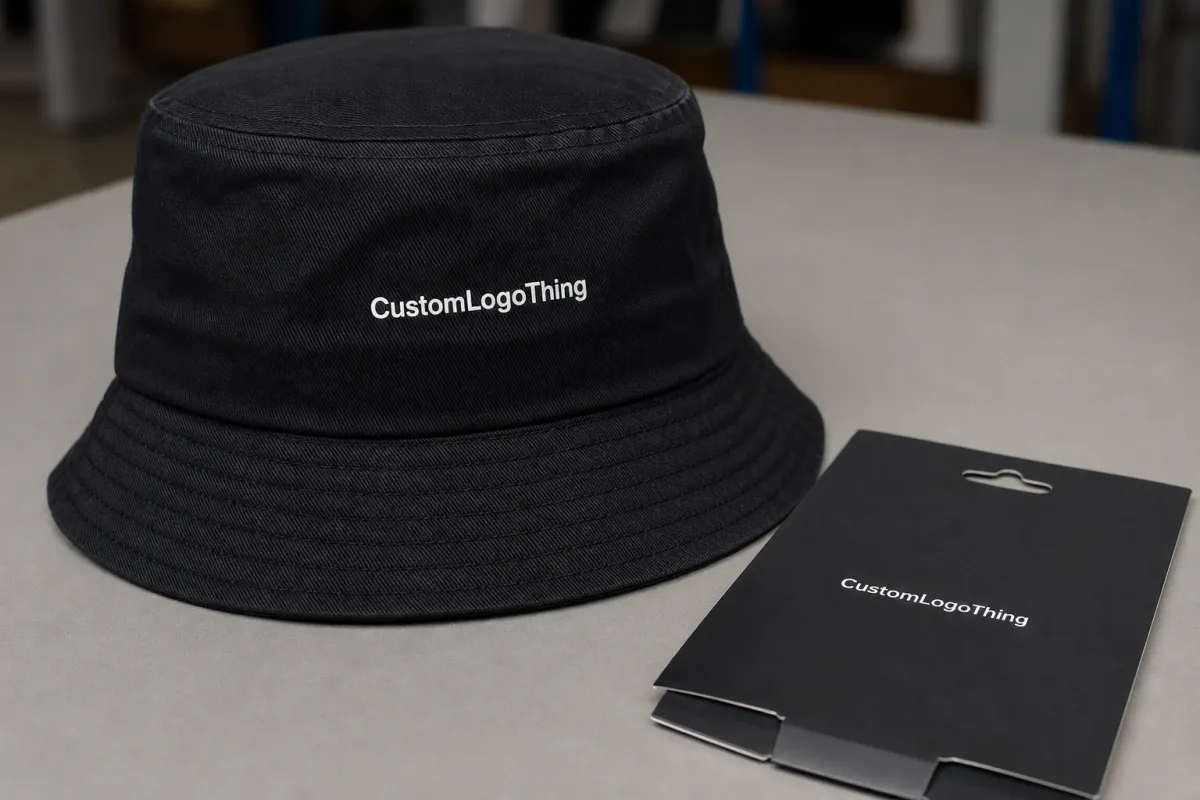
A retail bucket hat is not just a blank cap with a logo added later. It is a specification stack. Fabric weight, crown depth, brim width, stitch density, label placement, decoration method, and fold behavior all affect how the buyer and the customer read the product. A soft twill bucket hat with a woven label feels very different from a structured canvas style with dense embroidery and a stiff brim.
That matters most in custom bucket Hats for Retail drops, where the run is usually short, the launch date is fixed, and the product is being judged quickly. Drop launches can handle bolder colors and sharper graphics. They cannot tolerate sloppy specs. If the sample comes back with a shallow crown, a brim that is too narrow, or a logo too close to a seam, someone has to make a call fast.
Think of the hat like a piece of packaged merchandise. The fold line shapes the first impression. The hangtag shapes the price cue. The carton count shapes the receiving experience. A hat shipped loosely in a generic mailer sends a very different message from one packed with a consistent fold, size card, and branded insert. That is why packaging and apparel decisions end up in the same conversation.
For a retail drop, the goal is not decoration for its own sake. The goal is sell-through. A hat that photographs well, stacks neatly, and gives a clear value signal on shelf usually outperforms a more complicated style that is hard to manage in store. The customer does not reward complexity if the product is awkward in the hand.
How custom bucket hats for retail drops actually move through production
The workflow looks simple on paper and is less forgiving in practice. Brief, spec sheet, art placement, sample, revisions, bulk booking, quality checks, shipment. Each step has a different owner. Merchandising watches margin, color count, and ticket level. Design watches graphic balance and finish. Operations watches lead time, carton marks, and how much inventory can move without creating a headache later.
Most failures happen in the handoff, not in the sewing room. A buyer approves a logo on a flat mockup and later realizes it sits too high once the brim is folded. A palette looks strong on screen and dull under store lighting. Neither issue is abstract. Both show up as markdown risk, returns, or a launch that feels less sharp than the line sheet promised.
The cleanest teams keep the process narrow. One decision owner. One spec file. One approved measurement for logo placement. One delivery date. If the drop also includes accessories or presentation items, align the hat approval against the same retail calendar instead of treating it like a separate lane. That keeps the program consistent and cuts the chance of last-minute mismatch.
The sample is not a formality. It is the business case. If the sample misses on fit or stackability, the bulk order may still be technically correct and commercially weak. That distinction matters. Technical correctness does not sell through by itself.
Design and spec choices that change sell-through
Fit is not a side note. It is the product. Crown depth changes how the hat sits on different head shapes. Brim width changes whether the style feels fashion-led or functional. A 2.25-inch brim usually reads more compact and streetwear-led. A 2.75-inch brim feels broader and more relaxed. Neither is automatically better. One usually fits the retail story better.
Decoration changes the price signal fast. Embroidery usually gives the cleanest premium cue for a small run, especially with simple logos. Woven patches carry detail better and can feel more fashion-oriented. Printed patches work when the graphic carries the weight and the price point needs to stay lower. A woven side label can feel understated. A large front patch turns the hat into a statement piece. The right choice depends on the shelf story, not just the art file.
Color strategy needs the same discipline. Neutral bases like black, stone, olive, and washed navy are easier to merchandise and usually travel better across age groups and gender mixes. Bright seasonal colors can work, but they raise the risk of slow sell-through if the capsule is too narrow. In a retail drop, a tight two-color program often outperforms a six-color spread because the assortment feels intentional instead of scattered.
Material handfeel matters more than many buyers expect. A soft-washed cotton twill can read as more wearable than a rigid canvas. A heavier 12 oz cotton duck holds shape better, but it can also feel less relaxed. Small changes in finish affect how the product sits on display and how the customer reads the ticket. That is packaging logic applied to apparel: the surface tells the price story before the shopper even looks at the hangtag.
Here is the practical version: if the hat needs to feel premium, keep the shape clean and the decoration controlled. If it needs to feel trend-led, push the patchwork, texture, or color story, but do not add so many elements that the product starts looking busy. Retail buyers usually spot that problem before the first shelf set.
| Build type | Typical MOQ | Typical unit cost | Best use | Lead-time pressure |
|---|---|---|---|---|
| Simple embroidery on cotton twill | 100-300 pcs | $3.40-$5.80 | Clean retail basics and logo-led drops | Low to moderate |
| Woven patch with label set | 250-500 pcs | $4.20-$7.20 | More detailed graphics and stronger shelf signaling | Moderate |
| Printed patch plus custom hangtag | 250-500 pcs | $4.00-$6.90 | Bold artwork and a softer entry price | Moderate |
| Mixed-media build with specialty trim | 500+ pcs | $5.50-$8.50 | Fashion drops and higher-ticket capsules | High |
Those numbers are planning ranges, not fixed quotes. Freight, testing, and packout can move them quickly. Cartons and transit should be checked against the ship method and distribution model. If the packaging includes tags, inserts, or display cards, FSC-certified stock may matter for brand positioning and procurement review. The point is not to overbuild the program. The point is to make the spec match the margin.
Production steps and turnaround from sample to delivery
Once the design is locked, the clock starts. Artwork approval can happen in a day or two. Sample development usually takes longer, often a week or more depending on complexity. A simple embroidered hat moves faster than a mixed-media build with patches, trim, and custom labeling. Every revision cycle adds time. Every vague comment adds more.
For custom Bucket Hats for Retail drops, the sample stage is where schedules usually slip. Teams ask for "small tweaks," then ask again after seeing the second sample, then realize the launch date is getting tight. The better move is to consolidate feedback. Confirm brim width, logo placement in millimeters, label type, stitch color, and fold style in one pass. That gives production a clean target instead of a moving one.
Typical timing, assuming no material shortage, often looks like this: 5-10 business days for sample development, 10-20 business days for bulk production after approval, then freight based on the lane. Faster runs exist, but they usually cost more or narrow the options. A one-color embroidered run tends to be the fastest because setup is simpler and inspection points are fewer.
The retail calendar matters more than the factory calendar. A drop that needs to hit stores on a fixed date should be built backward with buffer for revisions, inbound freight, warehouse receiving, and store allocation. If the team wants a polished launch, it should also protect the final week for floor prep or e-commerce staging. A product that arrives on time but lands untagged or incorrectly packed still misses the moment.
One small but useful habit: ask for photos of the pre-packout stage. You do not need a glossy presentation. You need proof that folding, tagging, and carton counts are under control before the shipment leaves. That saves more headaches than another round of emailed reassurance.
Pricing, MOQ, and unit cost drivers
MOQ is not a random number. It usually comes from fabric purchasing, labor booking, and decoration setup. Smaller runs almost always carry a higher per-unit cost because the setup work gets spread across fewer hats. If the order is only 150 pieces, the unit price will look higher than a 1,000-piece run. That does not automatically make it worse. It may simply be a smarter inventory bet.
The biggest price drivers are decoration complexity, number of placements, and packout. Fabric choice matters, but often less than the artwork. A standard cotton twill base with one clean embroidery placement can cost less than a cheaper-looking blank with multiple patches, woven labels, and a custom hangtag. Add carton labels, barcode application, or special retail packing, and landed cost shifts again. Quoted price and landed cost are not the same number, even though people keep trying to treat them that way.
If you are comparing vendors on Custom Bucket Hats for retail drops, quote the same spec every time. Same hat body. Same decoration. Same packaging. Same delivery term. Compare the way you would compare packaging vendors: unit price, setup charge, freight, and what is actually included. A lower quote with vague packout is often just an incomplete quote.
For rough planning, a simple embroidered hat in a 2,000-piece run often lands in the mid-single digits before freight. A patch-heavy or label-heavy version can move into the upper single digits fast. If the retail target is aggressive, simplify the build rather than hoping margin appears later. The market usually punishes wishful thinking.
Some teams build the hat run into a wider branded packaging story. That can work if the launch includes inserts, cards, or DTC mailers. If so, keep the visual language aligned with the rest of the drop and review the package branding system as one group instead of a pile of separate decisions. The accessory should feel like part of the collection, not an orphan.
Common mistakes that cause missed launches
The first mistake is approving the sample without checking how it looks folded and stacked. A bucket hat can read well flat and still lose shape in a carton or sit awkwardly on shelf. The second mistake is overcomplicating the spec. Too many colors, too many placements, too many trims. That sounds premium in a deck. It often drags production and muddies the retail message.
Another common problem is treating MOQ like a soft target. It is usually a real manufacturing constraint. If the order sits below the factory's setup threshold, pricing can jump or timelines can stretch. That matters especially for Custom Bucket Hats for retail drops, where the calendar is tight and the margin for error is small. The store date does not care that the art changed three times.
Packaging errors are just as damaging. Missing barcodes, wrong carton counts, poor label placement, or a weak definition of retail-ready packing can delay receiving even when the hats are finished. The same applies to e-commerce. If the product is supposed to ship in a specific fold, with branded packaging, or with a certain insert, those details need to be written into the PO. Ambiguity becomes rework.
Fit gets skipped too often. The hat should be tried on by more than one head shape and hair type if the drop is meant for broad retail distribution. A style that looks balanced on a table may pinch, ride high, or slump when worn. That kind of issue is hard to correct late, and it usually shows up after launch, when returns or complaints start to appear.
At a minimum, confirm fit, fold, logo placement, label position, carton count, and whether the finish matches the price band. That is the difference between a clean capsule and a pile of stock that needs markdown support.
Next steps to lock the order and launch the drop
Start with a one-page spec. Keep it blunt: target retail price, quantity, color count, decoration method, labeling, packout, and delivery date. That single page prevents more mistakes than a long email thread ever does. For Custom Bucket Hats for retail drops, the best orders are usually the ones with fewer surprises buried in the footnotes.
Then request a sample or pre-production proof early. Use that sample to confirm artwork, color, fold, and photo readiness. If the brand is planning other launch assets, align the hat with the rest of the shelf story and with any related Custom Packaging Products so the presentation feels intentional. The hat should look like part of the same collection, not an afterthought.
Build backward from the drop date. Leave time for revisions, freight, receiving, and merchandising. A launch that is technically on time but operationally rushed still creates stress. Protect the final week for store prep or e-commerce staging, because that is where the customer sees the result.
Once the spec is locked, pricing gets easier to compare and the MOQ conversation gets real. That is the point where the product stops being an idea and becomes a production plan. Get the fit right, keep the packout clean, and the drop has a much better chance of selling at full price instead of living in clearance.
How many custom bucket hats should I order for a retail drop?
Base the quantity on store count, online demand, and whether you need reserve stock for replacements or seeding. Small drops usually need more buffer than buyers expect because headwear still has spoilage risk from defects, shipping damage, or late returns. If the product is being tested first, split the order into a sample run and a bulk run so you do not overbuy before sell-through data exists.
What drives the price of custom bucket hats for retail drops the most?
Decoration method, number of placements, and the complexity of the artwork usually move price faster than the blank hat itself. Low MOQs raise unit cost because setup time gets spread across fewer pieces. Packaging, freight, and special labeling can quietly add enough cost to change the final margin, which is why landed cost matters more than the first quote.
How long does a custom bucket hat order usually take?
Simple builds move faster, while patch work, multiple colors, or custom trims add setup time and approval cycles. The sample stage is often where schedules slip, so build in time for revisions before bulk production starts. If the drop date is fixed, ask for a schedule that shows sample, bulk, QC, and shipping separately instead of one blended estimate.
Which decoration method works best for a small retail capsule?
Embroidery is often the cleanest option for small runs when you want a premium look without heavy setup complexity. Woven or printed patches can work well when the design needs more detail or a more fashion-driven feel. Choose the method that fits the retail price band, not just the art file, so the final product matches buyer expectations.
How should bucket hats be packed for stores and e-commerce?
Decide whether the hat should arrive folded, tagged, polybagged, or carton-packed based on the receiving process at the retailer. Keep folding and placement consistent so the product looks uniform on shelf, in a stock room, and in fulfillment photos. Ask for packout details in writing, including carton counts, label placement, and any barcode requirements before production starts.

