Buyer Fit Snapshot
| Best fit | custom candle packaging boxes for packaging buyers comparing material specs, print proof, MOQ, unit cost, freight, and repeat-order risk where brand print, material, artwork control, and repeat-order consistency matter. |
|---|---|
| Quote inputs | Share finished size, material target, print colors, finish, packing count, annual reorder estimate, and delivery region. |
| Proofing check | Approve dieline scale, logo placement, barcode or warning zones, color tolerance, and any recyclable or compostable wording before bulk production. |
| Main risk | Vague material claims, crowded artwork, or missing packing details can create delays even when the unit price looks attractive. |
Fast answer: Custom Candle Packaging Boxes: Design, Cost, and Fit should be specified like a repeatable production item. The safest quote includes material, print method, finish, artwork proof, carton packing, and reorder notes in one written spec.
What to confirm before approving the packaging proof
Check the product dimensions against the actual filled item, not only the sales mockup. Ask for tolerance on folds, seals, hang holes, label areas, and retail display edges. If the package carries a logo, QR code, warning copy, or legal claim, reserve that space before decorative graphics fill the panel.
How to compare quotes without losing quality
Compare board or film grade, print process, finish, sampling route, tooling charges, carton quantity, and freight assumptions side by side. A lower quote is only useful if the supplier can repeat the same color, closure quality, and packing count on the next order.
Custom Candle Packaging Boxes: Design, Cost, and Fit
Custom candle packaging boxes do more than keep a jar from sliding around in a carton. They frame the scent before a customer ever opens the lid, protect glass or tin through shipping, and create the feeling that the candle belongs on a shelf, a mantel, or in a gift bag. That is a demanding job for a printed box, and the better versions earn their place quickly.
From a buyer's point of view, a candle gets judged fast. Online, the box is often the first physical cue of quality. In a store, it is the first thing someone touches. If the packaging feels flimsy, scuffs too easily, or leaves too much empty space, it sends the wrong message before the wax gets a chance to do its part.
The real work sits in the balance. Custom candle packaging boxes sit between brand storytelling and product protection, serving as display, damage control, and sales support all at once. Brands that treat the box as part engineering and part merchandising usually end up with cleaner unboxing moments, fewer returns, and a stronger retail presence.
What follows covers the decisions that matter most: structure, materials, finishes, timelines, pricing, and the mistakes that tend to show up after production is already underway. If you are developing packaging for candles, these details can save time and, in quite a few cases, a meaningful amount of money.
Why Custom Candle Packaging Boxes Win Attention Fast
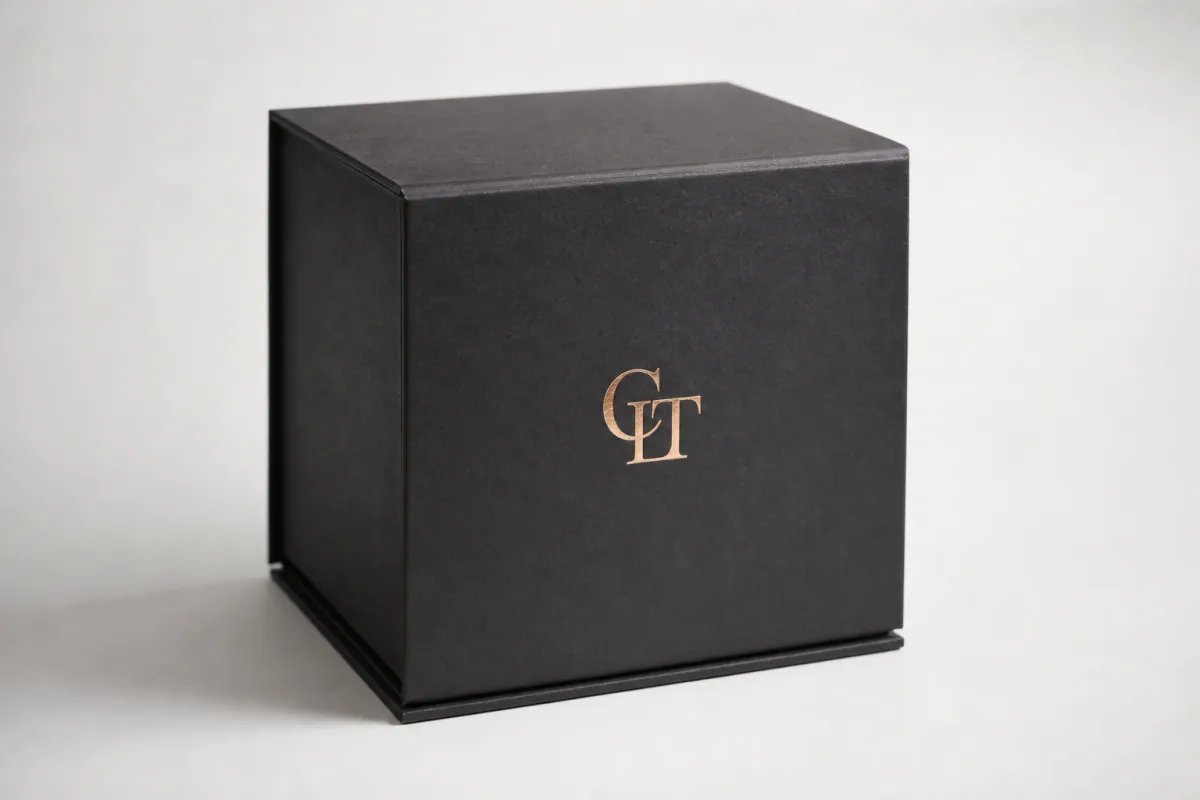
Custom candle packaging boxes have one unusual job: they must make a scent feel visible. That sounds abstract until you stand in front of a busy shelf. Jars start to look alike. Label text blurs. The box steps in and becomes the first signal through color, texture, shape, and message.
I see candle brands miss this point often. Fragrance development gets the attention, while packaging gets treated like a simple container. The box, though, often carries the first 60 seconds of the sale. If it suggests giftability, clean ingredients, seasonal mood, or a specific scent family, it changes how the shopper reads the product before the lid even comes off.
Custom candle packaging boxes also work harder online than many teams expect. A product photo can show the vessel, but the box adds the branded layer that makes the candle feel finished instead of generic. That matters for repeat buying too. A customer who keeps the box on a dresser or shelf sees the brand again and again, which is one reason packaging design influences retention as much as first impressions.
There is a practical side as well. Candles are heavy for their size, breakable, and often shipped with glass lids, metal closures, or decorative toppings. A well-built carton reduces movement, keeps labels from rubbing, and lowers the odds of cracked jars or shifted inserts. Custom candle packaging boxes only support the sale if they pass the shipping test first.
One detail that is easy to overlook: the packaging has to match the price point. A $22 soy candle in a thin sleeve can feel underdressed, while a $48 luxury candle in the wrong board or finish can feel overpromised. The box sets expectations instantly. If the material, print quality, and closure do not match the candle's positioning, the mismatch stands out.
The strongest custom candle packaging boxes often look simple to the shopper. The complexity sits under the surface: board choice, caliper, coating, dieline tolerances, and whether the insert holds the jar centered under vibration. When those pieces line up, the result feels natural rather than forced.
Practical rule: if the box would not still look credible after a parcel ride, a shelf move, and a gift handoff, it is not finished yet.
For brands that sell through retail and e-commerce at the same time, that dual performance matters even more. Retail packaging wants shelf appeal. Shipping packaging wants toughness. The best custom candle packaging boxes bridge both without looking bulky or overbuilt.
How Custom Candle Packaging Boxes Work From Dieline to Shelf
Custom candle packaging boxes are a system, not a single printed shell. The outer structure, the retention method, the graphic layout, the coating, and the closure all have to work together. If one part is off, the whole package feels less precise. Good packaging design starts with the candle itself, not the artwork.
The first step is measurement. A designer needs the jar diameter, body height, lid height, and any irregular features such as shoulders, embossing, or a tapered profile. From there, a dieline is built to match the box style. That dieline determines the panels, glue flap, tuck points, and whether the structure is built for retail display, gift presentation, or parcel shipping.
Common formats behave differently. Straight tuck cartons are efficient and familiar for retail packaging. Reverse tuck and auto-lock bottoms can offer better handling or faster assembly. Rigid boxes feel more premium and often support heavier presentation sets. Mailer-style boxes are more useful when custom candle packaging boxes have to survive direct-to-consumer shipping with less secondary protection.
Then comes the graphics layer. The artwork is not just decoration. It needs room for scent name, burn time, safety copy, batch details, barcode placement, and sometimes ingredient or claim language. Packaging buyers often underestimate how much information has to fit on a small carton. That is why custom printed boxes become a functional tool rather than a brand flourish.
Because candles are bought as gifts as often as home goods, the unboxing experience matters. A lid that opens cleanly, a panel that reveals the jar without scuffing the label, or a small insert that keeps the candle centered can make the experience feel deliberate. In practice, the shopper reads that as quality. The box says, before the product does, that the brand pays attention.
A useful way to think about custom candle packaging boxes is this: the shopper sees a display object, while the production team sees a fit problem. Good results happen when both sides are solved at once. Sample approval and dimensional testing should happen early, not after artwork is locked in.
For brands building a wider packaging lineup, Custom Packaging Products can help connect candle cartons with other branded packaging formats so the collection stays consistent across SKUs.
Key Materials, Finishes, and Structural Factors
Material choice shapes both cost and perception. Custom candle packaging boxes are often built from paperboard, SBS, kraft, or corrugated stock, and each one changes how the product feels in hand. Paperboard is common for retail cartons because it prints well and keeps weight down. SBS gives a clean, bright surface for sharp graphics. Kraft signals a more natural or minimal look. Corrugated works better when the box needs more shipping protection.
For a single jar candle, a typical retail carton might use 14-18 pt board, depending on the candle weight and insert style. Heavier jars, multipacks, or taller formats may call for stronger board or a secondary retention structure. The mistake I see most often is choosing board by appearance alone. A pretty board that flexes too much can still fail under load.
Finishes matter more than many brands expect. Matte lamination can soften the visual tone. Gloss can make color pop, though it may show scuffs faster. Soft-touch adds a premium feel, but it also raises cost and can be less forgiving if the box is handled often. Foil, embossing, and spot UV are useful when they support the brand story, not just because they look expensive.
That last point matters. Premium effects are not free, and they are not always the best choice for custom candle packaging boxes. A heavy finish stack can make the carton less recyclable, increase lead time, and hide small but important details like fragrance notes or compliance text. The box should look intentional, not crowded.
Insert design is another structural decision with real consequences. A paperboard cradle, a Molded Pulp Tray, or a folded retention tab can stop movement and reduce breakage. Glass jar candles usually benefit from some kind of restraint, especially if the box will ship through parcel networks. Tins and smaller votives may need less, but only if the dimensions are tight enough to keep them from rattling.
Sizing tolerance is where many production issues begin. A difference of just a few millimeters can change the unboxing feel completely. Too much space, and the candle shifts. Too little, and the product drags against the print surface or crushes the corners during insertion. Custom candle packaging boxes perform best when the jar is held firmly but not squeezed.
Sustainability is now part of structural planning, not a side note. Recycled content, FSC-certified board, minimal ink coverage where appropriate, and right-sized packaging all help reduce waste. If the box is likely to enter a recycling stream, the coating and insert should support that path. The FSC site offers a useful reference point on responsible sourcing for paper products: Forest Stewardship Council materials and certification.
In packaging terms, the smartest solution is often the quietest one. A clean structure, a board grade that matches the product weight, and a finish chosen for handling conditions usually outperform a flashy box that ignores the candle's actual use case.
Custom Candle Packaging Boxes Process, Timeline, and Turnaround
Custom candle packaging boxes move through a fairly predictable production path, but timing depends on how clear the brief is. The process usually starts with measurements and a packaging goal: retail, gift, subscription, or e-commerce. After that comes the structural recommendation, dieline creation, artwork layout, proofing, sampling, production, and shipment.
One thing that slows projects down is incomplete product data. If the jar diameter is measured at the base but not at the widest point, the box can arrive too tight. If the lid height is left out, the top panel may not close properly. When buyers supply accurate specs early, custom candle packaging boxes are easier to quote and much easier to produce.
There are three checkpoints that matter most. A digital proof confirms placement, copy, and barcodes. A physical sample checks fit, feel, and closure. The production run confirms that the approved version can be repeated consistently. If you care about custom candle packaging boxes working at scale, the sample is not a formality. It is the moment where small errors become visible.
Turnaround varies with complexity. A plain tuck carton with standard board and simple print coverage can move quickly once artwork is approved. A rigid setup with inserts, foil, embossing, or specialty lamination takes longer because more steps are involved. In many packaging programs, simple cartons often land around 12-15 business days after proof approval, while premium structures can take longer. That estimate still depends on art readiness, sampling, and shop workload.
For brands planning seasonal drops, timing matters more than they expect. Candle launches tied to holiday gift buying, spring scents, or limited-edition collections need extra cushion in the schedule. If the design team wants to compare two structures, that adds another round. If the brand changes copy after proofing, that adds more. Each round is small on paper and painful in aggregate.
There is a reason experienced buyers build schedule buffers into custom candle packaging boxes. Packaging delays rarely come from one dramatic failure. They come from three or four modest ones: late measurements, missing insert data, a finish change, a shipping hold, a second proof. Add them up, and the launch date starts moving.
For parcel-shipped orders, it also helps to think in testing terms. The International Safe Transit Association defines useful package test methods for distribution and handling; their site is a good reference point for buyers who want to understand transport risk: ISTA package testing resources. A box that looks perfect on screen still needs to survive the trip.
That is why the cleanest planning rule is simple: the more custom candle packaging boxes depend on precise fit or premium finishing, the earlier they should enter production. Last-minute changes are expensive in any print job, but they are especially costly when a fragile product is involved.
Custom Candle Packaging Boxes Cost, Pricing, MOQ, and Quote Variables
Cost is where many candle brands begin, but it should not be where the decision ends. Custom candle packaging boxes are priced by a mix of quantity, board grade, structure, print coverage, finishes, inserts, and shipping method. A quote that looks low can become expensive if it leaves out sampling, freight, or revision charges.
Quantity is the biggest driver. Setup costs spread across a larger run, so unit price usually drops as volume rises. That is why minimum order quantity matters. A 1,000-piece run can cost materially more per unit than a 5,000-piece run even if the design never changes. For packaging buyers, that is not a trick; it is simply how production economics work.
To make the ranges concrete, a simple straight tuck carton for a single candle might land in a lower unit-cost bracket, while a rigid gift box with an insert and premium finish lands much higher. Those figures move by region and supplier, but the pattern stays the same. More structure, more labor, more cost. More print coverage, more cost. More specialty finishing, more cost.
| Box Type | Typical Use | Relative Cost | Best Fit For |
|---|---|---|---|
| Straight tuck paperboard carton | Retail shelf display | Lower | Light-to-medium jar candles with clean, efficient branding |
| Mailer-style carton | E-commerce shipping | Moderate | Direct-to-consumer orders that need better transit protection |
| Rigid gift box | Premium presentation | Higher | Luxury candles, sets, or holiday collections |
| Corrugated shipper with insert | Transit protection | Moderate to higher | Fragile jars, subscription orders, or mixed-sku cartons |
Reading a quote well matters just as much as getting one. Check whether the price includes design support, prepress, sample production, and freight. Ask whether insert tooling is separate. Ask whether coatings or foil are billed as extras. Ask whether reproofs are included if the artwork shifts after the first layout. Those details can change the total more than the headline unit price.
The quote should also reflect business goals. A packaging buyer who wants the lowest possible number may save a few cents and lose more in breakage or weak shelf appeal. Custom candle packaging boxes are better evaluated as a cost per sale. If the box improves conversion, lowers damage claims, or supports a gift price point, the packaging can pay for itself in ways that are easy to miss in a spreadsheet.
There is a practical middle ground. Many brands use a standard board with one premium finish, or they choose a rigid feel for a hero SKU while keeping the rest of the line efficient. That approach keeps branded packaging coherent without pushing every candle into the most expensive construction.
If a brand needs to compare options quickly, the question is not "What is the cheapest box?" It is "Which version gives the best balance of cost, protection, and shelf impact for this candle line?" For most custom candle packaging boxes, that framing leads to better decisions than chasing the lowest quote alone.
Common Mistakes That Hurt Candle Packaging Performance
The first mistake is designing for the screen instead of the product. Custom candle packaging boxes can look excellent in a mockup and still fail in hand if the jar is a few millimeters off, the lid height was missed, or the insert does not control movement. Real packaging work starts with the actual object, not the render.
Oversizing is the second common error. A box that is too roomy lets the candle slide, which can scratch labels, dent tins, or crack glass. The damage may not show up immediately, which makes it more dangerous. A buyer sees a neat shipment, then a customer opens a box with a loose candle and a shifted label. That is a packaging problem, not a product problem.
Another trap is over-decorating. Heavy ink coverage, too many finishes, and dark artwork can make the carton feel busy or hide critical copy. Candle packaging needs room for scent notes, burn time, warnings, and barcode placement. If the visual system crowds that information, the box may look premium and still underperform as retail packaging.
Brands also get caught by seasonal variation. Holiday candles, gift sets, and scent families often use different vessels or lids. If the box system is not reviewed separately for each SKU, the production team can end up forcing one size into another. That shortcut rarely holds up across a full run.
Testing is the last line of defense, and too many launches skip it. A simple drop test can reveal weak corners, a bad insert, or a lid that pops open under impact. Parcel simulation is even better if the candle is sold online. The International Safe Transit Association methods exist for a reason. So do retailer handling standards and warehouse abuse scenarios. Custom candle packaging boxes should be judged in those conditions, not just on a desk.
When brands ignore testing, they often blame fulfillment or carriers after returns rise. Sometimes those factors matter. Sometimes the packaging did not protect the product well enough. The difference is measurable: cracked jars, dented tins, crushed sleeves, and scuffed finishes are all signals that the packaging design needs another round.
Here is the hard truth: custom candle packaging boxes are not expensive because they are printed. They are expensive because they have to do several jobs at once without failing at any of them. A weak structure can turn a good candle into a disappointing purchase very quickly.
Expert Tips and Next Steps for Better Candle Packaging
Start with a brief that treats custom candle packaging boxes as a sales and protection tool. List the jar dimensions, candle weight, lid type, fragrance family, sales channel, and whether the box must hold up in retail and shipping. The more precise the brief, the better the first dieline usually looks.
Request a sample early, not after the artwork is final. A sample tells you far more than a render ever will. It shows whether the candle sits too deep, whether the insert is too stiff, whether the lid rubs the panel, and whether the carton still feels right after a few opens and closes. That is where packaging design stops being theoretical.
Compare at least two or three versions before approving the run. A small change in board strength, coating, or insert style can materially improve performance. I have seen brands spend extra on foil while missing a basic fit issue that would have been solved with a tighter structure. The lesson is plain: solve the function first, then refine the presentation.
Build a repeatable checklist for future launches. If one candle line works well, document the dieline specs, insert type, finish, approved color references, and shipping test result. That becomes the benchmark for the next scent family or seasonal drop. Over time, custom candle packaging boxes become easier to manage because the brand is not starting from zero each time.
That process is especially useful for companies that sell across multiple channels. A retail carton might need stronger shelf impact, while an e-commerce version needs more edge protection. A strong packaging system keeps the brand consistent even when the box format changes. That consistency is part of package branding, and it matters more than many teams realize.
One practical next step is to review the approved sample as the baseline for the next order of custom candle packaging boxes. Then refine the brief based on what the test data shows: fit, breakage, print clarity, and unboxing feel. That cycle gives you better product packaging with each reorder instead of treating every launch like a fresh guess.
For brands that want to keep the line organized, a clear packaging program also helps across other custom printed boxes. The same visual rules, material logic, and label hierarchy can carry from candle cartons to gift sets, subscription mailers, or seasonal bundles.
Custom candle packaging boxes work best when they align three things at once: the candle inside, the channel it sells through, and the buyer's expectation of value. Get that balance right, and the box does more than hold a product. It strengthens the sale.
The most useful takeaway is simple: measure the candle accurately, choose the structure for the actual sales channel, and test the sample before locking artwork. Do those three things early, and custom candle packaging boxes are far more likely to look good, ship safely, and hold up in the hands of a customer who is gonna judge the package in seconds.
What materials work best for custom candle packaging boxes?
Paperboard is a strong choice for retail presentation, corrugated board works better for shipping protection, and rigid board fits premium gift sets. The right material depends on jar weight, fragility, and how often custom candle packaging boxes will move through parcel handling or shelf restocking.
How do I size custom candle packaging boxes for different jar shapes?
Measure the jar at its widest point, then include lid or stopper height before choosing the structure. Leave enough tolerance for easy insertion, but not so much that the candle rattles. If your collection uses multiple vessel shapes, test each version separately because custom candle packaging boxes often need their own fit adjustment.
What affects custom candle packaging boxes pricing the most?
Quantity, board type, print coverage, insert complexity, and premium finishes usually drive the biggest price differences. Smaller runs cost more per unit because setup is spread across fewer boxes. Shipping, sampling, and revision cycles can also change the final quote for custom candle packaging boxes.
How long does custom candle packaging boxes production usually take?
Timing depends on whether you need a simple carton, a rigid box, or a custom insert design. Artwork approval, sampling, and specialty finishing often add the most time. If you are launching a seasonal line, start earlier so custom candle packaging boxes are not forced into a rushed schedule.
Do custom candle packaging boxes need inserts?
Yes, if the jar can move, tilt, or strike the sides of the box during shipping or display. Inserts are especially useful for glass jars, tall candles, and multi-pack sets. The right insert should stabilize the product without making the unboxing feel cramped, which is one of the key balance points in custom candle packaging boxes.

