Buyer Fit Snapshot
| Best fit | Custom Molded Pulp Tray Inserts projects where brand print, material claims, artwork control, MOQ, and repeat-order consistency need to be specified before quoting. |
|---|---|
| Quote inputs | Share finished size, material target, print colors, finish, packing count, annual reorder estimate, ship-to region, and any compliance wording. |
| Proofing check | Approve dieline scale, logo placement, barcode or warning zones, color tolerance, closure strength, and carton packing before bulk production. |
| Main risk | Vague material claims, crowded artwork, missing packing details, or unclear freight terms can make a low unit price expensive after revisions. |
Fast answer: Custom Molded Pulp Tray Inserts: Cost, Fit, and Lead Time should be specified like a repeatable production item. The safest quote records material, print method, finish, artwork proof, packing count, and reorder notes in one written spec.
Production checks before approval
Compare the actual filled-product size with the drawing, then confirm tolerance on folds, seals, hang holes, label areas, and retail display edges. Reserve space for logos, QR codes, warning copy, and material claims before decorative graphics fill the panel.
Quote comparison points
Review material grade, print process, finish, sampling route, tooling charges, carton quantity, and freight assumptions side by side. A quote is only useful when the supplier can repeat the same color, closure quality, and packing count on the next order.
Custom Molded Pulp tray inserts are one of those packaging components that stay invisible until they fail. A product starts shifting in transit, a corner rubs against the carton wall, or a fragile item shows up with a crack that should never have happened. The tray itself is not the glamorous part of the pack, yet it carries a lot of responsibility. If the cavity depth misses the mark, the fit is loose, or the carton lacks stiffness, the whole system can fall apart before the customer even opens the box. In practical terms, custom molded pulp tray inserts are shaped fiber parts that hold one or more SKUs in place, limit movement, and keep the presentation intentional without relying on foam or plastic.
That matters across product packaging, retail packaging, and branded packaging. A tray can reduce motion in transit, support the unboxing experience inside custom printed boxes, and still give the brand a cleaner sustainability story than many alternatives. I've sat through enough pack-out reviews to know the weak point usually shows up in the details, not the marketing deck. Custom molded pulp tray inserts only perform well when the product, the carton, and the shipping abuse profile are considered together instead of being treated as separate problems.
Why Custom Molded Pulp Tray Inserts Punch Above Their Weight
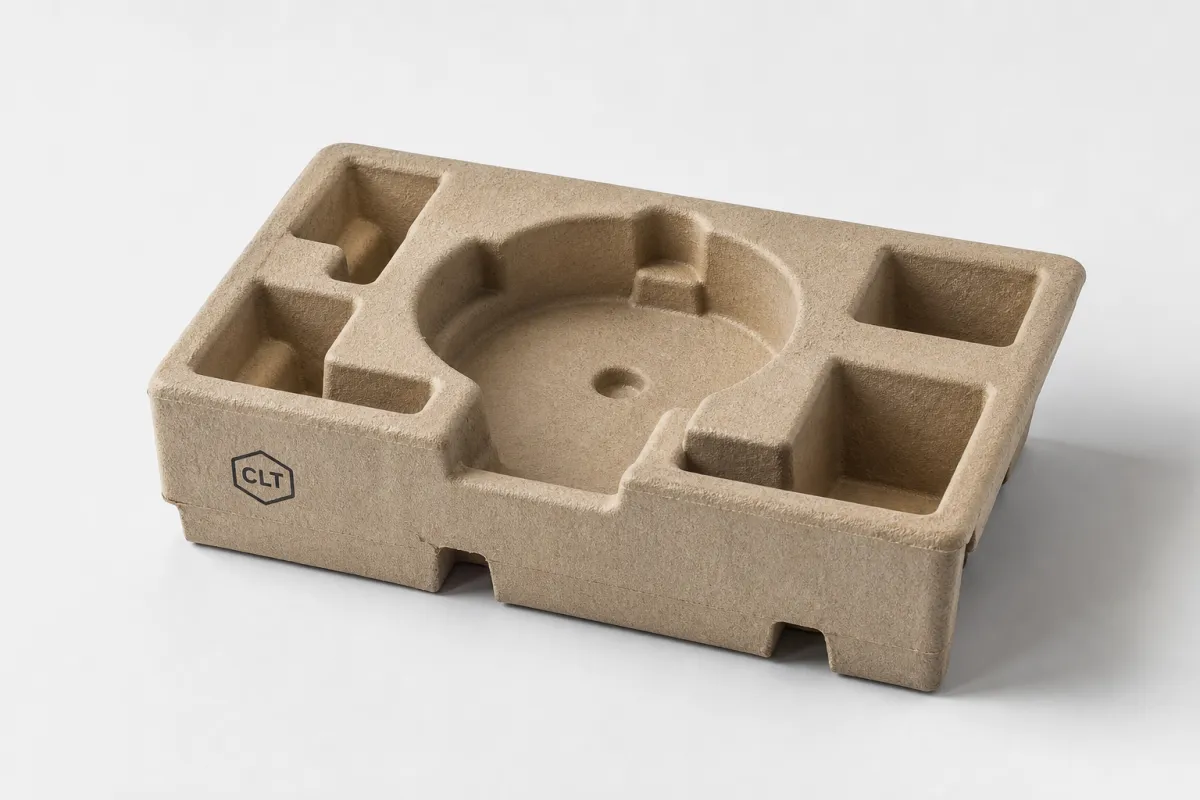
The real strength of custom molded pulp tray inserts is control. Cushioning matters, but control matters more. A well-designed tray tells the product where to sit, limits how far it can move, and directs force through the pack when a carton gets stacked, dropped, or shoved sideways in a warehouse. That is why these trays show up in fragile electronics, cosmetics, glass, small appliances, and kit packaging where repeatable presentation is as important as protection.
On a cost sheet, custom molded pulp tray inserts can look more expensive than foam at first glance. That first glance misses the bigger picture. A tray that speeds pack-out, reduces return rates, and gives the customer a cleaner opening experience often saves money in places buyers feel immediately: labor, damage claims, and the kind of complaints that quietly chew through margin. Packaging design rarely lives in material cost alone. The whole system tells the real story.
The sustainability story is real, as long as it stays honest. Many custom molded pulp tray inserts use recycled fiber, which can reduce plastic use and simplify disposal depending on coatings, inks, and local recycling rules. Some formats can be compostable under the right conditions. Others cannot. That is not a branding problem; it is a specification problem. Claims on the box need to match the material and the actual end-of-life path.
The trays that hold up best are often the plainest ones. No decorative excess. No shapes that exist just to impress a rendering. Just the right wall thickness, ribs in the right places, and a cavity that truly matches the product. People get drawn toward visual polish, then wonder why the insert is costly and still weak in transit. The insert should protect the item first and support the brand second.
If the tray only fits on paper, it does not fit.
That sounds blunt because the point is blunt. A pack only performs as well as its weakest point, whether that is the insert, the carton, the closure, or the way the line operator loads it. Custom molded pulp tray inserts do their best work inside a sensible package system, not as a last-minute fix for an underbuilt shipper. The tray is part of the system, not a patch over it.
One more thing that gets overlooked: pulp trays do not need to look perfect to work well. A lot of teams get nervous when they see a little surface variation or a fiber texture that looks less polished than plastic. That reaction is understandable, but it is kinda the wrong test. The better question is whether the part protects the product, packs consistently, and survives the trip without adding waste.
How Custom Molded Pulp Tray Inserts Work
At a basic level, custom molded pulp tray inserts begin as a fiber slurry that is drawn onto a mold with vacuum, formed into shape, pressed, and dried. The mold gives the tray its cavity, walls, corners, and structural details. What comes out is a fiber part that can be tuned for fit and protection instead of a generic off-the-shelf tray that only gets close.
The forming process is where most of the performance lives. Deeper pockets hold products more securely. Ribs and raised edges help the tray resist crush. Rounded corners reduce stress points. Finger notches can speed pack-out, especially when operators need to remove or replace a product without forcing it. Small geometry choices like these make a larger difference than most people expect when they first spec custom molded pulp tray inserts.
Tray style matters too. Some trays use smoother cosmetic faces because the product sits close to the top surface and the reveal matters. Others are thicker and more protective, with a rougher texture that makes sense for shipping-only applications. Nested trays are common for multiple components, while split trays or two-piece sets can be better for products with odd protrusions. Good packaging design comes from matching the tray style to the actual use case, not the prettiest rendering.
Custom molded pulp tray inserts also interact with the outer carton, and that part gets ignored too often. Too much void in the corrugated box lets the tray shift. Weak carton walls still allow motion even when the insert is carefully shaped. A close-out method that compresses the tray too much can load the product before the package even leaves the warehouse. This is why the insert, the carton, and the closure should be designed together, especially for branded packaging and retail packaging where the box opening is part of the experience.
Performance always comes with tradeoffs. More structure usually means more fiber, longer drying, and a higher unit price. Thinner walls can lower cost, but only if the product does not need stronger load paths. Custom molded pulp tray inserts are not just shaped pulp; they are a balance between material use, machine capability, and the abuse the pack must survive.
If you want to compare that balance with other packaging elements, it helps to think the same way you would when selecting Custom Packaging Products for a larger program: the insert has to fit the carton, the product, and the line speed, or the rest of the system starts paying for the mismatch.
Custom Molded Pulp Tray Inserts Cost, MOQ, and Pricing
Cost is where buyers get impatient, and that reaction makes sense. Custom molded pulp tray inserts can seem expensive if you compare only the unit price against a cheap foam pad or a basic corrugated spacer. That comparison leaves out tooling, labor, freight, damage reduction, and the way the insert changes pack-out speed. A tray that saves 8 seconds per pack is not a small gain once volume climbs into the thousands.
Tooling is usually the first cost driver. Simple molds may fall in the $1,500-$4,000 range. Larger or more detailed production tools can run $5,000-$12,000 or more, especially when multiple cavities, tighter tolerances, or complex deep-draw geometry are part of the spec. Sample tooling can cost less, though sample tools are not production tools and should never be treated as if they are interchangeable.
Unit price depends on volume and complexity. For straightforward custom molded pulp tray inserts, rough planning numbers might look like this:
| Volume | Simple Tray | Moderate Tray | Complex Tray |
|---|---|---|---|
| 500 units | $0.85-$1.40 | $1.10-$1.85 | $1.60-$2.60 |
| 1,000 units | $0.55-$0.95 | $0.75-$1.35 | $1.10-$1.90 |
| 5,000 units | $0.22-$0.48 | $0.32-$0.65 | $0.50-$0.95 |
| 10,000 units | $0.16-$0.32 | $0.24-$0.48 | $0.36-$0.75 |
Those numbers are planning ranges, not guarantees. Surface finish, drying method, wall thickness, and cavity count in the tool all move the price. Printed branding, embossing, and special cutouts for accessories change it too. Custom molded pulp tray inserts are economical only when the specification stays disciplined.
MOQ is the next question buyers usually ask. Most custom shapes need a higher MOQ than stock trays because setup and tooling have to be spread across fewer pieces. Simple designs may work at 500 or 1,000 units if the unit price can tolerate it and revisions stay limited. Once volumes reach 5,000 to 10,000, the math often improves enough that custom molded pulp tray inserts start competing well against foam, corrugated, and some plastic options.
The lowest unit price is not always the lowest total cost. A foam insert may be cheap to produce, yet if it slows pack-out, sheds dust, or increases damage, it becomes expensive in practice. A corrugated insert may look efficient, but extra hand assembly can erase the savings in labor. Custom molded pulp tray inserts often win because they sit in the middle ground between material cost and operational cost.
Hidden cost traps show up fast. Over-specifying strength is a common one. So is asking for a premium cosmetic finish on a shipping-only insert that no customer will ever see. Another trap is confusing a lab-friendly tray with one that survives real freight vibration, warehouse handling, and the occasional rough delivery route. If shipping validation matters, use a protocol tied to ISTA or ASTM methods instead of guesswork. The ISTA test standards are a useful reference point when the pack needs to be judged against actual transit abuse.
For a cleaner comparison, here is how common insert choices usually stack up:
| Insert Type | Typical Strength | Presentation | Sustainability | Best Fit |
|---|---|---|---|---|
| Custom molded pulp tray inserts | Good to very good, depending on geometry | Clean, natural, and consistent | Usually strong, especially with recycled fiber | Consumer goods, electronics, glass, kits |
| EPE or EPS foam | Very good cushioning, moisture concerns vary | Functional, less premium | Weaker story and harder disposal in many cases | High shock protection, legacy programs |
| Corrugated insert | Good for positioning, limited cushioning | Simple, economical | Often recyclable, depending on inks and coatings | Light products, low-to-moderate abuse |
| Vacuum-formed plastic | Good dimensional control, limited impact absorption | Neat, sometimes premium | Depends on resin and recovery path | Retail packaging, display packs, tight tolerances |
From a packaging buyer's point of view, the real question is not which insert is cheapest. It is which insert keeps the product safe, speeds the line, and fits the brand without embarrassing the sustainability team. That is where custom molded pulp tray inserts can justify themselves quickly.
Custom Molded Pulp Tray Inserts Process and Lead Time
Lead time is where the schedule starts to become real. Custom molded pulp tray inserts usually move through discovery, measurements, CAD, sample mold creation, prototype review, production tooling, pilot run, and then full production with pack-out testing. If a supplier skips the early steps, problems usually show up later in the program. The sequence matters.
A straightforward tray can sometimes move from brief to sample in about 7-14 business days, depending on factory queue and how quickly questions get answered. Production after approval may take another 10-20 business days for a relatively simple item. Deep cavities, tight tolerance requirements, or special surface finishes can push the full schedule into the 5-8 week range. Custom molded pulp tray inserts are not slow because the material is mysterious; they slow down when the design is immature or the mold is difficult.
Sample lead time and production lead time are different things, and buyers should stop treating them as if they are the same. A prototype can be useful while still being a poor predictor of the final output. The mold may differ, the drying profile may change, and the final material weight may shift slightly. Sample approval should be followed by a pilot run before any large release. That is also why custom molded pulp tray inserts should be quoted with dated milestones instead of vague reassurance.
Here is a practical timeline view:
- Discovery and measurements: 2-5 business days if drawings are clean.
- CAD and design review: 3-7 business days for a simple tray, longer for multi-cavity layouts.
- Sample mold or prototype: 5-10 business days in many cases.
- Revisions and approval: 3-7 business days, but only if feedback is specific.
- Production tooling: 1-3 weeks depending on complexity.
- Pilot run and shipping: 1-2 weeks after tooling is ready.
The schedule can move faster if the supplier has capacity and your specifications are clean. It can slow down hard if the product dimensions keep changing, a protruding connector gets left out of the drawing, or the cavity needs to be 3 mm deeper after sample approval. That kind of revision resets the clock, and custom molded pulp tray inserts are not the place to treat the schedule like a loose suggestion.
Good suppliers will give you dated checkpoints: design approval, sample review, tooling completion, pilot release, and final ship date. Ask for photos of the sample instead of relying on verbal reassurance. Ask whether the sample came from a prototype mold or production-equivalent tooling. Ask what happens if the insert fails a drop test. These are not annoying questions. They are the questions that keep branded packaging programs from drifting into avoidable chaos.
Common Mistakes With Custom Molded Pulp Tray Inserts
The most expensive mistake is designing the insert around the product alone and ignoring the carton, drop height, and handling reality. A tray that holds the item perfectly on a screen may still fail if the outer box flexes too much or the closure allows the top panel to bow inward. Custom molded pulp tray inserts have to work inside the full shipper, not only inside CAD.
Measurement errors come next. People round dimensions too aggressively, forget edge radii, or miss a connector, cap, handle, or decorative element that sticks out farther than the main body. Even a 2-4 mm error can create a loose fit or an over-tight pack. If the product has finish tolerances, such as a painted surface or a molded shell that varies slightly, those tolerances need to be included in the spec. That is packaging design 101, and it still gets missed with frustrating regularity.
Aesthetics-first thinking creates another problem. A deeper emboss or a more dramatic contour may look elegant in a rendering, but if it does not improve protection or reduce labor, it is just extra cost with a better haircut. Custom molded pulp tray inserts should support product packaging goals, not inflate the spec because someone liked the mockup. Harsh? Sure. Accurate? Also yes.
The sustainability trap is subtler. Some teams choose a recycled fiber spec and assume that automatically makes the insert better. That is not always true. If the fiber blend absorbs moisture too quickly, the tray can warp in humid transit. If the product carries oils or liquids, the tray can stain or weaken. If long-distance freight exposes the pack to condensation, a coating or a different pulp recipe may be necessary. The greener solution is the one that survives the trip, cuts returns, and avoids waste. See the EPA’s recycling guidance for a useful baseline on disposal reality: EPA recycling information.
Testing is the last big mistake. A sample on a desk proves almost nothing. A tray needs to be tested with the actual product, actual carton, and actual close-out method. Fragile items should be run through a drop or vibration protocol shaped around ISTA 1A, 3A, or an ASTM D4169-style plan. If that feels like too much testing, the damage claims usually have not started yet.
A sample that never shipped is just a nice object.
That line sounds sharp because many packaging failures are predictable and still ignored. The better habit is to approve custom molded pulp tray inserts only after they survive real handling, not because the cavity looks tidy in a presentation. Packaging is only done once the box has been through the route you actually sell into.
Expert Tips for Better Custom Molded Pulp Tray Inserts
Test with the actual product, the actual carton, and the actual closure method. That should be obvious, but obvious and common are not the same thing. If the tray needs to work with a tuck flap, adhesive strip, or overcap, include that in the trial. Custom molded pulp tray inserts are much easier to get right when the test setup reflects production rather than a simplified lab version.
Use structure where it matters. Ribs, shoulders, and corner supports often do more than adding wall thickness everywhere. A well-placed rib can absorb load and keep a product centered better than a blanket increase in material. Finger notches can speed pack-out and reduce the chance of an operator forcing a product into place. Good packaging design is selective. It places material in the path of force instead of everywhere at once.
Split or modular trays can help when a product has attachments, cords, or awkward geometry. A single deep cavity is not always the best answer. Sometimes two nested pieces reduce damage and improve line speed because each piece is easier to handle. Custom molded pulp tray inserts can be surprisingly flexible in this respect, which is one reason they show up across so many product packaging programs.
Sourcing questions matter just as much as the geometry. Ask for the material recipe, moisture performance, and sample photos from similar jobs. If the supplier cannot explain whether the tray uses recycled fiber, virgin pulp, or a blend, that is a useful signal. If the program needs consistent branded packaging, ask whether the finish will hold up across different production lots. If the claims matter, ask whether the board or pulp source has FSC chain-of-custody support. That is not window dressing. It is how teams avoid awkward conversations later.
For many brands, the smartest sustainability choice is not the lightest possible tray. It is the tray that uses less material overall because it fits correctly, ships cleanly, and reduces breakage. A slightly heavier custom molded pulp tray insert can still be the better option if it prevents returns, secondary packing, or extra void fill. That is the sort of tradeoff buyers should actually care about.
And yes, the insert should still look decent. Not fancy. Decent. In retail packaging, the first reveal matters. A tray that cradles the product neatly can raise the perceived quality of the whole box, especially when paired with custom printed boxes and a clear brand presentation. That is where package branding becomes practical instead of theoretical.
One detail I keep coming back to in packaging reviews is consistency. If the tray works beautifully in the first dozen units and then starts drifting, the program is not finished. The geometry, drying profile, and load path all need to stay within a tight band. That is the kind of boring discipline that saves a program from becoming an expensive cleanup job later.
Next Steps Before You Request a Quote for Custom Molded Pulp Tray Inserts
If you want a quote that actually means something, gather the minimum spec sheet first. You need product dimensions, product weight, finish condition, carton size, drop risk, annual volume, target market, and whether the pack will ship retail-ready or as a plain transit pack. The more precise this is, the less back-and-forth you will need. Custom molded pulp tray inserts become much easier to quote once the basic geometry and abuse level are clear.
Send suppliers three direct questions: what is the MOQ, what is the sample timeline, and what changes will move the unit cost. Those questions reveal whether the vendor understands the project or is just tossing out a number. Ask whether the quote includes design help, revisions, and freight. Ask whether the sample is chargeable and whether that sample cost converts into production credit. Those details matter more than a polished sales pitch.
Do not skip the prototype or sample die if the product is fragile, expensive, or likely to be handled by many people before it reaches the customer. Even a good-looking tray should be checked for fit under pressure, not just fit on the desk. Then compare quotes on the same basis: tooling, freight, revisions, material spec, and whether the vendor is actually helping with packaging design or simply selling pulp by the piece.
If you need adjacent components, the broader Custom Packaging Products catalog can help you coordinate trays with cartons, inserts, and other product packaging pieces so the whole shipment feels intentional instead of patched together. That is the difference between a pack that ships and a pack that performs.
My practical advice is simple: shortlist two or three suppliers, request samples, run a shipping test, then lock the version that balances protection, cost, and sustainability without pretending any one of those goals can be pushed to the maximum at the same time. Custom molded pulp tray inserts are worth the effort when they are spec'd honestly, tested properly, and matched to the real product. If you start with the product drawing, the carton dimensions, and the real transit profile, you are gonna get a quote you can actually use instead of a number that falls apart once sampling starts.
How do custom molded pulp tray inserts compare with foam inserts?
Custom molded pulp tray inserts usually win on sustainability and presentation, while foam can still be stronger in water resistance or extreme cushioning situations. The real cost comparison should include labor, freight, and damage reduction, not just the unit price. For many shipping packs, custom molded pulp tray inserts give enough protection with less waste and a cleaner customer experience.
What MOQ do custom molded pulp tray inserts usually require?
Custom molded pulp tray inserts usually need a higher MOQ than stock trays because tooling and setup costs have to be spread across fewer units. Simple shapes can work at lower volumes if you accept a higher unit price and keep revisions tight. Ask suppliers for pricing breakpoints at 500, 1,000, 5,000, and 10,000 units so you can see where custom molded pulp tray inserts start to make better financial sense.
How long does custom molded pulp tray inserts production take?
Samples can move faster than full production, but any design change can reset the schedule. Simple trays usually turn faster than deep-pocket or tight-tolerance designs, which need more validation. Get written milestones for design approval, sample review, tooling, pilot run, and shipping so the timeline for custom molded pulp tray inserts stays grounded in reality.
Can custom molded pulp tray inserts handle fragile or heavy products?
Yes, if the cavity geometry supports the load and the outer carton is strong enough. Heavier items usually need thicker walls, more support points, and actual drop testing instead of guesswork. Very sharp edges, liquids, or long wet transit may require a hybrid pack or a special coating, which is why custom molded pulp tray inserts should always be tested with the full pack system.
Are custom molded pulp tray inserts recyclable or compostable?
Most clean fiber trays are recyclable, but coatings, inks, and contamination can change that outcome. Compostability depends on the fiber blend and local rules, so do not assume it automatically qualifies. Ask the supplier for material data and disposal guidance Before You Print recycling or compost claims on packaging that uses custom molded pulp tray inserts.
For most brands, custom molded pulp tray inserts are worth the effort when the fit is right, the carton is sized properly, and the shipping test is real. Get those three things right, and custom molded pulp tray inserts can protect the product, support the brand, and keep the packaging story cleaner than a foam-heavy alternative. Start with the actual product, confirm the carton, then validate the pack under real transit conditions before you place a production order.

