Custom Cap Supplier Quote for Apparel Brands That Actually Holds Up
A custom cap supplier quote for apparel brands only works when the brief is specific enough to survive production. Leave out panel count, embroidery size, crown height, or closure type, and the number can swing more than the logo ever will. I have seen brand teams chase a low price, only to discover the quote was built on assumptions that never belonged in the first place. That is a painful way to learn that precision is not admin overhead; it is margin protection.
The strongest custom cap supplier quote for apparel brands is the one that explains how the cap will be built, decorated, packed, and shipped. The lowest line on the page is not always the best deal. A quote with fewer surprises is usually the better one because it helps buyers compare like for like, keeps reorders consistent, and reduces the chance that the sample and the bulk order drift apart. That part sounds boring. It is also where good sourcing saves real money.
Why a custom cap supplier quote for apparel brands starts with the brief
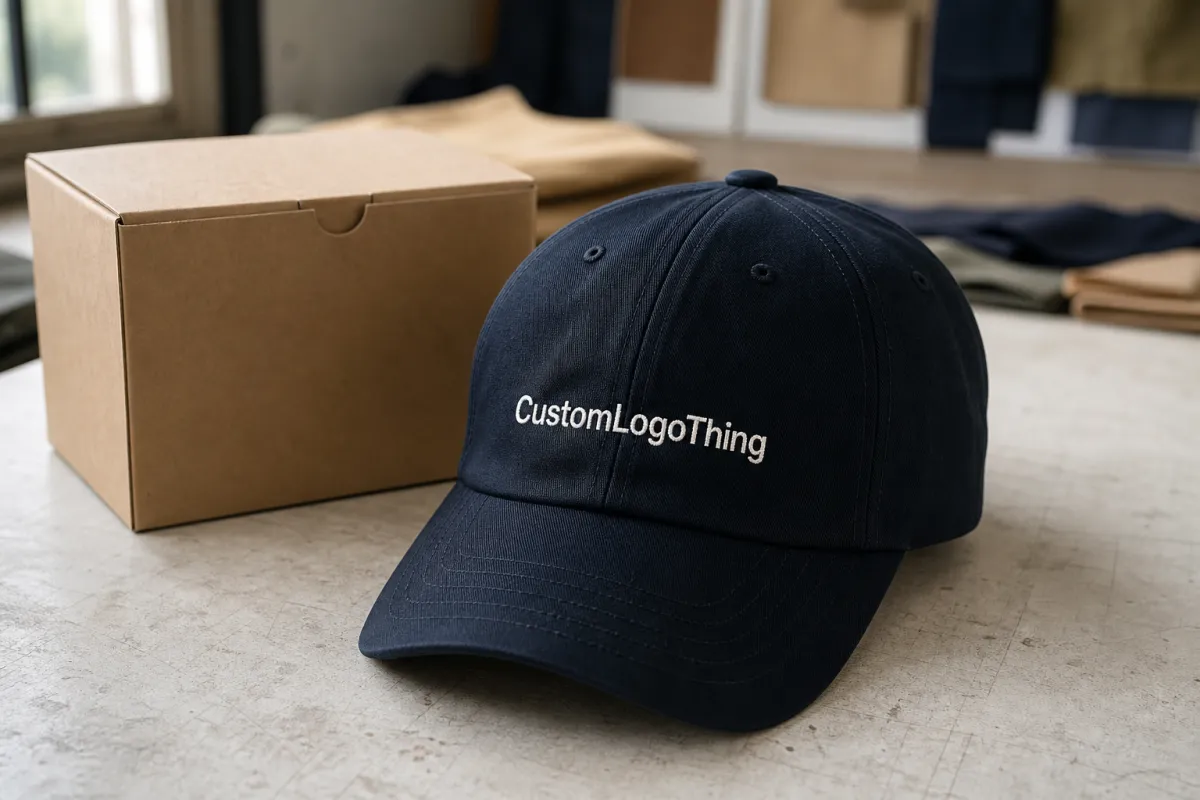
Most quote problems start with one missing field. A buyer writes “embroidered cap” and assumes the supplier will fill in the rest, but a custom cap supplier quote for apparel brands changes sharply depending on whether the style is a five-panel unstructured dad hat, a structured snapback, or a mesh trucker with a foam front. Panel count, crown height, brim curve, closure hardware, and reinforcement all affect labor, materials, and proofing time.
I think apparel teams get better results when they treat quoting like a specification exercise, not a price hunt. A custom cap supplier quote for apparel brands should answer a simple question: can this exact cap be repeated without drift? If the answer is yes, the buyer gets a quote that supports production instead of a number that only works on paper.
That matters even more for brands running multiple collections. One season may use washed cotton twill, the next may call for polyester with a moisture-wicking sweatband. If the brief changes halfway through, the custom cap supplier quote for apparel brands has to be revised, and every revision adds time. That delay has a knock-on effect. Artwork approval slows down, sample dates move, and the order slot becomes harder to hold.
A good quote behaves like a repeatable spec, not a number on a screen. If the supplier cannot restate the cap in plain language, the custom cap supplier quote for apparel brands is probably hiding assumptions.
The strongest supplier relationships are built on comparison, not persuasion. A buyer should be able to line up two or three versions of a custom cap supplier quote for apparel brands and see the differences clearly: fabric grade, decoration method, packaging level, lead time, and whether the minimum order quantity applies per design or per colorway. That is how brands protect margin and avoid ugly surprises when it is time to reorder.
For teams that also handle branded packaging, the same logic applies. If the cap launch includes hang tags, retail packaging, or Custom Printed Boxes for premium sets, those choices need to be in the brief from day one. A quote that ignores package branding may look cheaper until freight, carton counts, inserts, and pack-out labor are added back in. Then the math gets less flattering, pretty fast.
Custom cap supplier quote for apparel brands: product details that matter
Style choice drives far more than appearance. A custom cap supplier quote for apparel brands for a dad hat usually looks different from a quote for a fitted cap or a structured snapback because the construction and labor load are not the same. Dad hats often use softer crowns and simpler closures. Snapbacks usually need a firmer front, a cleaner silhouette, and a snap closure that can be sourced in the right color.
Here is the practical breakdown most apparel brands request in a custom cap supplier quote for apparel brands:
- Dad hats - unstructured, low crown, usually washed cotton or chino twill, often chosen for lifestyle drops.
- Snapbacks - structured, flat or slightly curved brim, higher crown, common in streetwear and team merchandise.
- Truckers - foam or fabric front with mesh back, useful for lighter, sportier looks and ventilation.
- Five-panels - flatter front profile, popular for outdoor brands and limited releases.
- Performance caps - polyester or nylon blends, often with sweat-control features and laser-cut ventilation.
- Fitted options - less common for new brand programs, but still relevant when a premium fit is the selling point.
Each style changes the custom cap supplier quote for apparel brands in a different way. A structured snapback may require buckram or another reinforcement layer in the front panel. A trucker adds mesh and usually a different back closure. A performance cap may need heat-transfer decoration instead of dense embroidery if the buyer wants a lighter handfeel and a faster production path.
Decoration is the next major driver. A custom cap supplier quote for apparel brands can move based on whether the logo is embroidered directly, applied as a woven patch, printed patch, silicone badge, or heat-applied graphic. Direct embroidery often costs less to set up but more to stitch when the design has several colors or dense fill. Patches can look more premium, yet they add a separate manufacturing step and another approval point. That is the tradeoff. Cheap on the front end, sometimes slower on the back end.
Small brand details matter too. Under-brim printing, seam taping, woven labels, and custom inside tags may sound minor, but they are the details buyers notice when a cap moves from sample stage to shelf-ready product. A custom cap supplier quote for apparel brands should show whether those elements are included or priced separately. That difference matters for retail packaging and the overall perceived value of the item.
For premium programs, I have seen brands use cap decoration almost like product packaging. The cap itself carries the logo, but the inside label, patch finish, and carton presentation help tell the story. A custom cap supplier quote for apparel brands that includes those layers gives the buyer a better read on the final retail result, not just the cost line. One buyer I worked with once swapped a basic woven label for a dyed-to-match woven label and said the whole hat suddenly looked “expensive enough to keep.” That tiny change was doing a lot of work.
Specifications that change fit, finish, and approval speed
The fastest way to improve a custom cap supplier quote for apparel brands is to tighten the spec sheet. The supplier does not need a novel. It needs the core data: fabric composition, fabric weight, panel count, eyelet style, closure type, sweatband finish, and decoration placement. If those fields are complete, quoting gets faster and the sample is less likely to miss the mark.
Fabric composition is especially important. A cotton twill cap behaves differently from a polyester performance cap, even if both carry the same logo. Cotton usually feels softer and can be washed to create a relaxed finish. Polyester resists moisture better and holds shape through heavier use. When a buyer gives that information up front, the custom cap supplier quote for apparel brands can reflect the right material and the right labor assumptions.
Fit details can be surprisingly expensive to ignore. A six-panel cap with a mid crown will sit differently from a low-profile five-panel. A pre-curved brim is not the same as a flat brim. A fabric-covered closure costs differently from a metal buckle or a plastic snap. Those distinctions alter the custom cap supplier quote for apparel brands because they influence both production time and the final comfort profile.
Decoration placement is another approval risk. Front-center embroidery is straightforward. Side embroidery, back embroidery, and brim decoration need more care because the cap has less usable space and more curves. If the art is not scaled properly, the supplier may need to revise the file or request a second proof. That slows the custom cap supplier quote for apparel brands and can push the sample timeline back by several business days. Nobody loves that part, but it is better to catch it before production than after 1,000 pieces are sitting on a dock.
Quality and compliance details save time later. Use Pantone references where possible, especially for thread colors and patch backgrounds. Decide whether care labeling is required, whether barcodes need to be packed by size or color, and how cartons should be numbered. If the caps will travel through a distribution center, ask whether the packaging plan aligns with transit testing expectations such as ISTA. For paper inserts or FSC-labeled hang tags, FSC is the right reference point. Those details do not only help the production team; they make the custom cap supplier quote for apparel brands cleaner and easier to approve.
One more point: fit and finish need to match the collection. A streetwear drop can tolerate a softer handfeel and a looser silhouette. An athlete program often cannot. A custom cap supplier quote for apparel brands should state whether the cap is meant to sit as retail display product, event giveaway product, or a durable reorder item. That context changes not just the bill of materials, but the approval speed as well.
Core specification checklist
- Fabric type and weight, such as 260gsm cotton twill or lightweight polyester.
- Panel count, crown height, brim shape, and internal reinforcement.
- Closure style, including snapback, strapback, buckle, Velcro, or fitted sizing.
- Decoration method, artwork size, placement, and thread or print color references.
- Labeling, care instructions, carton count, and packaging format.
Cost, pricing, MOQ, and unit cost: how to compare quotes
A custom cap supplier quote for apparel brands is easiest to compare when every line item is visible. The headline price is only part of the story. Material grade, decoration method, number of colors, setup work, labeling, and packaging all change the real landed cost. If one supplier includes custom labels and another does not, the lower quote may not actually be lower.
Here is a practical range most buyers can use as a starting point for a custom cap supplier quote for apparel brands. For a simple embroidered dad hat at a mid-sized run, the unit price may fall around $2.10-$3.40 before freight and sampling. A structured snapback with a woven patch often lands closer to $2.80-$4.20. A performance cap with lighter decoration can sit around $2.40-$3.90, depending on fabric and closure. These are working ranges, not fixed rules, because decoration coverage and packaging choices can move them quickly.
MOQ is the part many teams misread. A custom cap supplier quote for apparel brands may show a minimum of 100 pieces for one style, but 300 or 500 for another. MOQ often changes by decoration method and construction complexity. A lower minimum can help with a launch test, yet it usually carries a higher per-unit cost because setup is spread across fewer units. If the brand plans a reorder, the right question is not just “what is the MOQ?” but “what does the quote do at 300, 1,000, and 3,000 pieces?”
Hidden cost is where margin disappears. Sampling fees can run from $35-$120 depending on the style and decoration. Setup or digitizing charges may sit around $20-$150. Freight can stay small on a domestic sample and become far larger on a bulk shipment, especially if the caps ship in custom printed boxes or retail-ready cartons. A clean custom cap supplier quote for apparel brands should separate those items so the buyer can compare apples to apples.
| Quote option | Typical MOQ | Common decoration | Indicative unit price | Best fit |
|---|---|---|---|---|
| Embroidered dad hat | 100-300 pcs | Direct embroidery, woven label | $2.10-$3.40 | Lifestyle launches, influencer kits, soft retail looks |
| Structured snapback | 300-500 pcs | Woven patch, flat embroidery, inside tag | $2.80-$4.20 | Streetwear drops, team programs, stronger shelf presence |
| Performance cap | 200-500 pcs | Heat transfer, silicone badge, print detail | $2.40-$3.90 | Activewear, outdoor use, moisture-focused collections |
The best comparison framework is simple. Use one spec sheet, one artwork file, one packaging note, and one target delivery date. Then ask each supplier to price the same quantity tiers. A custom cap supplier quote for apparel brands becomes much more meaningful when the buyer can see where price breaks happen, where setup gets absorbed, and whether shipping terms are included or excluded.
Do not compare a bare cap price with a retail-ready cap price. If one supplier includes branded packaging, label insertion, and carton mapping while another leaves those out, the cheaper-looking quote may end up more expensive after rework or added freight. That is especially true for brands that care about retail packaging, product packaging, and package branding because the box or tag is part of the customer experience, not an afterthought.
Process and turnaround: how the quote moves to production
A custom cap supplier quote for apparel brands usually follows a predictable path, and the fastest projects are the ones with the fewest unclear steps. The process starts with the brief, moves to pricing, then artwork proofing, sample approval, purchase order confirmation, manufacturing, quality control, and shipment. If any one of those stages is vague, the timeline expands.
Artwork revisions are the most common cause of delay. A logo that looks fine in a flat file may need scaling to fit the front panel, especially on a five-panel or a low-profile crown. Pantone matching can also take time if the brand wants the cap and the decoration to stay tightly aligned with a seasonal palette. A custom cap supplier quote for apparel brands is not just about the cap; it is also about how quickly the artwork can be locked.
Sampling is another checkpoint that deserves real attention. Some buyers want a digital mockup first, then a physical sample before bulk production. Others can approve from a detailed proof if the style is standard. There is no universal answer, but one thing is clear: the more complete the brief, the less likely a custom cap supplier quote for apparel brands will be delayed by clarification rounds. One decision-maker helps too. When five people review the same sample and each wants a different adjustment, the production calendar suffers.
Lead time changes with seasonality and complexity. A straightforward embroidered cap may move from proof approval to bulk production in roughly 12-20 business days, while a more customized build with labels, patches, and specific packaging may take longer. Add export shipping, and the calendar stretches again. If the caps are moving by air, the time cost is different from sea freight. A good custom cap supplier quote for apparel brands should state that clearly instead of pretending one timeline fits every order.
For fast quoting, the buyer needs more than urgency. The supplier needs organized files, a clear target delivery date, and a direct answer on approval authority. That is why a custom cap supplier quote for apparel brands often gets sharper the moment the buyer sends all of the basics in one message rather than across five emails. It is not about being demanding; it is about removing friction before production starts. And yes, the supplier notices when the thread color, mockup, and packing note all agree the first time. That part makes everybody’s day easier, kinda like cleaning a lens before taking the photo.
Typical quote-to-production flow
- Send brief, artwork, quantity, and delivery target.
- Receive the first custom cap supplier quote for apparel brands with line-item pricing.
- Review proof, decoration placement, and packaging details.
- Approve sample or digital mockup.
- Issue purchase order and lock final specs.
- Manufacturing, quality checks, and carton preparation.
- Ship with the agreed packing format and delivery schedule.
One practical note: if the project includes carton testing, ask how the supplier handles transit strain. For retail shipments, ISTA provides testing guidance that can be useful when caps are packed with inserts or shipped in display-ready cartons. That matters because a good custom cap supplier quote for apparel brands should survive not just the factory floor, but the distribution path too.
Why choose a supplier built for apparel brand buying
The right supplier does more than cut and stitch. A custom cap supplier quote for apparel brands should come from someone who understands repeat orders, colorway changes, and retail expectations. Apparel teams need consistency across drops, not a one-off price that cannot be repeated later. If a cap spec drifts from sample to bulk to reorder, the brand pays for it in mismatched inventory and avoidable QA work.
Retail-minded support changes the quote experience in real terms. That includes clean labeling, branded packaging, carton planning, and size or color breakdowns by SKU. If the caps are being sold alongside other product packaging items, such as hang tags, mailers, or custom printed boxes, the supplier should be able to think in the same system the merchandising team uses. Packaging design is not only for cartons and boxes; it also affects how a cap is presented, stored, and counted in a warehouse.
Communication is the second half of the equation. A supplier can have solid factory capability and still be a weak fit if updates are slow or vague. Apparel brand buyers need precise status notes because launch calendars are often tight. When a custom cap supplier quote for apparel brands comes with clear response times, direct answers, and no hidden steps, the whole order becomes easier to manage.
From a buyer's standpoint, the best suppliers solve problems before they become expensive. That may mean warning that a dense embroidery file will add stitch time. It may mean recommending a different closure for a lower MOQ. It may mean saying the cap can be decorated one way for sampling and another way for bulk to keep the timeline realistic. A custom cap supplier quote for apparel brands that includes that kind of judgment is usually worth more than a smaller number with no context.
For brands comparing vendors, the most useful proof is usually not a polished sales deck. It is a previous order that shipped on time, matched the approved sample, and came back clean on inspection. That is the quiet kind of authority that matters in sourcing. Not flashy, just dependable.
If you want to see how spec control affects approval speed, review our Case Studies. If the project also needs packaging support, our Custom Packaging Products page shows adjacent options that can help with branded packaging and retail packaging decisions. Those examples are useful because they show how the cap, the label, and the carton behave as one system, not three separate purchases.
In practice, apparel brands do best with suppliers who understand both the cap and the surrounding system. That means the cap, the label, the carton, and the shelf presentation all belong in the same conversation. When that happens, the custom cap supplier quote for apparel brands becomes a working plan instead of a rough estimate.
How to request a quote that gets a fast, accurate reply
If speed matters, send a complete brief the first time. A custom cap supplier quote for apparel brands can move quickly when the buyer includes cap style, fabric, quantity, decoration method, target price, destination, and due date in one message. Missing any of those fields usually means the supplier has to guess, and guesses turn into revisions.
Think of the quote request as a short technical sheet. Include the exact cap style, such as dad hat, snapback, trucker, five-panel, or performance cap. Add the crown profile, closure type, and whether the brim should be flat or pre-curved. Then note whether the logo should be embroidery, a woven patch, a printed patch, a silicone badge, or a heat-applied graphic. The tighter the brief, the better the custom cap supplier quote for apparel brands will align with the finished piece.
Reference images help a great deal. Send one or two photos that show the shape you want, then attach the artwork file in a clean format. If you have Pantone references, include them. If you need branded packaging, insert cards, or retail packaging that must match a launch theme, say so now. A supplier cannot price what it does not know exists. That is the simplest reason a custom cap supplier quote for apparel brands becomes more accurate when the buyer is organized.
Ask for quantity tiers. A quote for 300 pieces can look very different from a quote for 1,000 pieces, and a quote for 3,000 pieces may improve sharply because setup costs are spread wider. That is useful for apparel brands trying to balance margin against sell-through. The supplier should show where the unit cost changes and whether the MOQ applies per design, per colorway, or per production run.
Quote request checklist
- Cap style, panel count, crown height, and brim shape.
- Fabric composition, fabric weight, and closure type.
- Decoration method, logo placement, and approximate artwork size.
- Quantity target, plus 2-3 quantity tiers for comparison.
- Packaging note, label requirement, and shipping destination.
- Target delivery date and any launch deadline that cannot move.
Use a short, direct template if you want faster replies. Something like this works well: “Please quote a custom cap supplier quote for apparel brands for 500 dad hats, washed cotton twill, 6-panel unstructured, front embroidery, woven side label, packed 50 per carton, shipping to our warehouse, with pricing at 300, 500, and 1,000 pieces.” That is enough detail for most suppliers to price accurately without a long back-and-forth.
Once the request goes out, keep the decision path simple. One approved contact should own the brief. One file should be the source of truth. One note should explain packaging or labeling changes. That structure turns a custom cap supplier quote for apparel brands into a real production path, not a scattered estimate with too many assumptions.
Next steps to compare, approve, and place the order
Before choosing a supplier, compare two or three quotes using the same spec sheet. A custom cap supplier quote for apparel brands only has meaning if the underlying details match. If one quote assumes cotton twill and another assumes performance polyester, the price gap is not a real comparison. The same applies to embroidery size, patch type, packaging format, and freight terms.
After that, confirm the sample. Do not approve bulk production until the sample shows the right fit, color, decoration placement, and closure behavior. If the cap is intended for retail packaging or a premium launch, check the carton plan too. Does the packed piece fit the shelving or distribution method? Does the package branding support the shelf story? Small details here save bigger problems later.
Then lock the final artwork and the final packing format. If the brand uses custom printed boxes or a specific insert style, keep that detail in the approval record. Save the spec sheet for the reorder. That is how apparel teams maintain consistency across new colorways and future drops. A good custom cap supplier quote for apparel brands should become the master record for the next purchase, not a file that gets buried after one order.
The practical takeaway is simple: compare only on the same spec, approve only after the sample matches that spec, and archive the final quote with the packing instructions attached. If those three steps are handled cleanly, the next order becomes easier to repeat, and the brand stops paying for the same mistakes twice.
FAQ
What should I include in a custom cap supplier quote for apparel brands?
Include cap style, fabric, closure type, decoration method, quantity, target delivery date, and shipping destination. Attach logo artwork, color references, and any packaging or labeling requirements so the supplier can price accurately. If possible, request pricing for multiple quantity tiers so you can see how the custom cap supplier quote for apparel brands changes with volume.
How does MOQ affect a custom cap supplier quote for apparel brands?
MOQ usually changes by style and decoration method, so a simple embroidered dad hat may have a different minimum than a printed performance cap. Lower minimums often mean higher unit pricing because setup costs are spread across fewer pieces. Ask whether the MOQ applies per colorway, per design, or per production run before you compare quotes.
Why do two custom cap supplier quotes for apparel brands look so different?
The quotes may use different fabrics, decoration methods, packaging levels, or shipping terms. One supplier may include setup, labels, or freight while another shows those as separate line items. Compare the same spec sheet before judging which custom cap supplier quote for apparel brands is actually lower.
How long does it take to get samples and production approval?
Timing depends on artwork readiness, decoration complexity, and whether a physical sample is required before bulk production. Fast approvals usually happen when the buyer provides complete specs, clear artwork, and one decision-maker. Production lead time can extend during peak season or when material sourcing changes, so build that into the custom cap supplier quote for apparel brands.
Can I request quotes for multiple cap styles at once?
Yes, and it is often the fastest way to compare price, MOQ, and turnaround across styles. Ask the supplier to quote each style separately so you can see which options best fit margin and launch timing. Use one standardized brief so every custom cap supplier quote for apparel brands can be compared on the same basis.

