An accurate beanie manufacturer Quote for Apparel Brands should do more than spit out a unit price and call it a day. It should show how cuff depth, yarn blend, stitch density, decoration method, and packaging format change the build, because those details usually move the number more than logo size ever will. If the quote cannot explain the tradeoffs, it is not a planning tool. It is a placeholder.
From the buyer side, the best quote is the one that cuts down on guesswork. A retail drop needs different economics than a staff uniform program. A promo order needs different timing than a cold-weather collection that has to land before the season turns. Getting pricing early, before artwork is locked, helps avoid a second sample round or a redesign that blows up the calendar. Nobody enjoys fixing preventable problems after the sample has already looked good on a desk.
A useful quote should show what is included, what is optional, and where the real cost drivers sit. That is the difference between a number that looks fine in email and a number that still makes sense once the goods are packed, labeled, and ready to ship.
Why Brands Request a Beanie Manufacturer Quote Before Artwork
Most apparel buyers learn this the hard way: a small spec change can matter more than the art. Move the cuff from 2.25 inches to 3.25 inches, switch from a plain acrylic yarn to a wool blend, or tighten the knit gauge for a denser handfeel, and the factory may need a different machine setup, a different yarn count, or a longer finishing step. That is why a first-pass beanie manufacturer Quote for Apparel Brands is often requested before final logo approval.
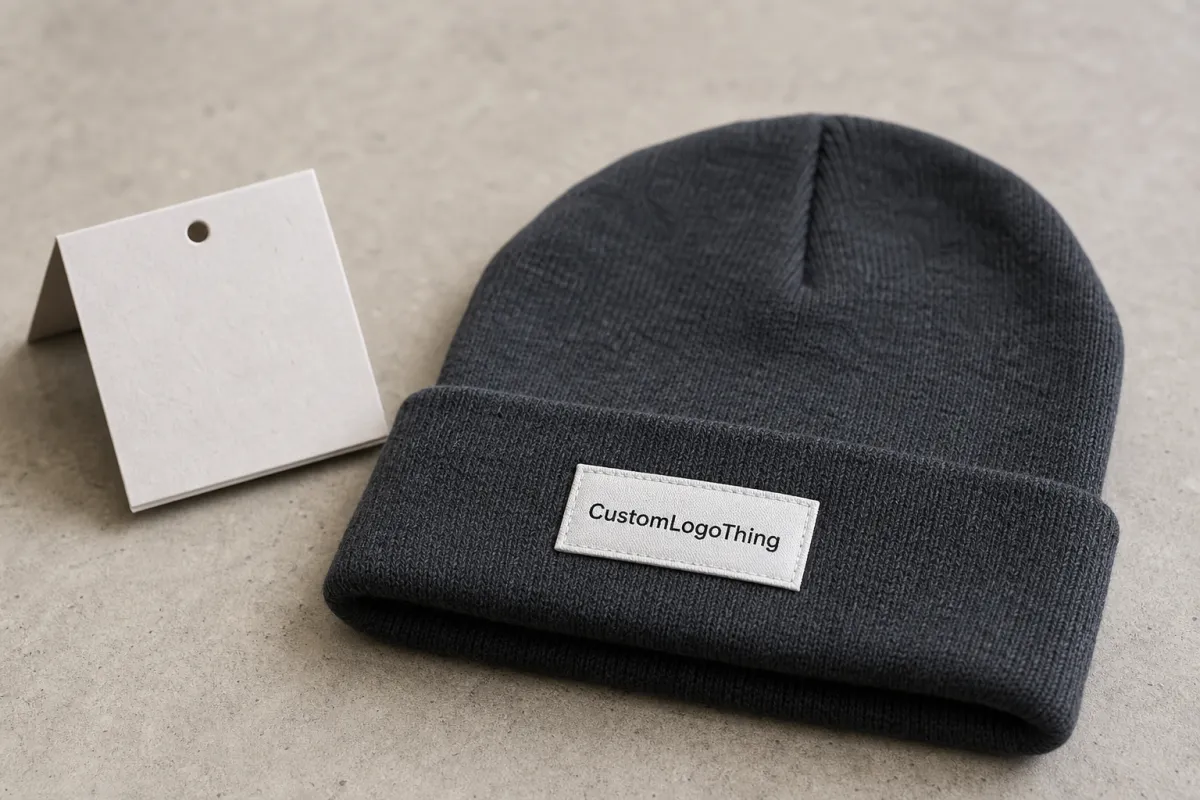
The quote is a decision tool. It tells you whether the product belongs in a premium retail line, an employee program, or a lower-cost giveaway. It also helps you avoid polishing artwork for a construction that will not hold it well. A bold woven patch, for example, may be a better call than dense embroidery on a low-stretch knit if the goal is a clean front panel and fewer production headaches.
Brands also use the quote to compare scenarios that look similar on paper but behave very differently in production. One version may use a woven label and kraft belly band; another may use direct embroidery and individual polybagging. Those changes can move the landed cost more than a two-color logo change. If the team is deciding between a seasonal drop and a replenishment program, the quote should make that comparison obvious, not buried under vague language and cheerful nonsense.
A clear quote also helps internal approval. Merchandising wants margin, operations wants timing, and design wants the product to still look like the product they approved. The earlier those questions are answered, the less likely the order is to wobble after sampling. That stability matters because every late change costs more than the change itself.
Beanie Styles, Materials, and Decoration Options
Apparel brands usually start with a few core constructions. A cuffed knit beanie is the most common because it gives room for a logo on the fold and a fit that works across a broad range of head sizes. A slouch style feels more relaxed and usually fits streetwear collections better. A rib-knit basic is clean and durable. A pom beanie still has a place for colder seasonal drops, team programs, and brands that want a slightly less serious look.
Material choice changes handfeel, warmth, and price in a very direct way. 100% acrylic is still the workhorse for many programs because it is consistent, easy to match, and usually the most cost-efficient. Recycled polyester can support sustainability claims if the supply chain is documented, and it tends to hold shape well. Wool blends feel warmer and more premium, but they also raise cost and can change how the knit relaxes after finishing. Mixed yarns sit in the middle and usually give brands a better compromise between comfort and margin.
Decoration should match the garment, not fight it. Woven labels are clean and low profile. Embroidery gives stronger texture and works well on thicker cuff areas. Patches, especially woven or faux leather versions, add a more finished retail look. Jacquard knit-in logos look excellent on larger runs because the artwork is built into the fabric, but they need more setup and usually a higher MOQ. If the artwork is tiny, busy, or full of thin lines, the factory should say so plainly instead of pretending the knit machine can do magic.
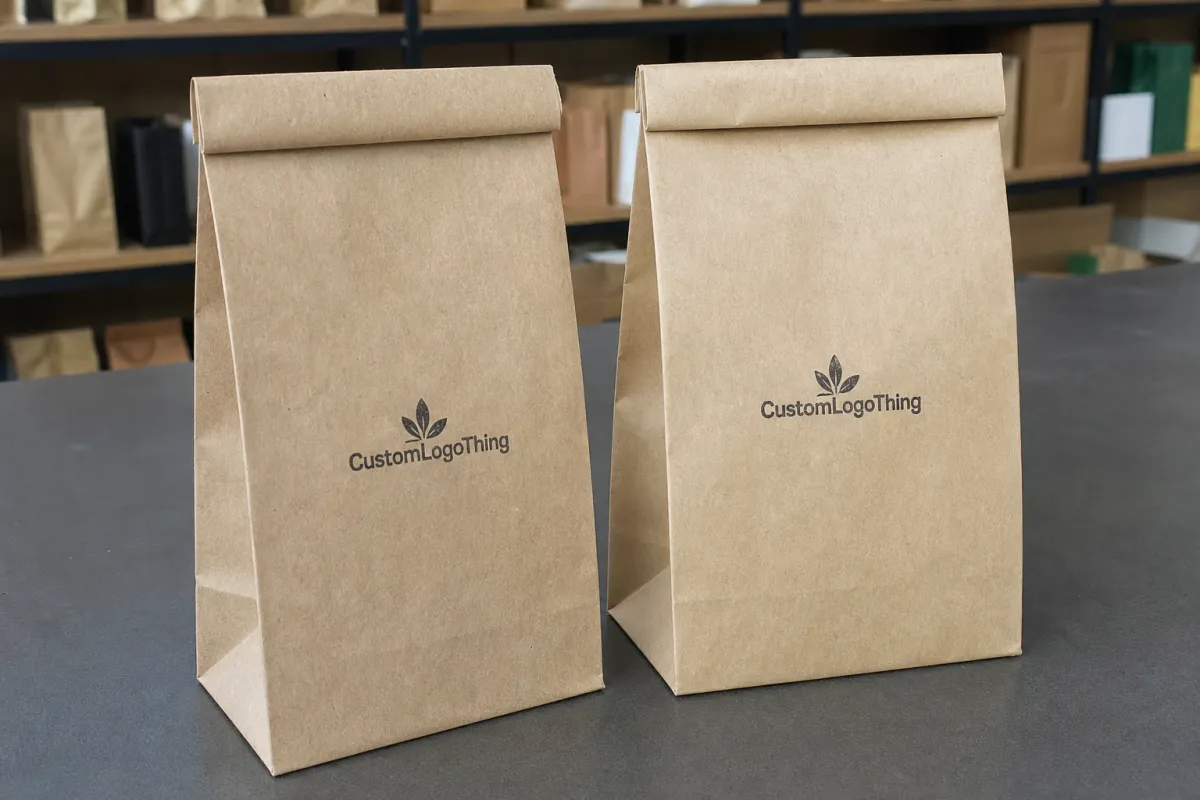
Packaging also belongs in the conversation. Some brands want folded beanies with belly bands for retail display. Others need individual polybags, barcode stickers, or hang tags for warehouse intake. Those details affect both cost and speed. For programs that move through multiple touchpoints, packaging and transit testing matter too; many buyers review ISTA guidance for shipping durability and FSC references when paper-based packaging claims are part of the brief.
For a premium capsule line, a wool-acrylic blend with a custom patch and branded packaging may make sense. For staff uniforms, a reliable acrylic beanie with a simple woven label is usually enough. For a giveaway, the priority is often clean decoration, predictable color, and a price that does not get the marketing team an angry email from finance.
Construction Specs That Define Fit, Feel, and Shelf Quality
Fit starts with a few hard numbers, and those numbers should be on the quote before anything goes into sampling. Crown height decides how deep the beanie sits. Cuff width affects logo placement and how much of the forehead the fold covers. Knit gauge changes texture and density, while yarn thickness shapes stretch and warmth. If those basics are vague, the finished piece can look fine on a flat lay and still feel shallow or tight on the head.
For most adult beanies, buyers often work with crown heights around 8.5 to 10.5 inches and cuff widths around 2 to 3.5 inches, though the exact numbers depend on the style and how the cap is meant to sit. A finer gauge can produce a cleaner retail finish, while a heavier gauge may feel warmer and more substantial. In practice, the factory also needs the target stretch, because an oversized fit is drafted differently from a close-fit style. That sounds obvious, but plenty of quote requests leave it out anyway.
Finishing details matter more than many new buyers expect. Woven labels can be sewn into the cuff seam or the side seam. Care tags may be tucked inside or made tear-away. Folding style affects how the product stacks in cartons and how it presents on shelf. Even something as small as a label shift can change how clean the brand mark looks in retail photography. A good beanie on the rack and a good beanie in the photo are not always the same thing.
A better spec sheet saves time. Include the preferred dimensions, stitch count if known, logo placement, trim style, and packaging format. Add a tolerance range if your brand can accept it, such as cuff width plus or minus 0.25 inch. That gives the factory room to price accurately and reduces the chance of reworking the quote after the first sample comes back.
"The cleanest quote is the one that already answers the first five production questions: what size, what yarn, what decoration, what packaging, and what delivery window."
Beanie Manufacturer Quote for Apparel Brands: Pricing, MOQ, and What Moves Cost
A useful beanie manufacturer quote for apparel brands should break pricing into clear parts: product cost, sample cost, setup charges, optional labeling, freight, and any special packaging. If everything is rolled into one number, you cannot tell whether you are comparing real production value or just different ways of presenting the same job. That is where quote shopping gets messy. A low number without context is not a deal; it is a puzzle.
The biggest cost drivers are straightforward. Quantity matters first, because the setup burden is spread over fewer pieces on a small order. Material choice matters next, because acrylic, recycled polyester, and wool blends do not price the same. Then comes decoration. A woven label is typically simpler than a knit-in logo, and a patch can be quicker than a complex embroidered build. Packaging also adds up if you need individual polybags, hang tags, size stickers, or custom insert cards.
MOQs in knit accessories vary by factory and construction. Simple cuffed acrylic programs may start around 200 to 300 pieces, while more customized knit-in logo styles often sit higher, sometimes 500 pieces or more. Lower quantities usually push the unit price up because the factory still absorbs pattern work, sample time, and machine setup. Larger runs improve efficiency, but only if the spec stays stable across the order. Change the spec after approval and the math gets worse, fast.
Comparing quotes works best when you look at total landed cost, not just the per-piece number. Freight, duty, and packaging can change the economics quickly. A quote that looks cheap on the screen may become the more expensive choice once cartons, labels, and shipping are added. Ask for the pieces to be separated so the team can see where the money goes, and so nobody mistakes a missing line item for savings.
| Beanie Option | Typical MOQ | Common Unit Range | Best Fit |
|---|---|---|---|
| Basic cuffed acrylic | 200-300 pcs | $3.10-$5.00 | Promos, staff programs, budget retail |
| Recycled polyester blend | 300-500 pcs | $4.20-$6.80 | Sustainability-led apparel drops |
| Wool/acrylic blend | 300-600 pcs | $5.25-$7.90 | Higher-end retail and colder weather lines |
| Jacquard knit-in logo | 500-1000 pcs | $5.80-$8.90 | Brand programs needing a built-in graphic look |
Those ranges are practical, not absolute. A two-color logo, a branded woven label, and a simple polybag will not price the same as a four-color graphic, a custom hang tag, and retail folding. Freight distance, lead time, yarn availability, and currency movement can shift the final number as well. Good buyers treat the quote as a live estimate tied to a spec, not a fixed truth carved into stone.
Sampling, Production Steps, and Lead Time After Approval
The quote should map the process from the start. First comes artwork and spec review. Then the factory develops a digital proof or technical mockup. If the construction is custom, a physical sample follows, sometimes with one revision round if the logo placement or handfeel needs adjustment. After sample approval, bulk knitting starts, followed by finishing, trimming, inspection, folding, and packing. Nothing glamorous there. Just the part where details stop being theoretical.
Lead time shifts for very practical reasons. Yarn matching can add days if the color is custom or if the factory needs to source a specific shade. A knit-in logo usually takes more planning than a simple embroidered badge. If the order includes custom labeling, inserted care cards, or retail packaging, those steps sit on top of the core production schedule. For clean orders with stocked materials, I usually see samples in about 7 to 14 business days and bulk production around 12 to 25 business days after approval, but factory load and job complexity can stretch that window.
Good buyers prepare the parts that are hardest to change. Final artwork should be vector-based if possible. Color references should be tied to a standard, not a loose screen image that looks different on every laptop in the room. If repeatability matters, note placement dimensions and tolerances before sampling begins. That avoids slow revisions later and keeps everyone arguing about the actual product instead of a bad mockup.
There is also a logistics step that should not be ignored. If the goods are shipping into a retail distribution center, carton labeling and packing instructions need to be clear before bulk starts. If the order is headed to multiple drop points, the packing plan should reflect that up front. A shipping delay caused by missing instructions is still a delay, even if the knitting finished on time.
What a Reliable Beanie Partner Should Deliver at Scale
At scale, reliability is not a vague service word. It is consistent knit quality, stable measurements, clear communication, and honest timing. A strong supplier should be able to repeat the same cuff height, the same label placement, and the same color family across reorders without making the brand relearn the product every season. That matters a great deal if you are coordinating retail windows, employee launches, or a set of regional drops.
Sample consistency is a major trust signal. If the first sample is soft but the bulk run comes back stiff, that is a problem. If the yarn shade drifts and the label size changes, that is a problem too. The better factories document approvals carefully, confirm spec revisions in writing, and make sure the final production reference is the one everybody is following. Guesswork is expensive in production. It is even more expensive when the goods are already on a boat.
Quality control is not only about defects. It is also about preserving the product story the brand approved. One quote may include a pre-production sample, in-line inspection, and final carton check. Another may not. Ask what the factory checks and how they document it. A serious run should cover measurement checks, stitch consistency, loose yarn ends, label alignment, and packaging count. If the order includes multiple colorways, the yarn lot control should be clear too.
Brands also gain planning value from predictable production commitments. If a supplier consistently misses their own dates, the cost shows up later in missed launches and extra freight. If they flag a yarn shortage or packaging delay early, the brand can adjust. That kind of transparency is worth more than a bargain quote that hides the risk until the last week. Cheap is only cheap if the shipment lands on time and looks right.
"A dependable beanie partner keeps the spec steady, the schedule honest, and the reorder close to the original run."
Common Quote Mistakes That Slow Down Apparel Brand Orders
Most delays start with incomplete information. Vague artwork files, missing size details, and unclear material notes force the supplier to ask follow-up questions before the quote can be finalized. If the brand only says "premium beanie" or "eco yarn" without any real spec, the estimate will be broad and often less useful than the buyer expects. The factory is not being difficult. It just cannot price a rumor.
Another common issue is asking for too many options in one message without separating them. One request can cover a cuffed acrylic beanie, a slouch version, and a knit-in logo style, but each one should be listed as its own line item. Otherwise, the numbers blur together and the supplier has to guess what belongs where. A focused request usually gets a cleaner response and a faster turnaround.
Delivery details matter more than many teams think. If the goods need to land at a warehouse, show up in retail-ready cartons, or be split across locations, say that before final pricing. Packaging and destination can affect freight planning, carton counts, and even how the factory stages the job. If the order is for an event, the schedule should reflect that hard deadline, not a loose target written down by somebody who hopes the universe is feeling generous.
Here is the short checklist I recommend before sending a request:
- Final or near-final artwork in a usable file format
- Target quantity, with a range if the count is still moving
- Preferred style, material, and decoration method
- Packaging and labeling needs
- Delivery destination and target in-hand date
That list is basic on purpose. The fewer things the factory has to guess, the more accurate the quote will be. And the fewer guesses in the quote, the fewer surprises in production.
What to Prepare Before You Request the Final Quote
Before you ask for the final number, get the spec sheet into one clear package. Include the artwork, the preferred beanie style, the yarn preference, the decoration method, the quantity, and the delivery window. If the product is for retail, employee gifting, promotions, or uniforms, say so. That use case changes the recommended build more often than buyers expect.
It also helps to decide what is fixed and what can move. Maybe the budget is firm, but the decoration can shift from embroidery to a woven patch. Maybe the deadline is firm, but the packaging can be simplified. Maybe the style is fixed, but the yarn blend can change to improve margin. The more of those decisions you settle early, the more useful the quote becomes.
Ask the supplier to show sample availability, production timing, and included services side by side. That makes it easier to compare one offer against another without overlooking setup fees or freight assumptions. If a quote looks unusually low, check whether labels, packaging, and shipping are included or hiding elsewhere. That one check saves a lot of unnecessary enthusiasm.
What matters most is clarity. A clean brief usually gets a cleaner quote, and a cleaner quote usually leads to fewer revisions after sampling. That is the whole point: less time decoding the offer, more time deciding whether the beanie actually fits the brand.
What should I include when requesting a beanie manufacturer quote for apparel brands?
Send the target quantity, artwork file, preferred beanie style, material, color count, and decoration method. Add your delivery window and packaging needs so the quote reflects the real landed cost, not only the unit price.
How does MOQ affect beanie pricing for an apparel line?
Lower quantities usually raise unit cost because setup, sampling, and production time are spread across fewer pieces. Higher quantities often improve pricing, especially when the yarn, label, and decoration setup stay the same across the run.
What is the normal lead time after sample approval?
Lead time depends on yarn availability, decoration complexity, and the size of the order. A clean approval process shortens delays, while late spec changes or color revisions usually extend the schedule.
Can I request one quote for several beanie styles at once?
Yes, but each style should be listed separately so the factory can price the construction, decoration, and packaging correctly. That makes it easier to compare options and Choose the Best mix of cost, fit, and presentation.
What helps me get the fastest accurate beanie quote?
A complete spec sheet, final artwork, quantity range, and clear delivery target usually speed things up the most. If possible, include whether the order is for retail, uniforms, or promo use, since that changes the build recommendation.