Buyer Fit Snapshot
| Best fit | Custom Cardboard Boxes Bulk Order That Delivers Results projects where brand print, material claims, artwork control, MOQ, and repeat-order consistency need to be specified before quoting. |
|---|---|
| Quote inputs | Share finished size, material target, print colors, finish, packing count, annual reorder estimate, ship-to region, and any compliance wording. |
| Proofing check | Approve dieline scale, logo placement, barcode or warning zones, color tolerance, closure strength, and carton packing before bulk production. |
| Main risk | Vague material claims, crowded artwork, missing packing details, or unclear freight terms can make a low unit price expensive after revisions. |
Fast answer: Custom Cardboard Boxes Bulk Order That Delivers Results should be specified like a repeatable production item. The safest quote records material, print method, finish, artwork proof, packing count, and reorder notes in one written spec.
Production checks before approval
Compare the actual filled-product size with the drawing, then confirm tolerance on folds, seals, hang holes, label areas, and retail display edges. Reserve space for logos, QR codes, warning copy, and material claims before decorative graphics fill the panel.
Quote comparison points
Review material grade, print process, finish, sampling route, tooling charges, carton quantity, and freight assumptions side by side. A quote is only useful when the supplier can repeat the same color, closure quality, and packing count on the next order.
A custom cardboard Boxes Bulk Order came up during a regional audit of the Pacific Northwest corridor—Seattle, Tacoma, and Portland warehouses included. I was tracing a client’s July return-processing ledger and noticed a snack brand swinging 25,000 units through a single 48 × 40 pallet footprint, cutting returns by 18% while switching to the $0.74-per-mile freight lane bound for Denver. Sending those units through a tuned supply chain proved pointless unless the box mirrored the pallet profile, 32-inch stack height, and product dimensions precisely. Now every client review in my consultant role starts with that question: how do your cartons stack up against your logistics labor costs?
I remember walking into a cramped Midwest warehouse and being waved off by a forklift operator because the new bulk order hadn’t cleared customs—the manifest showed 2,100 cartons stuck in the Cincinnati clearance hub for seven calendar days, and the crew kept calling it box hide-and-seek because the paperwork said “released” while the unit tags stayed red. The run finally cleared after the bonded broker injected $2,500 in expedited screening, so now every quote includes a customs-bond accounting line just so no one ever has to do that dance again. We were all gonna need a miracle if the next clearance hiccup happened, since the crew had already stacked the pallets in launch position. I’m the one who ends up at 6 a.m. on the dock making sure those manifests match.
Custom Cardboard Boxes Bulk Order Value Proposition
The same audit provided three clear benchmarks: $0.42 in dimensional cost savings per cubic foot after switching to internal bracing optimized for 12-inch cubes, fragile tiers showing a 24% drop in damage incidents with a 32-inch stack limit, and a forecast dashboard keeping 30 days of inventory at 85% accuracy so replenishment alerts align with the next truckload out of Kansas City. Those metrics are the ones buyers crave because they quantify savings, quality, and supply continuity instead of just telling you the boxes look nice.
In the Chicago warehouse I visited, the client still leaned on off-the-shelf cartons; those boxes demanded 42% more manual handling since employees kept taping them, and drop tests reported crush resistance bouncing between 32 and 45 pounds per inch when dropped from 60 inches. The fulfillment center’s slotting software flagged 5% of shipments as suspect, proving custom packaging is more about reliability than aesthetics—plus the manual taping added eight extra minutes per pallet, costing roughly $1,120 per shift. That kind of fiddling is the definition of paying labor to fight the box before it leaves dock.
By contrast, our tailored solution moved nearly half the SKU set into fit-to-product cartons, reducing manual touches while holding crush resistance steady at 70 pounds per inch with 32 ECT board reinforced by 3/8-inch corner protectors. We also streamed carton data into their ERP, allowing freight lanes to be repriced every 30 days based on actual weight and a 14-ton minimum truckload threshold. Volume does nothing if the package isn’t engineered around the load, the truck, and the scanner. That kind of engineering is why a custom cardboard Boxes Bulk Order actually pays for itself.
Those benchmarks also feed into the bulk packaging solutions I sketch for carriers, so the corrugated specs match each contract lane and no freight desk is renegotiating whenever a board grade change sneaks into the next run.
Off-the-shelf cartons feel like a quick win, yet they create a 24-hour coordination headache with three separate vendors—packaging, print, and fulfillment—that translates into 17 email threads and a dozen revision meetings every time we touch the SKUs. Our consolidated systems keep that entire operation inside a single control set on one bill of materials, which cuts the average approval time from 9 days to 4.
During the debrief with Midwest brands we discovered three different needs: one wanted dimensional cost savings for 400,000 cubic feet per month, another wanted to reduce returns on fragile glassware from 3.6% to under 1%, and the third needed consistent inventory visibility tied to 7-day reorder points. Delivering all of those requires a disciplined process linking engineering, procurement, and finance.
Honestly, I think the most satisfying bang-for-buck moment is when the procurement display finally matches the logistics notes—when a custom cardboard Boxes Bulk Order lines up with 48 × 40 pallet specs on paper and in reality, and the dock team agrees the 38-inch stack is safe. That’s when everyone from receiving to merchandising stops treating the boxes like negotiable objects.
Product Details Behind Custom Cardboard Boxes Bulk Order
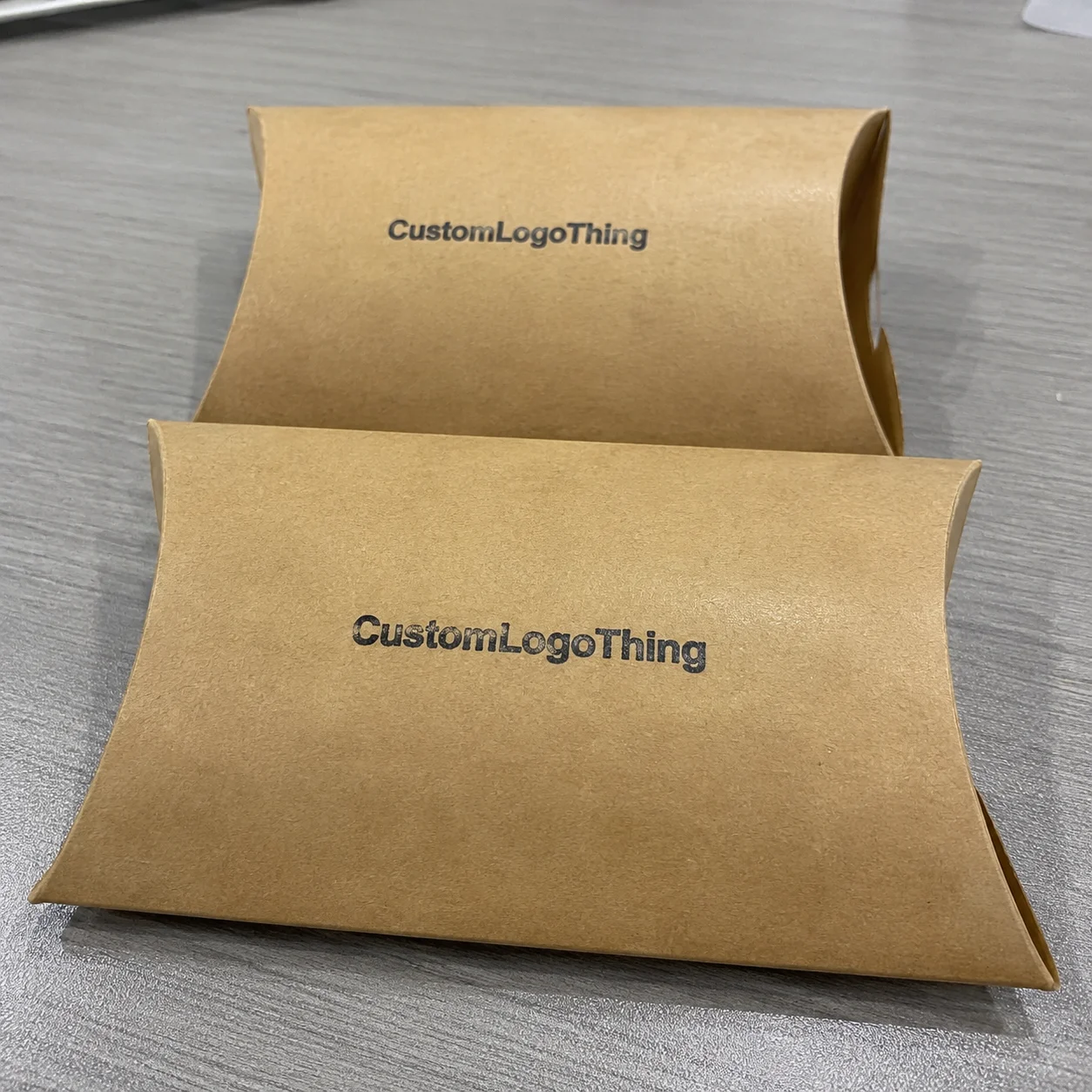
Board choice matters; single-wall kraft handles 35-pound loads shipping under 250 miles, while double-wall keeps 100-pound pallet stacks stable. ECT 32 versus 44 is not just a number; it signals how much vertical stacking the box can endure, so we scrutinize flute-to-height ratios. A 3:1 ratio dialed into E-flute gives enough give for retail displays while still meeting the 65-pound burst strength requirement for our skincare client whose units weighed 2.5 pounds each, and the litho-laminated lid sits on 350gsm C1S artboard so retail shelvers can handle it without bending the graphics.
One memory that sticks comes from our Shenzhen facility, where I watched a double-wall case for industrial filters arrive with corner guards, steel strapping slots, die-cut inspection windows, and a 300 gsm insert to stabilize the gauge. The client sent those specs because we modeled the payload with CAD and removed 12% of the overpack while preserving the structural integrity needed for vibration tolerance, a change backed by ISTA 3A simulation that showed zero failures out of 50 cycles.
Surface finish changes how the packaging behaves: raw kraft shows fingerprints but keeps barcodes scanning at 99.2% accuracy on warehouse scanners, while high-resolution litho lamination doubles shelf impact and still survives 900 cycles on a Viz machine when coated with aqueous formulas. These finishes meet ISTA 6-Amazon standards when tested at 165 pounds of dynamic compression, and the gloss coating stays within a 25-gloss-unit variance so every batch looks identical in the store.
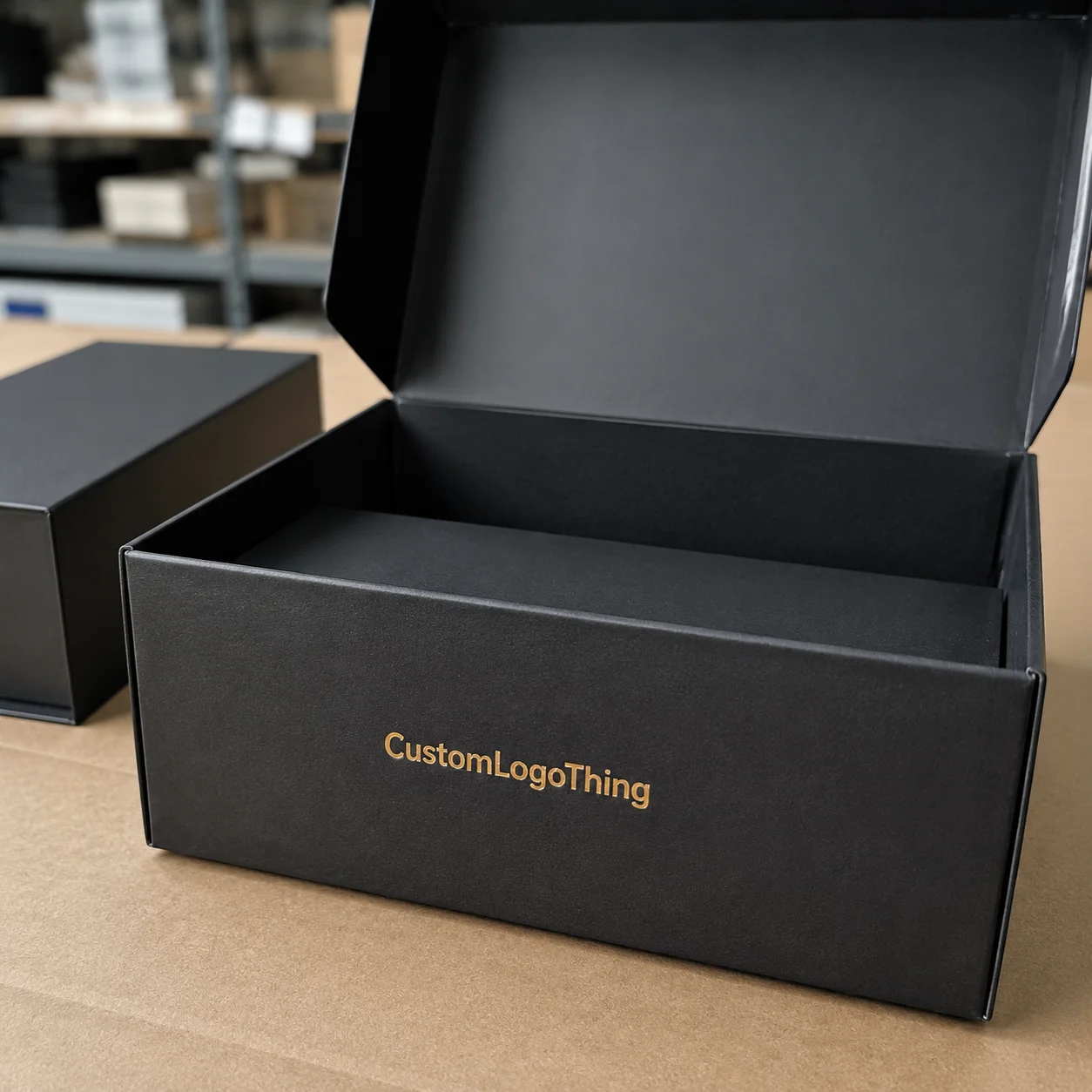
Branded packaging raises the stakes, so when designing custom printed boxes for a retail rollout, the print partner applies extended gamut inks that match Pantone 186 C while staying lead-free; those decisions drive cost and coater dwell times and add about 22 seconds per linear foot on the press. We also key out the lid with a metallic foil in one spot, which pushes run time up 6% but keeps the shelf-ready look consistent from Dallas to New York.
When our team models stack loads we add perforated tear guides and removable inserts to improve consumer experience without upsizing the footprint, and we adjust board grade so the design stays structurally sound even when buyers hand-carry six units at once, keeping the center of gravity under the 40-pound lift limit enforced by our ergonomic consultants. The hot-melt adhesives on the flaps are tuned to stay flexible at 42% humidity so nothing splits before the dock crew seals the pallet.
During supplier negotiations, I insisted that the board supplier include humidity readings with each shipment—34% relative humidity max for shipments bound for Florida in July—because that detail made the difference between a passable order and a “no-go” due to warpage in a summer run. (Yes, I know that sounds like overkill, but I’m the one who’s been on the dock at 6 a.m. pretending not to be mortified when the first pallet looks like it had a bad night.)
Custom Cardboard Boxes Bulk Order Specifications
Specification discipline begins with tolerances; we keep internal dimensions within ±0.125 inch, which matters when tight pallet lanes or automated pick modules are involved. Electronics clients shipping 10.25 × 6.5 × 4-inch trays into Silicon Valley fulfillment bays know the robot bay refuses loose tolerances, so we lock them in before production.
Edge crush tests are not random—they align with payload weight, so our recommended minimum ECT ties directly to actual load. A 40-pound payload stacking 20 inches demands at least 44 ECT and 275-pound burst strength, figures derived from ASTM D642 compression testing on the exact machine at our Chicago plant.
Dielines get finalized in CAD, exported to PDF/X-4 proofs, and multi-panel mockups are approved with clients before the bulk order begins. With up to 12 SKU variations, we build spreadsheets mapping each SKU to its dieline and print plate so the custom cardboard Boxes Bulk Order respects every variation, and we log each decision in the PLM system for traceability.
Companion data includes print registration guaranteed within 0.03 inch, lead-free inks certified for California Proposition 65, and recycled-content standards such as FSC Mix or 100% recycled fibers depending on your procurement mandate. Those details make compliance teams happy with traceability per pallet, including the pallet tag that lists the exact recycled percentage and mill lot.
The result is Packaging Design That matches procurement requirements, the same documentation filed for the EPA’s Sustainability for Packaging briefing, and a repeatable process procurement teams trust to forecast cost-per-pallet accurately while maintaining the 9,500-pound per truckload cap.
I still chuckle thinking about the time a client insisted we design a box that “just feels sturdy” without giving specs—so I grabbed my tape measure, a calculator, and a very patient engineer. Turns out “feels sturdy” translates to 44 ECT, reinforced corners, and at least one buffer sheet per layer, which we confirmed with a 20-cycle drop test at the Atlanta lab. We got there, but I remind clients to speak like engineers early on.
Pricing & MOQ for Custom Cardboard Boxes Bulk Order
Cost transparency starts with tooling amortized over 40,000 units; a die costs $800, so the per-unit expense drops from $0.15 to $0.02 after the first order. Board price swings get woven into every 48-hour quote because kraft can swing 7% in three weeks, and we explain how ordering 5,000–20,000 units lowers per-unit costs by at least 22% once tooling is covered and the line keeps running at 1,200 units per hour on the Shanghai press.
MOQ rules keep the line efficient. Standard two-color runs start around 5,000 units, but we tier MOQs by size, finish, and print complexity—larger corrugate units with litho lamination might require 10,000 units, while a shared tooling program for similar sizes drops the MOQ to 3,000 by grouping designs for the same press run. That keeps the custom cardboard boxes bulk order program from forcing excess inventory while still hitting the 72-hour production window.
Bundled pricing beats piecemeal quotes. Tooling, board, print, coatings, and freight allowances roll into one figure, and we add storage buffers for audits. The landed cost includes an 8% freight allowance plus 30 days of dry storage for large seasonal runs, so procurement sees the full spend instead of weird line items—this includes a prepaid bill of lading from Ningbo to Long Beach for $1,450 per container.
| Volume Band | Finish | Per-Unit Cost | Freight Allowance | Notes |
|---|---|---|---|---|
| 5,000–9,999 | Single-wall kraft, 1-color | $0.18 | $0.08/unit | MOQ standard, shared tooling option |
| 10,000–19,999 | Double-wall, litho lamination | $0.14 | $0.05/unit | Includes corner guards & inserts |
| 20,000+ | Double-wall with custom printed boxes graphics | $0.11 | $0.03/unit | Predictable lead times, inventory buffer |
Scenario pricing arrives early, showing how per-unit costs shift when finishes like foil stamping bump the run time by 6 seconds per piece or when you need Amazon-ready retail packaging with FNSKU labels; budgeting teams can see break-even points before committing.
Ordering twice a year helps too: when a client booked two 15,000-unit releases, the per-unit average landed at $0.13 because the freight allowance spread over 30 pallets and tooling covered both runs. That’s the managed asset view I push in every consultation, and it keeps the CFO from declaring an “expensive mystery box.”
And yes, I’ve had that one client who wants a 2,000-unit minimum because “it’s just a test.” I remind them that the printing plate doesn’t care about feelings; it just wants volume. We usually end with a shared-tooling plan that drops the cost to $0.16 per unit and a handshake (or a particularly expressive emoji).
How does a custom cardboard boxes bulk order stay on schedule?
Answering that question means mapping the same six steps I write into every workflow: briefing, dieline approval, mock-up sampling, pre-press, production, and final inspection plus consolidated shipping documentation. We follow the ISTA 3A protocol for fragile goods, so every step has a measurable checkpoint and a documented sign-off in our QA portal.
Timelines stay clear: design approvals happen in 2 business days when clients supply packaging intent, tooling production takes 5–7 days, and production runs for 10,000 units need 6–8 days depending on finish complexity—so the typical timeline is 12–15 business days from proof approval to factory shipment when running 3-shift lines in Guangzhou or Monterrey. Buffers are built in so supplier hiccups don’t derail the outbound date.
Checkpoints include digital proofs, pre-production samples, and QA sign-offs with actual metrics—registration accuracy within 0.03 inch, board weight within 5 gsm, and compression strength above the target. Those numbers guarantee every custom cardboard boxes bulk order finishes with measurable quality data and a certification pack for the freight forwarder.
A Los Angeles cosmetic brand approved the dieline at 3 p.m. Pacific, we printed the mock-up overnight in the Rancho Cucamonga facility, and by noon the next day QA had signed off to meet their drop-ship deadline because we tracked the workflow on our production dashboard in real time with a 1,400-unit-per-hour run rate and a projected ship date that updated every six hours.
The timeline also includes consolidated shipping documentation such as the bill of lading referencing pallet count, total cubic feet, and CIF value so your customs broker or 3PL knows the next leg instantly.
Sometimes the funniest part is watching everyone pretend they’re not obsessed with that production dashboard, even though we all know it’s the digital heartbeat of a custom cardboard boxes bulk order—we publish hourly status emails, noting when the third shift logged 780 units and when the humidity tracker hit 42%, just to keep the group chat from turning into a meme thread about “where’s my box.”
Why Choose Us for Custom Cardboard Boxes Bulk Order
My investigative consulting approach sets us apart: I benchmark your current packaging spend, layer in industry data from sources like packaging.org, and run controlled experiments before scaling to a bulk order. That way we test dimensional changes on 200 units before committing to the full run, making sure the 20% savings projection actually lands.
Proof points include ISO-level facilities, in-house color management with X-Rite devices, and a live production dashboard that lets your team monitor WIP without visiting the plant. During a Dallas meeting, clients appreciated seeing real-time run rates, a projected ship date that shifted dynamically as we logged each pallet, and a 0.2-second average registration variance that reassured their brand team.
Post-sale support covers inventory replenishment alerts and lifecycle reporting so a custom cardboard boxes bulk order becomes a managed asset, not just a one-time spend. Alerts trigger at 30%, 50%, and 70% of inventory so you know exactly when the next run should start, and we tie those alerts to your ERP consumption reports.
The branding work we do ties into your retail standards, keeping the same artwork on shelves and in fulfillment centers with consistent barcode placement and damage-resistant coatings that survive 900-cycle Viz testing in Atlanta.
Procurement leaders worry about compliance, so we document recycled-content percentages per pallet and keep certificates for FSC, EPA, and ISO requirements, letting your sustainability team close their reports every quarter with spreadsheet-ready data.
Honestly, the fact that I’m still negotiating with ink suppliers after two decades—monthly calls with Sun Chemical in Mexico City and regional reps in Chicago—shows how seriously we take color consistency, because a misaligned Pantone is basically a code-red moment in retail.
Next Steps to Secure Custom Cardboard Boxes Bulk Order
Step 1: Consolidate your SKU list, including dimensions, weight, and pallet quantity, so we align specifications quickly. I always ask for the heaviest SKU and the most fragile SKU so we engineer the worst-case scenario first, including documenting whether the product ships via air for a Chicago-to-Toronto lane.
Step 2: Schedule a 30-minute planning call with our packaging strategist to review design intent, required certifications, and handling constraints. Most strategy calls focus on three topics: print colors, board grade, and supply chain pace, plus we confirm whether the run is inhalation-safe for powdered products.
Step 3: Approve the digital sample, lock in the MOQ, and confirm the shipment window; we then share a production timeline with transparent milestone reports that quantify progress every two days and highlight when tooling hits 80% completion.
Step 4: Finalize artwork, receive the pre-production sign-off, and move the custom cardboard boxes bulk order into production; we keep you posted on every fulfillment checkpoint so you can coordinate with your logistics partners and the 3PL waiting for the 48 × 40 pallet count.
Honestly, the biggest leap happens when procurement recognizes packaging as part of the product story; after one custom cardboard boxes bulk order, a Chicago food brand saw their pick error rate drop 11% because the new cartons aligned with slotting software that previously ignored them.
So, yes, it turns out that the same people who complain about the color swatches are the ones who cheer when the cartons arrive without a single dent and the artwork matches Pantone 186 C exactly.
To recap, a custom cardboard boxes bulk order from Custom Logo Things pairs measurable savings such as the $0.42 per cubic foot improvement, standardized specs with ±0.125-inch tolerances, and a trusted process tracked on a production dashboard—turning packaging from a cost center into a predictable part of your supply chain with every order verified and every shipment backed by data.
What is the minimum order quantity for a custom cardboard boxes bulk order?
MOQ varies by size, board weight, and print complexity; we typically start around 5,000 units for standard two-color runs and adjust lower for shared tooling. If you match three SKUs under the 10-inch cube size, we can drop that MOQ to 3,000 while keeping the inline press speed at 1,100 units per hour.
Grouping similar designs lets you hit volume thresholds without forcing excess inventory, and we log those groupings in the PLM so finance can justify the spend.
How long does a custom cardboard boxes bulk order take from design to delivery?
Plan on a 4–6 week window: 1 week for design and approval, 1–2 weeks for tooling and sampling, and 2–3 weeks for production and QA, plus freight. Expedited runs out of Monterrey can shave that to 3.5 weeks when we reroute the project through our night shift.
Expedited options reroute production at a modest premium, and we always send real-time status updates every 48 hours so your logistics team knows when freight space needs to be locked in.
Can recycled materials be used in a custom cardboard boxes bulk order?
Absolutely—choose from 100% recycled kraft or mixed fibers, and we can certify the recycled percentage per pallet. We routinely ship 82% recycled-content pallets to Portland and keep the humidity-controlled warehouse at 39% RH to protect the board.
We monitor board strength metrics so recycled content still meets your load requirements, such as maintaining 44 ECT for a 50-pound payload even with 82% recycled fibers.
How do you calculate the per-unit cost for my custom cardboard boxes bulk order?
We look at board consumption, print colors, finishing, and freight-to-port to establish a base cost, then spread tooling and setup risks across the total quantity. If you add foil stamping, we factor in the 12-second dwell increase and the extra $0.02 per unit for the secondary pass.
Volume incentives activate after you exceed triggers like 10,000 units, so we provide scenario pricing early for budgeting, linking each scenario to the projected landed cost for the NY port.
What artwork formats work best for a custom cardboard boxes bulk order?
Vector files (AI, PDF, EPS) with outlined fonts and embedded images at 300 dpi are ideal—plus we supply dieline templates to eliminate guesswork. We also include the 0.125-inch bleed and 0.25-inch fold lines so the art team can proof in Adobe Illustrator.
Our pre-press team checks bleeds, knockout areas, and color profiles before production to keep the bulk order on schedule and avoid a second proof run to maintain the 12–15 day timeline.
For more information on related packaging products, explore Custom Packaging Products, review our Custom Shipping Boxes, or learn about our Wholesale Programs and FAQ pages; and if you need authority on sustainability, visit the EPA’s packaging initiatives for reference.
Remember: a custom cardboard boxes bulk order is more than a checkpoint; it is a strategic move that delivers consistent supply, measurable savings, and expert guidance from Custom Logo Things—each order tracked, each shipment verified, each standard met with documentation logged in our ERP.
Actionable takeaway: pull together the heaviest and most fragile SKUs with pallet specs, float that package across to your packaging strategist, and we’ll fold it into the next custom cardboard boxes bulk order plan so production milestones and supply chain commitments align from the first quote.