Buyer Fit Snapshot
| Best fit | Custom Cardboard Boxes with Logo projects where brand print, material claims, artwork control, MOQ, and repeat-order consistency need to be specified before quoting. |
|---|---|
| Quote inputs | Share finished size, material target, print colors, finish, packing count, annual reorder estimate, ship-to region, and any compliance wording. |
| Proofing check | Approve dieline scale, logo placement, barcode or warning zones, color tolerance, closure strength, and carton packing before bulk production. |
| Main risk | Vague material claims, crowded artwork, missing packing details, or unclear freight terms can make a low unit price expensive after revisions. |
Fast answer: Custom Cardboard Boxes with Logo: Quote Scope should be specified like a repeatable production item. The safest quote records material, print method, finish, artwork proof, packing count, and reorder notes in one written spec.
Production checks before approval
Compare the actual filled-product size with the drawing, then confirm tolerance on folds, seals, hang holes, label areas, and retail display edges. Reserve space for logos, QR codes, warning copy, and material claims before decorative graphics fill the panel.
Quote comparison points
Review material grade, print process, finish, sampling route, tooling charges, carton quantity, and freight assumptions side by side. A quote is only useful when the supplier can repeat the same color, closure quality, and packing count on the next order.
I watched one cosmetics brand spend $1,500 debating a foil stamp in Guangzhou, then lose another $8,000 on returns because the carton was 12 mm too loose for a 210 ml glass bottle. That is why Custom Cardboard Boxes with logo are never just a graphics decision. They sit at the intersection of product packaging, freight math, and package branding, and the numbers are usually less romantic than the mockup. Get the structure wrong and the logo turns into expensive decoration, which is a polite way to say you paid extra for a packaging error that could have been caught on a 90-second fit test.
The strongest Custom Cardboard Boxes with logo tend to disappear into the operation until the unboxing moment, then do their job without drama. They protect the product, fit the shipping method, look clean on a shelf or a doorstep, and do not blow the margin on the first purchase order. On a 5,000-piece run, a difference of $0.15 per unit can mean $750 more or less before freight even enters the room. Simple on paper. Messy in practice. One buyer at a Shenzhen carton plant told me, "The logo is the easy part. The box math is what hurts." He was right, and he said it with the face of someone who had already seen too many crushed corners and split seams.
At the core, Custom Cardboard Boxes with logo are branded boxes made from paperboard or corrugated board, sized for a specific product line and printed with a logo, pattern, or full artwork. Some are plain shipping mailers. Some are retail cartons. Some are Custom Printed Boxes with inserts and spot UV. Material, print method, and box style matter just as much as the logo itself. A 350gsm C1S artboard carton for a 120 ml serum behaves very differently from a 32 ECT corrugated mailer for a pair of shoes shipped from Dallas to Denver. People underestimate that until the first sample arrives and the flaps act like they have their own opinions.
What Are Custom Cardboard Boxes With Logo?
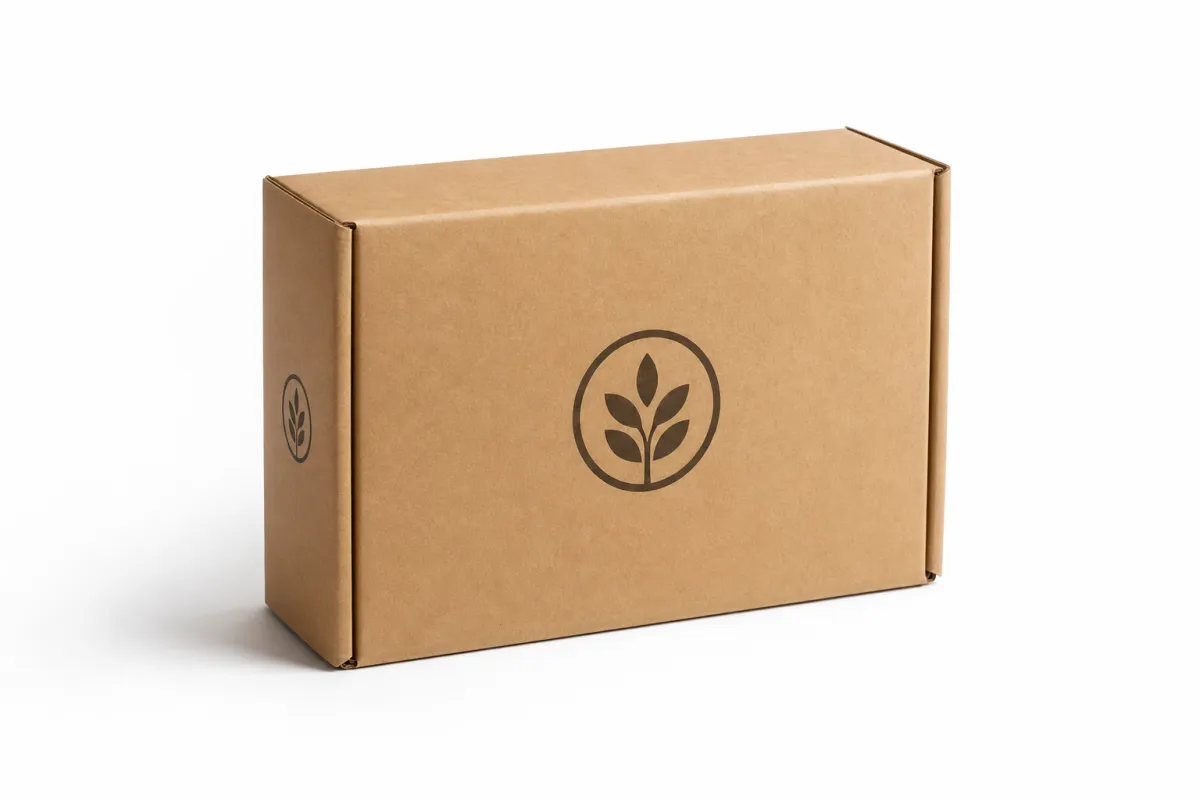
Custom Cardboard Boxes with logo are not one thing. A 16 pt folding carton for a serum bottle behaves very differently from a 32 ECT corrugated mailer for a pair of shoes. I have seen brands use the same phrase for both, then act stunned when one quote came in at $0.24 and the other landed at $1.12. The paperboard version is usually lighter, cleaner looking, and better for retail packaging, especially in pharmacy aisles or boutique displays in New York and Los Angeles. The corrugated version is built for shipping strength and bruised corners from parcel carriers. That difference sounds obvious until someone tries to ship a glass candle in a paperboard sleeve and wonders why the product arrives looking like a crime scene.
Think of Custom Cardboard Boxes with logo as a structural tool first and a branding surface second. The logo helps the customer identify the brand in 2 seconds, but the real job is to cradle the product, reduce movement, and survive the route from warehouse to doorstep. I once watched a beauty client in Dongguan insist on a metallic logo on the top panel, then skip the internal fit test. Three weeks later, the glass bottle was sliding inside the box because the insert was 4 mm too short. Pretty box. Bad outcome. The customers did not care that the foil was elegant; they cared that the serum arrived with a shattered lid and a leak on the outer mailer.
Cardboard wins because it is practical. It is cheaper than many rigid packaging formats, it is easy to print on, and it ships lighter than heavier presentation boxes. It also fits into recycling systems better than mixed-material packaging if you keep the structure simple. The EPA keeps solid guidance on recycling and materials recovery at epa.gov, and that matters if you want branded packaging that does not create a disposal headache for the customer. I have had buyers in Portland tell me they wanted to "feel premium" and then ask whether the box could still be curbside recyclable. That is a fair question. It is also a sign that the packaging brief needed more honesty and fewer buzzwords.
"I do not care how nice the logo looks if the box crushes in transit. Nobody posts a photo of a crushed corner and says, 'But the foil was beautiful.'"
That line came from a freight manager in Chicago after we moved a heavy setup to a lighter mailer and cut dimensional weight charges by $0.41 per unit on a 3,200-piece order. Blunt, yes. Wrong, no. Custom cardboard boxes with logo should be designed around protection, shelf impact, and freight efficiency together. If you only chase the visual side, the cost usually shows up somewhere else, usually in the most annoying column on the invoice and usually at the worst possible time.
People also make the mistake of treating the logo as the only brand signal. In custom cardboard boxes with logo, the panel layout, opening direction, ink coverage, and finishing all shape the customer experience. A 1-color logo on a natural kraft mailer can feel earthy and premium, especially with a 32 ECT board and a water-based matte varnish. A full-bleed digital print can feel more playful and retail-ready. The point is not to "add a logo." The point is to build package branding that matches the product, the channel, and the shipping reality. That is where good packaging starts acting like strategy instead of decoration.
How Custom Cardboard Boxes With Logo Get Made
The production path for custom cardboard boxes with logo usually starts with a brief, not artwork. Good suppliers want product dimensions, weight, shipping method, storage needs, and quantity before they touch a dieline. Skip that step and you are asking the factory to guess. Factories will guess, because they want the order, but the guess costs money later. I have seen that mistake add $260 in remake fees on a 3,000-unit run from a plant in Suzhou. The wild part is that the remake almost always starts with one small missing measurement, not some giant disaster. Packaging has a funny way of punishing tiny omissions.
After the brief comes the dieline. That is the flat template showing folds, cuts, glue areas, and print-safe zones. For custom cardboard boxes with logo, the dieline is where the logo placement either works beautifully or drifts onto a fold line like a bad idea nobody stopped in time. Artwork should be placed on the dieline, not on a random mockup screenshot. I have sat in proof reviews where a buyer approved a design with the logo sitting 8 mm into the crease. Nobody enjoys that call. I certainly do not enjoy hearing, "Can we just nudge it in production?" because no, that is not how gravity or carton geometry works.
The workflow is usually brief, dieline, artwork placement, digital proof, sample, production, quality check, and shipping. On a simple job, the digital proof may come back in 24 to 48 hours from a supplier in Shenzhen or Ningbo. A physical sample can take 5 to 10 business days, depending on structure and finishing. Production for custom cardboard boxes with logo can move in 12 to 18 business days after approval if the run is straightforward. Add inserts, complex coatings, or custom windows, and the clock stretches fast. I have had projects where a "simple tweak" to a window cutout added almost a week. One small cut line can behave like a hostage negotiator.
Sampling is not a luxury. It is the cheapest way to avoid a bad 5,000-piece mistake. One skincare brand I worked with asked me to skip the sample because they wanted to launch "as soon as possible." The cartons looked fine on screen. The sample showed the product rubbed against the inner flap because the pump cap sat 3 mm taller than the drawing. Fixing that on paper cost almost nothing. Fixing it after production would have been a nightmare. I remember the silence in that meeting after the sample test failed. Nobody had anything clever to say, which was probably the clearest signal that we had just saved money.
There is also a big difference between a stock-size print job and a fully custom structure. A stock-size box with a logo printed on it can be relatively quick because the cutting form already exists or is easy to adapt. A fully custom structure with custom cardboard boxes with logo, inserts, and special finishes is a different animal. That job needs closer proofing, more coordination, and usually a tighter sign-off process. I tell clients to treat them like two separate buying categories, because they are. Mixing them up is how projects become weird, expensive puzzles no one asked for, usually on a Friday afternoon when the factory is already planning its shipping cutoff.
If you want a sanity check before approval, ask for three things: a printed proof, a white sample, and one packed unit with the actual product inside. That packed unit catches the stuff CAD drawings miss, like magnet strength, flap interference, and whether the tuck tab pops open after a 38-inch drop. For e-commerce orders, I like to think in ISTA terms, especially ISTA 3A-style parcel testing, because parcel carriers are not gentle and they never apologize. A 24-inch cube from Louisville to Phoenix does not care whether the logo is centered to the millimeter.
The supplier side matters too. A good carton plant will ask annoying questions about flute type, board direction, glue points, and pallet height. That is a good sign. A supplier who says "no problem" to everything on a custom printed boxes order is often the one who will discover the problem later, after your cartons are already on a truck. The picky factories usually save more money than the cheerful ones. I know that sounds backwards, but the factories that argue with you early are usually trying to keep you from arguing with them later, usually after a pallet has already cleared the gate in Dongguan.
Custom Cardboard Boxes With Logo Pricing: What Changes the Cost
Pricing for custom cardboard boxes with logo comes down to six things: board grade, dimensions, print coverage, finish, inserts, and quantity. A larger box uses more board. A heavier board costs more. A full-bleed print or spot UV finish adds setup and production time. Inserts, whether they are paperboard, molded pulp, or corrugated, can lift the price fast. I have seen a 10% increase in board thickness raise the unit cost by 14% on a 2,000-unit run in Guangzhou. Paper is strange that way. It behaves like it has a sense of humor, which is deeply inconvenient for budgeting.
The unit price almost always drops as quantity rises, but the setup charges do not care about your enthusiasm. Plates, cutting dies, proofing, and freight are fixed or semi-fixed costs. That means a 500-unit run of custom cardboard boxes with logo can look expensive per box even if the supplier is fair. A 5,000-unit run spreads those costs out much better, and on some mainland China orders the difference between 500 and 5,000 can be the difference between $0.42 and $0.15 per unit for the same 1-color mailer. The trick is not just finding a low unit number. It is finding the best landed cost. I have watched a buyer celebrate a lower unit quote only to get flattened by freight like a cartoon character stepping off a cliff.
| Box Type | Typical Use | Example Unit Cost | Setup and Timing Notes |
|---|---|---|---|
| Stock-size corrugated mailer with 1-color logo | DTC shipping and subscription boxes | $0.38 to $0.72 at 5,000 units | Fast if the dieline is existing; typically 12 to 15 business days after proof approval |
| Fully custom corrugated box with printed exterior | Product-specific shipping protection | $0.62 to $1.35 at 2,000 units | Custom cutting and inserts add steps; sample stage usually takes 5 to 10 business days |
| Retail folding carton with full-color print | Shelf display and secondary packaging | $0.18 to $0.48 at 10,000 units | Lower unit cost at volume; plates and coating choices change the quote |
| Rigid presentation box | Premium gift sets and luxury kits | $2.40 to $6.50 at 1,000 units | High perceived value, but much higher labor and material cost |
That table is a framework, not a promise. Freight from Shenzhen to Los Angeles can add more than $0.20 per unit on a bulky corrugated order, and a domestic rush from Chicago to Atlanta can be even uglier if you need two-day transit. If you compare quotes, ask for landed cost, not just the line-item Price for Custom cardboard boxes with logo. Landed cost includes freight, duty if applicable, sampling, inserts, and any split shipment charges. A quote that looks $700 cheaper can turn into the expensive one after shipping. I have seen people celebrate the "best price" before the logistics invoice arrived. That celebration tends to age badly, sometimes within 48 hours.
Finish choices can move the price more than people expect. Matte aqueous coating is usually cheaper than soft-touch lamination. Gloss can show print beautifully on custom cardboard boxes with logo, but it also changes the feel and sometimes the drying time. Spot UV, embossing, foil stamping, and edge painting are the features that make sales teams smile and production managers sigh. I am not saying do not use them. I am saying know exactly why you are paying for them. If the effect does not help the unboxing, the shelf presence, or the brand story, it may just be a very expensive shimmer on a 300-gram carton.
Small runs are usually punished by setup economics. If you only need 300 units, digital printing often makes more sense than offset because the plate cost on offset can swallow the margin. If you need 12,000 units, the economics can flip. That is why a supplier should ask about reorder volume, not just the first purchase. Custom cardboard boxes with logo are a recurring cost, not a one-time art project. I tell people to treat packaging like a supply chain decision that happens to have a visual layer, because that is closer to reality than the usual marketing romance.
Key Design Choices for Custom Cardboard Boxes With Logo
Board choice is where packaging design gets real. Paperboard, like 16 pt SBS or C1S artboard, works well for lighter retail packaging and cosmetics cartons. Corrugated board, such as E-flute, B-flute, or 32 ECT mailer stock, is better for shipping strength and impact protection. If the product weighs 2 pounds or more, I usually start with corrugated unless there is a very good reason not to. The wrong board is one of the fastest ways to make custom cardboard boxes with logo look good and fail quietly. I have seen that happen with candles, glass jars, and one regrettable line of sauces that leaked like it had personal grievances.
Box style matters just as much. Mailer boxes are great for DTC shipping because they open well and hold inserts nicely. Tuck Top Boxes are common for retail packaging and smaller consumer goods. Folding cartons are efficient for shelf-ready product packaging. Sleeves can add branding without building a whole new structure. Die-cut shapes can Create a Memorable Unboxing, but they also add tooling complexity. I have watched one client add a die-cut window and accidentally increase packing labor by 18 seconds per unit. That sounds tiny until you multiply it by 8,000 units. Then it becomes a labor line item with a very sharp edge.
Logo placement should serve three views: the shelf view, the shipping label view, and the unboxing view. If the box spends its life in transit, put the logo where it will still be visible after a label goes on. If it sits on a retail shelf, make sure the front panel reads from 3 to 6 feet away. If the opening moment matters, keep the inside lid or front flap clean enough to surprise the customer. Custom cardboard boxes with logo should be designed for how people actually touch the box, not how a mockup looks in a slide deck. A lot of packaging looks clever in a presentation and then becomes weirdly invisible in real life.
The print method is another fork in the road. Digital printing is flexible for short runs and lots of color variation. Offset printing is better when the volume is high and the artwork is stable. Flexo can be economical for some corrugated jobs, especially simple graphics. If the design has a lot of fine type or small QR codes, I want to see a print proof because custom printed boxes can lose detail faster than people expect. Tiny text on a kraft surface is especially unforgiving. I have had to tell clients that their adorable six-point disclaimer was basically decorative dust. They were not thrilled, but they were informed.
Sustainability can be practical, not theatrical. FSC-certified board, recycled-content liners, and water-based adhesives are all reasonable choices if the supply chain supports them. The FSC standard at fsc.org is useful if your buyer wants certified fiber instead of vague claims. I also suggest checking the packaging references at packaging.org if you need a baseline for material types and converting terms. Buyers trust you more when you can speak precisely about board grade and certification instead of tossing around marketing fluff. Specificity is boring in the best way, especially when the mill in Hebei ships the exact FSC code listed on the spec sheet.
One supplier in Ningbo once tried to upsell me on a heavy gloss laminate for a shipping box that was going to be torn open and tossed. I told them no, because the box needed a matte aqueous coat and a strong flap, not a showroom shine. That kind of negotiation saves money and usually improves the product. Good package branding is not about adding every option. It is about choosing the 2 or 3 options that do the job best. Anything else starts smelling like overproduction, which is a very expensive scent in a warehouse outside Shanghai.
Step-by-Step Guide to Ordering Custom Cardboard Boxes With Logo
- Measure the real product. Use the product, any inserts, and the protective fill together. I want length, width, height, and weight down to the millimeter and gram, because custom cardboard boxes with logo fail most often when someone forgets the extra 6 mm from a pump cap or the 14 mm from bubble wrap. I learned that lesson after a shipment of kitchen gadgets arrived with every latch pressed into the side panel like tiny acts of revenge.
- Choose the box role. Is it retail packaging, shipping packaging, or both? A box that lives on a shelf can behave differently from one that rides across three distribution centers. The answer determines whether you need paperboard, corrugated, or a hybrid approach. If you try to make one box do every job, it usually does none of them well, and the freight quote from the Midwest will punish you for it.
- Request the dieline before artwork. The dieline shows folds, bleed, glue flaps, and safe zones. Put the logo on the dieline, not on a fake image. This is the step that keeps custom cardboard boxes with logo from printing beautifully in the wrong place. There is nothing glamorous about correcting art that sits half on a seam, yet somehow that is a very common meeting topic.
- Prepare the artwork correctly. Vector files are the safest bet, especially for logos, line art, and text. If the supplier asks for fonts outlined and color values in CMYK, do that. Low-res files are how custom printed boxes get blurry edges and sad little type. The file may look fine on a laptop screen and then fall apart the moment it meets actual ink on a 300gsm board.
- Approve a sample. Ask for a white sample, a printed proof, or both. Then pack the actual product and shake it. If the item moves, rattles, or pops open during a 30-inch drop test, fix the design before you approve mass production. I have had clients laugh at the shake test until a bottle cap popped loose in the sample room. After that, nobody laughed.
- Confirm the quote in writing. Check minimum order quantity, lead time, payment terms, and shipping terms. A supplier might quote 10 business days for production, but the real total can be 18 to 24 days once sampling and freight are included. Written confirmation saves a lot of awkward "I thought we meant" conversations, and those conversations are where budgets go to die.
The handoff from sales to production is where many orders get mangled. One vague email can turn a 4-color print into a 1-color job if nobody signs off on the proof. I always ask for one document that lists dimensions, board type, print method, finish, quantity, and carton count per master case. That way the customer service rep in Shanghai, the prepress team in Dongguan, and the packing crew in Ningbo are looking at the same instructions. It sounds basic because it is. Basic is good. Basic is the reason a box arrives shaped like a box.
If you are ordering through a packaging supplier or comparing quotes from several vendors, ask for two things that reveal a lot: a sample shipping weight and a pallet count. Those numbers tell you how custom cardboard boxes with logo will behave in freight, storage, and replenishment. A box that stacks 20 high is easier to warehouse than one that collapses at 12. Small detail, big cost difference. A warehouse manager can spot those differences in seconds, and they tend to remember the brands that made life easier, especially during peak season in November.
For first-time orders, I recommend a pilot run of 300 to 1,000 units if the design is new, the product is fragile, or the shipping lane is untested. I learned that the hard way on a candle brand where the jar neck and the insert slot were off by 2 mm. The pilot run exposed the issue before we committed to a 6,000-unit order. That saved the client more than $4,000 in rework and freight penalties. If that sounds cautious, good. Caution is cheaper than optimism in packaging, and optimism rarely pays the truck driver.
Common Mistakes With Custom Cardboard Boxes With Logo
The most expensive mistake is choosing the box size before measuring the product plus inserts. People fixate on outside dimensions because they want the box to look neat on a shelf or fit a shipping rate tier. Then the inner cavity is wrong, the product shifts, and the insert has to be redone. I have seen custom cardboard boxes with logo go back to die-line revision because one bottle was 7 mm taller than the prototype. That is not rare. That is Tuesday. And yes, someone usually insists the "sample must be wrong" before reality has to explain itself.
Another common failure is uploading artwork that is technically "ready" but practically wrong. The logo is low resolution, the text is too close to the fold, or the colors were built in RGB instead of CMYK. The proof looks decent on a monitor and terrible on paperboard. If you are ordering custom cardboard boxes with logo, get the file checked before the supplier prints a single sheet. Blurry logos are cheap on screen and expensive in production. I have seen a brand spend more on one emergency reprint than they spent on the original packaging order from a factory in Huizhou. That kind of pain is avoidable, which is the frustrating part.
Freight is another budget trap. A box that looks affordable per unit can become painful after dimensional weight, warehouse storage, or split shipments are added. I once reviewed a quote for a batch of custom cardboard boxes with logo that was $0.09 cheaper per unit than the competitor. After freight and a forced split into two pallets, it cost the client $620 more overall. That is why landed cost wins every time. I wish freight bills were more honest-looking, but apparently deception is part of the hobby, especially on routes through Los Angeles and Newark.
Over-design is a quiet killer too. Some boxes need a premium finish. Others just need to be strong, clean, and clear. If the product sells at $14.99 and the packaging costs $2.80 before freight, the math may be off. I have told clients to strip back the foil, drop the emboss, and keep the logo sharp on kraft board. They usually thank me after the margin report arrives. Fancy packaging is not always smarter packaging. Sometimes restraint is the most expensive-looking choice because it leaves enough margin to actually stay in business for the second reorder.
- Do not guess dimensions; measure the product, insert, and fill together.
- Do not skip the sample; one printed proof is cheaper than a remake.
- Do not compare unit price alone; compare freight, setup, and warehousing too.
- Do not overload the design; simple custom cardboard boxes with logo often print better.
- Do not assume every supplier uses the same board, coating, or glue spec.
Expert Tips for Ordering Custom Cardboard Boxes With Logo
My first tip is boring and expensive in the best way: standardize box sizes whenever you can. If three SKUs can fit into one carton size with one insert adjustment, your reorders will be easier and your storage will not look like a carton museum. I have seen a buyer cut 11% off annual packaging spend by reducing six custom sizes down to four at a plant in Suzhou. Custom cardboard boxes with logo do not need to be unique for every SKU. Variety is nice in a bakery. It is less charming in a warehouse.
My second tip is to keep the logo placement simple if speed matters. A centered logo on the lid, one product line color, and a clean inside flap will usually print more predictably than a full-coverage design with gradients, microcopy, and five special finishes. The less chaos you put into custom cardboard boxes with logo, the fewer places production can wander. That does not mean boring. It means controlled. I would rather see one strong visual idea executed properly than a box that tries to be a festival of effects and ends up looking tired after 10,000 units.
"Ask for one white sample, one printed proof, and one packed unit. If the supplier will not do that, I already know where the problems are hiding."
My third tip is to separate nice-to-have from must-have. If the logo, protection, and shipping fit are the must-haves, then soft-touch lamination and foil can wait. That is especially true on small runs, where setup charges make every extra finish feel like a tax. I have negotiated with suppliers from Guangzhou to Milwaukee, and the cleanest orders were always the ones with a tight spec sheet and one clear priority. Custom cardboard boxes with logo respond well to clarity. They get confused by wishful thinking, which is also true of most teams on deadline.
My fourth tip is to ask for a reorder plan before you approve the first batch. If the supplier can keep the dieline, plates, or digital setup on file, the second order is usually easier and faster. Ask what changes the price on a reorder, what the MOQ is, and whether the board spec can stay identical. That little conversation can save days on the next buy and stop a familiar carton from turning into a surprise. Reorders are where the smart money hides, quietly waiting for someone organized enough to notice.
My fifth tip is to compare the box against the customer path, not the mockup. A carton that looks impressive in a studio can behave badly in a fulfillment center in Indianapolis. A shelf box can be gorgeous and still hide the logo under a tamper seal. I prefer to map the product from warehouse shelf to parcel label to kitchen counter. Once you do that, custom cardboard boxes with logo stop feeling decorative and start acting like a business tool. I know that sounds slightly unromantic. Packaging rarely gets points for romance after the first transport damage report.
My sixth tip is to keep one technical contact in the loop. If the merchandiser, designer, and buyer all send slightly different instructions, the plant will pick the clearest one and ignore the rest. That is how errors slip in. One email chain, one approval file, one final spec sheet. The packaging world is full of expensive misunderstandings, and this one is easy to avoid. A single person owning the final version saves hours of back-and-forth and a surprising amount of blood pressure, especially when a factory in Hebei is waiting on sign-off.
Takeaway
If you want custom cardboard boxes with logo to do more than look branded, start with the product, not the artwork. Measure the real item, choose the board for the journey, approve a physical sample, and compare quotes using landed cost instead of the prettiest unit price. That sequence keeps the logo from becoming the most expensive part of a box that was never built to survive the trip. It is not glamorous, but it works, and in packaging that is kind of the whole point.
Decision checklist before ordering
- Measure the real product and confirm how it will be packed, displayed, stored, and shipped.
- Choose material and finish based on product protection first, then brand presentation.
- Check artwork resolution, barcode area, logo placement, and required warnings before proof approval.
- Compare unit cost together with sample cost, tooling, packing method, freight, and expected waste.
- Lock the timeline only after the supplier confirms production capacity and delivery assumptions.
FAQ
What are custom cardboard boxes with logo used for?
They are used for retail packaging, shipping boxes, subscription mailers, gift sets, and branded product launches. The logo helps with recognition, but the real value comes from fit, protection, and the way the box carries the product through handling and transit. I have seen them do everything from elevating a $12 candle to rescuing a very awkward electronics kit with a 1.5-pound charger brick.
Are custom cardboard boxes with logo expensive?
They can be, depending on size, board grade, print method, finish, and quantity. A small run usually costs more per unit because setup charges are spread across fewer boxes. Larger runs bring the unit cost down, though freight and storage can still change the final number. A 5,000-piece order at $0.15 per unit is very different from a 500-piece order at $0.52 per unit. The cheapest quote on paper is not always the cheapest box in the warehouse.
What is the difference between paperboard and corrugated custom cardboard boxes with logo?
Paperboard is thinner and better for retail cartons and lighter products. Corrugated board is thicker and stronger, so it handles shipping abuse better. A cosmetic jar in a store carton might use paperboard; the same jar shipped direct to a customer often needs corrugated protection. If the product can survive a drop test and a long ride without getting grumpy, you are probably in the right material family.
How do I make sure the logo prints correctly?
Ask for the dieline, place the logo on that file, and approve a printed proof before mass production. Vector artwork, outlined fonts, and CMYK color values usually help. A physical sample is the safest check, especially if the design uses tiny text or precise placement. I would rather correct a proof than discover the mistake after 20 pallets have already left a factory in Foshan.
Can custom cardboard boxes with logo be made more sustainably?
Yes. Recycled-content board, FSC-certified fiber, water-based adhesives, and simpler structures can all reduce environmental impact. The best choice depends on the product and the supply chain. A cleaner box is often the one with fewer mixed materials. If the packaging is easier to recycle and easier to manufacture, that is usually a sign the design is doing its job well.
How long does production usually take?
Simple orders can move in about 12 to 18 business days after approval. Samples often take 5 to 10 business days, and complex jobs with inserts or specialty finishes take longer. Freight time is separate, and that part is often the slowest piece, especially on routes from Shenzhen to Chicago. If a supplier promises everything will happen instantly, I would ask them to put that promise in writing and then verify it twice.
What should I ask a supplier before ordering?
Ask about board type, print method, finish, sample lead time, minimum order quantity, landed cost, and reorder options. Then ask for one packed sample if the product is fragile. That single sample can reveal whether the box will survive real use or just look good in a proof. A good supplier will not be annoyed by those questions; they will usually be relieved you asked them before the wrong boxes were made, which is exactly what the factory in Dongguan would prefer.

