Buyer Fit Snapshot
| Best fit | Custom Carry Bags Made of Kraft projects where brand print, material claims, artwork control, MOQ, and repeat-order consistency need to be specified before quoting. |
|---|---|
| Quote inputs | Share finished size, material target, print colors, finish, packing count, annual reorder estimate, ship-to region, and any compliance wording. |
| Proofing check | Approve dieline scale, logo placement, barcode or warning zones, color tolerance, closure strength, and carton packing before bulk production. |
| Main risk | Vague material claims, crowded artwork, missing packing details, or unclear freight terms can make a low unit price expensive after revisions. |
Fast answer: Custom Carry Bags Made of Kraft: Specs, Cost, and Timeline should be specified like a repeatable production item. The safest quote records material, print method, finish, artwork proof, packing count, and reorder notes in one written spec.
Production checks before approval
Compare the actual filled-product size with the drawing, then confirm tolerance on folds, seals, hang holes, label areas, and retail display edges. Reserve space for logos, QR codes, warning copy, and material claims before decorative graphics fill the panel.
Quote comparison points
Review material grade, print process, finish, sampling route, tooling charges, carton quantity, and freight assumptions side by side. A quote is only useful when the supplier can repeat the same color, closure quality, and packing count on the next order.
Custom Carry Bags Made of Kraft: Specs, Cost, and Timeline can look straightforward from a distance, yet custom carry bags made of kraft have a habit of carrying more than product. They carry first impressions, store presence, and a quiet signal about whether a brand pays attention to the details that customers feel before they ever read the label. A bag that sits well in the hand, holds its shape, and keeps the print legible does a lot of work in a few seconds.
That part is easy to miss if you only ever see the bag in a mockup. In packaging reviews I’ve sat through, the conversation often starts with logo placement and color palette, then drifts toward handle type, but the real-world check is always the same: does it feel good, does it carry safely, and does it still look like the brand after a shopper has walked three blocks with it in one hand and a coffee in the other? Custom Carry Bags made of kraft answer those questions faster than many other formats because they are so visible, so tactile, and so closely tied to the moment of purchase.
A paper carrier is not only a container for the walk home. It is a moving piece of packaging, a visible brand surface, and often the last physical item a shopper handles before leaving the store. For many retailers, custom carry bags made of kraft become one of the most efficient forms of package branding because they stay in use after the sale, show up in transit, and often end up in photos, offices, and kitchens.
Custom carry bags made of kraft sit in a useful middle zone. They feel more natural than plastic, less formal than a glossy laminated carrier, and often more substantial than a plain stock bag with a sticker. That balance makes them practical for boutiques, food service, gift packaging, and product packaging programs that need a cleaner material story without moving into expensive specialty formats.
The real decision is about tradeoffs. Buyers need to balance load strength, print clarity, moisture resistance, lead time, and landed cost. Matched well, custom carry bags made of kraft can return more value than the line item suggests. Matched poorly, they become the weak point in a branded packaging system that looked fine on paper but did not hold up in daily use.
Custom carry bags made of kraft: why they matter on the shelf
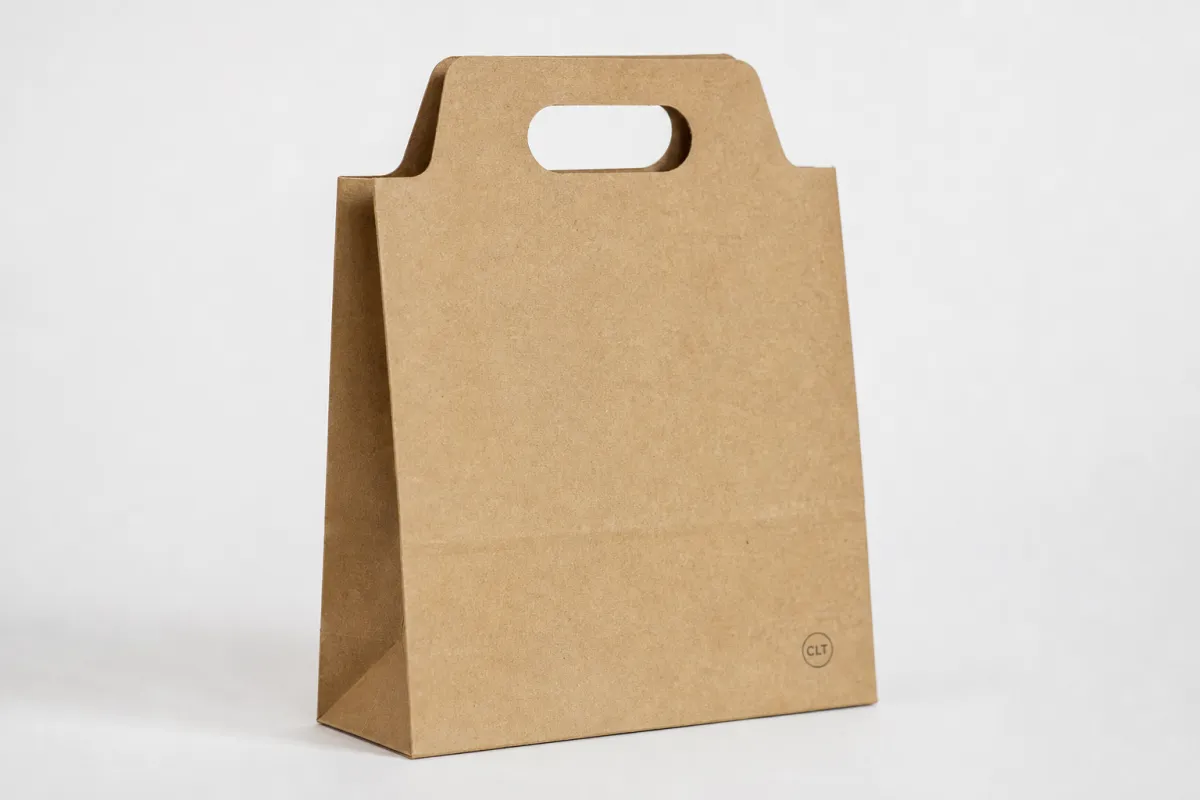
The moment a purchase crosses the counter, the bag becomes part of the experience. That is why custom carry bags made of kraft matter. Shoppers may never think about the carrier while browsing, but once the product leaves the register, the bag is visible to staff, passersby, rideshare drivers, office elevators, and everyone else in the path home.
For packaging buyers, that makes the bag a tiny billboard with a very short attention window. The logo has to read fast. The handles have to feel secure. The folds need to stay square enough to look intentional rather than improvised. Those small details are why custom carry bags made of kraft are usually best treated as an extension of retail packaging, not a leftover after the main package has been chosen.
Kraft is a fiber-based paper made from wood pulp, valued for its strength and its natural texture. Brown kraft usually reads as earthy, practical, and close to the material itself. Bleached white kraft gives more contrast for color work and a cleaner stage for logos and artwork. Either way, custom carry bags made of kraft sit much closer to paperboard and carton logic than to soft plastic film, which is one reason they are often paired with other paper-forward items like Custom Packaging Products and coordinated branded packaging.
Compared with plastic, kraft bags often communicate stronger sustainability cues, especially in categories where paper-based product packaging is expected. Compared with coated carriers, they often feel warmer and less polished in a way that suits handmade goods, food, and gift retail. That tactile quality matters more than many buyers expect. Print can be beautiful, but handle feel, gusset stiffness, and crease memory often shape the perceived quality before the artwork has a chance to do the talking.
There is another reason custom carry bags made of kraft stay popular: the material family is flexible enough to cover a wide range of weights and formats. A small jewelry bag and a restaurant carrier for takeout are not even close to the same specification, yet both can be built from kraft if the structure is designed with care. That flexibility is useful, and it is also where avoidable mistakes show up.
"A bag that feels flimsy can quietly downgrade a brand, even if the print is perfect."
That line sounds blunt because the outcome is blunt. Buyers often spend more time on logo placement than on the handle bond or bottom fold, then wonder why the finished bag sags, twists, or tears earlier than expected. Custom carry bags made of kraft need to be judged as a full construction, not just a printed surface. A better build gives stronger shelf appeal, a better post-purchase impression, and a more reliable return on the packaging budget.
The rest of the decision usually comes down to four questions. How is the bag built? How much weight will it carry? What kind of printing will suit the artwork? And what is the real landed cost once setup, freight, and timing are included? Those answers decide whether custom carry bags made of kraft become smart branded packaging or a compromise that looked cheaper than it really was.
How custom carry bags made of kraft are built and printed
Custom carry bags made of kraft begin with paper grade, and paper grade sets the tone for everything else. For retail bags, the common range is roughly 100 gsm to 200 gsm, though the right number depends on the size of the bag, the intended load, and whether reinforcement is added anywhere in the build. A compact fashion bag may perform well at the lower end, while a larger carrier for bottles or boxed goods usually needs more body and stronger seams.
The construction sounds simple at first, then turns more nuanced once you look at the stress points. A flat sheet is folded into a bag body, side gussets create volume, the bottom is glued and reinforced, and handles are attached by twisting, folding, or die-cutting. Once the structure is laid out this way, custom carry bags made of kraft stop looking like plain paper sacks and start looking like engineered retail packaging.
Handle style changes the entire feel of the bag. Twisted paper handles are common because they balance strength and cost well. Flat handles can feel comfortable in the hand and are often chosen for heavier or more utilitarian orders. Die-cut grips create a cleaner profile, though they are not always the best answer for heavier products unless the paper and reinforcement are upgraded. Buyers often underestimate how much the handle changes the perceived quality of custom carry bags made of kraft.
Printing is the next major variable. One-color printing is usually the most economical route. Spot colors keep artwork crisp and readable, especially on brown kraft. Full-color printing can look strong as well, but it asks for more careful color planning because the brown base affects how inks sit visually on the page. Dark artwork on unbleached stock can lose contrast quickly. That is why many packaging design teams build separate versions for brown kraft and white kraft instead of forcing one artwork file to do every job.
The press method matters too. Flexographic printing often suits simple graphics and larger runs. Offset can deliver finer detail and smoother gradients for certain jobs. Digital printing can be a strong choice for shorter runs or highly customized artwork. None of these methods is automatically the right one. The best fit depends on how many custom carry bags made of kraft you need, how much of the bag is covered with art, and whether the finished look should feel natural, premium, or direct and promotional.
Surface treatment is where finish and sustainability begin to overlap. Natural brown kraft keeps the paper look intact. Bleached kraft creates a brighter base. An aqueous coating can add light moisture resistance and scuff protection while staying closer to paper recycling streams in many cases. Lamination can improve wear resistance and surface appearance, though it may complicate recyclability. The right finish should follow the real use case, not just the visual preference.
One useful way to picture the bag is to think of it in layers. There is the outer printed sheet, the structural folds, the glued seams, reinforcement at the bottom, and the handle attachment points where the most stress collects. If any one of those layers is weak, the whole bag suffers. That is especially true with custom carry bags made of kraft, because the material can look sturdy even when the hidden bond line is not built for the actual load.
Packaging teams that compare formats often run into the same logic as custom printed boxes. Artwork can look excellent, but if the structure is not matched to the product, the package fails at the point of use. A bag spec deserves the same discipline as any carton spec, especially when the bag is expected to do daily retail work.
Key factors that shape durability, branding, and sustainability
Durability starts with paper weight, but the number on its own does not tell the whole story. Custom carry bags made of kraft can use a heavier sheet and still fail if the gusset is too shallow, the bottom seam is weak, or the handle bond only suits light retail use. It helps to think in terms of structure rather than one line on a specification sheet.
A better buying question has three parts. What is the bag carrying? How often will it be lifted? What kind of environment will it move through? A boutique bag holding a candle or scarf does not need the same build as a grocery-style carrier loaded with jars, bottles, or chilled goods. Moisture, condensation, and grease also matter. A kraft bag that looks excellent in a dry showroom can break down quickly near cold drinks or oily packaging.
Branding carries just as much weight. Brown kraft can make a logo feel grounded and artisanal, which suits independent retail, specialty food, and gift packaging. White kraft gives artwork a brighter base and helps colors stand out. Dense artwork changes the feel of the bag, though. Heavy ink coverage can make custom carry bags made of kraft feel less natural and can add cost without improving recognition or shelf impact.
Sustainability claims deserve precision. Recycled content, plastic-free handles, and paper from responsible forestry all help, but none of those details should be treated as a free pass. FSC certification is a useful sourcing signal, especially when a buyer wants evidence that fiber came from managed forests. That claim can be checked through FSC, while the final bag construction still decides how easy the product is to recycle in local systems.
Coatings deserve close attention. A light aqueous coating can help with rub resistance and mild dampness. A heavier laminated finish can protect the surface and sharpen the look, yet it may complicate end-of-life handling. That is not always a deal-breaker. It simply means custom carry bags made of kraft should be chosen with the actual retail environment in mind rather than with a broad sustainability label attached.
If the bag will be used for takeout, bakery items, or products that can sweat in transit, test the paper under realistic conditions. Grease resistance, condensation resistance, and handle strength all shift once the product is inside the bag. Buyers sometimes ask for a recycled-looking bag and then expect it to behave like a coated carrier. Those are different builds, and they should be specified that way.
A simple decision framework keeps the conversation grounded:
- Light retail carry - choose a lighter gsm, twisted handles, and one- or two-color printing.
- Midweight gift or boutique use - move to thicker paper, reinforced bottoms, and stronger handle bonding.
- Food or moisture exposure - ask for coating testing and confirm the finish against the product conditions.
- Premium visual presentation - use clean art, stronger contrast, and a bag tone that supports the brand palette.
That framework keeps the discussion practical. It also avoids a common mistake: choosing custom carry bags made of kraft because they appear affordable, then discovering that the wrong handle style or finish raises the total cost of ownership. The cheapest spec is not always the least expensive once breakage, replacements, and customer perception are all counted.
Custom carry bags made of kraft pricing: what drives the quote
Pricing for custom carry bags made of kraft usually comes down to the same factors buyers can control: size, paper weight, handle type, print coverage, coating, and quantity. Larger bags use more paper and glue. Heavier paper raises material cost. More colors often mean more setup and press time. Those pieces matter more than the quote heading might suggest.
MOQ, or minimum order quantity, should be discussed early. A supplier may offer a low unit price at a higher volume, then require a minimum run that does not fit the actual sales forecast. That is common. It does not make the quote wrong; it means the order economics need to be checked against demand and storage space. Custom carry bags made of kraft can look inexpensive per unit and still be a poor match if the MOQ is too high for the launch plan.
Setup charges also deserve more attention than many first-time buyers give them. Printing plates, die tooling for a custom size, handle attachment, and carton packing all create upfront costs. In shorter runs, those fixed costs push the unit price up. In larger runs, the same costs spread out and the price improves. Quoting at a few volume breakpoints is more useful than asking for one isolated number.
Here is a practical comparison that many buyers find useful:
| Spec profile | Typical unit price at 5,000 pcs | Strength / finish | Best fit |
|---|---|---|---|
| Natural kraft, one-color print, twisted paper handles | $0.22 - $0.45 | Solid everyday carry, simple visual presentation | Boutiques, gift shops, basic retail packaging |
| Bleached kraft, two- to four-color print, reinforced base | $0.35 - $0.70 | Sharper branding, better contrast, stronger load feel | Fashion, cosmetics, mid-tier branded packaging |
| Premium kraft, special finish, upgraded handles | $0.60 - $1.20 | Higher perceived value, more refined handling | Luxury retail, gifts, coordinated package branding |
Those numbers are directional, not universal. Freight, duties, carton counts, and artwork complexity can move them quickly. A smaller run may cost more per unit than a larger one even when the bag looks simpler, because the setup cost has not been spread across enough pieces. A supplier with a lower unit price may also quote a higher shipping charge or a larger minimum, so the comparison has to be made on the same terms.
The cleanest way to compare quotes is also the strictest. Check the same dimensions, the same paper weight, the same handle style, the same print count, the same coating, and the same packing format. If one quote includes inner cartons and another assumes loose packing, the numbers are not equal. Custom carry bags made of kraft are easy to compare badly when assumptions are left hidden.
Color coverage is another cost driver that often gets overlooked. A crisp logo with negative space usually costs less and reads more clearly than a full flood of ink. On brown kraft, especially, dark full-bleed artwork can make the bag feel less natural while using more ink without improving recognition. Better packaging design often improves price discipline as much as it improves visuals.
For teams building a broader retail launch, it helps to compare bag spend alongside custom printed boxes and other product packaging lines. That gives a clearer view of the total brand investment instead of treating each item as a disconnected line. Used well, custom carry bags made of kraft can perform in the store, on the street, and in the customer’s photos. Used carelessly, they become a tidy-looking line item that costs more than expected.
Production process and timeline for custom carry bags made of kraft
The production process for custom carry bags made of kraft is more predictable than many buyers expect, as long as approvals stay on schedule. It usually begins with a brief: bag size, target load, print style, handle preference, and destination market. Once those details are set, a dieline or working drawing is prepared so the structure can be confirmed before any paper is cut.
After dieline approval, the supplier normally prepares artwork proofs. A careful proof review can save days, sometimes weeks. Margins too close to the fold, logos sitting too low on the gusset, or copy losing contrast against brown stock are the kind of issues that show up fast if someone is paying attention. Custom carry bags made of kraft are not difficult to produce, but they are easy to mis-specify if the buyer assumes one template can fit every brand use case.
Sampling comes next. Depending on the order, that may be a digital mockup, a plain structural sample, or a printed pre-production sample. This step matters because a flat proof never tells the whole story. It cannot show how the handle feels in the hand or how the bag behaves under load. The sample is the point to check real-world details: creasing, handle pull, base support, print contrast, and overall presentation.
Production usually includes printing, converting, handle attachment, inspection, packing, and shipment preparation. Straightforward custom carry bags made of kraft orders often move faster than more complex jobs because they do not need specialty coatings or unusual handle builds. A simple run can often land in the 12-15 business day range after proof approval, though shipping adds its own timing. More complex work with coatings, special colors, or custom tooling can stretch to 18-30 business days or more.
Delays usually come from a handful of familiar places:
- Late artwork files or missing dieline approvals.
- Changes to dimensions after sampling has started.
- Color revisions after the first proof has been reviewed.
- Holiday capacity pressure or shipping congestion.
- Last-minute changes to carton count or packing format.
Buyers sometimes ask how to reduce that risk. The most reliable answer is to lock the spec first and the art second. If the bag size keeps changing, every proof turns into a moving target. If the supplier understands the final use case, the timeline becomes easier to predict. That is especially true with custom carry bags made of kraft, since the material is flexible enough that teams can keep revisiting the design long after the production window should have closed.
Testing also protects the schedule. If the bags are shipping in master cartons, ask about distribution testing for the outer pack. The ISTA methods are useful because they catch handling and transit damage before a larger run moves. That does not mean every bag order needs a full lab program. It does mean the carton and shipping stage should not be ignored just because the bag itself is paper.
A practical approval checklist keeps the process clean:
- Confirm final dimensions and gusset depth.
- Approve the artwork placement against the dieline.
- Review the material swatch or sample bag.
- Check handle style and pull feel.
- Verify carton count, packing method, and ship date.
Once those checkpoints are in place, custom carry bags made of kraft become a manageable production item rather than a surprise project. That predictability matters for merchandising calendars, seasonal launches, and any retail packaging program that cannot afford last-minute substitutions.
Common mistakes when buying custom carry bags made of kraft
The first mistake is underestimating weight. A bag can look sturdy and still fail because the handle bond or bottom seal was never matched to the actual load. If the product mix includes boxed goods, glass, or multiple items per order, the bag should be tested against the real payload instead of a generic sample weight. Custom carry bags made of kraft should be judged by how they behave in a customer’s hand, not by how they look in a catalog.
The second mistake is artwork that only works on white stock. Brown kraft changes color perception. Small text, thin serif fonts, and pale logos can disappear quickly. Large solid areas of ink can also shift the feel of the bag in a way that makes the brand look heavier than intended. Good packaging design works with the paper tone instead of trying to overpower it.
The third mistake is ignoring moisture and grease. That comes up often in food service and takeout. If the bag may encounter condensation, chilled packaging, or oils, the finish should be checked for protective treatment. Otherwise, custom carry bags made of kraft may weaken sooner than the buyer expects, even when the paper weight looked fine on the spec sheet.
The fourth mistake is skipping sample testing. A flat proof can confirm print placement, but it cannot show stiffness, handle comfort, or how the bag sits once loaded. A sample can reveal issues that are cheap to correct early and expensive to correct after production. That gap shows up often in product packaging procurement, especially when the team is moving quickly.
The fifth mistake is being too loose with sustainability claims. Not every paper bag is recyclable in every market, and not every recycled-looking finish is easy to recover. Coatings, laminations, mixed materials, and heavy adhesives can all complicate end-of-life handling. If a brand is making public claims, the material composition should support them.
There is a smaller but important mistake as well: buying too many sizes. Programs often start with one hero size, then a second size gets added, then a third, and suddenly the warehouse is carrying dead stock in the least-used format. A tighter range is usually better. Custom carry bags made of kraft can cover a lot of uses, but that does not mean every use case deserves its own SKU.
The safest route is to think like a buyer, not a collector of specifications. A bag should answer a real business need: carry safely, present well, and fit the launch economics. If it does those three things, the program is probably strong. If it only looks good in a render, the risk is still there.
Expert tips and next steps for custom carry bags made of kraft
Start with one hero size and one backup size. That sounds ordinary, and it is, but it keeps the program manageable while you learn what customers actually carry. The best bag spec is usually the one that fits real demand, not the one that looked clever in the first round of packaging design reviews. Custom carry bags made of kraft work best when the assortment stays disciplined.
Ask for three things before you approve a run: a physical sample, a flat artwork proof, and a material swatch. Those three items tell a more honest story than a screen render ever will. They also make it easier to compare suppliers on equal terms, which matters if you are collecting multiple quotes.
Compare at least two bids using the same spec sheet. If one supplier prices a 120 gsm bag and another prices a 150 gsm bag, that is not a bargain comparison; it is a different product. The same logic applies to handles, coatings, and print coverage. Once those details are aligned, the real pricing picture comes into focus. That is how custom carry bags made of kraft should be sourced: clear assumptions, not guesswork.
If your brand uses bags, cartons, and inserts together, keep the visual system aligned. A paper carrier can echo the same color language as Custom Packaging Products, match the structure of custom printed boxes, and support the wider branded packaging story without forcing every item to look identical. Consistency matters more than sameness.
Here is the practical checklist I would use before placing an order:
- Define the use case and target load.
- Choose paper weight based on the product, not the budget alone.
- Pick a handle style that fits the carry experience.
- Confirm print method and color count.
- Ask about coating, recyclability, and finish.
- Approve a sample before the full run.
- Check the lead time against your launch calendar.
Do that, and the decision gets much easier. Custom carry bags made of kraft can support premium presentation, practical carrying strength, and a cleaner material story at the same time, but only if the spec is grounded in real use. The part worth trusting is not the lowest quote, not the flashiest mockup, but the combination of paper weight, construction, print, and timing that fits the job. If you are building a retail package system, choose the bag spec first, verify it with a sample, and only then lock the production order.
FAQ
Are custom carry bags made of kraft strong enough for retail and groceries?
Yes, if the paper weight, handle style, and bottom reinforcement are matched to the intended load. Light boutique items may do well with a simpler build, while heavier orders usually need stronger gussets, better handle bonding, and a more careful load test. Ask the supplier to test the bag with your real product mix instead of a generic sample weight, because custom carry bags made of kraft can behave very differently once the weight shifts inside the bag.
What is the minimum order for custom carry bags made of kraft?
MOQ varies by size, print complexity, and whether the bag uses stock dimensions or custom tooling. Simple one-color orders often have lower minimums than full-color or specialty-finish jobs. A good next step is to request pricing at a few volume breakpoints so you can see where the best unit cost lands and whether the storage commitment makes sense for your launch or replenishment plan.
How long does production usually take for kraft carry bags?
Timeline depends on proof approval, sampling, printing, conversion, and shipping distance. Straightforward orders often move faster, while custom sizes, coatings, or complex artwork add time. As a practical planning range, many custom carry bags made of kraft orders finish in roughly 12-15 business days after approval, with more complex work taking longer. If you need a rush order, expect fewer revision rounds and higher pricing.
Can custom carry bags made of kraft use full-color branding?
Yes, though full coverage and dense imagery can raise cost and change how the kraft base color reads. Simple spot colors often look cleaner and more premium on natural kraft, especially when the brand wants a warm, earthy feel. Always check a printed proof because brown paper can shift brand colors more than white stock, and custom carry bags made of kraft are more sensitive to that shift than many buyers expect.
Are custom carry bags made of kraft recyclable or compostable?
Plain kraft is usually recyclable, but coatings, laminations, and mixed materials can change that outcome. Local recycling rules matter, so confirm the final construction against the destination market. If you want stronger sustainability claims, verify the paper source, inks, and any added finishes before you publish the claim. The material story has to match the actual bag build, not just the marketing language.

