Buyer Fit Snapshot
| Best fit | Custom Carton Boxes with Embossing projects where brand print, material claims, artwork control, MOQ, and repeat-order consistency need to be specified before quoting. |
|---|---|
| Quote inputs | Share finished size, material target, print colors, finish, packing count, annual reorder estimate, ship-to region, and any compliance wording. |
| Proofing check | Approve dieline scale, logo placement, barcode or warning zones, color tolerance, closure strength, and carton packing before bulk production. |
| Main risk | Vague material claims, crowded artwork, missing packing details, or unclear freight terms can make a low unit price expensive after revisions. |
Fast answer: Custom Carton Boxes with Embossing: Design, Cost, Process should be specified like a repeatable production item. The safest quote records material, print method, finish, artwork proof, packing count, and reorder notes in one written spec.
Production checks before approval
Compare the actual filled-product size with the drawing, then confirm tolerance on folds, seals, hang holes, label areas, and retail display edges. Reserve space for logos, QR codes, warning copy, and material claims before decorative graphics fill the panel.
Quote comparison points
Review material grade, print process, finish, sampling route, tooling charges, carton quantity, and freight assumptions side by side. A quote is only useful when the supplier can repeat the same color, closure quality, and packing count on the next order.
Custom Carton Boxes with Embossing: Design, Cost, Process
Custom carton Boxes with Embossing do something a flat carton cannot do on its own: they create a first impression that people can feel before they have fully registered the graphics. That tiny lift in the board carries a lot of weight. Texture suggests care, control, and finish quality in a way that printed ink alone sometimes misses. For brands that want a premium look without piling on extra foil, thick laminate, or plastic decoration, custom carton boxes with embossing can be a very practical middle ground.
I have seen this finish change the mood of a package with almost no visual noise. A carton that felt a bit too plain on press proof suddenly looked intentional once a logo was raised and the light started catching the edges. It did not need a loud pattern or a shiny coating. It just needed one clear tactile detail. That is kinda the whole point of good embossing: it adds presence without shouting.
This is why custom carton boxes with embossing show up so often in retail packaging, cosmetics, stationery, subscription kits, specialty food, and gift-ready product packaging. A carton mockup can look balanced on a screen and still feel anonymous in the hand. Add a raised mark, a frame, or a subtle geometric field, and the same structure gains depth and character. The finish works especially well for package branding because it relies on touch, shadow, and restraint rather than heavy graphics.
A strong emboss does not need to announce itself. The real payoff comes when someone turns the box over, feels the raised area, and pauses for half a second longer than expected.
If you are building custom printed boxes for a premium line, embossing can become the detail that holds the entire design together. It may be a blind logo on natural board, a raised border on a clean white carton, or a brand seal set into a matte panel. In each case, custom carton boxes with embossing create texture without forcing the rest of the package into a more complicated print system.
Custom carton boxes with embossing: what changes on the shelf?
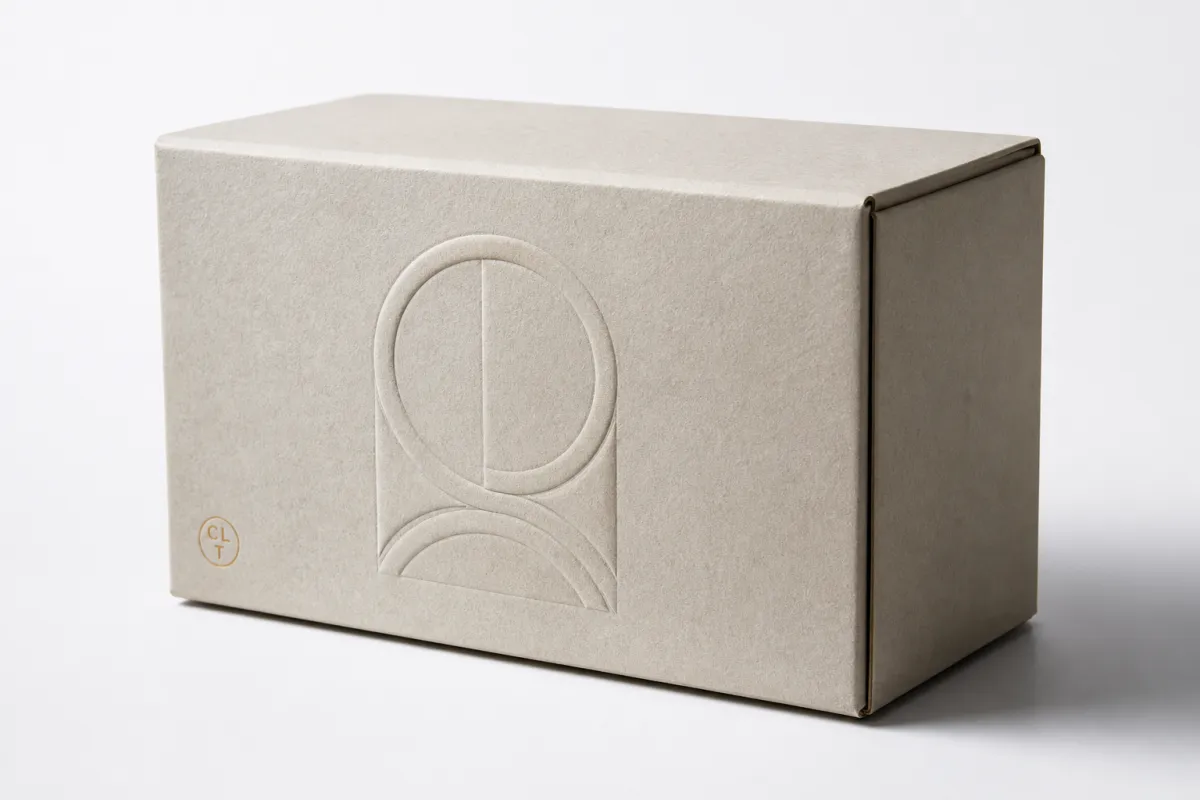
On shelf, texture changes how a package catches the eye. Shoppers usually notice color first, then shape, then detail. In hand, the order shifts. Fingers pick up relief almost immediately, and that is where custom carton boxes with embossing earn much of their value. A raised logo edge, a framed panel, or a restrained pattern can make a carton feel deliberate instead of generic.
The practical difference is easy to miss until you hold the box. A plain carton may look perfectly fine in a digital proof, then feel forgettable once it is printed and assembled. The surface can be too even, too quiet, too easy to skim past. Custom carton boxes with embossing give the board a point of contact, which is useful in retail settings where a small tactile cue can make the package feel more finished without changing the base structure.
Embossing itself is a straightforward mechanical process, even if the result looks refined. A matched die presses from behind the board and lifts the front surface into a raised shape. Depending on the tooling and the board, that rise can be soft, crisp, shallow, or fairly deep. The same process can support a blind logo, a border frame, or a repeating pattern. For custom carton boxes with embossing, the quality of the impression depends on board body, pressure, moisture balance, and how much detail the fibers can hold.
Embossing is not the same as foil or spot UV, and that distinction matters during planning. Foil adds shine and color contrast. Spot UV adds gloss and a visual highlight. Embossing adds relief. That relief can work beautifully on kraft, SBS, recycled board, or other straightforward carton stocks. If the design direction is quieter and more material-driven, custom carton boxes with embossing are often a better fit than a glossy laminate or a heavy sleeve wrap.
The sustainability angle is worth a real look, not a slogan. A brand does not always need more layers to look premium. Sometimes the better move is to let the carton do more of the work on its own. Using custom carton boxes with embossing can reduce the need for extra labels, wrap bands, or plastic-heavy add-ons, especially when the embossed detail is placed with care. Buyers comparing options often find that the result feels refined while staying close to a paperboard-first system.
- Embossing adds raised relief and tactile impact.
- Debossing pushes the design inward instead of lifting it up.
- Foil gives shine and contrast.
- Spot UV gives gloss and highlight.
- Custom carton boxes with embossing work especially well when texture should do most of the premium work.
For brands comparing finishes on Custom Packaging Products, embossing often ends up being the choice that feels most grounded. It does not depend on trend-driven shine. It depends on touch. That makes it useful across categories where presentation and restraint need to sit together, and it helps explain why custom carton boxes with embossing stay popular even when packaging styles keep changing.
Custom carton boxes with embossing: process and timeline
The production flow for custom carton boxes with embossing starts well before the finish itself. Artwork review comes first, followed by dieline checks and structure approval. Once the shape is settled, the embossing area can be mapped so the raised detail lands where it should and stays clear of folds, glue flaps, and other critical elements. That early planning matters because embossing is part of the structure, not a decorative layer you tack on at the last minute.
The embossing die is created to match the approved carton structure. If the raised area has to line up with a logo, a window cutout, or a panel break, registration becomes important very quickly. A die that is even slightly off can make the box feel careless, and that is a problem because custom carton boxes with embossing are usually chosen for precision. Good press setup is not only about pressure; it is also about alignment and repeatability.
A typical timeline has several moving parts. Tooling may take several days. A sample round can take longer if the board stock is unusual, if the art needs revisions, or if the design combines embossing with print and die cutting. After sample approval, production scheduling depends on press availability and whether the cartons need extra folding or gluing after the embossing pass. For many jobs, the full lead time often lands in the 12 to 15 business day range after proof approval, though complexity and volume can stretch that window.
There is a real difference between a simple one-location emboss and a build that combines several processes. Custom carton boxes with embossing can be run as a straightforward embellishment, or they can become a layered build with printing, die cutting, window patching, coatings, and glue work. Each added step brings more time and more coordination. That is not a reason to avoid the finish; it is just the normal reality of carton manufacturing. A cleaner plan usually means a smoother run.
Delays tend to show up in familiar places. Artwork gets revised after the die is approved. The board changes late because a buyer wants a different recycled content level. A sample behaves well on one substrate, then the final stock reacts differently under press pressure. Those issues are common enough that experienced teams build them into the schedule. Custom carton boxes with embossing are more forgiving when the board and art are locked early, and far less forgiving when the last decision happens after tooling has already started moving.
The structure also affects post-emboss handling. Some cartons can be embossed, printed, and converted without much friction. Others need tighter control because the raised area sits near a fold or a glue zone. In those cases, press and conversion teams need to watch for cracking, curl, and fiber distortion. A clean result comes from coordinating the whole workflow, not just the embossing station.
For teams that care about shipping performance, the finish should also be viewed alongside testing standards. Many buyers reference ISTA testing methods when they want to know whether a decorative carton still behaves well in transit, especially if the outer carton is part of a retail-ready presentation. That habit pays off. A premium surface matters most if the box still arrives in shape.
Key factors that shape custom carton boxes with embossing
The first factor is substrate choice. Paperboard caliper, recycled content, coating level, and fiber structure all influence whether custom carton boxes with embossing come out crisp or soft. A board with enough body can hold a clean raised edge. A board that is too thin may flatten out, crack at the edges, or show pressure on the reverse side. The best board is not always the thickest one; it is the one that supports the visual goal without fighting the structure.
Design detail matters just as much. Large simple shapes usually emboss more cleanly than tiny text, skinny lines, or dense pattern fields. If the artwork tries to do too much, the raised area can start to look muddled. That is why custom carton boxes with embossing often work best with logos, seals, monograms, borders, or clearly separated design zones. The box needs enough negative space so the finish can breathe.
Depth and pressure need to stay in balance. Too little pressure and the emboss looks flat. Too much pressure and the fibers can distort, the reverse side can show marks, or the folds can weaken. That becomes even more sensitive if the carton already carries printed artwork or an applied coating. In plain terms, custom carton boxes with embossing are not only about making something taller on the surface. They are about controlling how the surface changes under pressure.
The relationship between print and embossing is another major variable. Some jobs place the raised area over printed art. Others keep the emboss in an unprinted zone so it reads as a blind finish. Both can work, but they produce different visual results. Over print, the texture can create a premium highlight. On uncoated stock, the raised area can feel more natural and restrained. For many buyers, that second option supports sustainable package branding especially well.
Material finish also shapes the final impression. A soft-touch laminate can make the box feel more luxurious, but it adds another layer and can change how the emboss reads. A matte coated board behaves differently from an uncoated recycled board. That is why sample testing earns its place. Custom carton boxes with embossing should be evaluated under real light, on the actual material, not only in a screen render. That is the honest way to judge the tactile result.
Sustainability choices should stay practical. If the goal is a recyclable carton with a premium touch, the simplest route is often a sturdy paperboard, a restrained print system, and one focused embossed element. That approach keeps the material stack cleaner and usually makes the package easier to recover after use. For brands that want FSC sourcing, FSC-certified board options are worth discussing early, because board choice affects both the finish and the supply chain.
| Finish option | Typical look | Cost impact | Best use case |
|---|---|---|---|
| Blind emboss | Raised texture with no ink or foil | Moderate tooling, efficient on repeat runs | Natural, recycled, minimalist carton styles |
| Emboss plus print | Raised detail over branded artwork | Higher setup and alignment control | Retail packaging with visible logo contrast |
| Emboss plus foil | Tactile detail with metallic shine | Higher finishing cost | Gift packaging and premium launch boxes |
| Emboss plus soft-touch | Soft hand feel with raised detail | Higher material and finishing cost | Luxury product packaging that needs a muted surface |
That table is not a fixed price sheet, since pricing always depends on the actual structure, but it does show the tradeoffs clearly. In many cases, custom carton boxes with embossing stay competitive because the premium effect comes from one well-executed finish rather than several stacked decorative layers.
Custom carton boxes with embossing: cost and pricing factors
Pricing starts with tooling. The embossing die is a real setup item, and it is one reason custom carton boxes with embossing usually carry a higher upfront cost than plain cartons. The die needs to be built, matched to the structure, and tested for pressure and alignment. That cost does not disappear, but it can be spread across the run. On larger orders, the unit cost drops in a way that makes the finish much easier to justify.
Run length matters a great deal. A short production run spreads setup and tooling over fewer cartons, so the per-unit price rises. A larger run gives the line more room to absorb those early expenses. That is why buyers often ask about MOQ before they approve a finish. For custom carton boxes with embossing, a 500-piece order and a 10,000-piece order are not simply scaled versions of the same quote; they are different cost structures altogether.
The carton board grade also changes the number. A premium SBS board, a recycled kraft board, or a heavier caliper stock will not price the same way. Print coverage adds another layer. If the box needs heavy ink coverage, tighter registration, or special coatings, the price moves up. That is normal. Custom carton boxes with embossing are usually most cost-efficient when the finish strategy stays disciplined and the artwork does not force the production team into repeated adjustments.
Design simplicity can save money in ways that are easy to miss. A clean embossed logo with good margins usually needs fewer sample revisions than a dense all-over texture. Fewer revisions mean less time spent on proofs, less press tuning, and less risk of scrap. Experienced packaging buyers think beyond the obvious tooling charge. In practice, custom carton boxes with embossing become expensive when the project keeps changing after the die has been approved.
There are also budget items that get overlooked. Freight, sample charges, revision rounds, and any extra finishing steps after embossing should be asked about early. If the cartons need special folding or a secondary gluing step, that affects the quote too. I have seen buyers focus on die cost and miss the rest of the production picture. The smarter approach is to ask for a line-item view so you can see how the whole order is built.
For rough planning, simple embossed cartons in moderate volumes may sit in a different bracket than fully printed, heavily finished boxes. A useful ballpark can look like this: a small run may carry a higher unit cost because the tooling is spread thin, while a larger run can bring the per-box price down noticeably. The exact numbers depend on size, board, print coverage, and whether the project uses one emboss or several finishing steps. That is true for custom carton boxes with embossing, and it is true for most premium carton packaging.
If a quote looks unusually low, check what is missing. The cheapest number on paper is not always the cleanest number in production.
Buyers who want to compare options often ask for quotes on Custom Packaging Products with different board types, different emboss sizes, and different order quantities. That is a sensible approach, because it shows how much the finish changes the budget before the order is locked. It also helps you decide whether the premium detail belongs on the primary carton or only on a hero line.
Step-by-step guide to planning the right carton box
Start with the job the carton has to perform. Is it shipping protection, shelf display, a subscription reveal, or a protective outer carton? The answer shapes everything else. Custom carton boxes with embossing should support the structure, not fight it. A shipping carton needs strength and stackability. A retail carton can favor presentation. A gift-style carton may sit somewhere in between, with more attention on hand feel and opening experience.
Choose the carton material and finish before you finalize the artwork details. That sounds obvious, but it saves time later. A board that looks great in one format may not hold the same embossed definition in another. If the project uses recycled board, make sure the selected stock can handle the intended depth. For custom carton boxes with embossing, the material conversation should happen before the detail work is locked.
Set the embossed zones with restraint. Keep margins clean. Avoid crowded art in the raised area. Leave space near folds and glue points. The most successful cartons are often the ones that know exactly where the finish belongs and where it does not. That discipline helps the logo or pattern read clearly and keeps the production line from dealing with avoidable risk. If you want the carton to feel premium, let the embossing do its job without asking it to carry the entire design.
Request a sample or digital proof before full production. Check the sharpness, the hand feel, the alignment, and whether the reverse side shows pressure marks. This is the stage where a small issue can be corrected at low cost. It is also the stage where custom carton boxes with embossing prove whether the chosen board and the chosen artwork are truly a good match. If the sample feels weak, the final run will not fix that on its own.
Approve the final prepress file only after confirming the size, board stock, embossing location, and target quantity. That may sound like a long checklist, but every item protects the final result. Good packaging design is a chain, not a single decision. For brands that want retail packaging to do more than hold a product, that chain needs to stay tight from concept through conversion.
It also helps to compare the package against the rest of the product range. Some brands use the embossed carton only for premium SKUs, while others carry the finish across a full line so the brand family feels consistent. Either way, the finish should support the way the product is sold, stored, and opened. Custom carton boxes with embossing work best when they are designed with the full customer path in mind.
- Define the carton role first.
- Choose the board before locking artwork.
- Limit embossed zones.
- Review a sample under real lighting.
- Confirm the final file only after size, stock, and quantity are signed off.
Common mistakes to avoid with embossed carton packaging
One of the most common mistakes is asking too much of the artwork. Tiny details, hairline elements, and crowded textures can disappear once they are pressed into carton board. Instead of looking premium, the box can end up muddy. Custom carton boxes with embossing usually perform better when the design is clear, bold, and well spaced. The finish is doing visual work through shadow and touch, so the shapes need room to breathe.
Another mistake is choosing a substrate that cannot support the impression. Lightweight or low-grade board may be fine for simple folding cartons, but it can struggle under emboss pressure. The front may look acceptable while the reverse side shows crushed fibers or weak spots. That is why the board spec should be chosen with the finish in mind. If the substrate is not up to the task, custom carton boxes with embossing will not deliver the clean tactile result the buyer expected.
Ignoring the reverse side causes surprises more often than people admit. A carton can look fine from the front and still show distortion, sheen change, or pressure marks on the inside. If the emboss sits near a fold, the issue gets worse. For branded packaging that needs to stack, ship, and open cleanly, these hidden effects matter. A good sample review should always include both sides of the board.
Timing is another trap. Some teams bring embossing in too late, after the artwork and dieline are basically frozen. That creates avoidable compromise. Once the layout is locked, the embossed area may have to squeeze into a poor spot or get reduced in size. It is better to decide early whether the finish belongs on the front panel, side panel, or a specific seal area. Custom carton boxes with embossing are much easier to execute when the finish is part of the concept rather than a late-stage add-on.
Skipping sample approval is also risky. A render can hide the very things that matter: texture depth, edge quality, and the way light moves across the surface. If the packaging needs both a natural sustainable look and a precise tactile finish, the sample tells the truth. That is especially important for custom printed boxes where the brand wants consistency across multiple product lines. A single approval step can prevent a costly batch of cartons from landing slightly off spec.
There is also a standards angle here. If the carton will move through a distribution system, it helps to think about transport testing, moisture exposure, and board integrity as part of the project. The EPA recycling guidance is a useful reference point for teams trying to keep packaging recovery straightforward, especially when they want to stay close to paper-based materials and avoid mixed-material complexity. That kind of thinking keeps custom carton boxes with embossing practical instead of decorative for decoration's sake.
Expert tips for better custom carton boxes with embossing
Keep the embossed area memorable, not crowded. A logo crest, a product seal, a border line, or a single pattern field is often more effective than trying to emboss the entire carton. In packaging design, restraint usually reads as confidence. Custom carton boxes with embossing feel more premium when the raised detail has a clear purpose instead of trying to fill every available surface.
Pair the texture with restrained print work. If the art is already busy, the embossing loses some of its impact. A quieter layout lets the raised area become the hero and gives the carton a more natural feel. That approach works especially well for sustainable cartons, where the goal is often to signal quality without burying the board under too much decoration. For many brands, that is the point where custom carton boxes with embossing really start to feel worth the effort.
Ask for board samples under real light. A finish that looks subtle on a screen can read very differently in daylight, on a retail shelf, or under warmer indoor lighting. The angle of the light changes how the emboss catches shadows. This is one of those small details experienced buyers pay attention to because it changes the entire impression. A test sample can tell you more in 30 seconds than a stack of render files.
Talk early about tooling reuse. If the same embossed element may be needed for another product launch, or for a seasonal variation, the die strategy matters. Reusing tooling can make repeat runs more efficient, and it can keep the brand family consistent across multiple cartons. That matters in package branding, because a strong tactile cue can become part of the brand system rather than a one-off embellishment.
Keep the production conversation concrete. Ask for the board spec, the tooling cost, the MOQ, the expected lead time, and the sample path before you commit. If a supplier cannot explain those items clearly, that is a warning sign. The best jobs are planned with enough detail that the production team knows where the finish lives, how deep it needs to be, and what the acceptable tolerance looks like. That is how custom carton boxes with embossing stay crisp from proof to pallet.
For teams ready to turn a concept into packaging, the next steps are practical: gather your dimensions, choose the carton board, request a quote with tooling and MOQ details, review a sample under actual lighting, and then move into production with a clear approval trail. If you are comparing materials and formats, the broader range of Custom Packaging Products can help you test where embossing adds the most value. From a buyer's point of view, that is the smartest way to decide where custom carton boxes with embossing belong in the line.
The best embossed cartons are not the ones that try to impress from across the room. They are the ones that feel right in the hand, hold up in transit, and tell the brand story with a clean surface and a deliberate raised detail. That is why custom carton boxes with embossing keep showing up in strong retail programs and thoughtful product packaging. If you want a result That Feels Premium without becoming fussy, start with a sturdy board, keep the emboss area focused, and approve the sample under real light before production moves forward.
Are custom carton boxes with embossing recyclable?
Yes, they can be recyclable when the base carton is recyclable and the design avoids plastic-heavy coatings or mixed materials that complicate recovery. Uncoated or lightly coated paperboard is usually the easiest path for sustainability, but the exact recyclability depends on the full structure and local recycling rules.
How much do custom carton boxes with embossing usually cost?
Pricing depends on tooling, carton board grade, embossing complexity, print coverage, and order quantity. Higher MOQs usually reduce unit cost, while small runs pay more per box because setup and die costs are spread across fewer pieces.
What file setup works best for embossed carton artwork?
Use a clean vector file with clearly separated embossing layers so the press team can identify the raised areas quickly. Keep fine details simple, confirm the dieline early, and leave enough margin from folds, edges, and glue areas.
How long does the process take for custom carton boxes with embossing?
The timeline usually depends on die creation, proofing, sample approval, board availability, and press scheduling. Projects move faster when the artwork is final, the substrate is confirmed, and no extra revision rounds are needed.
What is the best material for a premium embossed carton look?
A sturdy paperboard with enough thickness to hold definition is usually the best starting point, especially if you want crisp edges and strong tactile impact. Recycled or uncoated boards can work very well for sustainable packaging, as long as the design stays bold enough for the material.

