Buyer Fit Snapshot
| Best fit | Custom Carton Dividers for Bottles projects where brand print, material claims, artwork control, MOQ, and repeat-order consistency need to be specified before quoting. |
|---|---|
| Quote inputs | Share finished size, material target, print colors, finish, packing count, annual reorder estimate, ship-to region, and any compliance wording. |
| Proofing check | Approve dieline scale, logo placement, barcode or warning zones, color tolerance, closure strength, and carton packing before bulk production. |
| Main risk | Vague material claims, crowded artwork, missing packing details, or unclear freight terms can make a low unit price expensive after revisions. |
Fast answer: Custom Carton Dividers for Bottles: Board, Finish, Dieline, and Unit Cost should be specified like a repeatable production item. The safest quote records material, print method, finish, artwork proof, packing count, and reorder notes in one written spec.
Production checks before approval
Compare the actual filled-product size with the drawing, then confirm tolerance on folds, seals, hang holes, label areas, and retail display edges. Reserve space for logos, QR codes, warning copy, and material claims before decorative graphics fill the panel.
Quote comparison points
Review material grade, print process, finish, sampling route, tooling charges, carton quantity, and freight assumptions side by side. A quote is only useful when the supplier can repeat the same color, closure quality, and packing count on the next order.
Custom Carton Dividers for Bottles: A Practical Guide A bottle that shifts inside a carton is not a minor packing flaw. It is a breakage event waiting for vibration, pressure, and one bad handoff to finish the job. Custom carton dividers for bottles stop that movement by separating each unit before abrasion, impact, and carton crush turn a shipment into a claim, a resend, and an unhappy customer.
Why Bottles Fail in Transit More Often Than You Think
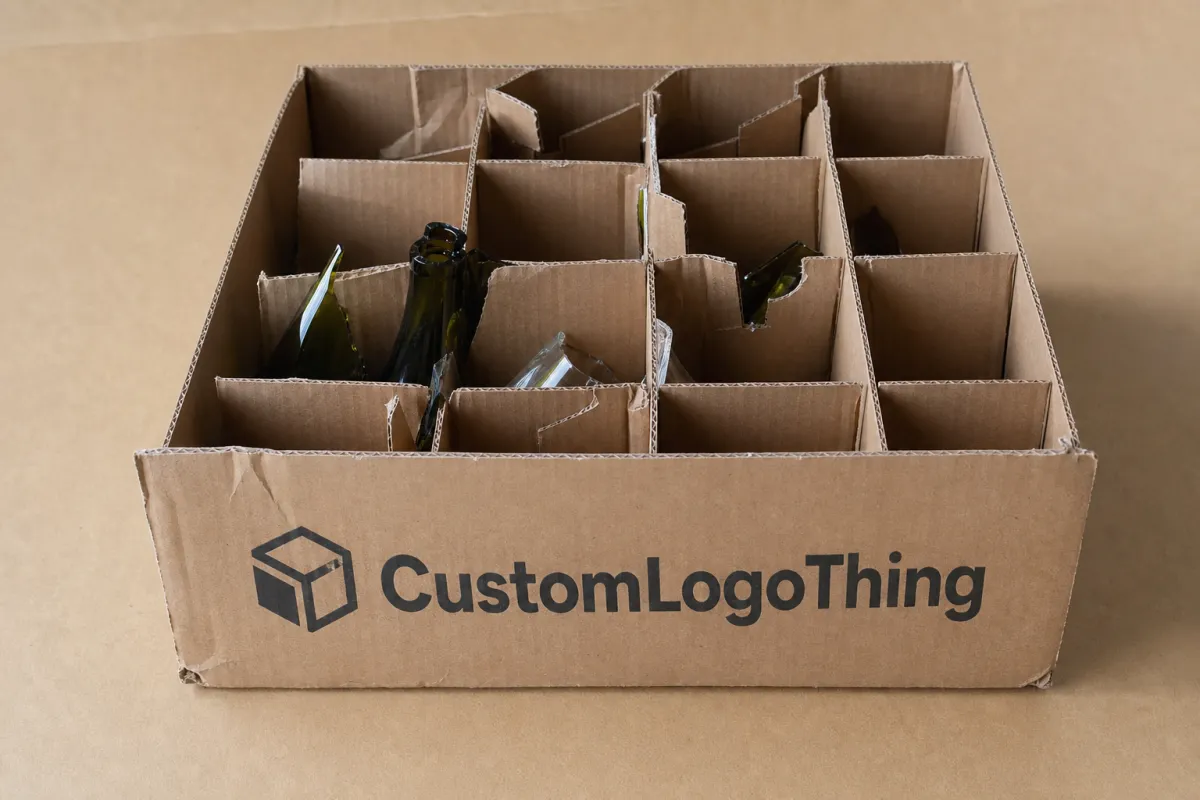
Breakage rarely begins with the dramatic drop people picture in a warehouse meeting. More often, it starts with small movements that repeat hundreds of times. A carton rides conveyors, gets stacked on a pallet, tilts in a trailer, then gets handled again at the final stop. Each movement adds a little more stress. Labels scuff. Closures loosen. Glass shoulders start tapping the same neighbor until one bottle gives way.
That is why damage claims can look mysterious from the outside. The outer carton may arrive with no visible tear, yet the contents are already scratched, chipped, or leaking. The failure sits inside the packout long before the box shows it. A buyer sees a clean carton and assumes the packaging did its job. In reality, the carton only survived the route. The bottle system did not.
Custom Carton Dividers for bottles solve that problem by creating individual cells. Each bottle gets its own space, which limits side-to-side motion and reduces contact points. The divider also helps spread load across the carton instead of letting bottle-to-bottle impact carry the force. That matters for glass, but it is not exclusive to glass. Plastic bottles can still scuff, tip, or leak if the fit is loose or the closures take repeated knocks.
From a buyer's perspective, the cost is never just the broken unit. There is rework, repacking, replacement freight, customer service time, and often a delayed reorder. A 2% failure rate on a small run can be annoying. On a high-volume program, it turns into a line item with real teeth. If 10,000 units move through a program and just 1% fail, that is 100 replacements before anyone starts counting labor.
For branded packaging, the divider plays a quieter role than the printed box, but it carries more of the functional burden. The outside can sell the story. The inside decides whether the story reaches the customer intact.
What Custom Carton Dividers for Bottles Are and How They Work
Carton dividers are partitions that split one shipping carton into several cells. A bottle sits in its own compartment rather than leaning into the next one. The concept is straightforward. The effect is not. Movement gets controlled, bottle-to-bottle contact gets removed, and the outer box does more of the work the packout needs.
Most bottle divider systems use corrugated partitions, chipboard partitions, or insert-style layouts. Corrugated partitions are common in shipping because they are recyclable, economical, and familiar to pack lines. Chipboard can work well for lighter bottles or presentation-led packs, though it is usually not the first choice for heavier glass. Insert-style structures show up in premium retail packaging or specialty kits where the bottle shape needs tighter control and the presentation matters as much as the protection.
Fit is where projects often succeed or fail. A divider can match the bottle body and still leave too much room at the shoulder, neck, or closure. That small gap is enough for movement to begin. Once movement begins, impact follows. The bottle does not need a huge space to fail; it only needs enough room to repeat a small hit many times.
Good custom carton dividers for bottles generally do three things well:
- They keep bottles from touching each other.
- They reduce movement during vibration and handling.
- They help the carton keep its shape under stack pressure.
That makes them useful for same-size bottles, case goods, e-commerce shipments, and fragile liquids that must stay upright. They also fit cleanly into Custom Printed Boxes, where the outer carton carries the branding and the divider handles the separation inside. It is a practical division of labor. Decoration on the outside, control on the inside.
The same logic shows up in liquor shipping, cosmetic bottle programs, food and beverage kits, and industrial samples. Once the bottle cells are right and the load is contained, the approach scales surprisingly well across bottle shapes and routes.
Key Factors That Decide the Right Divider Design
Bottle geometry comes first. Measure height, maximum diameter, shoulder angle, neck finish, and closure size. Measure the actual production bottle, not a drawing, and not just the label panel. A bottle can look simple on paper and still have a shoulder that changes the required cell height or a cap that adds surprise clearance needs. Round, square, oval, and faceted bottles each behave differently in a carton.
Weight matters just as much. A filled 750 ml glass bottle behaves very differently from an empty sample bottle or a lightweight PET bottle. The center of gravity changes, the compression load changes, and the line behavior changes too. A packout that feels acceptable on a bench can be unstable in a trailer. Heavy bottles deserve tighter support and more attention to the board spec. Light bottles can use less material, but only if movement is still controlled.
Board grade, flute profile, and partition thickness all affect performance. Single-wall corrugated is often enough for standard programs with controlled routes and moderate bottle weights. Heavier board or tighter tolerances make more sense when the route is rough, the bottles are heavy, or the carton will face long stack times. Some teams also need fiber certified to FSC standards for sourcing goals; that can be confirmed through FSC.
Packing format changes the design too. Two-bottle layouts are simple and quick to handle. Four-bottle layouts often balance protection and cube efficiency. Six-bottle layouts fit many shipping programs without becoming too awkward on the line. Twelve-bottle layouts can be efficient for case goods, but they need more attention to compression, loading speed, and carton strength. Bigger does not automatically mean better. Dense packs can cut freight volume and then create new fit problems if the carton or divider is underdesigned.
Shipping route is another deciding factor. Parcel, LTL, and palletized freight do different kinds of damage. Parcel gets dropped and rotated. LTL adds stack pressure and trailer vibration. Palletized freight is gentler in some ways, but it can still crush a weak carton or let a loose pack settle during transit. The divider should be designed for the route, not only for the bottle.
For broader product packaging work, start with the route, then the bottle, then the divider. That order saves time and keeps the outer carton, the insert, and the print spec aligned instead of stitched together after the fact. If you are comparing carton structure with insert structure, our Custom Packaging Products page is a practical place to review options before you lock the spec.
Process and Lead Time: From Sample to Shipment
The cleanest divider projects begin with measurement. Gather bottle dimensions, closure type, target bottle count, outer carton size, shipping method, and expected monthly volume. If the bottle has a label panel that needs protection, include that too. If the closure is a pump, spray top, cork, or tamper-evident cap, note the full profile. Missing one of those details can change the whole divider layout. A vague brief usually produces a vague sample, and vague samples are expensive guesswork with nicer paper.
Layout selection comes next. The grid gets mapped to the actual bottle dimensions, then the cell size, divider count, carton construction, and loading tolerance are set. Some packs should load quickly, with enough tolerance for line speed. Others need a tighter fit for rough transit. The sample should use the real bottle, the real closure, and the real carton size. Mock bottles can hide problems because they are often too light, too smooth, or too forgiving.
Sample test packs should always include the product, not just the dieline. A divider that looks correct on screen can still drag on labels, pinch a shoulder, or allow necks to touch when the carton closes. If the bottle is filled in production, test it filled. Empty bottles behave differently. That difference is small on paper and large in transit.
If the first sample only "almost fits," stop there. Almost fit is how claims begin.
Lead time for a simple sample can move quickly, often in a few business days when the dimensions are straightforward and the material is already in stock. Production timing usually lands in the low double digits for a standard run, then stretches when the order needs special board, a new layout, or several rounds of sample changes. Common designs move faster. Unusual designs need more back-and-forth, and that is normal.
Testing belongs here, not after the shipment leaves. A basic internal test should cover fit, packing speed, shake resistance, and stack stability. Formal shipping validation often borrows from ISTA test methods because they provide a disciplined way to think about vibration, drop, and compression. A lab is not required for every job. A consistent process is.
Once the sample passes, lock the files. Confirm the dieline, board spec, bottle count, print notes if any, and carton construction. Clean signoff prevents the classic production problem where one person approved a different thickness, another person assumed a different carton size, and the run lands in the middle. That is how packaging teams end up paying for corrections that should have been caught during sample review.
Cost and Pricing: What Changes the Unit Price
Pricing for custom carton dividers for bottles depends on a short list of concrete variables: board grade, divider complexity, bottle count per carton, print requirements, and order volume. A simple partition set for a standard bottle size can be very economical at scale. Heavier board, tighter cell tolerance, or a more elaborate layout costs more. Custom print on the divider itself is less common than print on the outer carton, but it can matter in retail packaging and branded presentation programs.
Minimum order quantity matters almost as much as the unit spec. Small runs usually carry a higher per-unit price because setup time, die cutting, and make-ready work get spread across fewer cartons. Larger runs generally improve the price per set because production costs are distributed more efficiently. If volume is uncertain, ask for quotes at more than one quantity break so you can see where the cost curve starts to flatten.
| Divider Option | Typical Use | Indicative Unit Price Impact | Main Tradeoff |
|---|---|---|---|
| Light corrugated partitions | Light plastic bottles, controlled shipping, lower stack risk | Lower, often around $0.18-$0.35 per set at higher volumes | Lower cost, less crush resistance |
| Standard corrugated partitions | Most glass or rigid bottle programs | Moderate, often around $0.25-$0.55 per set depending on count | Good balance of cost and protection |
| Heavy-duty partitions | Heavier bottles, long freight routes, more stack pressure | Higher, often around $0.40-$0.85 per set or more | More material, better compression control |
| Premium insert-style layouts | Retail packaging, presentation kits, specialty shapes | Higher still, especially at low volume | Stronger presentation, more setup complexity |
Those figures are not promises. They are working ranges. Actual quotes depend on carton dimensions, run size, whether the board is stock or special order, and how efficiently the layout nests on a sheet. A divider that creates little waste usually costs less than one that leaves a lot of scrap. Material markets also move, so any quote that pretends fiber pricing never changes is selling fiction.
Raw unit price tells only part of the story. The better metric is cost per protected bottle. A cheaper divider that fails once every few hundred shipments can cost more than a slightly better divider that protects the product consistently. Add replacement freight, labor, and customer service time, and the low-price option stops looking cheap. That is especially true for glass bottle shipments and premium packaging where one broken unit can damage the whole customer experience.
If you are comparing a carton-only approach with a divider-plus-carton system, ask for total landed cost rather than only the insert price. For some programs, using Custom Packaging Products as a starting point helps you compare outer carton strength, insert style, and branded printing together instead of chasing the lowest line item in isolation.
Common Mistakes That Make Bottle Dividers Fail
The first mistake is measuring only the bottle height. That is the easy error, and it causes trouble quickly. The widest point, shoulder profile, and closure matter just as much. Ignore them and the divider may look fine until the cap hits the top edge or the shoulder wedges against the partition. A bottle can be sized correctly and still be wrong for the carton.
The second mistake is fitting the body and forgetting the neck. Glass bottle packs do this often. The cells hold the lower body well, but the necks still touch once the carton closes. One contact point is enough to create scuffing or impact marks. If the necks are close enough to touch during transit, the divider is not finished.
The third mistake is underbuilding for parcel shipping. A divider that works in a warehouse or on a pallet may fail in parcel because the package sees more drops and more abrupt orientation changes. Parcel is tougher than many teams expect. It punishes weak board, loose fit, and poor stack resistance. If parcel is part of the route, do not spec the divider as if it is only moving from one shelf to another.
The fourth mistake is ignoring stack pressure. Freight shipments, especially palletized ones, can compress the carton until the top flaps bow or the divider crushes slightly and changes cell clearance. That damage can happen after the cartons leave your dock, which makes it harder to diagnose. If the shipment will stack under other product, design for it. Compression testing logic, such as ASTM D642, is useful here even when the job is not part of a formal lab program.
The fifth mistake is skipping a real packout test. Guessing is not testing. A sample should be loaded by the people who will actually pack the line, because operator behavior matters. A divider that is technically correct but awkward to load can slow the line or get used the wrong way. That is how the wrong layout survives approval and then causes production problems.
Branded packaging programs have one more failure mode: designing the outside first and the inside later. A custom printed box can look great in a render, but if the interior packout is sloppy, the customer remembers the breakage more than the print. The inside has to earn the right for the outside to matter.
Expert Tips and Next Steps Before You Order
Start with the worst-case shipment, not the best-case one. If the bottle must survive parcel and freight, design for parcel first. If the route includes long stack time, design for stack pressure first. That does not mean overbuilding every job into a brick. It means the real risk gets defined before the divider is chosen. A packaging design that is a little more conservative can save far more than it costs if the alternative is a damaged batch.
Ask for a sample using the actual bottle, actual closure, and actual carton size. If the supplier wants to skip that step, push back. It is easier to approve a proper sample than to explain broken glass to accounting later. Real samples also help you judge packing speed. A divider can protect the product and still be a poor operational fit if it slows the line on every unit.
Use a simple checklist in sample review:
- Does the bottle sit snugly without crushing labels?
- Do the necks, shoulders, and closures stay separated?
- Can an operator load the carton without slowing the line?
- Does the carton survive a shake test without visible movement?
- Does the stack hold shape when pressure is applied?
Build a one-page spec sheet before requesting quotes. Include bottle dimensions, bottle count, outer carton dimensions, shipping method, board preference, print needs, and target monthly volume. If the divider belongs to a larger retail packaging or product packaging program, note that too. A complete brief leads to a better quote. Vague requests get vague answers. Specific requests get useful pricing.
One more practical move: compare the divider against the whole shipping system, not only the insert. The carton, the closure, the bottle finish, and the route all shape the final result. That is why many teams pair the divider with a broader packaging review and keep the outer carton and insert under the same approval process. If you want a starting point for that coordinated approach, the Custom Packaging Products catalog can help you think through the full packout instead of treating the divider as an isolated part.
Final take: custom carton dividers for bottles are worth it when they are measured correctly, sampled with the real bottle, and matched to the real shipping problem. Do those three things and the result is fewer breakages, faster packing, and a cleaner customer experience. That is the work. For the next bottle program, start with the route, measure the actual bottle profile, and test the divider in the real carton before you commit to production.
How do I size custom carton dividers for bottles correctly?
Measure the widest point of the bottle, not just the height, and include the closure if it changes the profile. Aim for a snug fit that stops movement without crushing labels, shoulders, or necks. The safest step is to test a sample with actual bottles before you approve the divider grid.
Are carton dividers better for glass bottles or plastic bottles?
They work for both, but glass usually needs stronger board and tighter cell control. Plastic bottles can use lighter partitions if the packout still prevents tipping and neck contact. The better choice depends on weight, fragility, and shipping route more than bottle material alone.
What is the most common divider layout for shipping bottles?
Two-, four-, six-, and twelve-bottle layouts are the most common because they balance protection and packing speed. Smaller layouts can be easier to handle, while larger grids improve carton efficiency. Pick the layout that matches how the product ships, not how it looks on a spec sheet.
How long does it take to make custom carton dividers for bottles?
Simple samples can move quickly, but production timing depends on material, quantity, and whether the design is already proven. Lead time usually stretches when the order needs special board or repeated sample adjustments. If timing matters, ask for a sample schedule and production estimate before you lock the carton size.
Are custom carton dividers for bottles cheaper than foam inserts?
Often yes for repeat shipping, because corrugated partitions are usually lighter and easier to recycle. Foam or molded inserts may make sense for highly fragile or premium presentation needs. The real comparison is total cost per protected bottle, including damage risk, not just the insert price.
For most bottle programs, the smartest choice is the one that fits the product, survives the route, and keeps packing simple. That is why custom carton dividers for bottles stay so useful: they solve a physical problem without turning the packout into a maze.

