Buyer Fit Snapshot
| Best fit | custom carton packaging cost for packaging buyers comparing material specs, print proof, MOQ, unit cost, freight, and repeat-order risk where brand print, material, artwork control, and repeat-order consistency matter. |
|---|---|
| Quote inputs | Share finished size, material target, print colors, finish, packing count, annual reorder estimate, and delivery region. |
| Proofing check | Approve dieline scale, logo placement, barcode or warning zones, color tolerance, and any recyclable or compostable wording before bulk production. |
| Main risk | Vague material claims, crowded artwork, or missing packing details can create delays even when the unit price looks attractive. |
Fast answer: Custom Carton Packaging Cost: Pricing, Specs, and Savings should be specified like a repeatable production item. The safest quote includes material, print method, finish, artwork proof, carton packing, and reorder notes in one written spec.
What to confirm before approving the packaging proof
Check the product dimensions against the actual filled item, not only the sales mockup. Ask for tolerance on folds, seals, hang holes, label areas, and retail display edges. If the package carries a logo, QR code, warning copy, or legal claim, reserve that space before decorative graphics fill the panel.
How to compare quotes without losing quality
Compare board or film grade, print process, finish, sampling route, tooling charges, carton quantity, and freight assumptions side by side. A lower quote is only useful if the supplier can repeat the same color, closure quality, and packing count on the next order.
Custom Carton Packaging Cost: Pricing, Specs, and Savings
Two cartons can sit side by side on a shelf and look almost identical. One lands at a sane unit price; the other pushes custom carton packaging cost higher because of board grade, print coverage, and tooling choices that are easy to miss during early quoting. That gap is common, and it is usually explainable.
Most buyers do not need a polished pitch. They need a pricing model they can trust, a way to compare quotes fairly, and a clear view of where custom carton packaging cost can be trimmed without hurting the product. That is the lens here: practical numbers, material choices, quantity breaks, and the tradeoffs that matter in product packaging, retail packaging, and branded packaging.
What Actually Drives Custom Carton Packaging Cost?
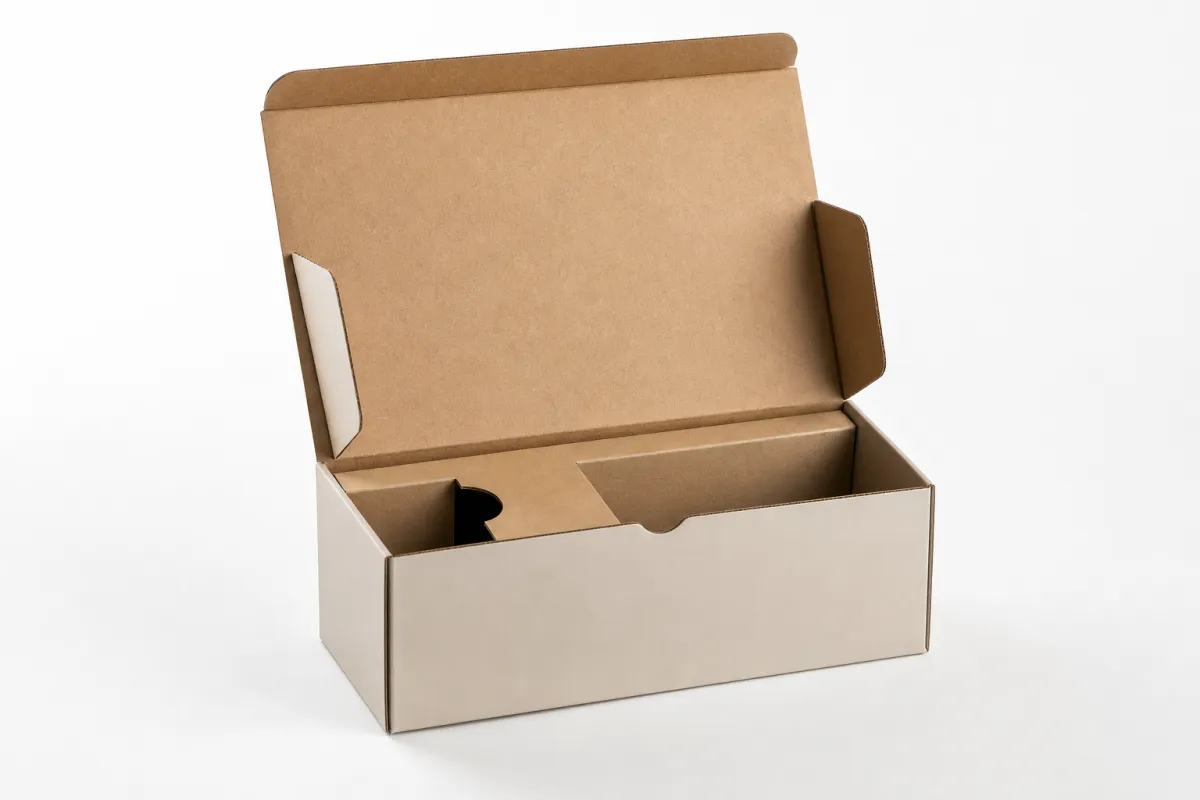
Two cartons can look nearly identical and still carry very different custom carton packaging cost profiles. The biggest swing often begins with the board itself. A simple tuck-end carton in SBS stock is not the same economic animal as a heavier recycled board with a specialty coating, extra die cuts, and a window patch. The shelf may not show the difference immediately. The quote certainly will.
The most common mistake is chasing the lowest headline unit price and ignoring the full system cost. A carton that costs a fraction less per unit can still increase labor time, trigger higher damage rates, or slow pack-out. Custom carton packaging cost should be read alongside shipping efficiency, case pack configuration, and how the carton behaves in production. Faster assembly can save more than a decorative finish ever adds.
A practical pricing model is simple: size + structure + material + print + quantity + finishing = final price. Add MOQ behavior, and the picture gets clearer. Low-volume orders absorb setup, tooling, and proofing across fewer units, so custom carton packaging cost rises quickly. Larger runs lower unit cost, but only if storage, cash flow, and sell-through can support the inventory.
The right question is not "What is the cheapest carton?" It is "Which carton gives the best combination of protection, presentation, and unit cost?" That framing matters because custom carton packaging cost is tied to more than paper and print. It is tied to the way the carton performs inside your fulfillment operation and on the retailer's shelf.
"The cleanest quote is the one built on identical assumptions. Same dimensions. Same stock. Same print method. Same finishing. Without that, custom carton packaging cost comparisons are just guesswork."
Revision can be a hidden cost that rarely appears in the first round of pricing. If artwork is still moving, dimensions are approximate, or the product has not been measured with inserts in place, the project can loop back through prepress and structural changes. That extra time pushes custom carton packaging cost higher in ways that are easy to miss until a launch date tightens.
I have seen two supplement cartons with the same outer dimensions come back with a 17% price gap because one needed a soft-touch coating and the other did not. That kind of spread surprises people until they break the job into its parts. Packaging economics is a bit like airline pricing: the base fare looks mild, then the extras start showing up one by one.
Product Details: Carton Styles, Uses, and Brand Impact
Custom carton packaging cost changes sharply depending on carton style. A straight tuck-end carton is usually the simplest starting point. It works well for lightweight retail items, cosmetics, supplements, and small electronics accessories. A mailer-style carton creates a more premium unboxing feel, which often suits subscription products and e-commerce orders. Sleeve cartons can elevate presentation with a lower material load, while auto-lock bottom cartons improve speed for heavier fills. Display cartons behave differently again because they are built to sell in place, not just to hold product.
Product category matters just as much as structure. Cosmetics need visual polish and print clarity. Food packaging needs materials and inks that align with regulatory and shelf-life requirements. Supplements usually demand strong branding and efficient pack-out, while apparel cartons may prioritize presentation and easy opening. Electronics often need more protection, tighter fit, and better insert planning. Each one shapes the quote differently because each product asks for a different mix of protection, branding, and labor.
A good carton does more than contain an item. It signals what the brand stands for before the product is even used. Packaging design is not only an aesthetic choice. A rigid-feeling build, crisp opening line, or well-placed logo can raise perceived value without major material changes. In some cases, smarter package branding does more for selling power than a more expensive substrate. That is a useful reminder when you are balancing custom carton packaging cost against brand impact.
Fit has a practical side too. Better fit often lowers hidden costs by reducing inserts, void fill, and damage risk. It can also speed up packing because the operator is not wrestling with loose product or oversized voids. That is why many buyers treat Custom Packaging Products as a design decision as much as a sourcing decision. The carton that fits well often costs less to run, less to ship, and less to explain internally.
From a shelf perspective, the right carton style can lift retail packaging performance without a premium finish. A clean front panel, a disciplined color count, and a reliable closure can outperform a crowded, overworked design. Teams often spend on decoration before they fix structure. Custom carton packaging cost is easier to control after the format is chosen correctly.
That is also where a little restraint helps. A foil stamp can look gorgeous in a render, but if the carton will spend its life inside a shipper or on a crowded back bar, it is kinda wasted money. The best-performing cartons often look simpler than the mood board. They are just built more intelligently.
Specifications That Shape Custom Carton Packaging Cost
Specification control is where custom carton packaging cost becomes predictable. The buyer should lock down dimensions, board thickness, material type, print coverage, coatings, inserts, and finishing before asking for a final quote. A vague brief creates vague pricing. A precise spec sheet creates a cleaner comparison and fewer revisions. That is not a small operational detail; it is the difference between a usable quote and a placeholder.
Size is one of the first cost drivers. Larger cartons use more board, create more print area, and usually cost more to ship. Oversized packaging can also create void space, which increases freight inefficiency and can force extra fill material into the pack-out process. A carton that is only a little too large can push the budget higher at multiple points: material, labor, shipping, and sometimes damage risk because the product shifts inside the box.
Material choice is another major lever. SBS is popular for sharp print and a clean retail appearance. Kraft can support a more natural look and may fit certain branded packaging strategies better. Recycled board is often selected for sustainability goals or cost discipline, but print brightness can differ. Specialty stocks can feel more premium, yet they do not always earn their price premium unless the product category truly benefits from the look and feel. The same principle applies to FSC-certified materials from the Forest Stewardship Council: they can strengthen sourcing credibility, but they still need to support the business case.
Print variables change the math quickly. CMYK is often the baseline for full-color cartons. Spot color can tighten brand consistency, especially on logo-heavy work. Metallic inks, foil, embossing, and soft-touch lamination create a more luxurious result, but they also raise custom carton packaging cost through extra setup, additional passes, and more press handling. The question is not whether these upgrades look good. Some do. The question is whether they earn their place in the market.
For quote discipline, use a single spec sheet and send it to every supplier. That sheet should include outside dimensions, material thickness, panel orientation, artwork coverage, coating, insert requirements, and preferred carton style. Ask the vendor to quote on exactly those assumptions. If one supplier assumes a 1-color print and another assumes 4-color with aqueous coating, the comparison is meaningless. Clean inputs keep custom carton packaging cost aligned across vendors and reduce the chance of expensive surprise changes later.
If a project is complex, request structural guidance and print recommendations early. Industry resources at packaging.org, along with ISTA transit testing and ASTM packaging test methods, can help teams think more clearly about fundamentals. That sort of discipline does not replace supplier expertise. It sharpens it.
One more practical detail: request samples in the same material family you plan to buy, not a generic mockup on whatever paper happens to be in the shop. A sample on the wrong substrate can hide scuffing, crack lines, and fold memory. That mistake is cheap to make and annoying to discover after approval.
Custom Carton Packaging Cost Breakdown: Pricing and MOQ
The most useful way to read custom carton packaging cost is layer by layer. Setup costs cover prepress, die creation, and proofing. Material costs cover the board itself. Printing adds press time and ink usage. Finishing adds coatings, foil, embossing, or special treatments. Tooling may apply depending on the structure and the complexity of the die line. Freight rounds out the picture. Once you see those layers, the quote stops looking arbitrary.
| Carton option | Typical use | Common price range at 5,000 units | Cost notes |
|---|---|---|---|
| Straight tuck-end carton | Cosmetics, supplements, small retail items | $0.18-$0.32 per unit | Usually the lowest setup burden; print coverage and coating change the final number |
| Mailer-style carton | E-commerce, subscription, presentation packaging | $0.35-$0.75 per unit | Heavier board and better structure increase protection and branding value |
| Auto-lock bottom carton | Heavier products, faster hand packing | $0.28-$0.55 per unit | Faster assembly can offset a slightly higher unit cost |
| Sleeve carton | Retail display and brand presentation | $0.16-$0.40 per unit | Lower board usage, but the product or inner tray must do more structural work |
These numbers are not a promise. They are a practical range based on typical order behavior, and custom carton packaging cost will shift with print coverage, paper grade, dimensions, and quantity. A small order might cost far more per unit because setup costs are spread across fewer boxes. A larger order usually lowers unit cost, but only if the business can carry inventory without pressure. That is why MOQ matters as much as price.
MOQ is often where the internal debate starts. Finance wants lower inventory risk. Operations wants stable supply. Marketing wants enough volume to support a launch or retailer reset. The best answer is usually not the lowest MOQ or the lowest unit price. It is the best blend of both. A buyer comparing suppliers should ask for several quantity bands: 1,000, 3,000, 5,000, and 10,000 units, for example. That reveals where the real break points sit.
Multiple SKUs can raise cost faster than most teams expect. Every version change may require new plates, revised proofing, or separate production scheduling. Dieline complexity has the same effect. More folds, more glue points, more windows, or custom locking tabs can all raise labor and tooling costs. It is often cheaper to simplify a structure than to keep layering small decorative choices onto a carton that already does the job.
There are real savings levers, and they do not always involve cutting quality. Standard size formats often reduce waste. Fewer finishes lower press complexity. Consolidated artwork changes prevent repeat proof cycles. Better carton dimensions can reduce board waste. In some projects, that kind of discipline cuts custom carton packaging cost more effectively than a supplier discount ever could.
Think in cents, but also think in scale. A three-cent difference on a 10,000-unit run is only $300. On a 50,000-unit run, it is $1,500 before freight or rework show up. Those numbers are small enough to overlook and large enough to upset a margin model. That is exactly why packaging cost conversations deserve the same attention as media spend or freight contracts.
Process and Timeline: From Brief to Delivery
The production path is simple on paper and messy in practice. A solid custom carton packaging cost quote starts with the brief, moves through spec confirmation, then shifts into dieline creation, proof approval, sampling, production, quality check, and shipment. Each step has a cost implication. Each step can also create delay if the inputs are incomplete. That is why the process matters just as much as the price.
Delays usually happen in the same places. Missing artwork slows prepress. Incomplete dimensions create structural revisions. Slow approval cycles stretch the schedule. A late change after sampling can force the whole job back through proofing. None of that is exotic. It is routine. The surprise is how often it happens on jobs where the team thought cost was the only variable worth tracking.
Lead time depends on complexity, but a realistic planning window helps. Simple carton jobs can often move faster once artwork is final and the spec is locked. More complex jobs, especially those with premium finishes or structural testing, take longer. A typical custom carton project may run 12-15 business days from proof approval to production completion, and that is before freight. Sampling can add time, but it usually saves money by catching sizing or print issues before full production. One wrong dimension on a large run can damage a budget faster than a slightly higher quote ever would.
Sampling also protects the brand. The sample shows whether the product fits properly, whether the closure holds, whether the print reads correctly, and whether the carton opens in a way that feels intentional. That matters for product packaging and for retail packaging because the unboxing or shelf experience is part of the purchase decision. In the language of custom carton packaging cost, sampling is a control cost, not a luxury.
Plan backward from the launch date, not forward from the quote date. Promotion windows, retailer resets, and subscription ship dates have a way of compressing every packaging decision. Good planning means the carton arrives before the work becomes urgent. From experience, urgency is one of the easiest ways to make pricing climb for no strategic reason.
There is a quieter point here too. Packaging projects rarely fail because the box looked bad on screen. They fail because someone approved a guess. A rough dimension, a placeholder coating, an implied insert, or a rushed proof can each trigger a nasty chain reaction later. That is the expensive part, not the paper itself.
Why Choose Us for Custom Carton Packaging
Many vendors can print a box. Fewer can help a buyer compare custom carton packaging cost in a way that supports a real sourcing decision. The difference is not rhetoric; it is process. A fact-driven partner asks for dimensions, target use, shipping conditions, and brand goals before recommending a structure. That keeps the quote grounded in the project, not in a sales script.
The best packaging suppliers also know where not to spend. Sometimes a carton needs a sturdier board. Sometimes it needs a cleaner print line. Sometimes it simply needs a better dieline. Good support means the supplier can explain which change improves the outcome and which change just adds cost. That is especially valuable for Custom Printed Boxes and branded packaging, where it is easy to overdesign the carton and underplan the run.
Quality checkpoints protect budget. Prepress review catches artwork errors before plates or digital output are committed. Sample sign-off confirms fit. In-process inspection reduces waste from print variation. Final pack-out verification helps ensure the cartons are bundled and shipped correctly. Each checkpoint lowers the odds that custom carton packaging cost will swell because of avoidable rework. That is a practical financial benefit, not a nice-to-have.
Good communication matters more than most buyers expect. A quick response on dieline questions, a clear note on finishing choices, or a prompt approval on proofs can keep the entire job on schedule. That schedule discipline has a direct effect on cost because rushed changes are expensive. For a team balancing branding, procurement, and launch timing, that sort of support is worth more than a slightly lower quote that creates friction later.
There is also a strategic benefit. Better carton design can lower damage, improve shelf impact, and make custom carton packaging cost easier to defend internally. When the carton performs well, the pricing conversation changes. It stops being about paper and ink. It becomes a discussion about fewer claims, cleaner presentation, and stronger conversion. That is a much easier argument to win inside a business.
A packaging partner worth listening to will also tell you when a premium finish is not worth it. That honesty matters. If the product sells through a distributor and the carton never faces a consumer, the money may be better spent on board strength or fit tolerance. If the box is the main shelf signal, then the story flips. The point is not to spend less everywhere; it is to spend in the right place.
For teams comparing packaging partners, review the sample, the dieline, and the landed quote together. A clean number on a PDF does not mean much if the sample opens badly or the freight class is ugly. The packaging team that shows its work usually saves the buyer time later, and time is part of cost whether it is billed or not.
How to Request an Accurate Quote
If the goal is a reliable custom carton packaging cost, start with the right inputs. Send product dimensions, target quantity, carton style, artwork files, finishing preferences, and any shipping or retail constraints. If the carton needs to fit inside a master case, say so. If the product requires an insert, include that. If the outer pack has to fit a retail peg or shelf dimension, include that too. The quote improves when the brief is specific.
It helps to ask for pricing at multiple quantity levels. A single number can hide the curve. Tiered pricing shows where the unit cost falls, where it flattens, and where inventory risk starts to grow. That makes the pricing picture easier to compare against storage, cash flow, and forecast confidence. For a lot of businesses, the best economic choice is not the biggest run. It is the run that fits the sales plan.
Compare every supplier on the same assumptions. Same dimensions. Same stock. Same print method. Same finishing. Same lead time target. Once those inputs line up, custom carton packaging cost turns into an apples-to-apples comparison instead of a negotiation over missing details. Ask for tooling, sample, freight, and post-press charges separately if they are not already clear. The landed number matters more than the headline quote.
A short decision checklist keeps the process disciplined: fit, protection, print quality, lead time, MOQ, and landed cost. If a carton checks all six, it is probably worth serious consideration. If it misses on fit or print consistency, the apparent savings may disappear fast. That is especially true for retail packaging, where a sloppy carton can weaken the product story before the shopper even opens it.
For buyers building a launch plan, the smartest move is usually simple: gather specs, request samples if needed, and use the quote to refine the carton before production. That approach keeps the budget under control and gives the team room to improve the structure instead of reacting to surprises. It is a disciplined way to buy packaging, and it usually pays for itself.
One practical rule holds up almost every time: do not approve a quote until the dimensions, board grade, and finish are written in plain language. If those three items are clear, the rest of the job gets easier. If they are fuzzy, the budget will probably wander.
What affects custom carton packaging cost the most?
Material choice, carton size, print coverage, finishing, and order quantity usually have the biggest impact on custom carton packaging cost. Complex structures and premium coatings add cost faster than simple shape changes, and freight or sampling can matter even more on smaller runs. If a quote looks off, check the assumptions first.
How do I lower custom carton packaging cost without lowering quality?
Use a standard size when possible and avoid unnecessary structure changes. Reduce expensive finishing to the elements that support brand value most. Consolidate SKUs or order larger runs if inventory planning allows it. The lowest custom carton packaging cost is not always the best result, but unnecessary complexity almost always raises the bill.
What is a typical MOQ for custom carton packaging?
MOQ depends on material, print method, and finishing, so there is no universal number. Digital or simpler runs may allow lower quantities, while specialty print often needs higher volume. Ask for tiered pricing so you can compare MOQ options against storage and cash flow. That is the fastest way to read the quote honestly.
How long does custom carton packaging production usually take?
Lead time depends on artwork readiness, sampling needs, and production complexity. Simple jobs move faster; structural development and premium finishes take longer. Approval speed is often the biggest variable a buyer can control. Once the proof is signed, a well-run packaging project is usually easier to forecast.
What should I provide for an accurate custom carton quote?
Share product dimensions, target quantity, carton style, print requirements, and finishing preferences. Include any insert needs, shipping constraints, or retail display requirements. Supplying artwork and a clear spec sheet reduces revisions and helps pricing stay accurate. Clear inputs make custom carton packaging cost easier to compare and faster to approve.
The strongest packaging decisions are rarely the most dramatic ones. They are the ones that fit the product, the forecast, and the budget with the least waste. That is why custom carton packaging cost should be read as a system, not a number. Get the specs right, compare quotes on equal terms, and the final carton usually becomes easier to justify, easier to ship, and easier to sell.

