Buyer Fit Snapshot
| Best fit | Custom Carton Prototype Samples projects where brand print, material claims, artwork control, MOQ, and repeat-order consistency need to be specified before quoting. |
|---|---|
| Quote inputs | Share finished size, material target, print colors, finish, packing count, annual reorder estimate, ship-to region, and any compliance wording. |
| Proofing check | Approve dieline scale, logo placement, barcode or warning zones, color tolerance, closure strength, and carton packing before bulk production. |
| Main risk | Vague material claims, crowded artwork, missing packing details, or unclear freight terms can make a low unit price expensive after revisions. |
Fast answer: Custom Carton Prototype Samples: Board, Finish, Dieline, and Unit Cost should be specified like a repeatable production item. The safest quote records material, print method, finish, artwork proof, packing count, and reorder notes in one written spec.
Production checks before approval
Compare the actual filled-product size with the drawing, then confirm tolerance on folds, seals, hang holes, label areas, and retail display edges. Reserve space for logos, QR codes, warning copy, and material claims before decorative graphics fill the panel.
Quote comparison points
Review material grade, print process, finish, sampling route, tooling charges, carton quantity, and freight assumptions side by side. A quote is only useful when the supplier can repeat the same color, closure quality, and packing count on the next order.
Custom Carton Prototype Samples: How to Get Them Right
Custom carton prototype samples look tiny on a budget sheet. Then they save a project from itself. A carton that feels perfect in a mockup can still fail when a real product lands inside it, a picker grabs it, or a pallet gets stacked a little too aggressively. That is the whole point of sampling: expose the problems while they are still cheap.
For buyers, the value is practical. A prototype can prove fit, confirm print placement, expose weak folds, or show that a finish looks great and handles like a greased fish. I have seen perfectly decent artwork turned into a headache because the coating scratched too easily or the carton opened too slowly on the packing line. Packaging has a habit of behaving nicely right up until the work gets real. Custom carton prototype samples are the reality check.
If you are comparing options for Custom Packaging Products, the sample stage is where the structure stops being an idea and becomes a thing with weight, corners, and consequences. It is also where custom printed boxes stop living in a PDF and start acting like an object someone has to pack, ship, stack, and store.
The cheapest sample is often the most expensive mistake. One wrong dimension, one weak board choice, or one insert that shifts during transit can create more damage than several rounds of sampling ever would. That is why smart teams treat custom carton prototype samples as a decision tool, not a box-ticking exercise.
Here, I break down how custom carton prototype samples are made, what drives pricing, how long the process usually takes, and how to review them like a packaging team instead of like someone admiring a nice box on a desk.
Custom carton prototype samples: what they are and why they matter
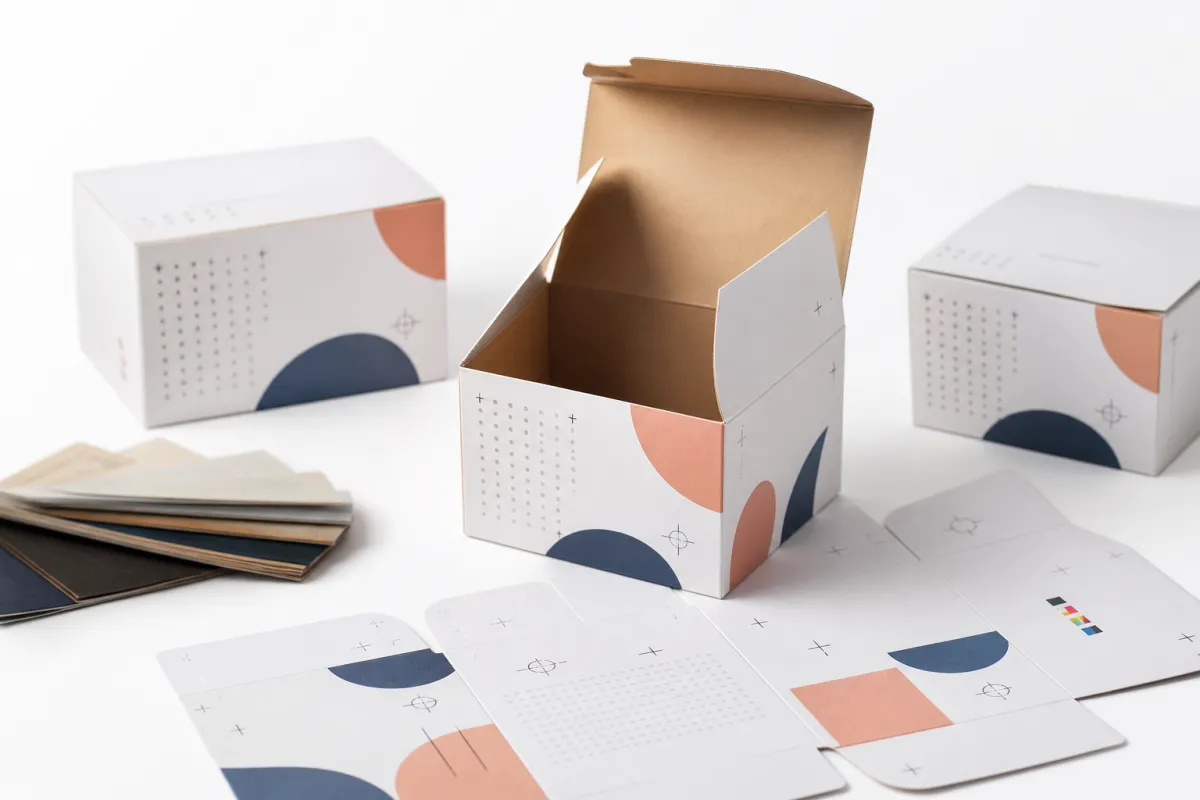
Custom carton prototype samples are pre-production carton examples built to test a design before full manufacturing starts. Depending on what needs to be checked, the sample may be a blank structural mockup, a digitally printed proof, or a fully converted prototype with the chosen board, finish, and inserts. The goal is blunt: catch problems early, before they get a purchase order attached to them.
That matters because cartons live in the real world, not in renderings. A box that fits perfectly in CAD may become too tight once the product has rounded corners, a sleeve, a label, or a protective bag. A shipping carton that looks strong enough in a meeting may fail under compression once it gets stacked on a pallet. Custom carton prototype samples let teams see those failures before production turns them into inventory.
Small dimension changes can ripple through the whole operation. Internal size affects fit, void fill, case pack count, and pallet pattern efficiency. External size affects freight cube and storage. A carton that shifts by just a few millimeters can still look fine on a drawing and still be wrong in the warehouse. That is why custom carton prototype samples matter so much for shipping-heavy programs.
The math usually settles the argument. One sample cycle may cost a few hundred dollars, depending on complexity. One bad production run can bring waste, returns, extra freight, and labor costs that chew through a budget fast. In plenty of cases, fixing the issue during custom carton prototype samples would have been cheaper than one bad pallet of finished goods.
A carton does not need to look dramatic to get expensive. Wrong size, wrong board, wrong closure, wrong everything. The bill shows up later in freight, labor, and customer complaints.
That is the business case. Custom carton prototype samples matter to operations, procurement, quality, and finance, not just design. They cut down on guesswork before the run gets large enough to hurt.
There is a branding side too. When branded packaging is part of the brief, the prototype checks whether the visual treatment works with the physical structure. A premium sleeve, a matte finish, or dense ink coverage can look polished on a screen and behave very differently once folded and glued. That is exactly the kind of thing custom carton prototype samples are supposed to reveal.
Think of them as a rehearsal with a stopwatch. The product gets one chance to fit. The carton gets one chance to close cleanly. The team gets one chance to spot what the spec sheet cannot tell them.
How custom carton prototype samples are made and approved
The usual workflow for custom carton prototype samples starts with a brief: product dimensions, weight, quantity per carton, shipping method, and any handling requirements. Then comes the dieline or CAD drawing, which maps folds, flaps, tuck areas, glue zones, and insert positions. That is where the structure either holds together or falls apart under scrutiny.
Once the dieline is locked, the sample builder produces the first version. A simple structural mockup may be cut and creased without print. A more complete version may be digitally printed, glued, and converted so the team can evaluate both the box form and the branding. For premium retail packaging, the prototype may also include coatings, foil, embossing, or other finishes.
Approval should move in steps, not in one giant yes-or-no blur. Structural approval, print approval, and final production sign-off are different decisions. A carton can fit perfectly and still have poor panel orientation. It can print correctly and still be a pain to assemble. Keeping those checks separate keeps custom carton prototype samples useful instead of fuzzy.
The review usually covers four things: fit with the actual product, hand assembly, visual inspection, and shipping simulation. If the carton is part of custom printed Boxes for Retail shelves, the team should also check panel alignment, logo orientation, and whether the finish catches light in a helpful or disastrous way. That is where packaging design stops being theoretical.
For parcels and distribution programs, ask whether the sample should be judged against ISTA methods or a related internal standard. For sustainability requirements, board selection should be checked against documentation such as FSC claims when certified fiber is part of the brief. Custom carton prototype samples should match the standards your team will actually be measured against. If the document trail is vague, stop and clean that up before approving anything.
A useful rule: if the sample only needs to answer a structural question, a blank mockup may be enough. If the sample needs to settle color, finish, or branded packaging details, printed is usually the better path. If the carton is headed for retail or launch photography, custom carton prototype samples should be close enough to production that nobody is squinting at a flat proof and pretending it counts.
The approval packet should include notes, measurements, photos, and a clear decision. The sample itself is not the record. The record is what the team decides after looking at it and dealing with the facts.
Key factors that shape custom carton prototype samples
Carton style comes first. Mailer boxes, folding cartons, corrugated shippers, retail-ready cartons, and display trays all sample differently because each one solves a different problem. A mailer box may focus on closure feel and presentation. A corrugated shipper may care more about crush resistance and stack strength. A display tray may be judged by shelf access and visibility. Custom carton prototype samples should match the actual use case, not some generic rectangle with ambition.
Material choice matters just as much, and often more than buyers expect. An 18pt SBS carton behaves differently from a 350gsm C1S artboard. A single-wall corrugated board with a B flute behaves differently from one with an E flute. Recycled content can shift color consistency and surface feel. Coatings change scuff resistance and folding behavior. When you evaluate custom carton prototype samples, you are approving a material system, not just a shape.
Dimensional precision is where logistics starts keeping score. Internal dimensions control fit. External dimensions control pallet patterns, freight cube, and warehouse storage. A carton that is 2 to 3 mm off can still pass a design review and still be wrong in the shipping lane. That is why custom carton prototype samples should be measured with the actual product inside, not by eyeballing an empty carton and calling it close enough.
Print and finish decisions can be just as consequential. Spot colors, varnish, lamination, foil, embossing, and uncoated textures all affect lead time and budget. Heavy ink coverage can slow drying or reveal surface distortion. Soft-touch lamination can make retail packaging feel premium, but it also changes handling. If the branding depends on exact color or a specific tactile effect, custom carton prototype samples should be close to the final finish, not just kind of similar from three feet away.
Product handling adds another layer. Sharp edges can scuff panels. Fragile contents may need inserts or dividers. Temperature-sensitive goods may need a carton that resists warping in storage. Heavy products may call for stronger board or a different lock. That is one reason custom carton prototype samples are more useful than a spec sheet: they make handling consequences visible.
Here is the practical picture: structure, material, dimensions, graphics, and handling all interact. Change one and the rest may shift with it. A carton that works beautifully for a 250 g product may fail after the product grows to 320 g or gains a rigid insert. Good custom carton prototype samples show those connections before production does it the hard way.
A packaging buyer who ignores those variables usually pays twice. First for the sample. Then for the fix. That is why the best review meetings focus less on taste and more on measurable requirements: caliper, crush resistance, fit tolerance, closure performance, and finish quality.
Custom carton prototype samples: cost, pricing, and quote drivers
Pricing for custom carton prototype samples usually comes down to five things: board usage, labor, tooling, print method, and how many revisions are likely. A blank structural mockup is usually the cheapest option because it skips full color setup. A digitally printed sample sits in the middle. A highly finished prototype with specialty coatings, inserts, or premium branding details can cost the most.
The quote can also shift depending on whether the sample is for one internal review or a multi-copy approval set. If purchasing, operations, and brand all need copies, the budget rises. Shipping the sample to multiple sites matters too. That is why custom carton prototype samples should be priced as part of a decision process, not as one lonely line item floating away from the rest of the project.
Low sticker price can hide missing scope. A sample that looks cheap but excludes revisions or special finishing can end up costing more than a slightly higher quote that includes changes. With custom carton prototype samples, scope beats headline price every time. The line item is not the project.
Most teams should budget for at least one revision cycle. The first prototype often answers the wrong question or reveals a new one. Maybe the fit is right but the closure is too slow. Maybe the box assembles cleanly but the insert shifts. Maybe the print looks fine but the gloss level clashes with branded packaging goals. A small budget buffer is usually cheaper than a rushed approval.
| Sample type | Typical use | Approx. cost logic | Typical lead time |
|---|---|---|---|
| Blank structural mockup | Fit, closure, dimensions, inserts | Lowest cost; minimal print and finish work | Often 2-5 business days |
| Digitally printed prototype | Artwork, panel placement, retail presentation | Mid-range; print and conversion add cost | Often 5-10 business days |
| Fully converted production-like sample | Color, coating, premium finish, final approval | Highest cost; closer to production setup | Often 10-15 business days or more |
Those ranges are not fixed. Every carton has its own level of pain. A simple tuck-end box and a corrugated shipper with die-cut inserts do not belong in the same pricing conversation. Still, the table gives teams a realistic way to think about custom carton prototype samples before the first quote lands.
The comparison that matters most is sample cost versus the cost of a bad production run. If a mistake forces a reprint, repack, or freight correction, the sample budget starts looking tiny. That is why packaging teams treat custom carton prototype samples as risk management, not a nice-to-have.
Step-by-step process and timeline for custom carton prototype samples
A clean sample process starts with a complete brief. Product dimensions, product weight, pack-out quantity, shipping method, stack height, shelf requirements, and artwork files should be ready before the first round starts. Missing information slows everything down because every unanswered question creates another revision for custom carton prototype samples.
- Gather product data and packing requirements.
- Confirm internal and external carton dimensions.
- Choose the right board, flute, or folding carton stock.
- Create the dieline and review fold logic.
- Build the prototype sample and test the fit.
- Review print, finish, and handling behavior.
- Revise, approve, and lock the production benchmark.
That timeline can move quickly when the brief is clean. A simple blank mockup may be ready in a few business days. A branded prototype with lamination, foil, or inserts can take longer because each choice affects the next step. For custom carton prototype samples, the slow projects are usually not the complicated ones. They are the ones where the team keeps changing its mind after work has already started.
Coordination is the hidden variable. Packaging design may approve the layout, while operations wants line speed confirmed. Procurement may push for lower-cost board, while quality wants more crush resistance. Sales may care about shelf appearance, while finance wants freight efficiency. The best custom carton prototype samples process gets those voices into the same review instead of sending feedback into six email threads and calling that progress.
Review the sample where it will actually live. If the carton is going into a warehouse, test it in the warehouse. If it is packed by hand, time the assembly by hand. If it will sit in retail packaging, place it next to the competition on the shelf. That is a better test than judging custom carton prototype samples under office lights on a clean table.
One simple habit helps a lot: keep one feedback document per round. Note the sample version, the exact issue, the person raising it, and the decision. That sounds boring because it is. It is also the difference between a controlled revision and a tangled mess of conflicting comments. When teams keep that record, custom carton prototype samples become a benchmark for the next reorder instead of a forgotten experiment.
If a project is high visibility, ask for a comparison set. One version may be optimized for fit. Another may be optimized for logistics or cost. Seeing both side by side often clears the fog faster than a room full of opinions. In packaging, that trade-off is usually real: better presentation can mean higher material cost, and lower cost can mean weaker handling performance. Custom carton prototype samples make the trade-off obvious.
From a timeline standpoint, indecision usually causes more delay than production. The sample builder can only move as fast as the brief allows. That is why the best teams lock their test criteria before they order custom carton prototype samples.
Common mistakes when reviewing prototype cartons
The first mistake is approving an empty carton. An empty box can close nicely and still fail once the product goes inside. It can hide fit issues, insert misalignment, or lid pressure that only appears under load. If custom carton prototype samples are approved without the actual product inside, the review is not complete.
The second mistake is obsessing over appearance and ignoring performance. A carton can photograph well and still travel badly. A print-perfect sample is not a shipping test. If the carton will move through parcel networks, stacking, or warehouse handling, it has to survive those conditions. That is why custom carton prototype samples should be checked for protection and function before anyone starts applauding the branding.
The most expensive sample is the one approved for the wrong reason.
Another common issue is changing dimensions after sampling without checking the system around the carton. A slightly larger box can change pallet count, freight cube, and case pack logic. That sounds minor until the warehouse has to live with it. Good custom carton prototype samples are never just a box; they are part of a packing, shipping, and storage system.
Vague feedback causes trouble too. Notes like “make it stronger” or “adjust the print” force the supplier to guess. Better feedback names the panel, fold, corner, image area, or closure that needs work. The more specific the note, the faster the revision. That matters even more for custom printed boxes, where a one-inch shift in artwork can change the whole visual balance. With custom carton prototype samples, clarity saves time.
Stakeholder misalignment is another trap. Packaging cares about fit. Operations cares about speed. Finance cares about cost. Sales cares about presentation. Those priorities are different, and pretending they are the same is how projects drift. If they are not discussed early, the final sample may satisfy one group and frustrate the others. That is not a sample problem. It is a review process problem, and custom carton prototype samples expose it quickly.
Finally, some teams forget to document the approved version. Months later, a reorder starts and nobody remembers whether the structure was the final revision or the near-final one. Save measurements, photos, and notes. If the design depends on a specific board grade, finishing method, or insert layout, keep that record with the packaging file. It protects the next run and gives custom carton prototype samples value long after the launch is over.
Expert tips and next steps for custom carton prototype samples
The best way to review custom carton prototype samples is to test them under real conditions. Put the product inside. Close the box at the speed your team will actually use. Stack it. Shake it lightly. Move it across the surface it will meet in a packing room. If the carton is meant for e-commerce, test it as a parcel, not as a pretty object that sits still. I am gonna be blunt here: a carton that only survives desk handling is not a finished answer.
One practical habit is to ask for photos and measurements from every sample round. That creates a paper trail future teams can use when they reorder or resize. It also helps if a production issue appears later. With records in place, it gets much easier to tell whether the fault came from the sample, the production setup, or some unrecorded change that wandered in and ruined your week. Custom carton prototype samples are most useful when they become part of a repeatable system.
If the carton is critical to launch success, consider two sample paths: one that protects fit and one that tests cost or logistics trade-offs. That may sound like extra work, but it often prevents the false confidence that comes from approving a single version too early. For brands using branded packaging as a sales asset, that extra review can stop a box from looking good while packing badly. Custom carton prototype samples should be judged on both sides of the equation.
Before sampling begins, decide which issues are non-negotiable. For some programs, the closure has to be tool-free. For others, the graphic panel must align with a shelf-facing edge. For others, FSC-certified board or a specific crush strength is mandatory. Once those rules are set, the review gets cleaner fast. That is how custom carton prototype samples move from opinion to packaging control.
If you are sourcing a carton for a new launch, gather the following before you request samples:
- Finished product dimensions and weight
- Quantity per carton and any insert needs
- Shipping method and stack requirements
- Artwork files and finish preferences
- Known risks such as crush, scuffing, or assembly speed
That checklist gives the sample maker enough information to build something useful on the first pass. It also shortens the path to approval. In other words, it helps custom carton prototype samples answer the right question sooner.
For teams balancing cost and presentation, the smartest next step is often to request a sample that mirrors final production as closely as possible, then compare it against shipping requirements and assembly speed. If the box performs, document it as the benchmark. If it misses, revise with a specific reason. That is the practical way to use custom carton prototype samples without turning the process into a guessing contest.
If you want a clean takeaway, here it is: define the three things that matter most Before You Order the sample, usually fit, handling, and finish. Then test the carton with the real product, not a stand-in. That one habit catches most of the expensive mistakes early, and it keeps custom carton prototype samples doing what they are supposed to do.
When the sample is right, production gets boring in the best possible way. The carton fits. The artwork lands. The shipping lane stops complaining. That is the goal, and custom carton prototype samples are the shortest path I know to getting there.
How many custom carton prototype samples should I order?
Order enough for each stakeholder who needs to review fit, print, or handling, plus one working copy for testing. For critical launches, request at least one revision round so you can compare options instead of approving the first pass blindly. If the team is split on priorities, a second sample usually pays for itself fast.
How long do custom carton prototype samples usually take?
Simple blank structural samples can often move faster than fully printed versions because they do not require finish matching or press setup. Complex cartons with inserts, coatings, or multiple review cycles take longer, especially if artwork or dimensions are still changing. Lead time also slips when the brief is fuzzy, which is annoyingly common.
What information do I need before requesting a carton prototype sample?
Provide finished product dimensions, weight, quantity per carton, shipping method, and any stacking or pallet requirements. Include artwork files, finish preferences, and any performance issues you want the sample to solve, such as crush resistance or easier assembly. If you already know the target board grade, say that too.
Are custom carton prototype samples expensive compared with production?
They usually cost more per unit than mass production, but they are far cheaper than fixing a mistake after a full run is printed and packed. The real comparison is sampling cost versus the cost of rework, returns, freight damage, or unused inventory. That is where the money goes when sampling gets skipped.
What should I check first when reviewing a carton prototype sample?
Start with fit, closure, and product protection before judging artwork or finish. Then test how the carton handles real packing speed, stacking, and shipping conditions so you do not approve a sample that only works on a desk. If those basics fail, the rest does not matter much.

