Buyer Fit Snapshot
| Best fit | Custom Cartons with Tamper Stickers projects where brand print, material claims, artwork control, MOQ, and repeat-order consistency need to be specified before quoting. |
|---|---|
| Quote inputs | Share finished size, material target, print colors, finish, packing count, annual reorder estimate, ship-to region, and any compliance wording. |
| Proofing check | Approve dieline scale, logo placement, barcode or warning zones, color tolerance, closure strength, and carton packing before bulk production. |
| Main risk | Vague material claims, crowded artwork, missing packing details, or unclear freight terms can make a low unit price expensive after revisions. |
Fast answer: Custom Cartons with Tamper Stickers: Material, Adhesive, Artwork, and MOQ should be specified like a repeatable production item. The safest quote records material, print method, finish, artwork proof, packing count, and reorder notes in one written spec.
Production checks before approval
Compare the actual filled-product size with the drawing, then confirm tolerance on folds, seals, hang holes, label areas, and retail display edges. Reserve space for logos, QR codes, warning copy, and material claims before decorative graphics fill the panel.
Quote comparison points
Review material grade, print process, finish, sampling route, tooling charges, carton quantity, and freight assumptions side by side. A quote is only useful when the supplier can repeat the same color, closure quality, and packing count on the next order.
Custom Cartons with Tamper Stickers: A Practical Guide starts with a hard truth that packaging teams usually learn the expensive way: a single broken seal can cost more than the carton, the print, and the freight combined. A shipment does not have to be luxury-priced to justify care. It only needs to be valuable, regulated, fragile, or irritating to replace. That is enough. Custom cartons with tamper stickers give the receiver a fast visual answer to a very plain question: was this box opened before it arrived?
The appeal is not limited to security. Custom cartons with tamper stickers can reduce disputes, improve receiving confidence, and make branded packaging feel more considered. A twelve-cent seal protecting a $120 order sounds lopsided until you have seen a chargeback disappear because the carton told the truth before anybody touched the contents. Packaging rarely gets that kind of credit. It should.
The real test is not whether the sticker looks secure in a mockup. The test is whether the carton, adhesive, board grade, and pack line hold up under vibration, stacking pressure, cold storage, humid docks, and the plain impatience of people trying to move boxes fast. That is the part glossy renders never show. And it is the part that decides whether the system actually works.
Custom Cartons with Tamper Stickers: The Small Detail That Stops Big Problems
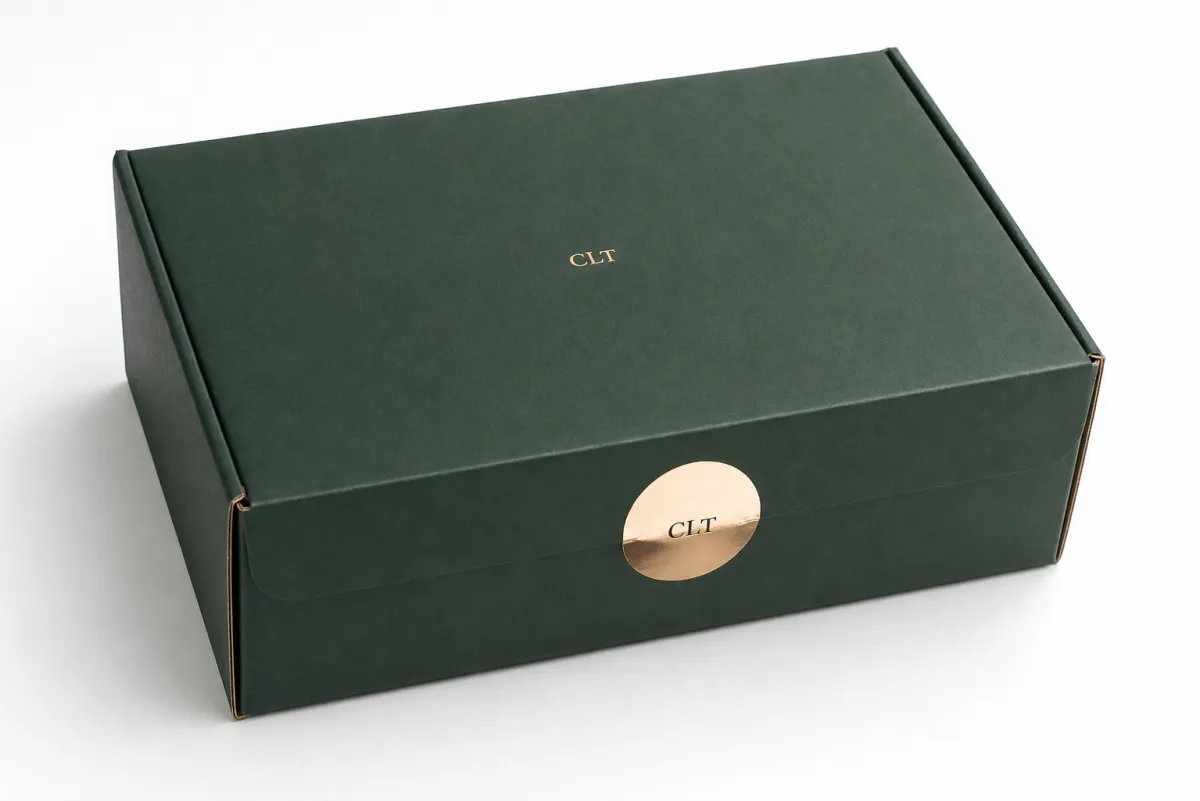
Picture a carton arriving on a receiving dock. The board is intact. The corners still look square. The print is clean. Then a clerk notices the seal has lifted on one edge. The conversation changes instantly. With custom cartons with tamper stickers, the goal is not to make opening impossible. The goal is to make opening obvious.
A custom carton is built around a product, a packing method, or a shipping lane. The tamper sticker adds a visible integrity marker. It may tear, void, split, discolor, or leave residue if someone tries to remove it. That visible failure is the point. It gives the receiver a quick check before the carton is accepted, shelved, or forwarded to the next step.
The business case extends well beyond basic protection. A clear seal can reduce claims, shorten back-and-forth with customer service, and reassure the recipient that the box was not quietly accessed in transit. In retail, trust forms in seconds. In B2B shipping, it forms at the dock. Either way, custom cartons with tamper stickers help the package speak before anyone starts asking questions.
I have seen teams spend heavily on print and almost nothing on closure design. That creates a strange imbalance. A carton can carry strong graphics, thoughtful product packaging, and well-built Custom Packaging Products, then fail the moment the seal peels cleanly off a recycled board surface. The weak point is not a small detail. It is the detail that decides whether the rest of the package matters.
Security can improve the look of the pack too. Cleanly placed custom cartons with tamper stickers often feel more deliberate than a plain carton with a strip of tape jammed across the seam. Premium brands notice that difference immediately. So do warehouse teams, even if they never say it out loud. A tidy closure signals that the process underneath it is tidy as well.
A good seal does not need to shout. It needs to make tampering undeniable.
That is the standard worth keeping in mind. A weak carton undermines the seal. A bad sticker makes the box look secure while behaving badly. A messy workflow invites inconsistent placement. Security, branding, and operations have to support one another, or the whole thing turns into expensive decoration.
How Custom Cartons with Tamper Stickers Work in the Real World
The mechanism is simple enough. A carton is closed with a label, sticker, or security tape designed to show visible evidence if it is lifted, split, or removed. Some seals fracture on removal. Others reveal a void message. Security tape may leave a pattern or residue behind. The right choice depends on the board finish, the route, and the level of scrutiny the shipment is likely to face.
Custom cartons with tamper stickers show up across a surprisingly wide range of settings. E-commerce brands use them for premium orders and replacements. Pharmaceutical and nutraceutical companies use them for compliance and custody reassurance. Luxury goods teams use them because the unboxing experience is part of the product story. Returns departments use them to determine whether a box was reopened in transit or after receipt. Internal transfers between facilities also benefit, especially when the contents are costly or sensitive.
A simple workflow makes the value clearer. A warehouse associate packs the item into the custom carton, closes the top flaps, and applies the tamper seal across the main seam. The box leaves the building. During transit, the seal acts like a visible integrity marker. On receipt, the buyer or clerk checks the seal first, not the contents. If the seal is intact, the carton moves forward. If it is broken, the issue is obvious immediately and can be documented before acceptance.
That one step changes the speed of the receiving process. It also gives customer service a cleaner starting point if something goes wrong. A vague complaint like “the package arrived damaged” turns into a more specific question: was the seal intact, was the seam stressed, or was the carton reopened after dispatch? Precision matters. It saves time, and time is usually what gets wasted first in packaging disputes.
There is a real difference between tamper-evident and tamper-resistant. Tamper-evident means the carton shows interference after the fact. Tamper-resistant means it is harder to open in the first place. Most commercial cartons are not truly tamper-resistant in an absolute sense. Pretending otherwise creates false confidence. Custom cartons with tamper stickers usually aim for evidence first, resistance second.
Testing language matters if you want a more rigorous way to think about performance. Transit simulation methods from organizations such as ISTA help teams understand what a packout will face once it enters the distribution chain. ASTM-based distribution testing often tells a similar story from another angle. A seal that behaves perfectly in a lab may still act differently after vibration, compression, cold storage, and repeated handling.
Material sourcing can matter too. If a buyer wants responsible fiber sourcing, a carton spec that includes FSC-certified board can support that conversation. Groups such as FSC make that language easier to verify. Security and sustainability are not the same conversation, but in packaging they sit on the same invoice, the same spec sheet, and often the same approval chain.
Key Factors That Affect Performance, Security, and Fit
The carton comes first. A seal cannot rescue weak corrugated board. If the flute profile, board grade, or compression strength is wrong, corners crush, seams shift, and the sticker has trouble sitting flat. For heavier shipments, the carton spec should follow the load, not the artwork. A 32 ECT carton can work fine for some light retail packaging, though dense contents or long transit lanes often need more structure.
The sticker material comes next. Destructible vinyl works when the goal is obvious breakage on removal. Void labels are useful when you want a hidden message or residue to appear after peeling. Security tape often makes sense for closure lines that need speed and broad visibility. There is no universal winner. The best material depends on the carton finish, the environment, and how visible you want the tamper evidence to be.
Adhesion is where projects start to get expensive. Dusty surfaces, low temperatures, high humidity, recycled board textures, and glossy coatings can all change the result. A sticker that bonds beautifully to one carton may fail on another if the coating or liner changes. Custom cartons with tamper stickers should be tested on the actual board finish, not on a stand-in sample that happens to look similar.
Cold-chain storage exposes this problem quickly. So does humid warehousing. Adhesives behave differently when the carton surface is cold, damp, or both. A seal that looks perfect in an office can fail in a loading bay where the air is heavy and the pallet has been sitting overnight. I have watched teams call that a “small issue” and then spend days chasing what was predictable from the start. A simple surface test would have found it first.
Branding adds another layer of judgment. Some teams want the seal loud, obvious, and impossible to miss. Others want it to blend into the carton so the package still reads as premium. Both can work. For branded packaging, the seal can either reinforce the look or stand apart as the verification point. For high-end product packaging, the challenge is to keep the security feature visible without making the box feel industrial.
Operational fit matters just as much as appearance. How large is the carton? Where does the main seam sit? Can the seal be applied in one motion, or does the operator need to stop, realign, and press twice? A high-volume line does not forgive tiny inefficiencies. A few extra seconds per box becomes real labor by the end of a shift. That is why Custom Printed Boxes with thoughtful seal placement often beat generic cartons plus labels.
Automation changes the equation again. A manually sealed carton can tolerate a little variation. A carton that runs through applicators, conveyors, or case erectors cannot. Sticker shape, placement window, and surface consistency matter more when machines are involved. A seal that feels easy to one operator can feel awkward to another, and inconsistency shows up quickly during peak periods.
Below is a practical comparison buyers can use as a starting point. Exact pricing shifts with print coverage, board spec, and order volume, but the pattern usually holds.
| Option | Typical Unit Cost | MOQ Reality | Security Visibility | Best Fit |
|---|---|---|---|---|
| Stock carton + standard label | $0.08-$0.18 carton cost, plus label cost | Lowest barrier | Moderate | Low-risk shipments and simple closure needs |
| Custom carton + tamper sticker | $0.18-$0.45 total system cost at mid volumes | Moderate | High | Branded packaging, premium e-commerce, controlled goods |
| Integrated security carton system | $0.35-$0.85+ depending on spec | Higher | Very high | Sensitive or high-value shipments with tighter chain-of-custody needs |
Those figures are planning numbers, not fixed quotes. The true comparison is not just unit price. A move from a plain stock carton to custom cartons with tamper stickers can raise spend, yet still reduce total cost if it cuts claims, avoids re-ships, reduces manual rework, and lowers the risk of loss or dispute. Packaging budgets often miss that distinction because the invoice is easier to see than the labor saved elsewhere.
Custom Labels & Tags can also support the system. Some cartons use a dedicated seal on the seam and a secondary label for instructions, traceability, or brand messaging. That combination can be more effective than trying to make one sticker do every job at once. Packaging does not reward overloading one component with ten responsibilities.
Custom Cartons with Tamper Stickers: Cost, Pricing, and MOQ
Pricing starts with structure. Carton dimensions, board grade, flute type, print coverage, and finish all move the number. Sticker type matters too. A straightforward pressure-sensitive seal is cheaper than a specialty destructible or void label. If the adhesive has to work in cold storage or on rough recycled board, the cost can rise again because the material spec gets more demanding. That is how custom cartons with tamper stickers become a system instead of a single line item.
Volume drives the second half of the math. Lower quantities usually mean a higher unit cost because setup, prepress, tooling, and converting time are spread across fewer pieces. Once order size rises, the economics usually improve. For many buyers, the real question is not “Can I place a custom order?” It is “At what point does the price make a fully integrated solution better than stock cartons plus labels?”
MOQ can be forgiving for some specialty items and much less flexible for highly customized packaging. A small run may make perfect sense for a premium product, a regulated item, or a narrow customer base. Broader catalog lines often need more volume to reach a sensible price. If demand is uncertain, a staged pilot is usually the smartest path. It lets you validate fit, seal behavior, and pack-line speed before committing to a larger order of custom cartons with tamper stickers.
The hidden costs are where the true comparison lives. A slightly more expensive carton can still save money if it lowers chargebacks, reduces replacement shipments, and cuts manual rework in the warehouse. The same logic applies to a seal that is easier to place. If a worker can apply it in one motion and inspect it quickly, the labor savings can outweigh a higher material cost over time.
For suppliers, ask for a quote that separates carton cost, seal cost, setup, proofing, and freight. That makes the comparison useful. A single blended number can hide the difference between options. I would also ask for three price points, not one. That shows the break points more clearly and gives a better feel for how the order scales.
A simple buying lens helps avoid bad comparisons:
- Carton cost should be separated from seal cost.
- Setup and tooling should be listed clearly.
- Freight should be quoted on the same shipping basis.
- Lead time should be tied to proof approval, not only production days.
- Test samples should be budgeted before the full launch.
The last point is the one teams skip most often. A sample that looks good on a desk is not enough. The right sample is one that can be packed, stacked, shipped, received, and inspected under the same conditions the real orders will face. If the sample only survives the showroom, it has not really been tested.
For broader sourcing or category expansion, review Custom Packaging Products as a family, not as a single SKU. Teams often start with one carton and one seal, then discover the same security logic can extend to mailers, inserts, kits, and replacement shipments. Once that happens, the packaging program starts to feel less improvised and more like a system.
Process and Timeline for Custom Cartons with Tamper Stickers
The process should begin with a tight brief. The supplier needs product dimensions, target weight, shipping lane, closure preference, artwork files, and the exact type of tamper evidence required. Leave out one of those pieces and the quote may still look fine while the final carton misses the pack line. Custom cartons with tamper stickers perform best when the spec reflects actual operating conditions instead of guesswork.
Sampling comes next. Physical samples should be checked for seal adhesion, opening visibility, and pack-line speed. The sample should not only be opened by hand. It should be packed by the same operators who will use the finished system. That difference sounds small. It is not. It separates a design approval from a production result people can actually live with.
Proofing and confirmation follow. Artwork, dielines, closure orientation, and sticker placement should all be locked before production starts. If the carton has print on multiple panels, seam location can change the final look. If the seal sits over key text or graphics, the package can feel cluttered or difficult to inspect. That is why custom printed boxes need both a graphics review and a logistics review.
Production usually moves through a sequence: artwork proof, structural confirmation, carton manufacturing, sticker conversion or printing, then final quality control. Lead time might run 12 to 15 business days from proof approval for a straightforward job, or longer if structural changes, specialty adhesive, or unusual board specs enter the picture. That is not a rule. It depends on the plant, the season, and how many revisions the job requires.
Do not let the first production run serve as the test run. Leave room for revisions. Leave room for line trials. If the launch is tied to a campaign, a retailer onboarding window, or a seasonal restock, start earlier than your instinct tells you. Packaging projects almost always eat more calendar time than the first mockup suggests. People underestimate it, then scramble.
For teams using security cartons in regulated or high-risk lanes, a pre-launch checklist can keep people aligned:
- Confirm the carton dimensions and board grade.
- Confirm seal type, adhesive, and placement.
- Test the seal in the real storage condition.
- Measure pack-out time with actual operators.
- Inspect the carton after vibration, stacking, and receipt simulation.
That kind of discipline is practical, not fancy. It stops waste before it starts. A seal that looks good on a proof but fails on the line costs more than the testing would have cost in the first place.
There is also a sourcing decision hiding in the process. If your procurement team wants environmentally responsible fiber or a specific certification chain, define that early. It is much easier to ask for FSC-certified board at the beginning than to force it into a spec after the dieline and seal placement are already fixed.
Common Mistakes When Ordering Tamper-Evident Cartons
The first mistake is choosing a seal that looks secure but fails on the actual carton surface. A smooth office sample can hide a weak adhesive match. Recycled board, matte coatings, dust, and cold temperatures all change the result. If a label lifts easily, the security feature disappears and the carton becomes theater instead of protection.
The second mistake is placing the sticker where normal handling will strike it. Fulfillment teams stack cartons, slide them, and grip them by the seam more often than many designers expect. If the seal sits where hands, conveyors, or pallet corners can scrape it, accidental damage becomes more likely. Custom cartons with tamper stickers should be designed for use, not for a render.
The third mistake is vague specifications. If the board grade is unspecified, the seal placement is loosely defined, and storage conditions are ignored, the quote may still look competitive, but the result can be unpredictable. Vague specs create expensive surprises. Exact specs reduce them.
The fourth mistake is overdesigning the package until the security feature becomes hard to see. That happens more often than people admit. A carton can carry strong branding, strong graphics, and strong product packaging cues, yet the tamper indicator gets buried in the visual noise. If the receiver cannot instantly identify the verification point, the system is weaker than it should be.
The fifth mistake is skipping a pilot run. A carton can pass a design review and still fail under real warehouse pressure. The seal might drag. The adhesive might fail. The carton might twist. The operator might slow down and start placing the seal inconsistently. A pilot reveals those problems before a full purchase order does.
Mixed-channel operations create one more problem. Teams sometimes use the same carton logic for every order size. That is risky. A one-unit e-commerce parcel, a twenty-unit B2B carton, and an interfacility transfer box do not need the same closure strategy. Custom cartons with tamper stickers should match the actual use case, not a generic shipping assumption.
Honestly, the best projects are usually the least dramatic ones. Clear specs. Clear samples. Clear acceptance criteria. No guessing. No last-minute compromise. The cartons arrive, the seals behave, and the warehouse stops thinking about them. That is a success.
Expert Tips for Better Security, Branding, and Unboxing
Start with the customer experience, then work backward. A good seal should feel deliberate, not improvised. It should be visible enough to check quickly, but not so loud that it fights with the box design. For premium retail packaging, that balance matters. The carton has to protect the product and still look like it belongs to the brand.
One useful tactic is to let the sticker do a little communication work. A short line such as “Inspect seal before opening” or “If seal is broken, report before acceptance” gives the receiver a clear instruction. That makes the security feature easier to understand and improves inspection consistency. It also turns custom cartons with tamper stickers into part of the service experience instead of a piece of shipping hardware.
Color coordination matters too. A seal that matches the carton graphics can feel premium. A high-contrast seal can feel more industrial, but also easier to spot. Neither is automatically better. The right choice depends on package branding and the level of visibility you want. For luxury goods, subtlety may be the right move. For regulated shipments, clarity usually wins.
Test by lane, not only by product. A carton that behaves beautifully in dry storage may act differently in a cold room, a humid distribution center, or a route with heavy vibration. If you ship across multiple regions, run a few cartons through the harshest lane first. That gives a better read on the true margin of safety.
Training matters more than many packaging teams admit. If one shift applies the seal at a slightly different angle, the visual result looks inconsistent. If another shift presses too lightly, adhesion drops. Small differences become larger as volume rises. A simple standard work sheet can help keep custom cartons with tamper stickers consistent across shifts and sites. It sounds a little dull, but it works.
The strongest cartons often share one quality: restraint. The print does enough, the seal does enough, and neither one competes for attention. That balance is difficult to fake. It usually comes from operational thinking, not just graphic polish. Good packaging carries proof in the details.
If the security feature makes the carton harder to use, people will work around it.
That is the practical test. A seal should protect the product without turning every pack-out into a ritual. The best systems are easy to apply, easy to inspect, and easy to trust. Everything else is decoration with a better name.
Next Steps: Spec, Sample, and Launch the Right Carton
The cleanest path is also the safest: define the product, map the shipping risk, choose the seal type, and confirm the carton structure. That is the core of custom cartons with tamper stickers. Once those four decisions are clear, the rest becomes easier to buy, sample, and launch.
Ask for a sample kit and test it in the warehouse. Do not just open the carton by hand. Pack it. Stack it. Move it through your real handling sequence. Inspect the seal after simulated transit and again at receipt. That produces a realistic picture of performance instead of a pretty sample that only behaves well on a desk.
Before you place an order, collect three data points: application speed, seal failure rate, and customer-facing appearance. Those three numbers tell a lot. If application is slow, the pack line will feel it. If failure rate is high, the security feature is weak. If the carton looks improvised, the brand pays for it later.
Get at least two apples-to-apples quotes. Keep the carton dimensions, board grade, seal type, and freight basis the same. Only then can you compare MOQ, Price, and Lead Time in a way that means something. Suppliers can differ sharply on setup cost, but not every difference shows up in the unit number.
If you are building a broader packaging program, think about how this carton fits with your other assets. The same brand system may extend into inserts, labels, mailers, and secondary packs. That is where product packaging starts to feel like part of the customer experience rather than a disconnected pile of supplies.
The short version is plain: spec it carefully, sample it honestly, then launch it with a small pilot run. That approach saves money, reduces risk, and gives you a better chance of getting the first production order right. Custom cartons with tamper stickers work best when they are treated as an operational tool first and a visual asset second.
Custom cartons with tamper stickers are not only for security-minded teams. They support trust, claims reduction, and package branding at the same time. Planned well, custom cartons with tamper stickers can become one of the most practical upgrades in a packaging program.
Are custom cartons with tamper stickers better than standard cartons plus tape?
Yes, if you need visible evidence of opening rather than only closure. Standard tape can hold a carton shut, but it usually does not show interference as clearly. Custom cartons with tamper stickers create a clearer inspection point, which can reduce disputes on receipt and make claims easier to assess. For low-risk shipments, standard cartons plus tape may still be enough.
What tamper sticker material works best for custom cartons with tamper-evident seals?
Destructible or void labels are usually the first materials to test because they make removal obvious. If the cartons will face dust, cold storage, or humidity, the adhesive spec matters just as much as the face stock. The best choice depends on the board finish and the real shipping lane. Always test custom cartons with tamper stickers on the actual carton surface, not only on a sample sheet.
How do I estimate MOQ for custom cartons with tamper stickers?
MOQ depends on carton size, print method, and whether the stickers are produced separately or built into the run. Ask for quotes at several volume points so you can see where unit cost drops meaningfully. If your volume is low or uncertain, a staged pilot order is often a smart way to validate fit before committing to a larger run of custom cartons with tamper stickers.
Will tamper-evident custom cartons slow down packing?
They can if the seal is awkward to place or the carton is hard to close. A well-designed system should add only a small amount of time once staff are trained. The real test is a pilot with your actual operators, because their pace and handling style determine whether custom cartons with tamper stickers fit the workflow.
Can I use custom cartons with tamper stickers for branded unboxing?
Yes, and that is one of the strongest advantages. Security can feel premium instead of purely industrial if the seal is clean, visible, and aligned with the carton graphics. Keep the design disciplined so the customer instantly understands where the security feature is. Done well, custom cartons with tamper stickers support both the unboxing experience and the integrity check.

