Buyer Fit Snapshot
| Best fit | Custom Clamshell Inserts Bulk Order Pricing projects where brand print, material claims, artwork control, MOQ, and repeat-order consistency need to be specified before quoting. |
|---|---|
| Quote inputs | Share finished size, material target, print colors, finish, packing count, annual reorder estimate, ship-to region, and any compliance wording. |
| Proofing check | Approve dieline scale, logo placement, barcode or warning zones, color tolerance, closure strength, and carton packing before bulk production. |
| Main risk | Vague material claims, crowded artwork, missing packing details, or unclear freight terms can make a low unit price expensive after revisions. |
Fast answer: Custom Clamshell Inserts Bulk Order Pricing: Material, Print, Proofing, and Reorder Risk should be specified like a repeatable production item. The safest quote records material, print method, finish, artwork proof, packing count, and reorder notes in one written spec.
Production checks before approval
Compare the actual filled-product size with the drawing, then confirm tolerance on folds, seals, hang holes, label areas, and retail display edges. Reserve space for logos, QR codes, warning copy, and material claims before decorative graphics fill the panel.
Quote comparison points
Review material grade, print process, finish, sampling route, tooling charges, carton quantity, and freight assumptions side by side. A quote is only useful when the supplier can repeat the same color, closure quality, and packing count on the next order.
Custom Clamshell Inserts Bulk Order Pricing Guide
A custom clamshell inserts bulk order looks inexpensive right up until the hidden costs show up: crushed corners, product movement, repacks, and the labor needed to fix damage that should never have happened. From a packaging buyer’s perspective, the insert is not filler. It is the part that keeps the product where it belongs, protects the shelf presentation, and keeps the line moving. Get the spec wrong and the whole shipment pays for it.
That pain shows up fastest in repeat programs. One loose cavity can create scrap in production, extra handling in fulfillment, and complaints from retail buyers who expect each package to look the same. Brand packaging is not just about appearance. It is about repeatability. Bulk ordering starts to make sense once the product dimensions are stable and the launch risk is understood.
Why Custom Clamshell Inserts Bulk Orders Save More Than Fill
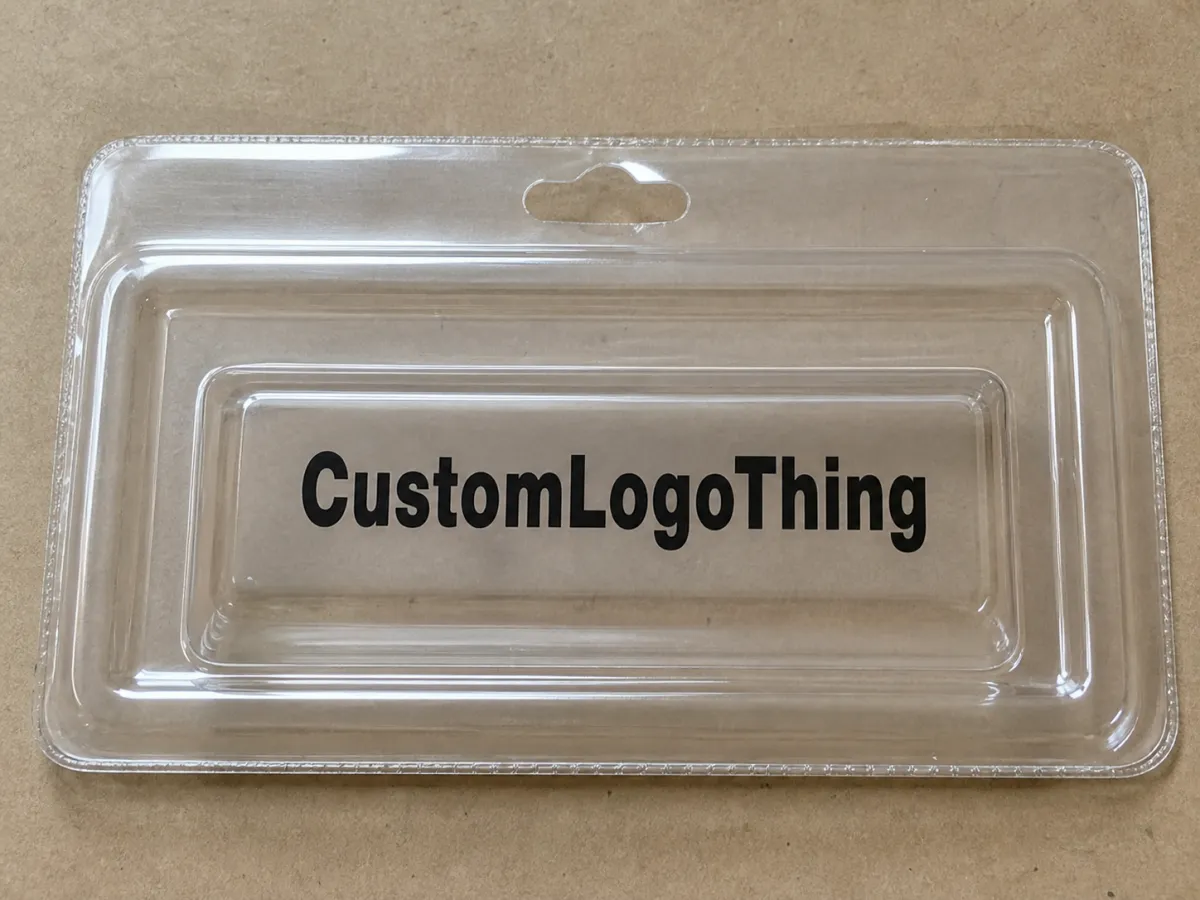
The insert price is only one line on the spreadsheet. The real bill usually hides around it: void fill, manual sorting, damaged returns, and customer service time spent explaining why a shipment arrived looking tired and broken. One fit problem can spread across the whole packout process. If the product shifts in transit, the carton can fail drop testing, the clamshell hinge can take unnecessary stress, and the outer shipper may need heavier corrugate or extra dunnage just to compensate.
Bulk ordering helps because it locks the design before tiny variations start multiplying. If one run is a little loose and the next is a little tight, operators end up improvising. That is where line speed dies. In a high-volume packing room, a few extra seconds per unit becomes real labor by the end of the week. Standardizing cavity shape, material gauge, and stack height reduces that noise and makes product packaging more predictable.
The bigger value is control. A custom insert can be built around product weight, orientation, and shelf presentation instead of forcing the item into stock trays or generic filler patterns. That matters most in retail packaging, where the buyer sees the package before they ever touch the product. Clean fit signals quality. Loose fit signals risk. Nobody confuses the two.
“The cheapest quote is not the cheapest outcome if it creates returns, rework, or another freight bill.”
Freight is the part people like to ignore. Poorly nested or inconsistent inserts eat space in the carton, which raises cube, pallet count, and inbound costs. In a custom clamshell inserts bulk order, a small gain in stackability or nesting efficiency can beat a modest price cut every time. The buyer who watches transport density usually gets a better landed cost than the buyer chasing the lowest sticker price.
If the package sits inside a larger branded packaging system, the insert should support that system across SKUs. That matters for Custom Printed Boxes, display kits, and multi-item sets where presentation consistency affects sell-through. One stable insert spec lowers training time for packers and makes reordering easier for procurement teams. That is not a tiny win. It is the difference between a package that works on paper and one that works on the floor.
For teams building a broader sourcing plan, it helps to connect the insert purchase to the rest of the program. A supplier that also supports Wholesale Programs and Custom Packaging Products can coordinate the insert, carton, and display pieces as one system instead of three disconnected orders.
What a Custom Clamshell Insert Includes
A custom clamshell insert is the shaped support structure that keeps a product in place inside, or alongside, a clamshell package. Depending on the job, it may be a thermoformed cavity tray, a support card, a molded partition, or a multi-pocket platform that keeps parts from rubbing against each other. The label matters less than the function: protection, alignment, presentation, and efficient packout.
The quote needs to define the full assembly clearly. Buyers Should Know whether they are pricing the insert only, the outer shell, the locking features, or the complete packaging set. A shell-and-insert combination may include snap tabs, friction-fit edges, lift points, hang tabs, and support ribs where the product needs reinforcement. Some programs show the insert through the retail front panel. Others hide it and use it only for structure. Those are different jobs, so the quotation should match the actual build.
Compared with stock packaging, a custom version changes three things at once. It improves fit. It reduces wasted space inside the pack. It can also speed line performance because the part drops into place instead of needing a second look and a manual adjustment. That is why custom packaging design gets approved even when the product is not especially fragile. A well-shaped cavity can save meaningful time on high-volume lines.
Common uses include:
- Hardware and tool accessories that must stay oriented during shipping
- Electronics, batteries, and small devices that need controlled positioning
- Cosmetics and personal care items where shelf presentation matters
- Medical and diagnostic components that require clean organization
- Retail kits, sample sets, and promotional bundles with multiple parts
There is a practical split between insert-only changes and a full clamshell packaging program. If the outer shell already meets size, display, and closure requirements, you may only need a shaped insert to stop movement or create compartments. If the shell is wrong, the locking points are unreliable, or the package needs to become peg-ready or shelf-ready, the whole system needs a redesign. That choice changes tooling, sampling time, and the total quote.
For buyers comparing package branding options, the insert is part of the consumer-facing experience. A product that arrives centered, easy to open, and visually neat creates a stronger impression than one that rattles in the pack. That stays true whether the outer shell is clear PET, printed paperboard, or a hybrid structure paired with custom printed boxes for shipping.
Materials and Specifications for Bulk Production
Material choice drives more than appearance. It affects stiffness, clarity, recyclability, forming behavior, and cost stability. In bulk production, those variables matter because a sample that looks great can become expensive or inconsistent once the run reaches thousands of units. For a custom clamshell inserts bulk order, the common materials are PET, RPET, PVC, and PP, but each comes with its own tradeoffs.
| Material | Common Strengths | Typical Tradeoffs | Best Fit For |
|---|---|---|---|
| PET | Good clarity, strong stiffness, wide availability | Can be more expensive than basic options; recycling rules vary by region | Retail-visible inserts, display packaging, general consumer goods |
| RPET | Supports recycled content goals, similar handling to PET | Surface appearance can vary slightly; supply consistency matters | Brands prioritizing recycled content and lower virgin resin use |
| PVC | Forming ease and clarity in some structures | Recycling concerns and policy pressure in some markets | Legacy programs, legacy tooling, specific legacy packaging lines |
| PP | Good chemical resistance, useful flexibility | Often less clear than PET and may need thicker gauges for stiffness | Functional inserts, reusable packs, utility-focused packaging |
Specifications matter just as much as the resin. A buyer should define overall dimensions, cavity depth, wall thickness, draft angle, stackability, and surface finish. If the product has sharp edges, the cavity needs enough clearance to avoid scuffing. If the product is heavy, the base must support load without oil-canning or flexing. For multi-part sets, the pocket layout should keep pieces separated while still letting operators pack fast.
Wall thickness often sits in the range of 0.018 to 0.040 inches for many thermoformed applications, but that is not a rule. A light cosmetic insert may work at the lower end, while a heavier hardware or electronics tray may need more material. Product weight, drop risk, and shelf presentation drive the final gauge choice. A tray that is too thin saves pennies and creates failures. A tray that is too thick can raise cost and kill nesting efficiency.
Surface finish changes the buying decision too. Glossy clarity can improve shelf appeal for retail packaging, while a matte or textured finish can hide scuffs and fingerprints better. If the insert hides inside a carton, appearance matters less than load stability and form retention. If it sits under a clear shell, the finish becomes part of the customer’s first impression and should be specified early.
For quality control, bulk runs should be checked for cavity consistency, edge trimming, dimensional tolerance, and nesting alignment. If the shell closes over the insert, seal integrity and latch performance also need verification. Shipping trials should reflect real use, not a perfect lab condition. That means checking fit after vibration, compression, and standard transit handling. The ISTA test standards are useful here because they give buyers a common shipping test framework instead of a pile of guesses.
Buyer goals keep shifting toward waste reduction, and material choice can support that. The U.S. EPA’s recycling guidance at EPA recycling resources is a useful reference point when reviewing resin selection, curbside compatibility, and end-of-life assumptions. Recyclability still depends on the full package, not just the insert. A recycled-content tray paired with the wrong labels, adhesives, or mixed-material closures may still be a headache to recover.
The best specs match the real production environment. If operators wear gloves, the cavity should allow easy placement. If the product has a polished surface, the contact points should minimize abrasion. If the item ships with accessories, the layout should group components in the order they are packed and opened. Good packaging design reduces human error as much as it improves structure. That is the part people miss when they focus only on price.
Cost, Pricing, MOQ, and Quote Drivers
Quote differences usually come from a few repeatable drivers: tooling, cavity complexity, material grade, run volume, and finishing requirements. If two quotes look similar but one includes a detailed spec sheet, samples, and freight terms while the other does not, they are not comparable. The same goes for first-run pricing versus repeat-run pricing. Tooling and setup make the first order more expensive, then repeat orders can drop hard if the tooling stays put and the spec does not move.
For simple thermoformed inserts, tooling might add a few hundred dollars on an uncomplicated shape and climb fast for multi-cavity, deep-draw, or highly detailed structures. Unit pricing can vary widely, but many buyers see a rough pattern: lower-volume runs often land in a higher per-piece range, while larger bulk runs can bring the cost down materially. For a 5,000-piece order, a basic PET or RPET insert may commonly sit around $0.18 to $0.40 per unit, while a more complex structure with thicker gauge, tighter tolerances, or special nesting can move higher. That range shifts with resin pricing, depth, and trim complexity.
MOQ changes by material and design. A simple flat or shallow cavity may have a lower MOQ because the forming and trim steps are efficient. Deep-draw geometry, special locking features, and multiple cavities usually push the minimum higher. Repeat orders often price differently because the supplier has already validated the tooling and may not need to absorb the same setup burden. Buyers should ask for both first-run and repeat-run pricing so demand planning reflects reality instead of wishful thinking.
To compare quotes fairly, every supplier should be working from the same sheet:
- Product dimensions and weight
- Target cavity layout and count
- Material type and thickness
- Required finish and color, if any
- Pack quantity, carton count, and pallet plan
- Destination terms and shipping method
Without those details, one quote may look cheaper simply because it skips a step the buyer will pay for later. Tooling can be hidden. Sampling can be hidden. Packaging for shipment can be hidden. Freight can be hidden. That is why the lowest quoted number is not always the lowest landed cost. A disciplined sourcing team compares total cost, not just the piece price. Otherwise the spreadsheet lies, and spreadsheets are usually annoying enough without help.
There are a few direct ways to cut cost without weakening the package. Simplify the cavity design where the product allows it. Increase run size if demand is stable enough to justify the inventory. Choose a standard resin instead of a niche grade unless the product really needs something special. Reduce unnecessary depth. Tighten the spec only where performance depends on it. Those moves do not make the package generic. They make it efficient.
Another savings point comes from alignment with broader buying programs. If the insert is part of a wider retail packaging rollout, ordering the components together can reduce mistakes, shorten procurement cycles, and improve consistency across SKUs. That is one reason some buyers keep their insert work tied to broader Custom Packaging Products sourcing rather than buying each piece separately.
Wholesale structures can help too. A supplier that supports Wholesale Programs may be able to hold better pricing tiers, coordinate reorders faster, and reduce the friction that shows up when multiple departments try to manage packaging on their own.
Cost comparison snapshot:
| Order Type | Typical Unit Cost Pattern | Tooling / Setup Impact | Best Use Case |
|---|---|---|---|
| Prototype / sample run | Highest per unit | Highest relative setup burden | Fit validation and early launch testing |
| First bulk run | Moderate, often drops with volume | Tooling usually included or amortized | Launch orders and initial replenishment |
| Repeat bulk run | Lowest if spec stays fixed | Lower setup burden if tooling is retained | Stable programs with predictable demand |
The smartest buyers use the quote process to pressure-test assumptions. Ask what happens if the cavity is simplified by 10 percent. Ask whether a slightly larger run changes the unit price enough to justify inventory. Ask how the price changes if the finish changes from high gloss to standard. Those questions show whether a supplier understands the real cost drivers or is just moving numbers around and hoping nobody notices.
Process, Timeline, and Production Steps
The process should start with product data, not guesses. A good intake package includes dimensions, product photos from multiple angles, quantity, target ship date, current packaging pain points, and any known failure mode. If the item chips, rattles, scratches, or arrives out of orientation, say so. Those details change the cavity design and the material choice. If the product has an irregular shape, a few extra photos can save days of back-and-forth later.
Sampling is where most risk gets stripped out. The first sample checks fit, ease of insertion, material behavior, and how the part looks in the actual pack. If the package closes, the latch action should be verified. If the insert nests, the nest profile should be checked for stability and stack height. If there are multiple components, the assembly order should be tested with actual operators, not just in a meeting. A sample that works on a desk can behave very differently on a packing line.
Typical lead time depends on approval speed, tooling needs, and order size. A simple structure with fast feedback may move from concept to sample in about 7 to 12 business days, while more complex programs can take longer. Once approved, production often runs in the 12 to 20 business day range for many bulk orders, though material availability and freight scheduling can add time. If tooling revisions are needed, the schedule stretches. If approval waits for internal signoff, the schedule stretches again. The calendar is usually less about manufacturing speed than decision speed.
Here is the practical sequence:
- Submit product dimensions, photos, and target quantity.
- Review initial design assumptions and material options.
- Approve a sample or prototype.
- Confirm production spec, carton count, and shipping plan.
- Release the order to bulk production.
- Inspect finished units before shipment if the program calls for it.
The cheapest changes happen before production starts. Moving a cavity wall a few millimeters before tooling is cut costs far less than changing it after samples are approved. Switching materials after validation is also expensive because it can affect stiffness, clarity, and trim behavior. Once the order is in production, even a minor revision can trigger delays, re-approval, and sometimes a full reset of the schedule. Nobody enjoys paying for a tiny “quick tweak” that turns into three extra weeks.
Freight coordination should happen early. Large inserts can be bulky even when they are light, and cube affects both pallet count and shipping cost. If the destination is a warehouse with limited receiving windows, that needs to be built into the plan. If the order must arrive in staggered waves, packaging and labeling should reflect that. A packaging supplier that understands logistics can help avoid the common mistake of producing the right item in the wrong shipment format.
For buyers in regulated categories, documentation matters. Medical, diagnostic, and certain electronics programs may require traceability, material declarations, or testing records. Even in less regulated categories, keeping a clean approval trail makes reorders easier. If the package design is ever questioned, the team can point to the approved sample, the spec sheet, and the shipment terms instead of trying to reconstruct decisions from memory. That saves time and prevents arguments.
Successful packaging programs follow the same pattern: the earlier the team agrees on dimensions, material, and packout behavior, the fewer surprises show up during launch. That is why the best results usually come from treating the insert as part of the production workflow, not as an isolated accessory.
Why Buyers Choose Us for Bulk Packaging Programs
Buyers usually choose a supplier for one of two reasons: lower friction or lower risk. The best programs deliver both. Consistency across repeat orders matters because a packaging spec that changes every time creates hidden labor costs. Multi-SKU programs are even more sensitive. If the fit is off by a few millimeters, operators notice immediately, and the issue repeats across every pallet until somebody fixes the spec.
Engineering support matters because protection, shelf presentation, and line-speed efficiency do not always point in the same direction. A cavity that looks elegant may be too tight for the packing team. A tray that is easy to load may not hold the product securely enough for transit. Good packaging design finds the balance. That is the work of a supplier who asks how the product ships, how it is displayed, and how it is handled at the point of packout.
Quality controls also separate dependable suppliers from the rest. Bulk packaging programs should be checked for dimensional consistency, trim quality, material traceability, and nesting performance. Clear communication during production matters just as much. Buyers should know when samples are moving, when approval is needed, when production starts, and when freight is booked. Silence is expensive. A short update prevents a week of confusion, which is a nice change for everyone involved.
The visible savings from a low quote can be tempting. Compare that savings with the cost of a package that fails after launch. Repack labor. Customer complaints. Returns. Lost shelf confidence. Those costs rarely show up on the initial quote, yet they can swallow the entire packaging budget. A better-fit insert may cost a little more up front and a lot less over the life of the program.
For brands building stronger package branding, the insert is part of the story customers experience. It supports the product, frames it correctly, and keeps the package clean through transit. In retail packaging, that presentation can shape the first impression before any marketing copy is read. The effect is subtle. It is also real.
Programs that combine inserts with custom printed boxes often perform better because the outer shipper, internal support, and retail-facing piece are engineered together. That lowers the chance that one component undermines another. It also simplifies reorder planning because the package behaves like one system rather than a stack of loose parts.
From a commercial standpoint, the best supplier is the one that helps you make the right tradeoff, not the one that says yes to everything. That means asking direct questions about fragility, nestability, shelf goals, freight mode, and expected reorder frequency. The answers shape the package, and the package shapes the final economics.
Next Steps to Place Your Bulk Order
If you are ready to move, send the information that actually drives the quote. Product dimensions. Clear photos. Estimated order quantity. Target ship date. Current packaging issue. A rough idea of whether the insert must be visible, hidden, or nested inside a larger assembly. Those details let the packaging team price the job against the real requirement instead of guessing and pretending that is strategy.
It also helps to request two paths: one cost-optimized option and one higher-protection option. That comparison gives procurement a cleaner decision. In some programs, the slightly higher-protection option creates lower total cost because it cuts damage claims and repacking. In others, the simpler design is enough. The point is to compare options against the same product risk, not against a vague idea of “better.”
A fast approval checklist usually includes:
- Signed sample approval or annotated sample feedback
- Final carton count and pack quantity
- Pallet plan and destination details
- Preferred freight method and timing
- Any compliance or documentation requirements
If the insert is part of a recurring launch or a replenishment cycle, lock the spec early and store the approved version with the purchasing file. That simple step prevents reorders from drifting over time. A stable spec supports better pricing, fewer errors, and faster repeat runs.
For buyers comparing suppliers, ask for landed cost, not just unit cost. Ask how tooling is handled. Ask what happens if the product changes by a few millimeters. Ask whether repeat pricing improves after the first run. Those questions identify a supplier that understands bulk order economics instead of just quoting a number and calling it a day.
The cleanest next step is to build the quote around a fixed spec sheet before anyone talks pricing. Send the dimensions, product photos, target quantity, and shipping requirements together, then review the tooling, sample, unit cost, and freight lines as a single package. That is the fastest way to avoid surprises and keep the custom clamshell inserts bulk order aligned with the actual production goal.
Need support for the broader packaging program too? Review our FAQ for common buying questions, and fold the insert project into the larger branded packaging and product packaging plan before the next production slot closes.
FAQ
What is the minimum order for custom clamshell inserts in bulk?
MOQ depends on material, tooling, and cavity complexity. A simple shallow insert can often be produced with a lower minimum than a deep-draw or multi-cavity design because the setup and trim steps are easier to manage. Larger runs usually lower unit cost more effectively than small design tweaks do, so it helps to ask for both first-run MOQ and repeat-run MOQ before you plan demand. That gives procurement a more realistic picture of how the program will scale.
How do I compare custom clamshell inserts bulk order quotes?
Match the same spec sheet across every quote. Use the same material grade, thickness, cavity layout, finish, quantity, and freight terms. Check whether tooling, sampling, packaging, and shipping are included or excluded. Compare total landed cost, not only the per-unit figure, because a low piece price can hide higher setup or freight charges. If one supplier gives you a quote with detailed assumptions and another gives you a one-line number, the detailed quote is usually the better basis for a buying decision.
Can you make custom clamshell inserts for fragile products?
Yes, but the cavity shape, support points, and wall thickness must be matched to the product’s weight and breakage risk. Fragile products often need more careful clearance around corners, stronger load-bearing zones, and better control of movement during transit. Photos, dimensions, and notes about known damage points make a big difference during design. If breakage creates expensive returns or warranty claims, prototype first and test the sample before approving bulk production.
What is the typical lead time for custom clamshell inserts bulk orders?
Lead time depends on approval speed, tooling needs, and order size. Simple samples may move quickly, while complex parts or revisions add time. After approval, bulk production often takes about 12 to 20 business days for many programs, though material availability and freight method can change the final delivery date. If the schedule is tight, send the target ship date early so the supplier can tell you whether the project is realistic before you commit internally.
Do custom clamshell inserts bulk orders help reduce packaging waste?
They can, especially when the insert replaces loose fill, reduces overboxing, or cuts damage-related rework. Material choice also matters. Recycled-content options may support lower virgin resin use, and a better-fit cavity can reduce the need for extra protective materials. Standardizing the insert across SKUs can lower scrap and make ordering cleaner across the team. The waste reduction is strongest when the whole package is designed as one system instead of pieced together from separate components.

