Buyer Fit Snapshot
| Best fit | Custom Clear Stickers with Logo projects where brand print, material claims, artwork control, MOQ, and repeat-order consistency need to be specified before quoting. |
|---|---|
| Quote inputs | Share finished size, material target, print colors, finish, packing count, annual reorder estimate, ship-to region, and any compliance wording. |
| Proofing check | Approve dieline scale, logo placement, barcode or warning zones, color tolerance, closure strength, and carton packing before bulk production. |
| Main risk | Vague material claims, crowded artwork, missing packing details, or unclear freight terms can make a low unit price expensive after revisions. |
Fast answer: Custom Clear Stickers with Logo: Material, Adhesive, Artwork, and MOQ should be specified like a repeatable production item. The safest quote records material, print method, finish, artwork proof, packing count, and reorder notes in one written spec.
Production checks before approval
Compare the actual filled-product size with the drawing, then confirm tolerance on folds, seals, hang holes, label areas, and retail display edges. Reserve space for logos, QR codes, warning copy, and material claims before decorative graphics fill the panel.
Quote comparison points
Review material grade, print process, finish, sampling route, tooling charges, carton quantity, and freight assumptions side by side. A quote is only useful when the supplier can repeat the same color, closure quality, and packing count on the next order.
Custom Clear Stickers With Logo: Materials, Costs, Tips
A clear sticker can make a bottle, jar, or carton look printed instead of labeled, and that is exactly why Custom Clear Stickers with logo are so useful in packaging. The effect feels crisp and premium when the film, artwork, and adhesive are matched to the actual container surface. Miss that fit, and custom clear stickers with logo can fade into the background, catch glare in the wrong way, or look softer than they should. I have seen a lot of good artwork lose its edge simply because the substrate and finish were not chosen with the same care as the logo itself.
From a packaging buyer's point of view, the appeal is straightforward: custom clear stickers with logo let the package color do part of the design work. On glass, smooth paperboard, and clean plastic surfaces, that transparency can create a restrained, high-end look that suits branded packaging, retail packaging, and short-run product packaging where a full print run would not make sense. The catch is simple too. A clear label is not invisible by default. It only works when the background gives the artwork enough contrast to read clearly.
What Custom Clear Stickers with Logo Actually Do
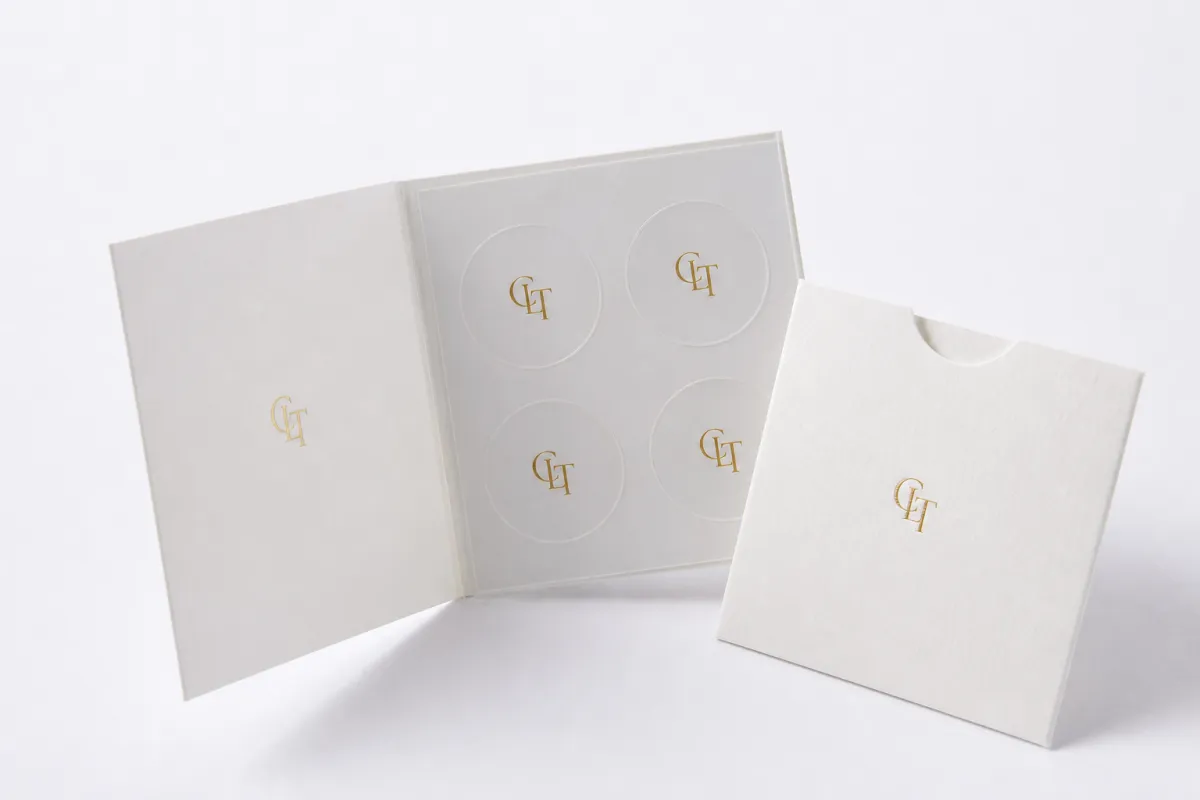
Custom clear stickers with logo are a small structure doing a lot of work. A transparent face stock carries the print, pressure-sensitive adhesive holds it in place, and a liner protects the sticker until application. Once it is on the package, the clear areas let the container show through, so the logo feels built into the surface instead of pasted on top. That is a big part of why these stickers show up on glass jars, serum bottles, cosmetics tubes, wine bottles, and polished cartons with a minimal finish.
The definition is simple enough: custom clear stickers with logo are transparent labels or decals that carry a brand mark while allowing the background to remain visible. That transparent look is the point, but it is also where many buyers get tripped up. Pale backgrounds, reflective surfaces, and busy packaging all affect legibility. A dark container often needs white ink under the logo, or the artwork can disappear into the surface. Custom clear stickers with logo are not just decoration; they become part of how the package is read.
They also do more than brand a bottle or box. A company might use custom clear stickers with logo as a seal on a folding carton, a closure sticker on a pouch, an identifier on a sample kit, or a promotional mark on a mailer. One sticker can handle both function and presentation, which is useful when you are balancing packaging design, line speed, and budget. Buyers often treat them as a minor detail at first, then realize they carry a lot of weight once the product is on the shelf.
What many teams like is the low-clutter result. A clear sticker leaves the substrate visible, unlike a white paper label that interrupts the material underneath. That makes sense on premium glass, on clean retail packaging, and on Custom Printed Boxes that already carry color and texture. The logo can be subtle or bold depending on the artwork and print build, but the base effect usually reads as clean, modern, and easy to carry across a line of SKUs. If you are trying to keep a steady visual language across Custom Packaging Products, a clear label often acts like a unifying accent rather than another competing element.
Two practical realities matter more than most people expect: first, the package color becomes part of the design; second, the sticker finish changes how clear it feels. Gloss can make custom clear stickers with logo look sharper and wetter, while matte softens reflections and gives the label a more restrained character. Neither choice is automatically better. The right one depends on the container, the shelf lighting, and whether you want the brand to feel crisp or quiet.
For product packaging that needs to look tidy without feeling overworked, custom clear stickers with logo often sit in the sweet spot. They can be small and discreet, or large enough to hold batch info, regulatory copy, or a decorative border. That range is why they are common in both launch orders and repeat production.
How Custom Clear Stickers with Logo Are Printed
Custom clear stickers with logo usually begin with a clear polypropylene or clear vinyl face stock, then a pressure-sensitive adhesive and a release liner beneath it. That stack sounds plain, but each layer changes how the finished piece behaves. Clear polypropylene is often a strong fit for lighter retail applications because it stays crisp and economical. Clear vinyl is usually the better choice when the sticker has to conform to a curve, withstand more handling, or hold up in tougher conditions. If the sticker needs extra scuff resistance, a laminate can be added over the print.
The biggest print decision is how the artwork separates into color, clear space, and white underprint. On a transparent label, print is not only ink on film; it is also a visibility decision. A red logo on clear film might look fine on a screen and then nearly vanish on a brown carton unless a white base sits underneath it. That white underprint gives custom clear stickers with logo enough punch to stand out on dark packaging, textured cartons, or colored plastic. Without it, the logo can absorb the color of whatever is behind it, which may be useful in some designs and a problem in others.
Digital printing is common for short and mid-size runs because it handles variable artwork well, keeps setup efficient, and works neatly for custom clear stickers with logo that need quick proof cycles. Flexographic printing can make sense on larger repeat orders, where the same design is used across multiple batches and press efficiency matters more than rapid design changes. Other methods exist, but the real decision usually comes down to quantity, color complexity, and whether the design calls for white ink or specialty finishing.
White Ink Is the Difference Maker
White ink is not an extra flourish; it is often the piece that decides whether custom clear stickers with logo read properly at all. On light substrates, you may only need a spot white behind the logo. On darker substrates, you may need heavier white coverage so the artwork does not look washed out. If the brand color is thin, pale, or transparent in the file, the proof should show exactly how much white build sits beneath it. That detail separates a well-made clear label from one that looks weak once it reaches the package.
Gloss and matte finishes change the final impression in ways that are obvious, though sometimes underestimated. Gloss tends to make custom clear stickers with logo look brighter, with a cleaner edge and a more polished feel. Matte reduces glare, which helps on reflective glass or under bright retail lighting, though it can soften the ultra-clear effect a bit. If the package is already glossy, matte can create useful contrast. If the package is matte, gloss often gives the brand mark more lift. In practice, that choice can save a design from looking flat or from fighting the shelf lighting.
For teams building branded packaging, the best print choice is rarely about the label alone. It is about how the sticker behaves next to the rest of the system. A label that looks great by itself can still feel wrong beside custom printed boxes, carton sleeves, or other package branding elements if the finish and contrast do not match. Strong packaging design keeps those pieces in conversation.
There is also a practical reason to care about print method: durability. Depending on the face stock and finish, some labels handle rubbing, condensation, and repeated handling better than others. If the package will travel through distribution, it is worth thinking about transit stress and reviewing ISTA package testing standards so the sticker is judged under conditions closer to the real world. That matters even more for custom clear stickers with logo used on e-commerce packs, chilled goods, and items that may rub against carton walls or bins.
When the sticker is part of a wider packaging structure that includes paperboard inserts or custom printed boxes with sustainability claims, the material documentation should be checked carefully. For paper components, FSC certification guidance can help you understand chain-of-custody language and the limits of the claim. Clear labels sit in a different material category, so the responsibility is to describe the full pack accurately instead of assuming one certified component covers everything.
One useful way to think about custom clear stickers with logo is this: the film is the stage, the ink is the performance, and the package beneath it shapes the lighting. When those three parts are chosen together, the result feels deliberate. When they are not, the sticker can read like a rushed afterthought.
Custom Clear Stickers with Logo Process and Turnaround
The production path for custom clear stickers with logo is usually straightforward, though the schedule can stretch if the details are not organized early. Artwork review comes first, then proofing, then color and white-ink setup, followed by printing, cutting, finishing, and packing. Every step matters because clear labels are less forgiving than they look. If the logo needs to sit precisely over a transparent area, even a small alignment issue can jump out once the sticker is on the package.
For a clean first run, the artwork should be in good shape before it reaches production. Vector files are best when the logo has sharp edges, outlined fonts are safer than live fonts, and the design should be built at the actual finished size. If the proof has to be rebuilt from a low-resolution file, turnaround slows right away. With custom clear stickers with logo, a large part of the schedule is really artwork readiness, not machine time.
Typical lead time often lands in a practical range of about 7 to 10 business days after proof approval for simpler digital jobs, and 12 to 15 business days or more when white ink, specialty die-cuts, or heavier quantities are involved. First-time orders may take longer because the proof stage often includes more back-and-forth. If the shape is unusual, the adhesive is specialty, or the design needs exact placement on a curved container, it is smart to leave a little extra room for adjustment. That is not delay for its own sake; it is what happens when the goal is a sticker that performs well instead of merely existing.
Rush orders can be possible, though only when the file is final, the proof is approved quickly, and the production line has capacity. A rush request cannot fix missing artwork, vague sizing, or uncertainty about the background color. Custom clear stickers with logo may be simple pieces of packaging, but they still depend on a disciplined handoff. The smoother the handoff, the more realistic the turnaround.
What Usually Slows a First Run
Three things slow new orders more than anything else: unclear artwork, changes after proofing, and uncertainty about the actual package surface. A buyer may say the logo just needs to be centered, but on a transparent label the centering depends on where the clear area falls relative to the edge, the seal line, or the curve of the container. That means a seemingly small change can ripple through the setup. With custom clear stickers with logo, precision is not a luxury.
Sample review is useful when the sticker has to be judged against a real container. A screen proof can show shape and copy, but it cannot show how the label will look against amber glass, a black carton, or frosted plastic. If the packaging line uses more than one substrate, test the label on each one before the order is locked in. That helps especially with product packaging that appears in several sizes or color variants.
In a practical production schedule, the order of operations looks like this:
- Confirm the finished size, shape, quantity, and finish.
- Upload the artwork and identify any transparent areas or white-ink needs.
- Review the proof at actual size, not just on screen.
- Check the proof against the real package color and texture.
- Approve only after the logo reads cleanly from normal viewing distance.
That last step sounds obvious, but it prevents a lot of expensive rework. If custom clear stickers with logo are part of a launch date, a sales event, or a retail packaging refresh, a day spent on proof review is usually cheaper than a week spent correcting the wrong setup.
Custom Clear Stickers with Logo Cost and Pricing Factors
Pricing for custom clear stickers with logo is driven less by the word clear and more by the mix of size, quantity, ink coverage, and finishing. A small 1-inch seal is not priced like a 4-inch bottle label, and a simple two-color design is not priced like a clear sticker with full white backing and a complex die-cut shape. If you want a meaningful quote, the supplier needs the finished size, the quantity, the substrate, and the intended use. Without those details, any price is just a guess dressed up as certainty.
For a buyer comparing options, the unit cost usually falls as quantity rises, which is standard for printed packaging. A short run of 500 to 1,000 custom clear stickers with logo may carry a higher per-piece cost because the setup, proofing, and cutting effort are spread across fewer units. At 5,000 pieces or more, the price can drop materially, but the exact number still depends on whether the sticker needs white underprint, lamination, or a custom shape. The same size label can vary by more than two times when one version needs heavy white and another does not.
The table below offers a practical way to compare common choices when you are pricing custom clear stickers with logo for branded packaging or retail packaging. The numbers are directional rather than a quote, but they help you judge the real cost drivers instead of chasing the cheapest headline number.
| Option | Best Use | Typical Unit Impact at 5,000 Pieces | What Changes the Price |
|---|---|---|---|
| Standard clear polypropylene | Dry retail packaging, jars, cartons | $0.06-$0.12 | Lower material cost, simpler print build |
| Clear vinyl with lamination | Curved bottles, handling, moisture exposure | $0.10-$0.20 | More conformable film, added scuff protection |
| Heavy white underprint | Dark glass, black cartons, colored plastic | +15% to +35% | Extra ink coverage and press setup |
| Custom die-cut shape | Logo seals, decorative marks, irregular borders | +5% to +15% or setup fee | More complex cutting and nesting |
| Special adhesive | Freezer, condensation, removable use | +10% to +25% | Adhesive formulation and testing |
That cost structure is why it helps to compare quotes using the same spec sheet. One vendor may quote a simple clear sticker with light coverage, while another is pricing full white underprint, a matte finish, and a specialty adhesive for cold storage. Those are not the same product, even if both are called custom clear stickers with logo. Comparing them without matching specs is like comparing different cartons and calling them equal because they both hold the same bottle.
Shape complexity is another hidden cost. A round or square sticker is easy to nest and cut. A logo-shaped sticker with tight turns, tiny points, and small interior cutouts usually takes more care and can raise the price. The same is true for oversized labels that use more material per piece and may require more careful press planning. For many buyers, the smartest move is not the cheapest sticker; it is the sticker that meets the job without wasting ink, space, or handling time.
Here is the practical takeaway: if your order looks simple, ask what makes it simple. If the quote is low because it omits white ink, finish, or special adhesive, you may not be comparing the same custom clear stickers with logo at all. That is how confusion starts, and it is one of the most common issues in packaging purchasing.
Step-by-Step Guide to Ordering Custom Clear Stickers with Logo
The best ordering process starts with use case, not artwork. Ask what the sticker has to do. Is it a product seal, a branding label, a closure sticker, a shelf-ready accent, or a simple identifier on a sample pack? The answer affects adhesive choice, size, and whether custom clear stickers with logo should lean subtle or bold. A seal that must stay down on a chilled bottle has different needs than a promotional sticker placed on a mailer.
Next, define the size and shape around the container rather than around the logo alone. A logo that looks great in a square on screen may need a tall, narrow label on a tube or a round label on a lid. The clear border matters too. Too little border and the edges can feel cramped. Too much border and the design can look accidental, especially on small retail packaging. If the sticker will sit beside other elements in a brand system, keep the proportions consistent with the rest of the packaging design.
Artwork preparation is where many buyers save or lose time. Send a high-resolution file, preferably vector, with fonts outlined and colors identified clearly. If you need white ink or transparent knockouts, mark them in the file or in notes so the printer does not have to guess. This is also the right time to think about how the label coordinates with other pieces in the kit, including Custom Labels & Tags for secondary packaging or even custom printed boxes that carry the same logo language.
A quote request should usually include:
- Finished size and shape
- Quantity needed
- Clear, matte, or gloss finish preference
- Package surface type, such as glass, paperboard, or plastic
- Any white-ink requirement
- Exposure conditions like moisture, refrigeration, or handling
After the quote, ask for a proof and review it as if you were standing at the shelf. Does the logo read from a normal viewing distance? Does the clear area still feel intentional on the real substrate? Does the finish fight the package, or support it? These are not abstract questions. They decide whether custom clear stickers with logo elevate the pack or just sit on it.
When the proof looks right, approve it only after you have checked placement, color contrast, and the size of any fine text. If the design is complex, a sample run is often worth the extra time and cost because it lets you evaluate real adhesion and appearance before the full order. That is especially useful if the sticker is part of a new product packaging launch or a branded packaging refresh across several SKUs.
One more practical point: keep a spec sheet for reorders. Once a clear label works, buyers often lose valuable time recreating the order from memory months later. A tidy spec sheet should record size, shape, quantity, finish, material, adhesive, and the exact package it was tested on. That makes future custom clear stickers with logo far easier to reorder without drifting away from the approved look.
Common Mistakes to Avoid With Custom Clear Stickers with Logo
The biggest mistake is weak contrast. Clear labels look elegant only when the artwork is built to be seen on the real background. A light gray logo on clear film may look refined on a monitor and then vanish on a pale carton or reflective bottle. If the sticker has to live on dark packaging, do not assume transparency will make it feel more premium on its own. Often it just makes the logo harder to read. Custom clear stickers with logo need intentional contrast, not guesswork.
Thin lines and tiny text are another trap. A font that looks elegant at large size can become fragile once it is printed through clear film and viewed against a real substrate. Fine rules may break up during cutting or feel too delicate under handling. In practical production terms, it is smarter to thicken lines slightly and keep critical text larger than you would on a paper label. Transparency makes weak details easier to lose, not harder.
Skipping real-package testing causes more disappointment than almost any other mistake. Glass, coated paper, matte cartons, and flexible plastic all behave differently. Some surfaces grip well on day one but fail after condensation or cooling. Others look perfect on a flat sample and then bridge or wrinkle on a curved bottle. If the sticker must survive shipping and handling, review the way distribution affects the pack and look at ISTA package testing standards as a reference point for real-world stress. It is not a magic answer, but it keeps the testing conversation grounded.
Adhesive choice deserves more attention than it usually gets. A standard adhesive may be fine for dry shelf conditions, but cold storage, moisture, or repeated handling can call for a different formulation. Freezer-grade or moisture-resistant adhesive is not just a fancy upsell; it is often the difference between a sticker staying flat and one peeling at the corner. The same is true if the sticker must remove cleanly without residue. That is a separate requirement, and it should be named clearly.
Another common issue is mixing up the visual role of the sticker with the rest of the packaging system. If the pack already uses bold graphics, metallic foils, or textured custom printed boxes, a clear sticker may need to be simpler than you first planned. If the rest of the system is minimal, the sticker can carry more of the visual load. The package should feel like one family, not a stack of unrelated parts.
A good proof is not the one that looks nicest on screen. It is the one that still reads cleanly when you hold it against the real container, under the real light, at the real distance.
That discipline is what turns small packaging details into real brand work. Tiny components usually earn their keep by being precise, not loud.
Expert Tips and Next Steps for Custom Clear Stickers with Logo
If you want custom clear stickers with logo to look sharp, start with the package surface and work backward into the artwork. That order matters. A logo that looks perfect on clear film can still feel wrong if the adhesive is too weak, the finish is too glossy for the shelf lighting, or the white underprint is too light for the background. Good packaging design rarely comes from one feature; it comes from how the features behave together.
My most practical advice is simple: use white ink behind the parts of the logo that need to pop, keep tiny type under control, and match the sticker finish to the surface finish. Gloss on gloss can look rich, though it can also create glare. Matte on matte can feel quiet and refined, though it may reduce contrast a bit. If you are building branded packaging for a premium line, test both when possible. Custom clear stickers with logo reward small choices made with care.
Another smart habit is to order a short sample run whenever the substrate changes. A label that behaves well on glass may act differently on coated cartons or flexible plastic, and a new adhesive may need a small trial before you commit to a larger production order. For product packaging launches, this is one of the least expensive ways to avoid a costly correction later. It is also the best time to check whether the sticker pairs well with any secondary packaging pieces you are using, including Custom Packaging Products.
It also helps to build a repeatable spec sheet. Keep one document that lists finished size, material, finish, adhesive, white-ink coverage, quantity, and the container it was tested on. If you are buying custom clear stickers with logo for multiple SKUs, that sheet becomes the bridge between design, purchasing, and production. It keeps reorders consistent and makes vendor comparison much easier because every quote starts from the same place.
For buyers balancing cost and appearance, the smartest path is often not the cheapest sticker on paper, but the one that saves time downstream. A clear label that applies cleanly, holds through shipping, and reads well on shelf is doing real work for the brand. That matters whether you are building a small line of artisan goods or a broader retail packaging program. The sticker is not the whole story, but it can be the detail that makes the package feel finished.
So the next steps are direct: review your packaging surface, gather your artwork, define the finish and adhesive, request a proof, and compare material options on the same spec sheet. If you handle those pieces well, custom clear stickers with logo can deliver a polished look that feels intentional rather than improvised. In packaging, that difference is often what people notice first.
Do custom clear stickers with logo work on dark packaging?
Yes, but they usually need a white underprint or a stronger color build so the logo does not blend into the background. Dark glass, black cartons, and colored plastic can all work well with custom clear stickers with logo when the artwork is built for contrast. A proof on the real package is the most reliable way to confirm readability before production.
What finish is best for custom clear stickers with logo?
Gloss often gives the cleanest, brightest look and can make the transparent areas feel more polished. Matte reduces glare and can look softer, but it may mute the ultra-clear effect a little. The best finish depends on the package surface, the lighting, and whether you want the label to feel premium, understated, or somewhere in between.
How do I make the logo stand out on custom clear stickers with logo?
Use strong contrast, simplify small details, and avoid relying on pale colors alone. Add white ink behind the key logo elements when the sticker will sit on dark or busy packaging. Keep fine text larger than you would on a paper label, because transparency makes weak details easier to lose.
What affects the turnaround for custom clear stickers with logo?
Artwork readiness, proof approval speed, quantity, print method, and whether the design needs white ink or special finishing all affect the schedule. Custom shapes and complex cut lines can add time compared with standard rectangles or circles. Rush production may be possible in some cases, but only when the file is final and the shop has capacity.
What should I send when requesting a quote for custom clear stickers with logo?
Send the artwork file, finished size, quantity, shape, finish preference, and the package surface the sticker will be applied to. Include any special requirements such as white ink, moisture resistance, or cold-chain use so pricing is accurate. The more specific the request, the easier it is to compare quotes and avoid adjustments later.
If you are comparing vendors, ask for the same size, film, finish, adhesive, quantity, and white-ink coverage so custom clear stickers with logo can be judged on real value, not on a trimmed-down quote that leaves out the hard parts. Lock the spec, test it on one real container, and use that approved version as the reference for every reorder after that.

