Custom Clothing Labels for skincare brands do more than identify an item. A sewn-in or printed label can outlast the carton, the tissue paper, and even the outer sleeve, which makes it one of the longest-lived brand touchpoints in a skincare kit. That matters when the product is a spa robe, a washcloth bundle, a sleep mask, or a retail gift set that needs to feel deliberate from the first touch.
From a packaging buyer's point of view, labels sit in a useful middle ground. They are part of product packaging, but they also function as a tactile brand cue inside the set. The same tote bag can read promotional, premium, or clinical depending on label material, placement, and print quality. That is why package branding is not just about the carton or bottle; it extends into the fabric details people keep, wear, and wash.
For brands comparing Custom Labels & Tags with broader Custom Packaging Products, the question is not whether a label looks nice on a proof. The real question is whether it still feels right after use, laundering, shipping, and storage. That is where the economics and the finish start to matter.
Why clothing labels matter on skincare kits and merch
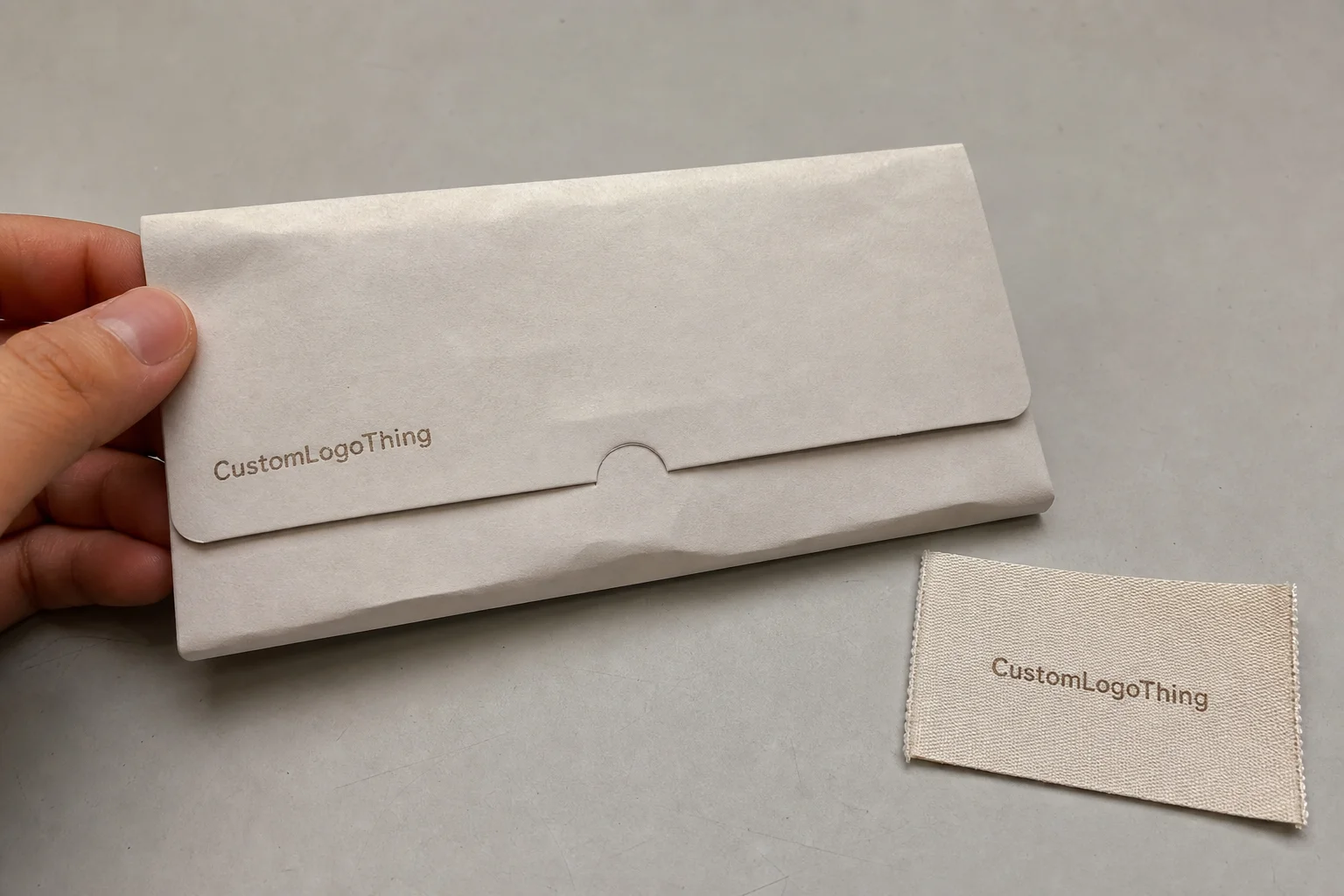
Skincare brands use clothing labels in more places than people expect. Spa robes, washcloths, headbands, tote bags, sleep masks, makeup-removal cloths, and bundled gift items all benefit from a clean, retail-ready label that signals the set was planned, not assembled at the last minute. The label is small, but it changes perception fast.
That perception shift is easy to underestimate. A plain accessory can feel like generic merch. Add a well-made woven or satin label, and the same item suddenly fits a controlled retail environment. The item appears connected to the rest of the brand system, alongside the bottle, carton, and any custom printed boxes used for the outer pack.
In practice, the longest-lived visual cue often wins. Cartons get recycled, tissue paper disappears, and inserts are tossed. A label on a robe or headband may be seen every time the item is used, which gives it more staying power than many pieces of branded packaging. That is one reason buyers treat labels as a brand asset rather than a low-value accessory.
For skincare sets, the best labels do three things at once:
- Reinforce trust with a clean, finished look.
- Reduce the odds that a gift set feels like an unbranded bundle.
- Make the overall retail packaging story feel more intentional.
A good label does not shout. It confirms that the brand cared about the part most customers will handle repeatedly.
That matters even more for clinical-leaning lines, spa collections, and direct-to-consumer bundles. A sharp label can make the difference between sample pack and shelf-ready kit. It also helps the accessory feel like part of the same pricing tier as the rest of the set, which is useful when the product is sold as a giftable bundle rather than a loose add-on.
There is also a practical side. Labels can help differentiate SKUs in a line that uses similar fabrics or shapes. If one robe is for retail and another is for spa operations, the label format can support that distinction without making the item look temporary or promotional.
Choosing the right label material, fold, and finish
The best label is not the most expensive one. It is the one that matches the product's contact point, wash cycle, and visual language. A label on a facial headband needs a different comfort profile than one on a tote bag, and a label on a robe needs different durability than one on a low-use gift pouch.
Woven labels are the default choice for many brands because they feel durable and look polished. They work well when the logo is simple enough to survive thread translation. If the brand uses fine typography, thin rules, or a detailed icon, ask for a sample first. Thread density affects readability more than most first-time buyers expect, and small type can collapse faster than expected on dense weaves.
Satin labels are softer against skin, which is why they show up often on face-adjacent items and lightweight accessories. They can feel more comfortable than a stiff woven label, especially on items used near the neck or cheek. The tradeoff is that they may show wear sooner on high-friction products unless the construction is chosen carefully.
Printed labels are useful when a brand needs smoother contact, small text, or a cleaner clinical look. They can handle color detail well, and they often suit brand systems that lean toward minimal packaging design. If the goal is sharp copy, care text, or small icons without the texture of thread, printed labels are worth serious consideration.
Heat-transfer labels remove the stitched edge entirely, which can be helpful on stretchy accessories or garments where a sewn label would create a pressure point. They are not always the most premium-looking option, but they can be the right answer for comfort, especially on items that sit close to the skin.
| Label type | Typical feel | Best use case | Common unit cost signal |
|---|---|---|---|
| Woven | Structured, polished, durable | Robes, totes, premium kits | $0.12-$0.28 at 5,000 pieces |
| Satin | Soft, smooth, skin-friendly | Headbands, sleep masks, face-adjacent items | $0.10-$0.22 at 5,000 pieces |
| Printed | Flat, clean, light | Care copy, small text, clinical branding | $0.08-$0.18 at 5,000 pieces |
| Heat-transfer | Very soft, no stitched edge | Stretch fabrics, close-contact items | $0.15-$0.35 at 5,000 pieces |
Fold style matters just as much as material. End fold, center fold, loop fold, and straight cut all change how the label sits and what information it can carry. If a label needs a lot of copy, the format is wrong. Better to split duties: one label for identity, another for size or care details, and a third only if the product truly needs it.
Color and texture should match the broader package branding system. A clinical skincare line usually benefits from crisp contrast, controlled typography, and very little visual noise. A natural or botanical brand may prefer softer tones, low-gloss finishes, and a calmer hand feel. The label should not argue with the carton, bottle, or insert.
For brands that care about sourcing, paper inserts and secondary components can align with FSC expectations through FSC paper choices, while shipping-critical packs may be worth checking against distribution testing references such as ISTA. That does not solve label selection by itself, but it helps keep the whole packaging system honest.
A final material detail matters more than many teams expect: edge finish. A clean cut on a soft accessory, a sealed edge on a satin piece, or a low-profile attachment on a robe can be the difference between a label that disappears into the garment and one that feels distracting in hand.
What affects cost, pricing, MOQ, and unit cost
Pricing is driven by a short list of variables, and most of them are predictable. Material choice, size, color count, thread density or print complexity, fold style, and attachment method all move the quote. If a supplier cannot explain those drivers clearly, the quote is not ready for comparison.
MOQ changes the math quickly. Small runs usually carry a higher unit cost because setup, proofing, and machine time are spread over fewer pieces. Larger orders tend to look cheaper on paper, but only because the fixed costs are diluted across more labels. That is useful if the SKU will sell through. It is less useful if the design is still being tested.
Hidden costs usually appear in four places: sampling, artwork revisions, rush charges, specialty folds, and split shipping. A supplier may quote the label itself at a fair price, then add charges for a second proof or delivery to multiple fulfillment points. Ask for a quote that includes the full production path, not just the piece price.
For a clean apples-to-apples comparison, ask every supplier the same set of questions:
- Does the price include sampling or only production?
- How many revisions are covered before artwork fees start?
- What is the exact MOQ per design and per colorway?
- Does the quote include finishing, folding, and attachment?
- Are shipping and split deliveries included or separate?
Most buyers also underestimate how much design complexity changes the economics of custom clothing Labels for Skincare brands. A simple one-color woven label can be much easier to produce than a label with multiple thread colors, micro type, and a special fold. A cleaner logo often saves more money than a bigger order does.
Order size is only part of the cost story. Repeating the same label across several SKUs can reduce cost and simplify production, but only if the artwork is genuinely shared. Small differences in size, fold, or color can turn a single program into multiple line items. That adds up fast when the labels are tied to seasonal packaging or short-run bundles.
If the labels are part of a broader packaging refresh, use the same discipline you would apply to cartons or sleeves. A label quote should be evaluated like any other packaging component inside the final retail packaging budget, not as an isolated accessory.
Honestly, the lowest unit price is not always the lowest total cost. A label that pills, frays, or arrives with poor color matching can force a re-order and create more waste than the original savings justified.
Custom clothing labels for skincare brands: process and timeline
The workflow is straightforward, but delays pile up when the brief is vague. Start with the use case. Is the label for a robe, a washcloth, a sleep mask, or a bundled gift accessory? Then decide whether the label is primarily for branding, care details, or retail compliance. That answer shapes everything else.
A practical process looks like this:
- Define the item, placement, and purpose.
- Send logo files, measurements, color references, and copy.
- Review the first proof or mockup.
- Approve a sample if the piece will touch skin or go through repeated washing.
- Move into production after final sign-off.
Lead time depends on the amount of customization. Simple labels can move faster, while specialty folds, uncommon colors, or multiple revisions add time quickly. In many programs, a straightforward order can land in roughly 12-15 business days from proof approval, but that number moves with queue length, complexity, and shipping destination. If the project includes sampling first, add more room.
The biggest timeline killers are predictable: low-resolution logos, missing dimensions, unclear placement, and late changes after proof approval. A buyer may think the label is a small piece of the program, but it can still hold up the entire launch if the artwork is not ready. That is especially true when the label has to coordinate with custom printed boxes, insert cards, or seasonal product packaging changes.
Production control matters after approval as much as before it. Buyers should ask how color is checked, whether thread tension is monitored, and what happens if the first output strays from the approved sample. Those details are not cosmetic. They are the difference between a label that matches the plan and one that quietly drifts out of spec across a larger run.
For launch planning, work backward from the date that cannot move. A subscription drop usually needs more cushion than a simple replenishment order because it touches fulfillment schedules, artwork approvals, and kit assembly. If the label is going into a gift set, remember that the accessory often gets packed after the carton spec is already locked. That creates avoidable friction.
If you need proof that the spec is set up correctly, start with examples from Case Studies. Real production scenarios are useful because they show how a design behaves after handling, folding, and finishing, not just in a flat digital mockup.
Common mistakes that hurt comfort, durability, and brand trust
The first mistake is using a scratchy material on a skin-contact item. If the product sits near the face, neck, or wrist, rough edges are not a minor issue. They create a comfort problem that customers associate with the brand, not the supplier. That is especially risky for spa kits and overnight routines.
The second mistake is forcing too much information into too little space. Tiny text, low contrast, and overloaded layouts make care details hard to read. They also make the brand look rushed. If the copy is important, the format should support it instead of fighting it.
The third mistake is choosing a label construction that does not match the item. A woven label that frays on wash items, or an adhesive-backed construction that peels on a flexible accessory, creates avoidable failure. The product may still function, but the branding looks weak.
The fourth mistake is trusting the digital proof too much. A screen mockup cannot tell you how the edge feels, whether the label shifts on a curved seam, or how the color behaves under natural light. For anything that touches skin or gets laundered, a physical sample is the better standard.
If the label is part of the user experience, sample it the same way you would test the product itself.
There is also a compliance angle. For products that touch skin or are washed, brand teams should think about care instructions, fiber content if applicable, and placement so the label does not interfere with comfort. The exact requirements depend on the item and market, so this is one place where assumptions create problems quickly. If there is uncertainty, the buyer should ask the supplier to spell out what the label construction can and cannot support.
Quality control should not stop at the first sample. A solid buying process checks color consistency between runs, edge integrity after folding, and legibility after heat, pressure, or laundering if the item will be washed. For skincare brands, that last point matters because a label that survives packaging but fails in use damages the entire perception of the line.
Finally, do not ignore how the label interacts with the rest of the package design. A carefully chosen label can elevate a simple accessory. A mismatched one can make a strong carton look inconsistent. That is a package branding issue, not just a fabrication issue.
Expert tips for a cleaner spec and stronger shelf appeal
Start with hierarchy. One label should usually carry the brand name or logo. A second label can handle size, fiber, or care details if the item needs them. A third is only justified when the product line truly requires extra information. Over-labeling is a common way to turn a polished item into a cluttered one.
Match the finish to the brand story. Clinical skincare lines often look stronger with crisp contrast, controlled margins, and a flatter surface. Botanical or natural brands may look better with softer textures and quieter tone-on-tone color. The wrong finish can make even a beautiful logo feel off-message.
Ask for tactile samples before you commit. The hand feel often matters more than the mockup. A label that looks elegant on screen can feel stiff in person, and a label that looks plain in a file can feel expensive once it is sewn into a robe or wrap.
Test the placement on the actual item. Not on a screenshot. On the real fabric. The label should sit flat, stay visible, and avoid seams, zippers, ties, or closures. A placement that works on a tote bag may fail on a curved headband or a stretch accessory.
For accuracy, check legibility at the smallest actual size you plan to produce. Tiny typography that looks acceptable at 200 percent zoom can fail once it is woven or printed at production scale. That is especially true on labels that include care symbols, ingredient references, or secondary language.
If the label is part of a broader launch, compare it with the rest of the packaging stack. The carton, insert, tissue, and accessory should feel like they belong to the same brand family. That is where Custom Packaging Products become relevant, because the label is not competing with the rest of the system; it is completing it.
One more point that buyers often miss: use the label to reduce ambiguity. If the item is a gift, a spa retail add-on, or a bundled purchase, the label should make its purpose obvious at a glance. That lowers confusion and supports the overall retail packaging story.
Next steps: build a spec before you request quotes
Before asking for pricing, audit each SKU. Identify which items need a clothing label, where the label will sit, and whether it is mainly for branding, care information, or retail compliance. That short exercise saves time and reduces back-and-forth with suppliers.
Then gather the essentials: logo files, target quantity, preferred material, size limits, color references, attachment method, and the date you cannot move. If the brand is still deciding between woven, satin, printed, or heat-transfer, ask for samples across those options instead of trying to decide from descriptions alone.
Good quote requests include production detail, not just a product name. Suppliers need to know the application, the wash profile, the substrate, and the end use. A robe label and a headband label are not the same job, even if the logo is identical.
For most brands, the cleanest path is to treat the first order as a pilot run. That gives room to test placement, softness, readability, and color before the spec is scaled across the line. It also helps compare the label against the carton, insert, and any other branded packaging components that support the same launch.
Use the pilot to refine what matters. If the label feels too stiff, switch material. If the contrast is weak, adjust the color spec. If the copy is too small, simplify it. That is how Custom Clothing Labels for skincare brands move from a decent sample to a production-ready system that fits the rest of the brand.
It also helps to lock one standard spec for recurring items and reserve special constructions for limited runs. A stable base spec reduces ordering mistakes, keeps quality more consistent, and gives the brand a cleaner visual rhythm across launches.
What are the best custom clothing labels for skincare brands?
Woven labels usually work best for a premium, durable look on robes, totes, and reusable accessories. Satin or printed labels are better when softness and low skin irritation matter more than texture. The right choice depends on the product, how often it is washed, and whether the label is meant to be seen first or felt first.
How much do custom clothing labels for skincare brands cost?
Pricing depends on material, size, color count, fold style, and order volume. Expect lower unit cost at higher quantities because setup and proofing are spread across more labels. Ask whether samples, artwork changes, and shipping are included so quotes can be compared accurately.
How long do custom clothing labels for skincare brands take to make?
Lead time depends on whether the design is simple or fully custom and whether samples are needed first. Revisions, specialty finishes, and rush orders can extend the timeline quickly. Build in extra time before a launch so a sample can be approved without risking the ship date.
Which label materials are most comfortable for skin-contact items?
Satin and soft woven labels are common choices because they reduce scratchiness on items worn near the face or neck. Printed labels can work well when a smooth surface and small typography are priorities. Test the label against the actual product, since comfort can change depending on fabric stretch and seam placement.
What should I include in a quote request for custom clothing labels?
Include quantity, dimensions, preferred material, colors, fold style, and attachment method. Add the use case, such as spa robes, headbands, or gift-set accessories, because that affects durability needs. Share artwork files and the target deadline so the supplier can quote accurately and flag production risks early.
For skincare brands, the label is a small part with an outsized job. It has to support comfort, durability, and brand recognition at the same time. If it is specified carefully, Custom clothing labels for skincare brands can make the entire package feel more intentional, more credible, and more finished from sample to shipment.


