Plan Custom Clothing Store Paper Bags Production Timeline
Why Clothing Store Paper Bags Take Longer Than Buyers Expect
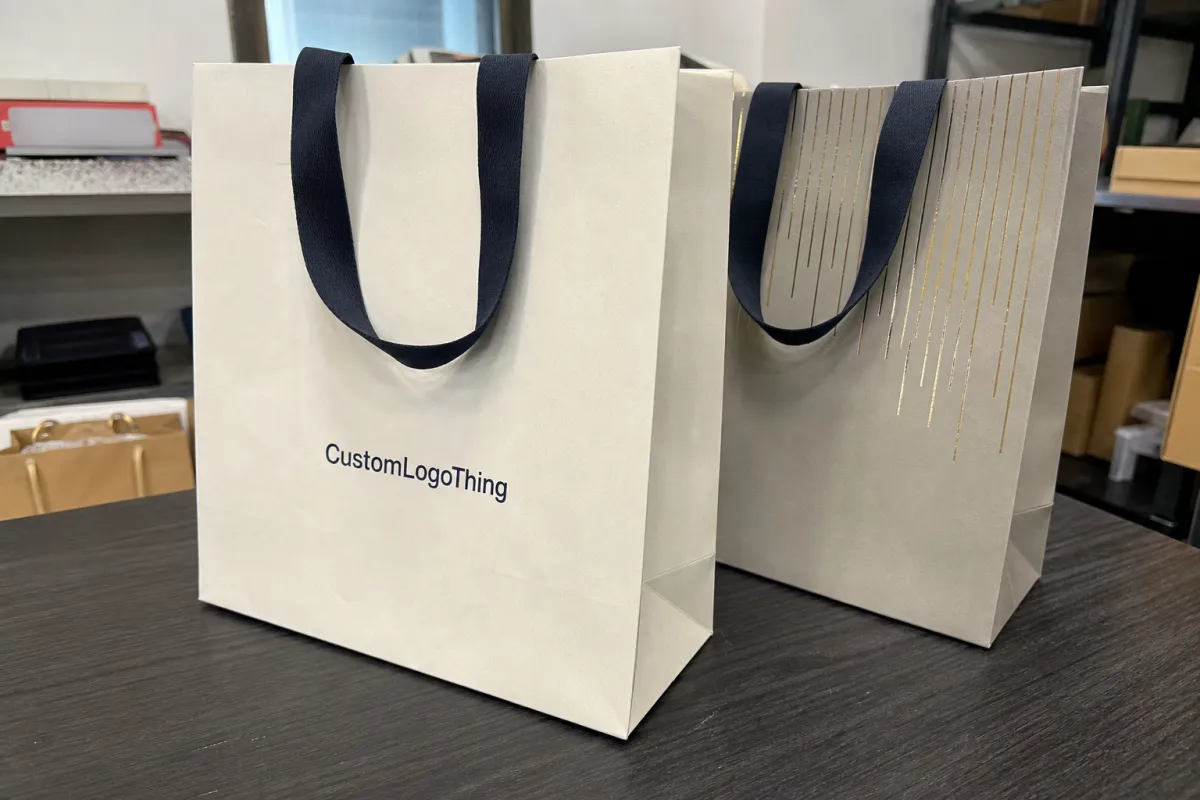
The boutique launch is in three weeks. The clothes are steamed, the tags are ready, the racks look expensive, and the branded bags are still a vague line item in someone’s inbox. That is how packaging panic happens. The Custom Clothing Store Paper Bags production timeline is not just the factory’s print schedule; it includes artwork cleanup, dielines, material sourcing, proofing, production, quality control, packing, and freight.
Here is the annoying part: printing may only take 2 to 5 business days on a simple order. Approvals can burn more time than the press itself. A slow logo file can be more dangerous than a busy factory floor. Yes, really.
For clothing retailers, boutique owners, merch managers, and ecommerce apparel brands, bags are not a side detail. They touch every checkout, pop-up, influencer mailer, wholesale event, and seasonal drop. Good retail packaging makes the handoff feel finished. Bad retail packaging makes a $180 dress feel like it left through the back door.
Simple Kraft Paper Bags with one-color printing can move quickly, often in 7 to 15 business days after proof approval if the size and handles are in stock. Fully custom laminated rope-handle bags with foil stamping, embossing, custom dimensions, and overseas freight can need 35 to 60 days. Same category. Very different calendar.
This is practical buying guidance, not inspiration-board fluff. You will see realistic lead time ranges, cost drivers, ordering steps, common mistakes, and the exact details suppliers need so you do not play twenty rounds of email ping-pong. Everyone loves email ping-pong. That was sarcasm.
The Real Custom Clothing Store Paper Bags Production Timeline
The Custom Clothing Store Paper Bags production timeline usually breaks into nine phases: quote and spec confirmation, artwork review, proof approval, material preparation, handle preparation, printing, finishing, converting, quality control, packing, and shipping. Skip one and the order stalls.
| Bag Type | Typical Lead Time After Proof Approval | Best For | Main Delay Risk |
|---|---|---|---|
| Stock-size kraft bag with one-color logo | 7-15 business days | Boutiques, pop-ups, small launches | Artwork quality or stock availability |
| Custom-size twisted-handle paper bag | 15-25 business days | Daily apparel checkout | Custom sizing and setup |
| Laminated eurotote with rope handles | 25-40 business days | Premium retail packaging | Finishing, handle assembly, sampling |
| Overseas specialty production | 45-60 days including transit | Large-volume seasonal programs | Ocean freight, customs, peak-season congestion |
The clock normally starts after the supplier has final artwork, confirmed specifications, paid deposit, and approved proof. Not when a buyer sends a blurry screenshot and says, “Can you just use this?” No, sadly, we cannot.
A digital proof confirms placement, size, color notes, print area, handle details, and orientation. Physical samples or pre-production samples add 5 to 12 business days, sometimes more, but they reduce risk on premium bags. If you are ordering 5,000 laminated bags with foil and cotton rope handles, sampling is not wasteful. It is cheaper than receiving 5,000 almost-right bags.
Production dependencies matter. Paper stock availability, PMS ink matching, foil dies, embossing plates, lamination film, handle inventory, and the factory queue all affect turnaround. A supplier may be able to print tomorrow but still wait 6 days for the right rope color or 10 days for a foil die.
Shipping deserves its own calendar line. Local ground shipping may take 2 to 5 business days. Air freight can move faster but gets expensive on bulky paper bags. Ocean freight is slower, often 25 to 40 days port-to-port plus handling, but it can make sense for large volumes. The bag is not useful until it is in your stockroom.
For fixed events, build in a buffer of at least 1 to 2 weeks. Launch dates, pop-ups, trade shows, and holiday windows do not care that your packaging design approval got stuck in a group chat.
How Custom Paper Bag Specs Change Lead Time
Specifications are not decoration. They are production instructions. Every choice changes speed, cost, durability, or all three.
Start with structure. Flat merchandise bags are usually fastest and cheapest, but they suit lightweight items such as tees, accessories, or sale items. SOS kraft bags stand upright and work for folded apparel. Twisted-handle shopping bags are common for retail checkout because they balance price and function. Eurotote-style rope-handle bags feel premium but need more assembly. Die-cut handle bags can look clean, though they may not handle heavy denim or shoes well unless the paper is strong enough.
Material choice changes the schedule. White kraft and natural kraft are usually easier to source. Recycled paper can be fast if stocked, slower if a specific recycled content or certification is required. Coated art paper gives sharper print, often in 157gsm, 190gsm, or 210gsm ranges. Heavy cardstock bags may use 250gsm to 350gsm C1S artboard, especially for luxury product packaging. Black dyed paper looks sharp but can complicate print visibility and foil testing.
If sustainability claims matter, ask for documentation instead of vague “eco-friendly” language. FSC-certified paper is a recognized option; buyers can learn more from the Forest Stewardship Council. Claims should match the actual material and chain-of-custody paperwork. Green vibes are not certification.
Size decisions are another timeline trap. Standard sizes are faster and cheaper. Custom dimensions can require tooling, longer setup, and higher minimum order quantities. Apparel buyers should size bags based on packed purchases: folded garments, tissue, receipts, hang tags, and maybe a shoe box. Not wishful thinking. A sweater does not become thinner because the bag spec looks prettier in a spreadsheet.
Handles matter too. Twisted paper handles are efficient and recyclable. Cotton rope, ribbon, and grosgrain handles feel more premium but often add labor and cost. A rope-handle bag may need reinforced holes, knots, metal eyelets, or manual finishing. Add foil stamping, embossing, spot UV, or soft-touch lamination, and the Custom Clothing Store Paper Bags production timeline gets longer because each finish needs setup and inspection.
Practical rule: if the deadline is tight, choose a stock size, standard paper, one or two print colors, and a common handle. Save the boutique drama for the second run.
Cost, MOQ, and Unit Pricing for Clothing Store Bags
The cheapest bag is rarely the best value if it arrives late, tears at checkout, or makes a premium clothing brand look like it bought packaging from a clearance bin. Low price only matters after the bag does its job.
Main cost drivers include bag size, paper weight, material type, print coverage, number of ink colors, handle type, finishing, order quantity, sampling, carton packing, and freight. For simple logo-printed stock bags, minimum order quantities may start around 250 to 500 pieces. Custom-size or specialty-finish bags often start around 1,000 to 3,000 pieces. Premium imported eurotote styles can require higher MOQs depending on paper, handle, print method, and finishing.
Unit cost drops as quantity rises because setup, proofing, plates, and labor get spread across more bags. A 500-piece order may feel expensive per unit. A 5,000-piece order may reduce unit cost but create a storage problem. Paper bags are bulky. They also hate damp storage. Clean, dry shelving matters more than people admit.
| Specification Choice | Typical Cost Impact | Typical Timeline Impact | Buyer Tradeoff |
|---|---|---|---|
| One-color logo on kraft paper | Lower | Fastest | Simple, durable, less premium |
| Full-coverage print | Medium to high | Adds proofing and press time | Strong package branding, higher waste risk |
| Foil stamping or embossing | Medium setup cost plus unit cost | Adds die or plate time | Premium look, slower approval cycle |
| Rope or ribbon handles | Higher | Adds assembly time | Better feel, less rush-friendly |
| Heavier paper weight | Higher material and freight cost | Usually minor unless sourced specially | Better strength, higher landed cost |
Ask for price breaks at 500, 1,000, 2,500, and 5,000 units. That tells you where the unit cost actually improves. Sometimes the jump from 1,000 to 2,500 is worth it. Sometimes your stockroom says absolutely not.
Do not compare quotes unless the specs match. A 157gsm laminated bag with cotton rope handles is not the same product as a thin kraft twisted-handle bag. Apples to apples, please. Packaging math is annoying enough already.
Budget freight separately. Bulky paper bags can make shipping a meaningful part of landed cost, especially for large cartons or air freight. If you are comparing suppliers, ask whether pricing includes delivery, duties, residential surcharges, liftgate fees, or just production at the factory door.
Step-by-Step Ordering Process Before Production Starts
A clean order starts before the supplier quotes. Choose the bag type, target size, quantity, material preference, handle style, print colors, launch deadline, delivery address, and budget range. If you are also planning Custom Packaging Products such as tissue, stickers, mailers, or custom printed boxes, mention that early so the supplier can align materials and shipment timing.
- Measure what goes inside. Include folded tees, denim, sweaters, shoe boxes, tissue paper, hang tags, and receipts. Clothing stores often under-size bags because they measure the garment flat instead of the packed purchase.
- Prepare usable artwork. AI, EPS, or editable PDF files are best. High-resolution raster logos may work for some print methods. Screenshots are not artwork; they are tiny acts of violence against production teams.
- Request a quote with exact specs. Ask what is included: printing, setup, proofing, packing, freight, duties if applicable, and delivery timing after proof approval.
- Review the digital proof carefully. Check logo placement, color callouts, dimensions, handle color, print area, spelling, orientation, and bag style.
- Approve the sample or proof and lock specs. Changes after approval can reset the timeline or create extra charges.
- Track production, QC, packing, and shipping. On larger or premium orders, ask for production photos or a pre-shipment inspection.
Quality control should not be mysterious. For export packaging and transit testing, many packaging professionals reference standards from groups such as the International Safe Transit Association. A shopping bag is not a shipping carton, but the same principle applies: packaging should survive real handling, not just look good on a mockup.
A clean spec sheet can cut days from the custom clothing store paper bags production timeline. Suppliers move faster when they are not guessing. Radical concept, I know.
Common Timeline Mistakes That Delay Paper Bag Orders
The first mistake is asking for a rush order before deciding bag size, quantity, paper stock, or artwork. Urgency does not replace specifications. It just makes everyone type faster.
The second mistake is approving artwork too casually. Buyers often focus on the logo but miss the wrong Pantone color, weak contrast on kraft paper, or a print area sitting too close to the handle. Print on natural kraft will look warmer and less crisp than print on white coated paper. Pretending otherwise wastes time.
Changing specs after proof approval is another classic delay. Switching from twisted handles to rope handles, changing size, or adding foil can restart quoting, proofing, sourcing, and setup. That does not mean changes are impossible. It means the calendar pays for them.
Freight time gets forgotten constantly. Production complete is not delivered. For pop-ups, store openings, trade shows, and seasonal apparel launches, the difference between “packed and ready” and “in your back room” can be 3 days or 5 weeks, depending on shipping method and distance.
Peak retail periods are messy. Suppliers, printers, and carriers get busy before holidays, trade shows, and back-to-school selling periods. Everyone wants rush packaging at the same time. Shocking, I know.
Cheap quotes can also hide weak specs. Check paper weight, print method, handle quality, carton packing, and delivery terms before choosing the lowest number. A quote that excludes freight, duties, or setup is not cheaper. It is incomplete.
Storage and reorder timing matter after delivery. A 5,000-piece order may save money per unit, but it needs clean, dry space and inventory planning. Retail bags get damaged, miscounted, used for influencer gifts, or burned through faster during promotions. Add a 5% to 10% buffer instead of reordering in panic mode.
Expert Tips to Shorten Turnaround Without Buying Junk
Choose stock sizes when speed matters. A standard size with strong branding often beats a custom dimension that misses the launch date. Package branding does not need to be complicated to look intentional.
Limit decoration on urgent orders. One or two ink colors, no foil, no embossing, no custom-dyed handles. If the opening date is close, build the fast practical version first and plan the premium version for the next production run.
Set priorities in the right order: deadline first, durability second, visual finish third, lowest possible unit cost fourth. Trying to optimize everything at once usually creates a mushy compromise. Nobody loves a mushy compromise.
Approve digital proofs quickly but not carelessly. Assign one internal approval owner. Three people debating whether the logo should move 3 millimeters left can add 2 days and improve nothing.
Provide Pantone colors, brand guidelines, and acceptable color tolerances early. If your logo must hit a specific red, say that before the proof. Also accept the material reality: kraft paper, coated white paper, and black dyed stock will not reproduce color the same way.
Split orders if the deadline is real. A smaller fast run of 250 to 500 stock bags can protect a launch, followed by a larger optimized run of 2,500 or 5,000 pieces for regular inventory. This keeps the custom clothing store paper bags production timeline under control without forcing every bag into rush pricing.
Ask direct timeline questions:
- What date do you need final approval to hit my in-hand date?
- Which materials and handles are already in stock?
- What can delay this order?
- When will it ship, not just finish production?
- What shipping method is assumed in the quote?
Finally, test bag strength with real products before committing to a massive run. If your hoodie fits only when folded by a packaging monk, the bag is too small.
Next Steps to Plan Your Bag Order Without Panic
Use a short checklist before requesting pricing: bag type, packed product measurements, quantity tiers, target delivery date, vector logo files, print colors, handle style, delivery address, and nice-to-have finishes. If you want matching tissue, stickers, mailer bags, or other Custom Packaging Products, include those in the same planning window.
Work backward from the required in-hand date. Add shipping time, production time, proofing time, and a buffer. If the event is fixed, the specs may need to flex. The calendar will not flex for your foil stamp.
A strong supplier brief can be one clean message: “We need twisted-handle kraft Paper Shopping Bags, 10 x 5 x 13 inches, 120gsm natural kraft, one-color black logo, 1,000 and 2,500 unit pricing, delivered to our store by [date]. Vector logo attached. Please include proofing, production time after approval, packing, and freight.” That gets a faster answer than “Can you price bags?” Astoundingly faster.
Ask for two quote options: a fast practical version and a premium version. For example, compare a one-color kraft twisted-handle bag against a laminated eurotote with rope handles and foil. Apparel brands can then decide whether speed, cost, or brand impact matters most for that order.
Once the first order lands, create a reorder plan. Track monthly bag usage, seasonal spikes, damage rate, and the actual lead time from the previous run. Reorder before stock drops below 6 to 8 weeks of coverage if your bags are custom-size or imported.
Understanding the custom clothing store paper bags production timeline lets buyers order with fewer surprises, better quotes, and bags that actually show up before the clothes need to leave the store. If the deadline is close, simplify the specs. If the brand experience matters more, start earlier and build the bag properly.
FAQ
How long is the custom clothing store paper bags production timeline for a first order?
Most first orders take about 2 to 6 weeks after final artwork and proof approval, depending on bag style, quantity, materials, finishes, and shipping method. Simple stock-size kraft bags with a one-color logo are usually fastest. Custom-size laminated bags with rope handles, foil, embossing, or overseas freight take longer. The timeline does not truly start until specs, artwork, payment, and proof approval are complete.
Can custom paper bags for a clothing store be rushed?
Yes, but only if the specs are simple and materials are available. Rush-friendly choices include stock sizes, standard paper, one-color printing, and common handle options. Specialty finishes, custom dimensions, physical sampling, and complex color matching are harder to rush without quality risks. Rush fees, air freight, or smaller initial quantities may increase the total cost.
What information do I need before requesting a quote for clothing store paper bags?
Prepare bag size, quantity, paper type, handle style, print colors, logo file, delivery address, deadline, and any finishing requests such as foil, embossing, or lamination. If you are unsure about size, measure the actual packed garments, not just flat clothing measurements. Ask for quantity price breaks so you can compare unit cost at different order volumes.
What delays custom clothing boutique bag production the most?
The most common delays are incomplete artwork, unclear specs, slow proof approval, unavailable materials, last-minute design changes, and underestimated shipping time. Buyers also lose time when too many people are involved in approval and no one owns the final decision. A clean spec sheet and fast proof review are the easiest ways to protect the schedule.
How can I lower the cost of custom paper shopping bags without making them look cheap?
Use standard sizes, reduce print colors, choose kraft or white paper stock, avoid unnecessary specialty finishes, and order at a quantity where the unit cost improves. Keep the logo clean and intentional instead of covering the entire bag with busy artwork. Spend where customers notice: sturdy paper, good handle strength, and sharp logo placement usually matter more than extra decoration.


