Buyer Fit Snapshot
| Best fit | Custom Cmyk Mailer Boxes projects where brand print, material claims, artwork control, MOQ, and repeat-order consistency need to be specified before quoting. |
|---|---|
| Quote inputs | Share finished size, material target, print colors, finish, packing count, annual reorder estimate, ship-to region, and any compliance wording. |
| Proofing check | Approve dieline scale, logo placement, barcode or warning zones, color tolerance, closure strength, and carton packing before bulk production. |
| Main risk | Vague material claims, crowded artwork, missing packing details, or unclear freight terms can make a low unit price expensive after revisions. |
Fast answer: Custom Cmyk Mailer Boxes: Film, Print, MOQ, and Carton Packing should be specified like a repeatable production item. The safest quote records material, print method, finish, artwork proof, packing count, and reorder notes in one written spec.
Production checks before approval
Compare the actual filled-product size with the drawing, then confirm tolerance on folds, seals, hang holes, label areas, and retail display edges. Reserve space for logos, QR codes, warning copy, and material claims before decorative graphics fill the panel.
Quote comparison points
Review material grade, print process, finish, sampling route, tooling charges, carton quantity, and freight assumptions side by side. A quote is only useful when the supplier can repeat the same color, closure quality, and packing count on the next order.
Custom CMYK Mailer Boxes: Sustainable Packaging Guide
Custom CMYK mailer boxes give a brand full-color impact without forcing it into a heavy, overbuilt shipper, and that balance matters more than many packaging teams expect. A well-made mailer protects the product, carries sharp graphics, and keeps the packout lean enough to avoid extra void fill, extra freight weight, and extra frustration on the packing line.
CMYK is the standard four-color print model: cyan, magenta, yellow, and black. Those inks build the artwork you see on the board, whether that is a logo, a photo, a repeating pattern, or a fully printed interior. For ecommerce, retail packaging, and subscription programs, custom CMYK mailer boxes are popular because they bring structure and print together in one piece, which helps product packaging feel deliberate instead of improvised.
The sustainability angle belongs in the spec early, not as an afterthought. Right-sized dimensions, recyclable board, and a box style that reduces filler can do as much for the footprint as a careful graphic system. In practice, custom CMYK mailer boxes sit at the intersection of packaging design, shipping performance, and package branding, so the strongest choices are rarely just about looks. They are about how the box is built, how it prints, and how it behaves once it leaves the warehouse. That part gets missed a lot, and then everyone is kinda stuck trying to fix it later.
What Are Custom CMYK Mailer Boxes?
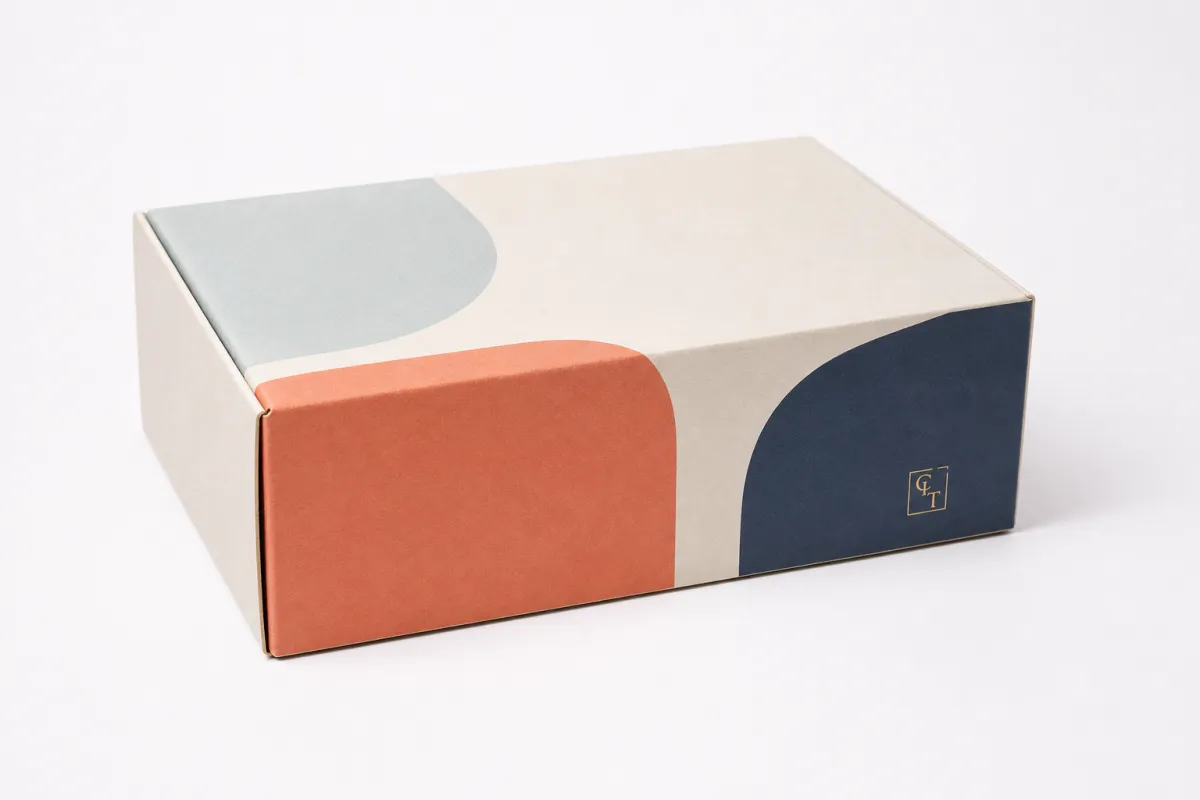
Custom CMYK mailer boxes are printed corrugated or paperboard boxes built with a self-locking structure, usually designed to open quickly, close securely, and present the product in a clean way. The surprise for many buyers is how much visual range custom CMYK mailer boxes can deliver without needing a complicated box build. The structure can stay straightforward while the outside carries rich color, patterns, and brand cues that make the unboxing feel intentional.
In practical terms, CMYK printing mixes four ink channels to recreate the artwork on the box. That makes it a useful fit for logos, gradients, photography, and detailed graphics. Compared with single-color printing or basic label application, custom CMYK mailer boxes give more room for branded packaging that feels complete from the first glance. A product that arrives in a carefully printed mailer often feels more premium before the customer even opens it.
A mailer box is not the same thing as a folding carton. Folding cartons are usually lighter and often used for shelf display, while mailers are built for repeated handling in ecommerce shipping and can stand up to more movement. The self-locking design also makes assembly simple on the packing line. That matters for Custom Printed Boxes because the structure has to support the artwork, not fight it. If the closure is awkward, the whole packout slows down, and nobody wants that.
Sustainability fits into that picture in a practical way. Recyclable board, reduced filler, and tighter dimensions all help. If a box is sized correctly, it uses less material and usually ships more efficiently. From a packaging buyer’s point of view, that can lower damage risk, reduce dimensional weight charges, and improve the customer experience all at once. For recycling guidance, it is smart to check neutral sources such as the EPA recycling information and confirm local rules, because disposal guidance can vary from one market to another.
The quiet win is usually the simplest one: a box that fits the product, prints cleanly, and does not force the shipper to add more paper, more void fill, or more labor than needed.
That is why custom CMYK mailer boxes are more than a print decision. They connect box structure, carton strength, package branding, and product protection into one specification. If you are comparing formats, the range on Custom Packaging Products is a useful place to see how different packaging structures support different jobs. The right choice depends on the product, the shipping lane, and how much of the unboxing story you want the box to carry.
For lighter shipments, some teams pair these boxes with Custom Poly Mailers for a different shipping profile, but the mailer box remains the better choice when presentation and structure need to work together. That is the central appeal of custom CMYK mailer boxes: a sturdy form, a printed exterior, and a simple path from warehouse to doorstep.
How Custom CMYK Mailer Boxes Are Printed and Built
The print workflow starts with artwork separation. Cyan, magenta, yellow, and black are layered in controlled amounts to create the final image on the board. On a good production run, the result feels crisp and balanced, but the outcome depends on file prep, substrate choice, and the printing method. Custom CMYK mailer boxes can be produced with digital printing for short runs or offset printing for larger, more color-critical orders, depending on the plant’s equipment and the economics of the job.
Board selection changes the appearance more than many buyers expect. Kraft board gives a natural, earthy tone and can soften some colors slightly, while white or coated stock usually makes artwork appear brighter and sharper. If the design uses pale pastels or photographic imagery, that surface choice matters. With custom CMYK mailer boxes, a white face sheet often supports cleaner color reproduction, while kraft can reinforce a warmer, more organic brand feel.
The structure itself is cut from a dieline, creased, folded, and glued into the final shape. Those cut lines and glue flaps are not just manufacturing details; they shape how the artwork lands. A logo too close to a fold can distort. A border too tight to the edge can disappear when trimmed. Good packaging design treats the dieline as part of the canvas, not as an afterthought. That is especially true for custom CMYK Mailer Boxes That use interior printing, panel wraps, or bold artwork across the lid and sidewalls.
Prepress checks are where many headaches are prevented. Artwork should be built to the correct dieline, with bleed, safe zones, and the right color profile. A proof can catch a surprising number of issues, from low-resolution photos to misaligned type. For custom CMYK mailer boxes, the approved proof is the bridge between design intent and production reality. If that step is rushed, the printed result can drift from the brand file, and nobody wants to discover that after a full run has already been made.
Shipping performance still matters even with a strong visual program. A box that looks good but crushes too easily is not a win. Corrugated structure, flute direction, and material thickness all play a role. Lighter ecommerce items may do well in E-flute, while heavier or denser products may need stronger board or a different build. For formal transit testing, teams often look at standards such as ISTA packaging test resources and related compression or vibration methods to understand how packaging behaves under real shipping stress.
That mix of print and structure is why custom CMYK mailer boxes are so useful for branded packaging programs. The artwork can be bold, the assembly can stay simple, and the box can still do the practical work of protecting the product. In many cases, that is a better outcome than adding extra inserts, extra wrapping, or a decorative outer shell that creates more waste than value.
Key Factors That Affect Custom CMYK Mailer Boxes
Size is the first lever to pull. Right-sizing reduces empty space, lowers the amount of filler required, and gives the customer a more polished unboxing. A box that is too large looks wasteful and can allow the product to shift, while a box that is too tight can crush edges or stress the closure. Custom CMYK mailer boxes work best when the internal dimensions are developed from the actual product footprint, not from a guess.
Artwork complexity also affects the result. Full-coverage backgrounds, rich gradients, dark solids, and photo-heavy layouts are more demanding than a simple one-color logo. On some paper stocks, large ink areas can show slight variation, especially if the design uses extreme tints or very deep blacks. For custom CMYK mailer boxes, the brand palette should be chosen with print behavior in mind, not only with screen rendering in mind.
Material choice is another practical decision. Recycled board can support sustainability goals, while virgin fiber may offer more uniform appearance and strength depending on the specification. Kraft versus white face stock can change how the color reads, and a coating may be needed if the box needs scuff resistance, moisture protection, or extra color depth. A coated surface usually makes custom CMYK mailer boxes look cleaner, but it can also change recyclability and should be used only when it adds real value.
Finish is where design and sustainability sometimes pull in different directions. Matte gives a softer, less reflective look. Gloss can make graphics pop, but it may also show fingerprints and can complicate recycling in some markets. Soft-touch feels premium, yet it adds a layer that may not fit every sustainability claim. Uncoated stock is often the simplest option for custom CMYK mailer boxes if the goal is straightforward recyclability and a more natural brand tone.
Carrier handling is worth respecting. A box sent through parcel networks may be stacked, dropped, vibrated, and exposed to humidity changes. Heavy products, fragile products, and temperature-sensitive goods all need a little more thought. A box that looks perfect on a sample table may still fail if the board is underspecified or the closure is weak. That is why custom CMYK mailer boxes should be judged as package branding tools and as shipping containers at the same time.
The most useful production specs usually include:
- Product weight and any fragile components inside the shipper.
- Exact dimensions of the item or inner pack.
- Board type, such as kraft corrugated or white-faced corrugated.
- Print coverage, including exterior only or inside-and-out.
- Finish choice, such as uncoated, matte, gloss, or soft-touch.
- Target quantity for the first run and reorders.
Custom CMYK Mailer Boxes: Cost, Pricing, and MOQ
Pricing for custom CMYK mailer boxes depends on more variables than most first-time buyers expect. Quantity drives the biggest difference, but it is not the only factor. Box size, board grade, print coverage, finish, inserts, and the amount of setup work all shape the final unit price. A small, simple mailer with moderate coverage can land in a very different cost zone than a large, heavily printed box with specialty coating or custom insert work.
MOQ, or minimum order quantity, is basically the point where the supplier can make the run efficient enough to produce. Smaller orders usually cost more per unit because setup work is spread across fewer boxes. Larger orders spread those fixed costs more effectively. For custom CMYK mailer boxes, that means a jump from 500 to 2,500 units can change pricing more dramatically than people expect, while a move from 5,000 to 10,000 may not always cut the unit cost in half. The details matter.
Comparing quotes is where many buyers lose clarity. One vendor may quote a box that uses a heavier board, another may quote a lighter one. One may include printing on all panels, while another prices only the exterior. If the specs are not aligned, the numbers are not truly comparable. For custom CMYK mailer boxes, the cleanest quote comparison uses the same dimensions, the same board construction, the same print sides, and the same finishing assumptions.
| Specification | Typical Price Impact | Brand Impact | Sustainability Notes |
|---|---|---|---|
| Kraft corrugated, exterior print only | Lower to midrange | Natural, earthy, practical | Often a simpler recycling profile |
| White-faced corrugated, full CMYK coverage | Midrange | Brighter color and sharper imagery | Still recyclable if no heavy plastic finish is added |
| Matte or aqueous coating | Small added cost | Cleaner surface, less glare | Usually easier than plastic-heavy lamination |
| Soft-touch finish or specialty insert | Higher added cost | Premium feel and strong presentation | Can complicate recycling and should be used intentionally |
That table is not a universal price sheet, because paper markets, freight lanes, and production methods change the math. It does show the general pattern: material and finish decisions often move the cost just as much as print coverage. For custom CMYK mailer boxes, the smartest buying mindset is not “What is the cheapest quote?” but “What combination gives the best balance of protection, brand impact, and sustainability?”
There are also hidden variables. Freight can be material. Proofing may be included or billed separately. Some suppliers charge setup fees for certain print methods or for multiple revisions. Rush schedules can increase cost fast, especially if the job needs to move ahead of other work on the line. If a buyer is comparing custom CMYK mailer boxes from more than one source, those extras should be listed explicitly so the comparison does not get distorted.
For teams that want to broaden the packaging mix, it can help to compare mailers with other Custom Packaging Products before locking the spec. Sometimes a different carton style, insert combination, or shipping pack gives a better cost-to-impact ratio. That is especially true when custom CMYK mailer boxes are being used for a subscription launch, a product refresh, or a seasonal promotion where both timing and presentation matter.
Custom CMYK Mailer Boxes Process, Timeline, and Lead Time
The production process usually starts with discovery. The supplier needs dimensions, product weight, target quantity, artwork goals, and any sustainability requirements. From there, a dieline is chosen or created, and the artwork is fitted to that template. Custom CMYK mailer boxes move much faster when those basics are clear from the start, because the prepress team spends less time solving avoidable layout issues.
After the file is prepared, proofing comes next. A PDF proof can catch layout mistakes, but a hard sample or preproduction sample is better if color accuracy, fit, or structural behavior is critical. In many programs, proof approval is the point where the clock really starts to matter. Once approved, custom CMYK mailer boxes move into printing, converting, gluing, and packing, then they are prepared for shipment.
Lead time changes with complexity. A simple order with standard dimensions and straightforward artwork can move faster than a box that needs new tooling, custom inserts, or detailed color matching. Peak season also affects timing. If a packaging schedule is already full, even a simple custom CMYK mailer boxes order may need to wait its turn. That is why launch dates should be set with a buffer, not with a razor-thin margin.
Here is a realistic planning view:
- Discovery and quote: 1-3 business days if the specs are complete.
- Dieline and artwork prep: 2-5 business days, longer if revisions are needed.
- Proof approval: 1-4 business days, depending on internal review speed.
- Sampling: a few extra days to more than a week, if the project needs one.
- Production and finishing: often 12-15 business days after approval for a straightforward run, though complex orders can take longer.
- Freight: depends on destination, shipping mode, and urgency.
That timeline is a working range, not a promise. Still, it gives a helpful frame. Custom CMYK mailer boxes do not usually get delayed by one giant issue; they get delayed by a handful of small ones. Missing artwork files. A revision that arrives late. A decision about coating that keeps changing. Even a single unresolved detail can push the schedule. The best way to keep production moving is to treat approvals like a packaging schedule, not like an optional admin step.
For buyers managing several packaging formats at once, the smartest move is to line up artwork, fulfillment forecasts, and reorder timing before the final sign-off. If your custom CMYK mailer boxes are part of a broader launch kit, the shipper, the insert, and any secondary packaging should all be coordinated as one system. That keeps the rollout cleaner and usually reduces the chance of last-minute changes.
Common Mistakes to Avoid with Custom CMYK Mailer Boxes
The first mistake is designing for the photo and ignoring the product. A box can look excellent in a mockup and still be wrong in the hand if the dimensions are off. Too much void space means more filler and more movement. Too little space can crush edges or make closing the box awkward. Custom CMYK mailer boxes have to fit the product first, because the best artwork in the world cannot fix a bad fit.
The next problem is file prep. Low-resolution images, missing bleed, and color files built in the wrong profile can all create headaches. So can type placed too close to a fold. Many packaging design problems are not printing problems at all; they are artwork setup problems. For custom CMYK mailer boxes, clean prepress files save time, lower the risk of rework, and usually produce a better-looking final box.
Sustainability mistakes show up often too. A buyer may add lamination because it looks premium, then discover that the finish is harder to recycle. Oversized boxes can look generous in a sample photo, yet they waste board and shipping space every time they are used. Decorative elements that only create visual noise are another trap. If a finish or feature does not improve the customer experience, the shipping performance, or the brand story, it may not belong on custom CMYK mailer boxes.
Choosing the lowest quote without checking board strength is another classic error. A weak box can lead to crushed corners, scuffed print, and product damage. Once that happens, the cheap option becomes expensive. Replacements, reships, customer service time, and waste all add up quickly. That is why custom CMYK mailer boxes should be evaluated against the actual use case, not just the lowest invoice total.
Skipping prototyping is risky when the item is fragile, heavy, or likely to travel through difficult shipping lanes. A sample can reveal fit problems, closure friction, or finish issues that are hard to catch on screen. If the product is valuable, the box deserves a sample round. That is especially true for custom CMYK mailer boxes that carry both the shipping load and the brand presentation. I have seen more than one job go sideways because somebody trusted a clean render a little too much.
Expert Tips for Custom CMYK Mailer Boxes
Start with a controlled color palette. A clean brand system with one or two strong accent colors usually prints more predictably than a design crowded with tiny color shifts. Rich blacks, subtle gradients, and fine type can all look good, but they need to be handled carefully in CMYK. Custom CMYK mailer boxes tend to look strongest when the artwork is confident rather than overcomplicated.
Ask for a sample before scaling if color accuracy matters. Even when the proof looks fine on screen, paper absorbency and finish can change the final appearance. A sample is especially useful for branded packaging that carries photography, skin tones, or dark solid backgrounds. For custom CMYK mailer boxes, that extra check can save a lot of back-and-forth once the production run is underway.
If sustainability is part of the brand promise, ask for FSC-aligned or recycled board options and confirm how the finish affects end-of-life disposal. FSC explains chain-of-custody basics clearly at FSC's official site, and that kind of documentation can matter when a buyer needs more than a general eco claim. Custom CMYK mailer boxes can support greener packaging goals, but only if the material and finish choices match the claim. Otherwise the language gets ahead of the box, and that is not a good look.
Plan reorders before inventory gets tight. A packaging program that waits until the last pallet is gone is usually one rush fee away from stress. If custom CMYK mailer boxes are tied to a seasonal launch or subscription cycle, reorder timing should be built into the operations calendar. That keeps lead times sane and helps the team avoid expensive shortcuts.
It also helps to think about the whole kit, not just the outer shipper. A strong mailer box pairs well with inserts, tissue, labels, and secondary branded pieces. If a team needs a wider packaging system, Custom Packaging Products can help frame the options, while lighter parcel formats like Custom Poly Mailers may suit other shipping needs. The point is to match the package to the job instead of forcing every product into the same container.
For teams balancing print quality, cost, and delivery speed, a useful rule is simple: make the structure as efficient as possible, then spend the visual budget where it truly helps the customer. That usually means a better board face, cleaner typography, and a purposeful color system rather than decorative extras. Custom CMYK mailer boxes work best when every line, fold, and printed panel earns its place.
Another practical tip: keep a reorder spec sheet. Record the final dimensions, board description, finish, print coverage, and approved artwork version. That file becomes valuable when the next run is ordered, because custom CMYK mailer boxes often repeat better and faster when the spec is documented instead of recreated from memory.
Final Takeaway
Custom CMYK mailer boxes can do a lot more than carry a product from one address to another. They can reinforce brand identity, reduce filler, improve shipping efficiency, and support a more responsible packaging strategy when the material and finish choices are made with care. The strongest results usually come from simple decisions made well: the right board, the right size, the right print method, and the right amount of finish.
If you keep the product fit tight, respect the dieline, compare quotes on equal terms, and plan production with realistic lead times, custom CMYK mailer boxes become a dependable part of product packaging rather than an afterthought. That is the real advantage. They let branded packaging feel polished while still staying practical, recyclable, and cost-aware. For most teams, that balance is exactly what makes custom CMYK mailer boxes worth the effort.
Frequently Asked Questions
Are custom CMYK mailer boxes eco-friendly?
They can be, if you choose recyclable board, keep the structure right-sized, and avoid plastic-heavy finishes that make recovery harder. Water-based coatings or simple uncoated stocks are often better than decorative layers that add complexity. Ask the supplier how the board, inks, and finish affect disposal in your market, because the right answer can vary by region and collection system.
What information do I need for a custom CMYK mailer boxes quote?
Provide box dimensions, product weight, quantity, print coverage, finish preference, and shipping destination. If you already have artwork, include the files and ask whether the supplier wants a dieline first. If sustainability matters, mention recycled content, FSC-aligned board, or coating limits up front so the quote reflects the real spec instead of a placeholder version.
How do I keep colors consistent on custom CMYK mailer boxes?
Use proper CMYK files, follow the printer’s color profile guidance, and supply high-resolution artwork. A proof or sample is smart when logos, product photography, or signature colors are critical. Very light tints and deep solids deserve extra attention because board absorbency can shift those areas more noticeably than midtones.
What is a typical MOQ for custom CMYK mailer boxes?
MOQ varies by size, board grade, print coverage, and finishing, so there is no single universal number. Smaller runs usually carry a higher unit cost because setup is spread across fewer pieces, while larger runs tend to reduce the per-unit impact of labor and make-ready work. Ask for tiered pricing so you can see the cost difference between ordering a little less and a little more.
How long do custom CMYK mailer boxes usually take to produce?
Timing depends on proof approval, sample requests, print complexity, and the supplier’s current schedule. Simple orders move faster than fully custom packaging with inserts or strict color matching, and the most common delay is usually not the press itself but the waiting time around approvals. The cleanest way to protect the schedule is to confirm quantities, review artwork promptly, and lock the spec before production begins. That is usually the safest path for custom CMYK mailer boxes.

