Buyer Fit Snapshot
| Best fit | Custom Compostable Labels for Jars projects where brand print, material claims, artwork control, MOQ, and repeat-order consistency need to be specified before quoting. |
|---|---|
| Quote inputs | Share finished size, material target, print colors, finish, packing count, annual reorder estimate, ship-to region, and any compliance wording. |
| Proofing check | Approve dieline scale, logo placement, barcode or warning zones, color tolerance, closure strength, and carton packing before bulk production. |
| Main risk | Vague material claims, crowded artwork, missing packing details, or unclear freight terms can make a low unit price expensive after revisions. |
Fast answer: Custom Compostable Labels for Jars: Material, Adhesive, Artwork, and MOQ should be specified like a repeatable production item. The safest quote records material, print method, finish, artwork proof, packing count, and reorder notes in one written spec.
Production checks before approval
Compare the actual filled-product size with the drawing, then confirm tolerance on folds, seals, hang holes, label areas, and retail display edges. Reserve space for logos, QR codes, warning copy, and material claims before decorative graphics fill the panel.
Quote comparison points
Review material grade, print process, finish, sampling route, tooling charges, carton quantity, and freight assumptions side by side. A quote is only useful when the supplier can repeat the same color, closure quality, and packing count on the next order.
Custom Compostable Labels for jars do more than hold a logo and an ingredients panel in place. In the right package, they help decide whether the whole system actually matches the low-waste story the brand is trying to tell. That is the part people miss. The jar can be glass, the lid can be metal, the product can be beautifully sourced, and then the label quietly shows up with a plastic layer, a non-compostable liner, or an adhesive that does not belong in the same conversation. Not exactly elegant. For brands building thoughtful product packaging, retail packaging, or a coordinated system with Custom Labels & Tags and Custom Packaging Products, the label deserves real attention, not a last-minute shrug.
A jar label can look natural and still miss the disposal goal. Face stock, adhesive, inks, coating, and liner all have to work together if the sustainability claim is going to survive contact with reality.
Custom Compostable Labels for Jars: What They Are
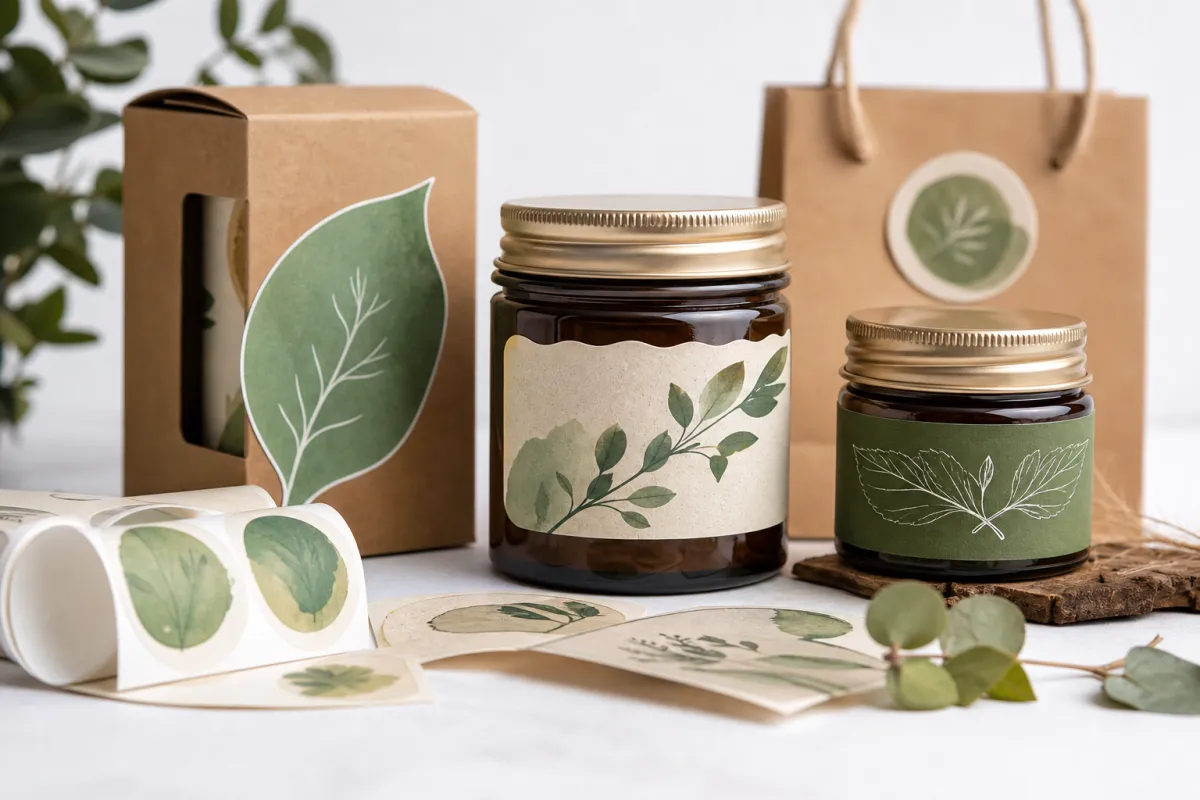
Custom compostable labels for jars are labels built from materials that are intended to break down under defined composting conditions instead of hanging around as persistent waste. Plain version: the label stack is chosen so it can move through a composting system without leaving the kind of residue you would expect from a standard vinyl or polypropylene label. The phrase custom compostable labels for jars sounds simple. The build is not. A label that is merely recyclable is not the same thing as one that is compostable, and a label marketed as biodegradable may have no clear time frame, environment, or residue standard at all. That word gets tossed around a lot. Too much, really.
Brands use custom compostable labels for jars on foods, dry goods, sauces, supplements, candles, and personal care products because jars show up everywhere. A jam label has to handle cold storage and condensation. A spice label needs to stay crisp through dry handling and shelf rubbing. A candle label may face wax bloom, warmth near a retail display, and a glossy premium finish. Personal care jars bring a different kind of annoyance, because oils, lotions, and bath products can challenge the adhesive edge before the customer even gets home. In each case, custom compostable labels for jars are chosen for more than sustainability messaging. They need to fit the product story and the actual use case.
I usually see buyers start with the artwork and work backward. That is the wrong order for this kind of label. Start with the use case. Then the disposal path. Then the visual direction. If a company is building a broader branded packaging system, the label should support the same package branding language as the rest of the line, whether that includes custom printed boxes, shipper cartons, or a coordinated set of eco-friendly packaging components. Shelf presentation is a fast read. Customers are not sitting there analyzing the stack like a procurement team with too much coffee.
One more thing people miss: compostability is not a logo property. It depends on the full structure, including the face stock, adhesive, printing inks, any topcoat or finish, and the release liner used during conversion. A supplier can say the paper is compostable, but if the coating, adhesive, or liner is not compatible with the intended composting pathway, the finished label may not meet the claim. That is why experienced buyers treat custom compostable labels for jars as a system decision, not a single-material purchase.
For brands trying to reduce waste and support a lower carbon footprint, this can be a practical move, not just a marketing one. A label matched correctly to the jar and its end-of-life pathway gives the product a cleaner story, especially when the rest of the package already uses careful material choices. Small part, yes. Small impact, no.
How the Construction Breaks Down
To understand custom compostable labels for jars, it helps to break the label into layers. The face stock is the printable top layer. That may be a compostable paper, a plant-based film, or another fiber-based material approved for the intended composting route. Under that sits the adhesive, which has to bond well enough to survive filling, shipping, and consumer handling, but still stay compatible with the end-of-life target. Printing ink matters too, because heavy ink coverage, specialty whites, and certain curing systems can change how the label behaves in composting. Then there is the liner, which gets peeled away during application and can become the hidden problem if it is made from a non-compostable backing. Yes, the part nobody stares at can still wreck the claim.
The biggest practical split is between industrial composting and home composting. Industrial systems run at controlled temperatures, aeration rates, and moisture levels, which means a material can be acceptable there even if it would never break down in a backyard bin. Home composting is far less predictable. Temperature swings are wider, moisture varies, and residence time is longer. If a brand says custom compostable labels for jars are suitable for home composting, that claim needs much more care than a generic compostable statement. The EPA composting guidance is a useful reminder that access to composting infrastructure differs by region, so the disposal message should match the real pathway available to customers.
Adhesive selection is where a lot of label programs succeed or fail. A strong adhesive is tempting because it reduces edge lift, improves filling-line handling, and tolerates abuse. Then people discover that a very aggressive adhesive can make the label harder to compost, especially if it includes chemistry that does not fit the intended certification route. The better answer is a balanced adhesive: strong enough for the product's life on shelf, but not so persistent that it fights the disposal goal. That balance is central to custom compostable labels for jars, and it usually needs testing on the actual jar surface rather than a guess from a datasheet.
Moisture and oils are the practical enemies here. A dry pantry jar with a matte paper label is simple. A chilled salsa jar is not. Condensation can soften paper, reduce tack at the edges, and blur print if the coating is not tuned correctly. Oil-based formulas can slowly creep into paper fibers and weaken the label face over time. Even candle jars can create heat-related changes that show up as curl, adhesive softening, or edge lifting. In plain English: custom compostable labels for jars are not only about compostability. They also have to survive the real environment where the jar lives.
Printing method matters too. Flexographic printing is common for longer runs and gives good control over spot colors and brand consistency. Digital printing can be useful for shorter runs, variable data, or faster artwork changes. Some specialty ink systems can support compostable label programs, but the printer and the label converter need to agree on curing, coverage, and substrate compatibility. If the project involves barcodes, lot codes, or regulatory text, those elements have to stay crisp after curing and during use. Good label engineering keeps all of that in view at once.
Key Factors That Affect Performance, Compliance, and Cost
There is no single price for custom compostable labels for jars, because the cost depends on several moving parts. Material choice is usually the first driver. Compostable face stocks often cost more than standard paper or film because sourcing is narrower and performance windows are tighter. Adhesive choice adds another layer, especially if the application needs cold resistance, moisture tolerance, or a disposal claim that can be documented. Print complexity matters too. A one-color black label is a very different production job from a full-coverage design with metallic accents, multiple spot colors, and fine type.
Quantity changes the math fast. At 5,000 pieces, a simple construction may land around $0.12-$0.24 per label, while more demanding builds with compostable paper, specialty adhesive, and higher ink coverage can move into the $0.18-$0.36 range or higher. Smaller runs usually carry more setup cost per unit, while higher volumes spread tooling, proofing, and press preparation across more labels. That is why buying custom compostable labels for jars for a limited seasonal product often costs more per piece than a standard high-volume program. Those numbers are ballpark estimates, not a promise, because material markets and press requirements can swing the final quote.
Shape and die-cut complexity also affect the quote. A clean rectangle or square is faster to convert and wastes less material than a rounded label with internal cutouts. If the jar uses a wraparound label, the layout must account for seam placement and reading distance. If the label is a front-and-back set, registration between panels becomes a factor. Every unusual cut line adds a little more waste, a little more setup time, and sometimes a little more testing. That is not a reason to avoid custom shapes, but it is a reason to design them carefully.
Finishing is where sustainability and aesthetics can collide. Many brands want a matte look for natural products, a soft sheen for premium retail packaging, or a tactile surface that feels intentional under the hand. The catch is that some gloss lamination and heavy barrier coatings do not fit compostable goals. That does not mean a label must look dull. It means the finish has to be chosen with discipline. A well-designed compostable paper can still look refined if the color palette, typography, and ink coverage are handled well. That kind of packaging design often feels more honest than a glossy label pretending to be plastic.
Compliance risk is another cost driver, even when it does not show up directly on the invoice. The more specific the claim, the more important the documentation. If the artwork says compostable, the supplier should be able to explain the material stack and the relevant standard, whether that is ASTM D6400, ASTM D6868, or EN 13432, depending on the construction and market. If the claim says industrial compostable, the brand should know whether the application is meant to align with a commercial facility rather than home composting. The wrong claim can create a problem far larger than the label cost itself.
| Construction | Best Fit | Typical Unit Cost at 5,000 Pieces | Notes |
|---|---|---|---|
| Compostable paper face stock + compostable adhesive | Dry goods, pantry jars, candles | $0.12-$0.24 | Usually the easiest path for simple custom compostable labels for jars with moderate print coverage. |
| Compostable paper face stock + moisture-tuned adhesive | Chilled foods, refrigerated sauces | $0.18-$0.36 | Better for condensation, but testing matters because edge lift can show up quickly. |
| Plant-based compostable film | Higher moisture exposure, premium retail packaging | $0.20-$0.42 | Can feel more durable, but finish and certification details need close review. |
| Standard recyclable paper label | Brands prioritizing recyclability over compostability | $0.08-$0.16 | Not a compostable solution, but useful as a cost baseline when comparing options. |
For buyers trying to control budget, the best savings usually come from simplifying the print layout, reducing the number of inks, avoiding unnecessary special finishes, and ordering enough volume to spread setup costs. A smarter label spec can save more money than chasing the cheapest face stock. That is especially true if the label will sit alongside Custom Packaging Products or custom printed boxes in a broader product packaging system, because the label should support the whole presentation rather than fight it.
One useful buying rule: pay for performance only where the jar actually needs it. If the product is a dry pantry item, do not spec the label like it is going into refrigeration and then spending a week in a shipping cooler. If it is a lotion jar with oily residue on the outside, do not spec it like a stationery label. Custom compostable labels for jars are cheaper to get right than to replace after launch.
Custom Compostable Labels for Jars: Step-by-Step Development Process
The development path for custom compostable labels for jars is usually straightforward when the project starts with the right information. First comes the product goal: what the brand wants the label to communicate, what disposal claim it wants to make, and what role the label plays in the package. Then comes substrate selection, which depends on jar shape, jar finish, storage conditions, and expected shelf life. After that, the artwork is reviewed for printability and claim language. Sampling follows, then testing, then approval, then the final run. That order sounds basic, and somehow people still skip it. That is usually where the trouble starts.
A good supplier will ask about jar dimensions, shoulder shape, cap style, fill level, and whether the jar has a smooth or textured surface. Surface energy matters because some jar finishes hold labels differently than others. A matte glass jar, for example, may behave differently from a glossy PET jar or a powder-coated candle vessel. The supplier should also ask whether the product is dry, chilled, oily, or exposed to wash-down conditions. Those answers shape the choice of adhesive and face stock far more than the logo file does. In a real program, custom compostable labels for jars are built around the container and the environment, not just the artwork.
Proofing should include more than a PDF approval. Color matching, copy review, barcode verification, and actual adhesion testing on the filled jar all belong in the process. I like to see the label checked after the jar has sat in its expected storage state for a while, because adhesion that looks fine on day one can change after refrigeration, heat exposure, or handling. A supplier that is serious about custom compostable labels for jars will usually want a sample on the real jar surface, with the actual fill condition, before locking in the final version.
Timeline depends on the complexity of the construction and the readiness of the artwork. A simple project with existing die lines and approved materials may move in about 12-15 business days from proof approval. If the job needs custom material sourcing, performance testing, special claim review, or multiple rounds of color correction, the lead time can stretch to 3-5 weeks or more. That is normal. The point is not speed for its own sake; the point is getting a label that performs as intended and supports the sustainability claim without surprises. With custom compostable labels for jars, a few extra days up front often saves a lot of trouble later.
Good documentation speeds everything up. Helpful inputs include:
- Jar diameter, height, shoulder shape, and label panel size
- Fill conditions, temperature range, and expected shelf life
- Whether the product is dry, refrigerated, oily, or exposed to condensation
- Artwork files, brand color references, and required copy
- Any compostability claim language already approved by the legal or sustainability team
- Required quantity, reorder expectations, and launch date
That list may look long, but it keeps the label from becoming an afterthought. A project built this way tends to support better branded packaging, cleaner packaging design, and a more credible story at shelf. It also gives the converter enough information to recommend the right construction the first time. That is where custom compostable labels for jars should live: in a process that is careful, practical, and grounded in how the product will really be used.
For shipment-level validation, especially if jars are traveling long distances or through retail distribution, it can help to reference transit testing practices from the ISTA test standards. The label itself is only one piece of the package, but scuffing, vibration, and compression all affect how that label looks when the customer opens the carton. That is true for jar labels, and it is just as true for custom printed boxes and secondary packaging around them.
Common Mistakes With Compostable Jar Labels
The most common mistake with custom compostable labels for jars is assuming that anything paper-like or earth-toned must be compostable. Color tells you nothing about the material stack. A kraft look can still hide a plastic laminate. A matte finish can still be non-compostable. Buyers get caught because the label looks environmentally friendly, but the underlying construction does not support the claim. Spec sheets matter more than appearance. Annoying, yes. Necessary, absolutely.
Another frequent error is choosing an adhesive only for line performance. I get why this happens; nobody wants edge lift, label drift, or failures during application. But if the adhesive is too aggressive or chemically mismatched to the composting pathway, the finished label may no longer belong in a compostable program. Custom compostable labels for jars need adhesives that respect both the shelf life of the product and the disposal goal after use. That is not always the same adhesive.
A third mistake is adding a coating or laminate because the artwork team wants extra shine. That can undo the whole project. If the label needs moisture resistance, the answer is not automatically a plastic overlaminate. Sometimes a different face stock, a better ink system, or a more suitable adhesive gives enough protection without breaking the compostable structure. The finish should serve the function, not compete with it. Same rule across eco-friendly packaging and product packaging: every layer should earn its place.
Vague claims create their own problems. Words like compostable, biodegradable, and earth-friendly are not interchangeable, and they are not equally useful in front of a customer or a compliance reviewer. If the package says compostable, the brand should know what standard supports that claim and what conditions are required. If it says biodegradable without context, buyers may assume more than the material can deliver. Strong sustainability messaging is specific. That specificity matters a lot with custom compostable labels for jars.
Another avoidable problem is skipping sample testing on the actual jar. A label that passes a bench test on a flat panel can still fail on a curved jar with a textured surface, cold condensation, or oil residue. Glass, coated metal, and molded fiber all behave differently. The best test is the real one: the actual jar, with the actual fill, under the actual storage condition. A few sample jars tell you more than a stack of assumptions, and they almost always reveal at least one detail worth fixing before production.
Finally, some teams overcomplicate the design. Heavy ink coverage, intricate microtext, multiple finishes, and complex die lines can create risk without adding much value. There is nothing wrong with attractive branding, but the smartest compostable label programs keep the graphic system clean enough that the materials can do their job. Simpler artwork often looks better on shelf anyway. It reads faster, prints more consistently, and leaves more room for the label structure to perform.
Expert Tips for Better Compostable Label Results
Design for the environment first. That is the cleanest rule I can give for custom compostable labels for jars. If the jar will live in a cold case, build around condensation. If it will move through a warm distribution chain, think about adhesive stability and curl. If consumers may handle the jar with wet hands, make sure the label surface still reads well after contact. The label should solve the real problem the product faces, not the idealized one.
Keep the graphics disciplined. A calm layout with strong typography, clear hierarchy, and limited ink coverage often looks more premium than a crowded design. It also gives the material more breathing room. For brands balancing package branding and sustainability, that restraint can be a strength. It allows the jar, the label, and the rest of the product packaging to feel intentional without forcing a plastic-like shine or an overworked finish. In many cases, that is the look buyers trust.
Always confirm the composting pathway before final approval. Industrial composting is not the same as home composting, and the disposal instructions should reflect the true target. If a product is sold in regions with weak compost access, the brand may need to rethink the claim language or adjust the material stack. The best custom compostable labels for jars align the artwork, the substrate, and the disposal guidance so there is no confusion at shelf or in the trash room.
Ask for documentation early. Material declarations, test results, and supplier notes on adhesive compatibility should be part of the approval package, not a later scramble. If the team needs to verify a compostability claim against a specific standard, that check should happen before the label is printed, not after the cartons are on a truck. That habit saves time and helps the brand speak clearly about the label's role in the package. It also reduces the chance that someone on the team makes a claim the actual construction cannot support.
Test on filled jars, not empty ones. That one habit catches a surprising number of issues. A label may look perfect on an empty jar, then fail once the fill adds internal pressure, the product surface changes temperature, or condensation forms after refrigeration. For custom compostable labels for jars, filled-jar testing is the most honest test there is. It shows how the adhesive, the face stock, and the print all behave as a system rather than as isolated parts.
For premium results, balance sustainability and shelf appeal instead of treating them like opposing goals. A compostable label can still feel polished, precise, and retail-ready. The trick is to Choose the Right material, keep the finishing honest, and let the design do some of the work. That is where experienced packaging design pays off. A label that looks confident and performs well builds trust faster than one that tries too hard to imitate plastic.
What to Do Next Before You Order
Before you place an order for custom compostable labels for jars, gather the basic facts that shape the build: jar measurements, fill conditions, storage temperature, target disposal path, and artwork files. If the product will face condensation, oils, refrigeration, or frequent handling, say so up front. Those details affect the adhesive choice and the face stock far more than the logo shape does. A supplier can usually recommend a better structure once those basics are clear.
Then ask for sample constructions and test them on the actual jar. That step is not busywork. It is the difference between a label that looks good in a proof file and one that performs on the shelf. If the job has to align with legal language or third-party compostability documentation, request that early too. A good approval checklist should cover durability, legibility, barcode performance, disposal claim language, and compatibility with the jar surface. The label should pass the practical test, not just the visual one.
It also helps to ask for a clear breakdown of the adhesive, face stock, print method, and estimated lead time. If the supplier can describe how the label behaves under cold storage, moisture, or shipping stress, that is a strong sign the construction is grounded in real production experience. Brands building a larger eco-friendly packaging program often use that same process across jar labels, custom printed boxes, and secondary packaging, because the goal is the same: a clean, credible, repeatable result.
If you are planning a launch, keep the approval process simple and disciplined. A short checklist might include:
- Correct jar dimensions and label panel size
- Confirmed composting pathway and claim language
- Sample tested on a filled jar
- Adhesion checked after temperature and moisture exposure
- Artwork proof reviewed for color, copy, and barcode accuracy
- Lead time aligned with launch date
That approach keeps the project moving without losing sight of the details that matter. A label is a small part of the pack, but it carries a lot of weight in how the whole package is understood. If the materials, testing, and messaging are aligned, custom compostable labels for jars can support a cleaner product story, a more credible sustainability message, and a shelf presence that feels deliberate instead of improvised. That is the kind of result worth building toward.
For brands that want the next step to feel organized rather than uncertain, the smartest move is to define the disposal goal, Choose the Right material stack, and verify performance on the real jar before committing to a full run. That is how custom compostable labels for jars stay practical, consistent, and ready for actual use.
Are custom compostable labels for jars really compostable if they use adhesive?
Yes, but only if the adhesive is part of a compostable-compatible construction and has been validated for the intended composting pathway. The full label system matters, including face stock, adhesive, inks, coating, and liner, because one incompatible layer can change the result. That is why custom compostable labels for jars should always be reviewed as a complete build, not a face stock alone.
What is the difference between compostable jar labels and biodegradable labels?
Compostable labels are designed to break down under defined composting conditions, while biodegradable is a looser term that may not specify time, environment, or residue. For packaging decisions, compostable is usually the more specific and useful claim. If a brand is evaluating custom compostable labels for jars, the more precise the claim, the easier it is to document and defend.
How do I choose the right material for custom compostable labels for jars?
Start with the jar's storage conditions: dry pantry, refrigerated, oily contents, or condensation exposure. Then match the face stock and adhesive to those conditions and test the label on the actual jar before production. That is the safest way to select custom compostable labels for jars because it ties the material choice to the real use case, not just the spec sheet.
Do compostable jar labels cost more than standard labels?
Often yes, because compostable materials, testing, and specialty adhesives can raise unit cost. Pricing usually improves with higher volume, simpler artwork, and fewer finishing steps. Even so, well-specified custom compostable labels for jars can be cost-efficient if the design stays practical and the run size is planned with production in mind.
How long does it take to produce custom compostable labels for jars?
Simple projects may move quickly, but custom material selection, proofing, and performance testing can extend the timeline. Lead time depends on artwork readiness, sample approval, quantity, and whether compliance documentation is required. For custom compostable labels for jars, the most dependable schedule is the one that leaves room for testing before the final run closes out.

