Buyer Fit Snapshot
| Best fit | Custom Compostable Packaging Labels projects where brand print, material claims, artwork control, MOQ, and repeat-order consistency need to be specified before quoting. |
|---|---|
| Quote inputs | Share finished size, material target, print colors, finish, packing count, annual reorder estimate, ship-to region, and any compliance wording. |
| Proofing check | Approve dieline scale, logo placement, barcode or warning zones, color tolerance, closure strength, and carton packing before bulk production. |
| Main risk | Vague material claims, crowded artwork, missing packing details, or unclear freight terms can make a low unit price expensive after revisions. |
Fast answer: Custom Compostable Packaging Labels: Material, Adhesive, Artwork, and MOQ should be specified like a repeatable production item. The safest quote records material, print method, finish, artwork proof, packing count, and reorder notes in one written spec.
Production checks before approval
Compare the actual filled-product size with the drawing, then confirm tolerance on folds, seals, hang holes, label areas, and retail display edges. Reserve space for logos, QR codes, warning copy, and material claims before decorative graphics fill the panel.
Quote comparison points
Review material grade, print process, finish, sampling route, tooling charges, carton quantity, and freight assumptions side by side. A quote is only useful when the supplier can repeat the same color, closure quality, and packing count on the next order.
Custom compostable packaging labels sound simple until a buyer has to sort through the adhesive, the liner, the print system, and the disposal claim in front of a retailer who has heard every green promise under the sun. That is usually where the real work begins. A label can look beautiful in a proof and still fail in the field if even one layer of the construction is off.
Custom compostable packaging labels need to be treated as part of the packaging system, not as a decorative afterthought. The label has to survive shipping, cold storage, moisture, and shelf handling first, then break down in the right environment after disposal. That can feel like a lot for a small sticker, yet packaging teams know the smallest part is often the one that causes the biggest headache.
For brands building eco-friendly packaging, the label often sits right where package branding, compliance, and shelf appeal meet. It can make a pouch feel more premium, help a jar look ready for retail, or bring a set of Custom Printed Boxes into one finished presentation. The spec still has to hold up in production, or the whole plan gets expensive fast.
A green claim on a sales sheet does not compost anything. The full construction has to earn the claim.
What Custom Compostable Packaging Labels Actually Are
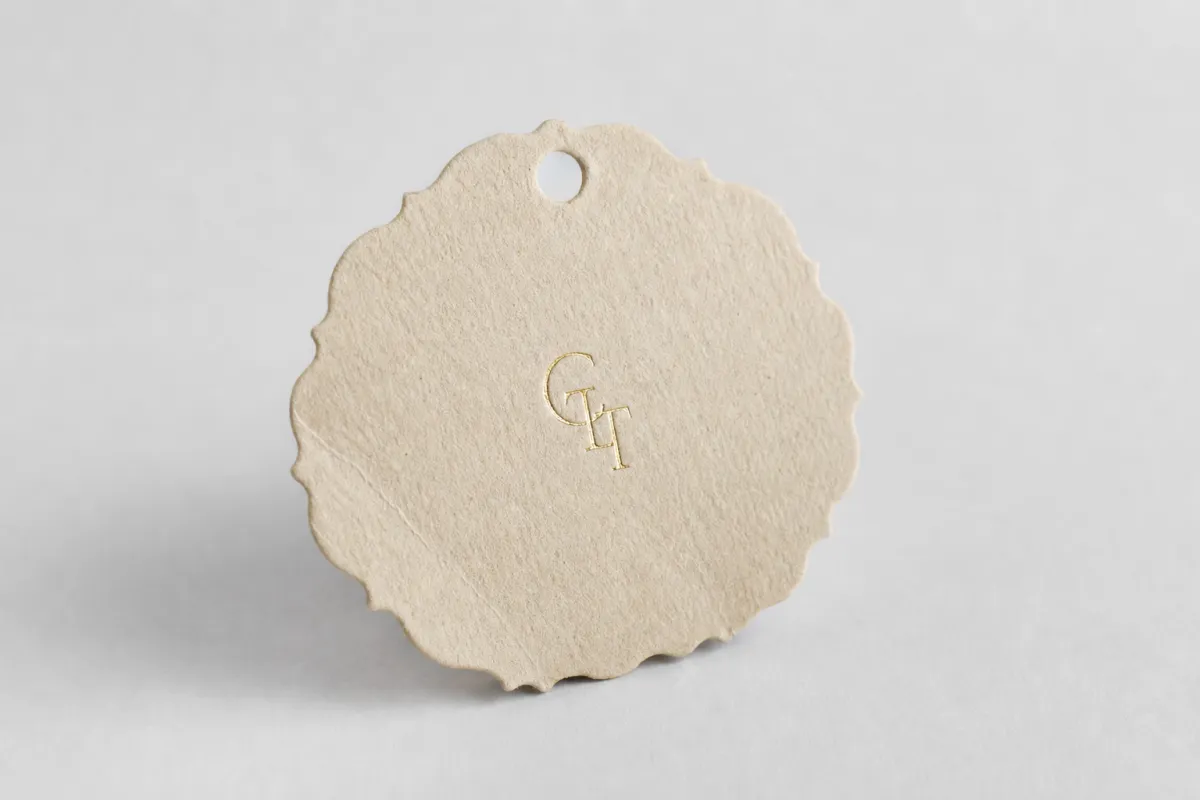
Custom compostable packaging labels are labels built from materials meant to break down under composting conditions instead of lingering like ordinary packaging waste. That distinction sounds obvious on paper. Buyers still mix up “printed with eco messaging” and “actually compostable,” and the gap between those two ideas is where a lot of bad purchasing decisions take root.
In practical terms, custom compostable packaging labels may use a compostable or fiber-based face stock, a compost-compatible adhesive, and a liner designed to fit the same disposal goal. If one layer breaks the chain, the label may no longer qualify as compostable. The face stock gets the attention because everyone can see it. The adhesive and liner are where the claim usually falls apart.
Home compostable, industrial compostable, and paper that is only partly ready
Not all custom compostable packaging labels are meant for the same disposal route. Home compostable labels are designed for slower, lower-temperature compost systems with less control. Industrial compostable labels are intended for commercial composting environments where heat, moisture, and microbial activity are higher and more predictable. That difference matters because a label that passes one path may fail the other.
There is also the awkward middle ground: paper Labels That Look recycled-friendly or fiber-based, but are not fully compostable as a complete structure. A kraft-looking label can support a natural brand aesthetic, especially on product packaging and retail packaging, yet appearance alone is not proof. The real question is whether the full construction has been tested and certified for the disposal claim you plan to print.
Where they show up most
Custom compostable packaging labels are common on food packaging, produce labels, compostable pouches, paper sleeves, glass jars, and shipping packs that carry a sustainability story. They also show up on subscription kits, sample packs, and branded packaging where a label has to pull the design together without forcing a full carton change.
- Food and beverage: jars, tubs, cups, and chilled packs.
- Produce: fruit stickers, bundle labels, and traceability labels.
- Pouches and sleeves: tea, snack, coffee, and dry goods.
- Retail displays: promotional seals, size labels, and compliance labels.
The biggest mistake is assuming the label alone makes the entire package compostable. It does not. A compostable label on a plastic pouch is still a compostable label sitting on a non-compostable pouch. Same problem, different wrapper. If the packaging system matters, the label spec needs to match the substrate, the application method, and the disposal claim.
For brands trying to lower impact without turning every launch into a science project, that distinction matters. A well-specified label can support a lower-impact pack format, but only if the whole stack is built around the same goal. That is why buyers who already work with Custom Packaging Products often treat labels as part of the wider packaging system rather than as a separate line item.
How Custom Compostable Packaging Labels Work on Real Packaging
On paper, custom compostable packaging labels look like a simple stack. In real production, they behave like a set of connected decisions, and each one changes how the label performs. The face material, adhesive, liner, and inks all have to work together, and each piece can affect both day-to-day performance and end-of-life behavior.
A buyer usually cares about three things first: does the label stick, does it stay legible, and does it still support the disposal claim? That order is the right one. If the label fails in distribution, compostability barely matters because the product already looks rough on shelf.
The label stack: face stock, adhesive, liner, and ink
The face stock is the visible surface. For custom compostable packaging labels, that might be a compostable paper, a fiber-based stock, or a specialty film made for composting conditions. The adhesive has to hold to the package without leaving behind residue that undermines the compost claim. The liner is the backing the label peels away from, and yes, that piece gets ignored far too often. The ink system matters too, especially if the design uses heavy coverage, metallic effects, or specialty whites.
Most buyers focus on the face stock because that is the visible brand surface. Fair enough. Still, custom compostable packaging labels only behave well if the adhesive and liner are built for the same end use. A paper face with the wrong adhesive can fail a certification target. A compost-friendly face stock on a non-compostable liner is not a clean answer either.
If the label is going onto curved jars, folded sleeves, or soft pouches, the adhesive also needs enough initial tack to grab quickly. If the pack is chilled, the adhesive must still work at lower application temperatures. Those details sound small until a production run starts shedding labels during cold chain transport.
How they behave before disposal
Before anyone worries about composting, custom compostable packaging labels have to survive real life. That means sticking to a surface with some texture, resisting light moisture, and staying readable through at least the normal shelf life of the product. A label for dry pantry goods has a very different job than a label for chilled produce or refrigerated beverage packs.
On branded packaging, the label often becomes the last visible design layer after a box or sleeve has done most of the structural work. That is common with custom printed boxes and flexible packs. A label may need to carry barcodes, lot codes, ingredient panels, or promotional copy, so print clarity matters as much as compostability.
If the label fails under condensation, the compostability claim is academic. Retailers care about labels that stay put.
For practical reference, buyers should think in terms of the actual packaging substrate. Paperboard, glass, coated cartons, compostable film, and fiber-based pouches all behave differently. A label that bonds nicely to a smooth glass jar may struggle on a matte pouch that flexes during transport. Custom compostable packaging labels need to be matched to the surface, not just the brand color palette.
For a solid technical baseline, industry references from EPA composting guidance and compostability standards such as ASTM or EN test frameworks are more useful than vague “green” language. That sounds dry. It is. It also prevents expensive mistakes.
Custom Compostable Packaging Labels: Cost, Pricing, and MOQ Basics
Pricing custom compostable packaging labels is not hard, but it gets messy fast when the quote is built on fuzzy specs. You are not only paying for a sticker. You are paying for material choice, print method, die-cut complexity, certification requirements, finishing, and the simple fact that smaller runs cost more per unit. Packaging buyers learn that lesson quickly, usually after the first quote makes them blink twice.
As a rough guide, custom compostable packaging labels for a 5,000-piece run often land in a range of about $0.11 to $0.35 per label, depending on size, coverage, shape, and the material stack. Very simple paper-based labels can sit near the low end. Specialty compostable film or highly certified stacks can move toward the top end. If the quote comes in far below that, something is missing. Usually more than one thing.
MOQ matters because setup is where the money hides. Once the press is running, the per-unit price drops fast. A 1,000-piece order can cost noticeably more per label than a 10,000-piece run, even when the design stays the same. That is normal. It is also why brands still testing product packaging often start with a smaller proof run before they scale.
| Label option | Typical MOQ | Indicative unit price | Best for | Main tradeoff |
|---|---|---|---|---|
| Compostable paper face stock | 1,000-5,000 | $0.11-$0.22 | Dry goods, sleeves, jars, simple retail packaging | Less moisture resistance than coated options |
| Moisture-tolerant compostable stack | 3,000-10,000 | $0.16-$0.30 | Chilled food, produce, refrigerated packs | Higher cost and tighter material sourcing |
| Compostable film label | 5,000-10,000 | $0.20-$0.35 | Flexible pouches, premium branded packaging | Needs closer testing on curved or soft surfaces |
| Custom shape with specialty print | 5,000+ | $0.22-$0.45 | High-visibility product packaging and launch kits | Die-cut, white ink, and finishing add cost quickly |
What drives the quote up
Several things push custom compostable packaging labels into a higher price band. Custom shapes cost more than standard rectangles. White ink usually adds cost. Multiple SKUs with variable data can add press time. Specialty adhesives, freezer-safe performance, and compostability certifications also raise the spec level. None of that is mysterious. It just means the label is doing more work.
- Material family: paper, fiber-based stock, or compostable film.
- Print coverage: light one-color work is cheaper than full-bleed graphics.
- Shape: standard cuts are easier than bespoke die lines.
- Validation: certification support and material proof add time and cost.
- Order size: bigger runs lower the unit price, almost every time.
When comparing quotes for custom compostable packaging labels, ask every vendor to quote the exact same spec sheet. Same size. Same artwork coverage. Same adhesive type. Same substrate. Same quantity. Otherwise the comparison is junk, and you will end up choosing the cheapest quote that was never quoting the same thing in the first place.
That same discipline applies if you are comparing labels against a broader packaging budget. A label may seem expensive until you compare it with a wasted carton run, a relaunch, or a retail rejection. If the label is part of a wider package branding system, it should be spec’d with the same care as the box itself.
Process and Timeline for Custom Compostable Packaging Labels
The production path for custom compostable packaging labels is not complicated, but it has enough moving parts to cause delays if the brief is sloppy. A clean process usually looks like this: project brief, material selection, artwork setup, proofing, compatibility review, sample approval, final print, finishing, and shipping. Miss one step and the schedule starts drifting.
For standard custom compostable packaging labels, a realistic timeline is often 10 to 15 business days after proof approval. If the job needs special material sourcing, certification review, or custom die-cutting, the timeline can stretch to 15 to 25 business days. Sample turnaround is usually shorter, but the more custom the stack, the more likely it is that the sample stage becomes the real bottleneck.
What slows things down
Two things slow custom compostable packaging labels more than anything else: unclear specs and approval loops. A supplier cannot validate adhesive compatibility if the buyer does not know the packaging substrate or storage conditions. A designer cannot finalize the label layout if nobody has confirmed the die line. Those sound like basic mistakes because they are basic mistakes.
Another common delay is certification review. If the brand needs a compostability claim that can hold up under scrutiny, the supplier may need time to confirm the material stack and, in some cases, the exact standards it was designed around. That can include ASTM D6400, ASTM D6868, or EN 13432, depending on the material family and market. For paper sourcing, FSC certification may also matter, especially when the brand is balancing compostability with responsible fiber sourcing.
What to prepare before requesting samples
The best sample requests for custom compostable packaging labels come with details, not guesswork. Send the exact label size, the packaging substrate, whether the pack is cold or dry, how the label is applied, the required disposal claim, and the quantity target. If the label is going onto a pouch, say whether it is a matte or gloss surface. If it is going onto a jar, say whether the jar is refrigerated, washed, or handled by wet hands. Those details matter.
- Exact dimensions and dieline
- Packaging material and surface finish
- Storage conditions: ambient, chilled, frozen, or humid
- Application method: manual, semi-auto, or automated
- Artwork file format and print coverage
- Target certification or disposal claim
For buyers building a broader launch, custom compostable packaging labels also need to be timed against other packaging items. If the cartons, sleeves, and inserts are all moving together, it helps to align the label approval window with the rest of the packaging design schedule. Otherwise the label gets approved early, then the box changes, then everyone gets to redo their life for no good reason. That is a favorite industry hobby.
If the project involves more than labels, it helps to keep the supply chain organized through a single packaging workflow. That is where Custom Labels & Tags usually sit beside other launch materials instead of drifting around as a separate problem.
Key Factors That Decide Label Performance
Performance is where custom compostable packaging labels either prove the spec or expose it. A label can look fine in a mockup and still fail in the real world once cold, moisture, friction, or UV exposure show up. Buyers who sell food, beverages, or retail goods learn this quickly. Packaging design is not only about how something looks. It is about how it survives.
The first question is always environment. A label for shelf-stable dry goods is a different animal than a label for refrigerated produce or a freezer pack. Condensation can wreck adhesion. Grease can stain weak inks. UV exposure can fade an untreated print surface. If the pack gets flexed during shipping, a label with poor tack may lift at the corners long before the product reaches a customer.
Adhesion strength and surface matching
Adhesion is not one-size-fits-all. Custom compostable packaging labels need the right bond strength for the actual substrate, not the substrate the supplier wishes you were using. Paperboard, coated paper, glass, compostable film, and fiber-based pouches all create different surface tensions. A label that works on one may fail on another.
That is why surface testing matters. The sample should go on the actual package, under actual conditions, for at least a realistic hold period. A room-temperature peel test is useful. A chilled hold test is better. A wet-hand simulation is even better. None of that is fancy. It is cheaper than a customer complaint.
Print durability and finish
Print durability matters just as much as adhesion. A matte finish can look natural and support the brand story, but it may need more careful ink selection if scuff resistance is a concern. A light protective varnish can help keep artwork readable without turning the label into a plastic-looking object. Heavy coating can protect the graphics, but it may also complicate the compostability claim if the finish is not part of the approved stack.
For retail packaging, print clarity is not optional. Barcodes have to scan. Small copy has to stay legible. Brand colors need to remain stable across runs. If the label is part of a launch kit or premium branded packaging presentation, the print spec should be tested on the same surface that will go into production, not just on a flat press sheet that behaves like a different product altogether.
A label spec that looks good only on paper is not a spec. It is a wish.
One more practical point: the label should match the package, not the other way around. For example, if the product already uses a compostable pouch and an FSC-certified carton, then the label should reinforce that system rather than fight it. That is the difference between thoughtful packaging and a pile of disconnected sustainability claims.
For shipping or distribution-heavy programs, testing against transit standards also helps. The ISTA framework is useful when labels, cartons, and packs need to stay intact through distribution, because a compostable label that fails in transit is not helping the launch. It is just giving the ops team a headache.
Common Mistakes With Custom Compostable Packaging Labels
The biggest errors with custom compostable packaging labels are usually not technical. They are assumption errors. Someone assumes the face stock is enough. Someone assumes “biodegradable” means certified. Someone assumes the label will behave the same on every substrate because it looked fine on one test sample. Then production starts, and reality shows up like an uninvited auditor.
One common mistake is mixing a compostable label face with a non-compostable adhesive or liner. That can break the whole claim. Another is using “eco-friendly” as if it were a material spec. It is not. It is a vague marketing phrase. Buyers need the exact material build, the test standard, and the evidence behind the claim.
Testing the wrong thing
Some teams test a label on a smooth sample board instead of the actual package. That is a bad habit. Custom compostable packaging labels need to be tested on the real surface, with the real application method, and in the real storage condition. Cold storage, oil exposure, and humidity can change performance enough to make a lab sample useless.
Another issue is overdesign. Full-bleed ink, specialty effects, extra coating, foil-like looks, and layered finishes can all make a label harder to certify or less likely to stay compostable in practice. A label does not need to be stripped bare to be credible. It just needs the right priorities. Clean graphics. Correct adhesive. Validated construction. That is enough.
- Do not assume paper automatically means compostable.
- Do not skip sample testing on the actual package.
- Do not rely on green-sounding copy without proof.
- Do not ignore the liner or adhesive in the spec.
- Do not use a disposal claim you cannot defend.
That last point matters because trust is fragile. If a brand prints a compostability claim that does not hold up, the problem is not just compliance. It is credibility. Buyers may forgive a plain label with no fancy promise. They are far less forgiving when the promise is false. That is especially true in food packaging, where disposal language is part of the trust equation.
There is also a supply chain mistake that gets overlooked: inconsistent quote specs. If one vendor quotes custom compostable packaging labels with an FSC-certified paper face, a compostable adhesive, and a paper liner, while another quotes “compostable” without details, the numbers are not comparable. The cheaper one may simply be less complete. That is not savings. That is a surprise fee waiting to happen.
Expert Tips and Next Steps for Ordering
If the goal is to buy custom compostable packaging labels without creating a mess, keep the process boring and specific. Boring is good in packaging. Boring means the spec is clear, the production line knows what to do, and nobody is debating the adhesive after the launch date is already set. That is the practical way to approach it.
Start with a simple checklist. Define the substrate. Define the environmental exposure. Define the print coverage. Define the disposal claim. Define the target MOQ. Define the lead time. If one of those items is unclear, the quote will be fuzzy. If several are unclear, the quote is mostly fiction.
What to ask suppliers before you place the order
Ask what the label construction is made of, not just whether it is compostable. Ask whether the full stack has been tested or certified for the claim you need. Ask how the label behaves on the actual substrate you plan to use. Ask whether the adhesive is pressure-sensitive, freezer-safe, or moisture-tolerant. Ask for sample evidence, not just a nice email with optimistic adjectives.
For brands using custom compostable packaging labels alongside broader packaging programs, it also helps to keep the label aligned with the rest of the pack. If the carton is matte and restrained, the label should not suddenly shout. If the pouch is natural and minimal, the label should not look like it belongs to a luxury cosmetics line. That kind of mismatch makes the whole package feel incoherent, and package branding suffers.
There is a practical balance to strike here. The greenest-sounding spec is not always the best spec. A label that fails in transit or storage is worse than a slightly less ambitious construction that actually performs. Real-world durability matters. So does the legitimacy of the compostability claim. Custom compostable packaging labels need both.
For teams still comparing options, the safest order of operations is simple:
- Shortlist two or three suppliers with actual material details.
- Request the same spec sheet from each one.
- Apply samples to the real package and test under real conditions.
- Approve the artwork and construction together, not separately.
- Lock reorder timing before the launch window gets tight.
If the project sits inside a larger product launch, keep the packaging workflow connected. A label on its own is useful. A label that works with the rest of the launch is much better. That is where product packaging stops being a pile of parts and starts acting like a system.
For brands that need custom compostable packaging labels as part of a wider roll-out, the cleanest move is usually to compare two or three quotes, approve one sample round, and then lock the spec before the packaging calendar starts slipping. That is not glamorous. It is how you keep the launch sane.
And yes, if the disposal claim matters, custom compostable packaging labels deserve the same discipline as any carton, sleeve, or pouch spec. Otherwise the label looks responsible and behaves like a compromise, which is a fine way to waste money. I have seen that happen more than once, and it always starts with someone saying the label was “probably fine.” Probably is not a production standard.
The actionable takeaway is straightforward: choose the substrate, the storage condition, and the disposal claim first, then make the label construction earn those choices through real sample testing. If those three pieces line up, custom compostable packaging labels can do their job without drama. If they do not, the press run is gonna remind everyone pretty quickly.
FAQ
Are custom compostable packaging labels really compostable on the package?
Only if the full construction is compostable, including the face stock, adhesive, ink, and liner. The package itself matters too; custom compostable packaging labels on a non-compostable pouch do not magically turn the whole item compostable. Ask for material specs or certification proof instead of trusting a vague green claim.
What materials are best for custom compostable packaging labels?
Paper-based face stocks are common, but the adhesive and coating still have to match the compostability goal. Some fiber-based or compostable film options work better for moisture-heavy products. The right choice depends on the packaging surface, storage conditions, and disposal claim you need to support.
How much do custom compostable packaging labels cost?
Price depends on material, print method, size, shape, certification needs, and order quantity. Lower MOQs usually mean higher unit cost, while larger runs bring the per-label price down. Specialty finishes, variable data, and unique adhesives can push pricing up fast.
What is the typical lead time for custom compostable packaging labels?
Lead time usually includes proofing, material confirmation, printing, curing or finishing, and shipping. Simple jobs move faster; custom shapes, certification review, or sample approvals add time. If your launch date is fixed, build in buffer for one proof round and one sample check.
Can custom compostable packaging labels handle refrigeration or moisture?
Some can, but moisture resistance depends on the face material, adhesive strength, and finish. Cold storage and condensation can weaken adhesion if the label was not tested on the real package. Ask for performance data on the exact use case before you commit to production, because custom compostable packaging labels that fail in a fridge are not doing anyone favors.
If you are building a launch around custom compostable packaging labels, start with the actual packaging surface, the real storage conditions, and the disposal claim you need to defend. That keeps the spec honest. It also keeps the order from turning into a rescue mission. For brands that want the label to support eco-friendly packaging without breaking the rest of the system, custom compostable packaging labels are worth the extra care.

