Buyer Fit Snapshot
| Best fit | Custom Compostable Pouches Bulk projects where brand print, material claims, artwork control, MOQ, and repeat-order consistency need to be specified before quoting. |
|---|---|
| Quote inputs | Share finished size, material target, print colors, finish, packing count, annual reorder estimate, ship-to region, and any compliance wording. |
| Proofing check | Approve dieline scale, logo placement, barcode or warning zones, color tolerance, closure strength, and carton packing before bulk production. |
| Main risk | Vague material claims, crowded artwork, missing packing details, or unclear freight terms can make a low unit price expensive after revisions. |
Fast answer: Custom Compostable Pouches Bulk: Specs, Pricing, Lead Time should be specified like a repeatable production item. The safest quote records material, print method, finish, artwork proof, packing count, and reorder notes in one written spec.
Production checks before approval
Compare the actual filled-product size with the drawing, then confirm tolerance on folds, seals, hang holes, label areas, and retail display edges. Reserve space for logos, QR codes, warning copy, and material claims before decorative graphics fill the panel.
Quote comparison points
Review material grade, print process, finish, sampling route, tooling charges, carton quantity, and freight assumptions side by side. A quote is only useful when the supplier can repeat the same color, closure quality, and packing count on the next order.
If you're buying custom compostable pouches bulk, the first thing to understand is simple: the cheapest path usually starts with the clearest specification. A pouch size chosen by guesswork, a film structure picked by instinct, or a print setup approved too quickly can cost more than people expect. The bill shows up later in extra samples, rework, repeat approvals, and inventory that sits in the wrong corner of the warehouse. Bulk buying only pays off when the structure is right. It is not a slogan. It is a practical way to control cost, shelf appearance, and supply chain noise at the same time.
For brands that want eco-friendly packaging without turning procurement into a side job, compostable pouches can be a smart format for retail packaging, branded packaging, and product packaging that needs to look sharp and hold up in transit. The real work is in matching the build to the product, not dressing up a weak structure with a green claim. Most packaging mistakes begin there. A surprising number end there too.
This guide looks at the specs buyers actually compare, how pricing shifts, what changes lead time, and how to place an order without dragging the process out for weeks. If your team also needs broader packaging support, review our Custom Packaging Products or check our Wholesale Programs for larger-volume buying options.
Why Bulk Compostable Pouches Beat One-Off Packaging Runs
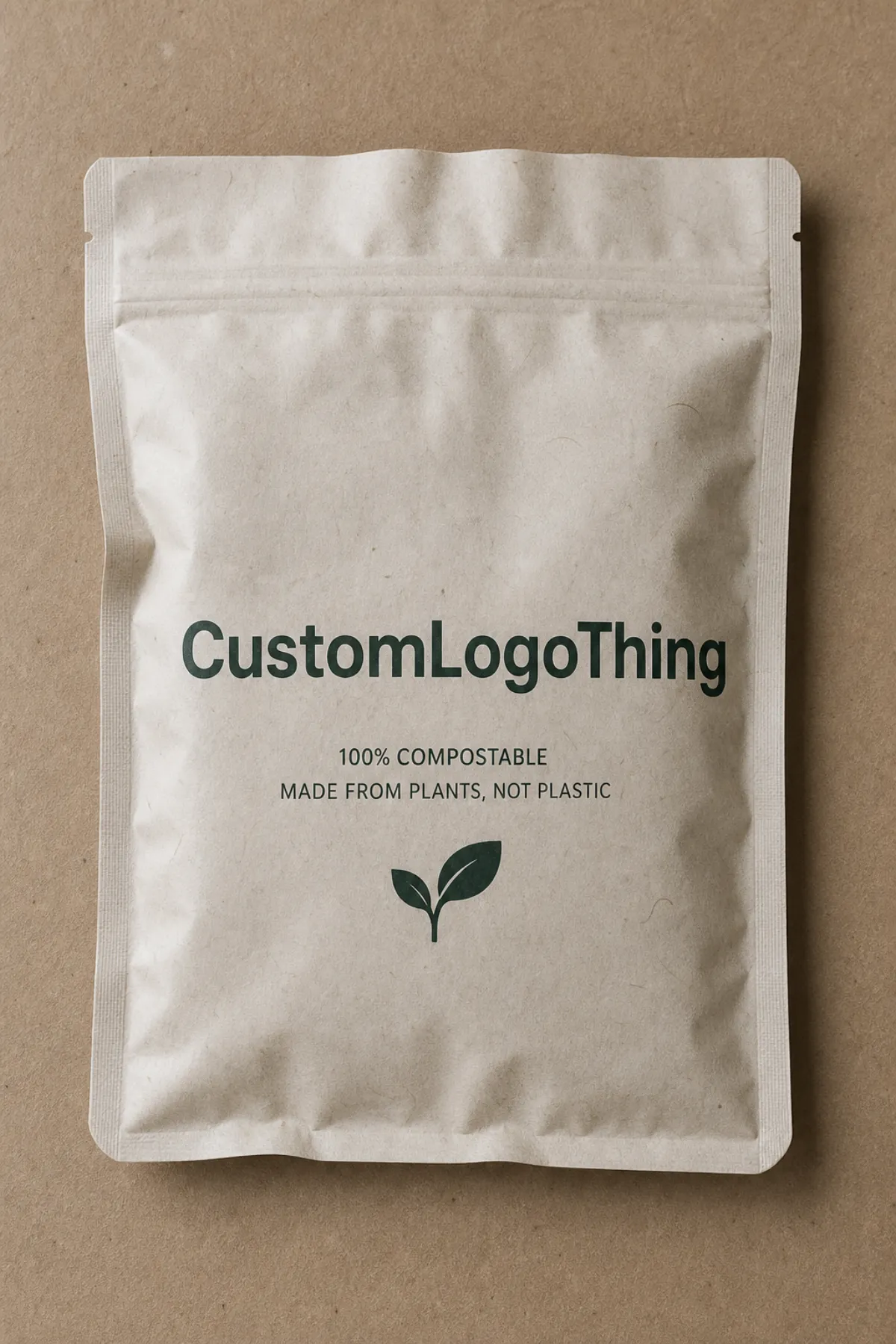
Small packaging runs feel safe until the second reorder lands. The same setup fees return, artwork revisions stack up, and the warehouse ends up with three nearly identical pouch versions no one plans to use up first. That is why custom compostable pouches bulk often beat one-off orders on total cost, not just unit price. Once the size, seal style, and print setup are settled, the cost per pouch drops because the supplier is no longer repeating the same prep work for a tiny run.
Bulk buying saves money in three places that buyers can actually see. Changeovers drop. Press and line shifts are not free, even if a quote makes them look harmless. Setup fees get spread across a larger run, so art checks, proofs, plates, cylinders, and file review stop swallowing the margin. Inventory becomes less erratic too. A brand ordering 1,000 units here and 1,500 units there often ends up with mixed lots, uneven lead times, and someone in operations living inside a spreadsheet.
From a packaging buyer's point of view, bulk also makes the message easier to manage. If a team is moving from mixed-material pouches to a compostable structure, the shelf story, the ecommerce story, and the carton story can all point in the same direction. That matters for package branding. It also matters inside the company, where sales, operations, and customer service all need the same answer when retailers ask why the format changed.
There is a practical benefit people miss: a larger order can reduce the carbon footprint per unit. Not because the material is magical. Freight, setup, and scrap are simply distributed across more finished pouches. One well-planned truckload of retail packaging usually beats a stack of emergency air shipments. If the pouch is designed correctly, the environmental story is cleaner and the procurement story is calmer. That boring result is often the useful one.
A compostable pouch is only a good deal if it survives the route, protects the product, and does not force a second order three weeks later. Cheap packaging that fails is just expensive packaging with a prettier quote.
Bulk buying also improves consistency. If the first run is approved, the repeat run can match print placement, seal behavior, and fit far more closely. Food brands, supplement brands, coffee roasters, and any company with product packaging on a retail shelf notice that quickly. It is easier to build a stable packaging program once every purchase is not treated like a fresh experiment.
What You Get in a Compostable Pouch Build
A compostable pouch is flexible packaging made from materials intended to break down under the right composting conditions. That sounds tidy until you look at the build itself. Some structures use paper-based layers with compostable coatings. Others rely on PLA-based films. Some include barrier layers that improve moisture or oxygen resistance. The right construction depends on what goes inside, how long freshness has to hold, and whether the pouch will live on a retail shelf, inside ecommerce shipping, or both.
Common pouch formats include flat pouches, stand-up pouches, resealable pouches, and custom shapes. Flat pouches are often the simplest and least expensive to produce. Stand-up pouches earn their keep on shelf because they display well and leave more room for graphics. Resealable pouches add zipper convenience, which helps when the product gets opened more than once. Custom shapes can create shelf impact, yet they also raise tooling and setup complexity, so the visual payoff needs to justify the cost.
Not every product belongs in the same pouch build. Dry snacks, tea, powdered blends, dried fruit, bath salts, and other low-moisture goods are usually easier fits. Coffee can work too, although aroma control and degassing need careful attention. Oily products, high-moisture items, and goods with strong odor migration can be poor matches unless the barrier layer is specified properly. A compostable pouch is not a cure-all. It is still a package, and the package still has a job to do.
Finishing choices matter more than most buyers expect. Matte finishes can look premium and cut glare. Clear windows let shoppers see the product, although window films can complicate a compostable build. Tear notches improve opening behavior. Hang holes help for peg displays. Zippers make reclose use easier, but they add cost and can affect compostability claims depending on the full structure. If the pouch is headed for retail packaging, these choices should follow the display environment and the usage pattern, not just the render.
If your company is also building Custom Printed Boxes or other branded packaging, keep the visual system aligned. The pouch does not need to copy the carton, yet typography, logo hierarchy, and color use should feel deliberate. A packaging design system that stays coherent looks more credible and less improvised. That matters most for brands building trust around sustainable materials, where consumers read packaging as a signal of how carefully the product itself was made.
For paper-heavy constructions, ask whether the paper component is FSC-certified. That does not make the entire pouch compostable by itself, but it does improve transparency around sourcing. Compostability claims should also be checked against the relevant standard, such as ASTM D6400 or EN 13432, and buyers should confirm whether the pouch is intended for industrial composting rather than home composting. The label matters. So does the infrastructure behind it. A pouch that technically meets a standard is not the same thing as a pouch that actually has a composting stream nearby.
Two useful references for teams setting policy are the EPA's composting guidance and the ISTA packaging test standards. One deals with composting reality. The other deals with how packaging survives transit. That pairing tells you more than a polished sustainability claim ever will.
Sizes, Barrier Levels, and Print Specs That Matter
Packaging specs should begin with the product, not the artwork. Buyers need to settle size, fill weight, barrier level, closure type, and display requirements before anyone argues over color swatches. If those basics are wrong, the pouch will waste material or fail in use. Both outcomes are frustrating. One costs more, but neither is necessary.
Size is not just a visual decision. A pouch that is too large can make the product look thin and awkward. One that is too tight can split at the seal or make filling harder than it should be. Fill weight, product density, headspace, and seal allowance all influence the final dimensions. A 5 oz snack pouch does not need the same footprint as a 2 lb powder pouch. That sounds obvious, and people still try to reuse one size across different SKUs because the mockup looked tidy.
Barrier level deserves real attention. Buyers often fixate on print first and preservation second, which is backward. Barrier performance affects moisture resistance, oxygen transmission, aroma retention, and grease resistance. Coffee, dried herbs, and other aroma-sensitive goods need oxygen barrier. Crackers and dehydrated fruit care more about moisture barrier. If shipping conditions swing hard, seal strength and film toughness become part of the same decision. A pretty pouch that lets air in is still a failure.
Print method usually follows volume and artwork complexity. Digital printing tends to suit smaller runs, multiple SKUs, or designs that change often. Flexographic printing usually makes more sense at higher volumes, where unit economics matter and the artwork is stable. Some suppliers offer hybrid approaches as well. The goal is not to choose the trendiest method. The goal is to match the process to the quantity and keep color, registration, and repeatability under control.
Compliance is not optional. Food-contact suitability, odor control, seal integrity, and shipping durability all need checking before production. If the pouch is headed to a warehouse, it should also be tested for puncture and transit stress. Packaging looks simple until a pallet gets stacked too tightly and the zippers fail on row three. Then everyone suddenly cares about ASTM testing, seal width, and film gauge.
Ask for a spec sheet before comparing quotes. Without one, you are not comparing prices. You are comparing guesses. A proper spec sheet should spell out:
- finished pouch dimensions and fill weight
- material structure and barrier target
- closure style, such as zipper, tear notch, or valve
- print method and number of colors
- matte, gloss, or uncoated finish
- shipping and storage conditions
- any certifications or compostability claims
Once those pieces are fixed, buyers can ask better questions and skip the usual back-and-forth where every department wants a different version of the truth. Marketing wants more white space. Operations wants a stronger seal. Procurement wants the cheapest quote. The pouch ignores opinions. It follows the specs.
Pricing, MOQ, and Unit Cost for Custom Compostable Pouches Bulk
Pricing for custom compostable pouches bulk depends on the material structure, pouch size, print coverage, closure type, and quantity. That is the short answer. The longer answer is that every upgrade adds cost, and the lowest quote is not automatically the best value if the pouch shows up weak, off-color, or difficult to fill.
Minimum order quantity, or MOQ, changes by supplier and by build. Smaller orders cost more per unit because setup fees are spread over fewer pieces. Larger bulk orders usually bring the unit price down because those same setup costs get diluted across more pouches. It is not a trick. It is just how manufacturing works.
As a practical range, here is how pricing often moves for custom compostable pouches, depending on dimensions and print complexity:
| Order Size | Typical Unit Price | Best For | What Usually Changes |
|---|---|---|---|
| 1,000-2,500 units | $0.42-$0.85 | Product testing, short launch windows | Higher setup share, fewer print economies |
| 5,000 units | $0.24-$0.48 | Early retail rollout, steady ecommerce | Better spread of setup cost, more stable production |
| 10,000 units | $0.16-$0.34 | Multi-SKU brands, replenishment orders | Lower unit cost, more room for custom features |
| 25,000+ units | $0.11-$0.26 | Established products, national distribution | Best price efficiency, stronger pricing power on print and freight |
Those numbers are not fixed. They move with pouch size, film gauge, and whether the build includes add-ons like zippers, windows, hang holes, or high-barrier layers. A simple flat pouch with light print coverage sits toward the lower end of the range. A larger stand-up pouch with a zipper and multi-color graphics moves higher. If a seller quotes you far outside these ranges, ask what is included. Sometimes the quote looks aggressive because the extras were parked somewhere else.
Rule of thumb: zippers can raise the cost by roughly 8% to 20%, depending on the build. Window features can add another 5% to 12%. Heavy barrier materials or specialty finishes can push pricing higher still. If you want a premium look with tougher performance, expect to pay for both. That is normal. Packaging is not a charity project.
Freight can hide in plain sight too. A local-looking quote can still become expensive once shipping, duties, sample charges, and compliance documents are added. That is why total landed cost matters more than unit price alone. If two suppliers quote $0.22 and $0.25, the cheaper line item may still lose once freight and sampling enter the math. Procurement teams know this. The tricky part is getting everyone else to care.
To get a cleaner quote, send the following upfront:
- product type and fill weight
- target pouch dimensions
- quantity by SKU
- print colors or artwork files
- closure type and feature list
- desired ship date
With those details in hand, a supplier can respond faster and with fewer assumptions. That means less revision, fewer delays, and a better chance of locking in the right build the first time.
Process, Timeline, and Lead Time From Quote to Delivery
Lead time is not just factory time. It includes quote review, spec confirmation, artwork checks, sample approval, production, transit, and any compliance sign-off your team needs before release. Ignore those steps and the schedule will surprise you in exactly the wrong direction.
The process itself is straightforward if the buyer is organized. It starts with discovery: what the product is, how it gets filled, and what kind of pouch is needed. Then comes spec confirmation. After that, artwork review and preflight checks. Samples or prototypes follow if the product needs them. Production starts only after approval, and then the order ships. Simple on paper. More complicated once two departments start rewriting copy in the same afternoon.
A realistic timeline for custom compostable pouches often looks like this:
- Quote turnaround: 1-3 business days if the specs are clear
- Artwork and file review: 1-5 business days depending on file readiness
- Sampling or prototype approval: 5-10 business days, sometimes longer for complex builds
- Production: often 12-20 business days after final approval
- Freight and delivery: 3-10 business days domestically, longer if international
Those ranges are not universal. They shift with order size, seasonality, print method, and the number of revisions. Still, they are useful for planning. If the launch date is fixed, work backward from delivery, not from the day the quote lands. That one habit saves a lot of panic.
What slows orders down the most? Missing artwork files. Unclear dimensions. Midstream changes to the pouch shape. Last-minute demands for a different closure. The classic one appears near the end: someone notices the compostability claim needs different wording after approval. A clean approval cycle beats a slightly faster quote every time.
After the first approved run, repeat orders usually move faster. The pouch spec is already locked. The artwork is already dialed in. The supplier knows the production settings. That is where bulk ordering gets easier. The first order creates the template. The next order benefits from it.
If your team is comparing packaging options across flexible packaging and rigid formats, remember that lead time can also be shaped by how the brand family is built. A pouch line that coordinates with Custom Printed Boxes and other product packaging should be planned together, not as disconnected projects. That gives marketing a cleaner rollout and keeps operations from juggling incompatible schedules.
For brands with ecommerce fulfillment, transit testing matters too. ISTA protocols exist for a reason. A pouch that looks great in a mockup can still fail under compression or vibration. If the product is sensitive, ask for transit-safe packaging validation instead of assuming the bag will handle whatever the carrier throws at it.
Why Brands Source Compostable Pouches Through Us
Most buyers do not need a lecture on sustainability. They need a pouch that fits the product, prints cleanly, ships on time, and does not become a warehouse headache later. That is the actual value of a competent packaging supplier. Not slogans. Not green gloss. Useful manufacturing support.
We help buyers match the structure to the application so the pouch is not overbuilt, underbuilt, or loaded with features nobody asked for. Compostable materials can be more sensitive to moisture, barrier demands, and storage conditions than standard plastic laminations. If the answer is always the most expensive version, that is usually a warning sign. A good supplier asks what the product actually needs before selling extras.
Quality control should stay non-negotiable. Consistent seals. Accurate print. Clean cut edges. Reliable fit for fillers and automated packing lines. Reasonable color consistency from run to run. If a pouch is meant to support retail packaging, it also has to look intentional on shelf. Buyers can feel the difference between a product package that was planned and one that was tolerated.
Operational support matters just as much. File checks catch technical problems before they waste a run. Sample coordination catches structural issues before the full order starts. Clear production updates keep the project from wandering. A supplier that handles those pieces well reduces risk. That is worth real money, because lost time is always more expensive than a few cents on unit cost.
Another reason brands stay with a reliable supplier is consistency across the whole packaging system. If you are already buying Custom Packaging Products for multiple SKUs, the pouch should fit the same visual language as the rest of the line. Logo placement, typography, and hierarchy should feel like one family, not three designers arguing in the hall. Strong package branding is not about being loud. It is about being coherent.
We also see buyers compare compostable pouches to other sustainable packaging formats and assume the greener option is always the better one. Not necessarily. If the pouch cannot protect the product, spoilage can erase the environmental benefit fast. A sturdier material choice that extends shelf life can cut actual waste more than a softer claim ever will. Packaging decisions should be judged on performance first, then sustainability, then price. That order matters.
For teams building a wholesale buying program, repeatability matters. The more standard the spec, the easier it is to forecast inventory and keep purchase orders moving. That is where a structured Wholesale Programs process helps. It reduces surprises and makes bulk replenishment less annoying. Which, frankly, is a useful service.
How to Order Custom Compostable Pouches Bulk Without Delays
If you want the cleanest quote and the fastest approval path, start with the pouch spec before you start debating artwork. Lock in the product fill weight, target dimensions, and barrier needs first. Then decide whether you need a zipper, tear notch, window, or hang hole. Those decisions drive the build and the pricing. Everything else can be layered on after the structure is right.
Prepare your artwork files early. Vector files work best for logos, text, and hard edges. If the design is not final, send the closest working version anyway. It helps the supplier estimate print coverage and catch problems before they turn into production delays. A clean preflight check beats a warehouse surprise every time.
Request a sample or prototype if the product is moisture-sensitive, aroma-sensitive, or expected to sit on shelf for a long time. That is especially true for coffee, powdered blends, dried ingredients, and anything with a strict shelf-life target. Sample approval is not busywork. It is where you catch the weak seal, the wrong finish, or the dimension that looked fine on screen and looks wrong in the hand.
Compare two or three spec options instead of sending one vague request. Ask for a flat pouch and a stand-up pouch if you are not sure which one fits better. Request a standard barrier and a higher barrier quote side by side if shelf life is still under discussion. Better inputs create cleaner pricing. They also make internal approval easier because the tradeoffs are visible instead of hidden in a single number.
A simple ordering checklist looks like this:
- confirm product type and fill weight
- choose pouch format and closure style
- define barrier target and shelf-life needs
- send artwork files or a rough layout
- set quantity and preferred delivery window
- request samples if the product is sensitive
Then make the decision. That is the part people delay. The best time to buy custom compostable pouches bulk is after the spec is confirmed and the sample has proved the structure works. Not after six more meetings about whether the green on the label should run warmer. The pouch will not care. The factory certainly will not.
Once the fit is right, bulk buying becomes straightforward. The unit cost makes sense, the lead time is predictable, and the packaging line does not have to keep learning a new format every month. That is the point. Place the order for custom compostable pouches bulk once the size, barrier, and print setup are confirmed, and the whole packaging program becomes easier to run. The clearest next step is to lock the spec, request a sample, and only then approve the full run.
FAQ
What materials are used for custom compostable pouches bulk?
Common builds include compostable films, paper-based layers, and barrier structures chosen around the product inside. Some pouches use PLA-based films, while others combine paper with compostable coatings or layers that improve oxygen and moisture resistance. The right choice depends on shelf life, product sensitivity, and whether the pouch needs a window or reseal feature. Ask for a material spec sheet before approving the quote so you know what you are actually buying.
Are custom compostable pouches bulk suitable for food packaging?
Yes, many are made for food use, but the structure has to match the product and storage conditions. Dry goods are usually easier to package than oily, high-moisture, or aroma-sensitive products. Always confirm food-contact suitability, barrier performance, and seal strength before production. If the product sits on a shelf for months, that testing matters more than the label on the pouch.
What is the usual MOQ for custom compostable pouches bulk?
MOQ depends on pouch size, print method, and material structure, so there is no single universal number. Smaller custom runs may start around 1,000 to 2,500 units, while bulk pricing often improves at 5,000, 10,000, and beyond. If you need a smaller test run, ask for options that reduce setup complexity rather than forcing a full production spec. That usually keeps the budget more manageable.
How do I get a quote for custom compostable pouches bulk?
Send the pouch size, fill weight, product type, print requirements, and target quantity. Include your artwork files if you already have them, because missing files slow down accurate pricing. The more complete the spec sheet, the cleaner the quote and the fewer surprises later. A good quote should show what is included, not just toss out one number and hope nobody asks questions.
What artwork do you need for custom compostable pouches bulk?
Vector files are best, especially for logos, text, and exact print placement. If the design is not finalized, a rough layout still helps the supplier estimate print coverage and setup. Ask for a preflight check so errors get caught before production, not after a pallet is already sitting in the warehouse. That one step saves a lot of grief.

