Buyer Fit Snapshot
| Best fit | Custom Corrugated Box Sleeves projects where brand print, material claims, artwork control, MOQ, and repeat-order consistency need to be specified before quoting. |
|---|---|
| Quote inputs | Share finished size, material target, print colors, finish, packing count, annual reorder estimate, ship-to region, and any compliance wording. |
| Proofing check | Approve dieline scale, logo placement, barcode or warning zones, color tolerance, closure strength, and carton packing before bulk production. |
| Main risk | Vague material claims, crowded artwork, missing packing details, or unclear freight terms can make a low unit price expensive after revisions. |
Fast answer: Custom Corrugated Box Sleeves: Design, Cost, and Fit should be specified like a repeatable production item. The safest quote records material, print method, finish, artwork proof, packing count, and reorder notes in one written spec.
Production checks before approval
Compare the actual filled-product size with the drawing, then confirm tolerance on folds, seals, hang holes, label areas, and retail display edges. Reserve space for logos, QR codes, warning copy, and material claims before decorative graphics fill the panel.
Quote comparison points
Review material grade, print process, finish, sampling route, tooling charges, carton quantity, and freight assumptions side by side. A quote is only useful when the supplier can repeat the same color, closure quality, and packing count on the next order.
Custom Corrugated Box Sleeves: Design, Cost, and Fit sound simple on paper, then a packaging team puts them on a real line and finds out how much the details matter. The sleeve has to look crisp, sit square, hold its position on the carton, and still let packers move at a pace that does not gum up the operation. That mix of presentation and practicality is exactly why custom corrugated box sleeves have become such a useful middle option for brands that want stronger branding without rebuilding the whole box.
From a buyer’s point of view, the appeal is easy to understand. A plain stock carton can be turned into branded packaging, shelf presence improves, and the base box can keep doing its job across multiple SKUs. In a lot of programs, custom corrugated box sleeves are the quickest route to a packaging upgrade because the print budget is focused on the visible surface instead of every panel of the carton. That matters for retail packaging, subscription kits, and shipping boxes that still need to photograph well for an e-commerce listing.
"A sleeve should make the box work harder, not make the packer work slower."
That is the real test. Not whether the render looks polished on a screen, but whether custom corrugated box sleeves still make sense once the dimensions are checked, the board is selected, the assembly method is set, and the true cost per finished unit is calculated. The sections below cover what sleeves are, how they are made, what drives price, and where teams tend to get tripped up. I’ve seen a lot of good concepts fall apart on the first production run because the early paperwork looked cleaner than the actual carton geometry.
What Are Custom Corrugated Box Sleeves?
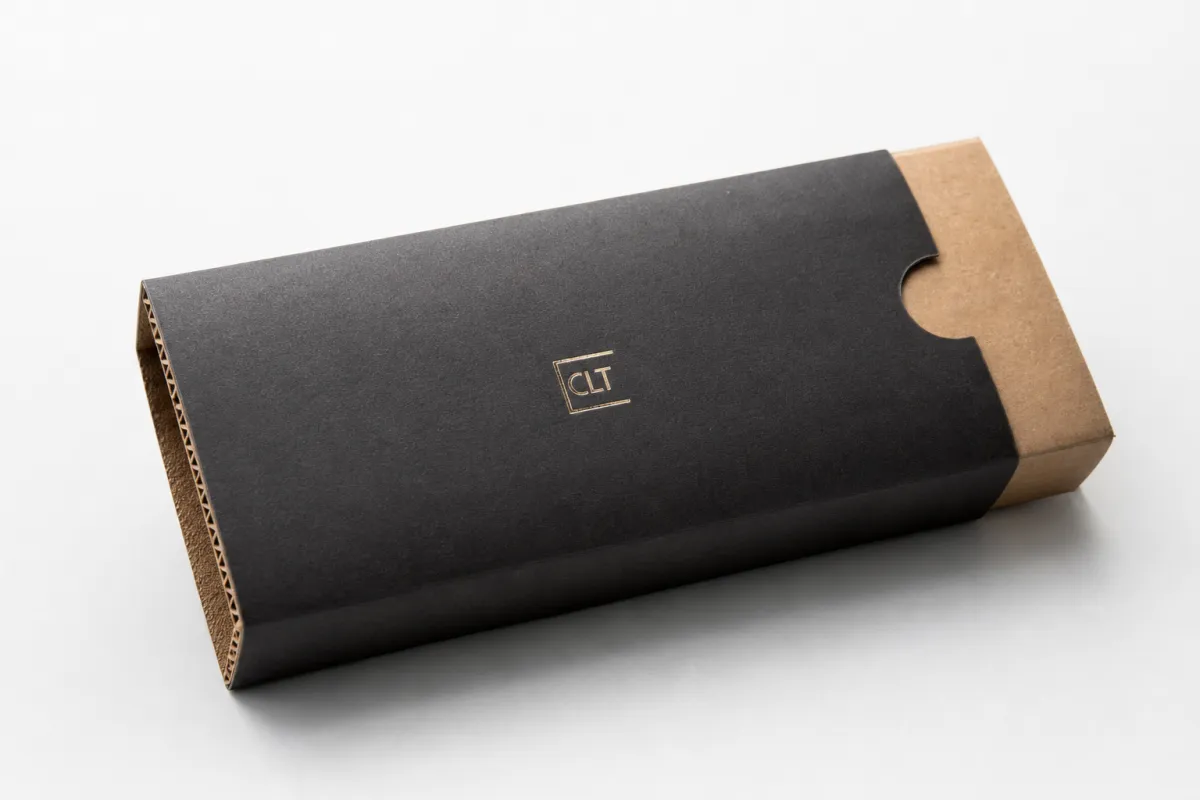
Custom corrugated box sleeves are printed wraps that slide over an existing carton, tray, or retail box. They let one package do two jobs at once: protect the product and carry the brand. That dual role is why sleeves show up so often in retail packaging, bundled sets, and launch kits. They give a brand the visual lift of Custom Printed Boxes without forcing it to give up a stock carton system that already works.
The format is straightforward, but the details matter. A sleeve is often open-ended, though some designs use a tab-lock or glued seam depending on the build and how it will be assembled. Some wraps are short bands that cover the front panel and one side edge. Others extend full height and leave only the top or bottom of the carton exposed. The best custom corrugated box sleeves are built around the information a buyer needs to see: product name, SKU, legal text, barcode, or a clean window cutout that lets the primary package underneath do part of the selling.
That is where sleeves become efficient in a very practical sense. A full custom carton prints every face. A sleeve prints only the surfaces that matter in the buying moment. The visual impact can still be close to a full box when the layout is handled well. For package branding, that is a smart trade. Less board area gets printed, less ink is required, and the converting process often stays simpler, while the carton itself remains standard.
Use cases are broad, though a few patterns show up over and over:
- Subscription kits that need a polished unboxing moment.
- E-commerce shippers that also need a retail-ready presentation.
- Seasonal promotions where the outer look changes faster than the base box.
- Multi-SKU bundles that share one carton format but need different graphics.
- Display packs that sit on a shelf and need a clean front panel.
From a production standpoint, custom corrugated box sleeves are often the quickest path to a brand refresh. If the carton size already exists, there may be no need to redesign the entire structure. That is one reason many teams start with Custom Shipping Boxes for the base container and add a sleeve to turn the shipment into branded packaging. It is a practical move, especially when launch timing is tight and the product team wants packaging changes without a structural restart.
Another reason sleeves get used so often is flexibility. A single stock box can support several graphics versions, which helps with promotions, seasonal runs, and regional messaging. The outer carton stays consistent, and only the sleeve changes. For brands managing multiple SKUs, custom corrugated box sleeves can be the difference between one efficient packaging system and a warehouse full of nearly identical custom cartons.
If the design is thoughtful, the sleeve also makes the carton feel more premium without adding much bulk. A customer sees a defined panel, a crisp logo, maybe a texture or matte coating, and the package reads as more deliberate. That kind of product packaging upgrade can raise perceived value without pushing the whole job into a high-cost custom box program.
How Custom Corrugated Box Sleeves Work: Process and Timeline
The workflow for custom corrugated box sleeves starts with the dieline. That is the flat drawing that defines sleeve size, folds, score lines, flap style, and seam placement. If the carton already exists, the dieline should be built around the exact outside dimensions, not a guessed measurement. If the carton is still being developed, the sleeve should wait until the box specification is stable. A lot of teams reverse that order, then wonder why the first run does not fit properly.
Artwork setup and proofing come next. Good prepress work matters more than many buyers expect. A logo that looks fine on a monitor can break down on corrugated stock if the line weight is too thin or the contrast is too soft. When custom corrugated box sleeves are meant to support retail packaging, the proof stage should check color limits, panel orientation, barcode placement, and whether any graphics disappear into folds or score lines.
Assembly can happen in two ways. In a kitting operation, the sleeve may be applied before the product is packed. In a fulfillment setting, the sleeve often slides over a finished carton after the contents are already sealed. The right method depends on line speed, labor availability, and whether the package needs a tight presentation when it reaches the customer. If a sleeve takes too long to place, it becomes a bottleneck. One extra 5 seconds per unit becomes more than 83 minutes across a 1,000-unit shift, and that cost shows up quickly.
Short-run digital prototypes move faster because they skip much of the setup tied to plate-based production. They are useful when the team wants to test structure, confirm readability, or compare artwork options. Larger offset or flexo runs usually take longer, but they lower the unit cost once quantities rise. For custom corrugated box sleeves, the timeline is rarely just print and ship. It usually unfolds as a chain of steps:
- Briefing and dimensional confirmation.
- Dieline development and artwork placement.
- Digital proof or physical sample review.
- Tooling, cutting, scoring, and print setup.
- Production, inspection, and packing.
- Freight to the warehouse or fulfillment site.
Where do delays usually show up? Artwork approvals are the classic culprit. Late changes to carton dimensions cause plenty of trouble too, especially when the base box comes from another vendor. Ink matching can also slow things down when a brand needs a specific spot-color look on corrugated stock. Another common snag is insert compatibility. If the sleeve overlaps a tray lip, a handle, or a tuck flap, the finished package may look good in concept and awkward in practice. Custom corrugated box sleeves work best when the design is checked against the actual pack-out sequence, not only against CAD artwork.
For brands that want a benchmark on testing and handling, the transit protocols from ISTA are a useful reference. They do not tell you how to design the sleeve, but they help frame what the package must survive once it leaves the facility. That reminder matters: packaging design is not only about print. It is about behavior under load, vibration, compression, and human handling.
In the best projects, custom corrugated box sleeves are planned around the line rather than against it. The sleeve should fit the process, the timeline, and the labor model. If it does not, the graphics may still look good, but the operation will pay for that beauty in delays, rework, or extra headcount.
Custom Corrugated Box Sleeves: Cost, MOQ, and Pricing Drivers
Pricing for custom corrugated box sleeves usually comes down to five things: size, board grade, print method, quantity, and finishing. The biggest surprise for new buyers is how much small changes in those variables can move unit cost. A larger sleeve needs more board and more ink coverage. A heavier board adds strength, but it also raises material cost and may create tighter score behavior. A premium coating or specialty ink can make sense, but only if it changes the customer experience or protects the print from scuffing.
MOQ matters because setup costs have to be spread across the run. A short digital run might be the best way to validate a design, but it is usually the most expensive per piece. A larger flexo or offset run generally lowers the price at scale, though the setup can feel heavy if the brand only needs a few hundred units. In many cases, custom corrugated box sleeves are economical because they decorate only the visible surface instead of the full carton. That can reduce total packaging spend even when the sleeve itself is not the cheapest component in the warehouse.
A practical rule helps here: ask for quotes at three quantities. A test run, a mid-run, and a production run. That is usually where the break point appears. Teams sometimes assume the lowest MOQ is the safest option, but the real savings often show up once the order passes the setup threshold. For custom corrugated box sleeves, that break point can be the difference between a pilot that costs a dollar per unit and a run that lands below forty cents.
| Production Option | Best For | Typical Unit Cost Influence | Lead Time Profile | Notes |
|---|---|---|---|---|
| Digital prototype run | Fit checks, pitch decks, launch samples | $0.65-$1.20 at low quantities | Fastest | Useful for testing custom corrugated box sleeves before volume commits |
| Short-run printed sleeves | Small launches, seasonal promotions | $0.30-$0.70 depending on coverage | Moderate | Good balance of speed and cost for branded packaging |
| Higher-volume flexo or offset run | Steady SKUs, repeated replenishment | $0.18-$0.40 at scale | Longer setup, lower per-unit price | Often the best option once the sleeve format is stable |
Those numbers are ballpark estimates, not promises. Artwork coverage, white ink, varnish, specialty finishes, and hand assembly can move them up. Die changes can shift them too. If a sleeve needs a new cut form or a tighter tolerance, the converting cost rises. That is especially true for custom corrugated box sleeves with windows, tear strips, or tamper-evident elements.
Assembly labor is one hidden cost. A sleeve that folds flat and locks quickly may barely affect throughput. A sleeve that needs to be hand-scored, hand-folded, or lined up with a retail tray can add meaningful labor time. On a low-volume program, that is manageable. On a higher-volume packaging line, it becomes a real budget line. Color management is another hidden cost. If the brand expects rich solids, gradients, or exact logo tones, print testing may be needed to keep the finish consistent across runs.
There is also a sustainability angle. A sleeve can be a lighter touch than a full custom box, and that can matter for source reduction and material efficiency. Brands that care about fiber sourcing often ask whether the board is FSC-certified, which is a reasonable question when packaging design is tied to procurement policy. The standard itself is not a magic stamp, but it signals that the material chain was traced according to FSC rules. For more on that, the FSC certification system is the authority most teams recognize.
So what should a buyer do? Quote custom corrugated box sleeves with and without premium features, then compare the visible uplift against the cost difference. The cleanest answer is not always the fanciest one. It is the sleeve that improves package branding enough to matter while still leaving room in the budget for the product itself.
Key Factors That Shape Fit, Strength, and Print Quality
Fit comes first. If custom corrugated box sleeves are even a few millimeters off, the result can be loose, wrinkled, or hard to apply. That is why the outside dimensions of the carton matter more than the inside dimensions. Board thickness changes the outside size, and compression in transit can affect how snug the sleeve feels once the carton is loaded. The sleeve needs to be designed around the real box, not the idealized one on a spec sheet.
Strength is the next issue. Corrugated board is not all the same. Flute choice, liner weight, and score placement affect how well the sleeve holds shape and stacks. A sleeve built on lighter board may be fine for a display pack, but it may not survive repeated handling in a fulfillment center. If the package is going through distribution, custom corrugated box sleeves should be checked against the same kind of rough handling that the base carton sees. A print-perfect sleeve that collapses under pressure is not a win.
Print quality depends on more than artwork resolution. Registration tolerance matters, especially where type sits near a fold or where a window cutout leaves little room for drift. Ink coverage matters too. Heavy solids on corrugated can show board texture, while lighter layouts may hide small imperfections more gracefully. If the job needs tight branding, the artwork should avoid tiny reverse type and thin rules wherever possible. That is especially true when custom corrugated box sleeves are part of a premium retail packaging system.
Functional details often decide whether the design works or fails. Openings for handles can make the sleeve easier to carry. Barcodes may need a clear, unwarped zone. Tear strips can improve opening, but they also add complexity. Tamper-evident features help in some categories, yet they should only be used when they serve a real need. One mistake I see often is teams adding feature after feature because the mockup looks impressive. Better to keep the structure clean and let the sleeve do one job well.
Think of the sleeve as a control layer in packaging design. The sleeve does not need to carry the full mechanical load of the carton, but it does need to communicate brand, protect the printed surface, and fit the operation. That is why the best custom corrugated box sleeves feel almost invisible from a process standpoint. They arrive, they fit, they print cleanly, and they disappear into the line without drama.
That balance is the reason many teams pair sleeves with other Custom Packaging Products rather than trying to solve everything with one custom structure. A smart packaging system usually combines the right carton, the right insert, and the right outer branding layer. Sleeve selection should be one part of that system, not a standalone decision made in isolation.
Custom Corrugated Box Sleeves Production Steps, Lead Time, and Sampling
The production path for custom corrugated box sleeves is easiest to manage when it is treated as a sequence with checkpoints. First comes the brief. Then a spec sheet. Then the dieline. Then artwork setup. After that, proof approval, manufacturing, finishing, packing, and freight. Each stage can add time, and the total lead time is usually longer than buyers expect if they are only looking at the print window.
Sampling is where a lot of teams save themselves pain. A flat digital proof is good for copy, barcode placement, and visual hierarchy. A white sample is better when fit matters more than color. A fully printed pre-production sample is the safest option when the sleeve has to hit a retail launch, because it shows the actual board behavior, fold quality, and print finish. For custom corrugated box sleeves, the right sample depends on risk level. Low-risk internal runs can move fast. High-visibility launches deserve a real physical check.
Lead time should be understood as a chain rather than a single number. A simple sleeve can move quickly if the dieline is approved and the artwork is final. A more complex job can slow down because tooling takes time, coatings need a separate pass, or the schedule is already full. Rush work is possible in some cases, but it nearly always costs more because it compresses proofing and manufacturing windows. If you want custom corrugated box sleeves to land cleanly, build in enough time for a sample review before the full run is locked.
A practical timeline might look like this:
- 1 to 3 business days for brief confirmation and dieline prep.
- 2 to 5 business days for artwork setup and proof exchange.
- Several days to a couple of weeks for sample production, depending on complexity.
- 12 to 15 business days for short-run production after approval, often longer for larger quantities.
- Freight time based on destination and service level.
That is not a universal promise. It depends on the plant schedule, the finishing spec, and whether the carton dimensions stay stable. Still, it is a useful frame. If a launch date is fixed, custom corrugated box sleeves should be scheduled backward from that date, with room for a revision cycle. Otherwise the team ends up approving artwork too late and accepting a fit risk that should have been caught earlier.
One more point: the sample should be checked under real conditions. Put it on the real carton. Load the actual product. Close the box. Move it down the packing line. Then look again. That simple test exposes more packaging design issues than a dozen static mockups. It is also how you confirm that the sleeve, the tray, and the insert all work together. When the goal is reliable product packaging, real handling matters more than presentation alone.
Teams that review custom corrugated box sleeves against an operations checklist tend to have fewer surprises. A good checklist covers print, fit, assembly speed, barcode legibility, scuff resistance, and how the package presents in a photo. The more jobs a sleeve has to satisfy, the more valuable that sample review becomes.
Common Mistakes When Ordering Custom Corrugated Box Sleeves
The most common mistake with custom corrugated box sleeves is measuring the inside of the box instead of the outside. That sounds minor. It is not. The sleeve has to cover the outer surface, and the outer surface is shaped by board thickness, flaps, compression, and the actual fold pattern. A dimension error of just a few millimeters can turn a clean sleeve into one that slips, buckles, or refuses to sit square.
Another mistake is designing before the carton is finalized. Packaging teams sometimes move too quickly on artwork, then learn that the carton depth changed or the closure style shifted. That small structural change can wreck sleeve fit. If the box is still fluid, the sleeve should stay in draft form until the carton spec is locked. Custom corrugated box sleeves are not forgiving when the underlying box keeps moving.
Branding errors happen just as often. Crowded panels, tiny legal text, and barcodes squeezed near a fold all create problems. Corrugated stock is not a glossy label. It has texture, grain, and conversion tolerance. If the art is too busy, the shelf read suffers. If the ink contrast is too weak, the package fades away. That is why packaging design for sleeves should be simplified before it is decorated. Less clutter usually reads better, especially in retail packaging where a buyer sees the package for only a second or two.
Assembly speed is another place where teams get burned. A sleeve that looks elegant in a mockup may be awkward when a packer has to fold it a few hundred times a day. If the operation depends on hand application, the shape should be tested by the people who will actually use it. Custom corrugated box sleeves should save labor, not quietly add it back.
Then there is the premium trap. Some teams add coatings, windows, special inks, and structural changes all at once, then wonder why the quote jumps. Not every finish is worth the spend. A soft-touch lamination can feel good, but if the sleeve spends its life inside a shipper, the effect may never be seen. A spot varnish can lift a logo, but if the artwork is already doing the job, the extra pass may be unnecessary. The smartest custom corrugated box sleeves are often the ones that reserve fancy features for places the customer will actually notice.
One more pitfall is ignoring the base carton strategy. Sleeves and carton specs should be designed together. If a company plans to standardize several SKUs, the sleeve may be the best place to keep variety while the box stays fixed. That is a strong argument for using Custom Shipping Boxes as the platform and then changing only the branded outer layer. It reduces clutter in the supply chain and makes replenishment easier.
If you want a testing framework that goes beyond appearance, packaging teams often look at broader industry resources at packaging.org as a useful reference point for material and performance conversations. The takeaway is simple: a sleeve should be judged on fit, function, and repeatability, not only on how it looks in a render.
Expert Tips and Next Steps for Better Sleeve Orders
Start with a dimension audit. Before you request a quote for custom corrugated box sleeves, confirm the carton outside dimensions, the packed product height, and any inserts or trays that change the final profile. That one step prevents a lot of expensive back-and-forth. It also gives the supplier enough information to recommend a fit that works in production, not only on paper.
Ask for a sample plan that covers print, fit, and assembly. Some jobs only need a digital proof. Others deserve a white sample and a printed sample. The decision should track the risk. If the sleeve is going to sit on a retail shelf, the sample matters more than if it is only serving as an e-commerce brand layer. For custom corrugated box sleeves, the sample is often where the job is won or lost.
Test two or three artwork versions if the sleeve has to do serious selling work. One version may emphasize price or product claims. Another may lean into lifestyle imagery. A third may strip the design back and make the logo the hero. Small changes can alter shelf read dramatically. In packaging design, what looks minor on a screen can be major in store. That is especially true when the sleeve is part of broader branded packaging across several SKUs.
Build a comparison sheet before you talk to suppliers. Keep it simple:
- Board grade.
- Print method.
- MOQ.
- Quoted lead time.
- Estimated unit cost at multiple quantities.
- Assembly method.
- Any special finishes or testing requirements.
That sheet makes it much easier to compare custom corrugated box sleeves against a full custom carton or against a simpler stock-box approach. It also exposes hidden differences. One supplier may offer a lower unit cost but require more manual assembly. Another may charge a little more but deliver a cleaner fit and a shorter schedule. Those trade-offs matter more than the headline price.
Finally, review the finished sample against your launch checklist. Does the sleeve sit straight? Can the barcode be scanned? Does the box still close cleanly? Does the package photograph well? Does the outer layer hold up after a few handling cycles? The best custom corrugated box sleeves are the ones that can be repeated reliably at scale, because repeatability is what turns packaging design into a real operating advantage.
If you are building a broader packaging system, it can help to review your carton lineup alongside your sleeve plans and any other Custom Packaging Products you may need. That keeps product packaging decisions connected instead of scattered across separate projects. It is also the easiest way to avoid a sleeve that looks good in isolation but clashes with the rest of the pack architecture.
My practical advice is this: treat custom corrugated box sleeves as a business decision first and a graphic decision second. The graphics matter, of course, but fit, speed, and cost decide whether the design survives the first production run. Get those right, and the sleeve becomes a durable tool for package branding, retail packaging, and launch flexibility. Get them wrong, and the cheapest-looking option is often the one that costs the most later.
FAQ
What are custom corrugated box sleeves used for?
They add branding to stock cartons, trays, or shipper boxes without redesigning the whole package. Custom corrugated box sleeves are commonly used for retail launches, subscription kits, promotional bundles, and seasonal packaging. They can also help standardize the look across multiple SKUs that share the same base box.
How do custom corrugated box sleeves compare with full custom boxes?
Sleeves usually cost less because they decorate only the visible surface instead of the entire carton. Full custom boxes can offer more structure and print coverage, but they often require more setup and higher minimums. Custom corrugated box sleeves are a strong choice when you want a fast brand upgrade with minimal packaging change.
What affects the price of custom corrugated box sleeves most?
Size, quantity, board grade, and print method are usually the biggest drivers. Coverage-heavy artwork, coatings, special inks, and manual assembly can raise the unit price. Getting quotes at multiple quantities usually reveals the fastest path to a better per-unit cost for custom corrugated box sleeves.
Do custom corrugated box sleeves change shipping protection?
Not much on their own, because the sleeve is usually a branding layer rather than the main structural container. Protection depends more on the base carton, internal cushioning, and how the packed unit is handled. If custom corrugated box sleeves must survive rough transit, the board grade and score design need extra attention.
How long do custom corrugated box sleeves take to produce?
Simple digital or short-run jobs can move quickly if artwork and dimensions are final. Longer timelines usually come from sampling, approvals, tooling, and higher-volume production scheduling. The safest plan is to build buffer time for proof review and fit testing before the launch date, especially for custom corrugated box sleeves tied to a retail rollout.
For brands that want a cleaner, more efficient path to branded packaging, custom corrugated box sleeves still make a lot of sense. They can tighten product packaging, support retail packaging, and reduce the risk of a full carton redesign when the only thing you really need is a better outer face. Used well, custom corrugated box sleeves are not just a cosmetic layer; they are a practical packaging decision that can improve fit, cost control, and the look of the entire pack. The takeaway is simple: lock the carton dimensions first, sample the fit on a real packed unit, and choose the sleeve spec that the line can actually live with.

