Buyer Fit Snapshot
| Best fit | Custom Corrugated Inserts for Bottles projects where brand print, material claims, artwork control, MOQ, and repeat-order consistency need to be specified before quoting. |
|---|---|
| Quote inputs | Share finished size, material target, print colors, finish, packing count, annual reorder estimate, ship-to region, and any compliance wording. |
| Proofing check | Approve dieline scale, logo placement, barcode or warning zones, color tolerance, closure strength, and carton packing before bulk production. |
| Main risk | Vague material claims, crowded artwork, missing packing details, or unclear freight terms can make a low unit price expensive after revisions. |
Fast answer: Custom Corrugated Inserts for Bottles: Retail Fit, Compliance Space, Print, and Cost should be specified like a repeatable production item. The safest quote records material, print method, finish, artwork proof, packing count, and reorder notes in one written spec.
Production checks before approval
Compare the actual filled-product size with the drawing, then confirm tolerance on folds, seals, hang holes, label areas, and retail display edges. Reserve space for logos, QR codes, warning copy, and material claims before decorative graphics fill the panel.
Quote comparison points
Review material grade, print process, finish, sampling route, tooling charges, carton quantity, and freight assumptions side by side. A quote is only useful when the supplier can repeat the same color, closure quality, and packing count on the next order.
Custom Corrugated Inserts for bottles exist for one reason: bottles move, and movement breaks things. The outer carton may be strong. The shipping label may be perfect. None of that matters if a bottle can slide, tip, or build speed before it hits a wall inside the shipper. Most damage starts there, inside the box, where nobody is looking.
From a packaging buyer's point of view, the job is straightforward. Stop motion. Protect the fragile zones. Keep pack-out clean. Avoid paying for material that does not improve performance. That is where Custom Corrugated Inserts for bottles earn their keep. They are cut, folded, and scored around the bottle's real dimensions so the load transfers through the board instead of through the glass. Done right, they cut breakage, reduce returns, and make the package look like someone planned it instead of hoping for the best.
For brands building branded packaging, the insert is not invisible. Customers notice whether a bottle shipper feels tidy or thrown together. A clean kraft structure can feel premium without trying too hard. A sloppy one sends the opposite message in about half a second. Packaging is rude like that.
Custom Corrugated Inserts for Bottles: Why the Cheap Fix Fails
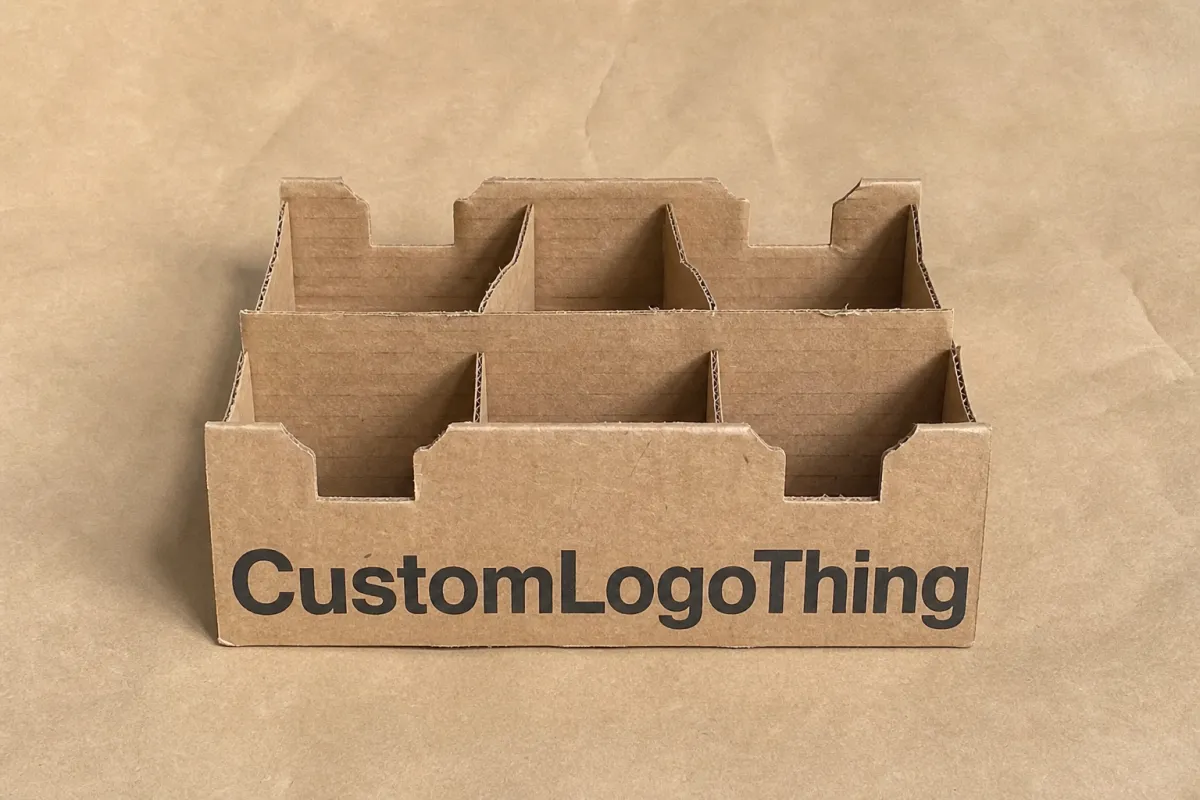
The cheap fix usually looks reasonable in a spreadsheet. A sturdy outer box, some loose kraft paper, maybe a few cardboard scraps folded in by hand. Then the first rough shipment lands and the bottle has been bouncing around like it has rent money. The real problem is motion. If the product can move, the package has already lost control of the trip.
Custom corrugated inserts for bottles solve that by creating a controlled cavity around each bottle. The insert supports the base, stabilizes the body, and often captures the neck or shoulder so the bottle cannot build momentum during a drop, vibration event, or rough sortation cycle. In plain language, the insert turns a box into a system.
That matters for wine, spirits, olive oil, sauces, tinctures, serums, and gift sets. Some products fail because they are glass. Others fail because the closure sticks out, the label scuffs easily, or the finish is part of the premium experience. A shipper that protects the bottle but ruins the presentation still misses the brief.
If the bottle can slide, the packaging has already handed away control. Outer box strength means little when the product inside is floating.
There is also a sustainability side that gets ignored when teams overpack with foam, plastic cushions, or oversized void fill. The right corrugated insert can replace multiple loose components, reduce packing labor, and use less total material than the "add more stuff" strategy. Less waste. Less mess. Fewer customers opening a package like they are excavating a museum box.
For brands that care about package branding, the insert is part of the experience. A simple kraft structure can feel deliberate and premium at the same time. If you are shipping directly to customers, the bottle insert is not just damage control. It is part of the unboxing moment, and it should behave like it belongs there.
How Corrugated Bottle Inserts Work Inside the Ship Box
Think of the insert as a restraint system made from paperboard. Its job is to lock each bottle in place, absorb vibration, and keep the pack from shifting side to side or top to bottom. The best designs do not rely on one trick. They use a set of small decisions that work together: fit, contact points, board strength, and predictable compression behavior.
Corrugated board works because the fluted medium crushes in a controlled way under load. That crush absorbs some energy during handling. Partitions spread force across a wider area so one bottle does not slam into another. When the walls are sized correctly, the bottle stays separated from the outer box, which reduces puncture risk, scuffing, and edge impact.
Common Insert Styles
- Die-cut sleeves wrap around the bottle body and create a snug fit with little loose space.
- Partition grids divide the carton into individual cells, which works well for multi-bottle sets and stackable shippers.
- Molded corrugated cradles create formed support zones for the base and shoulder, often used for heavier glass.
- Wrap-around supports stabilize tall bottles where neck movement is the main risk.
The geometry changes with the bottle. A long-neck bottle needs different support than a squat square bottle. A heavy base changes the center of gravity. A shoulder curve can create a pressure point if the insert is too tight. A pump top, cork, or dropper changes the total height and can shift the failure point upward.
That is why the design should start with the bottle, not the carton. Sounds obvious. Yet plenty of bad packaging work starts with box dimensions because those are the numbers people already know. Then the insert gets forced to fit the box instead of the product, and everyone acts surprised when the first shipment breaks.
In practical terms, the insert also affects operations. A structure that takes forty seconds to fold slows a packing line. A structure that requires guesswork creates inconsistency. A structure that guides the bottle into place naturally speeds up fulfillment and cuts training time. That cost matters even when it never shows up on the quote.
For teams reviewing Custom Packaging Products, bottle inserts sit inside a larger packaging system. They have to work with the outer box, the shipping method, the closure, and the customer experience. A good insert spec is never just a drawing. It is a decision about how the package will behave under pressure.
If the shipping format uses a matching outer carton, the insert has to coordinate with it. A strong outer shell from Custom Shipping Boxes helps, but it cannot rescue a loose or poorly fitted insert. People love to blame the box because it is visible. The bottle usually knows better.
Design Factors That Decide Fit, Protection, and Sustainability
A bottle insert is only as good as the data behind it. The inputs are basic, but they need to be exact. Height, maximum diameter, neck diameter, shoulder shape, closure type, fill level, and total weight all affect the structure. If the bottle is glass, PET, or another rigid material, that changes the design too because stiffness and failure behavior are not the same.
Board selection is the next big decision. Single-wall corrugated is often enough for lighter bottles and short parcel routes when the fit is tight and the handling is controlled. Double-wall starts to make sense when the bottle is heavy, the route is rougher, or the shipper needs more stack strength. The wrong answer is usually "just make it thicker." More board is not a strategy. It is a line item.
Here is the simplest way to think about fit:
- Too loose and the bottle becomes a moving target.
- Too tight and the insert can stress labels, edges, or closures.
- Correctly tuned and the bottle is supported without being pinched.
That fit window is narrower than most teams expect. A few millimeters can separate a stable pack from a bad one. For tall bottles, shoulder shape and closure height matter as much as body diameter. For short bottles, base support can be the real failure point because there is less vertical friction to help stabilize the pack.
Sustainability should not be a decorative line in the brief. The best eco-friendly choice is usually the one that removes waste from the system instead of adding "green" materials on top of a clumsy design. Recycled content, recyclable adhesives, and a single-material structure all help. Mixed materials complicate disposal. Oversized void fill does too. Nobody wants a box that takes two minutes to unpack and leaves a second box worth of trash behind.
For brands making Custom Printed Boxes or other premium product packaging, the insert finish matters too. Visible kraft edges can look honest and modern. A crisp die-cut structure can feel intentional. Printed inserts can work in some programs, but full coverage ink is not always the smart move if recyclability and cost matter. In many cases, a clean natural board finish does the job better.
Shipping conditions should be treated like design inputs, not afterthoughts. Parcel shipping, retail distribution, palletized freight, and temperature swings all change the stress on the pack. If the product goes through e-commerce, assume more handling. If it sits in a warehouse before shipping, assume more compression. If the route is seasonal, consider how humidity may affect board strength. Corrugated is useful, but it is still paper. Physics is not impressed by a brand deck.
| Insert Style | Best For | Typical Pros | Typical Tradeoffs | Approx. Cost Range at 5,000 Units |
|---|---|---|---|---|
| Die-cut sleeve | Single bottles, direct ship, premium presentation | Clean fit, efficient board use, strong branding feel | Needs accurate measurements; can be tricky for odd neck shapes | $0.18-$0.32 per insert |
| Partition grid | Multi-bottle sets, wine, spirits, sampler packs | Good bottle separation, easy stacking, simple assembly | Can use more material; less tailored to unusual bottle profiles | $0.24-$0.45 per set |
| Molded corrugated cradle | Heavier or premium glass bottles | Strong support at base and shoulder, good energy absorption | Tooling and setup can take longer; may cost more in small runs | $0.30-$0.60 per unit |
| Wrap-around support | Tall bottles, narrow necks, limited side clearance | Controls movement well, compact footprint | Less forgiving if bottle dimensions change | $0.20-$0.38 per unit |
Those numbers are not universal, and anyone pretending they are is selling a fairy tale. Material grade, print coverage, board thickness, tooling, and order volume all move the price around. Still, the table gives a useful buying range so you can compare quotes without acting like every insert should cost the same.
For sustainability claims, check the source and the structure. The FSC standard is one of the clearer signals for responsibly sourced fiber, while packaging recyclability still depends on the actual build and local recycling rules. A single-material corrugated insert is usually easier to recover than a mixed-material system with coatings, laminations, and plastic add-ons.
Production Process and Lead Time for Bottle Inserts
Good bottle inserts do not appear out of nowhere. The process usually starts with a spec sheet, a sample, or at least exact measurements. Then comes the structural concept, CAD layout, prototype cutting, fit testing, and final approval. If a supplier jumps from measurements straight to production, that is not speed. That is a bet against breakage.
A plain mockup is often the most useful step. Renderings can look perfect while hiding real-world problems like label scuffing, a closure that rubs the top panel, or a neck slot that pinches too hard. A physical sample shows how the bottle sits, how the board flexes, and whether the insert can actually be folded by a packing team without someone turning the air blue.
Testing should happen before production runs, not after the first complaint. If the shipment goes by parcel, teams often use test methods aligned with ISTA protocols, especially ISTA 3A or a similar procedure depending on package type and route. For palletized loads or more complex distribution chains, other methods may fit better. The exact test plan should match the product and the risk profile, not a generic checklist copied from the internet.
Typical Approval Steps
- Measurements and brief - bottle dimensions, total weight, closure details, ship method, and target quantity.
- Structural concept - initial insert geometry based on fit and protection requirements.
- Sample cut - a prototype from actual board stock or a close equivalent.
- Fit test - check the real bottle in the real insert, not just a sketch.
- Handling test - drop, compression, or vibration checks based on the route.
- Final sign-off - confirm dieline, material, print, and pack-out method.
Lead times vary by complexity. A simple insert using existing tooling or a common cut style can move quickly, often in the range of 7-12 business days after approval if materials are in stock. More custom structures, new dies, print work, or heavier board grades can push that to 2-4 weeks. If there is a new tooling requirement or a tricky bottle shape, add time. The calendar does not reward optimism.
What causes delays? Incomplete bottle data, revisions after sampling, and late changes to closure height or label placement. One of the easiest ways to prevent delay is to send a clean physical sample, exact dimensions, and a clear shipping goal before design starts. If the package has to survive courier handling, say so. If the insert needs to be curbside recyclable, say that too. Vague briefs create vague packaging, which is a lovely way to burn budget and time.
There is also a production question that gets ignored until it causes friction: how does the insert fold on the line? A clever dieline that looks efficient on screen can still be awkward in a real fulfillment environment. If the pack-out team has to force every tab into place, speed drops and error rates rise. That is where nice-looking packaging turns into a daily complaint.
Cost, Pricing, and MOQ: What Drives the Quote
Pricing for custom corrugated inserts for bottles is driven by a handful of variables, and none of them are mysterious. Board grade, flute thickness, insert complexity, print coverage, tooling, and volume all matter. The quote changes because the work changes. That sounds boring. It is still true.
MOQ matters because setup costs have to be spread across the run. A custom die-cut insert can look very reasonable at 5,000 or 10,000 pieces, then look expensive at 300 pieces because the tooling, makeready, and waste are being divided across a tiny order. That does not mean the quote is unfair. It means the order size is fighting manufacturing economics.
For buyers comparing options, the real question is not only "What does one insert cost?" It is "What does the whole system cost once freight, storage, labor, and breakage are included?" A cheaper insert that slows pack-out or increases damage can become the most expensive item in the room. Packaging people see this all the time. The lowest sticker price is often the least honest number.
Here is a useful way to compare quoted options:
- Unit cost - what you pay per insert at a given quantity.
- Landed cost - freight, taxes, and any handling charges.
- Labor cost - pack-out time and training time.
- Damage cost - returns, reships, and replacements.
- Storage cost - cube efficiency and warehouse space.
Savings usually come from simplification. Reduce the number of components. Tighten the dieline. Use recyclable kraft board where print is not needed. Keep the geometry honest. A clean insert made from one board style often beats a decorative structure with extra layers that do not improve performance.
Watch out for false economies. Oversized shippers increase dimensional weight. Complex folds slow down packers. Mixed materials make recycling harder. And a structure that is "almost" right tends to create waste every time somebody has to re-pack a bottle because the fit feels off. That wasted labor often costs more than the material itself.
For reference, here are practical quote inputs to send a supplier:
- Full bottle height, diameter, neck diameter, and base width
- Filled weight and closure type
- Quantity needed now and expected annual volume
- Parcel, pallet, or retail distribution method
- Desired print finish, if any
- Target sustainability requirements, such as recyclable single-material construction
- Acceptable scrap rate or breakage tolerance during testing
That last point matters more than people think. If your damage tolerance is near zero because the product is premium or fragile, the insert needs a different standard than a low-risk commodity pack. The quote should reflect that reality.
Common Mistakes That Cause Breakage or Waste
The most common mistake is designing from the box outward instead of from the bottle inward. It sounds minor. It is not. A box-centric design often creates a package that fits the carton dimensions but not the product. Then the insert gets stuffed, trimmed, or forced into place until the whole system behaves badly.
Another problem is overpacking. Some teams try to solve uncertainty with more board, more filler, more tape, and more material everywhere. That can add cost without actually controlling motion. If the bottle still has room to shift, extra material just makes the package heavier and more annoying to assemble.
Under-support is just as bad. The neck, shoulder, and base are the zones that matter most. That is where stress concentrates in a drop or vibration event. If those areas are not anchored, the bottle can fail even when the outer carton looks fine. A strong shipper with a weak insert is a dressed-up problem.
There is also a branding mistake people make when they ignore labels, print placement, and closure height. A bottle may survive the trip but still arrive with rubbed labels, scuffed glass, or a damaged closure. For premium alcohol, oil, or cosmetic lines, that is not a small issue. It looks cheap. And once a customer sees cheap, it is hard to unsee.
Sustainability errors are common too. Mixed materials make recycling harder. Oversized boxes waste board and freight cube. Overcomplicated insert structures can create more scrap than the package saves. If the goal is to make custom printed boxes or bottle shippers more responsible, simplicity usually wins.
Operations can expose bad design faster than lab tests. If the insert is hard to fold, slow to load, or visually confusing, packing teams will improvise. They will flip it, tape it, jam it, or skip steps to keep the line moving. Once that happens, the engineered package is no longer the package being shipped. The real package is the one the team made up on the floor.
Here are the failure modes that deserve extra attention:
- Loose fit around the bottle body
- Exposed neck with no restraint point
- Base pocket that is too shallow or too deep
- Label rub from a tight shoulder or sidewall contact
- Overly complex assembly that slows the pack line
- Mixed-material build that complicates recycling or disposal
One more thing: if your supplier says the first sample is "close enough," ask what close means in millimeters. Packaging is a measurement business. Impressions are nice. Measurements are better.
Expert Tips and Next Steps for Better Bottle Packaging
Start with a pilot run. Not because it sounds careful and responsible, but because it saves money. A small test batch tells you if the fit is right, if the pack-out is fast enough, and if the bottle survives the actual route. That is a lot cheaper than discovering a flaw after thousands of units are already printed and packed.
Gather the right data before you request a new insert design. The more exact the brief, the fewer revisions you need. That means full bottle dimensions, closure details, fill weight, shipping method, and the visual finish you want. If you can send a physical sample, do that. A photo helps. A real bottle helps more.
Test with real product, real outer cartons, and real handling conditions. A sample in isolation tells part of the story. The full system tells the truth. If your shippers are going to be stacked on pallets, test compression. If they are going through parcel carriers, test drops and vibration. If the route crosses hot and cold zones, consider how the board behaves with temperature and humidity.
Compare breakage rate, pack-out speed, and material use together. Not separately. Separate metrics can push teams into bad decisions. A slightly more expensive insert may still win if it cuts damage, shortens labor time, and reduces the need for void fill. That is the sort of tradeoff a real packaging buyer should want to see.
If sustainability is part of the brief, say what matters most. Is the goal FSC-certified fiber? Is curbside recyclability the priority? Is reducing plastic more important than print coverage? Different answers lead to different structures. Better to choose one clear target than to chase five goals with one messy design.
For many brands, the best next step is simple: request a sample, validate the fit, then scale. That is the point where custom corrugated inserts for bottles stop being a theory and start being a working packaging system.
If you are refining your bottle shipper alongside broader package branding goals, keep the insert aligned with the rest of the experience. The outer carton, the interior structure, and the opening moment should feel like they belong together. That is how branded packaging starts to feel considered instead of improvised.
Here is the practical takeaway: build from the bottle outward, not from the box inward. Get the exact bottle spec, choose the board around the route, sample the insert with the real closure and real carton, then test it under the shipping conditions it will actually face. Do that, and custom corrugated inserts for bottles become a control system, not just a spacer with a nice layout.
Frequently Asked Questions
How do custom corrugated inserts for bottles compare with molded pulp?
Corrugated usually gives tighter fit control and cleaner stacking for exact bottle dimensions. Molded pulp can work well for certain high-volume applications, especially when the shape is simple and the brand wants a more natural look. The better choice depends on fragility, visual finish, recycling goals, and how tightly you need the bottle to be held in place.
What measurements do I need before ordering bottle inserts?
Provide full bottle height, maximum diameter, neck diameter, shoulder shape, base width, and filled weight. Include closure type and any protruding elements like pumps, corks, or droppers. If possible, send a physical sample so the supplier can confirm tolerances instead of guessing from photos or drawings.
What is a realistic MOQ for custom bottle inserts?
MOQ depends on tooling method, insert complexity, and whether the supplier is using existing tooling or making a new die. Small runs can look expensive per unit because setup costs are spread across fewer pieces. Ask for quotes at several quantities so you can see where the pricing becomes more competitive.
How much protection do corrugated inserts for bottles actually provide?
They reduce movement, and movement is the main reason bottles fail in transit. Protection depends on fit, board grade, flute selection, and whether the bottle is fully supported at the base and neck. For fragile glass, the only honest way to confirm performance is through drop and compression testing with the actual bottle and outer carton.
Can corrugated bottle inserts be recycled after use?
Usually yes, if the insert is made from a single corrugated fiber material and does not include plastic laminations or heavy coatings. Recyclability also depends on local rules, ink coverage, and whether the customer separates the insert from other packaging components. Single-material construction makes end-of-life handling much simpler.
Bottom line: custom corrugated inserts for bottles are not just a protective layer. They are the part of the system that controls motion, supports the fragile zones, and keeps the shipping experience from falling apart. If you choose the structure around the bottle instead of forcing the bottle into a generic box, you get better protection, cleaner presentation, and less waste. That is the sensible way to build custom corrugated inserts for bottles, and frankly, it is the way most bottle packaging should have been designed from the start.

