The retail twisted Handle Paper Bags digital proof checklist is the last practical step before production turns a quote into inventory. It catches the mistakes that cost time and money: the wrong bag size, a logo that sits too close to the fold, a barcode that will not scan, or a finish note that never made it into the job ticket.
These bags shape the customer experience for boutiques, cosmetics brands, gift shops, pop-ups, and event kits. A proof protects the look, the budget, and the launch date. A weak proof leaves you with bags that print correctly in theory but fail in the hand.
Why proofs stop expensive bag mistakes early
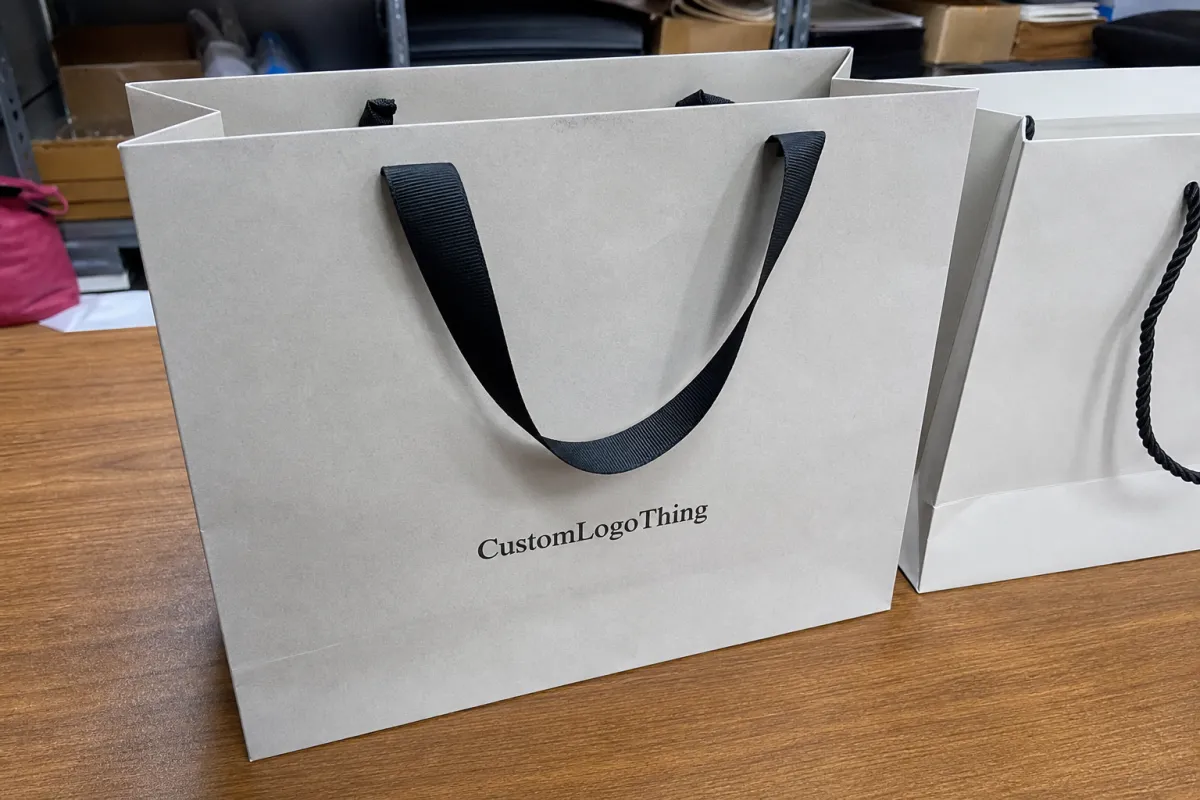
A digital proof confirms the details that matter before a line runs paper, labor, and freight. It should show the bag size, artwork placement, copy, color references, handle style, and finish notes in one document. That matters because a Twisted Handle Paper bag has a limited print area once the top fold, gusset, and handle patch are counted in.
The reason buyers lose money is rarely “bad design.” More often, they approve a file without checking how the structure changes the artwork. A logo that looks centered on a flat mockup can shift once the handle reinforcement is added. A QR code can be placed too close to the fold. These are easy to catch on the proof and expensive to fix after production starts.
A proof should protect you from five common problems:
- Placement errors where artwork crowds the handle patch or top fold.
- Size errors that change how the logo reads after the bag is formed.
- Color surprises caused by kraft stock, white board, or screen-only previews.
- Copy mistakes in store names, URLs, QR codes, or legal text.
- Schedule slips caused by late edits after approval is already close.
That is why a checklist is useful: it keeps the review focused on production risk, not on how polished the mockup looks.
How the digital proof process works from file to approval
The workflow is straightforward if the files are ready. You send final artwork, usually as vector PDF, AI, or EPS files with fonts outlined or packaged. The supplier places the design on the dieline and returns a marked-up proof showing the printable area, dimensions, safe zones, and setup notes. For production work, that proof should show how the bag will look once folded, glued, and handled.
Good proofs are specific. They identify the front and back panels, gusset width, top fold, handle patch area, bleed, and safe margins. If a supplier sends a polished render without measurements, that is not enough for approval. Buyers need a production document that answers practical questions: does the logo clear the reinforcement, is the QR code far enough from the fold, and will any artwork wrap into the bottom panel?
Approval should not become a second design phase. That is where delays start. If you approve a proof and then ask for a new tagline, different Pantone values, and a larger logo, the job has to be reopened. The cleanest feedback is the kind that addresses real production issues: wrong size, wrong copy, wrong position, wrong color reference, or a structural conflict the proof revealed.
Digital proofs are not the same as physical samples:
| Proof type | Typical cost | Turnaround | What it catches best | Best use |
|---|---|---|---|---|
| Digital proof | Often included or $0-$25 | 24-72 hours | Layout, copy, dieline fit, color callouts | Most retail orders |
| Physical sample | $25-$100 plus shipping | 5-10 business days | Handle feel, paper tint, finish, structure | Brand-sensitive launches |
| Pre-production sample | $75-$250 | 7-15 business days | Final look before full run | High-value campaigns |
| Press check or strikeoff | Varies | Schedule-dependent | Color confirmation under production conditions | Very strict brand work |
If color is critical, a digital proof alone is not enough. Use a sample, strikeoff, or press check when the brand cannot tolerate much variation. For a standard kraft bag with a simple one-color logo, the digital proof may be sufficient. The right choice depends on risk, not habit.
Shipping, sourcing, and recycling can matter as well. If the order is traveling far or being repacked, review transit expectations before release. For material sourcing and recycling questions, external guidance can help verify claims: FSC for chain-of-custody and EPA for paper recycling guidance.
Specs that drive the final look and function
Bag specs determine whether the finished product feels premium, basic, or underbuilt. Size is the first decision. Small retail bags often start around 8 x 4 x 10 inches. Mid-size gift bags are commonly 10 x 5 x 13 inches. Larger formats can reach 16 x 6 x 12 inches or more. Bigger is not always better because oversizing increases cost and can make the bag look empty.
Paper weight matters just as much. A 120-150 gsm kraft stock is common for everyday use. Move up to 170-200 gsm when the bag needs more stiffness or carry strength. Coated art paper or laminated board can create a more polished look, but that changes cost, recyclability, and how the ink behaves on the surface.
Twisted handles are usually glued and reinforced with internal patches. That improves strength and comfort, but it also reduces usable print space near the top edge. A logo that looks centered on a flat dieline can crowd the reinforcement once the bag is formed. Handle placement is a structural choice, not just a styling choice.
Color needs careful review. Pantone references help, but they are not magic. CMYK on uncoated kraft will mute bright tones, while brown stock darkens light inks. White underprint may help on darker materials, but not every printer handles it the same way. If a brand color is sensitive, ask what stock is being used and what tolerance the supplier can actually support.
Finish changes the feel of the bag too. Matte lamination creates a quieter, more premium surface. Gloss raises contrast and works well under store lighting. Soft-touch looks refined but can show wear if the bags are handled often. Spot UV is less common on paper bags, but when it is used, it should be checked carefully because it can shift the balance of the design.
Do not skip the practical copy items. They are easy to overlook and expensive to correct.
- Barcodes and QR codes need quiet space so they scan reliably.
- Recycling marks should match the actual material mix.
- Retail copy such as URLs, taglines, and legal lines should be reviewed by the right team.
- Pack-out notes matter if the bags fold a certain way or ship in fixed carton counts.
If you want a deeper look at bag construction or print methods before final sign-off, the Manufacturing Capabilities page is a useful reference point.
Process, timeline, and turnaround for proof approval
Fast projects move when the files are clean. A good digital proof can come back in 24-72 hours. If the artwork needs cleanup, the dieline changes, or the structure is still being discussed, expect the timeline to stretch. That is normal. What causes real delay is approving a moving brief instead of a finished one.
The bottlenecks are usually simple: missing vector files, unclear instructions, and slow internal approvals. If someone is still debating the logo lockup after the proof arrives, the calendar slips. Bag production, carton packing, freight booking, and store delivery all depend on that approval.
The best way to keep the process moving is to consolidate feedback. Send one marked-up file or one clean email thread. Do not split notes across texts, chat messages, and side conversations. Lock the decision-makers before the proof arrives so marketing is not changing copy while operations is trying to confirm shipping.
A typical approval sequence looks like this:
- Artwork is checked against the dieline.
- The supplier returns a digital proof with measurements and notes.
- One internal review round collects corrections.
- A revised proof is issued if needed.
- Final approval is given, and production setup starts.
One revision round is common. Two is still normal if the files are decent. Three or more usually means the brief is still changing, which is a project issue rather than a proofing issue. Launch timing matters too: if the bags support a seasonal drop, trade show, or store opening, approval should happen before freight dates are locked. A one-week delay can move the print window, then packing, then ship date.
Pricing, MOQ, and unit-cost drivers to compare
Bag pricing is mostly a formula. Size, paper stock, print coverage, number of colors, handle construction, finish complexity, and pack-out all push the price up or down. MOQ matters too. Lower quantities usually raise unit cost because setup is spread over fewer bags. Larger runs usually lower the per-unit cost if the specs stay the same.
For a simple retail kraft bag in the 5,000-piece range, a rough price might land around $0.18-$0.28 per unit for a basic one-color print, depending on size and coverage. Add more colors, heavier paper, or a specialty finish, and the range can move to $0.26-$0.45. Premium stock, laminated finishes, and tighter pack-out requirements can push it higher.
Use like-for-like comparison when reviewing quotes. The cheapest line item is often just the quote with the least included.
| Cost driver | Lower-cost choice | Higher-cost choice |
|---|---|---|
| Bag size | Standard retail size | Oversized or custom dimensions |
| Paper stock | 120-150 gsm kraft | 170-250 gsm premium stock |
| Print coverage | 1-color logo, limited coverage | 2-4 colors, wraparound art, full bleed |
| Handle | Standard twisted paper handle | Reinforced patch, dyed handle, custom placement |
| Finish | Uncoated | Gloss, matte lamination, soft-touch, spot finish |
Compare quotes only when the specs match: same size, same stock, same number of colors, same handle, same finish, and same pack-out. If those details differ, you are not comparing the same product. Ask for tiered pricing at 3,000, 5,000, and 10,000 pieces if quantity is flexible. Sometimes the higher run makes sense, and sometimes the step-up is too steep for the campaign.
Repeated proof changes can affect both schedule and cost. If the artwork keeps moving after quoting starts, the supplier may need to refresh the proof or recheck production details. That is normal. Time is part of the budget even when it is not listed as a line item.
Common proof mistakes that lead to reprints
The most common problem is approving what was not inspected. Low-resolution logos can look fine on screen and rough in print. Fonts get substituted when files are missing. Pantone references get guessed instead of confirmed. Then the bag prints exactly as the proof showed.
Bleed and safe area errors are another repeat offender. On a twisted handle bag, the top edge is limited real estate. The handle patch, top fold, and glue zones can hide or compress artwork. If the logo sits too close to the edge, the final bag will look cramped even if the mockup seemed fine.
Copy errors are where brands embarrass themselves. QR codes, URLs, store names, event dates, and legal lines deserve a real human read. Once the proof is approved, nobody wants to discover that the website address has one wrong letter.
Color mistakes are more forgiving on paper bags than on premium cartons, but they still matter. Screen color is not print color. Brown kraft changes everything. Coated white board changes it again. Uncoated stock changes it again. Buyers need to accept a tolerance range and decide what is close enough for the brand.
Pack-out mistakes are easy to miss. A bag can print correctly and still fail if it is folded the wrong way, packed in the wrong carton count, or labeled inconsistently. That becomes a real issue when the store team opens the carton and the bags do not stack the way the display plan requires.
For brands with strict visual standards, the safer move is to request a revised proof or a physical sample before approval. That costs more upfront, but it costs less than reprinting inventory that cannot be used for the launch you already scheduled.
If the artwork is simple, the order is standard, and the team is aligned, a clean proof is enough. If not, do not treat the first file like a final answer.
Expert checks and next steps before you order
Review the proof in a fixed order: dimensions first, artwork placement second, copy third, logistics last. That keeps the important issues from getting buried under a polished render. People often focus on color while the logo is sitting on the fold line. That is backwards.
Get sign-off from merchandising, marketing, and operations before approval. One team cares about shelf presentation, another cares about the message, and the third cares about whether the cartons fit in the back room. You need all three. A proof is much cheaper to fix than a warehouse full of the wrong inventory.
Write comments directly on the proof. Circle the problem, mark the panel, note the size, and keep the thread clean. Vague feedback like “make it pop more” creates mistakes. Specific feedback like “move the logo 8 mm down and keep the QR code 12 mm from the fold” gets the job done.
For launch-critical work, request a revised proof or a sample if the first pass leaves any doubt. Then compare the artwork against the spec sheet, not the sales description. Those are rarely identical.
A practical review process looks like this:
- Gather final files before requesting the proof.
- Compare the quote against the actual specs, not the marketing language.
- Approve once, or revise once, but do not leave the job in creative limbo.
- Save the proof with the order record so production has one source of truth.
Handled this way, the retail twisted Handle Paper Bags digital proof checklist becomes a small step that protects the whole order. It keeps the artwork aligned, the schedule realistic, and the launch from turning into a reprint problem.
What should I check first on a retail twisted handle paper bag digital proof?
Check the bag size against the dieline first. Then confirm handle placement, logo position, and any overlap with the top fold or reinforcement area. After that, verify copy, QR codes, and contact details so a simple typo does not turn into a costly reprint.
How many proof revisions are normal for twisted handle paper bags?
One to two revision rounds is normal when the artwork files are clean. More rounds usually mean the size, layout, or branding is still moving. Every extra round can push the schedule back, so it pays to collect internal comments early.
Will the digital proof match the printed color exactly?
No. Monitors, paper stock, ink, and the print process all affect the result. Use Pantone references or a physical sample when color accuracy matters, and treat the proof as a layout check first and a color reference second.
What drives MOQ and unit cost on retail paper bags?
The biggest drivers are quantity, paper stock, print colors, bag size, handle construction, and finish. Special finishes and heavy coverage usually raise the price. Lower MOQ almost always means a higher unit cost because setup is spread across fewer bags.
When should I request a new proof instead of approving it?
Request a new proof whenever the size, artwork, copy, or structure changes. Do not approve if the handle area, bleed, or safe zone is still wrong. For launch work, the checklist is cheaper than printing the wrong bag and explaining it later.

