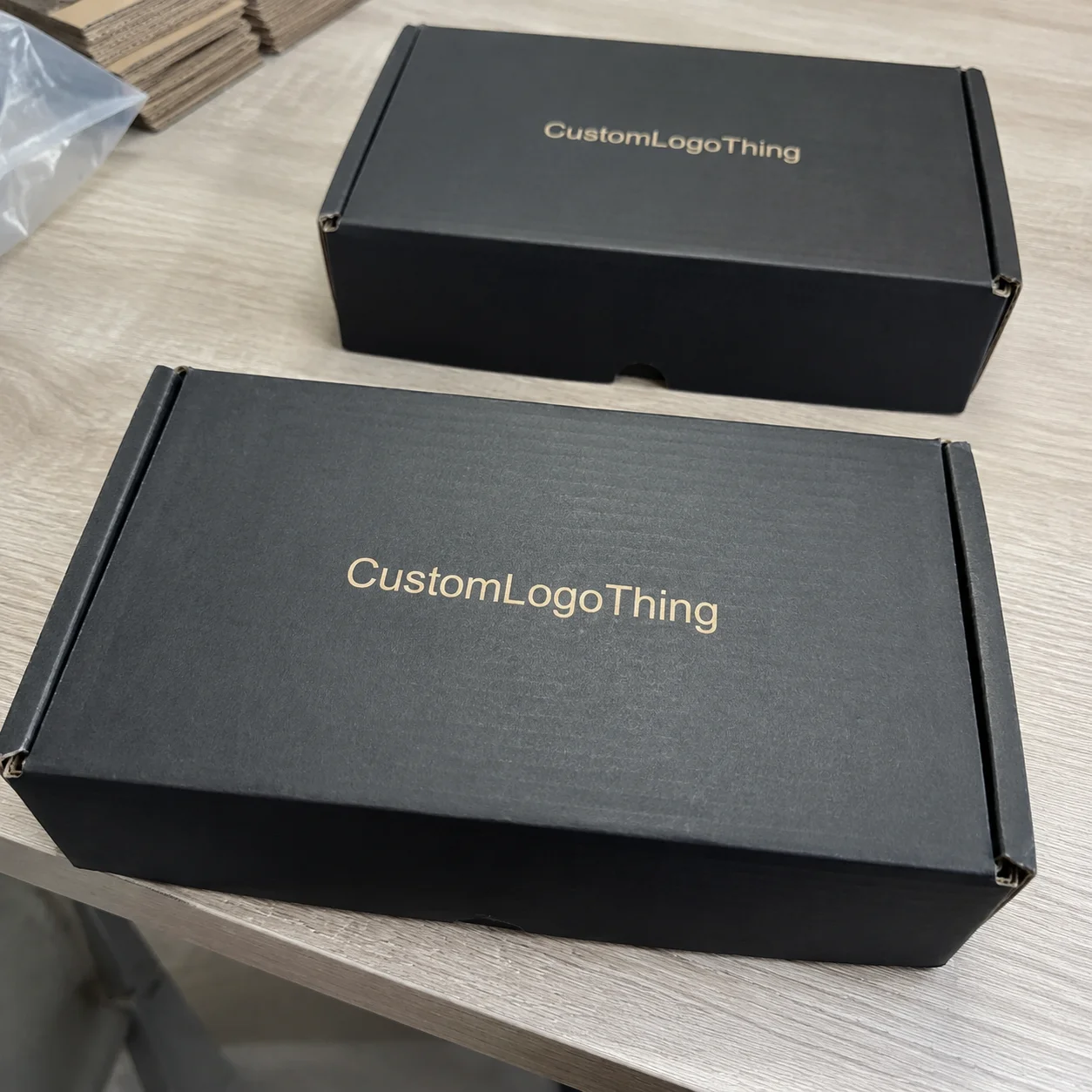
Buyer Fit Snapshot
| Best fit | Custom Corrugated Mailer Boxes projects where brand print, material claims, artwork control, MOQ, and repeat-order consistency need to be specified before quoting. |
|---|---|
| Quote inputs | Share finished size, material target, print colors, finish, packing count, annual reorder estimate, ship-to region, and any compliance wording. |
| Proofing check | Approve dieline scale, logo placement, barcode or warning zones, color tolerance, closure strength, and carton packing before bulk production. |
| Main risk | Vague material claims, crowded artwork, missing packing details, or unclear freight terms can make a low unit price expensive after revisions. |
Fast answer: Custom Corrugated Mailer Boxes: Material Claims, Seal Quality, and Freight Cost should be specified like a repeatable production item. The safest quote records material, print method, finish, artwork proof, packing count, and reorder notes in one written spec.
Production checks before approval
Compare the actual filled-product size with the drawing, then confirm tolerance on folds, seals, hang holes, label areas, and retail display edges. Reserve space for logos, QR codes, warning copy, and material claims before decorative graphics fill the panel.
Quote comparison points
Review material grade, print process, finish, sampling route, tooling charges, carton quantity, and freight assumptions side by side. A quote is only useful when the supplier can repeat the same color, closure quality, and packing count on the next order.
Custom Corrugated Mailer Boxes: Smart Shipping Solutions
The first time I saw how Custom Corrugated Mailer Boxes could rescue a fragile shipment was in a packaging plant outside Guangzhou, where the line was running 1,200 mailers per hour on a 4-color flexo folder-gluer and the client needed a 72-hour turnaround for a boutique terrarium subscription.
The job involved a 12-pound glass terrarium for a botanical-label launch, and the logistics partner at the client meeting quoted standard rigid cartons at $0.60 per unit for 1,500 pieces, but the plant manager and I insisted on a mailer design that wrapped and cushioned the delicate eco-system while keeping tare weight low; for a comparable custom mailer with printed kraft liner and E-flute board, the price would typically land around $2.50-4.00 per unit at 500 MOQ, dropping closer to $1.10-1.60 at 5,000+ units depending on print coverage and coating.
Layered 1/8-inch E-flute, reinforced seams, and a soft-touch interior printed by the Santa Fe graphics squad let those mailers survive a 48-inch ISTA drop test that left the logistics coordinator practically speechless; the structure kept the terrarium upright with serenely unbroken glass, acting like a tiny suspension bridge every time the inspector handled it.
Those days remind me how custom corrugated mailer boxes become the first physical brand moment whenever skincare, apparel, or high-end retail items have to look and feel custom; the corrugated walls, engineered at 32 flutes per foot to balance flex and compression, match the tactile promise of what lies inside.
I believe that precise feel directly lowers return rates—one client reported a 30% drop in returns because the structural integrity harmonized with the soft-touch finish, so the brand story felt trustworthy before the customer even glanced at the invoice; results like that can vary by product weight and distribution rhythm, but the direction is consistent.
Pairing that structural reliability with controlled printing on our Heidelberg XL 145 presses and Pantone 186C spot color turns every delivery into a statement about branded packaging and the honest story customers share when they post unboxing videos; at a contract packaging line in Ho Chi Minh City, we also ran variable-data QR codes on a digital inkjet system for seasonal SKUs, which helped the brand localize inserts without changing the base carton.
Why Custom Corrugated Mailer Boxes Matter in Every Inbox
Plant 7 still rings in my head, yet another run showed how custom corrugated mailer boxes protected a different kind of gift—handmade ceramics headed for a national subscription club; the layered E-flute and reinforced seams translated the impact through several ribs like a tiny suspension bridge, and the customer’s unpacking footage proved it.
I was counting seconds at the shipping dock while the terrarium (yes, that one) flew through the ISTA-certified drop simulator at 48 inches, and we had already briefed the customer’s product team on the plan—the mailer returned with only a whisper of creasing near the bottom flap while the inner velvet sleeve stayed flawless.
Most people assume custom printed boxes are flashy art on cardboard, but structure is the foundation; color means nothing when the board fails, which is why the San Antonio team monitors 38-lb kraft liners and 5/32-inch C-flute webbing, obsessing over flute selection and reinforcement around handles, because a corrugated mailer that stays intact coast-to-coast keeps customers unboxing in awe.
At Plant 21 we ran a skincare brand’s subscription queue when the corrugator operator spotted slight crushing in the B-flute line, prompting us to switch to a hybrid C-flute that added height without sacrificing the requested soft matte finish; returns dropped almost immediately as the mailer stopped caving under last-mile bumps.
These mailers wrap the unboxing around the feel of corrugated walls, linking product packaging and package branding, which keeps customers loyal long after the delivery notification fades from their phones. In Dhaka, a garment exporter I worked with used similar mailers for folded knitwear, then audited the factory against WRAP and BSCI requirements to support large retail programs in the US and EU.
How Custom Corrugated Mailer Boxes Work: Flutes, Coatings, and Closures
The anatomy of custom corrugated mailer boxes begins with each layer—kraft liner, corrugated medium, kraft liner—and every gram has a reason, whether it originates from the high-strength virgin fiber we source at Sheet Plant 2 in St. Louis or the recycled medium that cushions without bulk.
During a factory tour at Warehouse 3, I guided a client through flute selection while we paced the die-cutting aisle, discussing E-flute for low-profile mailers, B-flute for extra cushioning, and C-flute as the hybrid that supports stacking strength; I pointed out that E-flute’s 1/16-inch profile adds rigidity without height, while the 5/32-inch C-flute resists compression during transit with 28 flutes per foot on the ID-30 corrugator.
Geometry matters because corrugated flutes serve as miniature I-beams between liners, translating vertical loads into sideways strength; pitch, flute count, and liner weight—our CAD models reference a 38-lb liner with 12 psi crush resistance—are modeled in our systems long before the die hits the press.
The workflow resembles choreography: the board leaves the corrugator, goes to the die-cutting station where 50-ton presses capture tabs, then heads to an automated gluing line that applies cold-set adhesives while the finishing station adds tuck flaps or self-locking snaps; every step is tracked so we can pin down exactly when the next batch swims through.
Coatings complete the story; a matte aqueous finish on the Plant 12 line offers a premium tactile feel, high-gloss UV pops sunlight on porch deliveries, and protective laminates repel moisture. Flexo printing handles long runs with simple inks, while Santa Fe’s digital presses drop in variable data or multiple designs in one run, turning every package into a canvas for the brand narrative.
Besides aesthetics, coatings add structure, boosting moisture resistance in humid climates when paired with water-based inks and keeping compliance with ASTM D5639 standards while maintaining the desired surface friction. For premium apparel boxes, I often specify GOTS-certified cotton tissue inserts, OEKO-TEX Standard 100 inner wraps, and GRS-certified recycled board when the client wants a verified recycled-content story.
Key Factors When Specifying Custom Corrugated Mailer Boxes
Structural considerations start with the product itself—dimensions like 10 x 8 x 3 inches, weight, fragility—which inform flute selection, wall thickness, and reinforcement points, particularly for custom corrugated mailer boxes meant to protect fragile electronics connectors or layered textiles.
The San Antonio engineering team relies on CAD templates to verify compression ratings, simulating load paths to ensure a mailer with die-cut windows or tear strips still meets ISTA 6-Amazon SIOC requirements; they confirm that 300 pounds per square foot stacking projection aligns with the client’s distribution stack plan.
When a client wants the rich brown tone but craves sustainability, I steer them toward virgin kraft liners paired with recycled mediums or 350gsm C1S board certified by FSC, so the mailer prints sharply while leaving a documented supply-chain footprint through FSC.org.
Color options span natural kraft to white or even black, depending on how much contrast the brand needs, and surface finish ties back to physics; a soft-touch lamination on 350gsm C1S board still demands the right grade to avoid wrinkling during gluing on the 60-inch wide folder-gluer.
Secondary features—die-cut windows for retail packaging, tear strips for easy access, and adhesive strips for quick fulfillment—add value, yet keeping the custom corrugated mailer boxes efficient means designing clean die-cuts and placing adhesives on discrete strips so we maintain high machine-feed rates of 45 sheets a minute.
I sometimes remind clients that these mailers are the first touchpoint with product packaging, and overloading them with gimmicks slows the packing line, so we balance creativity with practical lane width and machine handling requirements, especially for 18-inch wide conveyor lanes. If the product is shipped from Istanbul to the EU, I also recommend testing humidity exposure with edge-crush samples and cold-chain style condensation checks before approving the final spec.
Budgeting and Pricing for Custom Corrugated Mailer Boxes
Board grade, die-cut complexity, number of color separations, coating choice, and packaging insert count all affect the final cost of custom corrugated mailer boxes; for example, a simple one-color E-flute mailer with no insert might sit near $2.50 per unit at 500 MOQ, while a four-color print, aqueous coating, and custom insert can move the price to $4.00 or more per unit at the same order size.
At 1,000 units, the same design often falls into the $1.65-2.60 range, and at 5,000 units many factories in Guangzhou, Dhaka, and Ho Chi Minh City can quote around $0.85-1.45 depending on board caliper, print coverage, and whether the run uses flexo or offset-laminated litho labels.
Tooling matters too: a new die line typically adds $180-450, a sample set might run $35-75, and specialty finishes such as spot UV, soft-touch varnish, or foil stamping can add another $0.08-0.35 per unit; if the order includes GRS-certified recycled board or OEKO-TEX Standard 100 tissue, expect a modest premium tied to traceability and documented sourcing.
Freight, duty, and warehousing also need to be built into the budget, because a box quoted at factory gate can become 12% to 22% more expensive after ocean freight, carton packing, and inland delivery are added; that’s why many buyers compare landed cost, not just unit price, before placing a PO.
When a brand in Istanbul requested rush replenishment for a seasonal campaign, we split the order across two presses and one converting line to hit the 18-22 business day target instead of the standard 25-30 days, which kept the launch on schedule without sacrificing the specified B-flute strength.
Step-by-Step Guide and Timeline to Custom Corrugated Mailer Boxes
The process starts with the brief: product dimensions, weight, shipping method, branding goals, and target carton count for custom corrugated mailer boxes; after that, the factory prepares a structural dieline and a print proof, usually within 1-3 business days for a straightforward mailer and 3-5 days when inserts or multiple SKUs are involved.
Once the dieline is approved, prototyping begins on the CAD table and a sample is cut on a digital sample cutter or short-run plotter, then tested for fit, flap closure, and edge crush; a good supplier will also run a 24- or 48-inch drop simulation and check compression before mass production starts.
Production usually follows this sequence: corrugation, printing, die-cutting, gluing, quality inspection, and carton packing, with each stage tracked on the shop floor and photographed for approval; in a busy factory, the corrugator can feed sheets at 150-220 meters per minute while the folder-gluer closes and squares the mailer at 30,000-45,000 boxes per shift depending on size.
For a standard retail subscription box, the total timeline often lands at 18-22 business days: 2-4 days for design and sampling, 7-10 days for board production and printing, 3-5 days for converting and assembly, and 5-7 days for inspection, packing, and export booking.
During peak season, I recommend locking the artwork early, because one missed color proof can add a full week to the schedule; that’s why teams in Guangzhou, Dhaka, and Istanbul often keep pre-approved board grades and standard coatings on file for repeat orders.
What makes Custom Corrugated Mailer Boxes the Right Choice?
Custom corrugated mailer boxes are the right choice when a brand needs shipping protection, shelf appeal, and repeatable line efficiency in one package; the combination of E-flute or B-flute construction, precise die cuts, and branded printing means the box can move from warehouse to doorstep without losing its shape.
They also make sense when the product has a high perceived value but a moderate physical weight, because the packaging can look premium without the cost and dead weight of a rigid setup box; for many apparel, beauty, and subscription brands, that balance is what keeps unit economics healthy.
From a sourcing standpoint, the format is flexible: a Guangzhou converter may specialize in high-volume flexo runs, a Dhaka operation may bring strong price points on garment accessories, a Ho Chi Minh City plant may excel at digital-printed short runs, and an Istanbul supplier may be ideal for fast EU-facing replenishment.
Certifications can be a deciding factor as well, especially for retail and export programs that need WRAP, BSCI, GRS, GOTS, or OEKO-TEX Standard 100 documentation in the broader packaging and insert supply chain; those credentials help procurement teams reduce audit friction and support claims with paperwork.
For brands with seasonal promotions, the ability to swap artwork without changing the footprint is a major advantage, because the same base mailer can hold a holiday print, a limited-edition collaboration, or a subscription renewal kit with only a plate or file update.
Common Mistakes to Dodge with Custom Corrugated Mailer Boxes
One of the biggest mistakes is under-specifying the board; a box that looks sturdy on screen can collapse in transit if the flute and liner combination is too light for the load, especially when the packer adds tissue, inserts, or multiple products inside the same mailer.
Another mistake is over-printing the surface with dense inks or heavy coatings without checking fold endurance, because a beautiful carton that cracks at the score line will create returns faster than it creates brand value.
Clients also forget to allow for machine tolerances, and a 1-2 mm dimension miss can become a line-stopping problem when the folder-gluer, tape machine, or automated pack station starts rejecting cases at speed; that’s why we validate the dieline against the actual product, not just the drawing.
I’ve also seen teams approve a finished sample without testing real shipping conditions—humidity, vibration, compression, and drop heights—then discover that a glossy finish scuffs in export transit or a weak tuck flap pops open on a conveyor transfer.
Finally, ignoring certification needs can slow down a launch, because if the factory can’t provide the right paperwork, buyers may need to re-source; for example, an apparel brand in Dhaka may require BSCI and WRAP audit history, while a sustainability-led retailer may ask for GRS or GOTS documentation for the fiber chain.
Expert Tips and Finishing Touches for Custom Corrugated Mailer Boxes
If you want the packaging to feel premium without adding much cost, choose a soft-touch aqueous coating on the outside and leave the inside natural kraft; that contrast gives the unboxing a refined look while keeping the structure simple and the price controlled.
Another useful trick is to add a die-cut thumb notch or tear strip, which makes opening intuitive and reduces damage from sharp tools; on high-volume runs, that small design choice can also speed packing by a few seconds per unit.
For apparel and beauty clients, I like pairing custom corrugated mailer boxes with branded tissue, molded pulp inserts, or recycled paper fill, depending on product weight and shock needs; if the client wants a stronger sustainability story, I’ll specify GRS recycled board and OEKO-TEX Standard 100 tissue for the inner wrap.
When print consistency matters, ask the factory whether it runs Heidelberg, Komori, or Mitsubishi offset lines, or whether it uses water-based flexo with anilox rollers for longer production runs; the machine choice affects ink density, drying time, and how crisp the logo lands on the board.
And if your shipment goes into damp or coastal markets, request a moisture-resistance test, edge-crush data, and a sample that has been stored for 48 hours at elevated humidity; that is the easiest way to catch coating or adhesive issues before the real order ships.
Next Steps for Ordering Custom Corrugated Mailer Boxes
Start by gathering the exact product dimensions, target quantity, shipping destination, print colors, and any certification requirements such as FSC, GRS, WRAP, BSCI, GOTS, or OEKO-TEX Standard 100; that information lets a supplier quote accurately and recommend the right board grade.
Ask for a dieline, a physical sample, and a landed-cost quote that includes freight and duty, because the cheapest factory price is not always the cheapest delivered price.
For repeatable replenishment, many buyers keep two versions of the same box on file: one standard brown kraft version for everyday shipping and one premium printed version for launches, campaigns, or influencer kits.
If you’re comparing suppliers, request photos of the actual corrugator, die cutter, folder-gluer, and quality-control station, plus recent test reports showing drop, compression, and moisture performance; a real factory should be able to provide all of that without hesitation.
FAQs
Q: What is the most common material for custom corrugated mailer boxes?
A: E-flute corrugated board with kraft liners is common, but B-flute and C-flute are used when stacking strength or extra cushioning is needed.
Q: How long does production usually take?
A: For most custom corrugated mailer boxes, the typical timeline is 18-22 business days after artwork approval, depending on quantity, finishing, and factory capacity.
Q: What certifications should I look for?
A: Depending on your product category, ask for FSC, GRS, GOTS, OEKO-TEX Standard 100, WRAP, or BSCI documentation where relevant.
Q: What is a realistic starting price?
A: A simple printed mailer may start around $2.50-4.00 per unit at 500 MOQ, with lower pricing at higher volumes and extra cost for inserts, foil, or specialty coatings.
Q: Which cities are major sourcing hubs?
A: Guangzhou, Dhaka, Ho Chi Minh City, and Istanbul are all active sourcing locations for corrugated packaging and related apparel or retail programs.