Buyer Fit Snapshot
| Best fit | Custom Corrugated Boxes with Foam Inserts projects where brand print, material claims, artwork control, MOQ, and repeat-order consistency need to be specified before quoting. |
|---|---|
| Quote inputs | Share finished size, material target, print colors, finish, packing count, annual reorder estimate, ship-to region, and any compliance wording. |
| Proofing check | Approve dieline scale, logo placement, barcode or warning zones, color tolerance, closure strength, and carton packing before bulk production. |
| Main risk | Vague material claims, crowded artwork, missing packing details, or unclear freight terms can make a low unit price expensive after revisions. |
Fast answer: Custom Corrugated Boxes with Foam Inserts: Board, Finish, Dieline, and Unit Cost should be specified like a repeatable production item. The safest quote records material, print method, finish, artwork proof, packing count, and reorder notes in one written spec.
Production checks before approval
Compare the actual filled-product size with the drawing, then confirm tolerance on folds, seals, hang holes, label areas, and retail display edges. Reserve space for logos, QR codes, warning copy, and material claims before decorative graphics fill the panel.
Quote comparison points
Review material grade, print process, finish, sampling route, tooling charges, carton quantity, and freight assumptions side by side. A quote is only useful when the supplier can repeat the same color, closure quality, and packing count on the next order.
Custom Corrugated Boxes with Foam Inserts: Smart Fit Guide
Custom Corrugated Boxes with foam inserts solve a very specific shipping problem: the carton survives, but the product still gets bruised, scuffed, or chipped because it moved just enough to take a hit. That tiny bit of motion matters more than most teams expect. A box can look solid on the outside and still let a polished component rub, a connector bend, or a glass edge fail before it reaches the customer.
That is the real packaging question: not “Is the carton strong?” but “Does the full system control movement, absorb shock, and still pack out at a sane speed?” That is where Custom Corrugated Boxes with foam inserts earn their keep. They pair a corrugated shipper for crush resistance with a foam interior that cradles the product, holds orientation, and reduces damage from drops, vibration, and rough handling.
If your team ships fragile electronics, precision parts, lab devices, cosmetics, premium kits, glassware, or anything with a finish that scratches easily, custom corrugated boxes with foam inserts deserve serious consideration. They also make sense when the package has to do double duty as product packaging and branded packaging, because the insert can protect the item while the outer carton carries a cleaner presentation. That is a different job than loose fill or a generic divider, and pretending otherwise usually costs money later.
Why Custom Corrugated Boxes with Foam Inserts Matter
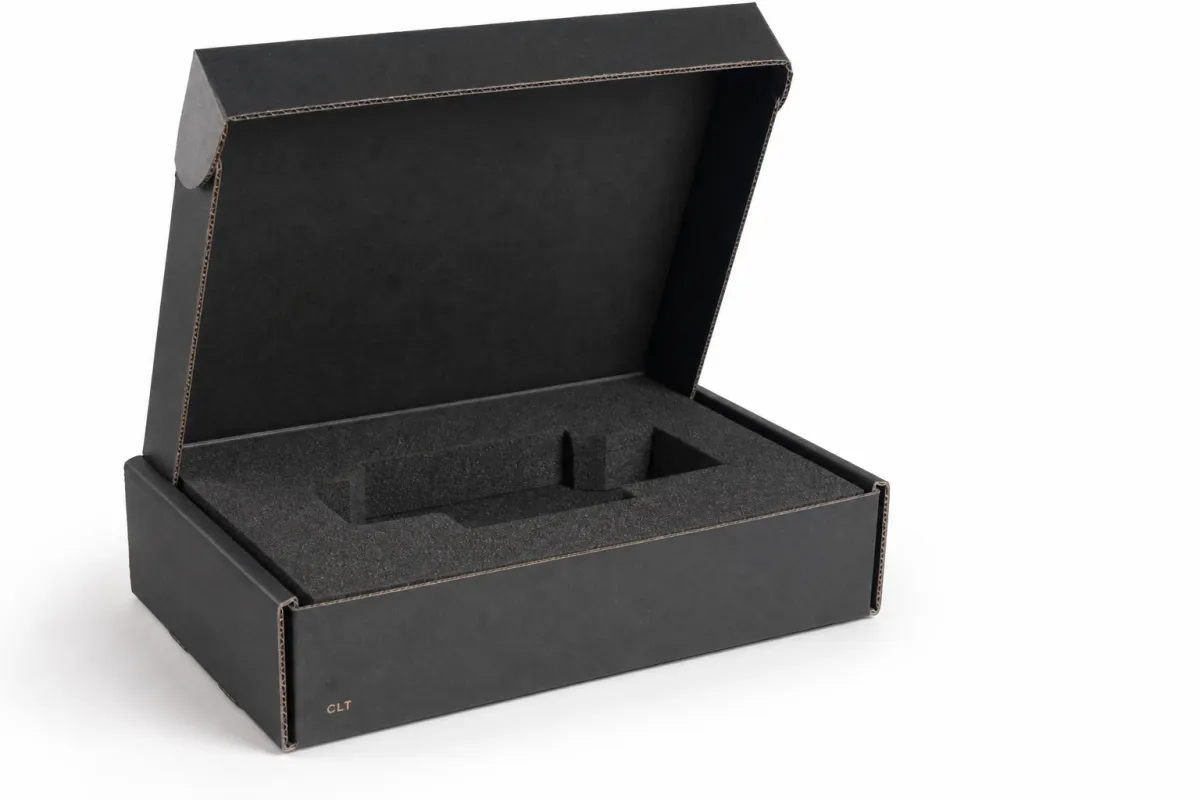
Here is the packaging reality that surprises people: many shipments do not fail because the outer box collapses. They fail because the product shifts a few millimeters, picks up momentum, and lands on the one edge or face that cannot take the hit. That is why custom corrugated boxes with foam inserts often outperform the “stronger box plus more void fill” approach. The corrugated shell handles compression and stacking, while the foam handles retention and shock control.
That split of labor is the whole point. In a well-designed system, the corrugated shell resists puncture, corner crush, and stacking load. The foam insert controls the internal environment. It keeps the product from rattling, stops corner-to-corner travel, and makes sure the item sits the same way in every shipment. For a buyer comparing custom corrugated boxes with foam inserts against Paper Void Fill or loose kraft, the difference is obvious in transit. One is built to hold a product in place. The others usually occupy empty space and hope for the best.
Where does this format earn its keep? Think about a small device with a screen, a machined part with a painted finish, a bottle with a fragile cap, or a premium kit that has to arrive looking as composed as it did in the sample room. In those cases, custom corrugated boxes with foam inserts can reduce abrasion, cut down on repacks, and lower damage claims. They also help when the packout needs to feel deliberate, which matters in retail packaging and direct-to-consumer boxes alike.
Teams often underestimate the business side of protection. A carton that prevents one damage claim out of every few hundred shipments can justify a more engineered structure if the product is high value or the return rate is painful. Once the package is consistent, the line runs better too. Operators spend less time improvising with tape, extra inserts, or last-minute dunnage. Custom corrugated boxes with foam inserts are not only a protective choice; they are an operations choice.
There is also a presentation effect that should not be ignored. A clean die-cut cavity inside a corrugated mailer can make a product feel more premium without changing the product itself. That matters in package branding, especially for companies that want the unboxing sequence to reinforce quality instead of making the customer dig through loose fill. If you are comparing Custom Packaging Products, the real question is often whether you need a protective shipper, a display-oriented pack, or both.
“The best package is the one that protects the product in the worst realistic shipment, not just the one that looks good on the bench.”
I have watched teams approve a sample because the carton looked clean and the insert felt tidy, then get surprised when the first drop test or courier run exposed a loose cavity. That happens more often than people admit. Custom corrugated boxes with foam inserts are built for those hard realities, not just the shelf photo.
How Custom Corrugated Boxes with Foam Inserts Work
Custom corrugated boxes with foam inserts are not one component; they are a small system. The outer corrugated box provides the structural shell. The foam insert creates a shaped cavity around the product. The cavity geometry sets how the product sits, how much force it takes to place and remove it, and how the package behaves under impact. The closure method matters too, because a strong internal design can still be undermined by a weak seal or a box that flexes too much under stacking pressure.
Think of the corrugated board as the package’s armor and the foam as the shock absorber. The board handles edge crush, puncture resistance, and compression from other cartons stacked above it. The foam spreads impact over a larger area so the product does not experience point loading. That distinction becomes critical for objects with lenses, coated surfaces, protruding connectors, or corners that fail before the rest of the item does. With custom corrugated boxes with foam inserts, the product should feel held, not squeezed.
The insert itself can be made from several foam families. Polyethylene foam is common for durability and clean cut edges. Polyurethane foam is often used where cushioning and cost need balance. EVA can be a good fit for a more finished feel or for products that need a denser, more stable cradle. There are also engineered foams for specialized applications. The right choice depends on product weight, desired insertion force, exposure to abrasion, and whether the package will be handled many times before it reaches the end user. That is why custom corrugated boxes with foam inserts should be specified from the product outward, not from a catalog inward.
Core parts that matter most
The first question is simple: what exactly needs to be protected? A product with a flat base and no fragile protrusions can be held differently than one with a centered lens, a side port, or a top-mounted handle. The insert should grip the item where it is strongest and leave sensitive features floating or shielded. In practice, that means measuring the product body, the tolerances around it, and any accessory that has to travel in the same cavity. For custom corrugated boxes with foam inserts, those details decide whether the package feels effortless or frustrating.
The second question is orientation. Some items can ship upright or on their side. Others must stay in one position because of liquid, finish, or internal component concerns. Foam gives you control over that orientation. It can act like a keyed seat, so the product cannot rotate, tip, or slide on impact. That is one reason custom corrugated boxes with foam inserts are common in precision components and electronics, where the package is expected to “know” where the product belongs.
Foam choice is not interchangeable
Buyers often say “foam” as if it is one material. It is not. Density, compression resistance, recovery, and surface finish all change the outcome. A softer foam might absorb a shock better but allow more movement. A denser foam may hold shape beautifully but transmit too much force if the cavity is too tight. The best designs for custom corrugated boxes with foam inserts usually sit in the middle: enough support to prevent travel, enough compliance to protect delicate surfaces, and enough clearance to allow repeatable packout on a production line.
There is a practical fit target that matters more than people think. The insert should retain the product with controlled pressure, not a hard squeeze. If insertion takes too much force, operators will fight the package, the foam may tear early, and the product may get stressed before shipping even starts. If the fit is too loose, the product will move and wear. Good custom corrugated boxes with foam inserts sit in that narrow band where retention is secure but not punitive.
Packaging engineers often pair this thinking with transit testing. For example, ISTA test methods are widely used to screen drop, vibration, and compression risks, while ASTM distribution tests are helpful when the team wants a structured view of how the package behaves in a real shipment cycle. If your product is sensitive and high value, those standards are not academic; they are one of the fastest ways to find weak points before customers do.
Custom Corrugated Boxes with Foam Inserts: Cost, Pricing, and MOQ
The price of custom corrugated boxes with foam inserts usually comes down to six things: dimensions, board grade, foam type, insert complexity, print coverage, and labor. Freight matters too, especially if cartons are large or if the insert has to ship assembled. A small change in any one of those variables can move the unit cost more than buyers expect. That is why one quote might look inexpensive on paper while the next jumps sharply after a minor structural revision. Packaging pricing can be a little sneaky that way.
Prototype pricing is almost always higher than production pricing. That is normal. The first sample run carries design time, cutting setup, proofing, and sometimes hand assembly. Once the package is dialed in and the quantity rises, the per-unit cost usually falls. For smaller programs, custom corrugated boxes with foam inserts can still be practical, but the design needs to stay simple. Too many pieces in the insert or too much manual assembly can make a low-volume program feel expensive fast.
Minimum order quantity is not just a supplier issue; it is a design issue. A clean, standard-sized outer carton with a simple insert may support smaller runs, while a highly shaped foam set can make tiny quantities inefficient. If a team wants to control spend, the fastest wins usually come from simplifying the insert geometry, reducing the number of foam components, standardizing outer box dimensions, and keeping print to a focused branding treatment instead of a full-panel build. Custom corrugated boxes with foam inserts become more affordable when the structure does more of the work and decoration does less.
| Program Type | Typical Use | Approx. Unit Cost | What Drives the Price |
|---|---|---|---|
| Prototype / Sample | Fit testing, approvals, launch validation | $8-$35 per set | Setup time, sample cuts, manual assembly, revisions |
| Short Run | Limited release, pilot shipping, replacement kits | $1.40-$4.50 per set | Lower volume, moderate setup, simpler print, some hand labor |
| Production Run | Ongoing fulfillment, repeat shipments, scaled programs | $0.35-$1.80 per set | Volume, automation, board grade, foam density, packout efficiency |
Those numbers are directional, not universal. A large insert, specialty foam, or heavy print coverage can push pricing higher. A simple brown corrugated shipper with a single foam cavity can come in lower. The point is to compare like with like. For custom corrugated boxes with foam inserts, the true cost is not just the carton and foam bill. It is the labor saved, the damage prevented, and the consistency created across hundreds or thousands of shipments.
One useful rule: if the quote seems too low, ask what is not included. Is assembly separate? Is freight separate? Is the insert quoted as one piece or multiple parts? Are samples included? A good quote request for custom corrugated boxes with foam inserts should include product dimensions, weight, annual volume, ship method, finish sensitivity, and whether the package must support premium presentation as well as transit protection. If you are comparing Custom Shipping Boxes, make sure the comparison includes the interior retention method, not just the outer carton price.
For brands that also care about sustainability, this is where nuance matters. Corrugated board can be sourced from responsible forestry programs, including options aligned with FSC certification. Foam is more complicated, because recyclability and local recovery vary by region and material family. The best design is not always the one with the fewest pieces. Sometimes it is the one that lowers damage and total waste across the life of the package. That tradeoff is a little less tidy than a slogan, but it is honest.
Production Process and Timeline for Custom Corrugated Boxes with Foam Inserts
The path from idea to shipment is usually straightforward, but only if the measurements are clean and the approvals move on time. For custom corrugated boxes with foam inserts, the process usually starts with product intake. The packaging partner needs exact dimensions, weight, photos of sensitive areas, and a sense of how the item will be shipped. From there comes the structure draft, foam selection, sample production, testing, approval, and final production. Each step sounds ordinary. The problems usually happen in the handoff between them.
The measurement phase deserves more attention than it gets. A product is never just its nominal dimensions. There are tolerances, labels, seams, protruding connectors, protective caps, and sometimes accessories that travel in the same box. If those are not captured early, the insert will be designed around the wrong footprint. With custom corrugated boxes with foam inserts, the most common measurement mistake is ignoring the “real” size of the product after packaging fixtures are attached. That is how fit problems sneak in.
Sampling is the decision point
A sample should not be treated as a courtesy. It is the moment when retention, insertion force, orientation, and packout speed all become visible. Teams should inspect whether the product drops in too easily, needs too much force, or sits in a way that looks secure but feels loose after a few shakes. Real operators should test it too. If the line struggles with orientation or removal, the design will not scale well. That is especially true for custom corrugated boxes with foam inserts, where small changes in foam cut depth or cavity width can change the entire packing experience.
Sample review should include a few hard questions. Can the product survive a typical drop profile? Does the package hold up under compression? Is the closure easy to repeat at speed? Does the sequence make sense to someone who has never packed the item before? If the answer to any of those is uncertain, the sample is telling you something useful. Better to catch it before production than after the first damage report.
Timelines depend on complexity
Simple custom corrugated boxes with foam inserts can move quickly once measurements are approved. More complex systems, especially those with printed cartons, multiple foam pieces, or a new product still changing in design, usually need more iteration. A straightforward sample-and-approve cycle may move in about 1-2 weeks. Production after approval may take another 1-3 weeks depending on quantity, materials, and scheduling. More complex programs can stretch beyond that, especially if the team makes late changes to product dimensions or board grade.
The hidden timeline risk is revision creep. A last-minute connector change, a thicker protective cap, or a request for denser foam can reset the fit. That is why custom corrugated boxes with foam inserts should be reviewed against frozen product specs whenever possible. Packaging teams do not like hearing that the product is still moving, but they like even less rerunning samples because a tiny feature changed after approval.
For launch planning, it helps to think in phases instead of hoping for a single flawless run. Product info comes first. Then structure. Then samples. Then drop and handling review. Then production. That sequence is boring, which is exactly why it works. A fast project is usually just a well-sequenced one.
Key Factors That Decide Fit, Protection, and Performance
Custom corrugated boxes with foam inserts only perform well if the design matches the product and the shipping environment. Weight matters. So does center of gravity. A heavy item with uneven mass can load one side of the insert more than the other, even if the outer carton looks oversized enough. That is one reason a product that seems “easy” to pack can still fail in transit. The package is not just holding weight; it is holding a force pattern.
Shipping conditions matter just as much. Parcel and freight are different worlds. Parcel shipments face more drops, more conveyor handling, and more random orientation changes. Freight adds stacking pressure and a different vibration profile. Temperature and humidity can also affect some materials and closures. If the item is going through a rough parcel network, custom corrugated boxes with foam inserts may need deeper retention, stronger board, or a more stable foam density than a box built for local hand delivery.
Surface sensitivity is another major factor. Polished finishes, painted housings, lenses, screens, and soft-touch coatings can all show marks quickly. In those cases, foam needs to contact the product in a way that avoids abrasion. Sometimes that means a softer surface layer. Sometimes it means changing the cavity so the product only touches on stronger areas. That is where packaging design stops being generic and starts becoming specific. Good custom corrugated boxes with foam inserts are tailored to the actual finish, not just the shape.
Sustainability needs a realistic frame
There is a temptation to treat foam as automatically wasteful and paper as automatically better. That is too simple. If a paper insert fails to protect a high-value item, the real waste is the damaged product, the return shipping, and the repack time. The better sustainability conversation compares full system performance. If custom corrugated boxes with foam inserts cut damage rates sharply and reduce replacements, they can lower total material waste even if the insert itself is more specialized. In practical terms, the right design often uses the least total material that can still protect the product in transit.
That also means thinking about end-of-life, especially for brands that want a cleaner story in branded packaging. Corrugated board is widely recyclable in many regions, and the EPA has useful background on recycling basics and material recovery. Foam recovery is less uniform, so the right answer may be material reduction, insert simplification, or a hybrid structure rather than chasing a one-size-fits-all “green” label. Honest packaging choices usually perform better than slogans.
Branding and user experience are not cosmetic extras. A secure package that opens in a clear order can make the product feel more premium. A chaotic packout with loose parts, hidden tabs, and unnecessary friction can make even a good product feel cheaper. That is why custom corrugated boxes with foam inserts are often used for premium kits and launch sets. They can protect the item and still support the brand story.
Common Mistakes When Specifying Custom Corrugated Boxes with Foam Inserts
The most common mistake is measuring only the product body and ignoring the rest. Connectors, labels, seams, clips, caps, and protective covers all change the true packing envelope. If those are missed, the insert will be wrong from the start. With custom corrugated boxes with foam inserts, a few millimeters can be the difference between secure retention and a package that tears itself up during packout.
Another frequent failure mode is over-tight foam. If the insertion force is too high, operators may deform the product, damage a finish, or simply stop following the intended packout method. That is a hidden operational cost. On the other side, loose cavities create movement, movement creates wear, and wear gets mistaken for “bad foam” when the real issue is poor fit. Good custom corrugated boxes with foam inserts avoid both extremes by balancing retention and ease of use.
Labor is the trap that catches many well-intended designs. A protective system that takes too long to pack can be expensive, error-prone, and unpopular on the floor. If the insert has to be rotated, aligned, folded, taped, and checked in multiple steps, the design may be too complicated for its own good. Simpler structures often pack better. That is one reason buyers should ask for an assembly visual or packout sheet before approving custom corrugated boxes with foam inserts.
Transit testing is another area where teams get too confident too early. A sample that survives one drop on a quiet bench is not the same as a box that survives repeated handling, corner impacts, stack pressure, and vibration. If the product will move through a parcel network, test it that way. If it will be palletized, test for compression and stacking too. A package that works in theory and fails in transit is still a failure.
There is also a branding mistake worth mentioning. Some teams chase a flashy outer print and forget the package still has to work on the inside. That is backwards. Custom corrugated boxes with foam inserts should begin with protection and usability, then support visual identity. The best Custom Printed Boxes do both, but the print cannot rescue a poor cavity design.
Expert Tips and Next Steps for Better Spec Decisions
Build the spec around the worst realistic case. Not the perfect sample. Not the cleanest line operator. Not the gentlest route. Use the edge condition that is most likely to expose a weakness. That might be a heavier accessory set, a tighter shipping lane, or a product revision with slightly different dimensions. For custom corrugated boxes with foam inserts, edge-case thinking saves money because it prevents redesign after damage appears in the field.
Ask for a packout sheet, dieline, and visual assembly guide. Those documents sound basic, but they keep production consistent when the work moves from one person to another. A good packout sheet reduces ambiguity: which side faces up, where the accessory goes, how much force is acceptable, and what the finished kit should look like. If you ever have multiple packing stations or seasonal staff, this is not optional. It is the difference between a controlled program and a guessing game.
Test the prototype with real operators, not just the engineering team. People who pack the product every day will spot awkward removal steps, confusing orientation, and slow motions that a designer may never notice. They also have a good instinct for what feels durable versus what feels delicate. That feedback is invaluable for custom corrugated boxes with foam inserts, because the best design is one the line can repeat without slowing down. If the team hates packing it, that is a signal, not a personality issue.
If you are preparing a quote request, make it complete from the start. Include product dimensions, weight, photos, fragility points, annual volume, ship method, branding goals, and any compliance needs. If the package is serving as both transit protection and customer-facing package branding, say so. That changes the design brief. It may also change the board choice, print strategy, or whether the project belongs closer to retail packaging or a purely protective shipper.
For teams comparing options across a broader program, it can help to review Custom Packaging Products alongside a dedicated Custom Shipping Boxes specification. The goal is not to buy more packaging. The goal is to match the structure to the product, the route, and the brand promise. That is the real job of custom corrugated boxes with foam inserts.
Start with three questions: what can break, how will it ship, and what has gone wrong before? Then gather photos, measurements, and damage history. Request a sample. Compare it against the worst route, not the best one. If the package passes that review, you are close. If it does not, the problem is usually easier to fix on paper than after thousands of units are packed. That is why custom corrugated boxes with foam inserts are worth a careful spec process: they protect the product, stabilize the packout, and reduce the kind of mistakes that are expensive to learn from.
Smart packaging programs are rarely the most complicated ones. They are the ones that fit the product cleanly, move through the line without drama, and survive the messiness of real transit. If you need a system that does all three, custom corrugated boxes with foam inserts are often the right place to start. And if you are still debating the final geometry, get the sample in hand before you argue about finish details; that usually settles the question in a kinda practical way.
Are custom corrugated boxes with foam inserts better than paper inserts?
Foam is usually the stronger choice when the product is fragile, heavy, oddly shaped, or likely to shift in parcel transit. Paper inserts can work well for lighter products, simpler retention, and brands that want easier recycling or a lower material cost. The better option depends on drop risk, product finish, and how much movement the package can tolerate without damage.
How thick should the foam be in custom corrugated boxes with foam inserts?
There is no universal thickness. The right answer depends on product weight, fragility, and the severity of the shipping environment. A practical starting point is to prototype several foam depths and compare insertion force, retention, and damage resistance. The safest route is to test under real handling conditions instead of guessing from appearance alone.
What affects the price of custom corrugated boxes with foam inserts most?
The biggest cost drivers are size, foam complexity, quantity, labor for assembly, print requirements, and shipping method. Lower quantities usually cost more per unit because setup and sampling get spread across fewer boxes. Simplifying the insert layout and standardizing outer carton sizes are two of the fastest ways to reduce price without weakening protection.
How long does it take to produce custom corrugated boxes with foam inserts?
Simple projects can move quickly once dimensions are approved, while more complex designs need extra time for sampling and revision. The longest delays usually come from unclear specs, late changes, or approval bottlenecks rather than manufacturing itself. If the product is still changing, plan for at least one sample round before committing to production.
What should I send when requesting a quote for custom corrugated boxes with foam inserts?
Send product dimensions, weight, photos, fragility concerns, and whether the product has sensitive surfaces or accessories. Include annual volume, preferred ship method, and any branding or presentation goals that affect the design. The more complete the input, the more accurate the quote and the faster the packaging partner can recommend a workable structure.

