Buyer Fit Snapshot
| Best fit | Custom Corrugated Pizza Boxes Wholesale projects where brand print, material claims, artwork control, MOQ, and repeat-order consistency need to be specified before quoting. |
|---|---|
| Quote inputs | Share finished size, material target, print colors, finish, packing count, annual reorder estimate, ship-to region, and any compliance wording. |
| Proofing check | Approve dieline scale, logo placement, barcode or warning zones, color tolerance, closure strength, and carton packing before bulk production. |
| Main risk | Vague material claims, crowded artwork, missing packing details, or unclear freight terms can make a low unit price expensive after revisions. |
Fast answer: Custom Corrugated Pizza Boxes Wholesale: Specs & Pricing should be specified like a repeatable production item. The safest quote records material, print method, finish, artwork proof, packing count, and reorder notes in one written spec.
Production checks before approval
Compare the actual filled-product size with the drawing, then confirm tolerance on folds, seals, hang holes, label areas, and retail display edges. Reserve space for logos, QR codes, warning copy, and material claims before decorative graphics fill the panel.
Quote comparison points
Review material grade, print process, finish, sampling route, tooling charges, carton quantity, and freight assumptions side by side. A quote is only useful when the supplier can repeat the same color, closure quality, and packing count on the next order.
Custom Corrugated Pizza Boxes Wholesale: Specs & Pricing
If you are buying custom Corrugated Pizza Boxes wholesale, the box is not decoration. It is heat control, grease control, and a small piece of structural engineering that leaves the oven with the pizza and stays in the picture until delivery is complete. Get it wrong and the pie arrives warped, sweaty, or crushed under the weight of everything stacked above it. That is not branding. That is a refund wearing a logo.
Why Cheap Pizza Boxes Get Expensive Fast
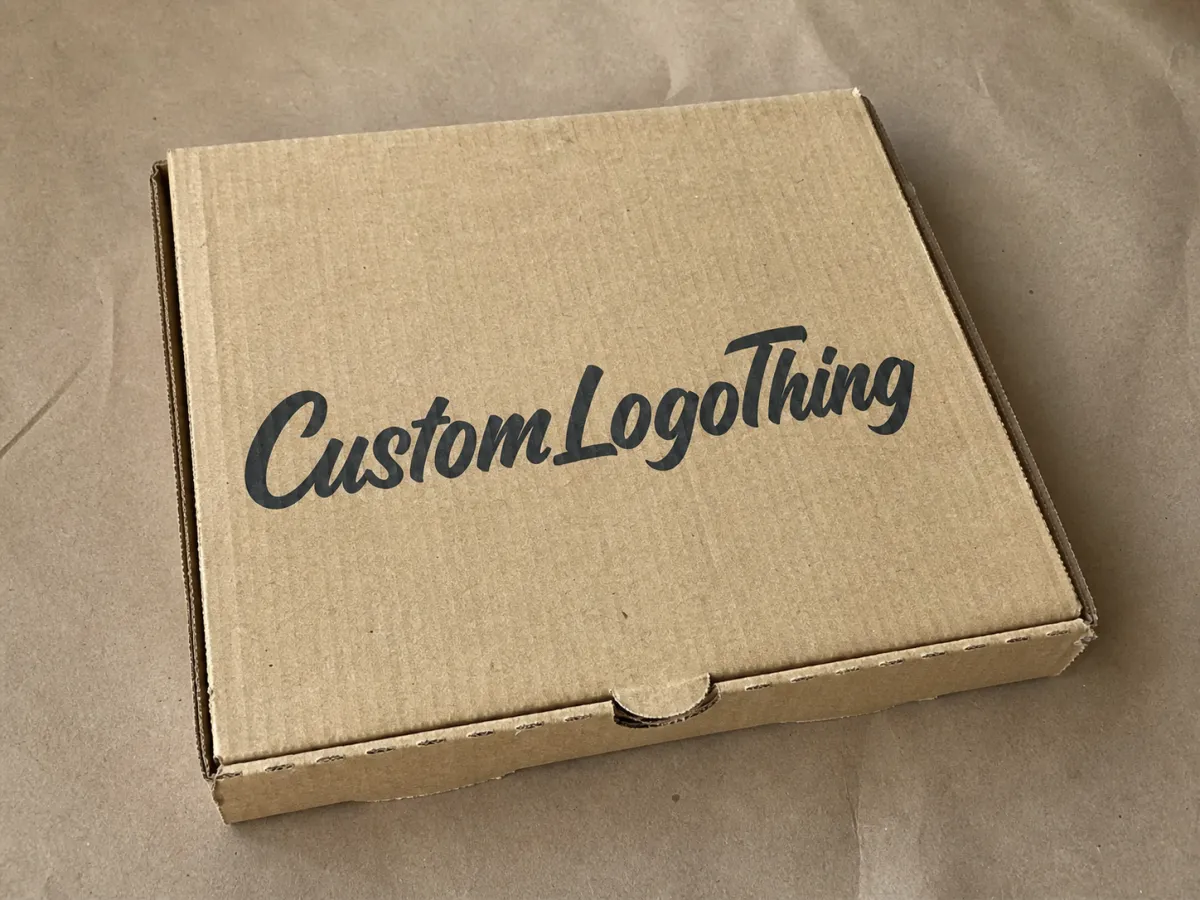
A pizza box looks harmless at pickup. Ten minutes later, after steam, stack pressure, and the inside of a delivery bag start working on it, the story changes. The lid bows. The grease stain spreads. The crust softens. The box that looked fine on the make line begins to look like a bad decision in corrugated form. That is why buying custom corrugated pizza boxes wholesale is usually a cost-control move, not a vanity purchase. The real savings show up in fewer remakes, fewer complaints, and fewer deliveries that come back with a box too soft to trust.
From a packaging buyer’s angle, the carton has three jobs at once. It has to hold heat without turning the crust into a damp sponge. It has to resist grease without collapsing at the corners. It has to survive transit, which sounds easy until six pies are stacked in a warm bag and the bottom carton becomes the place where all the stress lands. Cheap stock cartons often fail in one of those areas. Sometimes all three. Then the “cheap” order starts collecting hidden costs through waste, replacements, and the kind of customer experience that pushes people toward another pizzeria next time.
The lowest unit price is rarely the smartest metric. A thin box with a lower quote can cost more once spoilage, re-delivery, and brand damage are counted. That matters for branded packaging. It matters for food service packaging. It matters for retail packaging too, especially when boxes sit near the counter or show up in photos, which happens more often than many buyers want to admit. A good pizza box is structure, presentation, and delivery insurance in one piece of board.
“If the box bends before the pizza gets there, the problem was never the pizza.”
Buyers who know the category usually compare total landed cost, not just the factory number. That means board grade, flute choice, print coverage, freight, and the share of boxes that survive the route in usable shape. A slightly heavier board or a better flute can end up cheaper over a quarter than chasing the lowest carton price and paying for the damage later. It is plain arithmetic. Packaging turns that arithmetic into profit or loss.
Custom Corrugated Pizza Box Product Details
“Corrugated” means the box is built from layers, not one flat sheet. There is an outer liner, an inner liner, and a fluted medium between them. That middle flute gives the carton stiffness and a bit of thermal insulation. It also helps the lid stay upright when boxes are stacked in a warmer, loaded into a tote, or shoved into the back seat of a car that turns every stoplight into a compression test.
Most pizza programs use one-piece folder styles because they store flat, assemble quickly, and are familiar to staff. Tab-lock designs are common when the goal is quick setup without glue. Die-cut shapes make sense when a brand wants a different presentation or more visual impact, though the price usually rises as the cut and print layout become more complex. Slice boxes, whole pies, and oversized pies all change in dimension, but the buying logic stays steady: enough board strength to keep shape, enough venting to manage steam, and enough surface for custom printed boxes that look deliberate instead of busy.
Print options usually fall into a few practical lanes. One-color logos are simple to run and often deliver the best value for smaller wholesale programs. Two-color or full-coverage artwork gives stronger shelf presence and more room for package branding, yet setup costs climb. Inside printing can support promotions, ingredient notes, QR codes, or short brand messages, though it should never interfere with food safety or the carton’s structure. Buyers should also ask whether inks, coatings, and adhesives are approved for food-use applications. That question is not glamorous. It is basic diligence.
Grease resistance matters more than many buyers expect. Pizza is hot and oily, and the right board and surface treatment slow the grease from bleeding through the carton. Venting matters too. If steam has nowhere to go, the crust softens. If venting is too aggressive, the pie loses heat too quickly. The right balance depends on route length, kitchen speed, and whether the order is a quick neighborhood run or a longer delivery lane with more time for the box to be tested by physics.
For buyers who want outside reference points, paper sourcing and transport testing are not abstract extras. FSC certification is widely recognized for responsibly sourced paper materials, and packaging transport testing is often discussed through organizations like ISTA. Those references do not choose the box for you, but they do separate real packaging discipline from guesswork dressed up as confidence.
One more practical detail: corrugated pizza cartons are not all printed or manufactured the same way. Some suppliers offer preprint on the liner before the board is formed; others use post-print methods on finished blanks. The difference affects image quality, plate setup, and cost at scale. Preprint can produce cleaner graphics for larger runs, while post-print may be more economical for straightforward logos and simpler artwork. A buyer who knows the production method can ask better questions and avoid paying for a process that does not match the design.
Specifications That Decide Performance
Before any quote has meaning, the buyer needs a real spec sheet. Not “standard pizza box.” Not “big enough for our large pie.” You need the actual length, width, and depth, plus flute style, board strength, finish, and print coverage. Those details decide whether the box performs in the store and during transit. Leave them vague and the quote will be vague too, which usually means the problem shows up after the first shipment.
Size is the first decision because box size changes everything downstream. A carton that is too large lets the pizza slide around during transit, scuffing toppings and making the presentation look careless. A box that is too tight compresses the crust, sticks cheese to the lid, and sends the pie out looking overhandled. The right fit leaves just enough clearance for easy loading while keeping the pizza centered. For whole pies, buyers often look at 10-inch, 12-inch, 14-inch, 16-inch, and 18-inch sizes. Slice boxes and specialty square formats vary more, especially for operators packaging different menu items from the same line.
Flute type matters more than first-time buyers usually expect. E-flute is thinner and prints well, which suits presentation-driven designs and smaller profiles. B-flute is a common choice for strength and stackability. Double-wall construction is heavier, but it helps when the pizza is large, the route is long, or the carton needs more crush resistance. There is no single “best” board. There is only the board that matches your menu, delivery time, and handling conditions.
Operational details matter too. How does the box nest when flat? How many fit in a case? Does the carton stack cleanly in a warmer or delivery bag? Will the flap lock stay secure when staff assemble boxes under dinner rush pressure? Those questions sound minor until the ticket board fills up and someone is fighting a sloppy carton at the make line. Good custom corrugated pizza boxes wholesale programs save labor because they are easier to store, easier to assemble, and less likely to become a nuisance during peak hours.
Artwork prep deserves the same attention. A clean dieline, proper bleed, and print-ready logos are not optional. Printers need the correct layout before the first proof can move. If the design includes inside print, spot colors, or special finishing, the file review becomes even more important. Buyers should request the dieline early, confirm the print area, and decide whether the art is being optimized for cost or for stronger branding. Those are different jobs. One is a practical carton. The other is a marketing piece that happens to hold pizza.
Moisture control is another detail buyers sometimes overlook. A box that performs well in a dry test can behave differently once it is exposed to steam inside a delivery bag or a humid kitchen. The liner, the flute, and any coating all influence how long the carton stays firm. If your operation sends out pies in dense urban delivery routes or in climates with high humidity, that extra exposure matters. It can be the difference between a crisp crust and one that loses its edge before the customer opens the lid.
- Length, width, depth: Confirm the exact pizza size and any extra clearance needed for toppings or cut lines.
- Board grade: Choose the structure that matches stack pressure and delivery distance.
- Flute type: Balance stiffness, insulation, and print quality.
- Finish: Decide on natural kraft, coated paper, or another surface treatment based on grease resistance and print needs.
- Print coverage: Keep the design aligned with budget and production complexity.
Custom Corrugated Pizza Boxes Wholesale: Cost, MOQ, and Quote Basics
Pricing is where buyers get misled by clean-looking quotes. A low number on paper feels good. A useful number matters more. The real cost drivers for custom corrugated pizza boxes wholesale are box dimensions, board grade, flute type, print colors, finish or grease resistance, and total quantity ordered. Each variable affects material use, labor, and setup time. A carton that looks cheaper may simply be stripped down in ways that only become visible once delivery starts failing.
For rough planning, many wholesale pizza programs fall into the following range at moderate volumes, assuming a custom printed corrugated carton and a straightforward layout. These are practical ballparks, not promises:
| Box Type | Typical Use | Common Board / Flute | Estimated Wholesale Range per Unit | Notes |
|---|---|---|---|---|
| 10-inch slice or personal box | Singles, combo meals, takeout | E-flute or light B-flute | $0.22-$0.42 | Lower material use, good for branded packaging with simple print |
| 12-inch standard pie box | Most core pizza menus | B-flute | $0.28-$0.55 | Common balance of stiffness, cost, and stackability |
| 16-inch large pie box | Family pies, delivery orders | B-flute or heavier | $0.40-$0.78 | More board needed; freight and compression resistance matter more |
| 18-inch extra-large or heavy-duty box | Party sizes, high-topping loads | Heavier B-flute or double-wall | $0.55-$1.05 | Better for long routes and larger food service packaging loads |
Those numbers move quickly. Add full coverage print, inside printing, specialty coatings, or a smaller order, and the unit price rises. Increase volume and the per-box cost usually drops, though not in a perfectly straight line. Tooling, setup, freight, and plate charges can flatten the savings if the order is too small. That is why experienced buyers ask for multiple quantity breaks. Five thousand boxes can look expensive beside one thousand boxes until the per-unit math shows the larger run pulling down the delivered price enough to justify the inventory.
MOQ guidance should be realistic. For custom printed pizza boxes, many suppliers start around 1,000 to 3,000 units per size, with better economics at 5,000 or more. Plain stock cartons can go lower, but custom print brings setup work that needs volume to make sense. If you are testing a new menu item, ask for two quotes: one at pilot quantity and one at the scale quantity you expect once the roll-out sticks. That shows the real jump in unit cost, not a fantasy estimate built on wishful ordering.
An apples-to-apples quote should include these items:
- Exact carton dimensions and style.
- Board and flute specification, including recycled content or certification if needed.
- Print method and number of colors.
- Any coating or grease resistance requirement.
- Setup, plate, or die charges if they are separate.
- Shipping terms and destination.
- Lead time from proof approval to ship date.
If a quote leaves out freight, dies, or proofing, the “cheap” number is bait. Total cost per delivered box is what matters. That is the figure procurement should compare, not the prettiest line on the first page.
A smart buyer also checks whether the carton spec lines up with other packaging decisions across the menu. If the shop already uses branded carryout bags or related retail packaging, matching the print style can strengthen the full presentation without adding much cost. If the operation also ships merchandise or promo kits, the same artwork logic can carry into Custom Shipping Boxes or other Custom Packaging Products. Consistency helps. Randomness looks cheap faster than anyone expects.
It also helps to ask what is included in the sample and proof process. Some suppliers charge separately for physical samples; others include a flat proof stage but not a printed prototype. Those differences do not sound dramatic until the buyer realizes the first “sample” was only a digital mockup and did not test fit, stack behavior, or grease performance. The buyer who clarifies this up front is the buyer who avoids an expensive surprise later.
Ordering Process and Lead Time for Wholesale Runs
The ordering process should be predictable. Quote request, spec confirmation, artwork review, proof approval, production, packing, freight. Straightforward enough. The trouble starts when buyers jump in halfway through and expect production to fix what was never specified. That is how timelines slip and why one missing dieline can hold up a run that should have been simple.
A practical timeline for custom corrugated pizza boxes depends on complexity. Simple unprinted or lightly printed cartons can move relatively quickly, often in the 10 to 15 business day range after proof approval if the supplier already has the board and tooling ready. Custom-printed jobs with more colors, special finishes, or larger volumes usually take longer, often 15 to 25 business days or more. That is not slow. That is normal manufacturing. Anyone promising “instant” on a printed corrugated run is either selling air or planning to ask the plant to operate at a pace that will not end well.
The biggest delay points are predictable. Artwork arrives without the correct dieline. The box size is described in fuzzy terms. A client changes the logo after proof approval. The ship-to address is incomplete. Or the order gets approved and someone realizes the delivery date was set before the art was even finished. Packaging design is not the place to freestyle. A few careful checks early save days later.
Rush orders are possible, but only when the spec is locked and the artwork is ready. If the box is a repeat order, the path is easier because the supplier already has the production record. If it is a new format, especially with brand-specific changes or food service packaging requirements, the rush window tightens fast. Buyers should ask directly whether a rush changes freight options, proof turnaround, or minimum quantity. Those details matter more than the word “rush” itself.
When quality control matters, testing should not be treated like a luxury. Compression, stacking, and transit abuse are common failure points in corrugated packaging. If the run is large or the delivery environment is rough, buyers can ask for board testing references or transport-simulation guidance. The goal is simple: make sure the box survives the route, not just the factory floor. For larger logistics questions, an ISTA-style test mindset is more useful than trusting a photo and a low price.
From a procurement angle, the safest process is staged:
- Confirm carton size and style.
- Review the dieline before artwork is finalized.
- Approve a proof with colors, logo placement, and copy checked carefully.
- Lock the ship date only after proof approval.
- Keep a small buffer in inventory for reprints or unexpected volume spikes.
For operators with multiple locations, it is worth adding a second layer of control: standardize the approved box spec across stores, then keep a master file for artwork, freight notes, and repeat-order history. That reduces the chance that one location reorders a slightly different carton that looks close enough on paper but behaves differently in service. Small differences in packaging become large differences once the dinner rush begins.
Why Buy From Us Instead of Shopping Blind
Packaging is full of suppliers who can quote a box. Fewer can help you Choose the Right one. That difference matters when the carton has to perform under heat, grease, and delivery stress. At Custom Logo Things, the aim is not to toss random options at you and hope one works. The aim is to match the carton to the job so you are not paying for thickness you do not need or skipping strength you clearly do.
Buyer support is worth real money because it lowers the chance of mistakes. A good supplier should help with the spec, check the print area, explain the tradeoffs of a lighter board, and flag designs that ask too much from the carton. That matters for food service buyers who need more than nice-looking custom printed boxes. They need repeatable inventory, predictable assembly, and a box that works in the actual store environment. Not a sample that photographs well and fails on the third delivery run.
Clear communication matters just as much. One contact for quote, proof, and order changes is better than a loose chain where everyone assumes someone else handled the detail. That sounds obvious. It still gets missed all the time. Buyers with strict deadlines do not want a scavenger hunt across three inboxes. They want a direct answer on price, lead time, and what is actually included.
If you are comparing vendors, use the same spec sheet across every quote. Compare material grade, dimensions, print method, freight terms, and quantity break. Do not compare a heavy-duty board against a thinner carton and call it competitive pricing. That is not procurement. That is self-sabotage with a spreadsheet. A real comparison shows whether the supplier can deliver consistent branded packaging that matches your operating needs and stays stable at volume.
Our broader packaging lineup can also help if your box program sits alongside other formats. Browse Wholesale Programs if you are planning a multi-SKU order, or review Custom Packaging Products if you want a wider view of carton and print options. When pizza boxes are only one part of the packaging system, coordination matters. Otherwise the brand looks stitched together from three different supplier personalities.
In practical terms, the supplier should also be transparent about what a quote does not include. If the sample is digital only, say so. If a special coating changes recycling characteristics, say so. If there is a minimum quantity for a particular print method, say so. Honest limits are more useful than polished language. A buyer can work with a constraint. A buyer cannot work with a surprise.
In other words, the best supplier is the one that makes the quote usable. Clear ranges. Clear specs. No smoke. No vague “premium” language hiding the actual board weight. Just a carton built for delivery, takeout, and the real mess that happens between the oven and the customer.
Next Steps to Get a Reliable Quote
If you want a clean quote on custom corrugated pizza boxes wholesale, gather the basic facts first. Box size. Pizza style. Quantity. Print colors. Board preference. Ship-to location. Target delivery date. That is the minimum set. If you already know whether the order needs grease resistance, extra venting, or a specific finish, include that too. The more precise the request, the less time gets lost translating “standard” into something the plant can actually build.
Compare suppliers on the same spec sheet. That one step saves money. Too many buyers compare a heavy-duty custom box against a lighter carton with a prettier quote, then wonder why the cheaper one cost more after complaints started. Compare like with like. Same dimensions. Same board. Same print count. Same freight terms. Then decide.
If the order is custom or high-volume, ask for a sample, proof, or dieline before final approval. A physical sample will expose fit issues faster than a mockup on a screen. Proofs catch artwork mistakes. Dielines catch layout problems. Skipping those steps to “save time” usually just moves the problem into production, where it costs more to fix.
One more practical point: think beyond the carton itself. If your pizza program is part of a larger retail packaging or delivery system, consistency in print style can tighten the full brand presentation without adding much cost. That matters for shops trying to keep branded packaging recognizable across bags, drink carriers, and other takeout pieces. Good package branding is not loud. It is consistent.
Send the specs, get the quote, and judge the box on how it performs, not how cheap it looks in a spreadsheet. If you are ready to buy custom corrugated pizza boxes wholesale, the smart move is to request pricing on the exact carton you need instead of another round of guessing, re-quoting, and learning the low price was only low until the first delivery run.
FAQ
What is the minimum order for custom corrugated pizza boxes wholesale?
MOQ depends on the box size, print method, and board type, but wholesale orders usually start higher than plain stock cartons. Smaller test runs are possible, yet the unit price often rises because setup and print prep are spread across fewer boxes. If you are testing a new menu item or store rollout, ask for a quote at two quantities so you can see the price break clearly.
How much do custom corrugated pizza boxes wholesale cost per box?
Cost is driven by size, board strength, print coverage, and quantity, so there is no honest one-price answer. Larger runs usually lower the unit cost, but freight, tooling, and specialty finishes can change the total landed price. The right comparison is total cost per delivered box, not just the factory price printed on a quote.
Which board grade is best for hot delivery pizza boxes?
A stronger corrugated structure is usually better for hot deliveries because it holds shape under stack pressure and resists sagging. If the route is long or the pizzas are heavy, choose a board that balances stiffness with venting so steam does not soften the crust. Ask for a recommendation based on pizza diameter, topping weight, and delivery time instead of guessing from a catalog.
How long does production take for custom corrugated pizza boxes wholesale orders?
Lead time depends on proof approval, quantity, print complexity, and whether the artwork is ready on day one. Simple jobs move faster than multi-color custom boxes, and rush orders only work when the spec is locked early. Build in time for sampling and revisions if the box is new to your brand or shipping lane.
Can I get printed custom corrugated pizza boxes wholesale with a low MOQ?
Yes, but low MOQ printing usually comes with a higher unit cost because setup is spread over fewer cartons. One-color logos and simpler layouts are the easiest way to keep a smaller run affordable. If you need a low-volume launch, ask for pricing at a pilot quantity and a scale-up quantity before you decide.
Do custom corrugated pizza boxes need vent holes?
Not always, but some form of venting is usually helpful because trapped steam softens the crust. The best approach depends on the route length, the pizza style, and whether the box will sit inside an insulated bag. Too much venting can dump heat too quickly, so the goal is balance rather than maximum airflow.
Are kraft pizza boxes better than white pizza boxes?
Neither is automatically better. Kraft often feels more natural and can hide minor handling marks, while white surfaces usually deliver brighter print contrast. The choice usually comes down to brand look, print goals, and cost. If grease resistance and structural performance are equal, the right answer is the one that fits your menu and budget.

