Buyer Fit Snapshot
| Best fit | Printed Corrugated Pizza Boxes for Sustainable Packaging projects where brand print, material claims, artwork control, MOQ, and repeat-order consistency need to be specified before quoting. |
|---|---|
| Quote inputs | Share finished size, material target, print colors, finish, packing count, annual reorder estimate, ship-to region, and any compliance wording. |
| Proofing check | Approve dieline scale, logo placement, barcode or warning zones, color tolerance, closure strength, and carton packing before bulk production. |
| Main risk | Vague material claims, crowded artwork, missing packing details, or unclear freight terms can make a low unit price expensive after revisions. |
Fast answer: Printed Corrugated Pizza Boxes for Sustainable Packaging should be specified like a repeatable production item. The safest quote records material, print method, finish, artwork proof, packing count, and reorder notes in one written spec.
Production checks before approval
Compare the actual filled-product size with the drawing, then confirm tolerance on folds, seals, hang holes, label areas, and retail display edges. Reserve space for logos, QR codes, warning copy, and material claims before decorative graphics fill the panel.
Quote comparison points
Review material grade, print process, finish, sampling route, tooling charges, carton quantity, and freight assumptions side by side. A quote is only useful when the supplier can repeat the same color, closure quality, and packing count on the next order.
Printed Corrugated Pizza Boxes occupy a small but unusually consequential corner of food packaging. They carry heat, resist crush, manage moisture, and keep a logo visible from the counter to the table. That is a demanding job for a folded sheet of board. The box gets handled by the crew assembling the order, the driver, the customer, and often the recycling bin. Each touchpoint reveals something about the material, the print, and the spec behind it.
For Custom Logo Things and other brand-led packaging programs, the appeal is practical, not decorative. A plain stock carton can move a pizza from point A to point B, but a carefully specified printed carton can do the same while improving recognition, reducing order mix-ups, and making the meal feel more deliberate. Corrugated board matters because it adds stiffness and thermal buffering without adding much weight. Match the flute profile, board grade, and print method to the pizza size, route length, and stacking pressure, and the box usually performs better than first-time buyers expect. In that sense, printed corrugated pizza boxes are one of the few packaging categories where identity and utility can genuinely share the same structure.
A pizza box that collapses before the customer opens it has failed the order. A box that looks polished but arrives undersized has failed the business.
That tension sits inside every purchasing decision. The sections that follow examine how printed corrugated pizza Boxes Are Made, what actually drives price, how lead times are shaped, and where buyers most often create avoidable problems while trying to balance cost, sustainability, inventory, and performance.
Printed Corrugated Pizza Boxes: Why They Matter
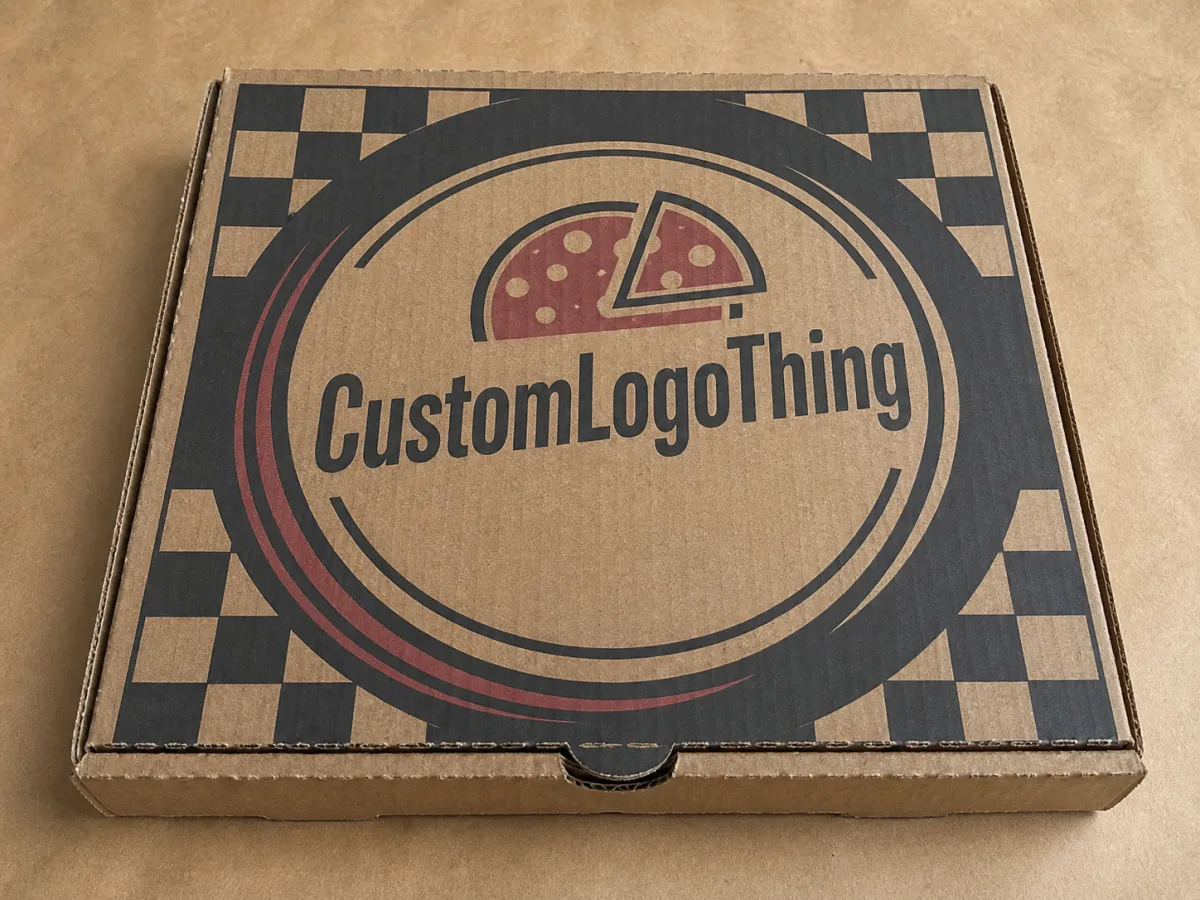
Pizza is one of the most frequently reordered items in foodservice, which gives its packaging more influence than many operators realize. The carton is not a neutral shell; it becomes part of the food experience. A customer may see the logo at the register, again in the driver’s hand, and again when the box lands on the table. That repeated exposure matters. One delivery can create three branded moments before the first slice is served.
Printed corrugated pizza boxes matter because they solve three jobs at once. They protect the food during transport, help manage heat and stacking pressure, and carry the brand. A plain box may handle one of those jobs well. A printed box can handle all three if the specification is right. For operators who want a more polished presentation without moving into a completely different packaging category, that is a real advantage. Good design does not need to shout. It makes the order easier to identify, the brand easier to remember, and the meal feel like it was handled with care.
The sustainability side is easy to oversimplify. Corrugated fiberboard derives its value from structure as much as from material volume. The fluted medium between the liners adds stiffness and gives the carton enough thermal buffer for short delivery windows while keeping the package relatively light. That means a well-designed corrugated pizza box can often replace heavier rigid packaging and still do the delivery job properly. When the board spec is right, buyers can reduce waste without compromising the basic needs of takeout and delivery.
Plain stock cartons can look cheaper at first glance, and sometimes they are. The catch is what happens next. Stickers, stamps, and inserts all add handling steps, and handling steps create inconsistency. Printed cartons place the message directly on the structure, which is especially useful for chains, seasonal campaigns, and independent restaurants that want a distinct identity without complicating operations. The box becomes part of the brand system instead of an afterthought.
Presentation affects perception in a way many buyers underestimate. Customers remember damp corners, crushed lids, and generic-looking cartons. They also remember crisp print, a clean panel layout, and a box that opens without tearing at the fold. Those details do not guarantee repeat orders, but they do remove friction from the experience. In a category built on repeat purchases, that matters more than it first appears.
There is also a back-of-house angle. Clear box graphics can speed line work during busy service, especially when a shop carries multiple sizes or crust styles. A crew member grabbing the right carton in seconds may not seem like a branding win, but it reduces avoidable errors. In a rush, that is the difference between a smooth handoff and a remake.
How Printed Corrugated Pizza Boxes Work
The basic structure is simple: two linerboards with a fluted medium in between. That corrugated core gives the box its crush resistance and enough spring to survive delivery, stacking, and the brief heat exposure that comes with a pizza leaving a hot oven. The harder question is how the board is printed and converted, because those choices shape image quality, cost, and minimum order quantity.
Some printed corrugated pizza boxes use preprinted linerboard that is later combined with the corrugated medium. Others are printed during or after converting, depending on the converter’s equipment and the visual outcome the brand wants. Flexographic printing is the workhorse for volume because it is fast, efficient, and well suited to bold logos and spot colors. Litho-lamination is used when a brand wants a sharper image surface, richer solids, and a more premium finish. Digital printing usually fits short runs, test programs, or artwork that changes by region or store.
The differences are not cosmetic. Flexography performs well with one to three colors, repeatable line art, and brands that care more about clarity than photo-like detail. It works especially well on kraft-facing boards and on cartons where the print has to stay legible at speed. Litho-lam delivers the cleanest visual surface because the artwork is printed on a coated sheet and then laminated to the corrugated board, but that extra beauty comes with extra steps and extra cost. Digital printing avoids plate charges and gives buyers room to test ideas quickly, though the per-unit price is usually higher and color consistency can be less predictable on rougher board surfaces.
Ink selection and board porosity matter more than many first-time buyers expect. Corrugated board is not a glossy poster stock. It is textured, absorbent, and built for structure before appearance. In practical terms, that means the ink needs to prioritize legibility and rub resistance rather than a showroom finish. Food-contact rules matter too. In most pizza box programs, graphics stay on the outer surface, while the inside face is left unprinted or printed lightly in line with the supplier’s food-safe spec. Water-based inks and adhesives are common because they support a cleaner sustainability story and fit well with high-volume production.
After printing, the board is die-cut, scored, folded, and glued or locked into the final carton shape. The boxes are then flat-packed for shipment, which is why pizza operators can store a large quantity in a relatively small backroom footprint. That flat-pack format is one of corrugated packaging’s quiet strengths: freight space is minimized until the box is actually needed.
The customer journey also benefits from that structure. A strong outer print can make it easier to identify box sizes or product lines at a glance, which helps with order accuracy. It can also improve the opening moment. The logo appears first, the pizza appears second, and the brand memory lands last. That sequence is not accidental; it shapes how the order is experienced.
Manufacturing details are worth a close look. A well-made pizza carton needs accurate score depth so the fold lines do not crack, die-cut edges that do not snag, and glue points that hold without creating stiff bulges. Those may sound like small production issues, but they affect how the lid closes and how the box behaves under pressure. The better the conversion, the less the operator has to think about it later.
If you want to compare corrugated pizza packaging with other packaging categories, the broader range of Custom Packaging Products can help frame what is possible, while Custom Shipping Boxes are useful for seeing how corrugated structures change when the priority shifts from food delivery to parcel handling.
For background on fiber-based packaging and recovery systems, the Packaging Institute and industry resources such as packaging.org are helpful. For end-of-life guidance, the EPA recycling guidance explains why contamination and local collection rules matter as much as the material itself.
Cost, Pricing, MOQ, and Unit Cost Tradeoffs
Cost is usually the first question, and it should be. The price of printed corrugated pizza boxes comes down to a handful of variables buyers can influence: board grade, box size, flute profile, print coverage, number of colors, tooling, and order quantity. A 12-inch single-wall box with one-color flexographic branding is not the same purchase as a full-color premium carton with heavy ink coverage and custom die lines. Treating them as interchangeable is how packaging budgets drift out of control.
Typical pricing ranges, before freight and local taxes, can look something like this for moderate production runs:
| Option | Typical MOQ | Approx. Unit Price Range | Best Fit | Main Tradeoff |
|---|---|---|---|---|
| Plain stock corrugated box | 1,000-5,000 | $0.18-$0.32 | Basic foodservice use, minimal branding | Lowest upfront cost, weakest brand impact |
| Single-color flexo print | 3,000-10,000 | $0.22-$0.40 | Simple logo programs, regional chains | Efficient, but limited graphic complexity |
| Full-color digital print | 250-3,000 | $0.30-$0.60 | Short runs, promotions, store-specific art | Flexible, but higher cost per unit |
| Litho-laminated premium box | 5,000+ | $0.45-$0.90 | High-end branding, visual-heavy campaigns | Best image quality, highest process cost |
Those numbers move with geography, board market conditions, and freight distance, but the shape of the decision stays the same. Low unit cost does not always mean low total cost. A carton that saves a few cents may still cost more overall if it crushes in transit, arrives late, or sits in inventory until a menu refresh makes it obsolete. Storage fees, spoilage, and reprint risk can erase the savings from a cheap quote very quickly.
MOQ deserves its own attention. Minimum order quantities exist because setup work is expensive: press preparation, die-making, plate creation, and material waste all add up. A converter running 10,000 units can usually produce them more efficiently than 1,000 units. That is not a sales tactic. It is how corrugated production economics work. If a buyer only needs 1,500 cartons for a pilot location, digital printing or a simpler stock-and-print arrangement may be a better fit than forcing a full custom run.
From a packaging buyer’s point of view, value is better measured through cost per delivered order, cost per impression, and cost per rejected box than through sticker price alone. If a stronger board grade cuts customer complaints and damaged deliveries, it may be the cheaper choice in real terms. If premium print makes sense during a launch but not for steady-state operations, a hybrid buying plan can make more sense: use the branded version for promotional windows and keep a simpler fallback carton for everyday volume.
Size plays a role too. A box that is only slightly too large uses more board, ships in a bigger cube, and consumes more storage space. A box that is too tight can deform the pie, scrape toppings, or trap too much steam. Both mistakes cost money. A disciplined spec usually protects margin better than aggressive price cutting.
Freight deserves a separate line in the budget, even though it is often buried in the quote. Flat-packed cartons are efficient compared with rigid packaging, but pallet configuration, delivery distance, and warehouse receiving charges still shape the real landed cost. A quote that looks strong on paper can turn mediocre once transport is added.
Production Steps, Timeline, and Lead Time
Production starts well before ink hits board. The process usually begins with a spec brief: pizza diameter, crust height, delivery method, stacking needs, board grade, print method, and artwork format. Once those pieces are set, the converter prepares the dieline, checks the printable area, and makes sure the logo, copy, and panel layout can work on the actual carton without distortion. Small mistakes here tend to spread into the rest of the order.
A realistic production flow looks like this:
- Gather dimensions, artwork, and performance requirements.
- Approve the dieline and box structure.
- Review a PDF proof or digital mockup.
- Build plates, dies, or digital print files.
- Run the print job and convert the board.
- Pack flat, palletize, and ship.
The delays that slow jobs down are easy to predict. Artwork revisions are the biggest one. Missing bleed, low-resolution logos, or text too close to folds can send a proof back for another round. Color approval can create another bottleneck, especially when a brand wants a specific Pantone match instead of a close visual approximation. Board sourcing can also stall a job if a converter is waiting on a specific liner grade or flute style. Production queues matter as well. A factory with a full calendar has to place new work behind other scheduled runs.
Simple repeat orders can sometimes move in 10-15 business days after approval, especially when tooling already exists and the artwork does not change. Fully custom jobs often need 15-30 business days, and premium litho-lam projects can stretch farther because they involve more steps and tighter registration. Freight time sits on top of that. A multi-state rollout can add several more business days, while palletized freight to a central warehouse may require its own coordination.
Sample timing deserves real attention. A PDF proof is fast, but it does not show how ink sits on the board or how the panel folds. A printed mockup is slower, yet it tells a much clearer story. Production-ready cartons are the real test, and they should be checked against the actual pizza, not just the drawing. Load a real product, close the lid, stack several boxes, and see whether the structure holds under normal handling. That test catches more problems than a screen proof ever will.
Lead time and sustainability are connected more often than buyers assume. When an order gets delayed, panic ordering becomes more likely. That usually means rushed freight, oversized safety stock, or approval of a box spec that was never ideal in the first place. Better forecasting cuts all three risks. It also helps keep obsolete cartons out of storage. In packaging, the cleanest carbon story is often the one that avoids waste before the box is even printed.
A simple planning habit helps a lot: set reorder triggers based on sales velocity, not anxiety. A store that burns through 800 cartons a month should reorder at a point tied to that run rate, the supplier’s lead time, and a buffer for proofing. That is more disciplined than ordering whenever the backroom starts looking thin.
One more practical point: if a location changes menu items, crust thickness, or delivery radius, the box spec may need a second look. A carton that works perfectly for a thin, single-topping pie can behave differently with a heavier load or a longer ride. Lead time planning should account for those operational changes, not just the calendar.
Key Factors That Affect Performance and Sustainability
Performance comes first. A pizza box has to hold heat without turning soggy, resist grease long enough for delivery, and stack without collapsing. Those demands pull in different directions. More venting can reduce condensation, but too much venting releases heat too quickly. Lighter board can reduce material use, but if it lacks stiffness the pie shifts and the crust takes the hit. Good packaging design usually looks like a series of tradeoffs rather than a perfect solution.
Board selection is the biggest technical lever. Recycled content can support sustainability goals, but recovered fiber is not automatically better if the board loses strength or varies too much from lot to lot. In some cases, a slightly heavier basis weight with better performance reduces damage and waste more effectively than a thinner board that fails more often. The better question is not simply, “How much recycled content is in the board?” It is, “How much function are we getting per ounce of fiber?”
Print design affects sustainability in quieter ways. Heavy ink coverage, broad flood coats, and specialty finishes can make a box look polished, but they can also complicate recycling or raise cost. Simple branding often performs better in actual use. A strong logo, clear type, and thoughtful negative space can look more intentional than a full-surface graphic that hides the structure. For kraft-facing boxes, a restrained layout often reads cleaner than a busy one.
Structural details matter too. Ventilation holes, locking tabs, and panel geometry change the way the box handles heat and moisture. Properly placed vents help keep the crust from sitting in trapped steam. A secure lock prevents lid pop-up during delivery. Sidewall geometry can improve stacking stability, which helps when orders are bundled for drivers or staged on a shelf before pickup.
If you need sourcing documentation, the FSC resource on responsible forest management is useful for understanding chain-of-custody claims and what they actually mean. It does not replace a supplier spec sheet, but it gives buyers a stronger framework for evaluating fiber claims. For end-of-life questions, the EPA guidance is useful because local recycling rules vary widely. A carton that is recyclable in one municipality may be rejected in another if it is heavily contaminated with cheese, grease, or food residue.
Branding claims and performance claims should stay separate in the buyer’s mind. A box can be recyclable and still perform poorly if it ships in the wrong format. It can be made from recycled fiber and still look inconsistent if the print design ignores board texture. It can also be food-safe on paper and still be a weak choice for a high-moisture delivery route. Buyers who evaluate all three dimensions together usually make better decisions than those chasing one headline metric.
If the program covers multiple product lines, consistency matters there too. Standardized sizes reduce inventory complexity, simplify forecasting, and lower the odds of dead stock. That matters for operators who also buy Custom Packaging Products for other menu items or Custom Shipping Boxes for takeout kits and retail delivery. Fewer variants usually mean fewer mistakes.
Technical note: if cartons will be stored in cases or moved through a warehouse, ask whether the supplier has done compression testing aligned with common corrugated methods such as ASTM D642, and whether the distribution assumptions fit your route. That is not overkill. It is basic quality control when printed corrugated pizza boxes travel beyond a single neighborhood.
Temperature testing also helps. A carton may look fine at room temperature and still warp once it sits on top of a hot pie for fifteen minutes. A quick mock delivery test, even with a single stack of sample cartons, can reveal whether the board relaxes too quickly or whether the vents are doing their job. That kind of field check is far more useful than assuming a spec sheet tells the whole story.
Common Mistakes When Ordering Printed Corrugated Pizza Boxes
The first mistake is choosing the wrong size. A carton can look fine on a proof and still fail once the pie shifts in transit, the lid presses into toppings, or the corners crush in the vehicle. Pizza is not a rigid product. Cheese melts, crust softens, steam changes the internal environment, and the box has to work with that reality instead of pretending it does not exist.
Artwork approval creates another trap. Buyers sometimes lock in graphics before confirming print limits, which causes trouble later. Fine type can blur on rough board. Thin lines can disappear at folds and scores. Logos placed too close to the edge can get clipped in die-cutting. A design that reads beautifully on a screen may not survive the converting process. That is why a good converter asks for a dieline review before sign-off.
Unit price can mislead as well. A cheaper board grade may save a few cents on paper, but if it increases crushed corners, grease soak-through, or customer complaints, the savings disappear quickly. Freight works the same way. A lower-cost unit sitting in a distant warehouse can cost more delivered than a slightly pricier carton made closer to the point of use. Packaging is a logistics product as much as a print product.
Ignoring lead time creates expensive shortcuts. Rush freight, minimal proofing, and last-minute artwork compromises all show up once a buyer waits too long. So does accepting a box spec that does not fit the menu. A thicker crust, heavier topping load, or extra-large pie often needs a different structure than a standard pie. It is far easier to adjust the carton early than to explain a delivery problem after the fact.
Seasonal overprinting is another common problem. A box with holiday artwork or a short-term promotion can look great in February and feel obsolete by April. Unless there is a clear reorder plan, that inventory sits in storage and quietly becomes sunk cost. A safer approach is to separate core branding from campaign messaging. Keep the structure stable and let the graphics carry only messages that can age out cleanly.
Sustainability messaging causes trouble when it gets vague. It is easy to call a box “green.” It is harder to prove what that means. Buyers should ask for material specs, print details, and recycling or sourcing documentation. If the carton uses a coating, ask what that coating does to recovery. If the supplier claims recycled fiber or responsible sourcing, ask for paperwork. Vague claims may sound good on a sales sheet, but they do not help a procurement team make a defensible decision.
One overlooked mistake is forgetting to check how the boxes open and reseal during actual service. If the front panel tears too easily, the customer has a messy experience. If the lid is too stiff, the crew slows down at the make line. That is the kind of detail that gets missed until a dinner rush exposes it.
Clear specs prevent expensive surprises. The cheapest box on paper is often the most expensive box in practice.
Expert Tips and Next Steps for Better Ordering
Start with the pizza, not the print. Measure the product first, then the delivery conditions, then the stacking needs. A 10-inch thin-crust pie in a walk-in pickup setup does not need the same carton as a 16-inch loaded pie that rides across town in a hot car. Once those product requirements are clear, the board grade and print method become much easier to choose.
Ask suppliers for a side-by-side comparison rather than a single quote. A useful comparison should show board specification, flute profile, print method, unit cost, MOQ, lead time, and any setup charges. If the numbers are buried in a flat estimate, it is harder to see where the real cost drivers live. You want to know whether the extra cents come from tooling, print coverage, freight, or a better board grade. That clarity makes the purchase easier to defend internally.
Build a simple test plan before final production. Order a sample or mockup, load an actual pizza, and check three things: heat retention, grease performance, and appearance after handling. If the print still looks sharp after being opened, closed, stacked, and carried, the spec is probably close. If the lid warps, the graphics smear, or the pizza shifts inside the carton, the design needs adjustment.
Standardize wherever possible. Fewer box variants usually mean lower inventory complexity, fewer ordering mistakes, and better forecasting. Standard sizes also make it easier to compare costs across vendors because the spec is less likely to drift. If your business uses multiple packaging formats, it can help to align the pizza box program with the rest of the line so the purchasing team is not managing a different box architecture for every menu item.
Use reorder triggers that reflect sales velocity. A store that sells 200 pizzas a week should not reorder at the same point as a store that sells 20. The trigger should account for lead time, safety stock, and shipment schedule. That sounds basic, but it removes a lot of panic buying. It also reduces the chance that a rush order forces the business into a carton it would not have approved under normal conditions.
If you are building a broader packaging system, consider whether the pizza box should share artwork elements, paper tone, or structural language with the rest of the brand’s packaging. A unified system can look more deliberate than a stack of disconnected cartons. That said, uniformity should never outrank function. A pizza box should still behave like a pizza box first.
For many operators, the next step is simple: write a one-page spec, request quotes from multiple converters, compare proof quality, and choose the carton that balances brand impact, cost, and sustainability. If you are shopping for a broader package family, the Custom Packaging Products catalog can help narrow the field, and Custom Shipping Boxes can serve as a useful comparison when you want to see how corrugated formats change for different handling demands.
The practical takeaway: the best printed corrugated pizza boxes are sized to the pie, printed for clarity rather than noise, and ordered with enough lead time to approve real samples before production. Buyers who anchor the decision in fit, print method, and delivery conditions usually get better results than those chasing the lowest quote. If the carton performs in transit, opens cleanly at the table, and fits the reorder rhythm of the business, it is doing the job it was built to do.
Are printed corrugated pizza boxes recyclable?
Usually yes, if the carton is made from standard corrugated fiberboard and is not heavily contaminated with grease or food residue. In practice, local recycling rules matter a lot. A box with light staining may be accepted in some programs, while a greasy or coated carton may be rejected elsewhere. Simpler ink coverage and fewer coatings often support better recovery, but buyers should still confirm local guidance before making a recyclability claim.
What printing method is best for printed corrugated pizza boxes?
Flexographic printing is often the best fit for higher volumes and straightforward branding because it balances speed, repeatability, and cost well. Digital printing makes sense for shorter runs, test programs, or store-specific artwork because it avoids plate charges and gives more flexibility. Litho-lamination is usually chosen when a brand wants the sharpest graphics and can justify the extra process steps and cost.
How long does it take to produce printed corrugated pizza boxes?
Lead time depends on artwork readiness, box complexity, print method, and the converter’s schedule. Simple repeat jobs can sometimes move in 10-15 business days after proof approval, while fully custom orders often need 15-30 business days or more. Add freight time, and the safest approach is to build extra time for proofing, revisions, and shipment planning so the order does not force a rushed compromise.
What affects the cost of printed corrugated pizza boxes?
Cost is driven by board grade, box size, print coverage, number of colors, tooling, and order volume. MOQ matters because setup costs are spread across the run, so smaller quantities can raise the unit price quickly. Storage, shipping, spoilage, and waste risk should also be counted because they affect the real cost of ownership, not just the quote on paper.
What should I check before approving a printed corrugated pizza box sample?
Check the fit, stack strength, and venting first so the box performs with the actual pizza and delivery method. Then review print clarity, panel alignment, and readability under normal lighting. It is also smart to confirm material claims, food-safe details, and reorder specs so the approved sample matches the production order rather than just looking good in isolation.


