Buyer Fit Snapshot
| Best fit | Custom Corrugated Retail Boxes projects where brand print, material claims, artwork control, MOQ, and repeat-order consistency need to be specified before quoting. |
|---|---|
| Quote inputs | Share finished size, material target, print colors, finish, packing count, annual reorder estimate, ship-to region, and any compliance wording. |
| Proofing check | Approve dieline scale, logo placement, barcode or warning zones, color tolerance, closure strength, and carton packing before bulk production. |
| Main risk | Vague material claims, crowded artwork, missing packing details, or unclear freight terms can make a low unit price expensive after revisions. |
Fast answer: Custom Corrugated Retail Boxes: Design, Cost, and Fit should be specified like a repeatable production item. The safest quote records material, print method, finish, artwork proof, packing count, and reorder notes in one written spec.
Production checks before approval
Compare the actual filled-product size with the drawing, then confirm tolerance on folds, seals, hang holes, label areas, and retail display edges. Reserve space for logos, QR codes, warning copy, and material claims before decorative graphics fill the panel.
Quote comparison points
Review material grade, print process, finish, sampling route, tooling charges, carton quantity, and freight assumptions side by side. A quote is only useful when the supplier can repeat the same color, closure quality, and packing count on the next order.
Custom Corrugated Retail Boxes: Design, Cost, and Fit
Custom corrugated retail boxes do more than keep a product from getting crushed on the way to the store. They can be the first branded surface a shopper touches, the part that keeps a shelf looking clean, and the package that makes a product feel thought through instead of tossed together. That is a lot of responsibility for one carton. Retail packaging has to satisfy the buyer who signs off on artwork, the warehouse team that packs the order, and the customer who sees it from a few feet away under ugly fluorescent light. Not exactly a relaxing job.
The best custom corrugated retail boxes are chosen for more than looks. Board strength matters. Flute profile matters. Print method matters. Box size matters a lot more than most people admit. If the carton swallows the product in empty space or hugs it so tightly that packing becomes a chore, the whole program starts off crooked. Custom Logo Things works with packaging buyers who need branded packaging that looks intentional, ships safely, and stays inside budget, so this guide stays on the practical side of the fence.
I have seen plenty of launches get delayed because someone treated the box like a last-minute accessory. That usually ends badly. The box is part of the product experience, part of the freight plan, and part of the store presentation. If you ignore one of those pieces, the others end up paying for it.
Custom Corrugated Retail Boxes: What They Are
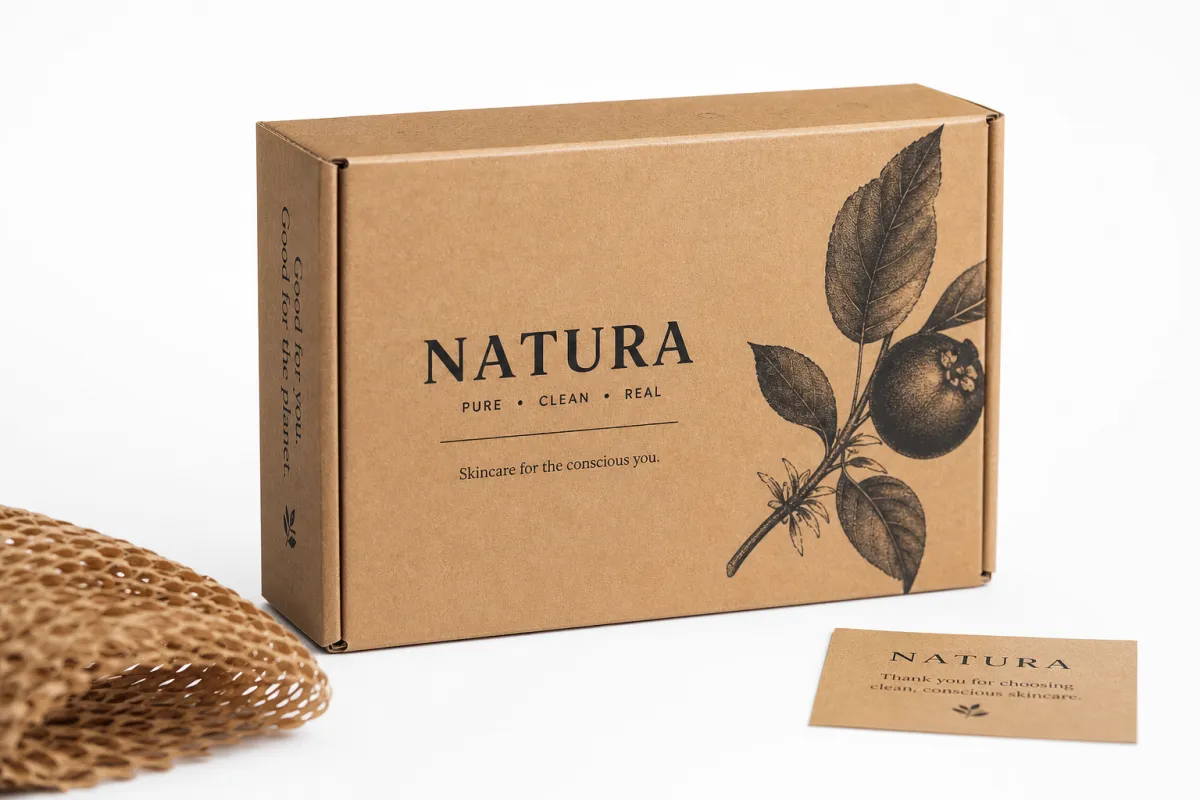
Corrugated board is basically a sandwich with a backbone: two flat linerboards with a fluted center layer between them. That fluting gives custom corrugated retail boxes their strength-to-weight balance, which is why they show up everywhere from candles and cosmetics to small electronics and subscription kits. The board stays light enough to move without drama, yet strong enough to stack, cushion, and survive the rough parts of the supply chain.
The material choice matters because it sits between two common extremes. Folding cartons are thinner and cleaner, which works well for light products that need shelf polish more than transit protection. Rigid boxes give a heavy, premium feel, but they cost more and do not make sense for every item. Custom corrugated retail boxes sit in the middle and solve a very common problem: the product needs to arrive intact and still look good on the shelf. That balance is exactly why so many brands use corrugated when they need custom printed boxes that can ship, display, and still look aligned with the rest of the line.
Retail formats also deserve a clear distinction. Mailer-style retail boxes usually have self-locking closures or lid-and-base styles, and they work well for direct-to-consumer programs that still need brand impact at opening. Shelf-ready packaging is built so store staff can remove a perforated panel and place the carton right on the shelf or in a tray. Display formats may use a cutout, window, or open-front panel so the package helps sell the item instead of hiding it. Each style of custom corrugated retail boxes solves a different problem, and each one changes the structure, graphics, and cost.
Honestly, the biggest mistake I see is people treating every corrugated carton like it is just a box. It is not. A tube, a tuck-top mailer, a die-cut tray, and a retail-ready display carton can all be made from corrugated board, but they behave very differently in packing, shipping, and merchandising. Match the format to the channel first, and custom corrugated retail boxes become much easier to spec, quote, and produce. For broader sourcing options, it also helps to review the range of Custom Packaging Products available alongside the box style you are considering.
For brands comparing materials, the rule is simple. Choose corrugated when you need stacking strength, consistent structure, and enough room for graphics without paying rigid-box prices. Choose folding cartons when the product is light and shelf crispness matters more than transit protection. Choose rigid packaging only when the product and price point justify the spend. That decision alone can save a surprising amount of time during packaging review, because the structure does part of the design work before the artwork even shows up.
One more practical wrinkle: corrugated is not one thing. E-flute, B-flute, C-flute, and double-wall structures all feel different in hand and perform differently in shipping. I have watched teams pick a flute because it sounded premium, then realize the wall profile was wrong for the insert, the fold, or the shelf height. That is the kind of detail that looks tiny in a spec sheet and huge in production.
Custom Corrugated Retail Boxes: How They Work on the Shelf
On shelf, custom corrugated retail boxes have to do two jobs at once: protect the product and make someone want to pick it up. If the board buckles, the product shifts, or the opening feels clumsy, trust drops fast. A clean die-cut, a crisp fold, and a closure that behaves the same way every time make the box feel engineered instead of improvised. Shoppers may not know the technical terms, but they notice when a package feels off.
Structural details shape how the box is read. A friction-fit closure can make a retail carton feel secure without adhesives. A tuck feature can speed up packing on a line. A sleeve can add presence without wrapping the whole carton in ink. A window can show the product while reducing the need for heavy graphics. Those choices affect the customer experience in small but real ways, from the first unboxing moment to the way the carton sits beside other SKUs on a crowded shelf.
Printing method matters just as much. Flexographic printing is often the practical choice for larger runs and simpler graphics because it keeps costs under control once the plates are made. Litho-lamination gives the package a sharper printed face by mounting a high-quality printed sheet onto corrugated board, which works well for retail packaging that needs richer image quality. Digital print fits short runs, launch testing, seasonal product packaging, and artwork that changes often. The right process depends on quantity, color count, and how much image detail the market actually needs.
From the shopper side, the open-and-see experience matters almost as much as the shelf view. If the box opens cleanly, the product is easy to reach, and the graphics still read after handling, the package feels intentional. That is one reason custom corrugated retail boxes are popular with brands that want a retail-ready structure without jumping to a more expensive carton system. For shipping-heavy programs, the same format can also support Custom Shipping Boxes that carry a stronger brand story from warehouse to customer.
A good retail carton should survive the dock, the shelf, and the shopper’s hands without begging for a second chance.
Store conditions are rougher than most brand teams expect. Cartons get vibrated in transit, bumped during stocking, and handled over and over as staff rotate inventory. If the design leans on weak corners or a loose product pocket, the display can look tired before the first reorder even lands. Custom corrugated retail boxes should be tested not just for shipping, but for how they hold up after repeated handling, repeated lifting, and several hours under fluorescent light that does no one any favors.
I like to think about shelf performance in layers: structural strength, graphic clarity, and retail handling. If one layer falls apart, the whole package feels cheaper than it should. Good packaging keeps those layers working together instead of treating the exterior print as the only part that matters. That kind of thinking saves rework later, which is usually when people discover they have a packaging problem disguised as a design decision.
There is also the very human side of shelf behavior. Store staff will open, restock, rotate, and sometimes drag the carton around with one hand while juggling five other tasks. If the closure fights back, they will not be kind to it. If the tear strip hangs up, it will get ripped anyway. I have seen nice packaging look beaten up in a single afternoon because the structure was built for the render, not the aisle.
Key Factors That Shape Custom Corrugated Retail Boxes
The first question should always be about the product. Weight, fragility, surface finish, and dimensions all decide whether custom corrugated retail boxes need E-flute, B-flute, C-flute, or a stronger single-wall or double-wall structure. Light items like cosmetics, candles, or small accessories may work fine in thinner board with a cleaner print surface. Heavier kits, glass, or products that stack tightly usually need more board caliper and better edge support. There is no shortcut here. The wrong flute creates either a flimsy feel or unnecessary material cost, and both are annoying for different reasons.
Size is the next lever. A box that is only a few millimeters too large can waste board, increase freight volume, and let the product rattle around. A box that is too tight can make assembly frustrating and damage the item during insertion. Good custom corrugated retail boxes leave room for inserts, product tolerances, and hand packing, but not so much room that the carton feels empty. That matters even more with branded packaging, where the shelf profile needs to look deliberate from the front and the side.
Finish choices deserve more attention than they usually get. A matte varnish can soften glare and help graphics read under bright retail lights. A gloss coating can sharpen color and add moisture resistance, though it may show scuffs more easily. Spot colors help when brand consistency matters, especially if the product line relies on a strong signature tone. If the print panel gets handled a lot, the design may need extra protection on corners, flaps, or closure zones. Those details sound minor until the sample comes back looking worn before launch. That is when everyone suddenly becomes interested in details.
Sustainability belongs in the design conversation, not in the last-minute marketing pass. Corrugated board is widely recyclable, and the easiest designs to recover are usually the ones that avoid extra plastic, unnecessary laminations, and mixed-material windows that complicate disposal. If sustainability is part of the brand promise, ask for FSC-certified board options and keep the structure as simple as the retail job allows. The EPA has helpful recycling guidance at EPA recycling resources, and the same logic applies in packaging: fewer material combinations usually make the end-of-life story easier.
Retail compliance details matter too. Barcode placement should stay readable and away from wrap edges or busy art. Carton labeling should match case pack logic so the warehouse team can identify counts quickly. Some retailers have strict dimensions for shelf-ready packaging or display trays. Others care more about master carton configuration and pallet patterns. These are not glamorous details, but they are the kind that keep custom corrugated retail boxes moving through the supply chain without drama. In many programs, that is the difference between packaging that looks good in a mockup and packaging that performs on a loading dock.
A useful checklist for this stage usually includes:
- Product weight and actual measured dimensions, not just nominal size.
- Expected shipping method, including parcel, LTL, or palletized distribution.
- Retail display needs, such as shelf-ready opening, hang tab, or window cutout.
- Print coverage, number of colors, and whether a premium finish is required.
- Any compliance or retailer requirements for barcodes, labeling, or carton count.
That kind of brief gives a converter something usable. Without it, custom corrugated retail boxes tend to get quoted like generic boxes, which is where avoidable revisions start piling up. Nobody needs a packaging loop that burns a week because the first specs were vague.
And yes, measurements matter more than most teams want to hear. I have seen a product be measured with the retail carton still in mind instead of the actual item, inserts included. That difference can be enough to change the whole construction. It is a boring step. It is also the step that keeps you from paying for a box that was only ever going to work in theory.
Custom Corrugated Retail Boxes Pricing: What Drives Cost
Pricing for custom corrugated retail boxes usually comes down to five practical levers: board type, box size, print method, color count, and structural complexity. A simple tuck-style carton with one-color flexo printing sits in a very different price band than a litho-laminated display box with a window, insert, and matte coating. Buyers sometimes ask for one number too early, but the honest answer is that unit cost is built from those details.
Run size changes the math in a big way. On short runs, setup cost matters more because plates, tooling, and make-ready time are spread across fewer units. On larger runs, the unit price matters more because the fixed setup is diluted. That is why custom corrugated retail boxes for a 500-piece test launch can feel expensive on a per-unit basis, while the same structure at 10,000 pieces may look far more efficient. The box is not magically harder to make; the economics just behave differently.
Here is a practical planning table buyers can use when they start comparing quotes. These are directional ranges, not universal prices, but they make apples-to-apples comparisons much easier.
| Option | Typical Fit | Common Cost Signal | Best Use Case |
|---|---|---|---|
| Single-color flexo, simple die-cut | High-volume, straightforward custom corrugated retail boxes | Lower setup, often about $0.40-$1.10 per unit at scale | Utility-driven retail packaging with controlled brand graphics |
| Digital print, short run | New product tests, seasonal launches, frequent artwork changes | Higher unit cost, often about $0.85-$2.25 per unit | Fast-turn custom printed boxes with limited quantity |
| Litho-laminated finish | Premium shelf presentation with sharper image quality | Mid-to-high unit cost, often about $1.10-$2.80 per unit | Retail packaging where print quality and brand detail matter |
| Window, insert, or specialty coating | Display-led packaging with added features | Higher material and labor cost | Products that need visibility, protection, or a premium touch |
Those ranges shift with board grade, exact dimensions, freight, and whether the line needs hand assembly. A box that is easy to convert can stay efficient even with good graphics, while a complicated structure may push labor costs higher than expected. I usually tell buyers to ask for quotes that separate print, board, tooling, and finishing so they can see where the money is actually going in custom corrugated retail boxes.
It also helps to compare unit price against total landed cost. A cheap box that ships poorly can cost more after damage, repacking, or retailer complaints. A slightly better-built carton may reduce waste, speed pack-out, and protect the product more reliably. That is why custom corrugated retail boxes should be judged against the whole packaging program, not just the invoice line for the printed shell. For buyers comparing cost across packaging lines, Custom Packaging Products can give a useful view of how different formats affect the final budget.
To keep quotes clean, ask suppliers to use the same assumptions for every option: board grade, quantity, color count, finishing, insert count, and freight terms. If one vendor is quoting a lighter board or ignoring insert labor, the comparison is not really useful. Clear specs save time, and they reduce the odds that custom corrugated retail boxes will need a second round of pricing after the approval meeting. That second round is usually where patience goes to die.
One disclaimer here, since people like clean numbers and packaging rarely offers them: pricing shifts by region, freight lane, paper market swings, and factory workload. The ranges above are useful for planning, not for locking a purchase order. If a quote looks wildly lower than the others, it is worth asking what got left out. Cheap sometimes just means unfinished.
Step-by-Step Timeline for Custom Corrugated Retail Boxes
The cleanest projects start with a simple product brief. Before anyone draws a dieline, the packaging team needs product dimensions, weight, retail channel, ship method, target quantity, and any special handling notes. If the item is fragile, temperature-sensitive, or sold in a club-store style environment, say that early. Custom corrugated retail boxes are much easier to design when the brief explains what the carton has to survive, not just what it should look like.
After the brief, the structural recommendation comes next. A designer or packaging engineer will usually sketch the die-line, confirm fold orientation, and decide where tabs, locks, perforations, or inserts belong. That is the stage where fit problems are cheapest to solve. If the product is a tight fit or has a complex shape, a physical prototype is worth the time. One sample can reveal a lot: whether the product rattles, whether the closure sticks, whether the printed side wraps cleanly, and whether the box is comfortable to assemble by hand. For custom corrugated retail boxes, that prototype is often the difference between a clean launch and a late change order.
Once the structure is approved, artwork moves into prepress. This is where the team checks bleeds, safe zones, barcode placement, color breaks, and any issues with small text on the corrugated surface. In some programs, a plate will be made for flexo printing; in others, the setup might be digital or litho-lam. Then the converter moves into print, finishing, die-cutting, gluing if needed, and packing. If the box has a special coating, foil element, or inserted component, that step usually gets added after the base structure is stable.
Timing depends on complexity. A straightforward repeat order can move quickly once the specs are locked. A new launch with custom printed boxes, sample approvals, and multiple proof cycles usually takes longer. A realistic production window often sits around 12-15 business days after final approval for simpler work, but more complex programs can run longer if tooling, material sourcing, or finish selection needs extra time. That is not a promise. It is a planning number that helps teams avoid overcommitting launch dates they cannot actually hit.
For transit-sensitive projects, it is smart to verify performance against recognized testing methods. The ISTA test standards are a good reference point for shipping performance, especially if the box must endure parcel drops, vibration, or distribution across multiple channels. That does not mean every retail carton needs full certification. It does mean the package should be judged against the actual stress it will face instead of an imagined gentle journey.
Delays usually come from three places: slow artwork approval, unclear product dimensions, and late changes to the structure after samples have already been made. If a team waits until the end to decide on barcode position or insert thickness, the entire schedule can slip. The best way to keep custom corrugated retail boxes on track is to approve the structure first, then the artwork, then the finish, with each step signed off cleanly before the next one starts.
Here is a simple flow that usually keeps projects moving:
- Share the product brief and quantity target.
- Confirm the structural format and board grade.
- Review dieline and artwork placement.
- Approve prototype or sample box.
- Release final art for production.
- Run print, convert, inspect, and pack.
If your launch date is fixed, treat sample approval as a hard gate. That discipline keeps custom corrugated retail boxes on schedule even when other parts of the program start drifting around. Launch dates love to slip when nobody owns the sample stage. I have watched a two-day delay snowball into two weeks because everyone assumed somebody else had already signed off.
Common Mistakes to Avoid with Custom Corrugated Retail Boxes
The most expensive mistake is designing the artwork first and the structure second. It is tempting, because the box looks like a brand canvas, but structure drives performance. If the die-line is treated like a side note, custom corrugated retail boxes can end up with awkward folds, wasted panels, or artwork that lands badly across seams and edges. Then the team has to fix the structure anyway, which usually means spending time and money twice.
Oversizing and undersizing are both common problems. Oversized cartons use more board than necessary, increase freight cubic volume, and make the product feel loose. Undersized cartons can crush corners, complicate packing, or create a shelf presentation that feels forced. The best fit leaves just enough tolerance for real-world handling. For custom corrugated retail boxes, that means measuring the actual product and packaging components, not relying on catalog dimensions or optimistic estimates.
Color expectations can also create trouble. Corrugated board is not coated paperboard, and ink will not always read the same way it does on a monitor. If a team skips print proofs, substrate tests, or finish checks, the final result can drift away from the brand standard. That is especially true with rich solids, pale tints, and small typography. Custom corrugated retail boxes usually look better when the color strategy is realistic about the material, the print method, and the store lighting where the box will sit.
Another mistake is forgetting the warehouse and store team that will actually open and handle the box. If a carton takes too long to assemble, the labor cost shows up downstream. If the opening flap tears too easily, the shelf-ready presentation starts to look messy after a few units. If the barcodes are placed in the wrong spot, scanning slows down. These are operations details, but they are central to how custom corrugated retail boxes perform in real life.
Late-stage changes are especially painful. A one-inch dimension change can alter the board usage, the dieline, the pallet pattern, and the freight estimate. A barcode revision can force a plate update or a whole proof cycle. A copy change can mean rework across multiple proofs. Once quantities and costs are approved, protect the specs. That is the simplest way to keep custom corrugated retail boxes from turning into a moving target.
One more issue gets missed often: trying to make every box do everything. A retail carton can ship well and display well, but sometimes the smartest design keeps the structure simple and lets the graphics or the insert do the rest. The more features you pile on, the more likely you are to slow pack-out or raise cost without improving the customer experience. Extra bells and whistles are not automatically clever. Sometimes they are just expensive. And kinda unnecessary.
It also helps to be honest about what the box is not doing. If the product needs shock absorption, the carton alone is not enough. If the brand wants a luxury feel, corrugated can help, but it will not magically behave like rigid packaging unless you spend for the right finishes and structure. Good packaging decisions start with limits, not wishful thinking.
Custom Corrugated Retail Boxes: Expert Tips and Next Steps
If you want a cleaner quote and fewer revisions, start with a one-page packaging brief. Include product size, weight, retail channel, shipping method, quantity, print coverage, finish preferences, and whether the box needs inserts or windows. That brief gives suppliers enough detail to recommend the right custom corrugated retail boxes instead of sending back a generic estimate that misses the real use case.
Order a prototype whenever the fit is tight, the graphics need precision, or the box will face rough handling. A sample can show whether the product shifts, whether the folds behave the way the team expected, and whether the retailer can open and display the carton quickly. For custom corrugated retail boxes, sample approval is not busywork; it is cheap insurance against a production run that looks fine on paper and behaves badly in the field.
I also recommend comparing options using total landed cost instead of printed box price alone. Freight, waste, packing labor, and damage rates all affect the real economics. A lower quote can disappear fast if the box ships inefficiently or requires extra handwork. Good custom corrugated retail boxes should protect margin as well as product, which is why package branding and operational fit need to be considered together.
If sustainability matters to your customer base, ask for recyclable board choices, FSC-certified paper where appropriate, and finishes that do not make recovery harder than necessary. A clean design can still feel premium without relying on excessive lamination or mixed materials. That balance is especially useful in retail packaging where buyers want a polished look but still need practical disposal options.
Before production release, use a simple approval checklist:
- Structure, dimensions, and board grade are confirmed.
- Artwork, bleed, and safe zones are checked on the dieline.
- Barcode placement and scan quality are verified.
- Finish, coating, or window details are approved.
- Pack-out method and carton count match warehouse needs.
If you are not sure which format is right, choose the box that solves the hardest problem first. If shipping is the risk, start with protection. If shelf presence is the risk, start with presentation. If labor is the risk, start with pack-out speed. The best custom corrugated retail boxes usually solve one primary problem well and do not pretend to be the answer to everything. That is the part people skip, then act surprised when the box disappoints them in the one area that mattered most.
From there, the next step is straightforward: gather the product specs, define the retail format, and ask for a packaging review that accounts for structure, print, and cost together. That is the point where custom corrugated retail boxes move from a vague idea to a workable plan, and that shift saves time for everyone involved.
For buyers who want a stronger starting point, custom corrugated retail boxes are easiest to spec once the channel, weight, and display needs are written down clearly. Do that first, then request a quote, and the rest of the process becomes a lot more manageable.
Here is the plain version: measure the product, choose the format based on where it will live, and approve a sample before you lock production. That sequence keeps the box honest. It also keeps your budget from wandering off because somebody guessed at the specs and hoped for the best.
What board strength is best for custom corrugated retail boxes?
The right board strength depends on the product weight, how the box will be shipped, and whether it has to stack in a warehouse or on a retail shelf. Lightweight items may work with a single-wall structure, while heavier or fragile products often need stronger board or added support. A supplier should review the actual product and handling conditions before recommending the board grade for custom corrugated retail boxes.
How long do custom corrugated retail boxes usually take to produce?
Timing depends on the structure, print method, quantity, and how quickly proofs get approved. Simple repeat orders move faster, while new projects that need dielines, samples, and artwork review take longer. The safest way to protect a launch schedule is to share specs early and approve samples as soon as they are ready.
What should I send for an accurate quote on custom corrugated retail boxes?
Send product dimensions, weight, quantity, print coverage, finish preferences, and any insert or window requirements. It also helps to explain how the box will be used in retail, shipping, and storage so the quote reflects real performance needs. If you can share a sample of the product or existing packaging, sizing can be checked against the actual item instead of an estimate.
Are custom corrugated retail boxes recyclable after printing and coating?
Most corrugated boxes are recyclable, but heavy laminations, plastic windows, or certain specialty coatings can make recovery more complicated. If recyclability matters, ask for coatings and print methods that keep the package easier to process in standard recycling streams. A well-planned design can still look premium while staying practical for disposal.
Can custom corrugated retail boxes be made for both display and shipping?
Yes, many designs are built to look polished on shelf while still protecting the product in transit. The key is balancing graphics, structure, and protective features so the box performs in both environments. Retail-ready packaging often reduces secondary packaging and can speed up store handling.
Custom corrugated retail boxes work best when they are treated as part of the product strategy, not just a shipping expense. Get the structure, Print, and Fit right, and the carton protects the product, supports the brand, and keeps the retail math under control. That is the real payoff of custom corrugated retail boxes: a package that earns its place from warehouse to shelf, then still looks right when the customer opens it.
The takeaway is simple. Start with the product, not the artwork. Build the box around real measurements, real handling, and real shelf conditions, then verify the sample before you approve the run. Do that, and custom corrugated retail boxes stop being a guessing game and start doing the job they were hired to do.

