Buyer Fit Snapshot
| Best fit | Custom Corrugated Sleeves Wholesale for Shipping Buyers projects where brand print, material claims, artwork control, MOQ, and repeat-order consistency need to be specified before quoting. |
|---|---|
| Quote inputs | Share finished size, material target, print colors, finish, packing count, annual reorder estimate, ship-to region, and any compliance wording. |
| Proofing check | Approve dieline scale, logo placement, barcode or warning zones, color tolerance, closure strength, and carton packing before bulk production. |
| Main risk | Vague material claims, crowded artwork, missing packing details, or unclear freight terms can make a low unit price expensive after revisions. |
Fast answer: Custom Corrugated Sleeves Wholesale for Shipping Buyers should be specified like a repeatable production item. The safest quote records material, print method, finish, artwork proof, packing count, and reorder notes in one written spec.
Production checks before approval
Compare the actual filled-product size with the drawing, then confirm tolerance on folds, seals, hang holes, label areas, and retail display edges. Reserve space for logos, QR codes, warning copy, and material claims before decorative graphics fill the panel.
Quote comparison points
Review material grade, print process, finish, sampling route, tooling charges, carton quantity, and freight assumptions side by side. A quote is only useful when the supplier can repeat the same color, closure quality, and packing count on the next order.
Custom corrugated sleeves wholesale gives brands a practical way to add structure, scuff resistance, and branding without paying for a full custom carton on every unit. If the product already ships inside a solid inner box or a tight master carton, the sleeve becomes the outer face people actually see. That is the appeal. You get a visible brand layer, better handling, and less board than building a whole new box around the product.
From a packaging buyer’s point of view, that matters. Extra board shows up in freight, storage, and labor. A sleeve ships flat, stores flat, and goes on fast. That makes custom corrugated sleeves wholesale a smart fit for programs that need quick branding, cleaner packouts, and repeatable results across several SKUs. The goal is not to overpackage anything. The goal is to cover the right surface, protect it, and keep the line moving.
I have seen more than one shipping line slow to a crawl because a “simple” packaging change turned into a hand-fit problem. Usually the sleeve looked great in the proof and kinda annoying in the warehouse. That is the kind of mismatch buyers want to avoid.
Why custom corrugated sleeves wholesale fit busy shipping lines
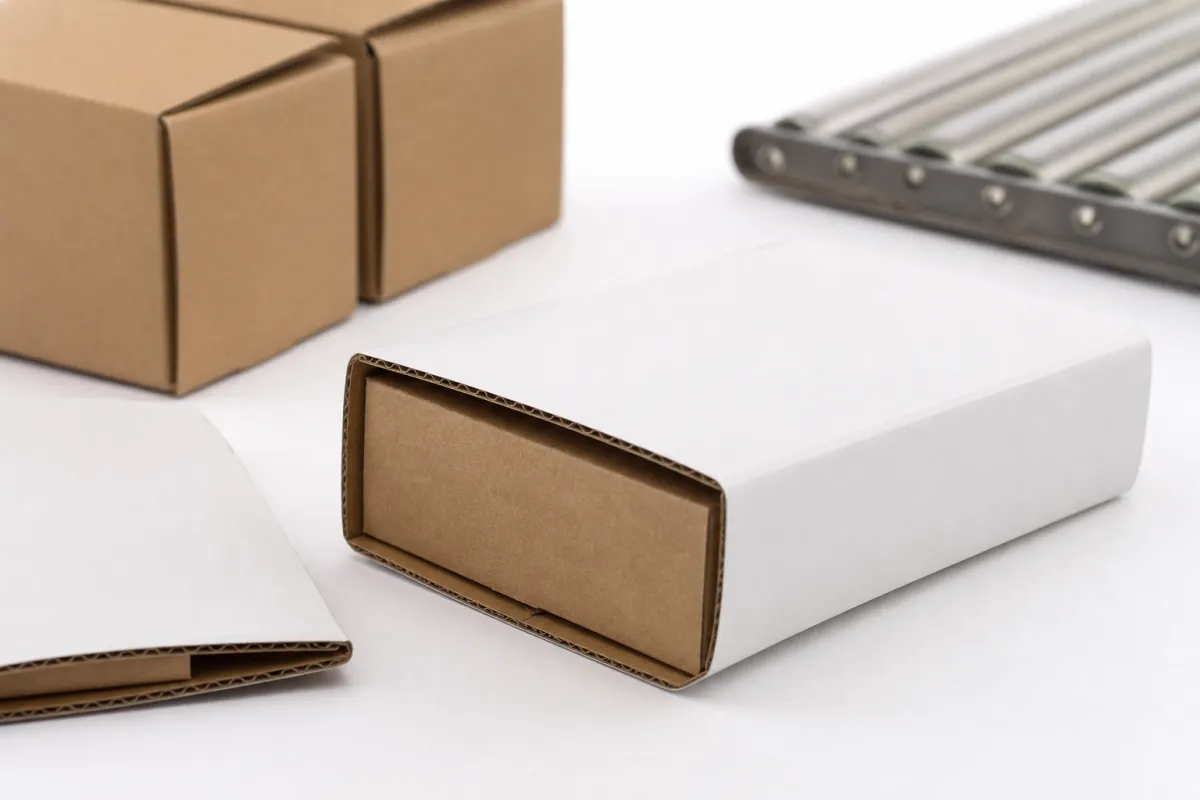
Busy shipping lines do not reward clever packaging. They reward packaging that is easy to stage and easy to apply. That is the first reason custom corrugated sleeves wholesale works so well in real operations: the sleeve arrives flat, the team pulls it from a carton or rack, and it slides over the product or carton with very little handling. On a line where seconds matter, that matters. On repeat programs with fixed box sizes, it matters even more because the same sleeve format can carry across a product family with only artwork changes.
There is also a straight visual payoff. A plain shipping carton can look forgettable, while custom corrugated sleeves wholesale gives the pack a branded face without rebuilding the whole structure. That helps with ecommerce shipments, retail-ready bundles, subscription kits, and club packs where the outer layer is the customer’s first look at the brand. A clean sleeve can carry a logo, product code, handling marks, and a short message without the bulk of a full printed carton.
In many cases, the sleeve also helps with scuff resistance. Corrugated board will not replace real protection for a fragile item, but it does absorb the kind of abuse that leaves labels scratched and carton faces dinged. If the base pack already has enough structure, custom corrugated sleeves wholesale can protect the visible face of the pack while keeping material use under control. That is a big reason packaging teams like it for product packaging programs that need to look polished without turning into overbuilt nonsense.
The sustainability angle is real, just not magical. Corrugated is fiber-based, and using a sleeve instead of a heavier outer box can reduce board usage when the product already has protection underneath. That is the useful conversation. A sleeve is not a cure-all. It is a cleaner way to add coverage where coverage is actually needed. For buyers tracking fiber sourcing, FSC certified options can support responsible procurement goals, and the ship-flat format can ease storage pressure in the warehouse. The EPA also publishes helpful guidance on packaging and sustainable materials through its packaging materials resources.
“If the base carton already carries the load, the sleeve should earn its keep by protecting the print, carrying the brand, and moving fast on the line. That is where custom corrugated sleeves wholesale makes sense.”
That practical thinking is why a lot of buyers compare custom corrugated sleeves wholesale with Custom Shipping Boxes before they place a new order. Sometimes a full custom box is still the right answer. Other times, the sleeve gets the job done with less board and less storage space. If you are building out a broader sourcing plan, the Wholesale Programs page is a useful place to start, especially if you are standardizing across several product lines.
Custom corrugated sleeves wholesale: materials, styles, and print
The material choice drives how the sleeve feels in hand and on the line. Most custom corrugated sleeves wholesale programs start with single-wall corrugated because it balances stiffness, printability, and cost. E-flute is common for tighter wrap applications where a smoother print surface matters, while B-flute offers more structure for cartons that need a bit more crush resistance. Micro-flute constructions can sit in the middle when the goal is a cleaner retail face without giving up too much board integrity.
Flute direction matters more than a lot of buyers expect. If the sleeve needs to bend sharply around the product, flute orientation affects cracking, spring-back, and the quality of the fold. A sleeve with the flute running the wrong way can feel stubborn on the line, even if the printed artwork looks fine on screen. For that reason, custom corrugated sleeves wholesale should be specified around the actual packout motion, not just the finished appearance.
Style selection is just as important. Open-ended wraps are efficient for cartons that already hold their shape. Die-cut sleeves work better when the design needs a custom window, a locking feature, or a more tailored fit. Tuck styles and wraparound bands often suit promotional bundles, subscription kits, or retail packs that need a strong front panel without enclosing every side. In practice, custom corrugated sleeves wholesale can support a wide range of retail packaging needs, provided the structure matches the product shape.
Print choices should stay tied to the packaging job. One-color branding can be enough for shipping identification and a clean, premium look. Spot color can help with logos, product families, or handling instructions. Full coverage graphics make sense when the sleeve is the visible retail face of the pack and the design needs to carry more of the brand story. That is where package branding and packaging design start doing real work, because the sleeve becomes a physical brand asset instead of a label with delusions of grandeur.
Finishing options matter too, but they should not be tossed in just to make a quote look fancier. Matte coatings reduce glare and can make line graphics easier to read. Gloss can make colors hit harder, especially on clean retail faces. Score quality matters because a crisp score keeps the sleeve folding the same way on every run. When buyers ask for custom corrugated sleeves wholesale, the best spec set usually includes print-safe zones, fold direction, and assembly method so the finish does not fight the line.
| Sleeve style | Best use | Typical board choice | Relative cost |
|---|---|---|---|
| Open-ended wrap | Cartons, boxed goods, simple branding | E-flute or B-flute | Lowest |
| Die-cut sleeve | Custom fit, display-driven packs, locking needs | E-flute, micro-flute, single-wall | Moderate |
| Wraparound band | Bundles, kits, promotions, subscription packaging | Light single-wall or micro-flute | Moderate |
| Tuck style | Faster assembly, SKU families, repeat packouts | Single-wall with good score control | Moderate to higher |
That table is not a universal rulebook, because every line has its own rhythm, but it does show why custom corrugated sleeves wholesale should be chosen by use case instead of appearance alone. A sleeve that looks great but slows the packer down is a bad sleeve. A sleeve that fits the product, prints cleanly, and stacks without complaint is the one that keeps paying for itself.
Sizing and specification details that keep sleeves performing
Sizing is where most sleeve projects either get easy or get expensive. For custom corrugated sleeves wholesale, the buyer needs three basic dimensions before quoting starts: width, height, and depth of the product or carton. Then the spec has to account for wrap allowance, overlap, and the amount of clearance needed for fast insertion. A sleeve that fits on paper but binds on the line will slow everything down, and labor costs do not care about good intentions.
Tolerances matter because products are rarely perfectly identical. Bottle diameters vary slightly, filled cartons compress under load, and some inserts add just enough bulk to change the final footprint. If the sleeve is too tight, the packer has to fight it. If it is too loose, the branding may shift or the sleeve may wander during transit. Good custom corrugated sleeves wholesale specs include a realistic tolerance band and a note about whether the item is measured empty, filled, or fully packed.
The technical sheet should also list board caliper, flute type, blank size, score placement, and any locking feature. Caliper affects stiffness and visual finish. Score placement affects folding speed and corner cleanliness. Blank size affects yield and freight efficiency. When a buyer asks for custom corrugated sleeves wholesale, those details may sound small, but they are the difference between a smooth job and a line that keeps stopping for manual correction.
Compression performance is another issue that should stay on the page. Sleeves often sit on pallets, ride in trailers, and move through warehouses before they ever reach the customer. That means edge protection and stackability deserve attention. In some programs, especially those that move through third-party distribution, it helps to think about ASTM or ISTA test logic so the packaging spec reflects the abuse pattern the product actually sees. Industry groups like ISTA provide useful guidance for shipping and transit testing, and that is worth reviewing before a high-volume launch.
From a buyer’s point of view, the smartest specification is the one that mirrors the real packout sequence. Does the sleeve go on before the product enters the shipper, or after the carton is sealed? Does the packer need a little flex room for speed? Is the sleeve shipping flat or partly assembled? Those questions sound operational because they are operational. Custom corrugated sleeves wholesale works best when the spec captures the actual motion of the package, not just the finished render.
Here is a rule I trust: if the sleeve cannot be applied the same way by three different operators, the design probably needs more refinement. That is especially true in high-volume product packaging environments where turnover happens, training time is short, and the packaging team needs a repeatable system rather than a clever idea. A clear spec protects both the quote and the production run.
Pricing, MOQ, and what actually drives unit cost
Pricing for custom corrugated sleeves wholesale is not random, even if it feels that way on the first quote. The largest drivers are board grade, flute style, print coverage, die cutting, finishing, order volume, and how efficiently the layout nests on the sheet. A sleeve with simple one-color print and standard scoring may price very differently from a sleeve with complex die lines, heavy ink coverage, and multiple fold points. The material itself is only part of the total cost.
MOQ, or minimum order quantity, usually follows setup efficiency. If a job requires tooling, dedicated press time, or special finishing, the manufacturer needs enough volume to spread those costs out. That is why a straightforward repeat sleeve can often support a lower threshold than a highly customized design. For custom corrugated sleeves wholesale, a pilot run may be the better choice when the SKU is still proving itself in the market. It keeps risk controlled while still giving the team something real to test.
To make the tradeoffs clearer, here are the kinds of price bands buyers often see at moderate volumes. These are not universal numbers, because board markets and print specs move around, but they are a decent planning range for quoting:
| Program type | Example volume | Typical unit range | What drives the price |
|---|---|---|---|
| Simple branded sleeve | 5,000+ pieces | $0.18-$0.28 | Single-color print, standard flute, simple cut |
| Mid-range retail sleeve | 5,000-10,000 pieces | $0.24-$0.42 | Spot color, better finish, more precise scoring |
| Complex custom wrap | 10,000+ pieces | $0.35-$0.60 | Heavier board, die cutting, more artwork coverage |
The better question is not just “What is the unit price?” The better question is “What is the total cost to pack, ship, store, and protect the product?” A cheaper sleeve that slows assembly or causes damage can cost more than a slightly stronger version. That is why experienced buyers treat custom corrugated sleeves wholesale as a total system decision, not a single line item. If the sleeve improves speed, reduces scuffing, and keeps branding consistent, the packaging budget often looks better even if the unit price is a little higher.
There are also practical ways to keep costs in check without making the pack worse. Standardizing sleeve widths across related products can reduce tool changes. Simplifying artwork can cut press time. Choosing a stock board construction that still meets the handling requirement can hold the line on price. Buyers who work through Custom Packaging Products often find that this kind of standardization gives them better control over both cost and procurement time.
For brands weighing Custom Printed Boxes against sleeve-based programs, the cost comparison is usually more layered than it first looks. A printed carton may be the right answer for a premium retail launch, while a sleeve may be the better move for a high-volume shipping program. Custom corrugated sleeves wholesale sits in that middle ground where the product already has enough structure and the outer layer is there to add brand value, handling clarity, and presentation.
Process and timeline from quote to delivered order
The cleanest projects follow a simple sequence. First, gather measurements, packout photos, and a clear description of how the sleeve will be used. Then request a quote, review the recommended board and construction, approve the dieline, check the proof or sample, and release production. That order matters because each step cuts down the chance of a fit problem later. With custom corrugated sleeves wholesale, the more precise the input, the faster the job usually moves.
Speed comes from good information. A dimensional drawing helps, but so do photos of the actual carton or product, the target annual quantity, the print file, and any retail or warehouse handling requirements. If the sleeve needs to fit around a carton that changes by fill weight, say so. If it must travel flat to a fulfillment center, say so. If the barcode must scan after folding, say so. The best custom corrugated sleeves wholesale projects are the ones where the packaging team tells the production team what the line actually needs.
Artwork review is another place where delays get avoided. The common mistakes are easy to predict: a barcode too close to a fold, a logo clipped by a score, a note printed on a hidden panel, or a color layout that looks good on screen but crowds the usable space once folded. A careful proof catches those issues early. This is also the point to confirm whether the sleeve is being packed flat, partially assembled, or fully formed, because that changes both shipping and warehouse receiving.
Typical timing depends on complexity. A repeat order with locked artwork can move quickly once the spec is set, while a new design with structural testing takes longer because sample verification has to happen before release. As a practical planning range, simple custom corrugated sleeves wholesale orders often land in about 10-15 business days after proof approval, while new structural work may need 15-20 business days or more before production is complete. Freight method can add time too, especially if a distribution center has limited receiving windows.
Warehouse coordination is easy to overlook, but it affects the real delivery date. Pallet count, pallet height, freight class, and dock appointment rules should all be confirmed early. If the sleeves arrive ready for line use, the buyer saves time on intake and staging. If they arrive in a format that needs extra handling, the savings from the sleeve can get eaten by receiving labor. Good custom corrugated sleeves wholesale planning includes the last mile inside the building, not just the truck ride.
One habit helps every time: sign off on the sample only after the sleeve opens, folds, and stacks the way the operation needs it to. A beautiful proof is not enough. The sample should be judged by fit, speed, and repeatability. That is how a packaging project stays grounded in the warehouse instead of drifting into a design exercise.
Why choose us for custom corrugated sleeves wholesale
Buyers usually come looking for a quote, but what they really need is packaging judgment. That is where a good supplier earns trust. The strongest custom corrugated sleeves wholesale programs are built on specification guidance, fit checks, print clarity, and honest recommendations about what the sleeve can and cannot do. If a design needs more structure, that should be said plainly. If a lighter board will do the job, that should be said too.
Consistency matters just as much as creativity. Wholesale programs live or die on repeatability, because packing teams need the sleeve to behave the same way every time. A sleeve that fits one run and drifts on the next creates waste. That is why custom corrugated sleeves wholesale should be backed by a production process that keeps die lines, scores, and print registration under control from run to run. It is not glamorous, but it is the difference between a stable program and a fragile one.
The sustainability conversation should stay factual. Right-sizing is often the biggest win. Fiber-based materials are another. Avoiding unnecessary board, especially when the primary package already carries the structural load, can reduce material use without sacrificing presentation. That is a better sustainability story than vague claims. In many cases, custom corrugated sleeves wholesale can support greener purchasing goals while still preserving the visible face of the product. That is useful in both retail packaging and shipping-led programs.
Experienced packaging support also helps prevent expensive mistakes. Measurement errors happen. Artwork can look fine on a computer and still fail after scoring. A sleeve can seem strong on the bench and still buckle in a stack if the board choice is off. Buyers who have lived through a few packaging changeovers know that a small spec issue can turn into line stoppages, rejects, and freight problems. That is why practical custom corrugated sleeves wholesale guidance is worth more than a fast yes.
We also know that many buyers are managing more than one packaging format at once. A sleeve project may sit beside Custom Shipping Boxes for a different product line, or beside a branded kit built through other custom printed boxes and retail displays. When that happens, the value is in making the whole packaging system easier to buy, easier to store, and easier to assemble. That is the kind of support that keeps a purchasing team moving.
If your goal is clean branding, efficient line use, and a sleeve that behaves the same way every time, custom corrugated sleeves wholesale is a smart place to invest. The structure is simple, but the results depend on thoughtful execution. That is the part most buyers appreciate once the first production run is in the warehouse.
Next steps to order custom corrugated sleeves wholesale
Start with the basics: product dimensions, packout photos, product weight, annual quantity, print expectations, and whether the sleeve is wrapping a standalone item or traveling with a carton. Those details make quoting much faster and much more accurate. For custom corrugated sleeves wholesale, it is better to over-prepare the first inquiry than to guess and rebuild the spec later.
If the product line has multiple sizes, choose one pilot SKU first. That lets the team validate fit, assembly speed, and print quality before rolling the format across the full range. It also helps expose whether a standard sleeve width can work across several items, which can simplify purchasing later. A pilot run is often the most practical way to prove whether custom corrugated sleeves wholesale will save time or create friction.
It is wise to compare two or three structural options using the same measurement set. One option may use less board, another may pack faster, and a third may offer better stackability. That comparison tells a buyer far more than a single quote line ever will. If you are already reviewing broader procurement options through Wholesale Programs, this is the stage where sleeve design should be matched against the rest of the package portfolio.
The final approval step should feel methodical, not rushed. Confirm the dieline, verify artwork placement, review the sample fit, and make sure the sleeve opens, folds, and stacks the way the operation needs. Only then should production be released. That habit protects the program and keeps custom corrugated sleeves wholesale from turning into a correction project after launch.
For teams building out a broader packaging plan, this is also the right time to compare sleeves against carton-based options. A sleeve may win on material reduction and presentation, while a full box may win on containment and structure. Both have a place. The key is to choose the one that matches the product, the handling environment, and the brand story. In the right program, custom corrugated sleeves wholesale brings all three together without forcing the buyer into excess packaging.
If you already have measurements, artwork, or a rough packout sketch, move from specs to sample request quickly. Custom corrugated sleeves wholesale is easiest to approve when the packaging team has a real use case in hand, clear dimensions, and a structure that reflects how the product will actually ship.
What products work best with custom corrugated sleeves wholesale?
They work well for cartons, kits, bottles, multi-packs, and boxed products that need branding or surface protection without a full new outer carton. They are especially useful when the primary package already provides most of the structure and the sleeve adds visibility, scuff resistance, or product identification. They are less ideal for items that need complete enclosure, high puncture protection, or multiple internal cushions.
How do I choose the right board for a corrugated sleeve order?
Start with the product weight, handling conditions, and whether the sleeve must resist stacking pressure during storage or transit. Single-wall and micro-flute constructions are common when the goal is coverage and presentation, while heavier options fit more demanding handling. Ask for a spec recommendation based on the actual item, not just on appearance, because caliper and flute choice affect fit, stiffness, and print results.
What affects the MOQ for custom corrugated sleeves wholesale?
MOQ is usually driven by setup time, tooling, press efficiency, board yield, and the complexity of the print or die cut. Simple repeat sleeves often support lower thresholds than highly customized shapes, but exact minimums depend on the manufacturer and the run plan. If volume is still uncertain, a pilot order may be a smarter first step than forcing a large production commitment too early.
How long does it take to produce custom corrugated sleeves wholesale?
Timing depends on how quickly the dimensions, artwork, and structural details are approved before production starts. New designs usually take longer because they need dieline review and sample verification, while repeat orders move faster. Freight method and warehouse receiving requirements can also affect the final delivery schedule, so those should be confirmed early.
Can I print branding and barcodes on corrugated sleeves?
Yes, sleeves can carry logos, product names, handling marks, and barcodes as long as the layout leaves enough quiet space and contrast for scanning. It is important to place barcodes away from score lines, folds, and areas that may warp during assembly or shipping. A print proof or sample is the safest way to confirm readability before releasing a full production run.
Custom corrugated sleeves wholesale works best when the sleeve matches the real job, not the render. If the base package already carries the structure, the sleeve can add branding and surface protection without extra board, and that is the kind of packaging decision That Holds Up in the warehouse. The practical takeaway is simple: collect the actual dimensions, packout photos, and a pilot quantity first, then compare two or three sleeve structures before you lock the design. That is how you keep the quote honest and the finished sleeve useful.

