Buyer Fit Snapshot
| Best fit | Custom Corrugated Void Fill Inserts projects where brand print, material claims, artwork control, MOQ, and repeat-order consistency need to be specified before quoting. |
|---|---|
| Quote inputs | Share finished size, material target, print colors, finish, packing count, annual reorder estimate, ship-to region, and any compliance wording. |
| Proofing check | Approve dieline scale, logo placement, barcode or warning zones, color tolerance, closure strength, and carton packing before bulk production. |
| Main risk | Vague material claims, crowded artwork, missing packing details, or unclear freight terms can make a low unit price expensive after revisions. |
Fast answer: Custom Corrugated Void Fill Inserts: Fit, Cost, Timeline should be specified like a repeatable production item. The safest quote records material, print method, finish, artwork proof, packing count, and reorder notes in one written spec.
Production checks before approval
Compare the actual filled-product size with the drawing, then confirm tolerance on folds, seals, hang holes, label areas, and retail display edges. Reserve space for logos, QR codes, warning copy, and material claims before decorative graphics fill the panel.
Quote comparison points
Review material grade, print process, finish, sampling route, tooling charges, carton quantity, and freight assumptions side by side. A quote is only useful when the supplier can repeat the same color, closure quality, and packing count on the next order.
Custom corrugated void fill inserts are one of those packaging parts people barely think about until a shipment lands with a dented corner, a rattling product, or a box that gives off that awful little sigh of failure before the customer even gets to the item. Empty space inside a carton is not harmless. It lets the product build momentum, shift off center, and slam into the wall of the box under drop force, vibration, or stack pressure. If you ship fragile goods, awkward shapes, or mixed-SKU kits, custom corrugated void fill inserts often determine whether the order arrives cleanly or turns into a replacement, a credit, and a complaint you would rather not hear.
The first question many buyers ask is whether the box looks full. That is a cosmetic question, and cosmetics do not stop breakage. The better question is whether the product stays where it was placed while the carton moves through parcel networks, warehouse handling, and final delivery. Custom corrugated void fill inserts solve that by taking up dead space with shaped board structures that brace, cradle, and hold the item in place. They are tidier than loose fill, more controlled than crinkle paper, and a lot more dependable than hoping an air pillow does enough. For branded packaging, retail packaging, and product packaging that needs to feel deliberate, they also keep the interior of the carton from looking improvised.
At Custom Logo Things, the practical side matters most. Good packaging design is not about stacking on more material and calling it safer. It is about Choosing the Right structure, the right board, and the right fit so the shipper sees fewer damages, the packer spends less time wrestling with assembly, and the customer opens the box without finding shredded filler everywhere. That is the job of custom corrugated void fill inserts.
Custom Corrugated Void Fill Inserts: Why Empty Space Gets Expensive Fast
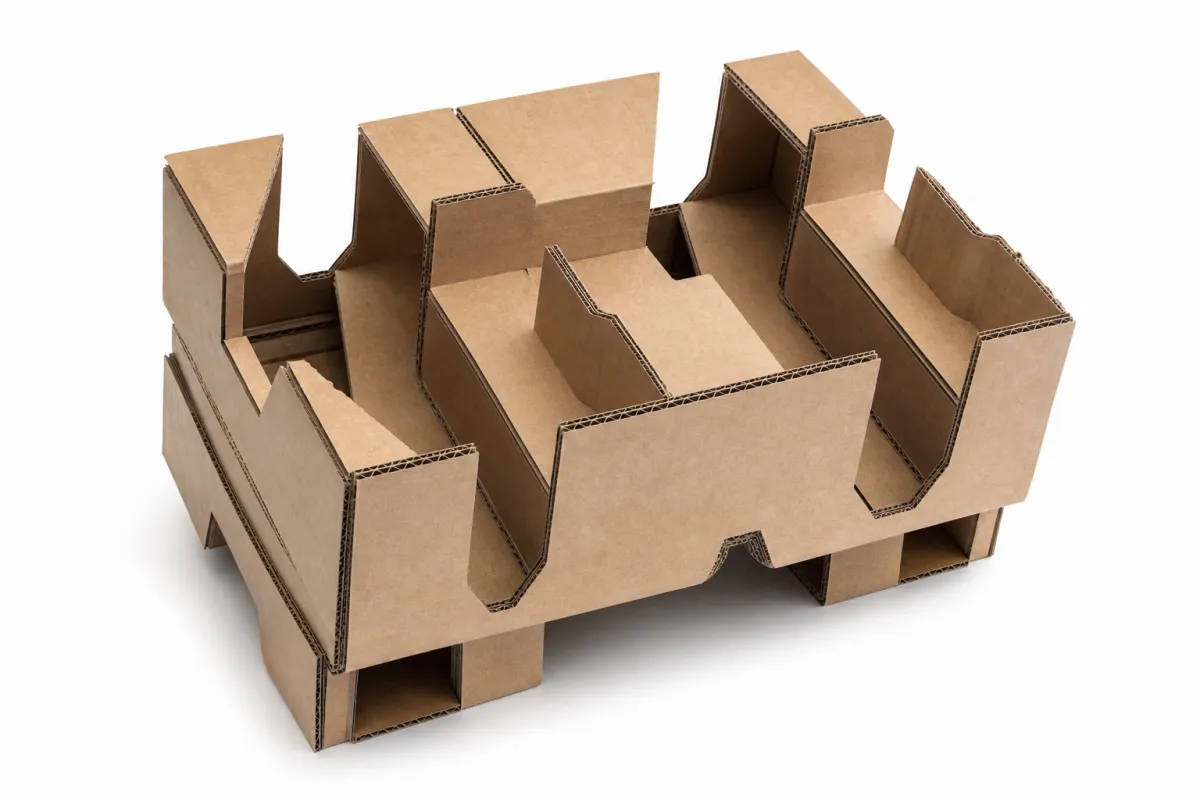
Empty space is wasted volume, but the real issue is mechanical. Inside a shipping carton, any gap allows movement, and movement is what creates scuffed surfaces, corner crush, chipped edges, broken closures, and those annoying claims where the carton looks fine and the product inside is not. Custom corrugated void fill inserts solve that by replacing open space with a shaped structure that keeps the product fixed in position during transit.
That matters across a wide range of products. Glass bottles need side restraint. Electronics need help resisting impact and vibration. Cosmetics need clean presentation with anti-shift control. Parts kits need each component to stay separated instead of colliding with the others. Subscription boxes often need the contents to sit at a consistent height so the unboxing moment feels intentional every time. In each of those cases, custom corrugated void fill inserts do more than fill space. They control load movement, improve presentation, and cut down the odds of a shipment being written off.
The usual alternatives are not useless, but they are blunt tools. Loose paper settles. Air pillows compress and migrate. Crinkle paper can look attractive on a shelf and still do very little for vertical restraint unless the packout is stuffed so tightly that it becomes a mess. Generic inserts can work if the dimensions are close, yet once the product or carton changes, the fit starts drifting and the protection drops with it. By contrast, custom corrugated void fill inserts are built around the exact carton and product dimensions, which makes the result far more repeatable. That repeatability matters when the same SKU ships every week and the damage rate needs to stay predictable.
A box can look full and still be a bad packout. If the item can move, it can fail.
One thing buyers often miss is the cost of a bad fit. A broken unit is not just the product itself. It is the customer service time, the reshipment, the return freight, and the bruise to the brand that comes from a disappointed customer. That is why custom corrugated void fill inserts are usually cheaper than they appear at first glance. A few cents more per pack can save much more than that in avoided damage. Packaging professionals think in terms of loss rate, labor, and consistency, not just unit price. That approach tends to age well.
For brands using custom printed boxes or building out stronger package branding, the insert also shapes the first impression inside the carton. If the interior looks sloppy, the outside branding has to work harder to carry the experience. A purpose-built insert supports the product and the presentation at the same time. That matters especially in retail packaging and direct-to-consumer shipments, where the box itself is part of the product experience.
How Custom Corrugated Void Fill Inserts Work Inside the Box
The basic job of custom corrugated void fill inserts is straightforward: stop the product from moving. The way they accomplish that takes a little more thought. A good insert creates pressure points and friction in the right places so the item cannot slide side to side, bounce vertically, or twist inside the carton. That restraint keeps the product from building enough speed to damage itself or the surrounding packaging.
Several common structures do that work. A simple die-cut insert can wrap around the product and hold it from the sides. A folded insert can create a cradle or channel that suspends the item. Multi-panel designs are useful for heavier products because they spread the load across several contact points instead of concentrating force in one location. Corner supports help with square or rectangular goods that are most vulnerable at the edges. Retention frames are common when the item needs to sit in the middle of the box with clearance around it but no freedom to rattle.
One useful distinction gets overlooked often: cushioning is not the same as immobilizing. Foam absorbs shock well, and paper fill can soften contact, but custom corrugated void fill inserts mainly solve movement first. They reduce the distance the item can travel before impact. In many packouts, that is enough to protect the product even without a soft cushioning layer, especially when the board geometry is built around the failure points.
Fit is the whole game. The insert has to account for the product dimensions, the usable interior box space, any protrusions, and the amount of headspace that needs to disappear. If the product is slightly oversized for the carton, the insert may need to compress gently. If the box is oversized, the insert may need tabs, shoulders, or foldbacks to close the gap. That is why custom corrugated void fill inserts are not a generic commodity. They are a fit problem with real consequences.
Board direction and flute choice matter more than most buyers expect. Corrugated board resists compression differently depending on flute profile and grain direction. B-flute, C-flute, and E-flute all behave a little differently under load. A fold that looks crisp in a sample can spring back too much in production, or crush too easily under stack load if the board is underspecified. Custom corrugated void fill inserts need enough stiffness to stay in position and enough foldability to assemble without fighting the line.
If you want the technical side to stay grounded, standards help. Parcel and transit testing often references ISTA procedures, and many packaging teams also use ASTM testing to compare performance under vibration, drop, and compression. For sustainability decisions, the FSC framework can help when you are trying to source paper-based materials responsibly. Standards do not design the insert for you, but they keep the conversation from drifting into wishful thinking.
Key Factors That Decide the Right Design
Start with the product. Weight, dimensions, shape, fragility, and surface sensitivity all change the design. A painted metal component can tolerate contact differently than a glass perfume bottle. A hard plastic item may survive compression and still fail if a corner takes a direct hit. With custom corrugated void fill inserts, the product’s weak points matter more than the overall silhouette. If the edge is fragile, protect the edge. If the face cannot take pressure, design around the face. Straightforward in theory, more nuanced in practice.
Then look at the box geometry. The same product may need a very different insert in a tall carton versus a short one. A narrow carton can create lateral pressure problems. A larger carton creates more drop distance and more room for the item to accelerate before impact. That is why custom corrugated void fill inserts are tied to the final shipping box dimensions, not just the product dimensions. The interaction between item and carton determines failure.
Shipping conditions matter just as much. Parcel networks create repeated drops, belt impacts, and vibration. LTL freight can introduce stacking pressure and longer dwell times on pallets. Warehouse handling brings fork movement, rework, and cross-dock transfers. If the packout moves through several environments, the insert has to survive all of them. A design that looks fine for one delivery mode may fail fast in another. That is one reason custom corrugated void fill inserts are often tested with realistic handling paths instead of a simple table-top fit check.
Assembly reality is the part buyers skip and regret later. A clever insert that takes 20 seconds to fold may be acceptable for a small boutique shipment and miserable for a fulfillment line running thousands of units. If the packer has to study three steps, rotate the insert twice, and still guess which tab locks first, labor waste is already built in. Good custom corrugated void fill inserts are designed so the packer sees the logic immediately. Fewer mistakes. Faster pack speed. Less training friction.
Brand requirements shape the outcome as well. Some teams want the insert to disappear and let the product do the talking. Others want the inside of the box to feel intentional, almost like an extension of the package branding. For Premium Product Packaging, a clean white board can look refined. For more utilitarian shipments, a natural kraft finish may suit the brand better. If you are pairing the insert with Custom Packaging Products or upgrading to Custom Shipping Boxes, it helps to think about the full packout, not each part on its own.
Environmental goals matter too, but not in a vague poster-on-the-wall way. Single-material corrugated designs are easier to recycle than mixed-material structures. Heavy coatings, plastic windows, and unnecessary laminations can complicate disposal. If the customer is supposed to recycle the carton, the insert should not make that harder. Custom corrugated void fill inserts can support sustainability goals when the board selection and finishing stay disciplined.
Useful spec inputs usually include:
- Product weight and exact dimensions, including protrusions and fragile areas
- Carton interior dimensions and caliper assumptions
- Shipping method, average transit distance, and handling frequency
- Desired pack speed and whether the line is manual or semi-automated
- Recycling or sourcing requirements, including FSC preference if needed
That list looks basic because it is basic. The hard part is using it honestly. Too many specs are written to make the box fit what already exists instead of what the product actually needs. Custom corrugated void fill inserts work best when the data is real, not optimistic.
Custom Corrugated Void Fill Inserts Process and Timeline
The process starts with measurement, not guesswork. A good supplier will want product dimensions, box dimensions, weight, photos from several angles, and a note about where the current damage is happening. If you have samples of damaged product, even better. The reason is practical: custom corrugated void fill inserts are built around the failure mode, and failure mode is usually easier to identify from a bad packout than from a spreadsheet.
Next comes the design phase. Someone turns those measurements into a dieline or sample concept that shows how the board will fold, where it will hold the product, and how much compression is built into the fit. This is where tolerance matters. A clean digital drawing can still produce a poor physical result if the board thickness, flute choice, or closure method was assumed instead of tested. For custom corrugated void fill inserts, the first concept is rarely the final one.
Sampling and approval are where smart buyers save money. One prototype often proves the basic geometry, but it does not prove line speed, compression behavior, or real-world abuse. A sample may look snug on a bench and still shift under vibration or crush during stacking. That is why many teams ask for a second sample after the first revision. It sounds tedious. It is cheaper than ordering 10,000 units and learning the hard way.
Production typically moves through a standard sequence: final approval, cutting setup or tooling, board procurement, converting, packing, and freight. If the design uses a standard board grade and a simple cut pattern, the process is faster. If it needs multiple folds, unusual board stock, or extra print features, the schedule stretches. For most straightforward custom corrugated void fill inserts, I would expect roughly 12-15 business days from final proof approval to production completion, with shipping added on top. Complex builds can take longer, especially if revisions are still happening.
The speed also depends on how clean your input is. If the product measurements are incomplete, the carton dimensions are old, or the actual packout has changed since the photo was taken, the project slows down. That is not the supplier being difficult. That is the project being under-specified. The better the inputs, the faster custom corrugated void fill inserts can move from concept to carton-ready.
For buyers comparing packaging design options, it helps to separate the design work from the physical manufacturing. The design phase is where fit gets solved. The production phase is where repeatability gets delivered. People sometimes treat those as the same thing, then wonder why the sample looked fine but the run did not. That is not a mystery. That is a process gap.
Practical timeline checkpoints:
- Day 1-3: gather dimensions, photos, and packout goals
- Day 3-7: review concept drawings or initial samples
- Day 7-10: revise fit and confirm assembly logic
- Day 10-15+: final approval, production, and shipping
That is not a guarantee, just a realistic planning range. If the board stock is specialty, the order quantity is large, or the design has multiple moving parts, add more time. Custom corrugated void fill inserts are not exotic, but they are still custom work. Custom means you own the timing quirks too.
Cost, Pricing, MOQ, and Quote Basics for Custom Corrugated Void Fill Inserts
Price depends on more than size. Board grade, thickness, cut complexity, print, coatings, quantity, and whether the insert needs manual folding all influence the quote. A small, simple die-cut may be inexpensive to make but awkward to assemble. A more engineered insert may cost a little more per unit but save time and reduce damage. With custom corrugated void fill inserts, the real cost is always the combination of unit price, labor, and loss rate.
MOQ is another place where buyers get surprised. Low quantities usually carry a higher unit cost because the setup work gets spread across fewer pieces. Larger runs bring the per-piece price down, sometimes sharply. If you only need a few hundred units, the economics may look annoying. If you need several thousand, custom corrugated void fill inserts often become much more sensible per shipper. That is how converting works. The first order hurts more than the reorders.
There are usually setup or tooling charges on the first order. Sometimes they are small. Sometimes they are the part of the quote that makes people blink. They still matter most on the initial run. Once the tooling or cut pattern exists, reorder pricing is often cleaner. A buyer who ignores setup charges and only compares piece price is usually comparing the wrong number. That is how packaging budgets get distorted without anyone technically lying.
Here is a practical comparison of common insert approaches:
| Option | Typical Unit Cost | Assembly Effort | Protection Profile | Best Use Case |
|---|---|---|---|---|
| Loose fill / crinkle paper | $0.03-$0.12 | Low | Basic settling, light cushioning | Low-risk retail packaging or decorative fill |
| Stock corrugated pads | $0.08-$0.20 | Low to medium | Moderate separation and support | Simple cartons with predictable dimensions |
| Custom corrugated void fill inserts | $0.12-$0.45+ | Low to medium, depending on fold count | Targeted immobilization and better fit control | Fragile goods, mixed-SKU kits, branded packaging, awkward voids |
| Foam components | $0.20-$0.80+ | Low | Strong cushioning, less recyclable | High-value electronics or impact-sensitive items |
Those ranges are broad because real pricing changes fast with quantity and complexity. A simple high-volume insert can sit near the low end, while a larger, multi-panel design with print or special board can rise quickly. For a 5,000-piece run, a decent custom corrugated void fill inserts project might land around $0.10-$0.30 per unit for simpler constructions and higher for more complex builds. If someone gives you a quote far outside that range, ask what changed. Usually something did.
When you compare quotes, make sure the assumptions match. Same board grade. Same dimensions. Same quantity. Same freight terms. Same fold or assembly expectations. A quote that assumes easy manual folding is not comparable to one that assumes pre-glued or preassembled components. The price gap may look attractive until the pack line starts burning labor. That is where custom corrugated void fill inserts earn or lose their reputation.
The cheapest insert on paper is not always the cheapest package. If the design increases breakage by even a few tenths of a percent, the savings disappear fast. Add customer complaints, replacement shipments, and a few ugly reviews, and the supposedly cheap option gets expensive in a hurry. That is why experienced buyers ask for total landed cost and damage reduction, not just carton-piece math.
One-time setup charges matter. Freight matters too. A design that saves 6 cents per unit but ships poorly may not beat a slightly pricier insert with better pallet density or easier packing. With custom corrugated void fill inserts, the quote needs to be read as a system, not a sticker.
Common Mistakes When Specifying Void Fill Inserts
The biggest mistake is embarrassingly common: measure the box, forget the product moves, approve the design, then act surprised when the item still has room to slide. A carton that technically fits the product is not automatically a protective packout. Custom corrugated void fill inserts need to account for movement, not just static dimensions. The gap between “fits” and “protects” is where claims live.
Another problem is tolerance stack-up. Closures, labels, coatings, tape, internal accessories, and protrusions all steal space. A few millimeters here and there do not sound like much until the insert is too tight for the packer or too loose for the product. That is why custom corrugated void fill inserts should be designed with real-world tolerances, not idealized CAD numbers that assume the carton is always perfect and the product never varies. Packaging rarely gets that lucky.
Over-engineering is the next trap. More board is not automatically better. If the insert gets too heavy, too stiff, or too complicated, it can slow the line and waste material without improving protection. Sometimes a lighter board with better geometry performs better than a heavy board that is fighting the fold. The point of custom corrugated void fill inserts is controlled restraint, not a cardboard fortress.
Testing is where too many projects get lazy. A sample that sits nicely on a desk is not proof. The real test is whether the actual fulfillment team can build it at speed, day after day, without guessing or forcing parts into place. If the insert only works when one trained person handles it carefully, you do not have a production-ready design. You have a fragile prototype. Custom corrugated void fill inserts should survive the people who use them, not just the engineer who drew them.
There is also the recycling trap. Mixed materials, plastic clips, and heavy laminations can make a good-looking insert annoying to dispose of. Customers do not love unpacking a box and sorting five different materials just to get to the product. If sustainability is part of the brand promise, keep the packout simple. Single-material corrugated is easier to explain and easier to recycle in many regions. That does not make every paper-based insert perfect, but it keeps the conversation honest.
Common mistakes to avoid:
- Approving fit without vibration or drop testing
- Ignoring assembly speed on the actual packing line
- Specifying the heaviest board instead of the right board
- Forgetting protrusions, closures, or label buildup
- Mixing materials without a clear recycling plan
For companies building branded packaging or product Packaging at Scale, these mistakes become more expensive because the same bad choice repeats hundreds or thousands of times. That is why custom corrugated void fill inserts deserve the same attention you would give the outer box. The inside matters. More than the marketing deck usually admits.
Expert Tips for Better Protection and Lower Waste
Design around retention first, cushioning second. If the product cannot move, it is already halfway protected. That sounds obvious, but plenty of packouts try to solve everything with soft materials and end up with a box that still lets the item drift. Custom corrugated void fill inserts work best when they lock the item in place before any cushioning question gets answered.
Make the folding logic idiot-proof. That is said kindly. A packer should be able to look at the insert and know how it nests, folds, and locks without reading a paragraph of instructions. If the geometry is not self-evident, the labor cost will show it. Good custom corrugated void fill inserts reduce thought, not add it. If somebody has to stop and stare at the part twice, the design is already asking too much.
Test with the actual fulfillment team. Not the design table. Not the sample room. The people who will build the order at speed know where the friction lives, where the tabs snag, and where confusion starts. If you want a real-world result, use real-world hands. That is one of the best ways to improve custom printed boxes, shipping inserts, and overall packaging design without guessing.
Match flute and board strength to the product. A 32 ECT board may be enough for some light parcels, while heavier items or stacked cartons may need stronger board or a different structure. The heavy option is not automatically the right option. If the board is too stiff, it may create poor folds or slow assembly. If it is too weak, the insert loses retention. Custom corrugated void fill inserts should be selected like a tool, not a trophy.
Keep waste down by simplifying the part count. Fewer pieces usually means fewer errors. Fewer errors means fewer damaged goods and less rework. It also means the customer has less to throw away or recycle. For brands that care about package branding, a cleaner insert also looks better at unboxing. Clean design is not just aesthetic; it is operational.
When possible, flatten the logic of the insert so it ships efficiently and stores efficiently. A design that nests compactly can save space in your warehouse and reduce freight cost. That matters for larger programs where insert storage becomes a hidden cost. Custom corrugated void fill inserts are not only about what happens inside the carton. They are part of the supply chain before the carton is even packed, which is kinda easy to forget until inventory starts taking over a corner of the warehouse.
Helpful performance goals to ask for:
- Enough restraint to prevent side-to-side and vertical shift
- Assembly under 10-15 seconds for standard manual lines
- Single-material construction where recycling is a priority
- Board choice that matches the product weight and stack load
- Prototype validation under drop, vibration, and compression conditions
Custom corrugated void fill inserts usually work best when they disappear into the job. No drama. No extra parts. No vague “we hope this holds” energy. The insert should support the shipping system, not become the story.
Next Steps: Measure, Test, and Lock in Custom Corrugated Void Fill Inserts
Start with measurements and photos. Capture the product dimensions, the usable interior box space, and the places where the product contacts the carton today. If you have damage reports, even better. A good spec for custom corrugated void fill inserts begins with the actual failure points, not a generic wishlist.
Then ask for a prototype or dieline review before you commit to production volume. A paper design can hide fit problems that show up instantly in a physical sample. That is especially true for products with odd corners, fragile finishes, or unusual center-of-gravity issues. If the prototype feels tight, loose, or awkward to build, fix it now. Custom corrugated void fill inserts are much cheaper to revise before the run.
Run real tests. Drop tests, vibration checks, and a pack-speed trial with the people who actually assemble the order. That trio reveals most of what you need to know. Packaging can look beautiful and still fail under motion. It can also protect the product and still be too slow to use economically. Custom corrugated void fill inserts have to pass both tests: protection and practicality.
Confirm the business details at the same time. Unit cost. MOQ. Lead time. Freight. Setup charges. Reorder pricing. If the quote does not separate those items clearly, ask for a cleaner breakdown. You should know what changes on the first order and what stays fixed later. For any serious packaging program, that clarity is worth as much as the sample itself.
Use a simple decision rule: choose the design that protects the product, fits the packing line, and stays economical at scale. Not the cheapest insert. Not the fanciest insert. The one that gives the best total outcome. That is where custom corrugated void fill inserts earn their keep.
For buyers balancing product packaging, retail packaging, and branded packaging decisions, the right insert can pull the whole system together. It supports the outer carton, protects the item, reduces waste, and keeps unboxing consistent. If you get that right, custom corrugated void fill inserts stop being a packaging expense and start acting like insurance that actually does something useful.
Clear takeaway: measure the product and carton together, prototype the insert in real board, then test it with the people who will pack it. If it locks the item in place, assembles quickly, and survives drop and vibration checks, you have a solid path forward. If it only looks good on paper, it is not ready yet.
What do custom corrugated void fill inserts do inside a shipping box?
They stop the product from sliding, tipping, or bouncing into the carton walls. They also reduce corner crush, scuffing, and breakage during normal parcel handling. In practice, custom corrugated void fill inserts replace loose fillers when you need a cleaner and more repeatable packout.
How do I measure for custom corrugated void fill inserts?
Measure the product first, then measure the usable interior space in the shipping box. Record protrusions, closures, labels, and any fragile surfaces that cannot take pressure. If you want custom corrugated void fill inserts to fit correctly, include real-world tolerances so the board still works when caliper, coatings, or print are added.
How long does the custom corrugated void fill inserts process usually take?
Simple designs can move quickly, but revisions and approvals usually stretch the schedule. Prototype sampling adds time, and complex fold patterns or special board grades can add more. Production time for custom corrugated void fill inserts also depends on quantity, capacity, and freight distance after the order is built.
What affects the price of custom corrugated void fill inserts the most?
Material grade, cut complexity, and quantity are usually the biggest drivers. Manual folding, printing, coating, and one-time tooling or setup charges can change the quote fast. The cheapest custom corrugated void fill inserts on paper are not cheap if they increase breakage or pack-out labor.
Are custom corrugated void fill inserts recyclable?
Usually yes, if they are made from single-material corrugated board and kept free of mixed components. Heavy lamination, plastic parts, or excess coatings can make recycling less straightforward. Check local recycling rules too, because access still varies by region. Well-designed custom corrugated void fill inserts are often easier to recycle than mixed-material alternatives.

