Buyer Fit Snapshot
| Best fit | custom countertop display boxes with logo for packaging buyers comparing material specs, print proof, MOQ, unit cost, freight, and repeat-order risk where brand print, material, artwork control, and repeat-order consistency matter. |
|---|---|
| Quote inputs | Share finished size, material target, print colors, finish, packing count, annual reorder estimate, and delivery region. |
| Proofing check | Approve dieline scale, logo placement, barcode or warning zones, color tolerance, and any recyclable or compostable wording before bulk production. |
| Main risk | Vague material claims, crowded artwork, or missing packing details can create delays even when the unit price looks attractive. |
Fast answer: Custom Countertop Display Boxes with Logo: Dieline, Finish, Proof, and Buyer Review should be specified like a repeatable production item. The safest quote includes material, print method, finish, artwork proof, carton packing, and reorder notes in one written spec.
What to confirm before approving the packaging proof
Check the product dimensions against the actual filled item, not only the sales mockup. Ask for tolerance on folds, seals, hang holes, label areas, and retail display edges. If the package carries a logo, QR code, warning copy, or legal claim, reserve that space before decorative graphics fill the panel.
How to compare quotes without losing quality
Compare board or film grade, print process, finish, sampling route, tooling charges, carton quantity, and freight assumptions side by side. A lower quote is only useful if the supplier can repeat the same color, closure quality, and packing count on the next order.
Custom countertop display Boxes with Logo do one thing better than plain trays: they turn a few inches of counter space into a sales surface. On a crowded register, a pharmacy counter, or a trade show table, that small footprint either earns attention quickly or disappears into the noise. There is not much middle ground.
For a packaging buyer, the value is easy to explain. Custom countertop display boxes with logo combine branding, product visibility, and compact placement, which is why they often beat generic product packaging for impulse purchases. If you need more than one format, our Custom Packaging Products page is a practical place to compare board stocks, inserts, and retail packaging options without the usual sales haze.
The short version is this: light items usually fit folding carton or paperboard displays; heavier items need corrugated or reinforced board; premium goods can justify rigid presenters, but only if the display helps tell the brand story. Sorting through Custom Printed Boxes for retail counters gets easier once structure becomes the first decision instead of an afterthought.
This piece covers the strongest styles, what they actually do on the shelf, where the pricing lands, how long production usually takes, and which custom countertop display boxes with logo make sense for different products. No mystery. Just packaging advice that still works after the first wave of shoppers has already picked through the tray.
Quick Answer: Why custom countertop display boxes with logo work
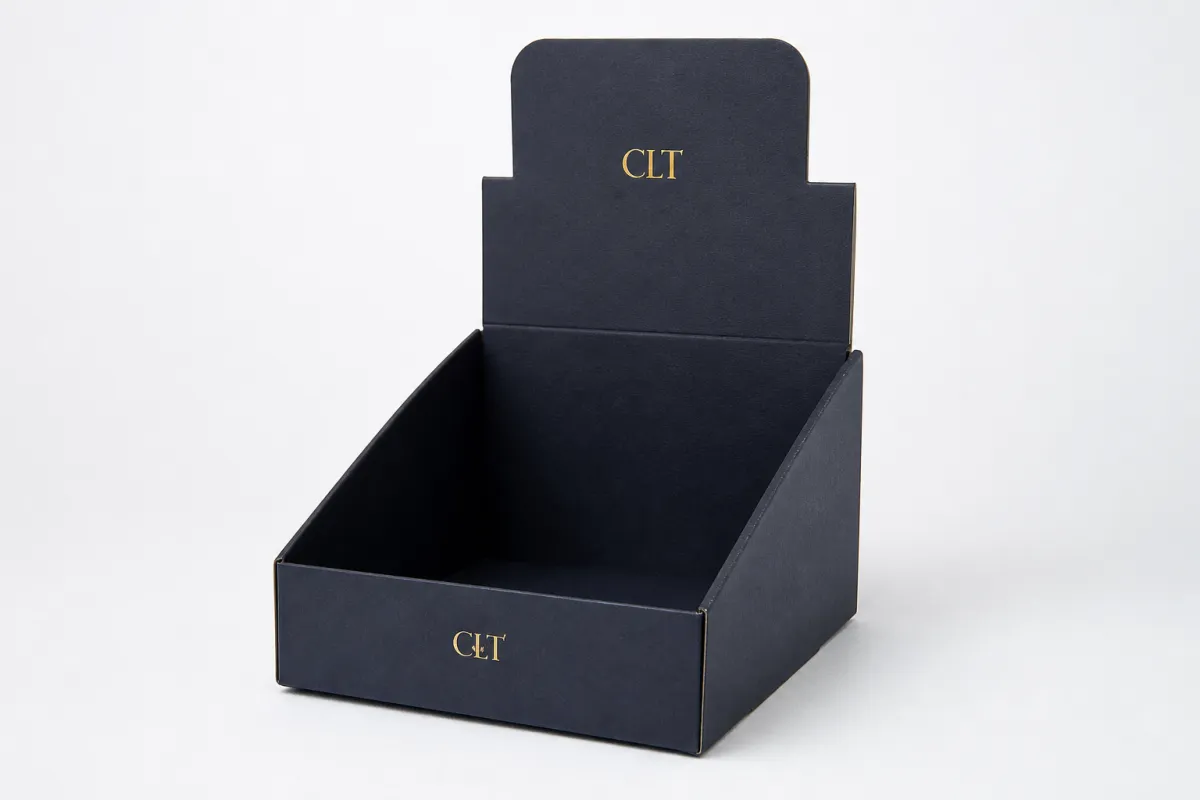
Custom countertop display boxes with logo work because they solve three retail problems at once: visibility, branding, and space. A shopper standing at a counter has maybe two seconds of patience. If the display looks generic, cluttered, or flimsy, it gets skipped. If it looks clear, organized, and recognizable, it earns a pick-up.
That is the practical win. Custom countertop display boxes with logo do not just hold product; they sell from the counter while taking up less space than a shelf unit. For impulse buys like lip balm, mints, chargers, sample packs, travel-size skincare, and small accessories, that tiny footprint is the whole point. Retail packaging has to work hard in a very small area, and this format does.
There is also a structural difference that buyers often miss. Light items, such as sachets or sample cards, can live in a paperboard counter display with a simple tuck or lock bottom. Heavier items, such as packaged tools, glass bottles, or dense cosmetics, need corrugated board or a reinforced tray with a stronger base. If the box sags after a week on the counter, the brand impression drops fast.
"A good counter display should do five things: fit the counter, hold its shape, show the product, carry the brand, and survive being touched by every shopper in the store."
That is why custom countertop display boxes with logo are usually a smarter buy than plain product trays. The tray may save a few cents, but it rarely gives you the same package branding, shelf presence, or trust. And trust matters. A customer is more likely to reach for packaging that looks intentional instead of improvised.
For buyers comparing retail packaging formats, one rule is useful: choose the simplest structure that keeps the product upright, visible, and easy to restock. Fancy die-cuts and dramatic shapes are fun until they slow filling or make the front row collapse. On a counter, function beats theatrics.
There is a reason custom countertop display boxes with logo are common in pharmacies, boutiques, convenience stores, and checkout lanes. The structure is small enough to stay out of the way and branded enough to feel like part of the product. That combination is hard to beat.
Top custom countertop display boxes with logo options compared
Not every display style solves the same problem. Some are built for speed. Some are built for premium presentation. Some are simply easier to live with during replenishment, which is usually the part nobody thinks about until the first sell-through run is half empty.
Here is the blunt take: custom countertop display boxes with logo should be chosen by product weight, fill pattern, and how long they need to look good after customers start grabbing units. A beautiful display that falls apart at 40 percent fill is not a good display. It is a short-lived prop.
| Display style | Best for | Strength level | Typical unit cost range | Tradeoff |
|---|---|---|---|---|
| Open-top tray | Samples, sachets, candy, small accessories | Light to medium | $0.18-$0.45 | Fast access, but less premium and less protection |
| Front-roll display | Items that need easy product access | Light to medium | $0.24-$0.58 | Good visibility, but needs thoughtful graphic layout |
| Tuck-top counter box | Premium small goods and controlled opening | Medium | $0.35-$0.80 | Cleaner look, but slower to stock if overdesigned |
| Shelf-ready display box | Retail restock programs and multi-unit packs | Medium to high | $0.40-$0.95 | Efficient for stores, but needs careful fit planning |
| Rigid countertop presenter | Luxury cosmetics, gifts, and prestige launches | High | $1.20-$3.50+ | Looks expensive, but the price climbs quickly |
Open-top trays are the easiest choice for custom countertop display boxes with logo when the product is light and the shopper needs direct access. Think mint tins, lip balms, trial-size skincare, or promotional items. They are cheap, fast to assemble, and easy for staff to refill. The downside is obvious: they do not hide much, so the product itself has to carry the presentation.
Front-roll displays look a little more polished. The front edge rolls or folds to create a cleaner opening, which helps the box feel less like a throwaway tray. This style works well for custom printed boxes with a decent brand panel and a visible product face. If your graphics are strong but not loud, this is a good middle ground.
Tuck-top counter boxes give more structure and a tidier premium look. They make sense for boutique skincare, supplements, gift items, or items sold one unit at a time. The tradeoff is fill speed. If your staff needs to restock constantly, too many closures and flaps slow things down.
Shelf-ready display boxes are practical when the unit needs to move from shipping carton to counter display with minimal handling. They are often used in retail packaging programs where the retailer wants quick replenishment and a neat face-out layout. They are not always flashy, but they are efficient, and efficiency usually wins in the back room.
Rigid countertop presenters are the premium end of the range. They work when package branding is part of the product value, not just a label on the side. Rigid board with soft-touch lamination, foil accents, or a window can make a display feel upscale. Just do not buy rigid structure for a commodity item and expect magic. The counter will not suddenly become a luxury stage because the board got thicker.
For branded packaging, the smartest choice is often the one that looks good from three feet away and still functions after ten hands have touched it. That usually means restrained artwork, clear product visibility, and a box style that can survive the real retail environment rather than a mockup table.
Detailed Reviews of custom countertop display boxes with logo by use case
Buying custom countertop display boxes with logo gets easier once you stop asking for the "best" version and start asking what the product actually needs. Weight, fill count, handling, and brand level matter far more than whatever looks nice in a render.
Small retail products that need fast pick-up visibility
For lip balm, sample packs, mints, travel-size toiletries, cables, and small accessories, lightweight paperboard custom countertop display boxes with logo are usually the strongest value. They keep cost down, ship flat, and assemble quickly. A simple open-top tray or front-roll display often works best because the product is visible from above and easy to grab from the front.
In practice, these products sell better when the display face is clean. Full-coverage graphics can work, but too much visual noise makes the tray look busy on a counter already filled with receipts, impulse snacks, and store clutter. I usually prefer a strong logo panel, one short benefit line, and enough negative space to let the product show through. That is packaging design, not art school theater.
I once reviewed a counter program for a travel skincare brand that insisted on four messages, two claims, and a QR code on a display barely wider than a paperback. It looked smart in the mockup. On shelf, it looked like a ransom note. We stripped it back to the logo, product name, and one benefit, and sell-through improved because the customer could actually identify the item in a glance. That kind of simplification is gonna save money and frustration more often than a flashy finish ever will.
Heavier products and premium items that need structure
For heavier items, custom countertop display boxes with logo need a stronger build. Corrugated board is the sensible middle ground when the box must hold weight, survive repeated handling, or travel through a rough distribution chain. If the product is dense or awkward, add inserts, side supports, or a thicker bottom panel. Otherwise the display will bow, and bowed displays make products look cheaper than they are.
This is where custom printed boxes and functional engineering should meet. A well-built corrugated counter unit can still look polished, especially with matte or soft-touch lamination. If the brand sits in skincare, supplements, wellness, or specialty retail, a restrained design often does more than loud color. Premium goods usually benefit from a cleaner presentation, not a busier one.
There is a temptation to treat premium as an excuse to add material thickness everywhere. That is not always the answer. A rigid box with poor internal support can still crush when the retailer stacks a second product nearby or leans over the counter during replenishment. Structure matters more than the label you give it.
High-graphics brands that need the box to sell before the copy is read
Some brands want the display to shout from the counter. Cosmetics, seasonal promos, and launch products often need that extra graphic punch. In those cases, custom countertop display boxes with logo can handle full-bleed print, bright color blocks, or strong icon systems. It can work, but only if the art is disciplined.
Gloss coating gives more shine and pop. Matte looks calmer. Soft-touch feels more premium in hand, though it adds cost and can show scuffs if the display gets abused. If the goal is visual energy, gloss helps. If the goal is a quieter premium signal, matte or soft-touch is better. That is the kind of tradeoff buyers should see before approving artwork, not after the first run lands on the floor.
Which styles hold up best in real store use
From a practical standpoint, the best custom countertop display boxes with logo are the ones that still look decent at half-full capacity. That usually means a wider base, a stable front wall, and an insert or divider if the product slips around. The flimsiest options are often the prettiest in render files. Real retail counters do not care about render files.
My honest ranking is this:
- Most camera-friendly: rigid presenters and tidy tuck-top boxes.
- Easiest to restock: open-top trays and shelf-ready displays.
- Best balance of cost and presentation: front-roll paperboard displays.
- Most likely to feel flimsy if underbuilt: ultra-thin open trays with heavy products.
If you want a second set of options, compare our Custom Packaging Products against your product weight and sales channel before you approve a final dieline. That one step prevents a lot of expensive reprints.
One more thing. A display can be beautiful and still fail if it ignores retailer reality. If the counter is narrow, you need a smaller footprint. If the store wants fast replenishment, you need an open format. If the product is fragile, you need more structure. Custom countertop display boxes with logo only work when the box follows the channel, not the other way around.
Cost, Pricing, MOQ, and Quote Guide for custom countertop display boxes with logo
Pricing for custom countertop display boxes with logo is not mysterious, but it gets distorted by vague quotes. One supplier says "affordable," another says "premium," and neither statement helps you buy anything. You need structure, quantity, print method, finish, and setup costs laid out in plain language.
For a practical range, simple paperboard counter displays often start around $0.18-$0.45 per unit in higher runs, depending on size, print coverage, and whether the structure is basic or custom-cut. Corrugated builds usually sit higher, roughly $0.30-$0.95 per unit. Rigid or specialty-finish displays can jump past $1.20 per unit quickly. If foil stamping, spot UV, magnetic closures, or intricate inserts are involved, the number moves up again.
The main reason is setup. Die cutting, printing plates, color matching, and gluing all add cost before a single display is assembled. That is why MOQ matters. Small runs cost more per box because the setup is spread over fewer units. Once the order moves into the low thousands, unit pricing often becomes far more reasonable. It is not charity. It is math.
Here is the part buyers should watch closely: the quote changes fastest when the box design gets complicated. Custom countertop display boxes with logo can look deceptively simple, but a few choices move cost fast:
- Number of print colors and sides printed
- Coating choice: gloss, matte, soft-touch, or aqueous
- Die-cut windows and patching
- Insert complexity and glue points
- Board thickness and corrugated flute type
- Special finishes like foil, embossing, or spot UV
If you want a quote that is actually useful, ask for the same design in two or three configurations. For example: one paperboard option, one corrugated option, and one backup material. That gives you a real comparison instead of vendor poetry. It also helps you see whether the brand wants premium presentation or just a sturdy display that does the job.
From a packaging buyer's point of view, the cheapest quote is not always the best purchase. If the display is too weak, too thin, or too hard to refill, the real cost shows up later in damaged product, wasted labor, and a counter that looks tired halfway through the run. That is a terrible bargain.
For brands comparing branded packaging investments, the best move is often to spend a little more on the display structure and a little less on unnecessary decoration. A cleaner box with strong board, accurate dimensions, and smart logo placement usually delivers better retail packaging results than a crowded design that eats budget and still looks generic.
One practical buying habit helps a lot: request pricing based on one dieline, one finish, and one fallback material. That keeps the quote comparable across suppliers and makes custom printed boxes easier to evaluate. If a supplier cannot explain the setup charges, ask again. Clear pricing is part of trust.
For businesses that need bigger product packaging programs, the question is not just "How much per box?" It is "How much does the display save me in labor, presentation, and sell-through?" That is the real cost model, and it is where custom countertop display boxes with logo often earn their keep.
Process and Timeline for custom countertop display boxes with logo
The production path for custom countertop display boxes with logo is straightforward when the brief is tight and the artwork is ready. It gets messy when dimensions are still changing, logo files are low resolution, or someone decides to "just make it more premium" after the sample is already approved.
Here is the normal flow:
- Brief and measurements
- Dieline or structural template
- Artwork setup
- Digital proof or print proof
- Sample approval
- Printing
- Die cutting and finishing
- Gluing or flat packing
- Final inspection and shipping
Simple digital sample runs can move faster, especially when the design uses standard paperboard and limited finishing. Offset runs, specialty coatings, rigid builds, and complex inserts take longer. If the display needs structural testing, the schedule stretches again because adjustments have to happen before full production starts. That extra step is annoying, sure, but it is still cheaper than redoing a thousand bad boxes.
On a normal run, custom countertop display boxes with logo often take around 12-20 business days after proof approval for standard builds, sometimes faster if the design is simple and stock materials are already available. Specialty work can take longer. If you are racing a launch date, do not treat the fastest estimate as a promise. It is a starting point, not a guarantee written by the packaging gods.
Delays usually come from the same few places:
- Missing dimensions or wrong product measurements
- Weak logo files or unreadable small text
- Late approval of proofs or samples
- Design revisions after production prep starts
- Overly complex coatings or finishes
One practical safeguard is to lock dimensions early. That sounds obvious, but it is where many launches slip. If the product changes after design starts, the dieline has to change too, and that can ripple through the whole schedule. Another safeguard is to approve a sample before the full run, especially if the box is holding a new SKU or a new product line.
Testing matters. Packaging standards such as ISTA are useful reminders that shipping and handling should be considered, not guessed. If the box will travel through distribution before it reaches the counter, test it under rougher conditions than your office desk can provide. That is not overkill. That is common sense.
For sustainability claims, keep them accurate. FSC-certified board, recycled content, and recyclable paperboard all have different meanings, and buyers should verify what they are actually ordering. The FSC site is a good reference point if you need to confirm sourcing language before you print it on the box.
If your custom countertop display boxes with logo are tied to a launch, build in buffer time. Sample approval, artwork changes, and shipping delays always seem to arrive together. That is how packaging schedules behave when nobody leaves slack in the plan.
How to Choose the Right custom countertop display boxes with logo
Choosing custom countertop display boxes with logo starts with three questions: how heavy is the product, how much counter space do you get, and how often will staff refill it? Those three answers eliminate a lot of bad options before anyone starts arguing about color palettes.
If the product is light and the counter is crowded, a paperboard tray or front-roll display is usually enough. If the product is heavier, a corrugated display or reinforced insert is safer. If the item is premium and the brand wants a gift-like feel, rigid board may be worth the higher cost. The wrong structure fails even when the artwork is beautiful, and that is a very expensive way to learn the obvious.
Sales environment matters too. Pharmacy counters need compact, sturdy displays that keep small items organized. Boutique checkout lanes can support more visual detail and a cleaner premium finish. Trade show tables often need displays that assemble quickly and survive being moved around. Grocery and convenience counters reward simple refill logic because staff will not spend extra time rebuilding anything.
For finish and branding decisions, use a checklist instead of guessing:
- Matte or gloss: matte feels calmer; gloss pops harder under store lighting.
- Soft-touch: good for premium feel, but it costs more and can scuff.
- Logo size: large enough to be read from a few feet away, not so large it crowds the product.
- Inside printing: useful for premium unboxing or when the open cavity is visible.
- Cutouts: useful for visibility, but they weaken structure if overused.
- Inserts: smart for products that tilt, roll, or vary in size.
Sustainability claims deserve careful handling. If you are using recycled board, FSC-certified stock, or water-based inks, make sure the claim is accurate and supported. The EPA recycling guidance is helpful when you want packaging language that does not overpromise. Customers are tired of greenwashing. Frankly, they should be.
A few mistakes show up again and again. Oversized boxes waste counter space and look lazy. Weak board sags after a week and makes the product feel lower value. Graphics that cram in too much text bury the actual item. Trying to make every display feel "luxury" is a fast path to overspending on packaging design that does not improve sell-through.
My practical advice is to pick the simplest structure that keeps the product visible, stable, and easy to restock. That is the core of good retail packaging. The rest is styling.
When custom countertop display boxes with logo are chosen well, they do more than hold stock. They support package branding, keep the presentation tidy, and give the product a better chance of being noticed before the customer moves on. That is the real job.
Our Recommendation and Next Steps
Here is the clean recommendation: choose the simplest custom countertop display boxes with logo that still protects the product, fits the counter, and looks good after half the stock is gone. Do not pay extra for drama you do not need. The counter is a selling space, not a stage set.
If you are unsure where to start, use this order of operations. First, measure the product and the shelf or counter depth. Second, pick two display styles that match the weight and sales setting. Third, request a quote with one finish option and one backup material so you can compare real numbers. Fourth, ask for a sample or proof before you approve a full run.
That process is boring. It also works.
For brands launching a new SKU, I usually recommend a paperboard display for lighter products, a corrugated version for heavier items, and a rigid presenter only when the box itself supports the price point. That keeps costs aligned with the product instead of forcing custom countertop display boxes with logo to carry more prestige than the item can justify.
Before You Order, confirm MOQ, lead time, and whether the display fits the retailer's counter depth, stocking rules, and packaging design requirements. If a store wants front-facing product, do not send a box with a narrow opening. If the staff needs quick refill, do not choose a closure that takes forever to handle. The little details are what separate useful product packaging from expensive clutter.
If you want a place to compare other formats, our Custom Packaging Products page is a practical starting point. You can check structural options, board styles, and retail packaging directions without making assumptions that cost you later.
My final take is simple: custom countertop display boxes with logo are worth it when they improve visibility, keep the product stable, and make the counter easier to manage. If they do not do those three things, the box is just decoration. And decoration does not fix weak sell-through.
The most useful next step is to lock the product dimensions, decide whether the item is light, medium, or heavy, and choose the display structure from that starting point. Once those three pieces are fixed, the logo, finish, and artwork become much easier to judge without second-guessing the whole package.
Frequently Asked Questions
What is the best material for custom countertop display boxes with logo?
Paperboard works best for lightweight retail items and keeps costs under control. Corrugated is the better choice when the display needs extra strength or shipping durability. Rigid board is the premium option, but it usually makes sense only when the packaging itself is part of the brand experience.
How many custom countertop display boxes with logo do I need to get a decent price?
Small runs are possible, but the unit price usually stays high because setup costs are spread across fewer boxes. Once quantities move into the low thousands, pricing often becomes more reasonable. Ask for two quotes: one at your target MOQ and one at a higher volume so you can see the real savings.
What is a realistic lead time for custom countertop display boxes with logo?
Simple printed paperboard boxes can move faster than specialty builds, especially if the artwork is already approved. Sampling, proof changes, and finish upgrades are the usual reasons timelines stretch. If the boxes support a launch, build in buffer time instead of betting everything on the fastest estimate.
Can custom countertop display boxes with logo be full color and still look premium?
Yes, but premium usually comes from restraint, not from covering every surface with graphics. Matte or soft-touch finishes often look more expensive than loud full-coverage art. A clean logo, strong typography, and a smart product window can outperform crowded artwork.
How do I keep custom countertop display boxes with logo stable on a busy counter?
Use a wider base, a lower center of gravity, and inserts if the product shifts around. Avoid overfilling the display, because messy stock makes the box look flimsy even when the structure is fine. Test the box with real handling, not just on a desk, since retail counters are rougher than mockups.

