Custom Dad Hats Bulk Order for Brand Drops and Events
Custom Dad Hats work because they are easy to wear, easy to size, and easy to reorder. For a buyer, that means less risk than many other merch formats. The cap does not need a fit chart, it does not feel overly promotional, and it usually gets worn instead of stored away.
That is why this style keeps showing up in brand drops, event kits, employee programs, and retail assortments. A good cap program is not about chasing novelty. It is about choosing a blank, decoration method, and timeline that can hold up across 250, 500, or 1,000 units without turning into a custom project every time you restock.
The best orders keep the spec simple and the approval process tight. That is what protects margin, lead time, and repeatability.
Why bulk dad hats sell when other merch sits in boxes
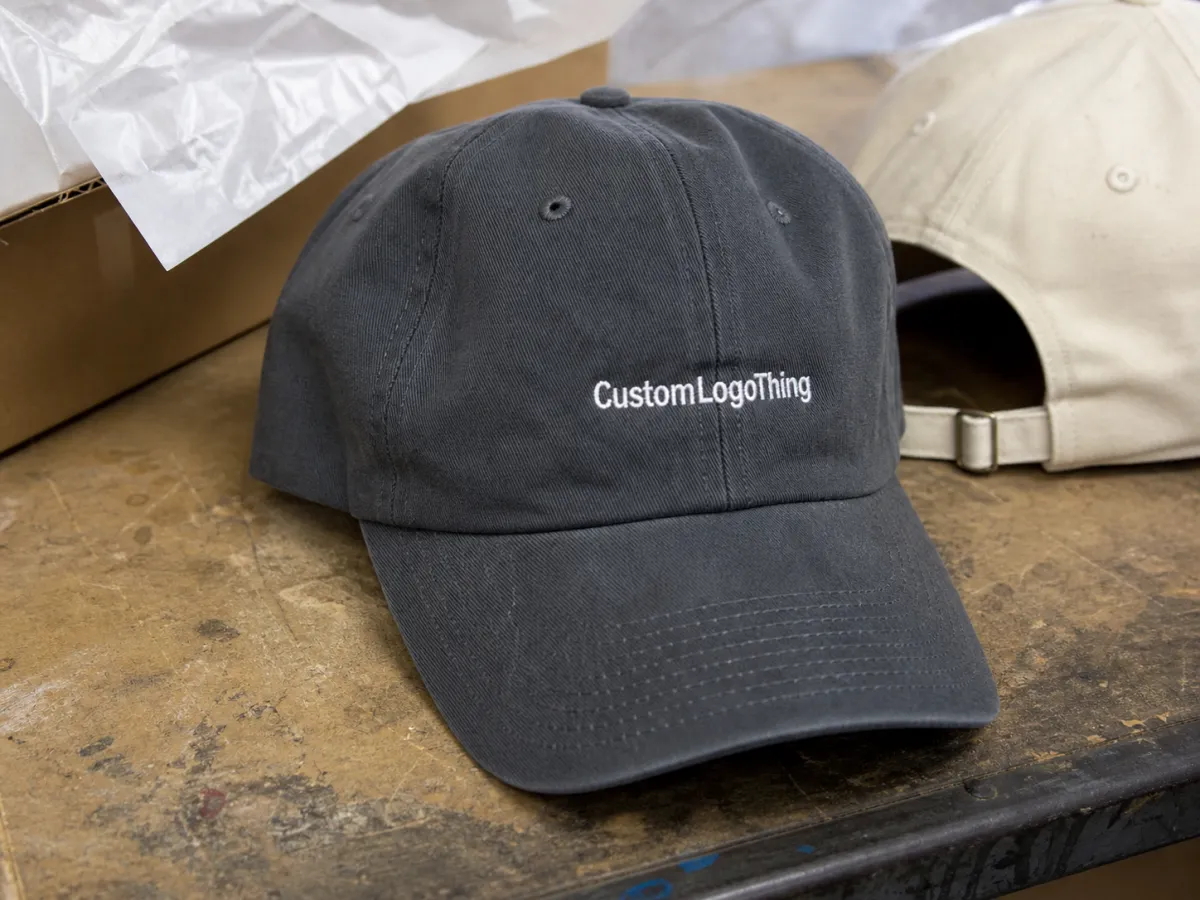
Dad hats sell because they remove friction. The low profile feels familiar, the brim is easy to wear, and the crown does not sit as high or stiff as a structured promotional cap. That makes the format more forgiving across different head shapes and more acceptable for everyday use.
They also fit a wide range of buyer goals. A brand can use them for retail, a company can hand them out at events, and a team can make them part of a uniform without forcing everyone into a piece they will never wear again. If the item needs to move quickly, simple wins.
Overdesigned merch is where inventory risk starts. A hat with too much visual noise, awkward fit, or a trend-driven silhouette may look good in a mockup and still sit in a box after the campaign ends. A dad hat is less likely to do that because the style already reads as usable.
Consistency matters just as much as appeal. When the blank, closure, and decoration method stay the same from one run to the next, the buyer gets a cleaner reorder process and fewer surprises in price or fit.
Styles, crown shape, and closure options that fit real buyers
The first choice is structure. Unstructured dad hats feel soft and relaxed, and they collapse naturally when not worn. Lightly structured hats hold the front panel a little better, which can help the logo read cleaner and look more retail-ready.
Neither option is automatically better. Unstructured works well for lifestyle brands, employee wear, and casual gifting. Light structure is useful when the hat needs to hold shape on a shelf, in a launch kit, or under bright event lighting. The right choice depends on the brand, not on a trend cycle.
Closure affects comfort, appearance, and cost. Strapbacks are common because they are familiar and adjustable. Metal buckles usually feel more finished than plastic hardware. Velcro can work well for events where speed matters, but it can also make the cap feel cheaper if the rest of the build is not strong. Leather straps are often used in premium runs, though they are not required for a clean result.
Construction details also shape the final look. A six-panel build is still the most predictable option because it gives the front panel a stable decoration area. A curved brim is usually the safest choice because it feels complete without extra styling. Low-profile hats often sit around 3.25 to 3.75 inches at the front, though the exact measurement depends on the blank and factory pattern.
Material should match the use case. Washed cotton feels softer and hides minor handling marks. Chino twill gives embroidery a cleaner surface. Nylon dries faster and makes more sense for outdoor or active use. Pigment-dyed blanks have a muted look, but color variation is part of that finish, not a defect. If the order has to cover staff, customers, and resale, the material should handle all three.
Logo placement and decoration specs that keep the hat readable
Front embroidery is still the default because it is durable and easy to repeat across a bulk run. A one-location logo usually looks best around 3 to 4 inches wide, depending on the crown shape and how much usable space the front panel gives you. Bigger art can work, but oversized graphics often fight the seam lines and the center front.
Patch decoration makes sense when the brand wants texture or a softer retail look. Woven patches are strong for small text and fine detail. Embroidered patches add depth. PVC patches hold shape and color well but do not fit every brand voice. Side embroidery is useful for quieter branding, and a small woven label at the back or inside the sweatband can add detail without crowding the cap.
The common mistake is asking embroidery to do too much. Thin lines, tiny text, gradients, and busy icons usually do not translate cleanly onto a curved fabric surface. Most decorators will simplify the art before digitizing it, which is not a shortcut; it is how the finished hat stays legible from a normal viewing distance.
Stitch count affects cost because it affects machine time. A simple logo may fall around 6,000 to 8,000 stitches. More detailed fills and multiple shapes can push much higher. At some point, extra detail stops improving the hat and starts inflating the price.
Placement matters as much as digitizing. If the art sits too high, too low, or too close to the seam, it can look off even when the stitching is clean. Good production teams check center point and brim curve before the run begins. That prevents avoidable rework.
Cost, pricing, MOQ, and quote drivers for a custom dad hats bulk order
Pricing comes from a few main inputs: blank cost, decoration method, stitch complexity, number of colorways, labels, packaging, and freight. Keep the design simple and the unit price usually drops. Add more placements, custom tags, or special packaging and the number goes up. That is the basic math behind most quotes.
MOQ is usually driven by the blank and decoration process. A stock hat with simple embroidery can sometimes start around 48 to 100 pieces. More custom work, such as woven patches, extra color options, or branded labels, often moves the minimum closer to 100 to 200 pieces. Lower quantities are possible, but setup costs have to be spread across fewer units.
| Run size | Typical unit price | Setup and notes | Best use |
|---|---|---|---|
| 100 pieces | $8.50-$14.00 | Digitizing or setup often runs $35-$75; one clean embroidery location keeps costs under control | Smaller launches, events, staff orders |
| 250 pieces | $6.75-$10.00 | Stock blank, standard thread colors, one logo location, limited extras | Brand drops, local retail, promo runs |
| 500 pieces | $5.25-$7.75 | Better volume pricing; patches or woven labels may add about $0.50-$2.25 per unit | Repeat programs, larger giveaways, employee merch |
| 1000 pieces | $4.25-$6.50 | Lowest unit price; freight, cartons, and packaging choices start to matter more | Large launches, ongoing resale, national rollouts |
Those numbers are a practical range, not a promise. A black cotton strapback with one-color embroidery is a different job from a pigment-dyed cap with a woven patch, side hit, custom label, and hangtag. The cleanest way to compare quotes is to ask for setup, sample, decoration, and freight as separate line items.
It also helps to ask what changes the price. Extra decoration locations add machine time. Special labels add labor. Mixed color orders can split the production run into smaller lots. Less common blank shades may cost more because they are harder to source.
Packaging and shipping protection matter too. If the hat is going into retail, a launch kit, or direct-to-customer mailers, a crushed carton can make the whole order feel cheaper than it should. The box should be planned with the cap, not after it.
Process, timeline, and production steps from proof to ship
The clean workflow is artwork review, digital proof, sample or approval, production, inspection, then ship. That sequence keeps the order moving and prevents last-minute fixes that slow everything down. Most delays happen when a proof is approved too quickly or the design changes after production is already scheduled.
For a straightforward embroidered run on stock blanks, a common production window is 10 to 15 business days after proof approval. Custom patches, labels, or multiple colorways can push that to 15 to 25 business days. Shipping is separate, so domestic freight can add another 2 to 5 business days depending on destination and season.
That is why real deadlines need buffer. If the hats are tied to a trade show, store opening, employee rollout, or pop-up, the in-hand date should be earlier than the day the boxes need to leave the dock. Rushing the order rarely improves quality.
Slow approvals are the most common bottleneck. Revised logos, swapped colorways, and late quantity changes all take time. Having one decision maker on the buyer side usually keeps the job moving faster than a multi-person approval chain.
If the order includes packaging, inserts, or a mailer program, those pieces should be planned alongside the hat spec. Good packaging keeps the product reading as one finished item instead of separate parts. For custom printed boxes or mailers, FSC-certified paperboard from FSC is a practical option that keeps the setup straightforward.
That same logic applies to branded shipping. A cap that arrives in a weak mailer can land with the wrong impression even if the decoration is perfect. The outer pack is part of the product experience.
If the order needs custom mailers, inserts, or a more complete packaging setup, our Custom Packaging Products page covers the pieces that keep the shipment aligned.
Quality checks that prevent crooked logos and uneven runs
Quality control starts before production. Check the proof size, logo placement, thread colors, and orientation on the crown. If the design is too high, too low, or too close to the seam in the proof, fix it there. Once the run starts, correction costs more.
A pre-production sample should be checked with a ruler, not guesswork. Measure the logo width, confirm the brim curve, test the closure, and look for puckering or loose stitches. One bad sample is a warning. Repeated problems usually mean the digitizing file or setup needs to be changed.
- Proof accuracy: verify placement, size, spelling, and orientation before sign-off.
- Thread color: compare actual thread against brand references, not just a screen preview.
- Panel alignment: confirm the logo does not drift off-center because of the seam.
- Closure test: make sure the strap, buckle, or clasp opens and closes cleanly.
- Stitch quality: inspect edge cleanup, density, and thread tension on the first sample.
The common problems are predictable. Low-resolution files create fuzzy edges. Tiny text disappears. Washed cotton and pigment-dyed blanks can show more variation from lot to lot, so buyers should know whether they want a consistent retail look or a more relaxed, lived-in finish.
For larger shipments, carton quality matters too. If the hats are going into retail packaging or a mailer kit, ask whether the outer shipper was checked against ISTA test methods. Nice embroidery does not matter much if the box arrives crushed.
Why buyers keep the same cap program instead of re-sourcing every run
Repeatability is the main value. A hat that fits well, keeps its shape, and reorders cleanly saves time on every run. Marketing does not need to relearn the item, operations does not need to hunt for a new blank, and procurement does not have to explain why the “same” cap feels different.
That consistency matters for seasonal programs, employee stores, recurring launches, and multi-location brands. One approved blank, one digitized file, one closure style, one decoration spec. That is not exciting, but it keeps cost and lead time under control.
Once the first run is locked, the next order gets easier. There are fewer approvals, fewer sample rounds, and less back-and-forth over basic decisions. The conversation shifts from what the hat should be to how many units the next run needs.
The same logic applies to packaging and branded inserts. When the box, liner, and cap spec work together, the shipment feels intentional instead of improvised.
Next steps to place a custom dad hats bulk order without delays
Start with the basics: send the artwork, target quantity, preferred colorways, and the date the hats need to arrive. That is enough to get a useful quote and a realistic production window. If the order is for retail, staff, gifting, or an event, say so. The use case changes the best cap style and decoration method.
Ask for a quote that shows MOQ, sample timing, production window, and shipping method. Clear quotes are easier to compare. Vague lead times and bundled pricing that hides setup costs usually create problems later.
- Vector logo or high-resolution artwork
- Quantity by color, not just total quantity
- Preferred cap style and closure
- Target in-hand date and ship-to ZIP
- Any packaging or insert needs for the order
Lock the artwork early and keep one person responsible for approvals. That prevents a lot of churn. If you want the usual setup questions in one place, our FAQ covers minimums, samples, and file prep without making you dig for them.
For a custom dad Hats Bulk Order that has to land on schedule, a clean spec sheet beats a clever concept every time. Clear art, clear quantity, clear deadline.
What is the MOQ for a custom dad hats bulk order?
MOQ usually depends on the blank and decoration method. Simple embroidery on stock hats can start around 48 to 100 pieces, while patches, labels, or special finishes often push the minimum higher. Ask for the MOQ on the exact style you want, since structure, closure, and fabric can change the number.
How long does a bulk order of custom dad hats usually take?
Simple embroidered runs on stocked blanks often take 10 to 15 business days after proof approval. Custom patches, labels, or mixed colorways usually take longer. Shipping time is separate, so add a buffer if the order has to arrive for a launch, event, or store opening.
Can I mix colors in one custom dad hats bulk order?
Yes, but color mixing can affect pricing and minimums if some shades are less common. Ask whether the order can be blended across one total quantity or whether each color needs its own minimum. Mixed colors work best when the decoration, closure, and blank style stay the same.
What decoration method lasts longest on bulk dad hats?
Front embroidery is usually the most durable option for everyday wear. Patches can also hold up well if they are applied correctly and matched to the cap surface. Fine print details may look sharp in proof files, but they are not always the best long-term choice on a curved cotton panel.
What files do I need for a custom dad hats bulk order quote?
Send a vector logo if possible, plus any font notes, color references, and placement instructions. Include the quantity, target date, and preferred style so the quote reflects the real job. Reference photos help too, especially if you want a specific crown shape or a certain level of structure.


