Custom Dad Hats Bulk Order: Pricing, Specs, and Lead Times
A custom dad Hats Bulk Order is usually the safest cap buy when you need one style that works across different head shapes and different use cases. The softer crown is more forgiving than a structured cap, so you reduce fit complaints and keep the order simple to repeat.
That is why dad hats show up in staff programs, retail drops, school stores, and event kits. They are easy to wear, easy to brand, and easier to reorder than trend-driven headwear. If the goal is broad appeal instead of a fashion statement, this style gives buyers fewer surprises.
Why a custom dad hats bulk order works when you need one safe style
Dad hats are easier to manage at scale because the unstructured or lightly structured crown hides small fit differences better than a stiff front panel. One approved style can cover more wearers without forcing you into multiple size runs or extra SKUs.
They are useful anywhere the product needs broad acceptance more than a sharp silhouette. Staff uniforms, promo giveaways, retail merch, school clubs, and startup launches all benefit from a style that looks natural on most people and does not need much explanation.
- Staff programs: simple to issue, comfortable to wear, and easy to replace.
- Merch launches: embroidery or a patch gives enough branding without complicating production.
- Promo kits: more wearable than many structured cap options.
- School and club stores: one style can work across different ages without creating fit complaints.
If you need a premium sports look or a cap that stands upright on display, a structured style may be better. If you need comfort, easy wear, and fewer returns, dad hats usually win. The value is not novelty; it is consistency.
There is a packaging lesson here too. The more a product matches the use case without forcing compromise, the fewer expensive surprises show up later. That applies to hats and it applies to Custom Packaging Products as well.
What buyers should compare before choosing a dad hat style
Start with the cap body, not the logo.
The first decision is unstructured versus lightly structured. Unstructured crowns feel softer and more relaxed. Lightly structured crowns hold a bit more shape in the front, which can help embroidery sit cleaner. Neither option is automatically better; the right choice depends on the channel and the look you want.
Next look at crown depth, brim curve, and panel shape. Most dad hats use six panels, but they still wear differently. A deeper crown sits lower and feels roomier. A shallower crown can look cleaner, but it may feel tighter on some wearers.
Closure choice also matters. Strapbacks are common because they adjust easily. Buckles and metal clasps can feel more finished. Self-fabric straps keep the look softer. Hook-and-loop is functional, but it usually reads less premium.
What to compare on the physical sample
- Crown depth: tells you whether the hat feels roomy or shallow.
- Brim curve: affects whether the cap looks casual or more polished.
- Closure type: changes fit, durability, and perceived value.
- Weight and hand feel: helps you judge whether the hat feels light, stiff, or washed-in.
- Sweatband comfort: matters for staff use and longer wear.
Choose the style based on the channel, not just the artwork. A giveaway can be simpler. A retail piece needs cleaner finishing. A uniform hat needs repeatable fit and dependable wear. If you are buying for resale, the small details matter quickly because customers compare with their hands as much as their eyes.
Fabric, stitching, and decoration specs that hold up in bulk
The fabric choice sets the tone. Cotton twill is the standard because it is stable and easy to decorate. Chino twill feels a little smoother. Pigment-dyed cotton gives a washed look that works for casual retail lines. Brushed cotton feels softer on day one. Recycled blends can work too, but they should be sampled first because hand feel and color response can change.
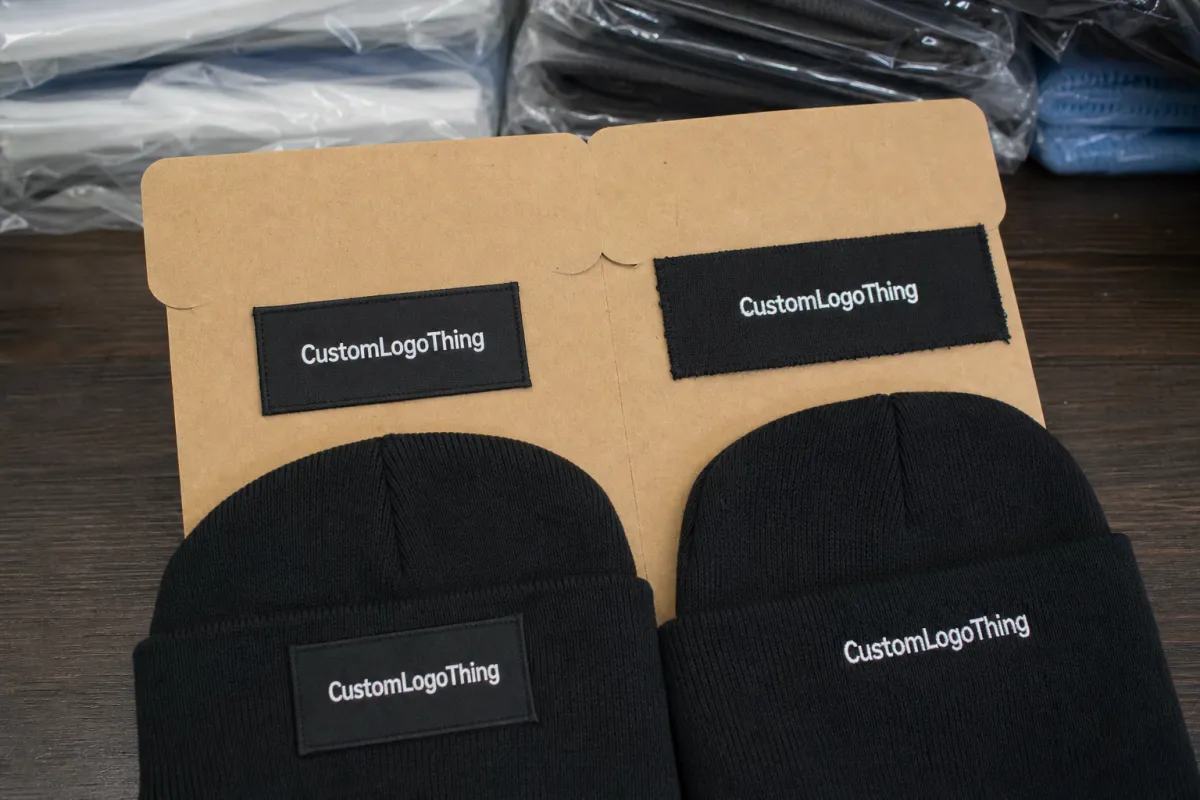
Decoration should match the artwork. Flat embroidery is the safest choice for simple logos because it is durable and predictable at scale. Woven patches make more sense when the artwork has fine detail or small text. Leather and PVC patches can push the hat toward a more premium retail presentation. The best option depends on the logo and the audience, not on what sounds strongest in a quote.
Before production starts, ask for the actual spec sheet and confirm logo size, stitch density, thread colors, panel placement, eyelet count, sweatband type, and whether the front panel has reinforcement. Those details are what separate a clean run from a sloppy one. A mockup can look fine and still produce a bad hat if the logo is too small or the crown shape does not support the art.
If the logo is crowded, tiny, or built from hairline text, the hat will expose it. Fabric does not rescue weak artwork.
Proofing on the actual cap style is non-negotiable. A logo that looks fine on a digital mockup can shrink awkwardly on a soft crown, especially if the front panel slopes more than expected. The safest workflow is mockup, proof, then sample or pre-production check before the bulk run moves forward.
Packaging and shipment planning should follow the same logic. If the hats are part of a larger branded packaging or retail packaging program, think through carton count, labeling, and transit protection before production starts. Standards from organizations like ISTA can help buyers think more clearly about shipment handling, and sourcing guidance from FSC is useful when the order includes paper-based packaging or inserts.
Pricing, MOQ, and unit cost basics
Price is usually driven by five things: quantity, decoration complexity, setup work, material choice, and any special packaging request. The same hat can move a lot in price depending on embroidery colors, patch type, and whether the buyer wants hangtags, bagging, or labels. Custom printed boxes or other branded packaging add cost quickly, especially when they are tied to the hat order instead of handled separately.
MOQ is not one universal number. It changes with the style and decoration. Still, most buyers see better pricing around 50, 100, 250, and 500 pieces. Smaller runs are possible, but the unit cost usually climbs because setup gets spread across fewer hats.
One practical mistake is looking only at the unit price and ignoring the landed cost. Samples, digitizing, rush fees, freight, and taxes show up later. The number that matters is the one that reaches your door. If you are comparing suppliers, ask for the full landed cost, not just the headline price.
| Order Tier | Typical Unit Range | Best Fit | Notes |
|---|---|---|---|
| 50-99 pcs | $6.50-$10.00 | Testing a design or filling a small internal need | Setup costs have a bigger impact at this level |
| 100-249 pcs | $4.75-$7.50 | Events, small retail drops, and team programs | Usually the best balance of flexibility and cost |
| 250-499 pcs | $3.75-$6.25 | Established merch programs and resale | Often the sweet spot for many buyers |
| 500+ pcs | $2.85-$5.25 | Large promos, retail distribution, and reorders | Lower unit cost, better room for inventory planning |
If the budget is tight, ordering a little extra is sometimes smarter than ordering exactly the number you think you need. The extra units can cover samples, damaged pieces, staff replacements, and last-minute add-ons. A small buffer often costs less than a second tiny production run.
This also matters when the hats sit inside a broader procurement plan. If packaging, labeling, and other merchandise are being ordered together, aligning the hat run with your Wholesale Programs can reduce separate shipping headaches and keep inventory from becoming a puzzle.
Production timeline, lead time, and approval checkpoints
A good workflow is boring in the best way: quote, art review, digitizing or patch setup, proof approval, sample or pre-production check, bulk production, quality control, shipping. If a supplier skips a step, you may save a day and lose a week later.
Lead time depends on four things more than anything else: whether the artwork is ready, whether the fabric is in stock, whether the decoration method needs setup, and whether the buyer wants custom packaging. If the logo file is clean and the style is already available, the order moves faster. If the artwork is messy or the fabric is backordered, the schedule stretches immediately.
For many bulk runs, a realistic window is 12-15 business days from proof approval, plus shipping time. Simple stock styles can move faster. Custom patches, special labeling, and high-volume orders take longer. Rush is possible on some jobs, but only when the design is simple and the approval process is fast.
Common delay triggers
- Missing vector artwork or low-resolution files.
- Late color approval or endless revisions.
- Unclear logo placement instructions.
- Backordered materials or closure parts.
- Packaging changes after the proof is already approved.
Protect the schedule by doing a few simple things early. Confirm the delivery address before the deposit is paid. Set the in-hands date before production starts. Send the final logo file in a usable format. Approve the proof quickly. Buyers who move slowly on approvals usually end up paying for rush service later.
Packaging can affect timing too. If the order includes retail packaging, inserts, labels, or carton marks, treat that as part of the production plan instead of an afterthought. Even for caps, the difference between a plain bulk carton and a retail-ready presentation can change labor, freight, and schedule.
What makes a dependable bulk supplier for repeat orders
Repeat orders live or die on consistency. The buyer should be able to reorder the same crown shape, the same thread colors, the same patch placement, and the same carton count without rebuilding the entire job file. If a supplier cannot save the spec sheet properly, that is a warning sign.
Clear communication matters more than polished sales copy. Written minimums, notes on substitutions, and realistic delivery dates protect the buyer from surprises. It is better to hear that a fabric is delayed than to get a glossy promise that collapses later.
Every serious bulk run should have quality checks at multiple points: artwork signoff, pre-production approval, inspection during sewing or embroidery, and final carton checks before shipment. If the supplier talks only about price and never about inspection, that tells you enough.
Documentation matters too. You want saved specs, versioned artwork, reorder notes, and a clean record of what changed between runs. That matters for merchandising teams, schools, and brands that need repeatability without digging through old emails.
If packaging and product presentation are part of the same project, ask whether the supplier can coordinate with branded packaging or custom printed boxes so the whole order lands with the same visual logic.
Common mistakes that waste money on dad hat orders
The biggest mistake is trying to cram too much into a soft cap. Tiny logos, thin lettering, and crowded artwork usually look worse once stitched and worn. A dad hat is not a billboard. Keep the mark readable and sized for the curve of the front panel.
Fit mistakes cost money too. Buyers often choose a closure because it sounds nice instead of because it suits the audience. A metal clasp may feel more premium, but if the wearers need fast on-off adjustments, a simpler strap may be the better call. Likewise, a crown depth that looks fine in a mockup can feel awkward in real life. Ask for measurements, not just vibes.
Color and placement mistakes are another easy way to burn budget. Approve the logo color, the patch size, and the placement on the actual cap style before production starts. A clean mockup is not enough. Production is where small errors get multiplied across dozens or hundreds of hats.
Do not forget hidden waste: samples, damaged units, replacements for staff, and last-minute add-ons. Buyers often budget exactly for the main order, then end up placing a second small order at a worse unit cost because they forgot the extras. Build a buffer into the first run if the project matters.
The cheapest order is not the one with the lowest quote. It is the one that arrives usable, on time, and close enough to reorder without fixing anything.
Next steps to lock your order and move to proof
Before you ask for a quote, gather six things: quantity, target delivery date, logo file, preferred hat color, closure choice, and any packaging or labeling requirements. That list saves time and keeps the quote honest. Missing one item usually turns into back-and-forth, and back-and-forth turns into delay.
Choose one primary decoration method and one backup option. For example, flat embroidery first, woven patch second. That keeps the supplier from guessing and helps you compare pricing without comparing apples to oranges.
The best next step sequence is simple: request the mockup, verify the unit cost and MOQ, approve the proof, and confirm the ship date before production starts. If you need support across a wider merch or packaging program, make sure the hat order sits inside the same workflow instead of floating off on its own.
A ready-to-quote Custom Dad Hats Bulk Order needs a clear quantity, a clean logo file, a realistic timeline, and a decision on whether you want embroidery, a patch, or another decoration route. Give the supplier those basics and the process gets a lot less noisy.
FAQ
How many custom dad hats do I need for a bulk order?
Most suppliers price better at common tiers like 50, 100, 250, and 500 pieces, but the real MOQ depends on decoration complexity and material availability. If you are testing a new design, ask for a smaller first run and confirm whether the supplier can save the spec for a faster reorder later.
What decoration method works best for custom dad hats in bulk?
Flat embroidery is usually the best choice for simple logos because it looks clean, holds up well, and keeps production straightforward. Woven or leather patches make more sense when the artwork has fine detail or the buyer wants a more premium retail look.
How long does a custom dad hats bulk order usually take?
Lead time depends on artwork readiness, proof approvals, fabric stock, and whether the order needs digitizing or patch setup. Rush production is possible on some runs, but only if the design is approved quickly and the chosen style is already in stock.
What should I send for an accurate quote on a custom dad hats bulk order?
Send the quantity, logo file, preferred hat color, decoration method, and target delivery date so the supplier can quote the run correctly. If you need special packaging, labeling, or a landed-cost quote, include that up front so the estimate is not padded with surprises later.
Can I reorder the same custom dad hats later?
Yes, if the supplier keeps the approved spec sheet, artwork file, stitch data, and color references from the first run. Reorders go faster when the first order was documented clearly and the buyer signed off on the sample or proof in writing.


