Buyer Fit Snapshot
| Best fit | Custom Document Mailers Wholesale projects where brand print, material claims, artwork control, MOQ, and repeat-order consistency need to be specified before quoting. |
|---|---|
| Quote inputs | Share finished size, material target, print colors, finish, packing count, annual reorder estimate, ship-to region, and any compliance wording. |
| Proofing check | Approve dieline scale, logo placement, barcode or warning zones, color tolerance, closure strength, and carton packing before bulk production. |
| Main risk | Vague material claims, crowded artwork, missing packing details, or unclear freight terms can make a low unit price expensive after revisions. |
Fast answer: Custom Document Mailers Wholesale: Pricing, Sizes, MOQ should be specified like a repeatable production item. The safest quote records material, print method, finish, artwork proof, packing count, and reorder notes in one written spec.
Production checks before approval
Compare the actual filled-product size with the drawing, then confirm tolerance on folds, seals, hang holes, label areas, and retail display edges. Reserve space for logos, QR codes, warning copy, and material claims before decorative graphics fill the panel.
Quote comparison points
Review material grade, print process, finish, sampling route, tooling charges, carton quantity, and freight assumptions side by side. A quote is only useful when the supplier can repeat the same color, closure quality, and packing count on the next order.
Custom Document Mailers Wholesale: Pricing, Sizes, MOQ
A perfectly printed invoice loses a lot of its value if it reaches a customer folded, scuffed, or torn. The problem is not only visual. A damaged mailer can slow payment, trigger a reprint, and make a routine send-out feel careless, which is exactly why custom document mailers wholesale carries more weight than many teams expect. A document mailer is a control point in the mailing process: it shields the contents, keeps paperwork aligned, and presents the brand cleanly the moment the piece is opened.
For teams mailing statements, contracts, certificates, policy documents, or insert packs, custom document mailers wholesale offers a practical way to reduce bends and edge wear while still leaving room for branding. That is a packaging decision grounded in utility, not decoration, and a better spec usually means fewer headaches later in mailrooms, accounting follow-up, and customer service. I have seen jobs go from constant complaints to almost none at all just by tightening up size, board, and closure.
Why Custom Document Mailers Wholesale Cut Damage and Reprints
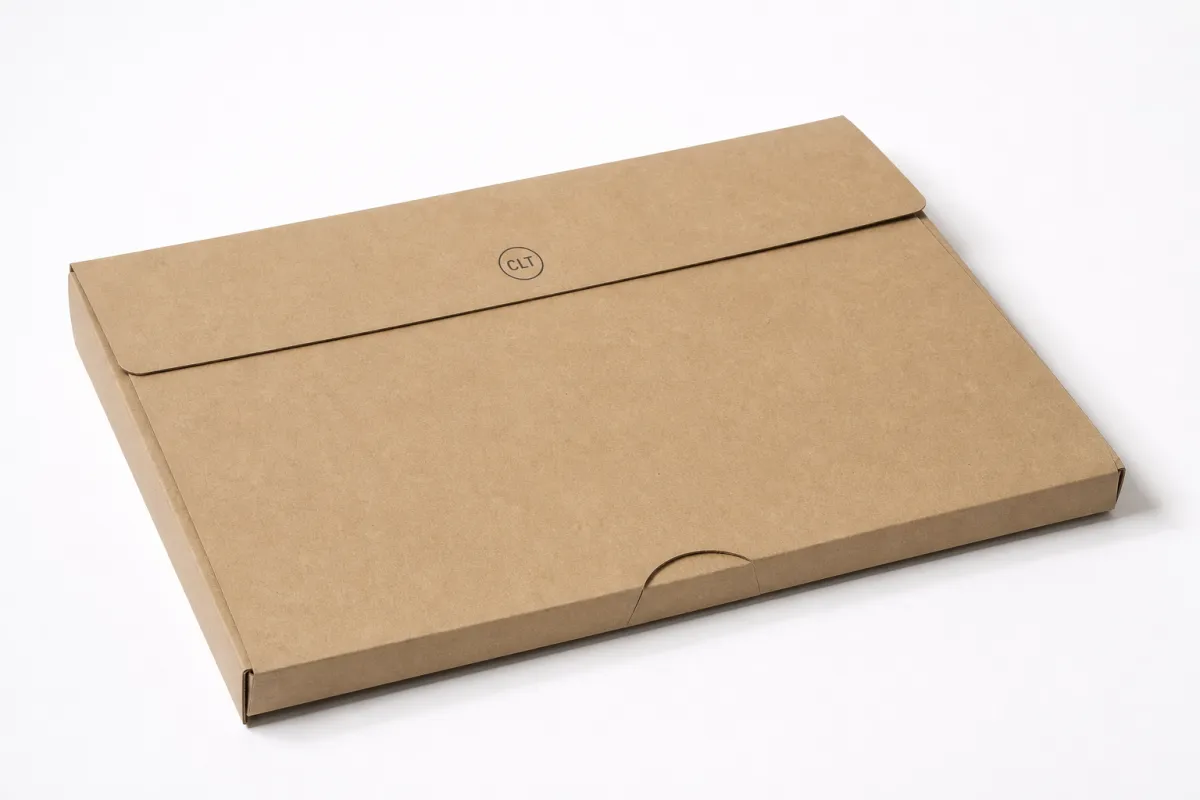
Picture a finance team that prints a clean batch of invoices, folds them carefully, and sends them out in plain mailing stock. A few days later, one arrives bent through the center, another has a corner crushed by postal handling, and another looks worn because it rode in a carton that flexed too much on a pallet. That is not a design problem. It is a packaging problem, and custom document mailers wholesale is often the simplest way to correct it.
Document mailers sit in a useful middle ground between a paper envelope and a full carton. They are rigid enough, or at least semi-rigid enough, to hold shape under normal postal handling and carton movement, yet still light enough to keep mailing costs reasonable. That balance matters. If the contents need to stay flat, legible, and presentable, custom document mailers wholesale helps protect the print investment already made.
From a buyer's perspective, the value reaches beyond fewer damaged pieces. It also means fewer replacement shipments, fewer customer complaints, and less staff time spent reissuing documents or chasing signatures. In that sense, custom document mailers wholesale supports both the mailing itself and the admin work around it. For businesses handling invoices, statements, or regulatory notices, that is measurable operational value, not marketing language.
The first impression matters too. A document that arrives crisp and aligned tells the recipient someone paid attention. A document that lands creased or dirty can make a strong brand feel rushed. Many companies compare custom document mailers wholesale with other branded packaging formats, including Custom Printed Boxes or lighter presentation sleeves, and choose the one that fits the risk level of the contents.
Document protection is not only about impact resistance. It also keeps edges clean, lowers the chance of misfeeds in mailroom equipment, and helps prevent internal inserts from shifting during transit. The better the fit, the less likely the pack is to scuff or fold at the opening.
A clean spec sheet saves more money than a fancy finish. If the size, thickness, and closure are right, custom document mailers wholesale often performs better than a prettier format that was never matched to the contents.
When buyers compare mailing formats, the full workflow deserves attention, not only the shipping leg. Will the document pass through a sorter? Will a fulfillment team handle it? Does it need an address window, a return panel, or an internal routing mark? Those details are where custom document mailers wholesale starts to pay off, because the product can be built around the process instead of forcing the process to adapt to the product.
Custom Document Mailers Wholesale: Styles, Materials, and Branding
Buyers usually compare several constructions before settling on custom document mailers wholesale, and each one serves a slightly different need. Flat mailers are common for invoices and statements because they stay compact and store easily. Tuck-style mailers add more closure security and fit well when the contents need extra protection. Open-end formats can speed insertion in a high-volume mailroom, while reinforced options help when the pack includes multiple sheets, a certificate, or a heavier insert bundle.
Material choice matters just as much as the style. Paperboard remains the workhorse because it prints well, holds creases cleanly, and gives a crisp, professional feel. SBS board is often chosen when print quality matters, especially for branded packaging that needs bright color reproduction. Kraft stock brings a more natural look and can signal sustainability or a low-gloss, utilitarian brand tone. Laminated stocks can add surface durability or a more refined hand feel if the presentation needs extra polish. For custom document mailers wholesale, the right stock depends on whether the job is meant to protect, promote, or do both.
Branding options are broad, but they should always support the mailing function. Full-color printing is common on the front panel, with spot color used when the design stays simple or when budget needs to remain tight. Double-sided printing can help with return instructions, compliance language, or routing marks. Some buyers want variable messaging, such as department labels or internal handling notes, especially when the mailer also supports office workflows. That kind of custom document mailers wholesale setup can reduce misrouting and speed up filing after delivery.
Functional details matter more than people sometimes expect. Window placement has to line up with the printed address. Closures need to open cleanly without splitting the stock. Tear strips can improve access for the recipient, but only if they are positioned correctly and tested. Security features, such as privacy flaps or opaque liners, can be important for statements and policy documents. In the stronger versions, custom document mailers wholesale combines presentation and utility so the piece works hard without looking busy.
If you are comparing broader product families, document mailers usually sit alongside Custom Packaging Products that serve retail packaging, promotional inserts, or fulfillment workflows. For lighter shipments, some teams also pair them with Custom Poly Mailers for non-rigid items. The right choice depends on how much structure the contents need and how formal the receiving experience should feel.
There is no single best format. The smartest buyers compare custom document mailers wholesale against the real weight of the insert, the way the mail is processed, and the brand impression they want to leave. A well-chosen kraft mailer can feel more trustworthy than an over-finished gloss stock, while a crisp SBS mailer can better support a premium service brand or a high-touch finance packet. Kinda surprising how often the simplest build ends up being the one that looks most polished in the mailbox.
For companies building a consistent brand system, mailers should be treated the same way as package branding in any other channel. The mailer, the invoice, and the outer presentation all work together. Packaging design becomes more than decoration at that point; it becomes part of how the company is recognized and remembered.
Specifications That Matter for Custom Document Mailers Wholesale
Before requesting a quote for custom document mailers wholesale, a buyer should have a few specs locked in. Finished size comes first. If the document is standard letter size, the mailer might be built around 9 x 12 inches, 10 x 13 inches, or a similar flat format. If the contents include multiple sheets, a folded insert, or a promotional sheet, the dimensions may need to increase to prevent buckling at the opening. The wrong fit is one of the most common causes of dissatisfaction.
Thickness or caliper is the next point. For paperboard mailers, the stock might fall in the 14 pt to 18 pt range, though the exact choice depends on the structure and the amount of protection needed. Kraft board, SBS, and laminated stocks each behave differently in conversion and in the mailstream. A heavier board can improve stiffness, but it may also raise postage or make folding more demanding during production. That is why custom document mailers wholesale should always be specified around the contents, not around a generic idea of "stronger is better."
Closures affect both the user experience and the production line. Peel-and-seal closures are popular for speed and consistency. Tuck flaps are simple and familiar, while self-locking or reinforced flaps can improve retention during transport. If the mailer needs to be opened and closed more than once, that should be discussed up front. Otherwise, the final pack may protect the documents well but frustrate the person handling them.
Pack configuration matters for storage and dispatch. Some buyers want cartons packed in 100s for easier warehouse handling. Others want larger bulk counts to reduce carton waste. If the order is part of a repeating mailing program, ask about pallet configuration, carton dimensions, and how the packs will fit into the mailroom. These are the details that make custom document mailers wholesale easier to receive, store, and re-order.
Fit and tolerance deserve special attention. A document that slides too loosely can shift and scuff. A document that is too tight can catch at the edge, crease, or slow down insertion. Practical tolerances are not glamorous, but they explain why one program runs smoothly while another keeps generating rework. For custom document mailers wholesale, the ideal fit usually feels snug without resistance.
Mailroom requirements also need to be considered. If a barcode, return address, or address block must remain visible, the dieline has to respect that space. If the mailer will be sorted by machine, the surfaces need to stay clean and readable. If internal routing is part of the job, the print layout has to leave room for notes or department identifiers. In workflows tied to compliance, those details can matter as much as the board choice.
Artwork readiness is another area where buyers can save time. Clear files with the right bleed, safe area, and dieline approval move into proofing faster. If the file is still being adjusted while the manufacturing quote is already moving, the schedule slips. Most delays on custom document mailers wholesale orders come from incomplete specs rather than the actual printing itself.
For design teams, packaging testing language can help too. The Institute of Packaging Professionals publishes useful material around packaging basics and professional standards at packaging.org, and while document mailers are not shipping crates, the same practical thinking applies: choose the structure for the handling conditions, not for a mood board.
Cost, Pricing, and MOQ for Custom Document Mailers Wholesale
Price for custom document mailers wholesale usually comes down to five things: size, board grade, print complexity, finishing, and quantity. Add carton configuration or special packing, and the quote can move further. A small run with full-color coverage, lamination, and custom tooling will cost more per unit than a straightforward one-color mailer on standard board. That is normal. The useful question is not "Why is this quote higher?" but "Which spec is driving the increase?"
MOQ, or minimum order quantity, exists because setup costs need to be spread over the run. Die cutting, plates, press setup, and proofing all carry labor and material costs before the first finished piece ships. In wholesale buying, larger quantities usually lower the per-unit cost because those setup costs are diluted across more pieces. For many custom document mailers wholesale programs, the practical MOQ often starts around 1,000 to 2,500 pieces for simpler work, and can move higher when custom tooling, special closures, or heavy print coverage are involved.
It helps to compare quotes on a landed basis, not just a unit price. Freight, proof charges, die charges, plates, packaging extras, and carton labeling can all change the real cost. A low piece price can look attractive until the shipping line item lands. For buyers managing budgets, custom document mailers wholesale should be quoted with all the moving parts visible so there are no unpleasant surprises at approval time.
| Mailer Style | Typical Use | Common Material | Indicative MOQ | Typical Price Range at 5,000 Pieces |
|---|---|---|---|---|
| Flat document mailer | Invoices, statements, folded letters | 14 pt - 16 pt SBS or kraft | 1,000 - 2,500 | $0.18 - $0.28 each |
| Tuck-style mailer | Contracts, certificates, branded packets | 16 pt - 18 pt board | 2,500 - 5,000 | $0.24 - $0.42 each |
| Reinforced open-end mailer | Heavier inserts, multi-page sets | Heavy board or laminated stock | 2,500+ | $0.30 - $0.55 each |
| Windowed branded mailer | Addressed statements, utility billing | SBS or kraft with film window | 5,000+ | $0.22 - $0.38 each |
The pricing above is a working range, not a promise. Artwork coverage, finishing, and the exact build can move those numbers up or down. Still, it gives buyers a realistic frame for custom document mailers wholesale planning, especially when comparing a basic functional mailer with a more presentation-driven option.
There are practical ways to control cost without compromising the program. Standardizing sizes is one of the biggest. Keeping print coverage focused on the panels that matter most helps too. If you do not need a soft-touch coating or specialty embossing, skip it. If one artwork version can serve multiple departments with a simple variable line, that is usually better than running several unique dies. The same thinking applies across branded packaging, whether the job is document mailers, retail packaging, or custom printed boxes.
Another smart move is to forecast reorder volume early. If the mailing program is stable, a larger initial run may reduce the long-term unit cost enough to justify a little extra storage. That does not suit every buyer, but it can make sense for recurring campaigns or monthly billing cycles. For custom document mailers wholesale, planned reorders are often cheaper and calmer than emergency replenishment.
When asking for a quote, send the supplier the finished document size, target quantity, print colors, closure style, whether windows are needed, and the ship date you are working toward. If you already have a dieline or sample image, include it. The clearer the starting point, the faster the quote can be matched to real production conditions. That matters especially for custom document mailers wholesale because even small design changes can affect tooling and assembly.
If sustainability documentation matters to procurement, ask whether the board is FSC-certified or whether recycled content documentation is available. FSC provides a recognized chain-of-custody framework, and the details are explained at fsc.org. For many buyers, that paperwork is not optional; it is part of the internal approval path.
Process, Timeline, and Production Steps for Custom Document Mailers Wholesale
The ordering process for custom document mailers wholesale usually starts with a spec review, then moves into quoting, proofing, production, packing, and shipment. That sounds straightforward, but the handoff points matter. A clean inquiry with the right measurements and artwork reference can move quickly. An inquiry that is still debating size, board, and closure will usually sit longer because the manufacturer has to solve too many variables before the run can be scheduled.
After the quote is accepted, the next step is file check and proof preparation. This is where dielines, bleed, safe area, and artwork placement get confirmed. If there is a window, the address block must land correctly. If there is a tear strip, it has to be positioned correctly. If the project includes compliance notes or return information, those elements need to remain legible after folding and trimming. For custom document mailers wholesale, a well-prepared proof saves more time than any rush request ever can.
Typical production steps include prepress, plate or tooling setup if needed, printing, die cutting, converting, inspection, and final carton packing. Depending on the construction, some of these steps happen in sequence while others overlap. The press run may be short, but the conversion and inspection work still need time, especially on jobs that require precise folds or closures. In a normal schedule, custom document mailers wholesale often lands in the 12 to 15 business day range after proof approval, though complex builds or large quantities can take longer.
Lead time changes with quantity, finishing, and material availability. A simple one-color mailer on standard board can move faster than a multi-panel piece with heavy coverage or a specialty finish. Custom tooling also adds time, and so does any artwork revision after the proof has already been issued. If the mailing date is fixed, the best move is to lock the specification early and avoid last-minute design changes. That is especially true for recurring custom document mailers wholesale programs, where the same specs can be reused on future orders.
One thing buyers often overlook is internal approval time. Procurement may review pricing, legal may check the language, and marketing may want a final say on the brand layout. Build that time into the schedule. A supplier can only move as fast as the slowest approval loop. When a team plans ahead, custom document mailers wholesale runs tend to be smoother and less expensive than rush jobs.
It also helps to think about the order in terms of risk. If the mailer is part of a compliance notice, a delay can be costly. If it is part of a seasonal campaign, missing the mailing window can reduce response rates. If it is a standing monthly pack, continuity and a stable reorder pattern may matter most. Different programs call for different planning rhythms, and that is one reason custom document mailers wholesale works best when the supplier understands the end use instead of only the print file.
Packaging buyers who handle multiple lines often compare this process to other projects, including custom printed boxes or branded inserts. The same discipline applies: confirm the structure, approve the artwork, and protect the timing. Good packaging design is not only about how the item looks on day one. It is about how reliably it can be produced every time the order repeats.
Why Choose Custom Logo Things for Wholesale Mailers
For a wholesale mailing program, reliability matters more than flash. Custom Logo Things is positioned for buyers who want practical guidance on custom document mailers wholesale, not vague promises. That means help with fit, material selection, print setup, and order planning in a way that respects real production constraints. If the specification is strong, the run is usually stronger.
A manufacturer-focused approach is especially useful when the job needs to be repeated. Stable specs make reorders easier, reduce proof churn, and help teams forecast their usage more accurately. That is valuable for billing cycles, policy mailings, statements, and recurring inserts. With custom document mailers wholesale, consistency often matters more than novelty because the piece has to do the same job month after month.
Technical clarity is another advantage. Buyers should not have to decode sales language to find out whether a stock is 16 pt or 18 pt, whether the closure is peel-and-seal or tuck style, or whether the print area can handle double-sided content. Honest answers save time. They also help the buyer make a cleaner comparison against other options in the broader Wholesale Programs offering.
The same clarity helps when a program spans multiple product types. A company may use document mailers for financial documents, Custom Poly Mailers for soft goods, and other Custom Packaging Products for promotional materials. Each format has its place. The goal is to match the packaging to the contents rather than forcing one format to do every job.
There is also value in practical guidance about print and packaging expectations. Buyers sometimes focus on graphics and forget the construction, which is where many delays begin. The question is not only whether the artwork looks good, but whether the design can survive trimming, folding, mailing, and handling without losing alignment. That is the part of custom document mailers wholesale an experienced supplier should explain clearly.
If you are building out a broader branded packaging system, the mailer should reinforce the same visual logic used in product packaging and retail packaging. That does not mean every item has to look identical. It means the typography, logo placement, and message hierarchy feel related. Done well, the result is cleaner package branding across the whole customer experience.
For procurement teams, the bigger benefit is predictability. Once the format is proven, reordering becomes simpler, approval cycles shorten, and the business can plan with fewer surprises. That is the kind of support buyers want from custom document mailers wholesale because it reduces friction at the exact points where mailing programs usually get messy.
Next Steps to Order Custom Document Mailers Wholesale
Start with the essentials. Gather the finished document size, number of inserts, desired quantity, print colors, closure preference, and target ship date. If the packet includes multiple pages or a folded insert, mention that clearly. Those basics give the supplier enough information to check fit and pricing for custom document mailers wholesale without guessing.
If you have a sample image, past order, or dieline reference, send it with the quote request. That speeds up confirmation on size, windows, branding placement, and any internal routing text. The more complete the reference, the fewer proof rounds you usually need. That is especially helpful on custom document mailers wholesale orders with strict mailing windows or compliance language.
Review the proof carefully before approval. Check dimensions, brand placement, return address, barcode space, and any postal or internal handling notes. Make sure the closure still works with the thickness of the document stack. Once production starts, small artwork changes can ripple into larger delays, so this is the time to catch them.
Set a reorder trigger based on average monthly usage. If your program uses 8,000 units a month, do not wait until you are down to your last carton. Build a buffer that accounts for proof timing and production lead time, especially if the format is part of a recurring billing or policy cycle. That simple habit keeps custom document mailers wholesale from becoming a scramble every quarter.
When you compare suppliers, look for clear specifications, straightforward pricing, and answers that explain the trade-offs. A better quote is not always the cheapest one. It is the one that tells you what is included, what Drives the Cost, and what can be adjusted if the budget needs to move. That is how custom document mailers wholesale becomes a usable procurement tool instead of just another line item.
Keep one practical rule in mind: choose the smallest mailer that fits the document cleanly, then confirm the closure, board, and print layout before you approve the run. That one decision saves time, cuts reprints, and gives the finished piece a much better chance of arriving the way it left the mailroom.
What are custom document mailers wholesale usually used for?
They are commonly used for invoices, statements, contracts, certificates, policy documents, and other flat inserts that need protection in transit. They help prevent bending, edge wear, and presentation issues that can make routine mail look unprofessional. They also support internal handling by keeping documents organized and easier to sort, file, or distribute after delivery.
What details do I need to request a custom document mailers wholesale quote?
Provide finished document size, target quantity, material preference, print colors, closure style, and whether you need windows or special features. Include artwork files or a layout reference, plus your expected delivery window so the manufacturer can check feasibility. If you are comparing pricing, ask whether tooling, proofing, freight, or packaging are included in the quote.
Is there usually a minimum order for custom document mailers wholesale?
Yes, most wholesale programs have an MOQ because setup, printing, and cutting costs need to be spread across the run. The minimum often depends on size, material, and whether the order uses standard or custom tooling. A larger order usually lowers the per-unit cost, so it is worth planning around expected monthly or quarterly usage.
How long does it take to produce custom document mailers wholesale orders?
Production time usually starts after proof approval, so the timeline depends on how quickly artwork and specifications are finalized. Complex printing, special finishes, custom dies, and larger quantities can extend lead time. A supplier can often give a more accurate schedule once the size, quantity, and construction are confirmed.
Can custom document mailers wholesale be printed on both sides?
Yes, many mailers can be printed on the front, back, or both sides depending on the structure and artwork layout. Double-sided printing is useful for branding, instructions, return information, and compliance notes. The key is to plan the design around safe areas, folds, and the way the mailer will be handled in production and mailing.

