Buyer Fit Snapshot
| Best fit | Custom Label Printing for Cosmetics projects where brand print, material claims, artwork control, MOQ, and repeat-order consistency need to be specified before quoting. |
|---|---|
| Quote inputs | Share finished size, material target, print colors, finish, packing count, annual reorder estimate, ship-to region, and any compliance wording. |
| Proofing check | Approve dieline scale, logo placement, barcode or warning zones, color tolerance, closure strength, and carton packing before bulk production. |
| Main risk | Vague material claims, crowded artwork, missing packing details, or unclear freight terms can make a low unit price expensive after revisions. |
Fast answer: Custom Label Printing for Cosmetics: Quote Scope, Sample Proof, MOQ, and Lead Time should be specified like a repeatable production item. The safest quote records material, print method, finish, artwork proof, packing count, and reorder notes in one written spec.
Production checks before approval
Compare the actual filled-product size with the drawing, then confirm tolerance on folds, seals, hang holes, label areas, and retail display edges. Reserve space for logos, QR codes, warning copy, and material claims before decorative graphics fill the panel.
Quote comparison points
Review material grade, print process, finish, sampling route, tooling charges, carton quantity, and freight assumptions side by side. A quote is only useful when the supplier can repeat the same color, closure quality, and packing count on the next order.
Custom Label Printing for Cosmetics: A Practical Guide
The first time I watched custom label printing for cosmetics fail in a meaningful way, it was on a 250 ml lotion bottle sitting on a damp factory floor in Shenzhen, about 40 minutes from the port of Yantian. The paper label looked respectable enough in the carton. Eighteen hours later, the adhesive had softened, the edge had bubbled around the curve of the bottle, and a 5,000-unit launch had turned into an expensive lesson over a label that cost less than $0.08 a piece. I still remember the silence in the room. Nothing says "we have a problem" quite like a brand manager staring at a peeling label and doing the math in real time.
Custom label printing for cosmetics is rarely just decoration. It sits at the intersection of branding, compliance, shelf impact, and container fit, and if any one of those pieces misses by 2 mm or uses the wrong adhesive spec, the whole package starts to feel rushed. In cosmetics, the label is often the first thing a shopper reads and the last thing an operations team wants to reprint. On a 12,000-unit run, a bad spec can turn into a $900 to $2,400 correction before anyone notices the product itself. That tension is what makes this corner of packaging so interesting. It is design, but it is also logistics. And logistics, as anyone who has chased a late pallet knows, has a sense of humor I do not appreciate.
Jars, tubes, pumps, droppers, palettes, cartons, and even shipping inserts can all depend on custom label printing for cosmetics when a brand wants the full unboxing story to match the bottle on the shelf. I have watched a $14 serum look like private-label drugstore stock because the font was too thin and the finish felt flat. I have also watched a plain balm sell faster because the package branding felt deliberate, using a 350gsm C1S artboard carton paired with a matte BOPP label. Same formula. Different label. Different outcome. That still surprises people, even though it probably should not. Pressure-sensitive labels, barcode readability, and shelf-ready packaging all matter here more than most founders expect, which is why the label spec has to be tested against the real container instead of a render.
What does custom label printing for cosmetics really mean?
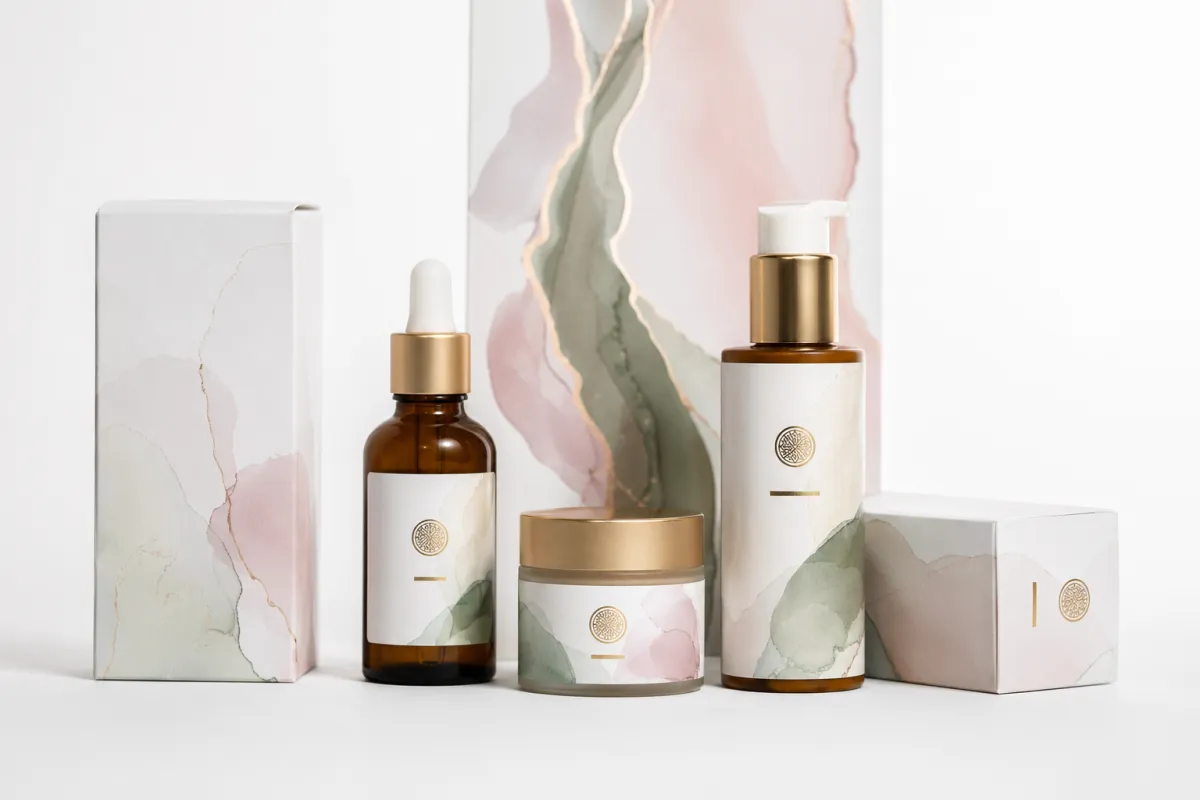
Founders usually ask about custom label printing for cosmetics in broad terms. I prefer to flip the question: what job does the label need to do? A label on a 30 ml dropper bottle is solving a different problem than a label on a 200 g body scrub jar, and a carton for retail packaging needs a different balance of durability and readability than a primary container that gets handled every day. Custom label printing for cosmetics covers all of that, not only the attractive part. The attractive part gets the photos. The unglamorous part keeps the product from looking wrecked after one week in a humid bathroom in Miami or Manila.
There is a reason labels can change how a product feels in about 3 seconds. Clean layout, a 6 pt-to-8 pt hierarchy that still reads, a finish that catches light properly, and enough white space to breathe can turn ordinary product packaging into branded packaging that sits comfortably beside a $38 moisturizer instead of a clearance-bin lotion. I have watched shoppers pick up two identical serums in a Seoul pop-up and the one with better custom label printing for cosmetics won the sale before anyone read the ingredient panel. That kind of comparison is brutal, but useful. Consumers do not run a lab test before they pick up the bottle.
The trust factor is easy to overlook. If the copy is fuzzy, the barcode is crooked, or the edge lifts after one bathroom test, buyers assume the formula was handled with the same care. Harsh, yes. True, too. Packaging design lives in the real world, not on a mood board. Custom label printing for cosmetics is where package branding stops being an idea and starts becoming a production choice. I have seen beautiful concepts get humbled by one crooked application line on a 63 mm jar. It is almost comical, except for the part where somebody is paying for it.
I once stood next to a line operator in Dongguan who said, "If this label peels in the sink, the customer will blame the cream, not the adhesive." He was right. That is exactly how custom label printing for cosmetics gets judged on a shelf and in a bathroom.
Short answer: custom label printing for cosmetics means choosing the right stock, the right adhesive, the right finish, and the right print method so the label survives the bottle, the formula, and the customer’s handling habits. If your product also uses Custom Labels & Tags, plus cartons or inserts from Custom Packaging Products, the label has to match the rest of the product packaging instead of fighting it. That difference separates decent from forgettable. Sometimes it also separates a smooth launch from a week of apologizing to retailers, which usually costs more than the label itself.
How custom label printing for cosmetics works from quote to shelf
The production flow for custom label printing for cosmetics looks simple on paper and gets messy fast in real life. It usually starts with a brief, moves to a quote, then artwork review, proofing, sampling, printing, finishing, quality check, and delivery. On a straightforward digital printing job, I have seen the whole process move in 7 to 12 business days after proof approval. A more complex offset printing run with foil or a custom die can take 15 to 25 business days, especially if raw materials need to be ordered in from Jiangsu or Zhejiang. And yes, that extra time tends to show up right when a brand is already stressed. Funny how that works.
Printers need more than a logo file and optimism. They need exact container dimensions, a dieline, artwork in the right format, finish preferences, quantity, and a clear read on what the formula does. If the product is oily, alcohol-heavy, refrigerated, or used in showers, the spec changes. I learned that the hard way during a client meeting where the brand sent a mockup based on a 60 mm cylinder, but the actual jar measured 63.5 mm at the shoulder. That 3.5 mm mistake cost two proof cycles, $180 in sample freight, and a week on the calendar. It was the kind of tiny mismatch that feels insulting because it is so avoidable.
The approval stage is where smart teams save money. Good proofing catches color shifts, barcode issues, tiny copy that disappears at arm’s length, and cut-line problems before production starts. A digital proof might look perfect on a laptop, but I still want it checked on the real bottle under warehouse lighting in Guangzhou, because a 12-point label on a 15-inch screen can behave very differently on a curved tube with a 4 mm seam. Custom label printing for cosmetics should be treated like a controlled production step, not a last-minute email attachment. If people are approving labels over coffee and vibes, they are basically volunteering for a reprint.
Late artwork changes cause most of the pain. I have seen brands swap ingredients copy after approval, add a new compliance line, and then wonder why the quote jumped by $180 for reproofing and $95 for shipping a replacement sample. Raw material delays can also slow custom label printing for cosmetics, especially when the adhesive stock has to come from 3M, Avery Dennison, or UPM Raflatac and the converter does not keep that exact roll width on hand. One missing line of text can hold up a whole pallet. Charming, right? I have never met a launch timeline that enjoyed being held hostage by a tiny legal note.
Choosing the right materials, adhesives, and finishes
Material choice is where custom label printing for cosmetics either gets smart or expensive. Paper labels work fine for dry shelf items, secondary cartons, and some low-moisture products, but film stocks such as BOPP, polyethylene, and clear polypropylene usually hold up better on lotions, serums, balms, and bathroom products that see water, oil, and frequent handling. If sustainability matters, I look at guidance from the Sustainable Packaging Coalition and the practical limits of each substrate, because the right stock should fit both the product and the brand story. I have a soft spot for materials that can do their job without announcing themselves every five seconds.
Adhesive choice matters just as much. A permanent acrylic adhesive is common for long-term use, a removable adhesive makes sense for limited-edition or refillable containers, freezer-safe options help with cold storage, and moisture-resistant adhesives are the minimum for shower products or humid bathrooms. I once negotiated a label spec where the difference between a generic adhesive and a 3M construction was $0.012 per unit, and that tiny number saved a $900 reprint after a face cream started sweating in transit from Ningbo to Los Angeles. That is the sort of math that makes custom label printing for cosmetics either boring or very exciting, depending on who pays the invoice. If you have ever seen a label curl at the corners like it is actively giving up, you know exactly what I mean.
Finishes change both the look and the behavior of the label. Matte feels understated and hides fingerprints, gloss makes color pop, soft-touch gives a luxury feel, foil adds shelf sparkle, spot UV creates contrast, and embossing adds tactile detail. Each finish affects legibility and price. A rose-gold foil on a 24 mm jar cap can look excellent, yet if the font drops below 7 pt, the label stops reading like premium and starts reading like a decision made at 11:40 p.m. on launch week. Custom label printing for cosmetics should never trade readability for the illusion of luxury. I am stubborn about this one. Fancy is lovely. Unreadable is not fancy; it is a problem with better lighting.
Formula matters too. Oil-heavy balms, alcohol-based toners, water-based gels, bath products, and refrigerated skincare all ask different things from the label. A label that survives on a shelf at 21 C may fail in a humid 38 C restroom after two hand washes. I tell clients to match the label to the worst-case environment, not the best-case photo shoot. If the label is part of broader Manufacturing Capabilities, it should be tested alongside the carton, insert, and any secondary packaging so everything behaves like one system instead of four unrelated vendors. That coordination saves a lot of awkward "why is this one swelling?" conversations.
For teams that need a quick comparison, this is how I usually frame custom label printing for cosmetics materials:
| Option | Best For | Typical Price per 1,000 | Notes |
|---|---|---|---|
| Paper label | Dry shelf products, cartons, low-moisture items | $45-$85 | Lowest cost, easiest to print, weaker against water and oils |
| BOPP film | Lotion, serum, balm, shower-safe retail packaging | $70-$140 | Better durability and cleaner edge wear than paper |
| Clear film | Minimalist skincare, transparent bottles, premium package branding | $90-$160 | Needs careful artwork and strong contrast to stay readable |
| Textured specialty stock | Luxury gift sets, artisan brands, custom printed boxes with matching labels | $140-$260 | Strong tactile impression, but cost rises fast with finish upgrades |
Custom label printing for cosmetics pricing: what changes the cost
Pricing for custom label printing for cosmetics comes down to five main things: quantity, size, material, adhesive, and finish. A 1,000-piece order is almost always more expensive per label than a 10,000-piece order because setup costs, proofing, and waste are spread across fewer units. For example, a simple 2 x 3 inch paper label might land around $65 to $110 per 1,000 units, while the same artwork on a BOPP film with moisture-resistant adhesive can move into the $95 to $180 range depending on quantity and die complexity. I know that spread looks annoying, but the cost drivers are usually logical once you see the production side.
The order size changes the math in a big way. Digital printing usually makes sense for 500 to 3,000 labels, especially if the brand needs fast turns or multiple SKUs with variable copy. Offset printing starts to look better for larger runs, often 5,000 units and up, because the per-label cost drops after the press is set. Ask for foil, spot UV, or a custom shape with tighter tolerances, and the setup fee can add $150 to $600 before anyone prints a single label. Custom label printing for cosmetics rewards teams that ask for quotes on both a plain version and a premium version. I like having both numbers on the table. It keeps everyone honest and prevents the magical thinking that somehow premium finishes cost the same as plain paper.
Hidden costs catch people off guard: rush fees, reproofing, special cartons for shipping, split shipments, and reprints when the first batch fails a bathroom test or a rub test. I have seen a founder save $40 by choosing a cheaper adhesive, then spend $720 replacing labels that peeled on the first production lot. That is not savings. That is a very expensive detour. For brands comparing suppliers, a better starting point is to check whether the printer can also support Custom Packaging Products and whether the label spec aligns with the rest of the product packaging plan. If the label, carton, and insert are each telling a different story, customers notice. They may not say it out loud, but they notice.
If you are comparing vendors, use a simple framework:
- Price per 1,000 - good for rough comparison, useless on its own if materials are different.
- Setup fee - often $50 to $300 for small runs, and it matters a lot below 2,000 units.
- Lead time - ask for proof approval timing, print timing, and ship timing separately.
- Material spec - paper, BOPP, clear film, or specialty stock changes performance and cost.
- Finish cost - foil, embossing, and spot UV can raise the price by $0.02 to $0.15 per label.
Good cost control means asking sharper questions, not chasing the lowest quote. If your cosmetic line is also shipped in Custom Printed Boxes, keep the label, carton, and insert specs aligned from the beginning so one change does not trigger three new proofs. If you want the broader manufacturing picture before placing an order, our Manufacturing Capabilities page is a cleaner place to start than guessing from a PDF. I have learned that the hard way too many times: guessing is cheap until the corrections arrive.
Common mistakes that wreck cosmetic label projects
The biggest mistake in custom label printing for cosmetics is designing for a screen instead of the actual bottle, jar, or tube. A layout that looks elegant on a 27-inch monitor can turn into a cramped mess on a 28 mm lip balm tube. I have seen founders choose a delicate serif font at 6 pt because it looked "luxury" in Figma, then discover that their lot code and ingredient list became unreadable once wrapped around a curved container. Pretty is not the same as usable. I wish that lesson were cheaper than it is.
Material mismatch is the next disaster. Oily serums, alcohol sprays, cold storage, and wet environments all punish weak stock and weak adhesive. If the product lives in a bathroom, gets handled daily, or travels through temperature swings of 10 C to 35 C, a cheap paper label is asking for wrinkles, edge lift, and smudging. Custom label printing for cosmetics gets unforgiving here. The label may survive a tidy tabletop photo and fail under real use within 48 hours. I have watched a label look pristine in a studio in Milan, then peel at the corner after one customer used the bottle with damp hands. Not exactly a proud moment.
Overstuffed design causes another problem. Tiny copy, too many claims, weak contrast, and a busy background can make even premium package branding feel cluttered. I sat through one client review where the team wanted seven selling points, three icons, a QR code, and a regulatory panel on a 50 mm round label. The result looked like a flyer that had fallen into a blender. Strong packaging design uses space as a tool, not an enemy. Negative space is not wasted space. It is the part that keeps the whole thing from looking like a panic attack.
A buyer once told me, "I approved the mockup because it looked clean on screen." Then the first production run arrived with a barcode that would not scan at retail. That mistake cost them 11 days and a second print run. Custom label printing for cosmetics needs a real proof on a real container, not a thumbs-up emoji.
Late changes are brutal. If the net contents shift from 1.7 oz to 1.8 oz, or the ingredient order changes after a reformulation, the label has to be corrected before print. I have watched a brand spend $1,400 redoing labels because the legal line was still wrong at final approval, and no one checked the proof against the actual artwork sheet. I push teams to test the first piece, the tenth piece, and the first packed carton before releasing the whole batch. That extra hour of checking can save days of cleanup later. Which, frankly, is a bargain.
What should you do next with custom label printing for cosmetics?
Start with a spec sheet. Keep it to one page and include container dimensions, formula type, storage conditions, finish goals, order quantity, and the brand look you want. I like to see physical samples from the bottle supplier before design begins, because measuring from a render is how people burn through $300 in proofs before lunch. If your cosmetic line already includes retail packaging, cartons, or inserts, line up the label decision with the rest of the system instead of treating it as a separate project. Custom label printing for cosmetics works best when it is part of a plan, not a rescue mission.
Next, ask printers for recommendations, not just quotes. A decent printer should tell you whether paper, film, or clear stock fits the product, whether the adhesive should be permanent or removable, and whether digital printing or offset printing makes more sense for the order size. The best conversations sound practical: "Your 3,000-unit serum run can stay on digital, but your 12,000-unit body cream should probably shift to offset printing once the artwork is final." That kind of answer saves real money. It also saves the stress tax, which is never printed on the invoice but still gets paid. I wish more teams treated that advice like the gold it is.
Then run a small test. Apply the label, leave it on the container for 72 hours, wipe it with a damp cloth 10 times, and watch the edges, the barcode, and the seam. For products that need shipping or transit resistance, I like to compare the result with the handling logic behind ISTA packaging test methods, because cosmetics should survive more than one gentle studio photo. If the label starts to smear or peel under mild abuse, it will probably be worse after a week in a real bathroom. And if a bathroom is the test, the bathroom usually wins.
Build one reusable label spec document for future launches. Include the die line, approved materials, adhesive notes, finish notes, barcode placement, and any compliance text that never changes. That way, your next SKU does not start at zero. It starts at version 2, which is where efficient brands save time and stop acting surprised by basics. I have seen teams cut launch prep from three weeks to nine days just by reusing the same label framework across four SKUs from a supplier in Suzhou. That is not glamorous, but it is real progress, and real progress is better than a pretty mess.
My blunt advice: treat custom label printing for cosmetics like a production decision, not a vibe check. The right label raises shelf presence, supports branded packaging, and makes the product feel worth the price. The wrong one creates reprints, delay, and a lot of embarrassing emails. If you want the shortest path, talk to the printer early, check your specs twice, and make sure the label works with the formula, the container, and the customer’s actual life. That is how custom label printing for cosmetics turns into a sales asset instead of a launch headache.
How much does custom label printing for cosmetics usually cost?
Cost depends on quantity, size, material, adhesive, and finish, so two labels that look similar can price very differently. For custom label printing for cosmetics, small runs often land at a higher per-label cost because setup and proofing are spread across fewer units, and a premium finish like foil or spot UV can add $0.02 to $0.15 per label. A 5,000-piece order in BOPP with a permanent adhesive might price around $0.11 to $0.19 per unit, while a 500-piece test run can sit closer to $0.35 to $0.60 per unit. If someone gives you a quote that seems too low, I would ask what they left out before getting excited.
What label material is best for custom label printing for cosmetics on oily products?
A film label with a strong moisture-resistant adhesive usually performs better than standard paper on oily lotions, serums, and balms. For custom label printing for cosmetics, I still want the exact bottle or jar tested in the real environment, because a label that survives a clean bench can fail after 24 hours in a warm bathroom. A clear polypropylene or white BOPP stock with permanent acrylic adhesive is a common starting point for bottles filled in places like Guangzhou or Dongguan. Bathrooms are rude like that.
How long does the custom label printing for cosmetics process take?
Simple digital jobs can move quickly, but quote-to-delivery speed depends on proof approvals, material availability, and shipping. For custom label printing for cosmetics, a clean run can move in 7 to 12 business days after approval, while custom dies, complex finishes, or offset printing can stretch the timeline to 15 to 25 business days. If your printer is sourcing specialty stock from Zhejiang or adding foil from a second vendor in Shenzhen, add another 2 to 4 business days. If your launch date is firm, build a little padding into the plan. Future-you will be grateful.
Do cosmetic labels need to be waterproof or just water-resistant?
If the product will sit in a shower, near sinks, or in cold storage, water-resistant may not be enough and waterproof construction can be safer. In custom label printing for cosmetics, I always match the label to the worst-case environment, because a label that only survives ideal conditions is just reprint fuel. A shower-safe BOPP label with a moisture-resistant adhesive is usually a better bet than coated paper for products sold in humid cities like Singapore or Hong Kong. And reprint fuel has a way of burning through a budget faster than anyone expects.
Can I use one label design across multiple cosmetic SKUs?
Yes, but only if the containers, fill sizes, and regulatory copy all fit without making the label crowded or inconsistent. For custom label printing for cosmetics, a modular system with shared branding and variable product data usually works better than forcing one exact layout onto every SKU, especially when the line also uses matching Custom Printed Boxes. A 30 ml serum, a 50 ml cream, and a 200 g scrub can share one design language, but the die line, barcode placement, and ingredients panel should still be checked one by one. Consistency matters, but so does not cramming a novel onto a jar lid.

