Buyer Fit Snapshot
| Best fit | Custom Double Wall Corrugated Boxes projects where brand print, material claims, artwork control, MOQ, and repeat-order consistency need to be specified before quoting. |
|---|---|
| Quote inputs | Share finished size, material target, print colors, finish, packing count, annual reorder estimate, ship-to region, and any compliance wording. |
| Proofing check | Approve dieline scale, logo placement, barcode or warning zones, color tolerance, closure strength, and carton packing before bulk production. |
| Main risk | Vague material claims, crowded artwork, missing packing details, or unclear freight terms can make a low unit price expensive after revisions. |
Fast answer: Custom Double Wall Corrugated Boxes: Board, Finish, Dieline, and Unit Cost should be specified like a repeatable production item. The safest quote records material, print method, finish, artwork proof, packing count, and reorder notes in one written spec.
Production checks before approval
Compare the actual filled-product size with the drawing, then confirm tolerance on folds, seals, hang holes, label areas, and retail display edges. Reserve space for logos, QR codes, warning copy, and material claims before decorative graphics fill the panel.
Quote comparison points
Review material grade, print process, finish, sampling route, tooling charges, carton quantity, and freight assumptions side by side. A quote is only useful when the supplier can repeat the same color, closure quality, and packing count on the next order.
Custom Double Wall Corrugated Boxes: Uses, Costs, Tips
Heavy products have a way of exposing weak packaging fast. A rough conveyor belt, a damp dock, one overloaded pallet, one sharp corner in transit, and the carton either earns its keep or folds. That is why custom double wall corrugated boxes matter. They are not decorative. They are structural. They reduce damage, protect margin, and keep a shipment from turning into a service problem with a freight bill attached.
Packaging teams notice the math before anyone else does. A box that costs a little more on the front end can be cheaper across the full trip if it prevents even a small number of returns. Damage rates as low as 1% can erase the savings from lighter materials once replacement freight, labor, customer service, and write-offs enter the picture. That is where custom double wall corrugated boxes start to look less like an upgrade and more like a correction. They sit between product packaging and branded packaging, while also doing the dull but essential work of survival.
If you are sorting through Custom Packaging Products or narrowing the list to Custom Shipping Boxes, the better question is not which carton is cheapest. It is which carton handles the real shipment with the least risk. That question tends to change the answer, and pretty quickly.
Custom Double Wall Corrugated Boxes: The Pack That Saves the Shipment
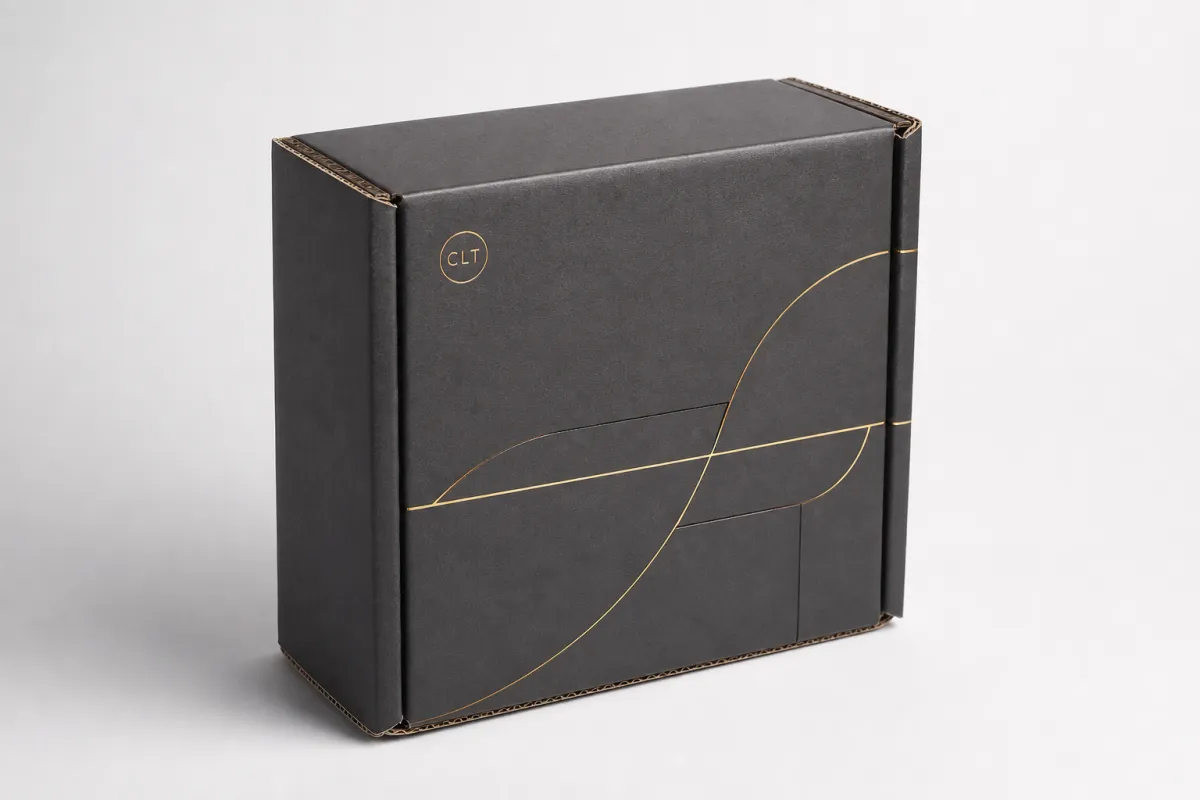
Custom double wall corrugated boxes use three liner sheets and two fluted mediums. The result is a thicker, stiffer build than a single wall carton, with more resistance to crush, puncture, and bending. The outer liners take surface abuse. The flutes add cushion and compression strength. The inner liner helps spread load so the panel does not fail at one weak point and drag the rest of the box down with it.
That extra structure matters most for products that are dense, tall, awkward, or expensive enough that a small damage rate becomes a real line item. Industrial parts, retail kits with multiple components, bottles, appliance accessories, hardware assortments, and e-commerce shipments with fragile inserts all benefit from that kind of control. Custom double wall corrugated boxes are not just about strength in the abstract; they control how force travels through the package.
Protection can improve sustainability in a way that does not fit neatly into a brochure. A weaker shipper that triggers one extra return shipment creates more board use, more fuel burn, more labor, and more waste. A stronger carton that prevents the return can lower total material demand across the chain. That is a better environmental outcome than a lighter box that merely looks efficient on a spec sheet.
I have seen this play out in warehouse audits more than once. A brand trims board weight, celebrates the lower carton cost, and then spends the next quarter sorting out crushed corners and replacement shipments. The hard part is that the packaging decision looks smart right up until the boxes start moving. That is the trap. A little less paperboard can become a lot more expense.
I would argue that the best packaging teams do not treat custom double wall corrugated boxes as a box purchase. They treat them as a system choice. Product weight, shipping lane, warehouse stacking, retail compliance, and unboxing appearance all belong in the same conversation. If the carton supports product protection and package branding at the same time, the design is earning its space. If it is oversized, overprinted, or overbuilt, it is just expensive paperboard with delusions of grandeur.
Flexibility is part of the appeal too. Custom double wall corrugated boxes can be sized closely to the item, printed for identification or branded packaging, and paired with inserts that hold the load steady without creating a bulky outer shipper. That kind of fit often beats a stock carton with too much void space and too little structural discipline.
Channel matters as well. A package for retail packaging may need shelf presence and cleaner print quality. A direct-to-consumer shipper may need sharper edge protection, stronger corners, and better compression performance. The same box style can serve both channels, but only if the spec reflects the route. That is where custom double wall corrugated boxes earn their reputation.
And yes, sometimes the best answer is a little boring. If a well-fitted double wall shipper solves the damage problem without adding drama, fancy finishes, or extra material layers, that is usually the right call. Nobody in operations is gonna miss the drama.
How Custom Double Wall Corrugated Boxes Work
The simplest mental model for custom double wall corrugated boxes is a sandwich with two cushioning layers. A single wall carton has one fluted medium between two liners. A double wall carton adds a second fluted layer and a third liner, which increases stiffness, puncture resistance, and compression strength. Those layers spread force across a wider area, so the box resists crushing better during stacking or trailer loading.
The structure is not cosmetic. In day-to-day shipping, double wall designs improve edge crush resistance and top-load performance, both of which matter during pallet storage and warehouse stacking. They also resist punctures better when cartons rub against pallet corners, shelving, or neighboring boxes with rough edges. A heavy item does not merely sit in the box; it loads the seams, the corners, and the panels every time the package is moved.
Custom double wall corrugated boxes are usually defined by flute combination, board grade, and finish. Common builds pair a larger flute with a smaller one because that combination balances cushioning and printability. The larger flute helps absorb shock and support compression. The smaller flute can improve surface quality and tighten the overall profile. Which route makes sense depends on whether the job demands stacking strength, print quality, or space efficiency.
Compared with single wall cartons, custom double wall corrugated boxes leave more room for error. Compared with triple wall, they are lighter, easier to print, and usually more cost-efficient for mid- to heavy-duty shipping. Triple wall belongs in harsher industrial work, where a carton may be replacing a crate or protecting a very dense load across punishing freight conditions. Most brands do not need that much board. They need a middle tier that performs without becoming wasteful, and double wall often lands there cleanly.
Testing gives the structure meaning. Packaging engineers look at compression data, burst resistance, drop testing, and vibration simulation before approving a design. ASTM methods are common in that work, and ISTA protocols are widely used for shipping qualification; the organization’s standards framework is available at ISTA. A carton can look strong and still fail if the product moves inside or the stack load is higher than expected.
The reason this construction works is plain enough. One layer resists bending, another layer absorbs impact, and the liners keep the structure from collapsing too early. If the fit is correct and the board grade matches the shipment, the carton becomes part of the load-bearing system rather than a passive container.
Key Factors That Decide Performance and Sustainability
The performance of custom double wall corrugated boxes depends on a cluster of choices that sound small but swing outcomes hard: product weight, box dimensions, stacking height, transit distance, humidity exposure, and handling environment. A 28-pound unit moving across town is not the same spec problem as a 28-pound unit crossing three distribution centers and a winter lane with temperature swings. The route matters. The warehouse climate matters. The way people handle the carton matters too.
Board grade is the first variable worth pressing on. Two boxes can share the same footprint and still behave very differently because the paper mix, basis weight, and flute selection are not identical. That is why “strong box” is a lazy description. If you want the right custom double wall corrugated boxes, ask for board specifications and test assumptions. Compression strength is useful. Real shipping performance is what pays the bills.
Fit changes everything. Excess void space lets the product move, and movement is the enemy. It increases abrasion, beats up corners, crushes inserts, and forces the packer to add more filler. It also inflates dimensional weight charges and ships more air than necessary. Right-sizing is not only a cost move. It is a protection move and a carbon move at the same time.
Sustainability improves when the box is built only as heavy as the product requires. A properly sized shipper with the right wall construction often beats a lighter carton that was never going to hold the load. That is why many brands now ask whether they truly need custom double wall corrugated boxes or whether smarter inserts can carry some of the load. The question is healthy. It usually saves money before it saves materials, which is why it survives internal budget meetings.
Three variables tend to shape the sustainability profile most clearly:
Board choice
Recycled content, fiber source, and finish all matter. A paper-based box with recycled content and water-based inks is often easier to recycle than a carton with heavy coatings or mixed-material decoration. FSC-certified paper can support responsible sourcing claims, and the certification body explains that framework at FSC. If the carton is part of a broader branded packaging program, keep the visual system restrained enough to protect recyclability. Recycling rules vary by city and by hauler, so local guidance still matters.
Product load
The item itself drives the spec. Weight distribution, center of gravity, rigid edges, and fragile surfaces all affect whether the box needs more edge protection, tighter inserts, or stronger panel stiffness. Custom double wall corrugated boxes are most valuable when the product places real stress on the shipper, not when they are chosen because the buyer wants to feel safe.
End-of-life recyclability
Heavy coatings, plastic windows, laminated labels, and mixed-material add-ons can complicate recycling. If the carton supports retail packaging or direct-to-consumer orders, there is a strong case for clean paper-based construction and inks that do not interfere with recovery. EPA guidance on waste reduction is useful for brands trying to cut packaging waste and improve recycling behavior; the agency’s resources are available at EPA recycling resources.
One more factor affects both performance and sustainability: unfilled space. A box with too much air inside usually needs more dunnage, more tape, and more labor. It may also ship at a higher dimensional weight. That is one reason well-designed custom double wall corrugated boxes can outperform generic packaging on total footprint, even when the board itself weighs more. Less waste inside the shipment can mean less waste overall.
For buyers, the useful question is not “Can we make this box stronger?” It is “What is the minimum construction that passes the required lane, handling, and stacking conditions?” That is where the savings hide. Not in the headline unit price. In the system cost.
| Box option | Typical use | Relative cost | Protection level | Best fit for |
|---|---|---|---|---|
| Single wall custom box | Light to medium products | $ | Moderate | Short lanes, lower stack loads |
| Custom double wall corrugated boxes | Heavy, fragile, or high-value products | $$ | High | Long transit, warehouse stacking, damage-sensitive shipments |
| Triple wall corrugated boxes | Industrial or extreme-duty shipments | $$$ | Very high | Very heavy loads, severe handling, crate replacement use cases |
The table is a starting point, not a verdict. A well-specified single wall box can outperform a bad double wall box, and an oversized double wall box can underperform a properly fitted lighter design. Even so, custom double wall corrugated boxes land in the sweet spot for a lot of products: strong enough to protect the item, not so heavy that they become wasteful.
Cost and Pricing for Custom Double Wall Corrugated Boxes
Pricing for custom double wall corrugated boxes usually comes down to five variables: board specification, dimensions, print complexity, order quantity, and whether inserts or special finishes are included. Board choice matters more than many buyers expect, because material usage rises quickly as the box gets larger or thicker. A few millimeters of dimension change can become a meaningful cost shift once the order volume climbs.
For a simple brown unprinted shipper, the unit price may sit far below a fully printed branded packaging job with inserts and specialty finishing. Once Custom Printed Boxes enter the discussion, artwork setup, sample revisions, and tighter quality control push the quote around. In many buying situations, the real price of custom double wall corrugated boxes is less about the carton itself and more about the total project: tooling, freight, storage, and the damage avoided later.
Minimum order quantity shapes the economics too. A supplier may quote a lower per-unit cost at 5,000 or 10,000 pieces, but the buyer has to carry more inventory and tie up more cash up front. That trade can still make sense. If the packaging is stable and demand is predictable, volume can bring the unit cost down sharply. If the product is still changing, a smaller run may be the better choice even when the piece price looks worse.
Good comparison discipline helps prevent false bargains. One supplier may quote a lower base box price, but omit inserts, use lighter board, or allow looser tolerances. Another may come in higher, but include stronger board, tighter dimensions, and better artwork prep. If you are comparing custom double wall corrugated boxes, ask for the same box size, board grade, flute combination, print coverage, test assumptions, and lead time. Otherwise the quotes are not competing on equal ground.
Hidden costs show up later if nobody names them early. Sample rounds take time and money. Tooling or die changes may be billed once or spread across the run. Freight can be expensive on bulky cartons. Storage gets costly when production outruns demand. Over-specifying the box is a cost too, even if it never appears as a line item. Every extra gram of board is a decision with consequences.
Sometimes the more expensive box is the cheaper decision. That sounds like a procurement slogan until you count returns. A damaged unit creates customer service work, replacement freight, repack labor, and negative reviews. If custom double wall corrugated boxes reduce the damage rate enough to avoid even a modest number of claims, they can lower total landed cost. The effect is strongest in high-value product packaging, where one saved shipment can pay for a lot of paperboard.
A practical comparison helps buyers stay honest during early quotes:
- Lower unit price: works when the load is light, the lane is short, and damage history is already clean.
- Higher unit price: earns its place if the product has shown crush, puncture, or corner damage in transit.
- Custom double wall corrugated boxes: often deliver the best balance for heavier shipments where stack strength matters.
If the choice feels like a standoff between protection and price, the answer is usually not at the extremes. It is fit, board grade, and testing discipline. That is part of why custom double wall corrugated boxes are such a practical category: they provide structural headroom without pushing every shipment into the heavier industrial tier.
Production Process, Timeline, and Lead Time
The production flow for custom double wall corrugated boxes usually begins with discovery: product dimensions, weight, shipping method, stacking expectations, and any retailer or distributor requirements. From there, the supplier builds the spec, reviews or creates the dieline, and checks whether the design needs inserts, print adjustments, or more board strength. This early phase saves the most time later because it flushes out problems before anyone has committed to a run.
A prototype or sample generally follows. That sample may be plain or printed, depending on the project. The purpose is simple: confirm fit, closure, assembly time, and how the box behaves under load. If the item shifts, the sidewalls bow, or the flaps fight the closure, the design needs another pass. With custom double wall corrugated boxes, small fit errors can become large logistics problems once the order scales.
Testing usually comes next in serious programs. Compression checks, drop testing, and lane simulation help prove that the pack can survive its intended use. Packaging teams often tie this to ASTM methods or ISTA protocols so the approval process is based on evidence rather than instinct. That matters because a carton can pass one test and still fail a real lane if humidity, vibration, or pallet loading changes the conditions.
After approval, production is scheduled. Straightforward reorders move faster because the structure and artwork already exist. First-time custom jobs take longer because they need more review, more sampling, and more back-and-forth between buyer and supplier. A realistic planning window for custom double wall corrugated boxes has to include proofing, production, and freight, not just the machine time.
What stretches lead time the most?
- Structural changes: a size change or board upgrade usually triggers new sampling and review.
- Print revisions: artwork corrections can add days, especially if color matching matters.
- Sample approvals: internal signoff often drags longer than expected.
- Busy production windows: peak seasons can delay raw material sourcing and machine time.
- Freight delays: bulky cartons take space and sometimes move slower than the production itself.
Launch planning needs margin. A simple reorder may be relatively quick. A new branded packaging program with custom printed boxes, inserts, and retail-facing graphics needs more runway. If the boxes support a retailer launch or seasonal spike, waiting until the last week is a poor bet. Custom double wall corrugated boxes are a packaging decision, but they are also a scheduling decision.
A practical internal timing framework looks like this:
- Simple reorder: shorter path because the die, artwork, and specs already exist.
- New custom design: more time for sampling, fit checks, and approval loops.
- Pilot-test order: useful when the product is new, heavy, or shipping through an unfamiliar lane.
That last item deserves more attention than it usually gets. A small pilot run can reveal a packaging weakness before it turns into a larger operational headache. If the box fails in the pilot, the fix is manageable. If it fails after thousands of custom double wall corrugated boxes have shipped, the mistake becomes expensive very quickly.
Common Mistakes When Specifying Custom Double Wall Corrugated Boxes
Oversizing the box is the most common mistake. Extra headroom sounds harmless until the item starts shifting, the packer adds more void fill, and the shipment gets larger and heavier than necessary. Dimensional weight rises, material use rises, and the product can arrive with more damage than a tighter spec would have allowed. Custom double wall corrugated boxes should fit like a shipping tool, not a storage bin that happens to have flaps.
The opposite mistake shows up just as often: selecting more box than the job needs. Over-specifying board strength, wall construction, or print finish can push cost and emissions up without improving the outcome. If the product is light, stable, and traveling on short lanes, a heavy double wall build may be unnecessary. Good packaging design starts with the item, not with the strongest box on the shelf.
Ignoring how the product sits inside the carton is another easy way to get the spec wrong. Weight distribution matters. Orientation matters. A tall item with a narrow base may need different support than a flat, dense item. Custom double wall corrugated boxes perform best when the internal load is considered with the same seriousness as the outer carton. If the contents can roll, tilt, or punch through an interior panel, the board strength is solving the wrong problem.
Testing mistakes are expensive too. Some teams approve a box without drop testing, compression checks, or a lane-specific trial. That is a gamble. A carton that looks fine on a desk may fail after a few pallet stacks or a rough regional route. The better sequence is simple: sample, test, adjust, and then scale. High-value products deserve that discipline.
Sustainability errors deserve equal attention. Mixed-material add-ons, heavy film lamination, and decorative treatments can complicate recycling. If the carton is part of package branding, the finish should still allow the paperboard to make sense in the waste stream. A clean paper-based design is generally easier to recover than a carton with hard-to-separate components. That does not mean every decorative choice is bad. It means the finish should be chosen with the end-of-life path in mind.
There is a supply-chain mistake that gets less attention: not planning for the actual packing line. A box can be structurally sound and still be a nuisance if it is awkward to fold, slow to fill, or too bulky for the pack station. Custom double wall corrugated boxes should support labor speed, not fight it. The best packaging teams measure protection and packout time together.
“The strongest box is not always the right box. The right box is the one that passes the lane, fits the product, and does not make the warehouse hate it.”
That line is blunt, but the warehouse rarely rewards sentiment. A box that satisfies engineering and irritates operations often loses in the real world. The best designs stay friendly to the people packing, shipping, receiving, and opening them. That is why custom double wall corrugated boxes should be judged across the full chain, not just in procurement.
Expert Tips and Next Steps for Custom Double Wall Corrugated Boxes
Start with the smallest internal dimensions that still allow safe packing, consistent loading, and the automation you need. That one move can cut board usage, reduce filler, and lower dimensional charges. It also tends to improve product restraint. For many brands, right-sizing is the single biggest upgrade available before anyone starts asking for more expensive changes.
Ask for more than a quote. Request the board spec, the flute combination, any compression data, sample photos, and assumptions about print coverage or finish. A low quote with weak assumptions is not a bargain. For custom double wall corrugated boxes, the details are the value. Without them, the numbers do not mean the same thing.
A pilot in a real shipping lane helps more than another internal meeting. A box can look perfect in a lab and still behave differently once humidity, vibration, pallet loading, or handling style enters the picture. Send a small batch, inspect the returns, and study the corners, flaps, and seams. If the carton survives the lane, not just the test bench, you have a useful spec.
Cost and sustainability belong in the same conversation. If custom double wall corrugated boxes reduce breakage, they often reduce replacement shipments and waste. If they fit better, they can lower shipping volume. If they use recyclable paperboard and simple finishes, they support end-of-life recovery. The cheapest box on the quote sheet is not always the cheapest system.
Use this checklist before placing an order:
- Confirm product weight, dimensions, and orientation.
- Define the shipping lane and handling environment.
- Request three apples-to-apples quotes.
- Review board grade, flute combination, and print assumptions.
- Test the sample under real packing and transit conditions.
If you follow that sequence, custom double wall corrugated boxes stop being a guess and become a controlled decision. That is the real advantage. You are not just buying a stronger carton. You are buying fewer damages, fewer returns, a cleaner package branding story, and a better shot at keeping total landed cost under control. For the right product, that is a strong case.
If the choice still sits between standard shippers and custom double wall corrugated boxes, test the lane instead of debating it to death. A sample run, a compression check, and a review of damage data will tell you more than a long meeting ever will. Honestly, that kind of evidence settles the argument faster than most teams expect.
Frequently Asked Questions
What are custom double wall corrugated boxes best used for?
They are best for heavier products that need extra compression strength during stacking and storage, fragile or high-value items that move through rough lanes, and shipments where avoiding damage matters more than trimming a few cents from the unit cost. Custom double wall corrugated boxes are especially useful when the product has a history of crush, puncture, or corner damage.
Are custom double wall corrugated boxes recyclable?
Usually yes, if they are made from paper-based board and do not include hard-to-separate materials. Recyclability drops when the carton uses heavy coatings, plastic laminations, or mixed-material add-ons. If sustainability matters, ask the supplier about recycled content, finish options, and local recycling expectations before finalizing custom double wall corrugated boxes. Local rules can differ quite a bit, so it is smart to verify with the hauler or municipality too.
How do I know if I need double wall instead of single wall boxes?
Compare product weight, stack height, shipping distance, and the likelihood of puncture or crush damage. If the item has failed transit tests or arrived damaged in single wall packaging, double wall is often the next step. A sample test and compression review are the fastest way to validate custom double wall corrugated boxes against a lighter alternative.
What affects the price of custom double wall corrugated boxes most?
Dimensions and board grade usually have the biggest impact because they change material usage. Print complexity, inserts, and order quantity also move the quote up or down. Freight, sample rounds, and tooling can change the total project cost even when the unit price looks stable, so compare custom double wall corrugated boxes on the same assumptions.
How long does production take for custom double wall corrugated boxes?
Simple reorders can move faster because the structure and artwork are already approved. New designs take longer because they require dielines, samples, testing, and signoff. Lead time also depends on factory capacity, seasonal demand, and delivery distance, so build extra time into the schedule for custom double wall corrugated boxes.
For most brands, custom double wall corrugated boxes are not a luxury item. They are a structural choice that makes sense when the shipment is heavy enough, fragile enough, or valuable enough that damage costs more than the upgrade. Get the fit right, ask for real test data, and compare total system cost instead of focusing only on the per-unit quote. That is where custom double wall corrugated boxes start paying for themselves, and that is the takeaway worth acting on.

