Buyer Fit Snapshot
| Best fit | Custom Drawstring Bags Wholesale projects where brand print, material claims, artwork control, MOQ, and repeat-order consistency need to be specified before quoting. |
|---|---|
| Quote inputs | Share finished size, material target, print colors, finish, packing count, annual reorder estimate, ship-to region, and any compliance wording. |
| Proofing check | Approve dieline scale, logo placement, barcode or warning zones, color tolerance, closure strength, and carton packing before bulk production. |
| Main risk | Vague material claims, crowded artwork, missing packing details, or unclear freight terms can make a low unit price expensive after revisions. |
Fast answer: Custom Drawstring Bags Wholesale: Pricing and Lead Time should be specified like a repeatable production item. The safest quote records material, print method, finish, artwork proof, packing count, and reorder notes in one written spec.
Production checks before approval
Compare the actual filled-product size with the drawing, then confirm tolerance on folds, seals, hang holes, label areas, and retail display edges. Reserve space for logos, QR codes, warning copy, and material claims before decorative graphics fill the panel.
Quote comparison points
Review material grade, print process, finish, sampling route, tooling charges, carton quantity, and freight assumptions side by side. A quote is only useful when the supplier can repeat the same color, closure quality, and packing count on the next order.
Buyers comparing Custom Drawstring Bags wholesale options are usually shopping for more than a container. The bag becomes a second touchpoint, sometimes a third, and it can keep carrying a logo long after the original purchase has been opened and forgotten. That makes custom drawstring bags wholesale a packaging decision with a surprisingly long tail. The cheapest quote on paper can be the most expensive choice if the bag tears, pills, stretches, or simply feels forgettable in the hand.
I have seen that lesson land the hard way. A brand once ordered a thin promo pouch for a product launch and saved a few cents per unit; three weeks later, the retail team was replacing bags at the event because the seams pulled when the contents were heavier than expected. The bags did their job for exactly one morning. After that, not so much.
The best orders usually land in the narrow space between visual appeal and mechanical usefulness. A pouch that folds flat can save carton space, reduce shipping bulk, and make warehouse receiving less annoying. A sturdier bag can turn a simple unboxing into something the customer keeps, reuses, and shows off. Retail packaging, gift sets, ecommerce inserts, and trade-show kits all benefit from that reuse cycle. A bag that gets used ten more times is ten more brand impressions without another round of packaging spend.
Logos get attention, but materials decide whether people keep the bag. Seam strength, drawcord feel, closure style, and the way the fabric hangs all change the perception of quality. A crisp imprint on weak fabric still reads as weak. The opposite can be true too: a modest logo on a well-made pouch can look more expensive than a louder design on a flimsy one. Anyone sourcing custom drawstring bags wholesale gets a better result by locking down the size, fabric, print area, and pack-out plan before asking for a quote.
Custom Drawstring Bags Wholesale: The Bag People Keep Using
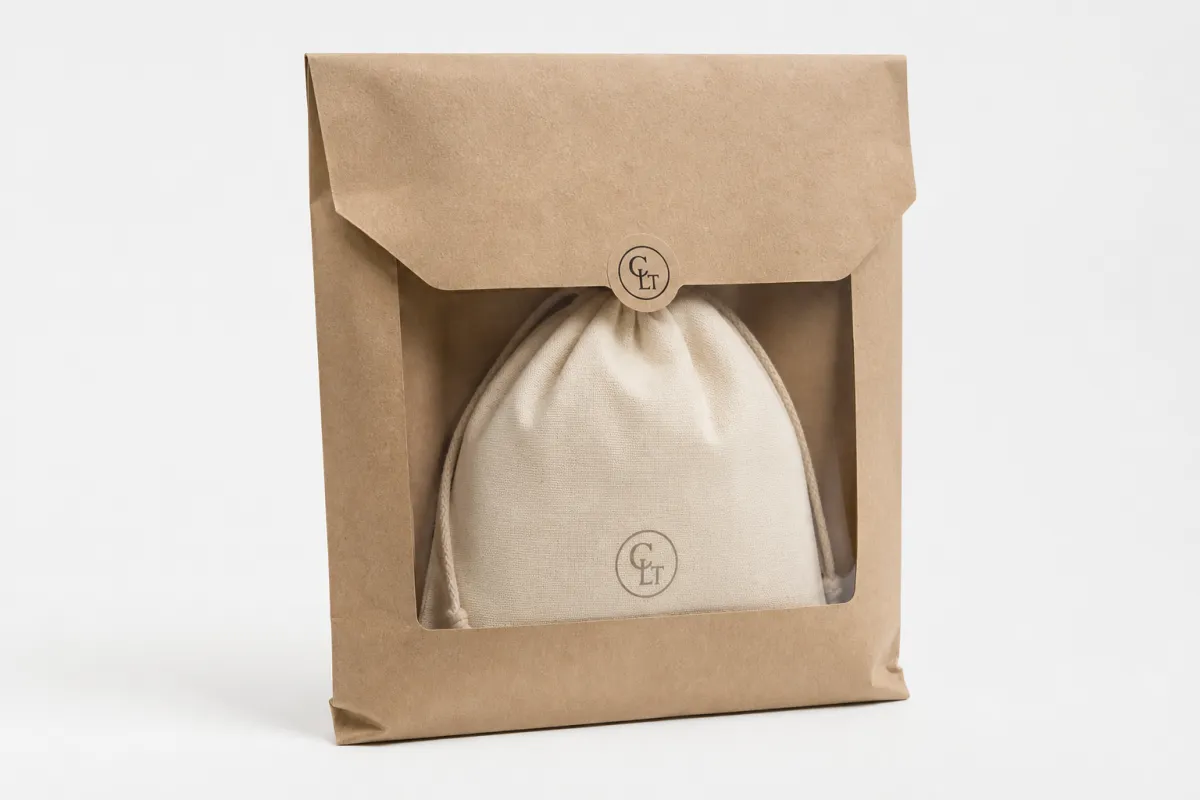
The most persuasive argument for custom drawstring bags wholesale is plain enough. People keep the bag. Mailers get tossed, cartons get recycled, and paper wraps get ripped open. A decent drawstring pouch survives that first use and usually earns a second life in a closet, a suitcase, a gym bag, or a desk drawer. Cords, chargers, cosmetics, supplements, small accessories, shoes, and sample kits all fit that pattern. One package becomes storage. Storage becomes repeated exposure. That is branding with a longer memory than a one-time print hit.
Warehouse teams notice another benefit. Drawstring bags are compact, countable, and easy to stage. Compared with rigid containers, custom drawstring bags wholesale orders often take less shelf space and less carton space, which matters when thousands of units are moving through a fulfillment system. A bag can also speed up kit assembly because it corrals multiple items in a single motion. That sounds minor until a packing line is running at volume and every saved second has a dollar value attached.
The presentation value is real, too. Cotton and canvas tend to feel warmer and more human than a printed box, especially when the product inside is simple and the packaging has to carry the brand story. Some buyers want a softer reveal. Others want a lightweight carry solution that is still branded. Custom drawstring bags wholesale can do both, but only if the spec is honest about the use. A bag that is too thin, too loose, or too lightly stitched sends the wrong signal fast.
Useful buyers think in repeat cycles, not one-off moments. How many times will the bag be opened? What weight will it carry? Is it moving through a retail shelf, a promotional event, or an ecommerce line? Will it hold apparel, skincare, or a premium gift set? Those details decide the best material, closure, and print method for custom drawstring bags wholesale far more than a mood board does. A spec built around actual use tends to age well. A spec built around excitement often gets expensive.
“The cheapest bag is expensive if it tears on the first re-use.” Teams usually learn that lesson after the cartons are already on the dock.
There is a useful way to think about the bag inside the wider packaging system. Some brands pair custom drawstring bags wholesale with custom printed boxes, using the box for shipping and the pouch for the reveal. Other brands skip the outer flourish and let the bag do the work alone. Both approaches can work. The wrong approach is the generic one, where the pouch is added because it seems nice and not because it solves a packaging problem.
Start with the bag’s job: protect, present, store, or carry. That question cuts through most of the noise. Once the job is clear, the right custom drawstring bags wholesale spec becomes much easier to identify, and the pricing conversation gets more honest too.
Material and Construction Options for Reliable Everyday Use
Material choice drives almost everything buyers feel when they handle custom drawstring bags wholesale orders. Cotton is the familiar route when the goal is a softer, more natural look. A 5 oz cotton bag works for lighter retail items and low-weight kits. Move up to 8 oz or 10 oz cotton and the bag starts to feel sturdier, less casual, more capable of repeated use. Canvas goes further. At 10 oz or 12 oz, it holds shape better and carries more without collapsing into a limp shell.
Non-woven polypropylene usually plays the price-conscious role. It shows up in event kits, giveaways, and high-volume custom drawstring bags wholesale programs where the priority is controlled cost, fast pack-out, and decent print visibility. It will not feel as rich as cotton, yet it can be the rational choice when the bag is meant to be practical rather than precious. A bag used once, or a handful of times, does not need museum-grade material. It needs to survive the actual job.
Polyester and nylon sit in a useful middle ground. A 210D polyester bag is light, durable enough for daily carry, and useful when moisture resistance matters. Nylon packs small and handles repeated use well, which makes it a good match for travel kits, sports accessories, and lightweight gear. Microfiber deserves attention when the contents are delicate. Eyewear pouches, premium cosmetic sets, and small product bundles can benefit from the softer touch. A microfiber pouch can make the contents feel more considered, even when the item itself is small.
Weight and weave matter as much as the raw material. A looser weave can feel softer in the hand, but a tighter weave usually prints more cleanly and resists the slouchy look that makes a bag feel cheap after a few uses. Fabric weight changes the math in a subtle way. A slightly heavier cloth may cost a bit more up front, yet it often delivers better perceived value over time. That tradeoff shows up clearly in custom drawstring bags wholesale orders, where the spec needs to hold up under actual handling rather than showroom lighting.
The closure system changes the experience more than buyers expect. A single drawcord is simple and keeps cost down. A double drawcord feels more balanced and can improve the opening action. Cord locks add convenience when the bag is used repeatedly, especially for travel or sports. Ribbon ties lean into gift presentation, though they can slow down packing. Cinch-style closures work for light contents, but they depend on good stitching so the mouth closes evenly. The closure should fit the product, not just the design render.
Reinforcement is where a bag quietly earns its keep. Bar tacks at stress points, bound edges, side seams, and bottom gussets all improve the way the bag handles load. Several extra stitches may sound trivial. They are not. In custom drawstring bags wholesale runs, those details often do more for product life than a bigger logo ever could. A bag that frays at the mouth or splits along a seam will be remembered for the wrong reason.
Shipping and packing conditions matter too. A pouch that looks sturdy when empty can behave differently when filled with apparel, supplements, jars, or boxed accessories. The smartest custom drawstring bags wholesale spec is the one matched to how the bag will be filled, stored, shipped, and handled after it leaves the factory. A supplier should ask about product weight, pack-out method, and whether the bag needs to stand upright in a carton or lie flat for storage.
Size, Print, and Performance Specs Buyers Should Confirm
Size is one of the easiest places to miss the mark in custom drawstring bags wholesale orders. The stitched dimensions may look fine on a spreadsheet and still fail once the product is inside. Irregular edges, multiple components, or a boxy item with sharp corners can eat the usable space fast. Small items like jewelry, cords, and sample kits often fit well in 4 x 6 inches or 5 x 7 inches. Medium retail uses often settle around 8 x 10 inches, 9 x 12 inches, or 10 x 12 inches. Larger kits, apparel bundles, and travel sets may need 12 x 16 inches or more. Usable interior space matters more than the nominal size stamped on a spec sheet.
Decoration choice affects both appearance and cost. Screen printing usually works best for bold logos, simple shapes, and one to three colors. It is often the most economical route for higher-volume custom drawstring bags wholesale runs, especially when the design is clean rather than photographic. Heat transfer can handle complex artwork and smaller text, though it may feel less integrated into the fabric. Embroidery adds a premium finish on thicker materials, but it can distort lighter cloth if the stitch count is too heavy. Woven labels are quieter and suit subtle package branding or minimal designs.
Print area deserves careful attention. A bag may technically allow a large logo while still offering a limited usable zone because of the cord tunnel, seam placement, or fold lines. Edge clearance matters. So does line thickness for small text. A crisp logo that sits too close to a seam can look poorly placed even if the artwork file was perfect. In custom drawstring bags wholesale production, a good supplier should flag artwork that is too detailed for the fabric or the print method instead of pushing it through and hoping the outcome behaves.
Performance specs should be confirmed before production starts. Color matching tolerance, logo placement approval, sample requirements, and acceptable stitching standards should all be named clearly. If the bags need to match existing branded packaging or a retail packaging line, ask for a reference sample or a color swatch match. Natural cotton, off-white fabric, and darker tones can shift a whole visual system more than buyers expect. A tiny difference in shade can make a repeat order look like a different program.
Shipping performance matters just as much as shelf performance. Bags that will travel alongside other items should be considered under transit stress, not only under showroom light. The ISTA testing framework helps buyers think about vibration, compression, and drop conditions rather than aesthetics alone. For custom drawstring bags wholesale, that perspective catches problems early. A pouch can look excellent and still fail once it is loaded, stacked, or shipped in volume.
The safest path is the least glamorous one: tighter specs, fewer assumptions, less improvisation. That approach matters even more when a brand plans repeat orders across several shipments, because the second run should match the first without a scavenger hunt for why something changed. If the buyer is also sourcing custom printed boxes or other product packaging pieces, the same discipline applies. Define the spec, then build the artwork around it.
Custom Drawstring Bags Wholesale Pricing, MOQ, and Unit Cost
Pricing for custom drawstring bags wholesale orders follows a handful of practical variables, and none of them are mysterious once they are laid out. Material choice drives a large share of the cost. A simple non-woven bag is cheaper than a heavy cotton canvas bag because the raw material, sew time, and finishing work are different. Bag size matters next. Larger panels use more fabric and often require more labor. Decoration complexity changes the number again. One-color screen print usually costs less than full-color transfer or multiple print locations. Quantity changes the equation sharply because setup costs get spread across more pieces at higher volume.
These ranges give buyers a useful market frame. They are working estimates, not fixed quotes, because shipping, finish details, art complexity, and order timing can all move the final landed cost.
| Material | Typical MOQ | Typical Unit Price at 5,000 Pieces | Best Fit | Watch-Out |
|---|---|---|---|---|
| Non-woven polypropylene, 80 gsm | 500-1,000 | $0.18-$0.35 | Events, giveaways, light product kits | Less premium hand feel |
| 210D polyester | 500-1,000 | $0.28-$0.60 | Travel, sports, repeat-use promotions | Print can look better with simple art |
| 5 oz cotton | 300-800 | $0.40-$0.85 | Retail add-ons, lighter gifting, brand kits | Can wrinkle and feel soft rather than structured |
| 10 oz cotton canvas | 300-800 | $0.75-$1.45 | Premium retail packaging, heavier contents | Higher shipping weight and higher sew cost |
| Microfiber | 500-1,000 | $0.55-$1.20 | Eyewear, cosmetics, small premium accessories | Artwork must suit the softer surface |
Setup charges and sampling can matter more than buyers expect, especially on smaller runs. A quote for custom drawstring bags wholesale can look low on a per-piece basis and still end up expensive once screen setup, embroidery digitizing, special dyeing, or physical samples get added. Clean quoting separates product cost, setup, sampling, and freight. That separation makes comparison possible. A bundled number does not. It hides the real shape of the order and makes it harder to compare one supplier against another using different fabric, print, or packaging assumptions.
MOQ changes with the structure of the bag. A stock-style pouch with simple decoration can start in the low hundreds. A fully custom fabric, custom size, or more complex closure can push minimums much higher. Buyers should ask about MOQ early, before the artwork gets locked in. That saves time and prevents a design from being built around a quantity that cannot be produced economically. For custom drawstring bags wholesale, MOQ often becomes the place where the buyer’s wish list meets the factory’s actual production logic.
Use the same checklist every time you compare quotes:
- Finished size: confirm the usable interior space, not just the stitched dimensions.
- Material and weight: confirm gsm, oz, denier, or fabric blend.
- Print method: screen print, heat transfer, embroidery, or label.
- Print coverage: one side, two sides, or multiple placements.
- Closure details: cord type, cord lock, ribbon, or cinch style.
- Pack-out: bulk packed, polybagged, or carton-separated.
- Shipping basis: factory, port, warehouse, or delivered price.
That checklist looks basic because it is basic, and basic is what keeps prices honest. Different quotes are often compared as though they describe the same bag when they do not. A lower number may reflect thinner fabric, a smaller print zone, or weaker stitching. A cheaper quote can end up costing more if the bag fails in use or arrives with the wrong visual effect. Custom drawstring bags wholesale should be judged as a whole package, not as an isolated unit price.
Brands trying to balance budget against presentation usually do better when they define three spec tiers before asking for numbers. A value version, a mid-range version, and a premium version create a clean view of where the cost rises because of fabric weight, print coverage, or finishing detail. That structure makes it much easier to decide whether the bag should stand alone or work alongside custom printed boxes and other product packaging components.
Process, Timeline, and Production Steps
A custom drawstring bags wholesale order usually follows a straightforward path: inquiry, quote, proof or sample review, production, packing, freight. Delays tend to appear when the buyer is still choosing size, artwork, or packaging method after the supplier has already started waiting for approval. That lag can stretch the calendar before the project even gets moving.
The quickest quotes come from complete information. Dimensions, quantity, artwork files, desired material, closure style, destination, and target date all help the supplier quote correctly the first time. Even one missing detail can change the price materially. A bag packed flat in bulk is priced differently from one that is individually polybagged. A one-color logo on one side is not the same as a two-sided print with larger coverage. The more exact the request, the cleaner the quote for custom drawstring bags wholesale.
Proofing is the point where many problems can still be stopped. A digital proof should be checked for spelling, logo placement, seam clearance, color intent, and bleed. A physical sample should be checked for hand feel, stitch quality, drawcord length, closure action, and actual fit. Buyers sometimes approve a proof too quickly because the art looks right, then discover the bag is too small or too soft once the sample arrives. That is a preventable mistake. Careful review costs less than rework.
Lead time depends on the build. A simple custom drawstring bags wholesale order with finalized artwork and stock materials may move through production in about 12 to 18 business days after proof approval. More customized programs, such as heavier canvas, embroidery, special dye lots, or custom closures, often need 20 to 30 business days. Sampling can add 5 to 10 business days when a physical sample is required. Freight sits outside production and can become the longest variable when the order travels across the country or overseas.
Pack-out deserves its own conversation. Bags may be counted in cartons of 100, 200, or 250 pieces depending on size and material. Individual polybags or inserts change labor and carton count. Bulk packing is faster and cheaper, while special packing adds handling. For custom drawstring bags wholesale, the carton plan matters because warehouse teams need to know receiving volume, storage space, and dock timing before the shipment lands.
A schedule stays healthier when all specs are approved before the run begins. Final artwork, final bag size, final material, and final packing instructions should all be locked before production starts. Changing any of those later usually adds cost and extends lead time. The most reliable custom drawstring bags wholesale projects treat schedule as part of the spec rather than a separate promise floating outside it.
Why Choose Us for Custom Drawstring Bags Wholesale
Buyers usually want the same three things from custom drawstring bags wholesale: control, consistency, and no surprises. The fabric should match the quote. The print should land where the proof showed it. The bags should arrive in the same condition from the first carton to the last. That takes more than a graphic mockup. It takes knowledge of sewn products, where tension, tolerance, and handling can change the final result in ways a flat art file never reveals.
We focus on the details that affect everyday use. Stitch consistency, seam strength, drawcord function, carton counts, and print registration all matter because they change how the bag performs after it reaches your operation. A retail brand wants shelf appeal. An event team wants quick assembly. An ecommerce program wants repeatable inserts that do not slow the line. Those needs overlap, but they are not identical. Custom drawstring bags wholesale works best when the spec reflects the actual setting.
Clear quoting is another reason buyers return. A useful quote separates bag cost, sampling, decoration, and freight so the buyer can see where the money goes. That matters when the bag is compared against custom printed boxes, mailers, or presentation sleeves. It also explains why our Wholesale Programs page is structured around real buying patterns instead of vague promotional copy that sounds impressive and says very little.
Specification guidance helps when a project does not need to be overbuilt. Brands can often save money by cutting print colors, choosing a standard closure, or selecting a fabric that still looks good without adding weight. That kind of advice is useful for custom drawstring bags wholesale orders that need to hit a target price while still feeling intentional. Sometimes the smarter move is a modest bag paired with a stronger product or a different packaging choice.
If the bag is one part of a larger packaging mix, our Custom Packaging Products selection helps map where the pouch belongs. In some programs, the drawstring bag is the hero. In others, it is the finishing layer inside a broader kit. Either way, the goal stays the same: a result that can be repeated, reordered, and received without drama.
That is the real value of custom drawstring bags wholesale done well. The order should feel controlled from the first quote to the last carton count. No hidden assumptions. No guessing after production starts. No awkward conversation when the shipment lands and the spec turns out to have meant something different than everyone thought.
Next Steps to Get a Quote and Place the Right Order
If you want an accurate quote for custom drawstring bags wholesale, gather the basics before you send artwork. Size, material, quantity, closure style, and imprint method should already be known. Add the ship-to location, target delivery date, and whether the bags need special packaging such as individual polybags, barcode stickers, or master-carton labeling. Those details change both cost and lead time, and they make the quote much easier to compare.
Request a sample or proof before approving production when the contents are heavier or the bag is expected to carry premium brand weight. Apparel, cosmetics, supplements, and reusable kits all deserve a test run. A sample shows whether the fabric feels right, whether the drawcord pulls smoothly, and whether the logo sits correctly on the panel. In custom drawstring bags wholesale work, a small test prevents a large cleanup later.
Receiving plans should be confirmed before the order is finalized. Will the bags be stored in a warehouse, repacked by a fulfillment team, or handed out at an event? How many cartons can the team receive at once? Does the shipment need to arrive early enough to support packaging revisions or a product launch? If the answer is yes, that time needs to be built into the schedule from the start rather than patched in after the fact.
Comparing two or three spec sets usually works better than chasing one perfect version. A value version, a mid-range version, and a premium version make it easier to see where custom drawstring bags wholesale pricing rises because of fabric weight, print coverage, or finish detail. That comparison replaces guesswork with actual tradeoffs. Once the numbers and timing line up, move ahead with the spec that fits the budget, the product, and the brand story.
Many buyers end up returning to the same conclusion: the right order is the one that can be repeated cleanly. Clear specs, realistic cost, dependable timing, and a finished bag that holds up in daily use are the real measures of custom drawstring bags wholesale. When those pieces line up, the purchase stops feeling risky and starts acting like a dependable part of the packaging program.
The practical takeaway is simple: define the bag’s job first, then size, material, print, and packing around that job. If the pouch has to carry a heavier item, pick structure over novelty. If it is a giveaway, control cost without cutting so deep that the bag feels disposable after one use. If the order will repeat, keep the spec tight enough that the second run matches the first. That is the difference between a nice sample and a packaging item that actually earns its keep.
What is the usual MOQ for custom drawstring bags wholesale orders?
MOQ depends on material, size, and decoration method, but many custom drawstring bags wholesale orders start with a few hundred pieces. Stock-style bags with simple print often allow lower minimums, while custom fabric choices, embroidery, or special finishing usually require a higher run. Ask about MOQ early so the quote matches your buying plan before artwork is finalized.
Which material works best for custom drawstring bags wholesale with heavier items?
Cotton canvas, thicker polyester, and reinforced non-woven options are common choices for heavier contents in custom drawstring bags wholesale programs. Look for stronger seams, sturdy drawcords, and enough fabric weight to keep the bag from stretching or tearing under load. The best material depends on product weight, reuse expectations, and whether the bag needs a premium finish.
Can custom drawstring bags wholesale orders include printing on both sides?
Yes, many custom drawstring bags wholesale orders can be printed on one side or both sides depending on the decoration method and artwork. Double-sided printing can increase cost and may extend lead time, so it should be confirmed early in the quoting stage. It also helps to check imprint area details so both sides stay centered and readable.
How long do custom drawstring bags wholesale orders usually take?
Timing depends on sampling, proof approval, print complexity, and material availability. Standard custom drawstring bags wholesale orders often move through production in about 12 to 18 business days after proof approval when the spec is simple and the artwork is ready. Freight time should also be included in the plan so the bags arrive when they are actually needed.
What drives the price of custom drawstring bags wholesale the most?
The biggest drivers are material, bag size, decoration method, quantity, and packaging requirements. Setup fees and shipping can matter too, especially on smaller custom drawstring bags wholesale orders. A complete quote should separate product cost from freight and any extra finishing charges so the buyer can compare suppliers on the same basis.

