Buyer Fit Snapshot
| Best fit | Custom Drawstring Bags with Logo projects where brand print, material claims, artwork control, MOQ, and repeat-order consistency need to be specified before quoting. |
|---|---|
| Quote inputs | Share finished size, material target, print colors, finish, packing count, annual reorder estimate, ship-to region, and any compliance wording. |
| Proofing check | Approve dieline scale, logo placement, barcode or warning zones, color tolerance, closure strength, and carton packing before bulk production. |
| Main risk | Vague material claims, crowded artwork, missing packing details, or unclear freight terms can make a low unit price expensive after revisions. |
Fast answer: Custom Drawstring Bags with Logo: Film, Print, MOQ, and Carton Packing should be specified like a repeatable production item. The safest quote records material, print method, finish, artwork proof, packing count, and reorder notes in one written spec.
Production checks before approval
Compare the actual filled-product size with the drawing, then confirm tolerance on folds, seals, hang holes, label areas, and retail display edges. Reserve space for logos, QR codes, warning copy, and material claims before decorative graphics fill the panel.
Quote comparison points
Review material grade, print process, finish, sampling route, tooling charges, carton quantity, and freight assumptions side by side. A quote is only useful when the supplier can repeat the same color, closure quality, and packing count on the next order.
A modest pouch can travel farther than the item tucked inside it, and Custom Drawstring Bags with logo prove that point with quiet confidence. A well-built bag gets reused for errands, gym sessions, travel days, and event swag, which means the brand stays visible long after the first handoff. That repeat use is not flashy, but it is exactly why this format earns its place in so many packaging programs.
That practical staying power is why custom drawstring bags with logo keep showing up in retail packaging, subscription inserts, welcome kits, and branded packaging programs that need to feel useful rather than throwaway. The format is familiar, easy to pack, and forgiving in a good way, as long as the size, fabric, closure, and decoration all fit the real job the bag is meant to do. If those pieces are mismatched, the whole thing can feel off in a way people notice instantly, even if they cannot quite explain why.
From a packaging buyer's angle, the strongest orders are rarely the fanciest ones. They are the ones where the bag suits the product, the logo reads cleanly from arm's length, and the total spend makes sense once reuse, shipping, and the impression the bag creates every time it is picked up again are all part of the math. That is the kind of practical thinking that keeps packaging from becoming just another line item.
Why Custom Drawstring Bags with Logo Work So Well
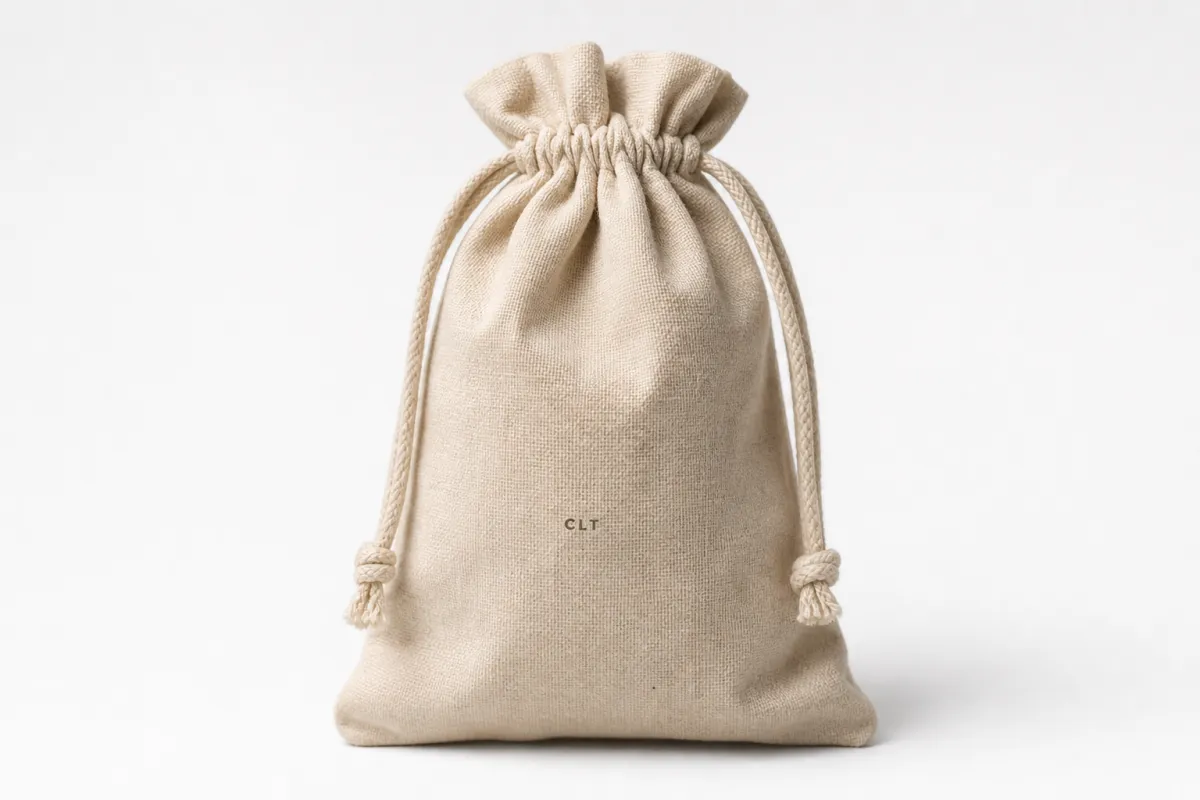
What makes custom drawstring bags with logo so useful is the combination of low friction and high visibility. There is no rigid structure to figure out, no zipper to wrestle with, and no complicated assembly for the person receiving it. The cord opens, the contents come out, and the bag often stays in circulation because it still has a second job as storage or carry gear. That reuse is where package branding earns its keep, because the logo keeps moving through daily life instead of disappearing into a shipping bin.
Compared with tote bags, pouches, and gift bags, drawstring bags occupy a sweet middle ground. A tote is fast and open, which is handy for quick carry but less ideal for small parts, cosmetics, or products that need a little containment. A pouch usually closes with a zipper or flap, which can feel more polished, though it also adds cost and construction time. A gift bag is easy to assemble and present, yet it is often discarded after a single event. Custom drawstring bags with logo sit between those categories, offering a soft hand, an easygoing look, and enough structure to feel deliberate without overbuilding the packaging design.
The strongest use cases tend to be the ones where the bag supports the product instead of competing with it. Event kits, school supplies, gym accessories, travel essentials, subscription inserts, samples, retail packaging, and small apparel items all fit neatly. They also work well for products that need light protection but do not justify a rigid box. For those jobs, custom drawstring bags with logo carry the brand message while also functioning as packaging people keep around. I have seen that usefulness matter most in programs where the bag is handled several times before the product ever is.
Material choice matters just as much as the artwork. Cotton or canvas signals warmth and craft, which suits gift sets, artisan goods, and premium retail packaging. Polyester or nonwoven polypropylene brings a more utilitarian tone, which often fits giveaways, sports gear, or heavier daily use. A bag that feels too shiny, too thin, or too delicate for the product makes the whole presentation feel off, kinda like wearing a winter coat to a beach picnic. A bag that matches the item, though, can make custom drawstring bags with logo look more polished than the simplicity of the format suggests.
Too many brands overdecorate this kind of packaging. A clean logo, a fabric weight that feels honest, and tidy stitching usually do more for perception than a crowded graphic ever will. Good custom drawstring bags with logo are not trying to become posters; they are meant to feel like a natural extension of the product and the brand. That restraint tends to age better, too, because a simple mark rarely feels dated as quickly as a busy layout.
There is also a quiet trust factor here. A bag that closes cleanly, sits flat, and holds up after a few uses tells people the brand paid attention to the parts that matter. That kind of confidence is hard to fake, which is why the details deserve real consideration rather than a last-minute guess.
Custom Drawstring Bags with Logo: Process and Timeline
The production flow for custom drawstring bags with logo is straightforward, yet every step can slow down if the details are fuzzy. The usual path starts with artwork review, moves into a digital proof or sample, then continues into bulk production, finishing, packing, and shipping. Once the time is broken into those pieces, planning a launch or restock becomes much easier, because the buyer can see where the calendar is actually going instead of treating the order like a black box.
Artwork approval is often the first place where delays show up. Low-resolution JPG files, text that is too small, or bag dimensions that were never confirmed can stretch the proof round longer than expected. Clean vector files help considerably. A proper AI file, EPS, or editable PDF gives the printer something sharp to work with, and it cuts down the back-and-forth that often happens when a logo has to be rebuilt before custom drawstring bags with logo can move ahead. I have seen one unclear logo file add days to a schedule that should have been simple.
Material sourcing comes next. Standard cotton, polyester, and nonwoven polypropylene are easier to schedule because they are common substrates. A custom weave, an unusual cord color, a lining, or a specialty finish adds moving parts and can stretch the timeline. Simple one-color custom drawstring bags with logo usually move fastest. Multi-color art, embroidery, woven labels, or mixed-material construction usually need more coordination, partly because each step creates another point where the proof has to be checked and the finish confirmed.
For planning, it helps to separate production time from transit time. Production time is the manufacturing window, often around 10-20 business days for a straightforward order after proof approval, though quantity and material availability can change that. Transit time is the shipping window after the goods leave the factory. If an event has a fixed date, both numbers matter. A bag that leaves on schedule but spends a week in transit can still miss the launch table. That is why a calendar review should happen before artwork is finalized, not after.
A clean ordering sequence keeps custom drawstring bags with logo moving without unnecessary stalls:
- Confirm the bag size, intended product, and target quantity.
- Send clean artwork and mark the preferred print location.
- Review the proof for placement, color, and proportion.
- Approve any sample or pre-production check.
- Lock the production schedule and shipping method.
- Track the order against the event, retail date, or campaign launch.
If the bag will be seen more than once, put the money into the material first and the decoration second. A clean logo on the right fabric usually outperforms a flashy design on a weak bag.
That advice shows up repeatedly in branded packaging work. Buyers who are also reviewing Custom Printed Boxes, hang tags, or retail packaging inserts usually discover that consistency matters more than complexity. Custom drawstring bags with logo should fit the broader product packaging system rather than compete with it. The bag can support the story, but it should not try to explain the whole story by itself.
For teams balancing several packaging pieces, it helps to align the drawstring bag schedule with the rest of the branded packaging plan. If you are also sourcing Custom Packaging Products, compare proof timing across all items so one late approval does not stall the entire kit. A short delay on the bag can ripple through the packaging design process faster than most buyers expect, especially when multiple vendors are waiting on the same sign-off.
Custom Drawstring Bags with Logo Cost, Pricing, and MOQ
Pricing for custom drawstring bags with logo depends on more variables than many buyers expect at first glance. Material type, bag size, cord style, print method, number of colors, stitching complexity, and total quantity all shape the final unit cost. The lowest quote is not always the strongest value, because a low number can hide weak seams, thin fabric, or print that breaks down after a few uses. That is the part people sometimes learn the hard way, after the samples are already approved and the order is in motion.
As order volume rises, unit cost usually falls. That holds true for most custom drawstring bags with logo because setup work gets spread across more pieces. A 500-piece run often carries a higher per-unit cost than a 5,000-piece run, even when the design stays the same, simply because the production setup and decoration costs are amortized over fewer bags. Minimum order quantity matters here. If you only need a small test run, ask about MOQ early so the design and budget line up before you get attached to a format that sits outside reach.
A useful quote should show more than one number at the bottom. You want to see setup fees, decoration charges, sample costs, shipping, and any extras such as individual polybagging, folded packing, or carton labeling. When those items are separated, comparing two suppliers becomes much easier. If one quote looks cheaper but excludes shipping or adds charges for every color change, the supposed savings can vanish quickly. Transparency matters here because hidden extras can turn a sensible order into an awkward one.
For rough planning, simple nonwoven polypropylene bags with a one-color logo may land around $0.18-$0.45 per unit at higher volumes, while cotton or canvas options often sit higher because the fabric and sewing take more work. At lower quantities, custom drawstring bags with logo can easily move into the $0.80-$2.50 range per unit depending on size, print coverage, and material. Those ranges are wide on purpose. A heavier bag, a lined bag, or a bag with embroidery can sit above them without any surprise.
The table below offers a more practical way to think about value rather than chasing the lowest number on a spreadsheet.
| Material | Typical Feel | Best For | Approx. Unit Cost at 1,000 | Approx. Unit Cost at 5,000 |
|---|---|---|---|---|
| Nonwoven polypropylene | Light, functional, budget-friendly | Events, giveaways, promo kits | $0.20-$0.45 | $0.12-$0.28 |
| Polyester | Smoother, durable, easy-care | Gym gear, travel items, tech accessories | $0.35-$0.75 | $0.22-$0.48 |
| Cotton | Natural, soft, familiar | Retail packaging, gifts, lifestyle brands | $0.65-$1.35 | $0.38-$0.92 |
| Canvas | Heavier, premium, long-wearing | Luxury sets, apparel, premium branding | $0.95-$2.10 | $0.62-$1.45 |
Those figures are not fixed quotes, but they do show the market logic. Heavier fabric, stronger stitching, and more complex decoration almost always cost more. The real question is whether the added spend supports the product and the audience. If the bag will be reused many times, a slightly higher unit price may be the better business choice for custom drawstring bags with logo. I have seen buyers save a little up front and lose that savings the moment a cheap bag fails before the campaign is even over.
Buyers who care about responsible sourcing should also ask about fabric origin and fiber certifications. If the bag includes paper components, fiber blends, or paper-based inserts, look at resources such as FSC for chain-of-custody guidance. For broader packaging education, the materials and sustainability articles at packaging.org are useful for understanding how packaging choices shape perception and logistics. Standards such as ISTA transit testing can also matter if the bags ship as part of a larger kit, especially for fragile or mixed-item orders.
Price is only one part of the decision. Value per impression is the better lens. A well-made bag that gets reused twenty times has a very different cost profile from a flimsy bag that ends up in the trash after one event. That is why custom drawstring bags with logo should be evaluated as part of the full package, not as a stand-alone line item.
Materials, Print Methods, and Finish Choices
Material selection sets the tone before the logo even appears. Cotton feels approachable and soft, which works well for natural brands, gift packaging, and retail packaging that should feel warm in hand. Canvas carries more body and gives the bag a firmer, more durable profile. Polyester is lighter and often stands up well to repeat use. Nonwoven polypropylene is the budget-conscious workhorse, especially for campaigns where quantity matters and the bag does not need to feel luxurious. Those are the core choices most buyers compare for custom drawstring bags with logo, and each one changes the customer's first touchpoint in a real way.
The print method matters just as much as the base fabric. Screen printing is the dependable choice for a bold logo, a simple mark, or one to three colors. It gives strong opacity and can stay crisp on many fabrics. Heat transfer works well for more detailed art, though it can feel a little different to the touch and may not suit every brand. Embroidery adds texture and a premium feel, but the artwork needs to be simplified and the cost is usually higher. Woven labels are a smart option when you want subtle branding without covering the entire surface. Each of these methods can work on custom drawstring bags with logo, and each one has a different sweet spot.
Construction details deserve attention too. Cord style changes both the hand feel and the look. Round cords can feel more traditional, while flat cords can sit more comfortably on the shoulder if the bag will be carried for a while. Reinforced corners help with stress points. A drawstring channel should be neat and even, or the bag may twist when it closes. Gussets add extra volume for thicker products. Lining can protect delicate items, though it adds cost and weight. These details sound small, yet they change how the finished bag behaves in real use. That matters a great deal for custom drawstring bags with logo meant for heavier retail products or repeated daily carry.
If you are matching the bag to the product, think in categories rather than aesthetics alone:
- Cosmetics and skincare: Soft cotton, a tidy one-color print, and a compact size usually work best.
- Apparel and accessories: Midweight canvas or polyester gives enough structure for folding and transport.
- Sports and gym gear: Polyester or nonwoven options hold up well to repeated handling and moisture exposure.
- Promotional kits: A simple screen print and a sensible fabric weight keep the budget under control.
- Premium gifting: Heavier cotton, canvas, or embroidery can lift the whole unboxing experience.
From a packaging design standpoint, the logo should stay large enough to read quickly without crowding the bag. Many brands shrink the mark to leave more negative space, but that can weaken the very purpose of the bag, which is to communicate at a glance. Clean custom drawstring bags with logo do not need to shout. They do need to be legible from a few feet away, and that usually means choosing clarity over decoration.
Color interaction matters more than many teams expect. Natural cotton can soften certain ink shades, while dark fabrics may need a white underbase to keep the logo bright. That affects cost and may change the hand feel a little. A careful proof is worth the time, since the color approved on screen rarely matches fabric perfectly. In branded packaging, that gap is normal, which is why a physical sample or a well-prepared digital proof pays off. It is better to see the mismatch before production than to explain it after the cartons are already moving.
There is one more detail worth mentioning. Some art files look excellent in a presentation deck and then fall apart on cloth because the lines are too fine or the contrast is too close. A careful preflight check saves a lot of awkward cleanup later, and it keeps the final bag from feeling like it was forced to carry a design that never belonged there in the first place.
Step-by-Step: How to Order Custom Drawstring Bags with Logo
The clearest orders begin with one simple question: what should the bag actually do? If the answer is "carry a lightweight sample kit," the specs will look very different than if the answer is "hold a premium apparel set that will be reused for months." That first choice shapes the size, fabric, cord, and decoration for custom drawstring bags with logo. It also keeps everyone honest about what the bag needs to accomplish, which is the part that usually gets skipped when a project moves too fast.
After that, the artwork needs to be prepared correctly. Vector files are best because they scale cleanly and keep edges sharp. If you only have a raster file, make sure it is high resolution and large enough for review. Decide early whether the logo should sit centered, lower on the bag, or repeat as a pattern. A strong proof process is not only about color; it is also about whether the design feels balanced on the actual bag. That is where packaging design turns practical rather than theoretical.
The next step is sample review. A digital proof can catch proportion issues, but a physical sample is better when the order has high visibility or the bag will be touched often. Check the cord length, seam quality, print placement, and how the bag closes under load. If the product is rounded, sharp-edged, or unusually heavy, place it inside the sample. That simple test tells you more about fit than a spec sheet ever will. Custom drawstring bags with logo should feel right in hand, not only look right on a monitor.
Then lock the order details in the right order:
- Confirm quantity and MOQ.
- Approve the quote with all extras shown.
- Set the production schedule and target ship date.
- Confirm packaging needs such as folding, labeling, or carton marks.
- Document the delivery address and any receiving constraints.
That sequence matters because it prevents backtracking. If the shipping destination changes after production starts, the cost can rise. If the quantity changes after the quote is approved, the unit price can shift. If the proof is rushed, small errors can become expensive later. Custom drawstring bags with logo are often delayed not because the factory is slow, but because the buyer had not settled the basic decisions before asking production to begin. The more complete the brief, the calmer the production process tends to be.
It also helps to align the bag with the rest of the packaging system. If the bag is part of a launch kit, compare it with inserts, labels, and any custom printed boxes you are using elsewhere. The strongest branded packaging programs usually feel coordinated without becoming repetitive. A drawstring bag can carry the same visual language as the outer box, or it can stay intentionally quieter and let the product take the lead. Either approach can work, as long as the whole set feels like one family.
A useful order brief answers six questions before production starts: size, material, logo placement, quantity, timeline, and destination. If any one of those is vague, the rest of the job gets harder.
When the program expands, it can help to review our Custom Packaging Products alongside the bag order so the full set feels consistent. In many cases, custom drawstring bags with logo work best as part of a wider product packaging strategy rather than as a standalone piece. That broader view usually saves time later, because it reduces the odds that the bag, the box, and the inserts all drift in different directions.
Common Mistakes to Avoid Before Ordering
The first mistake is choosing the wrong size. A bag that is too small stretches the seams, distorts the logo, and makes the product look forced. A bag that is too large wastes material and can make a small item feel underwhelming. With custom drawstring bags with logo, the size should match the product closely enough to look intentional, but not so tightly that every edge shows through the fabric. A little breathing room usually looks better than a fit that is so exact it feels tense.
The second mistake is treating artwork as an afterthought. Low-resolution files, tiny text, overcomplicated illustrations, and weak color contrast all become more obvious on fabric than they do on a screen. Fine lines can disappear into weave texture. Small type can blur once the bag is folded or cinched. If the logo is supposed to represent package branding in retail packaging or event kits, it needs to be bold enough to survive real use. That holds true for custom drawstring bags with logo and for most branded packaging items. A design that looks clean in a mockup can still fail once the cloth starts doing its job.
The third mistake is ignoring how the bag will be used. A giveaway bag for a one-day event can be light and inexpensive. A bag for daily carry, sports gear, or repeat retail use needs stronger stitching, better cord quality, and usually a heavier fabric. Buyers sometimes save a little on the front end by choosing a weaker build, then spend more later replacing bags that failed early. The right spec depends on use, not only on budget. That is the part that tends to get overlooked when the focus is only on the quote total.
Timing mistakes are just as common. If you do not leave room for proof revisions, sample approval, production lead time, and shipping, the order can miss the window even when the supplier performs well. For any launch where custom drawstring bags with logo are part of the reveal, buffer time should be built in from the start. A two-day delay in approval can become a ten-day delay in receipt once production and transit are both underway. Schedules are honest in that way; they do not really care how elegant the plan looked on paper.
Finally, confirm every critical spec in writing. That includes bag dimensions, print location, material weight, cord style, color count, packaging method, and destination. Clear documentation reduces misunderstandings and keeps the order aligned with the quote. It also makes it much easier to reorder later if the bag performs well. For custom drawstring bags with logo, repeatability is a major part of the value, because a strong result should be easy to reproduce without rebuilding the project from scratch.
Expert Tips and Next Steps for a Better Order
The simplest expert advice is also the most useful: keep the logo readable, choose the fabric for the actual use case, and do not overcomplicate the design. That combination solves more problems than any fancy finishing trick. A well-placed mark on the right material tends to outperform a crowded layout every time, especially on custom drawstring Bags with Logo That are meant to be used more than once. The bag does not have to be loud to do its job well.
If the bag will be highly visible, order one sample or a short run before committing to a larger production order. That is especially helpful for retail packaging, gifting, and recurring campaigns where the bag becomes part of the customer's memory of the brand. Small test runs can expose issues with cord length, print contrast, and overall fit that are far easier to correct before volume increases. That little bit of patience can prevent a lot of expensive cleanup later.
Comparing two quotes on the same spec sheet is one of the most useful things a buyer can do. It removes vague language and shows where the real differences sit: fabric weight, stitch count, print coverage, sample policy, or shipping method. If two suppliers are quoting custom drawstring bags with logo and one is much cheaper, ask what changed. Often the answer is not magic; it is thinner fabric, a smaller print area, or a less durable construction. A lower price is only useful if the bag still does the work you need it to do.
Think about the bag as one piece of a larger presentation system. If it sits inside a branded box, pair the color and finish choices with the rest of the kit. If you are using custom printed boxes, a label, or inserts, the drawstring bag should echo those choices rather than compete with them. Good product packaging feels coordinated without becoming repetitive, and that balance is what makes the experience feel deliberate. The best programs usually feel like they were planned by someone who cared about how the pieces would land in a customer's hands.
A practical buying checklist looks like this:
- Measure the product and leave enough room for easy insertion.
- Choose the material based on weight, feel, and frequency of reuse.
- Confirm the print method against the logo detail and color count.
- Ask about MOQ, setup charges, and sample costs before artwork finalization.
- Build in time for proof review and shipping.
If you are building a new packaging program, it can be smart to review the broader Custom Packaging Products range before you finalize the bag order. Sometimes the bag is the hero piece; sometimes it is the supporting piece that makes the entire branded packaging system feel complete. Either way, custom drawstring bags with logo should earn their place by being useful, durable, and easy to recognize.
Custom drawstring bags with logo work best when they are treated like practical packaging, not just decoration. Match the material to the product, keep the logo legible, plan for production and transit separately, and ask for a quote that shows every major cost. If you do those things well, the next order becomes a lot easier to judge: the right size, the right fabric, the right print, and a bag that actually gets used.
FAQ
What material is best for custom drawstring bags with logo?
Cotton and canvas work well when you want a softer, more premium feel, while polyester and nonwoven polypropylene are often better for lighter budgets or higher durability needs. The best choice depends on product weight, brand image, and how often the bag will be reused. For custom drawstring bags with logo, the strongest option is usually the one that matches the use case instead of the one that simply looks nicest in isolation.
How much do custom drawstring bags with logo usually cost?
Price depends on quantity, material, size, print method, and decoration complexity. Unit cost usually drops as the order gets larger, while setup and sample costs may affect small runs more heavily. The most useful comparison is a full quote that includes decoration, packing, and shipping, because custom drawstring bags with logo can look inexpensive until the extras are added.
What is the typical turnaround for custom drawstring bags with logo?
Turnaround varies based on artwork approval, material availability, and the complexity of the print or finishing. Simple orders usually move faster than jobs with multiple colors, embroidery, or custom fabric choices. Planning ahead is the safest way to avoid delays for events, retail launches, or seasonal promotions, especially when custom drawstring bags with logo are tied to a fixed date.
Can I order a small MOQ for custom drawstring bags with logo?
Some suppliers can support smaller quantities, but minimums vary by material and print method. Lower MOQs are often easier with simpler decoration and standard bag sizes. Ask for the MOQ before finalizing artwork so the design and budget match the order size, since custom drawstring bags with logo can become expensive if the quantity is too small for the chosen method.
What file do I need for custom drawstring bags with logo artwork?
Vector artwork is usually best because it scales cleanly and keeps edges sharp in print. A clear PDF, AI, EPS, or high-resolution editable file is often preferred for production review. If only a raster file is available, it should be high resolution and checked carefully before proof approval so custom drawstring bags with logo do not lose clarity on the finished bag.
For buyers who want the best result, the next step is straightforward: measure the product, gather the artwork, decide the quantity, compare materials and timelines, and then move forward with custom drawstring bags with logo that fit the job instead of forcing the job to fit the bag.

