Buyer Fit Snapshot
| Best fit | Custom Eco Retail Packaging Boxes projects where brand print, material claims, artwork control, MOQ, and repeat-order consistency need to be specified before quoting. |
|---|---|
| Quote inputs | Share finished size, material target, print colors, finish, packing count, annual reorder estimate, ship-to region, and any compliance wording. |
| Proofing check | Approve dieline scale, logo placement, barcode or warning zones, color tolerance, closure strength, and carton packing before bulk production. |
| Main risk | Vague material claims, crowded artwork, missing packing details, or unclear freight terms can make a low unit price expensive after revisions. |
Fast answer: Custom Eco Retail Packaging Boxes: Board, Finish, Dieline, and Unit Cost should be specified like a repeatable production item. The safest quote records material, print method, finish, artwork proof, packing count, and reorder notes in one written spec.
Production checks before approval
Compare the actual filled-product size with the drawing, then confirm tolerance on folds, seals, hang holes, label areas, and retail display edges. Reserve space for logos, QR codes, warning copy, and material claims before decorative graphics fill the panel.
Quote comparison points
Review material grade, print process, finish, sampling route, tooling charges, carton quantity, and freight assumptions side by side. A quote is only useful when the supplier can repeat the same color, closure quality, and packing count on the next order.
Custom Eco Retail Packaging Boxes: Smart Sustainable Guide
Custom eco Retail Packaging Boxes do more than hold a product. The carton is often the first physical proof a shopper gets that a brand understands its market, respects the item inside, and has thought through how that package will move through stores, warehouses, and homes. Before a seal is broken, the box can shape value perception, and that is why packaging decisions sit a lot closer to sales than many teams expect.
For a packaging buyer, the real question is not whether custom eco retail packaging boxes look environmentally friendly. The harder question is whether they protect the product, stay inside budget, print cleanly, fit retail requirements, and avoid unnecessary board, ink, or freight volume. That balance takes discipline, especially for candles, skincare, tea, supplements, and snack formats that need a branded presence with a lighter material footprint. I have seen otherwise strong launches get slowed down by packaging that looked good on screen but fought the product in real life, which is a pretty common headache.
What Custom Eco Retail Packaging Boxes Do on the Shelf
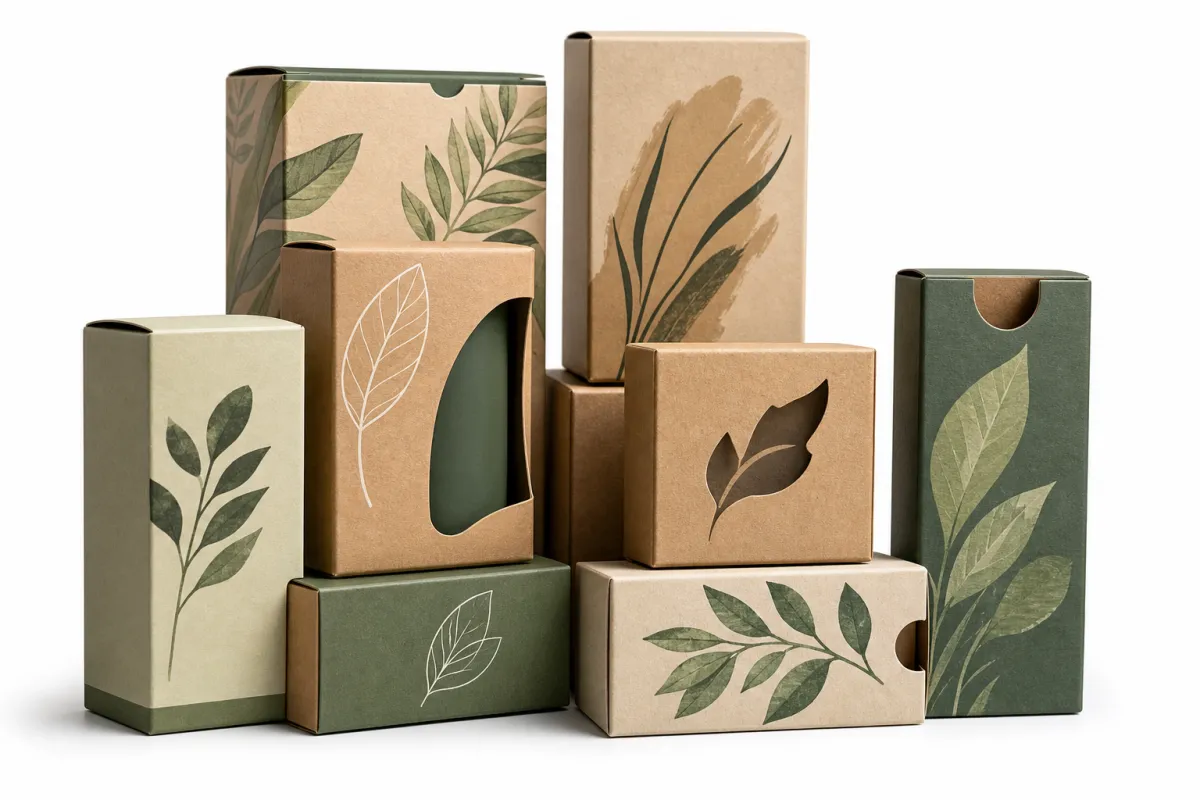
Custom eco retail packaging boxes matter because shelf decisions happen fast. A shopper may only give a package a few seconds of attention, and the carton has to communicate value, use, and trust almost at once. If the box looks flimsy, overbuilt, or awkwardly sized, the product can feel less refined than it really is. If the proportions are tight and the graphics feel intentional, the brand tends to read as more credible and current.
In practical terms, custom eco retail packaging boxes are retail-ready boxes built for a specific product, a specific display environment, and a more efficient use of material where the project allows it. That can mean a right-sized footprint, paper-based substrates, soy or water-based inks, and finishes that avoid plastic-heavy treatments unless they are truly needed. The aim is not to strip every package down to something plain. The aim is to make the package make sense, plain and simple.
Picture a premium candle in a carton that carries far more empty space than the product requires. The excess may look harmless in a spreadsheet, but on a shelf it signals waste. The same problem shows up with skincare, wellness, and food items. Packaging has to support the product, not create friction around it.
That is where custom eco retail packaging boxes prove their value. They can cut down on void fill, improve the perceived quality of an item, and give brands a cleaner sustainability story without depending on exaggerated claims. Used well, they support product packaging decisions across the supply chain, from line efficiency to shelf appeal to end-of-life recovery. That kind of alignment matters because every step after design usually gets more expensive if the carton is off by even a little.
“A box should earn its footprint.” That is a useful standard for custom eco retail packaging boxes. If the package uses more board, more ink, or more freight space than the product justifies, the design deserves another pass.
Brands comparing options early usually make better choices later. A look through Custom Packaging Products before settling on a structure can prevent a lot of wasted time on the first design that merely looks good in a mockup. Packaging usually improves after a few disciplined trade-offs, not after guesswork. I have watched teams save themselves from a lot of backtracking simply by comparing a couple of structures before artwork even starts.
Sustainability is broader than material choice. It also includes whether the box is easy to recycle, whether the print process depends on heavy solvent chemistry, and whether the package can be flattened or separated cleanly at the end of its life. The U.S. EPA’s recycling guidance is a practical reference for teams shaping claims and material decisions: EPA recycling resources.
That is the real promise of custom eco retail packaging boxes. They help a brand look better without treating appearance and responsibility as opposing goals.
How Custom Eco Retail Packaging Boxes Work in Retail
Custom eco retail packaging boxes work because they have to do three jobs at once. They protect the product through handling, stocking, and checkout. They present the brand clearly on a crowded shelf. They also have to fit the practical reality of retail, which can include warehouse stacking, shelf restocking, barcode scanning, and the trip home in a shopping bag. Miss one of those jobs, and the box stops earning its place.
Structure matters more than many teams expect. A tuck-end folding carton is efficient and familiar, though it may not feel as structurally confident as a sleeve or a mailer-style box. A rigid box sends a premium signal, yet it usually increases material use and cost. Corrugated construction can improve durability, especially for heavier or ship-to-store items, but it can shift the brand’s visual language. Custom eco retail packaging boxes are not a single format. They are a set of choices with different trade-offs.
Right-sizing is one of the strongest sustainability moves available to a brand. Reducing length, width, or height by even a small amount can cut board use, reduce shipping volume, and improve pallet efficiency. Those changes matter in retail logistics because every extra millimeter can affect how many units fit in a shipper or on a pallet. Packaging design has a logistics consequence, whether the team wants one or not.
Branding matters just as much. Clean typography, a controlled color palette, and sensible print coverage can communicate quality without leaning on heavy coatings, plastic windows, or excess decoration. Some of the strongest custom printed boxes use restraint well. They let texture, proportion, and material tone do part of the selling. That creates a different kind of package branding than the crowded, overworked style many brands still default to.
The package also has to hold up to what shoppers see and touch. Retail buyers and consumers compare the story on the box with the box in their hands. If a package claims environmental intent but arrives with inflated dimensions, a plastic insert, and a thick lamination stack, the message weakens fast. Custom eco retail packaging boxes work best when material choice, structure, and print treatment point in the same direction.
For brands developing a new retail package, it helps to think in terms of use cases:
- Shelf display: The box needs clear visual communication from 3 to 6 feet away.
- Transit handling: The carton has to survive stacking, sorting, and occasional drops.
- Consumer experience: Opening the box should feel deliberate, not fussy.
- Recovery: Materials should be selected with recycling, compostability, or easy separation in mind when appropriate.
That is why custom eco retail packaging boxes are usually better judged as a system than as a single object. Material, print, closure, and fit all affect one another. Change one, and the others may need a rethink too.
Teams comparing brand-driven and function-driven options often benefit from a short structure review followed by a sample fit test. If you are exploring Custom Packaging Products, ask which format best supports product weight, shelf presentation, and recycling goals before discussing finishes. That order keeps the project cleaner and usually saves a round of revisions that nobody has time for.
Custom Eco Retail Packaging Boxes: Key Factors That Matter
Custom eco retail packaging boxes rise or fall on a small set of variables. Material selection sits near the top because the substrate affects strength, print quality, hand feel, and end-of-life behavior. Recycled paperboard often works well for lightweight retail products that need a clean print surface. Kraft board suits brands that want a natural tone and less visual clutter. Corrugated board is usually the better fit for heavier product packaging or items that will see extra transport stress. Specialty fibers can be useful in certain cases, though they are not always the right answer if sourcing, cost, or print consistency becomes difficult.
Printing and finishing come next. Soy or water-based inks are often chosen to reduce environmental impact and support recovery pathways. Limited coatings can keep the package easier to recycle, though some protection may still be necessary for moisture resistance or scuff resistance. Spot embossing, restrained foil, or selective varnish can still create a premium effect, but each additional finish should justify its place. It is easy to overspec a box in the name of luxury and accidentally weaken the sustainability case.
Protection is where good intentions get tested. A delicate serum bottle, glass candle jar, or snack pouch with a brittle seal needs more than attractive artwork. It may need tighter tolerances, a locking feature, a paper insert, or a stronger board caliper. For distribution validation, many teams reference ISTA-style testing or ASTM methods such as ASTM D4169 to simulate the drops, compression, vibration, and handling that retail packaging must survive. That testing is not bureaucracy for its own sake. It helps avoid returns and write-offs, which is where the real money tends to disappear.
Retail compliance also matters. A beautiful box that hides the barcode, buries the ingredients panel, or makes warning copy hard to read is a problem waiting to happen. Shelf-ready custom printed boxes need to work with regulatory requirements, retailer planograms, and scanning conditions. If the package does not scan cleanly or fails a readability check, the sustainability story becomes secondary to operational friction.
Brand strategy should shape the decision as well. A natural skincare label may want visible kraft texture and muted ink coverage. A premium wellness product might prefer a polished recycled paperboard with restrained graphics. A performance-led brand may need sharper contrast and bolder typography to stand out in a crowded category. Custom eco retail packaging boxes should match the price point and audience expectations, not only the environmental brief. A $6 impulse product and a $60 prestige item rarely need the same visual language.
The other point buyers often miss is that “eco” does not mean the same thing in every market. Compostable is not always practical. Recyclable is not enough if the box is too heavy or wasteful. FSC-certified paper can support responsible sourcing, but the structure still needs to be efficient. For sourcing standards and forest stewardship information, the Forest Stewardship Council is a credible reference point.
Put differently, custom eco retail packaging boxes should be measured against several tests at once:
- Material fit: Does the board suit the product weight and handling needs?
- Print fit: Does the artwork feel intentional on that surface?
- Retail fit: Does the box scan, stack, and display properly?
- End-of-life fit: Is the package easier to recover than the current option?
That is the line between eco messaging and eco execution.
Custom Eco Retail Packaging Boxes: Process, Timeline, and Lead Time
Custom eco retail packaging boxes move through a fairly predictable process, though speed depends on how complete the brief is. The work usually begins with product dimension review, then moves into dieline selection or structural planning, followed by artwork setup, proofing, production, and shipping. A brand with clear specs can move quickly. A brand that keeps changing dimensions or creative direction usually cannot.
The first bottleneck is often the brief, not the press. If one person says the box must fit a 10 oz jar, another says the fill volume is still changing, and a third changes the closure style halfway through, the project slows before production even starts. One approved dimension set, one package goal, and one final decision-maker can save days, sometimes weeks.
Sampling is where smart teams reduce risk. An unprinted structural sample is useful for fit, tolerance, and assembly checks. It helps confirm whether the insert holds the item correctly, whether the closure stays secure, and whether the box feels right in hand. A printed prototype adds another layer: color accuracy, logo placement, copy readability, and shelf presence. Both matter, and they answer different questions.
Lead time depends on the complexity of the order. Smaller runs using standard materials may move faster, often in the 12 to 15 business day range after proof approval, though that is not universal. Custom structures, unusual board combinations, specialty coatings, and multiple revision cycles can extend the schedule. If a project involves custom eco retail packaging boxes with a new insert design or strict retail compliance requirements, a longer timeline is normal rather than a warning sign.
Delays usually come from a handful of avoidable issues:
- Unclear specs: Missing dimensions or weight data slow die-line work.
- Late artwork changes: Last-minute copy edits can trigger new proof rounds.
- Barcode problems: Incorrect sizing or poor contrast can block approval.
- Material substitutions: A switch in board grade may require fresh testing.
- Overly complex finishes: Multiple coatings or treatments lengthen production.
From a packaging buyer’s point of view, the fastest project is usually the one with the fewest open variables. That idea sounds basic, yet it gets ignored often. Custom eco retail packaging boxes are easier to produce when the team decides early whether it wants a natural recycled look, a premium retail finish, or a stronger ship-ready format. Trying to optimize all three at the last minute usually creates delays.
One practical benchmark helps on launches, trade shows, and seasonal retail resets: add buffer to the schedule. Even a clean order can slip if a proof needs revision or a substrate is temporarily unavailable. That is normal procurement reality, not a rare exception. A few extra days in the plan is a lot kinder than an overnight scramble later.
For brands comparing broader solutions, reviewing Custom Packaging Products early can shorten the timeline because weaker structural ideas can be removed before artwork begins. That is often where the real time savings show up.
Custom Eco Retail Packaging Boxes: Cost, Pricing, MOQ, and Quote Drivers
Cost is usually the first number buyers want, and it should be. Custom eco retail packaging boxes can vary widely in price because changes in size, board grade, finishing, and quantity affect the unit economics quickly. A simple folding carton in recycled paperboard may sit in a very different range from a rigid gift-style box or a corrugated retail shipper. The material itself is only one part of the quote.
The main pricing drivers are straightforward: board type, box dimensions, print coverage, finishing, inserts, quantity, and freight. Larger boxes use more material. Heavy ink coverage can add cost and sometimes slow production. Embossing, foil, lamination, and specialty varnishes raise the total. Inserts protect the product, but they add design and assembly work. Freight is the quiet line item many teams underestimate, especially if the packaging ships from a distant plant or if the carton volume is larger than expected.
MOQ, or minimum order quantity, depends on the box style and production method. Simple folding cartons often support lower MOQs than rigid boxes or highly customized structures. Smaller runs reduce inventory risk, which is useful for fast-moving product packaging or test launches. The trade-off is unit cost. Larger orders usually improve price efficiency, but they can also create storage pressure and tie up cash. There is no universal best answer; the right MOQ depends on turnover, launch timing, and how stable the artwork is likely to remain.
Quote comparisons can be misleading if the specs are not identical. Two suppliers may both say they can deliver custom eco retail packaging boxes, but one quote may use a thinner board, tighter tolerance, or simpler finish. Another may include better structural support or more careful print matching. Comparing only the unit price is how buyers end up with a box that looks inexpensive but performs poorly in real use.
| Box Type | Typical Use | Indicative Unit Cost at 5,000 Pieces | Strength | Eco Notes |
|---|---|---|---|---|
| Recycled paperboard folding carton | Light retail items, cosmetics, supplements | $0.18-$0.35 | Moderate | Often recyclable; good print surface |
| Kraft board carton | Natural-looking retail packaging, artisan goods | $0.20-$0.38 | Moderate | Natural appearance; minimal ink can reduce impact |
| Corrugated retail box | Heavier items, shipping and display use | $0.45-$0.90 | High | Good for protection; common recycling pathways |
| Rigid set-up box with paper wrap | Premium gift or prestige retail packaging | $1.20-$2.80 | Very high | Premium feel, but more material and labor |
Those numbers are directional, not promises. They reflect how custom eco retail packaging boxes often price in practice, assuming standard artwork and common production conditions. Dense print coverage, special inserts, and complex construction can move the number quickly. Freight can shift it as well, especially on smaller runs.
Total landed cost is the better way to think about the project. A cheaper carton that fails in transit can cost more once returns, replacements, customer complaints, and rework are included. That is why the lowest quote often backfires. The strongest brands treat custom eco retail packaging boxes as an operating cost that affects margin, returns, and perception at the same time.
A simple decision rule helps: reduce dimensions first, reduce finishing second, and reduce complexity third. Those three moves usually do more for cost control than shaving a few cents off material grade alone.
Common Mistakes With Custom Eco Retail Packaging Boxes
One common mistake is choosing a material that looks green but is too weak for the product. That happens often when lightweight board is selected for visual appeal instead of actual use. The box may look clean on a mood board, but if it dents in transit, the savings disappear into damage claims and replacement stock. Custom eco retail packaging boxes need to be strong enough for the item, not just attractive in a mockup.
Oversizing is another frequent problem. Some teams choose a larger box because it is easier to design or gives the art department more space to work. The result is wasted material, higher freight volume, and a product that can look smaller than it really is. Oversizing also weakens the sustainability message because shoppers can see the excess immediately. A package does not need to be tiny, but it should be disciplined.
Retail compliance creates another trap. If the barcode sits too close to an edge, if small text is hard to read, or if legal copy is buried under a fold, the packaging may fail internal review after production has already started. That is an expensive place to discover a layout issue. Custom eco retail packaging boxes need the same level of compliance checking as any other retail packaging, maybe more, because eco claims can draw extra scrutiny.
A green-looking box is not the same as a responsible box. If the structure, inks, finish, and logistics do not support the claim, shoppers usually notice before the brand team does.
Some brands also treat sustainability as a messaging layer only. They print the right language on the panel, while the actual package remains overbuilt, overcoated, or difficult to recycle. That is a weak strategy. Sustainability has to show up in the structure, the materials, and the production decisions. It is not a sticker added at the end.
Skipping sample testing is the final mistake worth calling out. The risk is especially high for fragile or temperature-sensitive products. A box can look perfect and still fail under real weight, repeated handling, or seasonal stress. Testing one or two samples with the actual product is much cheaper than learning about a fit problem after full production ships.
Here are the failures I see most often in custom eco Retail Packaging Boxes:
- Weak board chosen for a heavy item.
- Oversized dimensions that waste material and shelf presence.
- Barcode or legal-copy placement that misses retail requirements.
- Too many finishes for a package that should be simpler.
- No structural sample before production approval.
Avoiding those mistakes does not require a huge budget. It requires a clearer brief and more discipline early in the process.
Expert Tips and Next Steps for Custom Eco Retail Packaging Boxes
If you are narrowing down custom eco retail packaging boxes for a launch or redesign, start with one SKU. Pick the hero product, measure it accurately, and build the packaging brief around its weight, shape, handling needs, and shelf position. Trying to design for every product at once usually creates a compromised carton that fits nothing well. One clean launch package is stronger than three half-finished ones.
Next, ask for a material comparison. A serious packaging partner should be able to show two or three board options with different trade-offs in appearance, recyclability, strength, and price. That comparison helps reveal where the real value sits. The best answer is not always the most expensive board. Sometimes it is the one that gives the right print result and uses less total material.
Ask for a sample plan in two stages. First, get the structural sample and check fit, closure, and stacking behavior. Then request a printed proof or prototype so you can judge color, logo placement, and shelf readability. This sequence catches more issues than waiting for a final run sample after production has already been approved.
A quote checklist also protects margin. Before comparing suppliers, confirm the exact material, dimensions, print method, finish, insert requirement, MOQ, timeline, and freight terms. If one quote includes a paper insert and another does not, the comparison is already off. Fair quoting is one of the easiest ways to keep custom eco retail packaging boxes under control.
One practical way to move forward is to audit the current package and identify one waste point. It might be extra headspace, a coating you do not need, a structural insert that could become paper-based, or a box shape that wastes pallet space. Turn that single issue into a redesign brief. Small improvements are how better retail packaging starts, and they tend to add up faster than folks expect.
For teams that want a wider view of available structures and print approaches, Custom Packaging Products is a useful place to compare directions before committing to artwork. The right package usually comes out of a few disciplined decisions, not a long chain of revisions.
There is also a standards angle worth keeping in view. If your product needs transit validation, consider whether the package should be checked against ISTA testing logic, and if sourcing is part of the brief, review FSC-certified material pathways. Those references keep the project grounded in real-world performance rather than marketing language alone. The packaging may still be beautiful. It just should not be beautiful at the expense of function.
Here is the short version: custom eco retail packaging boxes work best when they are right-sized, honest in their material choices, and clear about the brand they represent. They should protect the product, support shelf appeal, and reduce waste where possible. If one of those pieces is missing, the package feels unfinished.
Most brands stumble by treating packaging as the last step. In practice, it is one of the first decisions that shapes margin, logistics, and perception. Build custom eco retail packaging boxes with that in mind, and the result is usually stronger, leaner, and easier to sell. The most useful next move is simple: lock the product dimensions, choose one material path, and test one structural sample before you spend a minute polishing artwork.
FAQ
What materials are best for custom eco retail packaging boxes?
Recycled paperboard and kraft board are common starting points for lightweight retail products. Corrugated board is better when the box needs to handle shipping stress or heavier items. The best choice depends on product weight, print goals, and whether recyclability or premium feel matters more. In a lot of projects, the right answer is the one that does all three jobs well enough without overcomplicating the box.
How do custom eco retail packaging boxes protect products without extra plastic?
Right-sized dimensions reduce movement, which lowers the need for fillers. Board thickness, locking tabs, and paper-based inserts can replace plastic supports in many cases. Testing the package with real product weight is the fastest way to see whether the design holds up. If the item rattles, tips, or scuffs in the sample, the structure still needs work.
What is a realistic MOQ for custom eco retail packaging boxes?
MOQ depends on the printer, material, and box style, so there is no single standard number. Simple folding cartons usually have lower minimums than specialty rigid boxes or complex structures. If you need a smaller run, expect a higher unit cost and fewer finishing options. That trade-off is normal, and it is often worth it for a pilot launch or seasonal test.
How long does production take for custom eco retail packaging boxes?
Standard runs can move faster when artwork is ready and the structure is already approved. Custom structures, specialty finishes, and sample revisions usually extend the production timeline. The biggest delay is often not printing; it is waiting on final specs, proofs, or material approval. A tidy brief usually saves more time than chasing an extra rush fee later.
How can I lower the cost of custom eco retail packaging boxes?
Reduce box size first, because smaller dimensions can cut material, shipping, and storage costs. Limit finishes and keep the print plan focused on the parts shoppers actually see. Compare total landed cost, not just unit price, because failed packaging can create bigger expenses later. If you want the quickest savings, start by removing excess space before you touch the artwork.

