Buyer Fit Snapshot
| Best fit | Green Retail Packaging Boxes Manufacturer projects where brand print, material claims, artwork control, MOQ, and repeat-order consistency need to be specified before quoting. |
|---|---|
| Quote inputs | Share finished size, material target, print colors, finish, packing count, annual reorder estimate, ship-to region, and any compliance wording. |
| Proofing check | Approve dieline scale, logo placement, barcode or warning zones, color tolerance, closure strength, and carton packing before bulk production. |
| Main risk | Vague material claims, crowded artwork, missing packing details, or unclear freight terms can make a low unit price expensive after revisions. |
Fast answer: Green Retail Packaging Boxes Manufacturer: Board, Finish, Dieline, and Unit Cost should be specified like a repeatable production item. The safest quote records material, print method, finish, artwork proof, packing count, and reorder notes in one written spec.
Production checks before approval
Compare the actual filled-product size with the drawing, then confirm tolerance on folds, seals, hang holes, label areas, and retail display edges. Reserve space for logos, QR codes, warning copy, and material claims before decorative graphics fill the panel.
Quote comparison points
Review material grade, print process, finish, sampling route, tooling charges, carton quantity, and freight assumptions side by side. A quote is only useful when the supplier can repeat the same color, closure quality, and packing count on the next order.
A green retail packaging boxes manufacturer is not just a printer with recycled-paper language and a tidy leaf graphic on the website. The real work sits deeper than that: build retail packaging that protects the product, moves through production without waste, looks convincing on shelf, and still makes sense once the customer opens it and sends it onward to recycling. If you are comparing suppliers, the question that matters is not “Who says they are eco-friendly?” It is “Who can show the material, structure, and print choices behind the claim?”
After enough shelf checks, sample reviews, and press proofs, one pattern keeps showing up: the best packaging specs are rarely the fanciest ones. They are the ones that are honest about the product, efficient in the hand, and practical in the supply chain. That is where many buyers get stuck. A box can look responsible and still be a poor fit if it mixes materials, wastes space, or uses a finish that complicates recovery after use. A better green retail packaging boxes manufacturer will talk about board grades, coatings, dielines, and production limits in plain language instead of leaning on vague sustainability slogans. If you want to compare packaging formats while you sort through suppliers, you can also review Custom Packaging Products or learn more about the team on About Custom Logo Things.
Most projects settle best in the middle. Not the cheapest carton. Not the loudest “eco” statement piece. Just the version that balances packaging design, freight efficiency, shelf appeal, and end-of-life reality without wasting board, ink, or budget. That middle ground is where good packaging usually lives, even if it is a little less dramatic than the marketing slides.
What a green retail packaging boxes manufacturer actually does
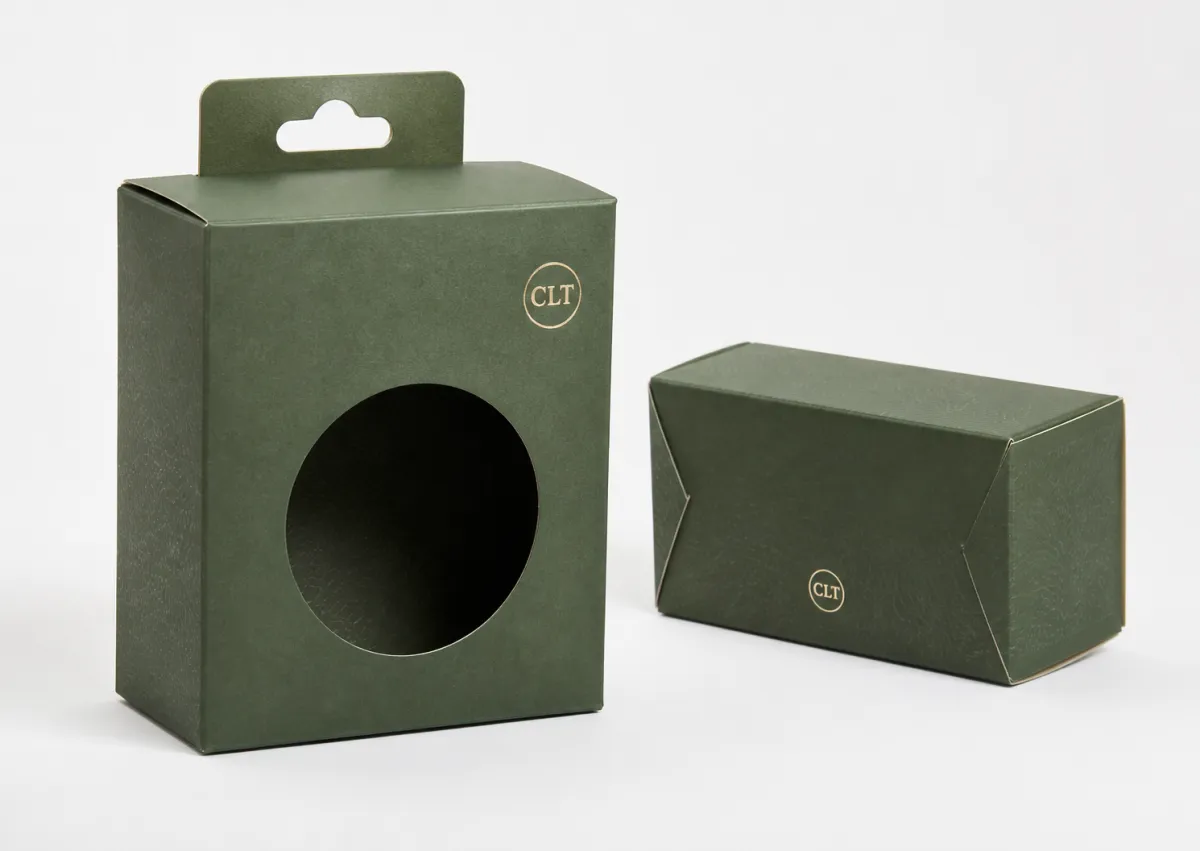
A green retail packaging boxes manufacturer handles much more than printing a logo on paperboard. The work usually spans the full path from concept to finished carton: board selection, structural design, print compatibility, coatings, inserts, assembly style, and ship-ready packing. That sounds straightforward until a product’s weight, shelf life, and merchandising goals have to fit inside a box that also survives freight, stacking, and retailer handling.
Many retail boxes marketed as “eco” are only partly sustainable. That is the blunt truth. Some use recycled fiber but add plastic lamination. Some can be recycled in theory yet rely on foil, thick varnish, or glued windows that complicate recovery. A serious green retail packaging boxes manufacturer helps sort the measurable choices from the marketing language. That means checking recycled content, source certification, print chemistry, and the total material mix rather than trusting the front of the sales sheet.
There is a branding side too. Retail packaging is not a shipping carton hidden in a back room. It is part of the product experience. A box that feels deliberate can raise perceived value, help a display stand out, and reduce the need for extra inserts or oversized secondary packs. That matters in cosmetics, supplements, candles, apparel accessories, and specialty food items where the package itself does part of the selling.
Recycled, recyclable, compostable, FSC-certified, and plastic-free are not the same label with different wording. Each one points to a different material reality, and that distinction matters.
- Recycled content means the material includes recovered fiber, often post-consumer or pre-consumer paper stock.
- Recyclable means the package can be processed again in a recycling stream, but only if the local system accepts it.
- Compostable means the item can break down under defined conditions, which is not the same as “can be tossed in a backyard pile.”
- FSC-certified means the fiber chain is tied to responsible forest management and chain-of-custody controls.
- Plastic-free means no plastic components, but it does not automatically mean low impact or easy recycling.
A practical green retail packaging boxes manufacturer should be able to explain which of those labels apply to your box and which do not. That matters even more if you plan to print claims on the carton, because packaging language should match the actual spec rather than hopeful copy. For neutral background on recovery and packaging sustainability, the EPA recycling guidance is a useful starting point, and FSC’s certification framework at fsc.org helps explain chain-of-custody expectations.
From a buyer’s point of view, the right supplier also cuts waste in a very practical way: fewer empty spaces in the box, fewer reprints caused by bad proofs, fewer freight damages, and fewer overbuilt cartons that consume too much board. A good green retail packaging boxes manufacturer should make the box smaller, smarter, and easier to ship without making it fragile. That is the sweet spot. Everything else is just brochure language.
How a green retail packaging boxes manufacturer keeps boxes sustainable
There is a real sustainability stack behind a well-made carton, and a green retail packaging boxes manufacturer uses more than one tactic to keep the design responsible. The first layer is the board itself. Paperboard options can include recycled content, FSC-certified virgin fiber, or a blend of both, depending on the strength and print finish you need. For many retail jobs, the practical range lands around 250gsm to 400gsm for folding cartons, though heavier products may need stronger construction or a rigid setup box.
The next layer is ink usage. Lower-coverage graphics often require less ink, fewer passes, and less risk of print inconsistency. That does not mean bland design. It means smarter branded packaging choices: clear typography, strong hierarchy, and limited spot effects where they matter. A green retail packaging boxes manufacturer can often lower environmental load by helping a buyer avoid giant flood coats or unnecessary full-coverage black backgrounds that are harder to print cleanly.
Coatings matter just as much. Water-based coatings, aqueous varnishes, and some soy-based ink systems are often preferred because they do not create the same recycling complications as heavy plastic films. That does not make every coating automatically better. It depends on the substrate, the recycling stream, and whether the finish changes how the board behaves during handling. Glossy lamination can look sharp, but it can also make a box harder to recover after use. A seasoned green retail packaging boxes manufacturer should be able to explain that tradeoff without hiding behind the word “premium.”
Structural design carries equal weight. A box that uses less board but still holds shape is usually better than an overbuilt package that feels sturdy while wasting material. The design goal is simple: remove dead air, avoid extra folds that do nothing, and keep the insert system as light as possible. That may mean a locking tab instead of a glued tray, or a paperboard insert instead of a plastic shell. For some categories, a mailer-style retail box can replace a separate shipper and display carton, which saves both material and labor.
The practical checklist I would use when evaluating a green retail packaging boxes manufacturer looks like this:
- Board choice: recycled content, FSC chain-of-custody, or both.
- Ink system: water-based, soy-based, or low-impact conventional print depending on the run.
- Finish: recyclable-friendly coating instead of heavy film whenever possible.
- Structure: right-sized dieline, not oversized “just in case” dimensions.
- Insert design: paperboard, molded fiber, or no insert if the product can safely travel without one.
For cosmetics, a folding carton with a tight fit and a paperboard insert can work well if the bottle or jar is stable. For apparel accessories, a mailer-style retail box often does double duty as product packaging and presentation packaging. For small electronics or premium gift items, rigid or semi-rigid construction may still be necessary, but the insert and wrap should stay as simple as the product allows. A strong green retail packaging boxes manufacturer knows where the structure should stop. Overengineering is costly, and it does not become virtuous just because it uses paper.
One detail buyers sometimes miss: sustainability is not only about what happens after the box is used. It also lives in how efficiently the box moves through the supply chain. A box that ships flatter, stacks better, and wastes less pallet space creates less transport waste. That is real material reduction, not a polished story. The best green retail packaging boxes manufacturer treats the box as a system, not a pretty shell.
“If the package needs three extra materials to look sustainable, it probably isn’t as sustainable as it claims.”
Green retail packaging boxes manufacturer cost, pricing, and MOQ basics
Cost is where the conversation gets practical very quickly. A green retail packaging boxes manufacturer usually prices around five main variables: board grade, box size, print coverage, finishes, and order volume. The more custom the structure and decoration, the more setup work goes into the job. That means small orders can look surprisingly expensive, even if the carton seems simple at first glance.
For Custom Folding Cartons, a common starting point for a mid-volume run might sit around $0.18 to $0.45 per unit at 5,000 pieces, depending on size, artwork complexity, and coating choice. A higher-end box with heavier board, specialty insert work, or premium finish effects can move into the $0.60 to $1.20 per unit range or higher. That is not the supplier being difficult. It is setup, die cutting, print calibration, and finishing carrying real cost. A reputable green retail packaging boxes manufacturer should explain that early instead of tossing out a low quote that later grows teeth.
MOQ is the other reality check. Minimum order quantities exist because tooling, press setup, and make-ready work do not scale nicely into tiny runs. A simple retail carton may carry a lower MOQ than a rigid gift box with custom inserts and special finishes. If you want FSC material, a custom structural design, and a full-color print with coating, the MOQ may climb because the supplier has to source and process everything within a specific production window. A practical green retail packaging boxes manufacturer should tell you the threshold before you fall in love with a sample that does not fit your volume.
A simple pricing comparison helps keep the numbers grounded.
| Box type | Typical spec | Indicative unit cost | Common MOQ range | Notes |
|---|---|---|---|---|
| Basic folding carton | 300-350gsm board, 1-2 color print, aqueous coating | $0.18-$0.32 | 1,000-3,000 | Best for lighter retail products and simple branding |
| Mid-tier custom carton | 350-400gsm board, full-color print, matte or soft-touch coating, paperboard insert | $0.28-$0.55 | 2,000-5,000 | Good balance of shelf appeal and material efficiency |
| Premium sustainable box | Heavier board, specialty structural design, embossed details, custom insert | $0.60-$1.20+ | 3,000-10,000 | Used when presentation matters and the structure needs more engineering |
Those ranges are not universal. Size, print area, shipping terms, and current board pricing can swing the numbers. Still, they are useful enough to keep a buyer from treating every quote as if it came from another planet. A good green retail packaging boxes manufacturer should also separate unit cost from one-time charges such as tooling, plates, or sampling. Those upfront fees matter. Sometimes they are modest. Sometimes they are the entire reason a “cheap” quote is not cheap at all.
There is also a hidden cost in the wrong spec. A box that is slightly too big may burn more board and freight. A box that is too weak may crush in transit, which means replacement units, returns, or retailer complaints. A finish that makes the package look premium but blocks recyclability may create the exact waste problem the buyer was trying to avoid. The smartest move is to ask a green retail packaging boxes manufacturer for two versions of the same structure: one lowest-cost version and one lower-impact version. Then compare them line by line. That is how the tradeoffs become visible instead of guessed.
Cheap and sustainable are not natural enemies, but they do not always sit comfortably together. The cleanest spec often costs a little more upfront and saves less in waste over time. The wrong spec can save pennies and create much larger headaches later. That is exactly the kind of math a serious green retail packaging boxes manufacturer should help you work through.
Production process, timeline, and lead time from quote to delivery
Most buyers want a date. Fair enough. A green retail packaging boxes manufacturer should be able to give one, but the honest answer depends on how settled the design already is. A straight reprint of an existing box may move faster than a brand-new structural concept, especially if you need certified materials, new tooling, or a custom insert. The fuller the brief, the more predictable the schedule.
The usual sequence starts with a request for quote and a short production brief. At this stage, the supplier needs dimensions, product weight, target quantity, print method, finish preference, and any recycling or certification requirement. If those details are fuzzy, everything slows down later. A good green retail packaging boxes manufacturer will usually turn that brief into a dieline recommendation and a material suggestion before anything gets committed.
Next comes the dieline approval stage. This is where box dimensions, folds, glue areas, and insert placements get locked in. If the structure is wrong here, the rest of the project pays for it. Then come the artwork proofs, which should be checked with almost stubborn precision: spelling, barcode placement, safe zones, color values, compliance text, and any claims about recycled content or certification. That step is not glamorous, but it saves money. A green retail packaging boxes manufacturer can print exactly what you approve, including mistakes.
After approval, sampling usually takes a few business days for a standard carton and longer for a more complex structure. Simple blank samples may move quickly. Printed samples or pre-production proofs take longer because the supplier needs to match ink, board, and finish more closely. If you are asking for a custom molded fiber insert or a specialty coating, add time. A dependable green retail packaging boxes manufacturer will warn you before the schedule gets tight instead of pretending every custom job is a same-week miracle.
The timing model below holds up in many packaging jobs:
- Quote and brief review: 1-3 business days if the specs are complete.
- Dieline and structural approval: 1-3 business days for a simple format, longer if the box is new.
- Sampling: 3-7 business days for standard samples; 7-12 business days for more detailed printed samples.
- Production: 10-20 business days after approval for common retail cartons.
- Finishing and packing: 1-3 business days depending on complexity.
- Shipping: a few days domestically, longer if the order is moving by ocean freight.
Those ranges are normal. They are not a failure. If a green retail packaging boxes manufacturer promises a highly customized run in a dramatically shorter window, ask what gets skipped. Usually it is sampling, proofing, or proper curing time. That is how rushed jobs turn into expensive jobs.
Delays usually happen in the same places. Sample revisions are one. Artwork mistakes are another. Many brands also change material choice late in the process because they discover a stronger sustainability claim or a different price point. That sounds harmless until the supplier has to re-source board, reset finishing, and update the proof. The easiest way to keep lead time sane is to freeze the spec early and treat changes like actual changes, not minor edits.
If your project requires FSC-certified material, custom coatings, or a new structure, expect a little more lead time. Not a disaster. Just a sensible buffer. For buyers who need to line up with retailer launch dates, that buffer matters more than a tiny unit price difference. A trustworthy green retail packaging boxes manufacturer will give you a milestone-based timeline, not a vague promise that everything will work out somehow.
Key factors that decide box performance and shelf appeal
A box can be sustainable on paper and still fail in the real world. That is why a green retail packaging boxes manufacturer has to balance performance and shelf appeal at the same time. Protection comes first. If the box collapses, scuffs, or opens too easily, the rest of the branding loses its footing. Shelf appeal comes second, though it still matters a lot. Retail packaging has to help the product look credible in a few seconds, often from two or three feet away under poor lighting.
The main performance metrics are direct. Compression strength, edge crush resistance, product fit, and closure integrity all matter. A lighter board may work for a cosmetic tube, but not for a heavy glass jar. A lock-bottom structure may work better than a tuck-top design for some products. A good green retail packaging boxes manufacturer should understand where the product’s failure points are before recommending a box style. If they never ask about weight, stack height, and shipping method, they are guessing.
Shelf appeal is its own discipline. Print sharpness, color accuracy, tactile finish, and visual hierarchy all affect whether the box looks polished or generic. The right packaging design can make a simple structure feel premium, while a box covered in too many effects can end up looking noisy and careless. One of the most common mistakes in product packaging is trying to “upgrade” the box with layers of decoration that do not help the customer understand the product. A cleaner layout often looks more expensive than a busy one.
Barcode placement, SKU codes, and retailer requirements are easy to overlook until they cause trouble. Some stores want specific barcode visibility, certain carton sizes, or stackable dimensions that fit shelf plans. If the box is also used for distribution, assembly speed matters too. A retail-ready box that takes too long to fold or close can slow down fulfillment. A capable green retail packaging boxes manufacturer should factor in the people handling the box, not just the people shopping it.
One of the best ways to reduce both waste and cost is to right-size the structure. Oversized packaging burns board, increases freight volume, and usually looks less refined. Tight dimensions often improve presentation because the package feels designed rather than padded. That is a useful place where sustainability and branding overlap. Better fit can reduce material use and improve the customer’s first impression at the same time. A thoughtful green retail packaging boxes manufacturer will bring that up before you ask.
For buyers in regulated or retail-heavy categories, standards matter too. If you are validating transit performance, look at the testing language used by organizations like ISTA, which helps define how packaging should survive distribution stresses. That does not mean every retail carton needs full transport lab testing, but it does mean the box should be judged against real handling conditions rather than optimism.
One detail many brands miss: the visual story and the environmental story should point in the same direction. A heavy gloss carton with plastic accents may look expensive, but it can also create recycling friction. A simpler, well-designed paper-based box often communicates cleaner package branding and better material discipline. That is not a trendy opinion. It is just what tends to hold up once the box has moved through a store, a warehouse, and the customer’s hands.
Common mistakes when choosing a green retail packaging boxes manufacturer
Most bad packaging decisions do not come from one dramatic mistake. They come from a chain of smaller oversights. A green retail packaging boxes manufacturer can only help so much if the buyer starts with vague goals and ends with late-stage panic. The first mistake is assuming a recycled label solves everything. It does not. Recycled content is useful, but the structure can still be hard to recycle if it includes mixed films, heavy foil, or non-paper components. That is the difference between a nice-looking claim and a usable packaging spec.
The second mistake is approving samples that only look good on a desk. A box can look excellent in a photo and still fail once loaded with real product weight, stacked in transit, or handled on a retail floor. A serious green retail packaging boxes manufacturer should sample against real product dimensions and real shipping conditions whenever possible. If the sample feels loose, flimsy, or hard to assemble, the final production run will only amplify the problem.
Third, buyers often add too many finishes because they want the box to feel special. A little embossing, a smart matte coat, or a small foil accent can work well. Once the spec picks up plastic lamination, metallic film, complex inserts, and extra coating steps, the box stops being a clean sustainability story. It also gets expensive. That is spec creep, and it is one of the easiest ways to turn a green project into a messy one. A pragmatic green retail packaging boxes manufacturer should push back when the design starts working against itself.
Another common issue is skipping a detailed quote review. A quote should spell out material grade, dimensions, print process, finish, MOQ, unit pricing, sample cost, tooling charges, and shipping terms. If any of that is missing, the buyer is not comparing quotes. They are comparing assumptions. Assumptions are where surprise costs live. A careful green retail packaging boxes manufacturer will usually welcome a written spec check because it prevents rework later.
There is also a branding mistake that sounds harmless but causes real damage: making the box look “eco” in a generic way instead of matching the brand. Brown kraft is not automatically better. Minimal print is not automatically premium. Natural texture is not automatically the right signal. The box should fit the product category and the brand position. A thoughtful green retail packaging boxes manufacturer can help Choose the Right balance between restrained and expressive so the package looks intentional, not recycled for the sake of it.
Finally, do not ignore assembly and packing method. Some boxes are easy to print and miserable to pack. Others save material but add labor that destroys the savings. If a box requires three extra folding steps, or if the insert is fiddly enough to slow your line, the “green” choice may cost more than it saves. Good packaging is not just about material reduction. It is about the entire production run, from press sheet to finished carton.
Expert tips and next steps for working with a green retail packaging boxes manufacturer
Start with the actual use case. A retail shelf box, an ecommerce-ready box, and a hybrid distribution box do not need the same structure. A strong green retail packaging boxes manufacturer will ask where the package lives most of the time: on a shelf, in a parcel network, or in both. That answer changes the material thickness, closure style, and finish choices. A box built for shelf impact can differ from one built to survive repeated shipping, and pretending otherwise is how brands waste money.
Ask for two quotes side by side. One should optimize for lowest cost. One should optimize for sustainability and material efficiency. That comparison is far more useful than a single “best” quote because it exposes the tradeoff. Maybe the greener version uses less board but needs a slightly higher MOQ. Maybe the cheaper version relies on a finish that complicates recycling. You cannot see that clearly unless the green retail packaging boxes manufacturer lays the specs out in parallel.
Request a material specification sheet, print method details, and a sample approval timeline before the order starts. Those documents should tell you board thickness or caliper, print process, coating type, insert material, and any relevant certification. If the supplier cannot provide that level of detail, they are probably not ready for a custom retail run. A serious green retail packaging boxes manufacturer should be comfortable naming the exact spec, not just the theme of it.
Before you approve production, confirm these items in writing:
- Dimensions and tolerances
- Artwork files and approved color references
- MOQ and overrun/underrun policy
- Lead time with sample and production milestones
- Packing method and carton count per shipper
- Recycling or certification claims that will appear on pack
If you need to claim recycled content, FSC certification, or a recyclable structure, make sure the wording is checked before print. That is a legal and brand protection step, not a nice-to-have. A reliable green retail packaging boxes manufacturer should support that review instead of treating it like your problem alone. That kind of detail separates a decent supplier from one that simply hopes nothing goes wrong.
For brands still in the research phase, it helps to review the supplier’s broader approach to Custom Printed Boxes and retail packaging styles before placing a production order. The better vendors usually have a steady process, clear communication, and a willingness to say no to bad specs. That matters more than a flashy render. Honestly, a box supplier that asks hard questions is usually worth more than one that agrees with everything.
One practical next step: shortlist one green retail packaging boxes manufacturer, send the same brief to each supplier, and compare response quality, not just unit price. Did they ask about product weight? Did they explain board and coating tradeoffs? Did they flag any risk in your layout or claims? That is the real test. A good quote is nice. A clear, informed answer is better.
And if you want to keep the project grounded, remember the simple version: less excess board, fewer mixed materials, right-sized structure, honest claims. That is where a green retail packaging boxes manufacturer earns the job. Not by saying “eco” the loudest, but by delivering retail packaging that actually works.
FAQ
What should I ask a green retail packaging boxes manufacturer before ordering?
Ask what materials are used, how they are certified, and whether the box is recyclable in your target market. Confirm MOQ, unit price at different volumes, sample cost, lead time, and whether any tooling charges apply. Request a clear explanation of coatings, inks, and inserts so the sustainability claim is not just nice-sounding copy. A good green retail packaging boxes manufacturer should answer these without dodging the details.
How do I compare pricing from different green retail packaging boxes manufacturers?
Compare the same specs line by line: board type, dimensions, print method, finish, insert type, and shipment terms. Do not compare only unit price; include setup fees, sample fees, freight, and rework risk. A lower quote can be worse value if the supplier cuts corners on material quality or proofing. That is why a careful green retail packaging boxes manufacturer evaluation should always include the full scope, not just the headline number.
What is a realistic MOQ for custom sustainable retail boxes?
MOQ varies by structure and print method, but custom boxes usually start higher than stock packaging because of setup work. More complex boxes, specialty finishes, and certified materials often push the MOQ up. If your volume is small, ask for a simplified structure or limited print to keep the order viable. A practical green retail packaging boxes manufacturer will usually suggest a spec that fits your order size instead of forcing a high-complexity design.
How long does it usually take a green retail packaging boxes manufacturer to produce an order?
The schedule usually includes quote approval, artwork proofing, sampling, production, and shipping. Simple runs move faster; custom structures, new materials, or multiple revisions extend lead time. Ask for a milestone-based timeline so you know where the bottlenecks are before production starts. A dependable green retail packaging boxes manufacturer should be able to break the process into clear stages.
Can a green retail packaging boxes manufacturer make boxes look premium without using plastic lamination?
Yes, premium results can come from strong structure, crisp print, embossing, debossing, and smart use of matte coatings. Paper-based finishes and careful color control often look cleaner than overdecorated plastic-heavy packaging. The trick is choosing the right visual effects instead of stacking every finish under the sun. A skilled green retail packaging boxes manufacturer can usually create a strong shelf presence with less material and less fuss.
If you are ready to compare options, the most useful move is to send the same brief to a few suppliers and judge the clarity of their replies. That will tell you more than a glossy sample ever will. A good green retail packaging boxes manufacturer should make your retail packaging easier to sell, easier to ship, and easier to live with after the customer opens it. For the cleanest result, lock the spec early, keep the material mix simple, and choose the version that protects the product without adding extra baggage.


