Buyer Fit Snapshot
| Best fit | Custom Ecommerce Boxes for Retail projects where brand print, material claims, artwork control, MOQ, and repeat-order consistency need to be specified before quoting. |
|---|---|
| Quote inputs | Share finished size, material target, print colors, finish, packing count, annual reorder estimate, ship-to region, and any compliance wording. |
| Proofing check | Approve dieline scale, logo placement, barcode or warning zones, color tolerance, closure strength, and carton packing before bulk production. |
| Main risk | Vague material claims, crowded artwork, missing packing details, or unclear freight terms can make a low unit price expensive after revisions. |
Fast answer: Custom Ecommerce Boxes for Retail: Board, Finish, Dieline, and Unit Cost should be specified like a repeatable production item. The safest quote records material, print method, finish, artwork proof, packing count, and reorder notes in one written spec.
Production checks before approval
Compare the actual filled-product size with the drawing, then confirm tolerance on folds, seals, hang holes, label areas, and retail display edges. Reserve space for logos, QR codes, warning copy, and material claims before decorative graphics fill the panel.
Quote comparison points
Review material grade, print process, finish, sampling route, tooling charges, carton quantity, and freight assumptions side by side. A quote is only useful when the supplier can repeat the same color, closure quality, and packing count on the next order.
A carton can win or lose a retail order before the customer even gets the product out of it. That is why Custom Ecommerce Boxes for retail matter more than most teams like to admit. They have to protect the item, keep shipping costs from wandering off, and still look like they belong to the brand instead of some random warehouse that woke up annoyed.
From a packaging buyer's point of view, the box has three jobs at once. It is a structural container, a presentation surface, and a transit system that needs to survive parcel handling, returns, stacking, and long shipping lanes without turning into a damage claim. That is a pretty unfair workload for a piece of board, honestly.
Good retail packaging is not about making the carton pretty for the sake of it. It is about picking the right board, the right size, and the right closure so the order ships cleanly, arrives intact, and uses less filler, less tape, and less wasted cube. That is the whole point, and no amount of fancy language changes it.
The sustainability conversation belongs at the start, not after the budget is already gone. Right-sizing, recycled corrugate, and smarter packout choices can cut material waste and freight waste at the same time. That usually matters more than a green slogan printed on the flap, which is nice for marketing and not much else.
What Custom Ecommerce Boxes for Retail Really Solve
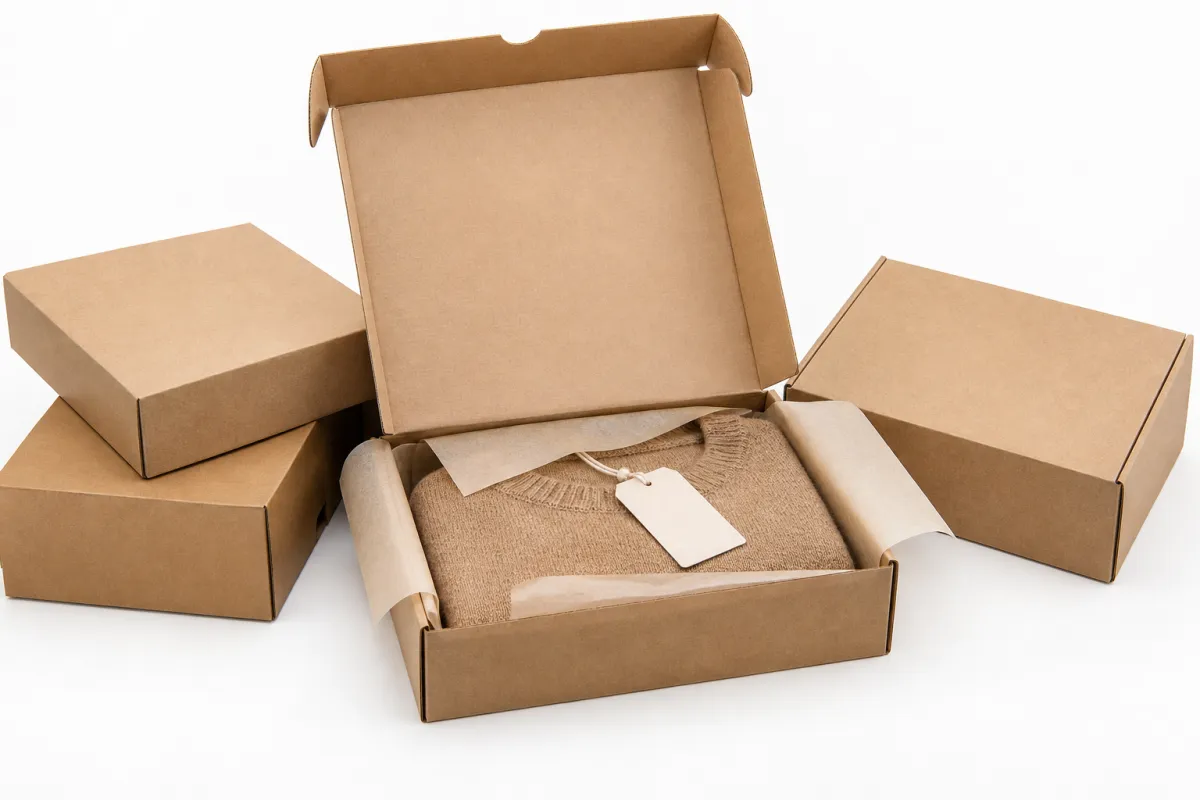
Custom ecommerce boxes for retail solve a very practical problem: a standard shipping box is built to move a generic load, while a retail order usually needs a tighter fit, cleaner presentation, and better protection for a specific SKU or product family. The gap shows up fast once a package hits a conveyor, a sortation center, or a delivery truck that was clearly not hired for its gentle touch.
The first thing most buyers notice is fit. A product that moves inside the carton needs more dunnage, more tape, and more patience from the fulfillment team. A properly sized box keeps the item centered, reduces abrasion, and cuts down on the lovely "one size fits none" problem that shows up in every warehouse sooner or later.
There is a brand side to this too. Branded packaging creates the first physical touchpoint, and that matters because the customer is not just opening a shipping container; they are opening a promise. Clean print, a crisp fold, and a box that opens with intention change how the product feels before anyone even touches it.
Retail ecommerce packaging also has to survive returns. That gets overlooked all the time. A carton that looks great on the way out but tears apart on the way back is a short-term win and a long-term headache. The better custom printed boxes are designed so the same structure can be packed, sealed, opened, and repacked without falling apart at the seams.
The sustainability piece is equally concrete. When a box is sized correctly, you usually need less void fill, which means less material entering the supply chain and less labor spent stuffing paper or air pillows into empty space. Smaller cube also tends to improve truck utilization, and freight cost and environmental cost like to travel together whether anyone asks them to or not.
Honestly, a lot of packaging waste starts with a lazy habit: using the same carton for everything because it feels easier. It is easier in the moment. It is usually more expensive over time. I have sat in pack rooms where a five-cent carton choice turned into replacement shipments, damage credits, and a service team that wanted to throw a stapler through the wall. A family of well-planned custom ecommerce boxes for retail can cut damage, reduce pack time, and make the order look more deliberate.
For brands that want a benchmark for packaging design and material choices, industry references help keep decisions grounded. The ISTA testing standards are a good place to understand how packages are evaluated for transit stress, while the FSC framework helps buyers think through responsible fiber sourcing.
How Custom Ecommerce Boxes for Retail Are Built
The structure comes first. Custom ecommerce boxes for retail are not all the same thing, and the carton style should match the product, the fulfillment method, and the customer experience you want. Mailer-style cartons work well for subscription kits, apparel, accessories, and lighter retail orders. Tuck-top folding cartons can give a cleaner presentation. Regular slotted cartons are still a strong choice for heavier products or shipments that need extra stacking strength.
There is no single "best" style. A telescope box can look premium, but it also adds components and assembly time. A mailer with locking tabs can ship efficiently and open well, but it may not suit a fragile glass item unless the insert system is doing real work. The right structure is the one that matches the actual handling path, not the one that sounds smartest in a sales deck.
Board selection matters just as much. Single-wall corrugated with the right flute profile can handle many retail orders, while heavier loads may need a stronger caliper or even double-wall construction. E-flute gives a smoother print surface and a tighter profile; B-flute offers better crush resistance; C-flute and combinations such as BC can help when stacking or shipping stress is higher. For many retail programs, a 32 ECT or 44 ECT starting point is more useful than a vague promise that the box is "strong enough."
The closure design affects both protection and labor. Dust flaps help keep contents centered. Locking tabs reduce the need for excess tape. Inserts, whether corrugated, paperboard, or molded pulp, keep the product from drifting inside the carton. For fragile items, a simple insert can do more for damage reduction than a much heavier outer box ever could.
Printing and finishing are the visible side of package branding. Flexographic printing is often the practical choice for corrugated runs because it is efficient and cost-effective at scale. Lithographic wrapping can deliver finer graphics and richer detail on premium builds. Labels, spot color, and controlled ink coverage also matter, because not every box needs full flood coverage to look intentional.
Recyclability should stay in the conversation while those choices are being made. Water-based inks and coatings are often preferred because they support a more straightforward recovery path than heavy plastic laminations or mixed-material finishes. A box can still look polished without becoming a recycling headache. That part is not glamorous, but customers notice when brands are honest about it.
Fulfillment flow is the last piece, and it is easy to underestimate. A good carton should be quick to identify, quick to form, quick to fill, and quick to seal. The best custom ecommerce boxes for retail are not just protective on a drop test; they are easy for a packing line to run ten thousand times without slowdowns, finger fatigue, or confusion about orientation.
I have seen gorgeous cartons fail because the closure tabs fought the packing line. Pretty does not matter much if the crew starts bypassing the design by adding extra tape. That is kinda the whole trap.
Key Factors That Shape Performance, Cost, and Sustainability
Every solid packaging decision starts with the product itself. Weight, shape, surface finish, and fragility set the baseline for the carton design. A rigid candle box, a soft-goods apparel order, and a glass bottle all need different levels of restraint, even if the outer dimensions look similar on paper. That is why custom ecommerce boxes for retail should start with the product profile, not the print idea.
Movement inside the carton is a major damage driver. If the item can slide, tip, or bounce, the outer box is only part of the answer. You may need a paper insert, a corrugated divider, a pulp tray, or a nested structure that controls the product without making unpacking annoying. The right answer depends on the product geometry and how much shock the shipment is likely to see.
Order behavior matters too. A carton built for a single item can fail when the same brand starts packing bundles, gift sets, or subscription combinations. Multi-item retail orders usually need more internal planning, because weight shifts and product interaction can cause scuffing or breakage. That is a classic place where product packaging needs a rethink instead of another layer of tape.
Sustainability is not just a paper-content conversation. Recycled fiber, FSC-certified paper, water-based inks, and coating choices all matter, but so does the amount of material required to get the job done. A smaller, better-fit box can be a bigger environmental improvement than a thicker, oversized carton made from "greener" stock.
Warehouse efficiency also belongs in the cost equation. Boxes that store flat, form quickly, and nest well can save labor and rack space. A design that looks inexpensive on the quote sheet may cost more once you count the extra dunnage, the higher freight cube, and the time needed to assemble it at scale. The true cost of custom ecommerce boxes for retail usually hides in the process, not the carton alone.
Brand expectations can push the spec in a different direction. Premium unboxing, accurate color, matte or soft-touch finishes, and crisp interior printing all improve perceived value, but they also affect price and sometimes recyclability. A buyer should ask whether the brand moment is worth the added board, ink coverage, or coating. Sometimes it is. Sometimes a cleaner, simpler carton does the job better.
There is a practical balance here. If the product is durable, the box should not pretend to be a luxury rigid set-up. If the item is fragile or premium, the carton should not feel like a leftover shipping solution. Custom ecommerce boxes for retail work best when the construction, branding, and supply-chain reality all point in the same direction.
A decent rule of thumb: choose the lightest structure that still passes the lane. Not the prettiest one. Not the heaviest one. The one That Actually Works without drama.
Step-by-Step Process for Planning the Right Box
The smartest packaging projects begin with a basic audit. Measure the SKU dimensions, document the actual weight, note the current damage rate, and record how much tape, filler, and labor the present packout uses. Those numbers sound simple, but they tell you a lot about where the waste is hiding. A good brief for custom ecommerce boxes for retail starts with facts, not guesses.
- Gather live product samples, not just spec-sheet dimensions.
- Measure current box sizes, void fill usage, and seal method.
- Track damage history by product and lane if you can.
- Define the target experience: basic protection, premium unboxing, or both.
- Set sustainability requirements, including recycled content and fiber sourcing.
Once the audit is complete, translate the findings into a packaging brief. That brief should cover inside dimensions, protection level, print expectations, any compliance needs, and the target unit cost. If the carton is also part of a retail presentation, say so clearly. Retail packaging projects go off track when everyone assumes the same thing but nobody writes it down.
Then choose the structure and material, and ask for a dieline or sample pack. A dieline lets the team check the print area, closure lines, and panel layout. A sample pack lets the warehouse team see whether the box forms quickly, whether the tabs stay put, and whether the product actually fits without crushing the corners or rubbing against the board.
Prototype with real product samples and real packing staff. That is not optional in my view. A design can look perfect in CAD and still be awkward in a live line because the opening is too tight, the insert slows assembly, or the closure fights the worker's hand. A practical test often reveals whether the box needs a small trim, a different flute, or a completely different layout.
Before approving full production, test for shipping, opening, and return behavior. If the carton is going through parcel carriers, ask whether it should be evaluated against a transit protocol such as ASTM D4169 or an ISTA procedure. The point is not to collect certificates for a drawer; the point is to learn how the box behaves under vibration, drop, and compression. That is where many custom ecommerce boxes for retail either prove themselves or fail fast.
If you are comparing structures or finishes, start with Custom Packaging Products and narrow the shortlist based on the product, the shipping lane, and the amount of brand presentation you need. A focused comparison usually beats a giant wish list full of cartons nobody can actually run.
At approval time, lock in artwork, tolerances, board grade, and the acceptable range for color and cut quality. If you do not define those details, the first run may technically meet the quote and still disappoint the warehouse or the brand team. That is a painful way to learn how expensive vague specs can be.
Custom Ecommerce Boxes for Retail Pricing and Timeline
Pricing for custom ecommerce boxes for retail is shaped by a handful of variables that move quickly once the spec changes. Box size, board grade, print method, number of colors, coatings, inserts, and order quantity all affect the number. A small shift in dimensions can change board usage more than many buyers expect, especially once the carton crosses a certain material efficiency threshold.
For planning purposes, it helps to think in ranges instead of fantasies. A simple uncoated mailer in moderate volume might land in the neighborhood of $0.40 to $0.90 per unit, depending on size and board. Add more print coverage, a stronger flute, or a custom insert, and the range can move into roughly $0.90 to $2.50 or higher. Premium presentation structures can go beyond that. These are planning numbers, not quotes, and they vary by supplier, region, and volume.
| Box style | Typical use | Relative unit cost | Notes |
|---|---|---|---|
| Mailer-style corrugated box | Apparel, accessories, small retail kits | Low to moderate | Good for fast assembly and branded unboxing |
| Tuck-top or folding carton with shipper use | Lightweight retail goods, cosmetic-type packs, gift sets | Moderate | Cleaner presentation, may need extra protection for transit |
| Regular slotted carton with insert | Heavier or fragile retail orders | Moderate to higher | Strong structure, often efficient for shipping and stacking |
| Premium wrapped or specialty format | High-value items, launch kits, premium retail programs | Higher | Better presentation, more labor and material investment |
That table keeps the conversation honest. The cheapest carton is not always the lowest-cost choice. If an undersized or underbuilt box causes damage, customer complaints, or replacement shipments, the "cheap" option gets expensive very quickly. I have seen more than one packaging program save a few cents on the box and then lose dollars on the back end. Custom ecommerce boxes for retail should be judged on total performance, not carton price alone.
A box that saves three cents but triggers one return is already more expensive than it looked on the quote.
Lead times deserve a realistic conversation too. A straightforward project may move from brief to samples in about 5 to 10 business days, with production following roughly 10 to 20 business days after approval, depending on the plant schedule and the complexity of the order. If the project has a new diecut, special coatings, multiple revision rounds, or heavy print coverage, the timeline can stretch. That is normal, not a sign that something is broken.
Forecasting changes the economics as well. A higher minimum order quantity often lowers the unit price, but only if the business can actually use the inventory before the brand changes, the product line shifts, or the season passes. Overstocked packaging is still dead inventory, even when the pricing looks beautiful on paper. That is why a good supplier quote should include both the unit cost and the likely landed cost.
If a supplier can quote Custom Packaging Products in multiple sizes and finishes, ask for a side-by-side comparison that includes freight, storage, and packout time. That is the kind of comparison that helps a buyer make a real decision instead of a cosmetic one.
Common Mistakes That Undercut Retail Packaging
The most expensive mistake is choosing custom ecommerce boxes for retail by price alone. On a spreadsheet, a lower unit cost looks attractive. In practice, a carton that crushes, tears, or needs extra filler often costs more because the real expense shows up in replacements, service time, and customer frustration.
Oversizing is another classic error. A box with too much empty space usually needs more void fill, raises dimensional weight, and makes the package feel sloppy. Customers notice that. The order can arrive in perfect condition and still feel underplanned, which is not the impression most brands want from their custom printed boxes.
Over-specifying is the mirror-image problem. Some cartons are built with far more board, more coating, and more finish than the product needs. That can be justified for premium goods, but not for every SKU. If the product is light and stable, a heavy structure may just raise cost without adding meaningful protection. Good packaging design knows when to stop.
Another common miss is failing to test the carton in actual transit conditions. A hand test on the packing table tells you almost nothing about what a box will do after a few conveyor drops, a truck vibration cycle, and a compression event in a carrier trailer. That is why transit testing and compression testing matter. Even a basic review against an ISTA procedure can uncover problems before they become claims.
Sustainability claims can also drift into vague territory. "Eco-friendly" means very little unless the material spec backs it up. If a package uses recycled fiber, say how much. If the board is FSC-certified, say that clearly. If the coating affects curbside recyclability, do not pretend it does not. Buyers have gotten better at spotting empty language, and good. For reference, many teams use sources like the EPA recycling guidance to stay grounded in practical recovery rules.
One more problem: ignoring the people who actually pack the order. If the carton is hard to fold, hard to seal, or awkward to close, the warehouse will find a way around the design. The result is usually more tape, more substitutions, or slower throughput. A box that respects the pack line tends to perform better everywhere else. That is true for custom ecommerce boxes for retail just as much as any other pack format.
Expert Tips for Custom Ecommerce Boxes for Retail
If I had to narrow this down to the most useful advice, I would start with one rule: test a real packed sample through a full ship cycle before you place a large order. Not a dummy weight. A real product, real insert, real tape, real seal. That single test often exposes fit issues, closure stress, and handling problems within minutes. It is one of the cheapest ways to avoid a very expensive mistake.
Compare two or three board grades side by side if you can. A small change in flute profile or caliper can sometimes reduce material cost without hurting protection, and sometimes the opposite is true. The only way to know is to look at the actual product and the actual lane. That is especially true for custom ecommerce boxes for retail used across multiple SKUs, where one carton may be doing too much work for too many different items.
Ask for exact inside dimensions, not just the nominal box size. Tolerances matter. So do print-safe zones, score locations, and the amount of room available for the insert. If the art team is designing package branding at the same time, make sure the packaging supplier and the creative team are using the same dieline. A tiny mismatch there can waste a full press run.
Use a pilot run to measure packing speed and damage rate. A pilot is not just a miniature production run; it is a stress test for the workflow. Watch how long it takes to form the box, place the product, close the flaps, and scan the order. If the box slows the line, the "better" design may actually cost more than the older one. In packaging, labor matters as much as board.
Ask about coatings and finishes with realism. Soft-touch lamination can feel premium, but it can also complicate recycling in some cases. Aqueous coatings may be a better Fit for Brands that want a cleaner fiber recovery path. The right answer depends on the product, the market, and the sustainability promise the brand is making.
Finally, look at custom ecommerce boxes for retail as a system, not a single carton. The outer box, insert, print, warehouse process, carrier profile, and return flow all interact. Brands that treat packaging as part of product packaging strategy usually get better results than brands that treat it as a last-minute sourcing task.
Here is a practical way to move forward: gather the SKUs, the current damage data, the box sizes you use now, the amount of filler you go through, and the sustainability goals that actually matter to the business. Then request samples, review the fit, and refine the spec before scaling. That is usually how the strongest custom ecommerce boxes for retail programs get built, and it is how you avoid paying for guesswork later.
If you want the short version, this is it: measure the product, test the lane, choose the lightest box that still survives real handling, and only then layer on print and finishing. That order saves money, cuts waste, and keeps the customer from opening a disappointment wrapped in corrugate.
Frequently Asked Questions
What size should custom ecommerce boxes for retail be?
Size the carton to the product plus only the clearance needed for protection or an insert. Oversized boxes raise shipping cost, use more filler, and make the package feel less deliberate. If you sell multiple SKUs, a small family of box sizes is often better than one oversized universal carton.
Are custom ecommerce boxes for retail recyclable?
They usually are if they are made from paper-based board and avoid hard-to-recycle laminations or plastic-heavy finishes. Water-based inks, recycled content, and FSC-certified paper can improve the sustainability story without hurting performance. Ask your supplier how the full package, including coatings and inserts, affects curbside recyclability.
How do I lower the cost of custom ecommerce boxes for retail?
Right-size the carton first, because reducing board usage often lowers both material cost and shipping cost. Simplify print colors, coatings, and inserts unless the product truly needs them. Use realistic order forecasts so you can benefit from volume pricing without overbuying inventory.
How long does it take to produce custom ecommerce boxes for retail?
Simple projects can move quickly, but sampling, artwork approval, and production planning still take time. Complex structures, special finishes, and multiple revision rounds add more lead time. Build a buffer into the schedule if the boxes are tied to a launch, holiday surge, or rebrand.
Do custom ecommerce boxes for retail need inserts?
Not always, but inserts help when the product can shift, tip, scratch, or break inside the carton. Use the simplest insert that holds the product securely, since extra components add cost and assembly time. A good fit test will show whether the box alone is enough or whether you need a paper insert, pulp tray, or corrugated divider.
Strong custom ecommerce boxes for retail do more than move a product from point A to point B. They protect the order, support the brand, reduce waste, and keep fulfillment efficient enough to scale without constant rework. If you are planning one, start with the real product, the real shipping lane, and the real packing process. Everything else comes after that.

