Buyer Fit Snapshot
| Best fit | Custom Edge Crush Test Boxes projects where brand print, material claims, artwork control, MOQ, and repeat-order consistency need to be specified before quoting. |
|---|---|
| Quote inputs | Share finished size, material target, print colors, finish, packing count, annual reorder estimate, ship-to region, and any compliance wording. |
| Proofing check | Approve dieline scale, logo placement, barcode or warning zones, color tolerance, closure strength, and carton packing before bulk production. |
| Main risk | Vague material claims, crowded artwork, missing packing details, or unclear freight terms can make a low unit price expensive after revisions. |
Fast answer: Custom Edge Crush Test Boxes: Board, Finish, Dieline, and Unit Cost should be specified like a repeatable production item. The safest quote records material, print method, finish, artwork proof, packing count, and reorder notes in one written spec.
Production checks before approval
Compare the actual filled-product size with the drawing, then confirm tolerance on folds, seals, hang holes, label areas, and retail display edges. Reserve space for logos, QR codes, warning copy, and material claims before decorative graphics fill the panel.
Quote comparison points
Review material grade, print process, finish, sampling route, tooling charges, carton quantity, and freight assumptions side by side. A quote is only useful when the supplier can repeat the same color, closure quality, and packing count on the next order.
Two cartons can sit side by side on a pallet and tell different stories once the load starts to stack. One holds shape. The other bows at the corners, then gives way a little at a time. That split is exactly why custom edge crush test boxes matter: the number on the spec sheet says more about shipping survival than the artwork on the outside ever will.
From a buyer's point of view, custom edge crush test boxes are not just corrugated containers with a stronger label. They are a sourcing choice that touches damage claims, freight efficiency, shelf presentation, and the total cost of product packaging. Choose board that is too light and the result can be crushed corners, sagging stacks, and customer complaints. Choose board that is too heavy and you may pay for stiffness you never use, while making pack-out harder than it needs to be.
I have watched packaging teams get this wrong in both directions. A retailer I worked with once over-specified cartons for a light private-label line because the buyer wanted to be safe. The result was a package that looked impressive in the sample room and irritated the warehouse crew every single morning. The opposite happens too, and it is uglier: claims, repacks, and the kind of damage photos nobody wants to see in a monthly review.
That tradeoff shows up across a wide range of operations: e-commerce brands trying to cut returns, food and beverage shippers protecting case packs, manufacturers moving dense components, and distributors building stable pallets for long warehouse stays. The phrase custom edge crush test boxes sounds technical. The decision behind it is not. Can this carton handle the lane you actually ship through?
What Custom Edge Crush Test Boxes Actually Are
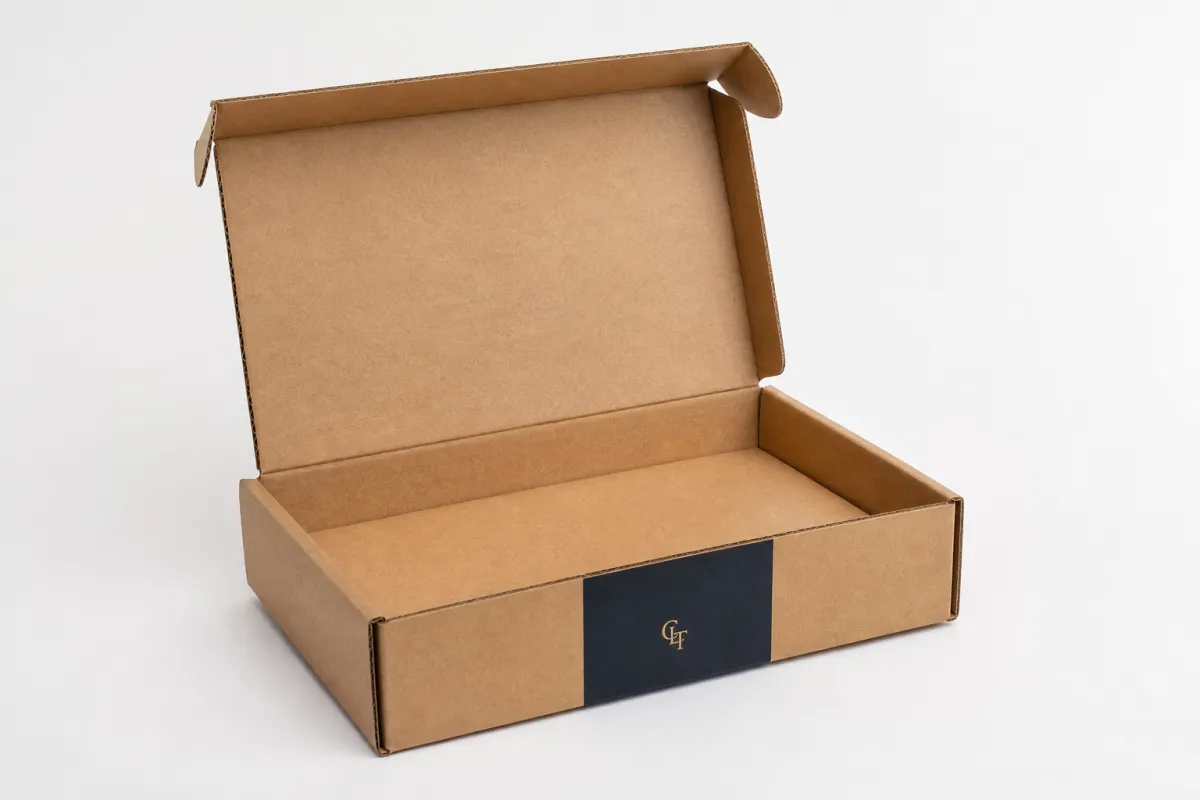
Custom edge crush test boxes are corrugated cartons built around a board-strength target measured by edge crush testing, usually shortened to ECT. In plain language, ECT measures how much force a strip of corrugated board can take when pressure is applied to its edge before it buckles. That matters because shipping boxes rarely fail from one dramatic event alone. More often, they fail from stacking pressure, vibration, and time.
If you have ever compared two shipping cartons that looked almost the same, you have already met the problem. One may carry a light product on a short ground route with no trouble. The other may collapse after sitting under load in a humid warehouse for a few days. Custom edge crush test boxes help buyers match board strength to the actual load, instead of guessing from appearance or from a supplier's stock default.
In procurement terms, the phrase also signals a design decision. A buyer asking for custom edge crush test boxes is usually trying to balance board grade, box dimensions, and unit economics at the same time. That is where packaging becomes commercial strategy. A box with the right flute profile and the right panel spans can reduce waste, trim shipping weight, and support cleaner package branding without paying for overbuilt corrugate.
Who relies on these cartons most often? A lot of groups:
- E-commerce brands that need predictable protection across parcel networks.
- Food and beverage shippers where stack strength matters in warehouses and mixed freight.
- Manufacturers moving components, kits, or refill packs in high volume.
- Distributors who need stable case packs on pallets, often with long dwell times.
The important distinction is simple: custom edge crush test boxes are not automatically better than standard cartons. They are better only when the spec fits the lane. If a box is oversized, underfilled, or stored in damp conditions, the rating stops acting like a promise and starts acting like an expensive assumption.
For buyers comparing suppliers, it helps to treat custom edge crush test boxes as a performance system rather than a single number. Board grade, flute choice, liner quality, die-line geometry, and warehouse behavior all work together. A strong spec on paper can still fail in the wrong operating environment. That is the part marketing copy tends to skip, and honestly, it should not.
How the Edge Crush Test Works
The edge crush test is simple in concept. A laboratory takes a narrow strip of corrugated board, stands it on edge, and compresses it until the structure fails. The force required to crush that strip becomes the ECT value. That number then acts as a proxy for how well custom edge crush test boxes should resist stacking pressure.
Why does that matter? A corrugated carton is a small compression structure. The flutes carry load, the liners spread pressure, and the geometry determines how much force reaches the corners and panels. A higher ECT usually means more strength at the edge, but the number still needs context. A short, compact carton and a tall, wide carton with the same board grade will not perform the same way in the field.
That is one reason buyers should avoid comparing custom edge crush test boxes with a single metric in isolation. The same ECT can behave differently depending on:
- Box size and panel span.
- Flute profile, such as B-flute, C-flute, or E-flute.
- Liner quality, including recycled content and fiber blend.
- Humidity, cold storage, and time in transit.
- Load pattern and pallet overhang.
It also helps to separate ECT from burst strength. Burst strength measures resistance to rupture or puncture. ECT measures resistance to edge compression. The two are related, but they answer different questions. If a shipment is mostly exposed to stacking and warehouse compression, custom edge crush test boxes should be chosen mainly for ECT. If puncture and rough handling dominate, burst strength and board construction deserve equal attention.
For distribution planning, that distinction is more than academic. A package can survive the lab and still fail in the lane. Heat in a trailer, a pallet wrapped too loosely, or seasonal humidity can change the outcome faster than many buyers expect. That is why many packaging teams pair ECT with distribution testing. Resources from the International Safe Transit Association help connect board data to real shipping conditions, because ISTA protocols make the gap between paper specs and actual transit conditions easier to measure.
From a sourcing perspective, custom edge crush test boxes should be treated as the starting point for validation, not the final proof of performance. The lab number tells you the material can perform. Your route tells you whether the box is actually right.
One practical check stands out: if your box will be stacked for days, not hours, margin matters more than the headline spec. A carton that looks fine after a short parcel trip can deform after a week under load in a warehouse. That is why experienced buyers often specify custom edge crush test boxes with a bit of headroom rather than living right on the edge of failure.
A box that looks strong is not the same thing as a box that stacks well. The shipment decides the truth.
Key Factors That Change Box Performance
Board strength is only part of the story. Custom edge crush test boxes perform the way they do because several variables interact at once, and the buyer who understands those variables usually gets a better quote and fewer surprises later.
Corrugated structure comes first. Single-wall board is common for lighter shipments and lower stack heights. Double-wall board adds a second corrugated medium and liner pair, which usually improves compression performance and puncture resistance. The tradeoff is weight, cost, and sometimes less friendly pack-out. If the product is light but bulky, a double-wall design may be more than you need. If the product is dense or palletized high, single-wall may not be enough.
Flute profile matters too. B-flute often gives a practical balance of printability and compression. C-flute often offers more cushioning and stacking support. E-flute is thinner and can look sharper for retail-facing packaging, but it is not always the right choice for heavy stacked loads. When buyers talk about custom edge crush test boxes, the flute decision often shifts both performance and appearance. That is where retail packaging concerns meet freight realities.
Dimensions change the equation quickly. Taller cartons and wider panel spans usually need more board performance to hold the same load. The physics are not subtle. A cube-like box generally behaves better under compression than a tall, narrow carton with the same contents. If your pack-out leaves a lot of empty space, the board has to work harder, and so do the void fillers. That is one reason smart packaging design starts with the product footprint, not with the artwork.
Environment can quietly erode performance before the box ever reaches the customer. Heat, humidity, refrigerated storage, and long dwell times all influence corrugated strength. Food, beverage, and seasonal goods are especially exposed to this. A specification that looks perfect on a dry sample can feel thin after a week in a warm, damp trailer. Buyers comparing custom edge crush test boxes should ask where the cartons will sit, for how long, and under what conditions.
Product and pallet load are the final variables. Heavy concentrated loads create hot spots. Uneven packing can distort the wall panels. Overhang on a pallet can reduce edge support. If the product shifts, the carton often takes the damage first. That is why many suppliers ask for product weight, pallet pattern, stacking height, and warehouse conditions before they quote custom edge crush test boxes. Without that information, the supplier is guessing, and guesses are expensive.
A useful rule of thumb: the stronger the shipping pressure, the more conservative you should be with both size and spec. A carton that feels slightly overbuilt in a sample room often saves money in the field. A carton that is barely adequate on paper can trigger damage claims once vibration, compression, and time enter the picture. The market can be kind of unforgiving about that.
For buyers building a branded packaging program, the goal is not only strength. It is consistency. A well-designed carton can support Custom Printed Boxes, sharp graphics, and a cleaner unboxing while still holding its shape on a pallet. That balance is where custom edge crush test boxes become more than a technical purchase; they become part of the operating system.
Custom Edge Crush Test Boxes: Cost, Pricing, and MOQ Drivers
Price is where many projects get misread. Custom edge crush test boxes are rarely expensive for one reason. They cost what they cost because of board grade, dimensions, print coverage, tooling, and how many units you order at once. Change those inputs and the quote changes quickly.
Start with the obvious driver: board grade. A stronger corrugated board generally costs more than a lighter one, though not always by a dramatic amount. In many quoting scenarios, a modest jump in ECT can be cheaper than fixing damage later. That is why the cheapest unit price is not always the cheapest landed cost. If a lighter carton causes returns, breakage, or repacking labor, the math turns against it fast.
Custom size also influences cost. If your carton needs a nonstandard footprint or height, the supplier may need a custom die, extra setup, or a new converting run. Printing adds another layer. Simple one-color branding is usually easier to price than full-coverage artwork, spot coatings, or specialty finishes. Even so, custom edge crush test boxes can support good-looking branded packaging without becoming a luxury item. The trick is to align the visual program with the shipping requirement instead of treating the carton like a marketing poster.
MOQ, or minimum order quantity, is another major factor. Smaller runs usually cost more per unit because setup time, press adjustment, and tooling are spread across fewer cartons. That is why a 1,000-unit order may look far more expensive per box than a 5,000-unit order, even if the board specification is identical. For buyers comparing custom edge crush test boxes, the unit price at low volume can mislead unless you also compare setup fees, freight, and storage costs.
Here is a practical pricing frame that buyers often use for simple, uncoated corrugated cartons. These are not universal numbers, but they are realistic enough to guide a first conversation:
| Option | Typical Use | Relative Cost | What to Watch |
|---|---|---|---|
| 32 ECT single-wall | Light to medium-weight shipments, short or controlled routes | Lower | Can be too light for tall stacks or humid storage |
| 44 ECT single-wall | Common sweet spot for e-commerce and general distribution | Moderate | Usually a better balance of strength and cost |
| 48-51 ECT single-wall | Heavier cartons or more demanding warehouse conditions | Moderate to higher | May be more box than you need for lighter products |
| 71 ECT double-wall | Heavy products, mixed-mode freight, high-stack lanes | Higher | Adds cost, weight, and sometimes pack-out complexity |
For a simple unprinted order around 5,000 units, a buyer might see something like $0.18-$0.28 per unit for a basic lower-strength single-wall carton, $0.25-$0.45 for a more protective mid-range build, and $0.60 or more for a heavier double-wall structure, depending on size and board market conditions. Add print, coatings, or unusual dimensions, and the range moves. That is normal. It is also why custom edge crush test boxes should be quoted against multiple specs, not just one.
There is a useful comparison point here: a slightly stronger carton can sometimes reduce the need for extra void fill, inner packaging, or overboxing. The unit price may rise while the total package cost falls. The idea is simple, yet many buyers miss it because they focus on carton line items instead of system cost.
If you are building a broader packaging program, compare the carton quote with the rest of the bill of materials. A better fit can lower corrugated usage, reduce freight weight, and support cleaner automation. That is why some teams move from generic stock cartons into Custom Packaging Products once volume stabilizes. The savings often show up in labor and damage rates, not just in the carton price itself.
One more point on pricing: ask suppliers to quote at least two or three ECT options side by side. A 32 ECT and 44 ECT quote may be close enough that the stronger board is the smarter buy. The opposite can be true for short-haul, light shipments. You do not know until the numbers are laid out in the open. That is the right way to buy custom edge crush test boxes.
For firms that care about sourcing standards, sustainability, and paper fiber origin, it is also worth checking whether the material can be certified through FSC. Certification does not replace performance testing, but it does help with procurement policies and customer expectations. Many buyers now ask for both: performance data and responsible fiber sourcing.
Process and Timeline from Spec Sheet to Shipment
Most delays are not caused by the box machine. They are caused by missing information. When a project for custom edge crush test boxes stays on schedule, it usually follows a predictable path: gather specs, choose board grade, approve a dieline, review a sample, confirm artwork, and move into production.
The first step is the spec sheet. A good brief should include product dimensions, packed weight, pallet pattern, stacking height, shipping method, and any storage conditions that matter. If the carton is for a promotional launch, add the target date. If the boxes will be used in refrigerated warehousing, say so. If they will sit in a humid distribution center, say that too. Custom edge crush test boxes are only as accurate as the data behind them.
Next comes the dieline or structural layout. This is where the carton's folds, closures, and cut lines are confirmed. A simple box may not need much iteration. A box with internal fit features, print registration, or retail-facing panels can take more back-and-forth. If you are comparing a few suppliers, ask for the dieline in a format your team can review quickly. Clear communication here saves days later.
Sampling matters more than many buyers expect. A physical sample reveals issues that a PDF never shows: the way the carton closes, whether the product slides, whether print alignment looks right, whether the box is too loose, or whether the strength feels excessive. For custom edge crush test boxes, sample approval is not a formality. It is the bridge between theory and production reality.
Timeline pressure points usually show up in four places:
- Sample approval if the design needs adjustment.
- Print proofing if the carton carries branded graphics or retail copy.
- Tooling if a new die or cutting form is needed.
- Freight scheduling if the boxes need to arrive just before a launch.
For a straightforward unprinted carton, many suppliers can move from approval to production in roughly 10-15 business days, though material availability and factory backlog can change that. More complex work, especially if it includes heavy print coverage, custom inserts, or a new board profile, can stretch beyond that. A realistic buffer is not pessimism. It is basic risk control.
That buffer matters because packaging often becomes the hidden bottleneck. Product teams can miss a launch by a week because the box spec was approved late or the freight booking did not match production. With custom edge crush test boxes, the safest plan is to work backward from the launch date and build in extra time for one sample cycle. Not always two. Usually one, but with enough slack that a small revision does not upset the calendar.
One more operational point: if you need custom edge crush test boxes for a promotion, seasonal spike, or channel expansion, tell the supplier the annual volume as well as the first order. A box that is slightly more expensive on the first run may be cheaper across the year if the supplier can plan repeat production more efficiently. That is where long-term packaging design and short-term procurement start to overlap.
And if your cartons serve both retail and shipping, the timeline should reflect both needs. You are not just buying a box. You are buying a piece of product packaging that has to move through operations and still look credible at the destination.
Common Mistakes When Buying Custom Edge Crush Test Boxes
The most common mistake with custom edge crush test boxes is over-specifying the board. Buyers often assume a stronger rating automatically means better protection. Sometimes that is true. Often it is not. If the carton is only carrying a light product on a short route, a higher ECT can raise cost, increase weight, and make folding or packing more awkward without reducing risk in a meaningful way.
A second mistake is ignoring the shipping lane. A carton that works for local distribution may struggle in long-haul freight, humid storage, or mixed-mode shipping. The route is not a footnote. It is the test. If your product goes from a dry warehouse to a high-humidity trailer to a fulfillment center, custom edge crush test boxes need to be specified for that full journey, not just for the average day.
Buyers also make quoting harder than necessary. Missing weight data, stack height, pallet pattern, and storage conditions forces the supplier to fill in the blanks. That usually leads to conservative pricing or a carton spec that is safer than it needs to be. Better brief, better quote. It sounds plain, and it still saves real money.
Another hidden mistake is focusing on one metric only. ECT is useful, but it is not the whole package. Box design, closure style, product fit, corrugation structure, and logistics all influence performance. A carton can have a respectable ECT and still fail if the interior void is wrong or the pallet pattern creates uneven load paths. The best custom edge crush test boxes are designed with the whole system in mind.
There is also a branding mistake that shows up in more mature programs. Some teams push the carton to do too much visual work and too little structural work. Strong custom printed boxes are valuable, but if the graphics program overwhelms the engineering brief, the result can be a pretty box that underperforms. Good package branding should support the carton, not distract from the job it has to do.
Here is a simple decision check that saves time:
- Does the product fit snugly without crushing the contents?
- Will the carton sit stacked for hours, days, or weeks?
- Will humidity or temperature swings affect the board?
- Is the pallet pattern consistent, or does it vary by order?
- Are you optimizing for freight protection, retail display, or both?
If you cannot answer those questions clearly, the quote for custom edge crush test boxes is probably too early. That is not a failure. It is a sign that the brief needs more work.
One more comparison is worth making: there is a difference between damage avoidance and quality theater. Some cartons are built to look impressive in a sample room. Others are built to survive the actual route. Buyers get better outcomes when they choose the second one. That is especially true for high-volume programs, where a one-cent difference per unit can become a real budget item once the annual run reaches six figures.
For sustainability-minded teams, overbuilding is also waste. More fiber, more weight, and more freight all add up. A well-matched carton can be a cleaner packaging decision than a larger, heavier one, even if the carton is technically stronger.
Expert Tips and Actionable Next Steps
If you want a cleaner sourcing process, start with a one-page packaging brief. It does not need to be fancy. It needs to be complete. Include product dimensions, packed weight, target annual volume, print requirements, storage conditions, pallet pattern, and whether you want the carton to support shelf presentation as well as shipping. That single page can save a lot of back-and-forth when you request custom edge crush test boxes.
From there, ask suppliers for at least two or three specs. Compare the quote for a lighter board, a mid-range board, and a stronger board. Sometimes the middle option is the best value. Sometimes the stronger board is only a little more expensive and clearly safer. If the quote spread is small, the stronger carton may be the smarter buy. If the spread is wide, you may be able to redesign the pack-out instead of paying for more board.
Do not approve the first sample without a real test. A controlled bench test helps, but the actual shipping lane tells the more honest story. If possible, run a small pilot through the route you use most often. Check corner crush, closure integrity, print scuffing, and stack behavior. If the cartons are part of a distribution program, note how they perform after a few days under load, not just after one afternoon on a table.
That is where custom edge crush test boxes pay off. They lower risk when the spec matches the route. They do not save money when they are chosen because they sound stronger or look more polished. The packaging buyer who understands that distinction usually ends up with better margins and fewer headaches.
Here is a practical checklist you can use before you request a quote:
- Product data: dimensions, weight, and fragility level.
- Logistics data: shipping method, pallet height, dwell time, and humidity exposure.
- Branding needs: one-color print, full color, or no print at all.
- Volume: first order quantity and expected repeat demand.
- Performance target: stacking strength, retail appearance, or both.
If you are still unsure where to start, compare the carton choice against the broader packaging program. Sometimes the right answer is a stronger box. Sometimes it is a smaller footprint, better internal support, or a different case pack. That is why experienced teams treat custom edge crush test boxes as part of packaging design, not as an isolated line item.
For brands that want a supplier relationship beyond a one-off order, it can help to browse Custom Packaging Products and think in terms of repeatable formats, not emergency buys. A packaging system built around stable specs is easier to budget, easier to reorder, and easier to audit when freight costs move around.
Honestly, the best outcome is usually the least dramatic one: a carton that fits, stacks, prints well, and arrives boringly intact. That is what good custom edge crush test boxes should do.
If sustainability is part of the decision, ask for fiber sourcing documentation, recycled content details, and certification options early. That way, the carton can support both performance and procurement standards without forcing a redesign later. A box That Ships Well and aligns with policy is much easier to scale than one that solves only half the problem.
One final thought: the smartest buyers do not ask, "What is the strongest box?" They ask, "What is the right box for this lane?" That mindset keeps custom edge crush test boxes from becoming an expensive guess.
And if you want the shortest possible decision rule, here it is: match the board to the lane, test the sample in real conditions, and leave a little margin for humidity and dwell time. That small bit of caution is usually where the savings show up.
FAQ
What are custom edge crush test boxes used for?
They are used for shipments that need reliable stacking strength during storage, palletization, and freight transit. Custom edge crush test boxes are especially useful when box failure would create damage claims, spoilage, or customer returns. They also help buyers choose board strength based on shipping conditions instead of guessing from appearance alone.
How do I choose the right ECT rating for custom edge crush test boxes?
Start with the packed product weight, pallet height, and whether cartons will be stacked in a warehouse or trailer. Match the board grade to the worst-case route conditions, including humidity and long dwell times. Ask suppliers to compare multiple ECT options so you can balance performance against cost.
Are custom edge crush test boxes more expensive than standard cartons?
Usually yes, but the price difference depends on whether the design requires a special size, print, or higher board grade. The real question is landed cost, because a better-fitting box can reduce damage, void fill, and freight waste. In many cases, the right spec lowers total packaging cost even if the unit price is higher.
How long does it take to source custom edge crush test boxes?
Simple orders can move quickly once dimensions and artwork are approved, but lead time depends on material availability and factory schedule. Sampling and proof approval often add time, especially for first-time buyers or new box structures. Build in extra time if you need a new tool, special board grade, or a production slot tied to a launch date.
What should I send for a quote on custom edge crush test boxes?
Send product dimensions, weight, pallet pattern, stacking expectations, shipping method, and any humidity or temperature concerns. Include artwork needs, target quantity, and whether you want samples or multiple ECT options priced side by side. The more complete the brief, the more accurate the quote and the fewer revisions you will need.

