Buyer Fit Snapshot
| Best fit | Custom Embossed Logo Boxes Wholesale for Shipping Needs projects where brand print, material claims, artwork control, MOQ, and repeat-order consistency need to be specified before quoting. |
|---|---|
| Quote inputs | Share finished size, material target, print colors, finish, packing count, annual reorder estimate, ship-to region, and any compliance wording. |
| Proofing check | Approve dieline scale, logo placement, barcode or warning zones, color tolerance, closure strength, and carton packing before bulk production. |
| Main risk | Vague material claims, crowded artwork, missing packing details, or unclear freight terms can make a low unit price expensive after revisions. |
Fast answer: Custom Embossed Logo Boxes Wholesale for Shipping Needs should be specified like a repeatable production item. The safest quote records material, print method, finish, artwork proof, packing count, and reorder notes in one written spec.
Production checks before approval
Compare the actual filled-product size with the drawing, then confirm tolerance on folds, seals, hang holes, label areas, and retail display edges. Reserve space for logos, QR codes, warning copy, and material claims before decorative graphics fill the panel.
Quote comparison points
Review material grade, print process, finish, sampling route, tooling charges, carton quantity, and freight assumptions side by side. A quote is only useful when the supplier can repeat the same color, closure quality, and packing count on the next order.
For brands that need the box to earn its keep before the seal gets cracked, custom embossed logo boxes wholesale are one of the cleaner ways to make a package look intentional without flooding it with ink or piling on finishes that do not survive real handling. A plain shipping carton moves product. An embossed logo box makes the product feel chosen the second it lands on the dock. That matters whether the shipment is headed to a retail buyer, a fulfillment center, or a customer filming the unboxing with one hand and a coffee in the other.
The raised logo is not there just to look polished in a mockup. It gives the package a defined surface, a sharper brand read in back-of-house handling, and a premium cue that holds up better than delicate all-over print when the box gets pushed through actual logistics. If the goal is branded packaging that still respects freight realities, embossing is one of the few finish choices that can do both jobs without turning the budget into a science experiment.
I am going to keep this simple: where embossed boxes help, which specs matter, how pricing shifts, and what you need before asking for a quote. No fluff. No packaging poetry. Just the buying details that save time and money.
A box can be cheap, fast, or premium. Pick two, then decide where embossing actually belongs.
Why Custom Embossed Logo Boxes Wholesale Stand Out in Transit
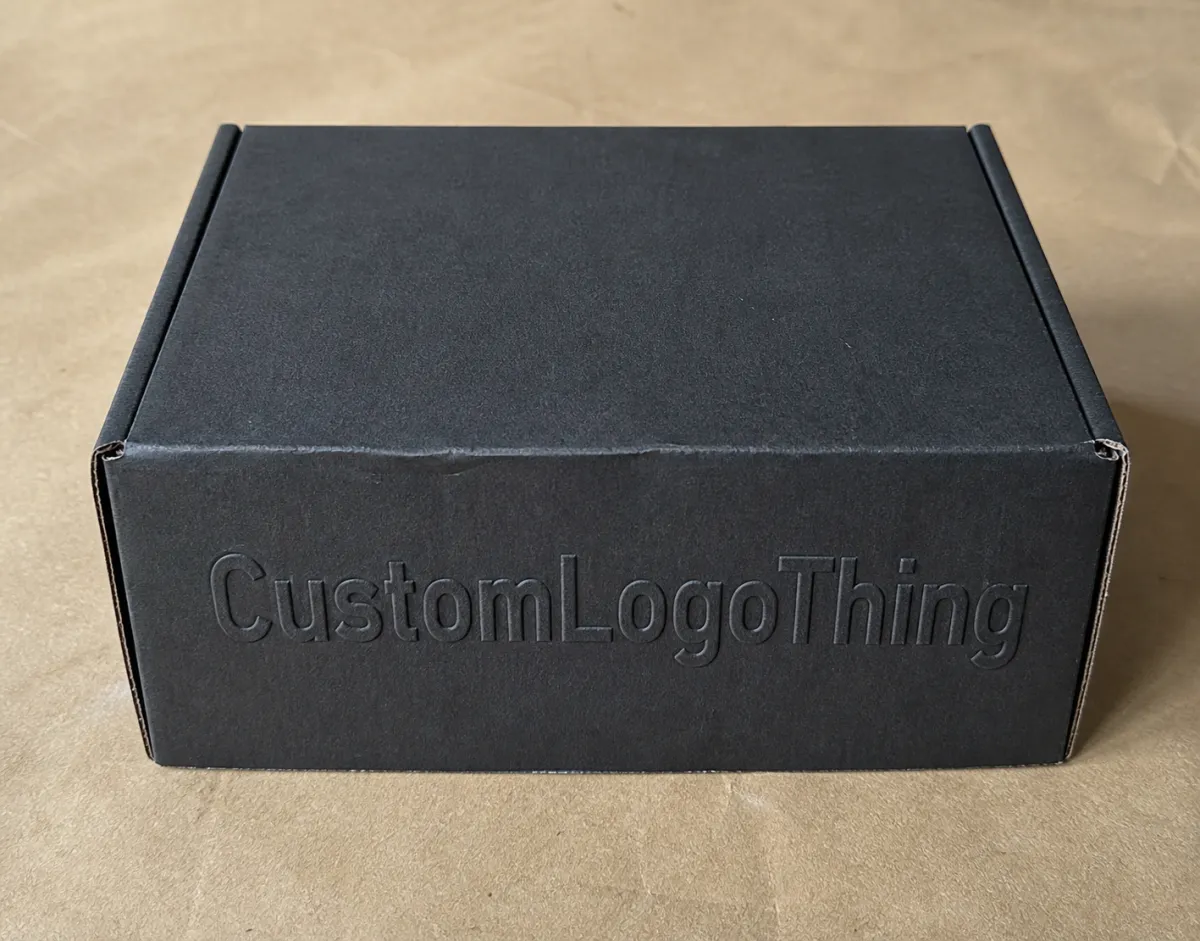
Picture the receiving sequence. The carton arrives, someone scans it, the tape gets cut, and the product comes out of the outer pack. A plain brown box does the job. Fine. A Custom Embossed Box changes the impression fast. The logo can be seen and felt before anyone even gets near the product, which is useful in retail back rooms, subscription fulfillment, and any setup where the packaging still has to do brand work after shipping.
That is the real value of custom embossed logo boxes wholesale: tactile recognition without depending on heavy ink coverage, metallic flood coats, or a finish stack that eats into margin. Embossing lifts the logo above the surface, so the brand mark stands out on matte stocks, kraft finishes, and understated product packaging. Loud design is optional. A clean panel with a raised mark often says more than another full-color box trying too hard.
From a logistics angle, this format works because it balances visual impact with practical use. A premium retail carton can still fit into master cartons, ship through a warehouse, and survive handling better than fragile embellishments that scuff, peel, or crack when someone breathes on them wrong. That is why embossed boxes show up so often in luxury retail packaging, gift sets, cosmetic kits, apparel launches, and subscription shipments where the outer pack is part of the brand story.
The tradeoff is straightforward. Deeper emboss depth, thicker board, and more detailed artwork all push cost up and can slow production. Tiny details, thin strokes, and busy layouts are where the die starts asking for mercy. If the package needs to survive parcel shipping, the board and construction need to match the lane, not the photo shoot. Pretty does not pay freight.
Good buyers think about the full path, not just the unboxing clip. Does the box stack well? Will the raised area crush if it rides at the bottom of a pallet? Does the finish hide scuffs? Will the logo still look crisp after a few handoffs through distribution? Those are the questions that matter. Embossing helps when the box has to look premium and still act like packaging, not a display prop pretending to be useful.
It also helps to separate use cases. A rigid gift box with a raised logo is not the same buy as a corrugated mailer with an embossed panel. One is about presentation. The other is about surviving transit while still looking branded at arrival. Both fit under custom embossed logo boxes wholesale, but the spec sheet changes fast depending on the job.
There is one more reality buyers should keep in mind: not every logo benefits from embossing. Very fine type, hairline strokes, and crowded icons can lose definition once they are pressed into board. A stronger mark with cleaner shapes usually produces a better result. The best embossed box is not the most complicated one. It is the one that still reads clearly after production, palletizing, and delivery.
Product Details: Embossing Options, Box Styles, and Finishes
Embossing and debossing get mixed up all the time, so here is the plain version. Embossing raises the logo or artwork above the surface. Debossing pushes it down into the board. Embossing usually reads louder and feels more tactile on a brand panel. Debossing can look quieter and more restrained, especially on heavier rigid board where the recessed mark feels controlled instead of showy.
For wholesale packaging, the box structure matters just as much as the logo treatment. Folding cartons are the most efficient option when you need Custom Printed Boxes that ship flat and run in higher quantities. Rigid setup boxes carry more presence and feel premium in hand, but they cost more and eat storage space. Mailer boxes work well for ecommerce and direct-to-consumer product packaging because they combine branding with decent shipping strength. Sleeves, drawer boxes, and lid-and-base styles each create a different mix of presentation and protection.
Finish pairings can make or break the result. Matte lamination is common because it keeps the embossed area readable without glare. Soft-touch coating adds a velvety feel and can make branded packaging feel more upscale, though it adds cost and can slow production. Spot UV can help the logo stand out, but it needs a light hand; too much gloss on top of embossing starts looking busy. Foil stamping is another strong pairing for gift sets and retail packaging, especially on rigid boxes where the logo needs to read quickly. Kraft stock works well when the goal is natural, earthy, or handmade positioning, but the emboss detail has to stay simple enough to hold cleanly.
Artwork prep is where a lot of delays begin. Vector files are the standard for emboss dies because they hold clean edges. Thin line work, tiny text, and overloaded logos often fall apart once they are converted into a raised plate. Safe placement zones matter too. Put the logo too close to a fold, corner, or edge and the emboss can distort, especially on lighter board. Keep the mark centered, give it breathing room, and build the design around the physical shape of the box instead of forcing a flat graphic onto something that bends and folds.
Different products call for different build decisions:
- Cosmetics often need rigid boxes or premium folding cartons with embossing plus matte or soft-touch finish.
- Apparel shipments often use mailers or folding cartons where the logo does the brand work without adding weight.
- Promotional kits benefit from drawer boxes or lid-and-base styles when the opening moment matters.
- Food-adjacent packaging usually needs clean materials, careful coatings, and a structure that keeps the print area readable during handling. If the box touches food directly, confirm compliance with the right material and coating standards.
- Premium shipping boxes need stronger board and construction so the box does not collapse before the customer sees it.
Embossing is not a free pass to make the design more complicated. In a lot of wholesale orders, the cleanest solution wins. A single raised logo, one panel, one controlled finish. That is enough. Once you start stacking too many finishing moves, production slows, unit pricing rises, and quality control gets more places to slip.
If you are comparing options, it helps to see how the common structures stack up. Here is the short version buyers usually need.
| Box Style | Typical Best Use | Common Unit Range | Strength Notes | Brand Impact |
|---|---|---|---|---|
| Folding carton | Retail inserts, light products, cosmetics | $0.25-$0.85 | Moderate; ships flat, best for lower-weight items | Clean, efficient, easy to brand |
| Mailer box | Ecommerce and subscription shipments | $0.70-$1.60 | Good shipping performance, carton-safe | Strong unboxing presence |
| Rigid setup box | Gift sets, premium retail, launches | $1.80-$4.50 | High presentation value, more storage and freight cost | Best tactile premium feel |
| Drawer box | Jewelry, specialty kits, collector items | $2.20-$5.00 | Good presentation, more assembly labor | High-end, memorable opening |
| Lid-and-base | Apparel, gifts, luxury retail | $2.00-$4.80 | Solid and familiar, depends on board and wrap | Classic premium packaging design |
For structure and sourcing context, material standards and sustainability targets matter too. The ISTA testing framework is useful when you need packaging that can survive parcel handling and distribution abuse. For board sourcing, FSC certification gives buyers a credible paper trail on responsible fiber sourcing. Those are not marketing stickers. They are signals that the pack was built for actual use.
One practical detail often gets missed: embossing behaves differently on different surfaces. Coated paperboard usually gives a crisper edge. Uncoated kraft can look natural and expensive, but the raised detail may soften a little, especially with smaller logos. That is not a defect. It is just material behavior. Buyers who understand that difference usually approve better samples and avoid disappointment later.
Specifications That Affect Fit, Durability, and Freight
Buyers often start with artwork and forget the physical spec. Backwards. The box has to fit the product first, then survive the shipment, then carry the branding. For custom embossed logo boxes wholesale, the first decision is the stock type. SBS board is a common choice for crisp print surfaces and cleaner emboss detail. Kraft gives a natural look and works well for branded packaging with an earthy or minimal feel. Corrugated board is the better call when shipping strength matters. Rigid board costs more, but it earns that premium if the box is meant to carry presentation and protection at the same time.
Thickness and construction change more than people think. A thin carton can look good on a table and still crush in a stack. A thicker board can hold the emboss more cleanly and resist compression better, but it also costs more, takes more freight space, and sometimes needs a more aggressive die setup. If the box has corners, folds, or inserted components, the board needs enough strength to survive repeated handling. A crushed corner is a fast way to make expensive packaging look cheap.
Internal fit matters because void space creates movement, and movement creates damage. Too much room means the product slides, the insert shifts, and the embossed front panel can pick up scuffs before the shipment even reaches the customer. Too little room means the closure strains, the board bows, and the box stops closing cleanly. Good product packaging starts with the actual dimensions of the item, not the dimensions somebody guessed from the last run.
There are a few emboss-specific details buyers should ask about before approving production:
- Relief height - deeper embossing feels more tactile, but detail can break down if the logo is too intricate.
- Registration tolerance - the raised area needs to align with print and finish layers, especially on multi-step designs.
- Coating compatibility - some coatings support the emboss better than others; slick surfaces can reduce crispness.
- Artwork complexity - fine lines, small text, and dense icons are harder to raise cleanly.
- Board recovery - some materials spring back better after pressing, which affects the final sharpness of the mark.
Freight details are easy to ignore until the bill shows up. Master case count, pallet pattern, pallet height, and dimensional weight all affect landed cost. If the box ships flat, you save storage space and usually reduce freight charges. If it ships assembled, you may pay more in transport but save labor on pack-out. Humidity tolerance matters too, especially for paperboard and wrapped rigid boxes. A box that looks perfect in a dry sample room can warp in a damp warehouse. Not a theory. It happens all the time.
Packaging standards matter here as well. ASTM and ISTA testing exist for a reason: drops, vibration, compression, and environment all take a bite out of package performance. If the box is going into ecommerce or any route with multiple handoffs, ask whether the structure has been reviewed for transit conditions rather than only for shelf appearance. A good emboss is wasted if the corner arrives split.
From a purchasing point of view, the smartest spec sheet is the one that balances appearance with freight. Enough board to protect the product, enough relief to sell the brand, and enough simplicity to keep production predictable. That balance is where the real value sits.
Pricing, MOQ, and Quote Details That Affect Unit Cost
Pricing for embossed packaging comes down to a few practical inputs. Box style is first. Board grade is second. After that come emboss die setup, print coverage, finish selection, inserts, quantity, and destination. Strip away the sales fluff and that is what you are paying for. The more steps needed to make the box, the higher the unit cost. No mystery there.
MOQ works the same way. Setup costs are fixed, so the first run carries the most weight. Once the die is made and the press is set, the cost per box falls as the order grows. Folding cartons usually support lower minimums than rigid setup boxes because they are simpler to run and easier to ship flat. Rigid boxes, drawer boxes, and layered presentation packs usually need a higher MOQ because labor and material handling are heavier from the start.
For practical budgeting, these are the kinds of ranges buyers usually see:
- Simple embossed folding cartons often land around $0.25-$0.85 per unit depending on quantity and print coverage.
- Mailer boxes with embossing commonly fall in the $0.70-$1.60 range for moderate runs.
- Rigid embossed boxes are frequently $1.80-$4.50 or more, depending on wrap, inserts, and finish.
- Drawer and specialty presentation boxes can move above that range quickly if magnets, ribbons, or custom trays are involved.
Price still depends on the exact build. A clean one-color emboss on kraft is not the same order as a foil-stamped rigid box with soft-touch lamination and a custom insert. If someone gives you one flat number without asking for dimensions, stock, quantity, and finish, they are guessing. Guessing is not a pricing strategy, no matter how confident the spreadsheet looks.
Here is the quote information that prevents most surprises:
- Exact dimensions of the product and box
- Desired box style and closure method
- Artwork file type, ideally vector
- Emboss area and whether you want emboss only or emboss plus print
- Stock preference, such as SBS, kraft, corrugated, or rigid board
- Quantity breaks for comparison
- Delivery ZIP or postal code
- Target ship date or launch date
There are hidden costs worth putting on the table early. Samples cost money, and sometimes they should. Rush production costs more because it compresses press time and narrows material choices. Split shipments increase freight. Oversized cartons can trigger dimensional charges. Specialty coatings and extra finishing steps raise both labor and waste. If you know those items before the quote is built, you can choose where to spend and where to simplify.
One useful habit: always ask for a tiered pricing table. Even if you think you know your order size, seeing the cost at 1,000, 2,500, 5,000, and 10,000 units often changes the decision. Sometimes the jump from one tier to the next is small enough to justify a larger run. Sometimes it is not. Better to see the line than find it after approval.
Another thing that saves money is being honest about the finish stack. If you want emboss, foil, matte lamination, and an insert, say that early. If you only need a strong raised logo on a clean carton, say that too. The difference is not subtle. It changes tooling, labor, and lead time. Clear input gets a cleaner quote. Vague input gets padded pricing and extra emails nobody wants.
Process, Timeline, and Lead Time for Wholesale Orders
The order flow is predictable if the artwork is clean and the dimensions are final. First you send specs. Then the structure gets confirmed. Next comes the dieline review, followed by artwork approval, sample production if needed, and full manufacturing. After that the boxes are packed, palletized, and booked for freight. Simple on paper. Messy only when the paperwork is vague.
Proof timing is usually quick if the file is ready. Digital proofs often move in 1 to 3 business days. If a new die is required, add time. If the logo needs cleanup, add more time. If there is a custom structural change, expect the schedule to stretch because someone has to confirm that the folds, edges, and raised areas still work together. The fastest job is the one that does not need a second round of correction.
For bulk production, many wholesale orders land in the 2 to 4 week range after final approval. That window changes with box style and finish complexity. A simple folding carton with embossing can move faster than a rigid box with multiple wraps, inserts, and specialty coating. If production is overseas or the order needs customs handling, freight time has to be added on top. That sounds obvious, yet buyers still get surprised by transit time after the boxes leave the factory. Shipping is not a magic trick.
It helps to think about the schedule in stages:
- Spec review - confirm size, stock, structure, and quantity.
- Artwork setup - clean the logo, map the emboss area, and align print elements.
- Proof approval - check layout, spelling, relief placement, and finish notes.
- Sampling - produce a physical sample if the structure or finish needs validation.
- Production - run the approved order through printing, embossing, finishing, and assembly.
- Pack-out - carton count, pallet labels, freight booking, and final dispatch.
There is always a tradeoff between speed and control. Rush orders shrink the room for checks. They also narrow the material choices and can lift the final unit cost. If the launch date is fixed, speed may be worth it. If the schedule has slack, use it. Extra time often pays for itself in cleaner embossing, better fit, and fewer headaches in receiving.
One detail buyers skip too often is the logistics stage after production. How many boxes per master carton? Are the cartons pallet-ready? Do you need corner protection? Is the warehouse set up to receive large pallets, or should the shipment be split? Those questions sound boring because they are. They also save money. Boring is good in shipping.
If the order includes multiple SKUs, the timeline should also account for changeovers. A plant can move quickly on one structure, then lose time when the next carton uses a different board, wrap, or emboss plate. That does not mean the run is risky. It just means the schedule should reflect the real work, not an optimistic calendar note typed in a hurry.
Why Choose Us for Custom Embossed Logo Boxes Wholesale
Packaging buyers do not need more adjectives. They need consistency, straight answers, and a packaging supplier who understands that the box has to work in the real world. Repeat orders should match emboss depth, color, and board quality instead of drifting every time the reorder shows up. The structure also needs to fit the lane it travels, whether that is retail shelf placement, parcel delivery, or palletized distribution.
What matters most is control over the details that usually cause waste. Dielines get cleaned up before press time. Logos get checked for line weight and spacing. Artwork gets reviewed for emboss compatibility. If the design is too busy to raise cleanly, that needs to be said early. It is better to trim a logo than to find out too late that the raised detail has turned into mush. Honest feedback saves more money than polite silence.
For buyers comparing Custom Packaging Products and broader Wholesale Programs, the useful question is not just price. It is whether the supplier can keep a spec stable across repeat runs. A cheap first order means very little if the reorder arrives with a different board feel or a weaker emboss. That is how brands end up paying twice.
Quality control should show up in the process, not hide behind a sales promise. Sample approval is one check. Batch tracking is another. Inspection standards matter too, especially for premium packaging where a small defect reads as a big miss. A raised logo that is off-center by a few millimeters may not sound dramatic on paper, but on a clean retail carton it is the first thing the buyer sees. And once they see it, they cannot unsee it.
Our approach is built around practical buying reality:
- Transparent pricing so the quote reflects actual materials and finishing, not guesswork.
- Clear timelines so launch planning is based on real lead time, not wishful thinking.
- Material choices that fit the product, freight lane, and presentation target.
- Branding support that improves the logo treatment instead of forcing a design that will not emboss well.
- Wholesale consistency so reorders stay aligned across production runs.
If you are building custom printed boxes for a premium product line, the best packaging design is usually the one that understands its own limits. Embossing should enhance the box, not fight the structure. The right supplier keeps that balance in view instead of pretending every idea deserves to go to press unchanged.
And yes, logistics matter here too. A beautiful box that arrives dented is not premium. It is an expensive complaint.
There is also a practical reason buyers return to embossed packaging after trying louder options. It photographs well, feels deliberate in hand, and does not rely on trend-driven graphics to carry the brand. That makes it useful for product lines that need to look current without starting from scratch every season.
Next Steps: What to Prepare Before You Request a Quote
If you want a clean quote, start with the basics. List the product dimensions, the box style you need, and the quantity range you are considering. Decide whether the box is meant to ship, sit on a shelf, or do both. A shipping box, a retail box, and a gift-style presentation box all solve different problems, and the quote should reflect that difference.
Send logo artwork in vector format if you have it. If you want emboss only, say that. If you want print plus emboss, spell out the colors and finishes. If you are thinking about foil, matte lamination, or soft-touch coating, note it early so the cost is built properly. Loose instructions create loose estimates, and loose estimates are how budgets get bent.
It also helps to define the way the boxes will move through your operation. Will they ship parcel or freight? Will they sit in a warehouse for weeks before pack-out? Do you need them palletized, carton-packed, or shipped flat to save space? Those details affect both material selection and freight cost. A good quote should fit your operation, not someone else's.
Before you approve anything, ask for a sample, a quantity-break table, and a production calendar. That gives you three useful things: physical proof of the build, a real comparison of unit cost across order sizes, and a schedule you can actually use for planning. It is a lot easier to compare options when the numbers are in front of you instead of hidden inside a sales email.
The practical path is simple: confirm the structure, approve the proof, lock the MOQ, and Order custom embossed logo boxes wholesale with a lead time that matches your launch date, not your optimism. That is how you get packaging that looks premium, ships well, and does not turn into a budget leak the minute production starts.
One final filter helps more than people expect: choose the box style that survives the worst part of your supply chain, not the prettiest part. If the carton looks strong on a sample table but gets crushed in a warehouse stack, it is the wrong carton. If the emboss looks crisp in a mockup but disappears on the actual stock, it is the wrong finish. The right decision is the one that still works after packing, freight, and receiving.
FAQ
What is the difference between embossed and debossed custom embossed logo boxes wholesale?
Embossing raises the logo above the surface, while debossing presses it into the board for a recessed look. Embossing usually reads better on premium retail boxes and textured stocks when you want a strong tactile brand moment. Debossing can feel quieter and works well on thicker rigid boards when the design should stay subtle.
What MOQ should I expect for custom embossed logo boxes wholesale?
MOQ depends on box style, board type, and how much setup the emboss and finishing require. Folding cartons often support lower minimums than rigid setup boxes, which need more labor and material. If you want a lower unit price, ask for tiered pricing at multiple quantity levels before you commit.
How long does production usually take for embossed logo boxes wholesale?
Digital proofs are often ready in 1 to 3 business days if the artwork is clean and the dimensions are confirmed. Samples, custom dies, and approval cycles can add about a week or more before full production starts. Bulk production commonly falls in the 2 to 4 week range after approval, with freight time added on top.
What files do I need to quote custom embossed logo boxes wholesale?
Send a vector logo file, outlined fonts, exact dimensions, and any dieline you already have. If possible, include a separate layer or note showing the emboss area so the press team knows what to raise. Low-resolution raster files slow everything down because they make the proofing and die setup riskier.
Can custom embossed logo boxes wholesale ship flat to reduce freight?
Yes, folding cartons and sleeves usually ship flat, which helps reduce freight cost and storage space. Rigid boxes often ship assembled or semi-assembled because the structure is part of the presentation. Flat shipping is cheaper, but it can limit structure, so the best option depends on the product and the unboxing experience.

